




Less than most expect.
A productive hydroponic garden fits in under 10 square feet. Vertical and stacked systems push that number even further. Dozens of plants. Hundreds, even. All in a corner of a room.
The assumption that growing food requires land is outdated. Hydroponics changes the equation entirely.
Space becomes a design problem, not a limitation.
What Is the Absolute Minimum Space for a Hydroponic Setup?
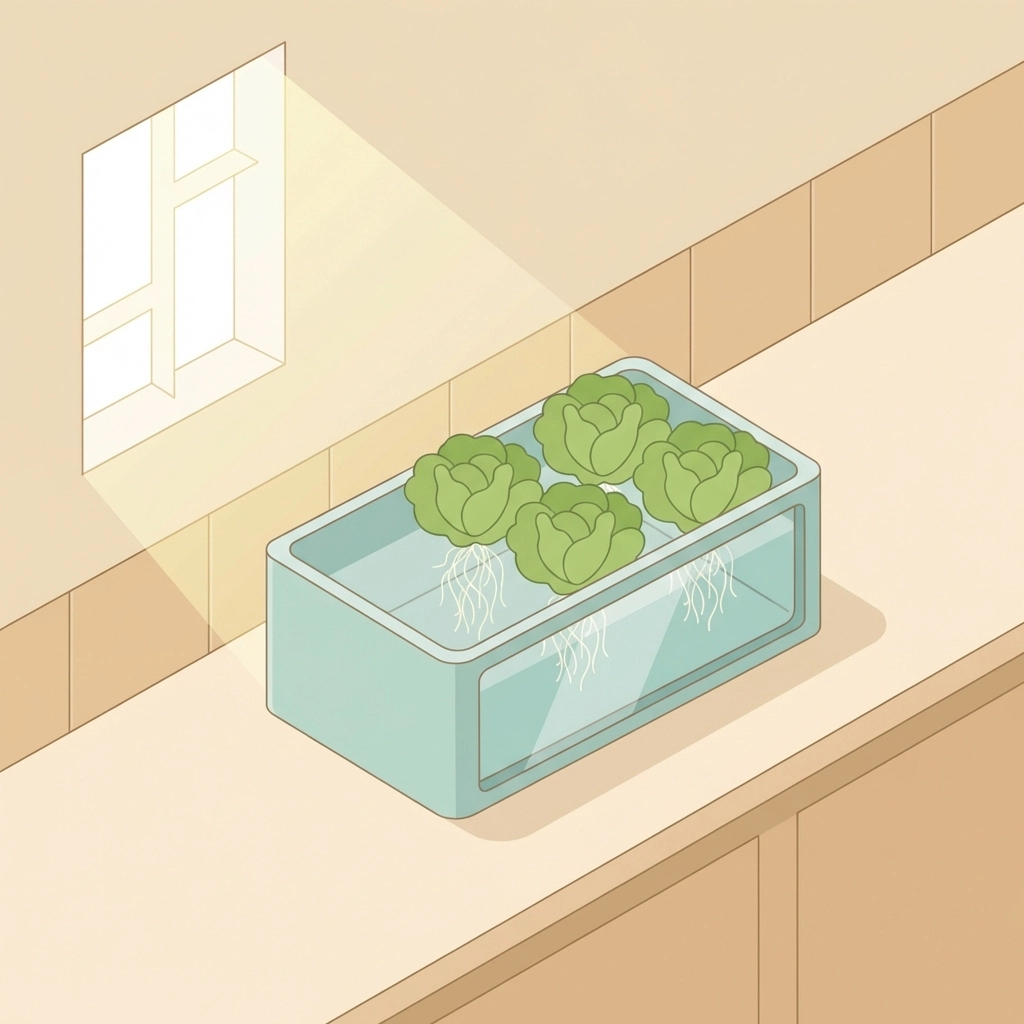
A kitchen counter.
A 2×2 foot area supports a functional Deep Water Culture (DWC) system. Four square feet. That grows 8-12 heads of lettuce every month.
Smaller options exist. Countertop herb gardens take up less than one square foot. A single Kratky jar sits on a windowsill.
The minimum is whatever flat surface exists.
How Much Space Do Leafy Greens Require?
Leafy greens are the most space-efficient crops in hydroponics.
General spacing:
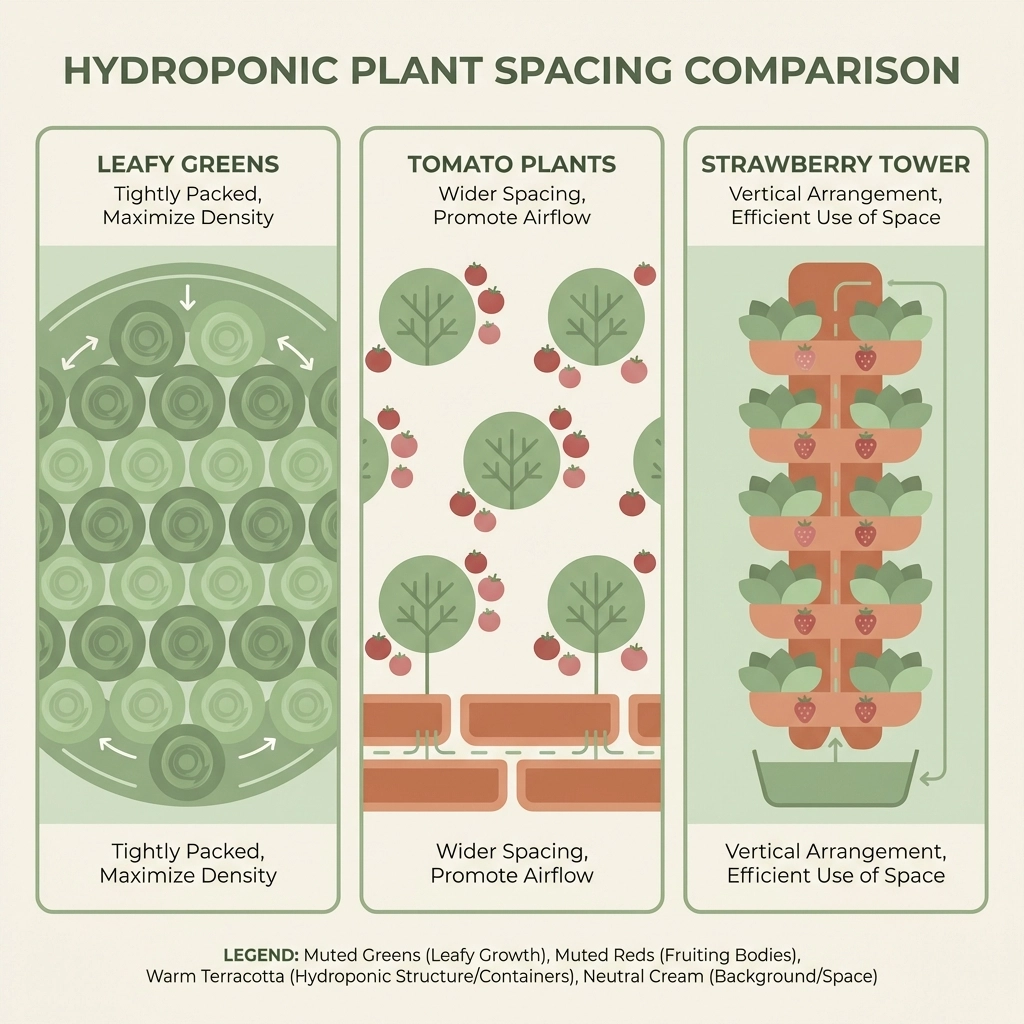
- 6-8 inches between plants
- 4-6 plants per square foot
- 30-day harvest cycle for most varieties
A 2×4 foot system produces 8-12 lettuce heads monthly. That same footprint grows spinach, arugula, kale, or bok choy.
Herbs need slightly more room. 10-12 inches apart. Still compact. Still productive.
One square foot of lettuce outperforms several square feet of soil-grown crops in yield per area.
How Much Room Do Tomatoes, Peppers, and Strawberries Need?
Fruiting crops demand more space.
Tomatoes:
- 2-4 square feet per plant
- 18-24 inches between plants
- 90-day production cycle
- 15-20 pounds per plant in a 2×4 foot system with 2-3 plants
Peppers:
- 1.5-2 square feet per plant
- 12-18 inches apart
- Compact varieties exist for tighter spaces
Strawberries:
- 6-12 inches apart
- Ideal for vertical towers
- 20+ plants per vertical square foot
Fruiting crops grow vertically. Trellising and staking reduce horizontal footprint. A single tomato plant trained upward fits in a 2×2 corner.
Does Vertical Hydroponics Really Multiply Growing Space?
Yes.
Vertical systems stack growing positions. One square foot of floor space becomes multiple square feet of growing area.
Aeroponic tower systems:
- 40+ plants in 1.6 square feet of floor space
- 360-degree growing surface
- No soil, minimal water
ZipGrow towers:
- 80+ plants per 10 square feet
- Modular and expandable
- Commercial-grade in residential footprints
Stacked NFT channels:
- 3-5 levels in standard ceiling height
- Each level adds full growing capacity
- Leafy greens and herbs thrive in this configuration
Vertical growing transforms a closet into a production space. A spare corner becomes a salad factory.
The floor plan stays small. The yield scales upward.
What Space Works Best for Apartments?
Apartments present specific constraints. Limited square footage. Shared walls. Lease restrictions.
Optimal apartment setups:
- Countertop Kratky systems (herbs, lettuce)
- Window-mounted vertical gardens
- Compact DWC tubs under grow lights
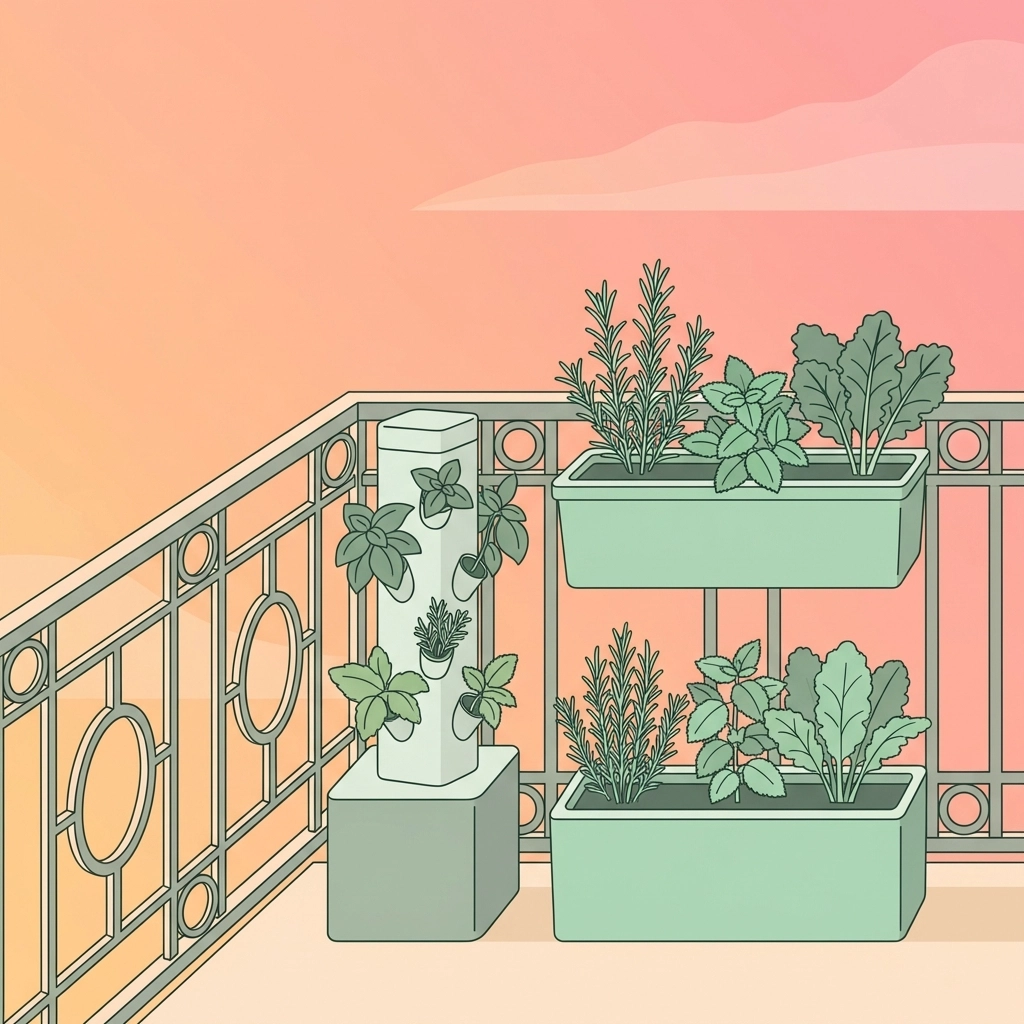
- Tower gardens on balconies
A 3×3 foot corner accommodates a full vertical tower. That tower holds 20-40 plants depending on configuration.
Balconies expand options. A 4×6 foot balcony supports multiple systems. Leafy greens, strawberries, compact peppers.
Key apartment considerations:
- Weight limits on balconies
- Water drainage and leak prevention
- Light availability or supplemental lighting needs
- Noise from air pumps (minimal with quality equipment)
Small apartments benefit most from vertical designs. Floor space stays open. Growing capacity stays high.
What About Classrooms and Educational Settings?
Classrooms require safety, visibility, and educational value.
Recommended classroom footprints:
- 2×3 foot ebb and flow systems
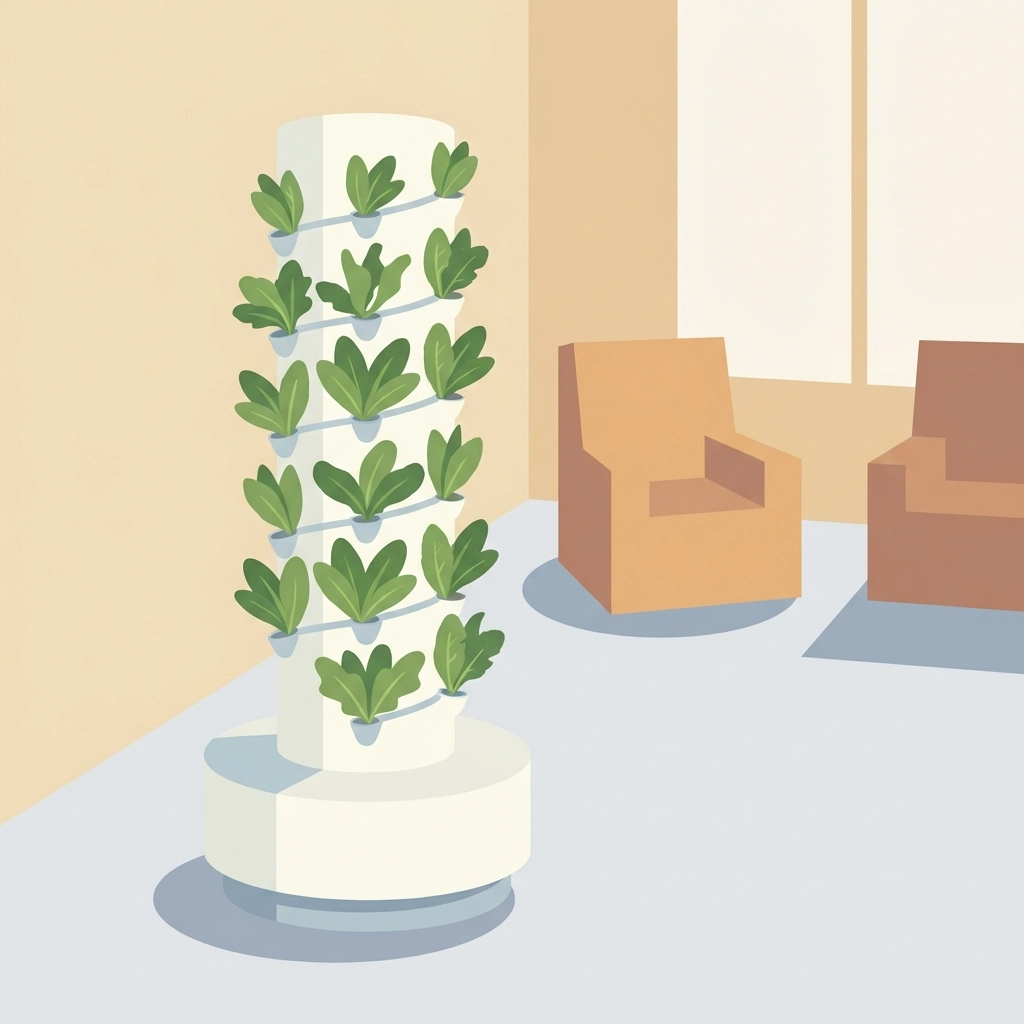
- Single tower gardens (1.5-2 square feet)
- Window-based Kratky demonstrations
- Countertop DWC with clear containers
A 2×4 foot table holds a complete NFT system. Students observe root development, nutrient flow, and plant growth cycles.
Tower gardens serve as centerpieces. Visible from all angles. Interactive. Low maintenance between class periods.
Space allocation for classrooms:
- 6-10 square feet for a demonstration system
- 24 inches clearance on all sides for student access
- Proximity to electrical outlets and water source
The educational footprint is modest. The learning outcomes are substantial.
How Do Busy Families Fit Hydroponics Into Their Homes?
Time matters more than space for busy families.
Low-maintenance systems fit anywhere. A Kratky setup requires no pumps, no timers, no daily attention. Refill nutrients weekly. Harvest when ready.
Family-friendly configurations:
- Kitchen counter herb garden (1 square foot)
- Garage corner with vertical tower (4 square feet)
- Basement shelf with DWC tubs (6-8 square feet)
- Sunroom NFT channels (8-12 square feet)
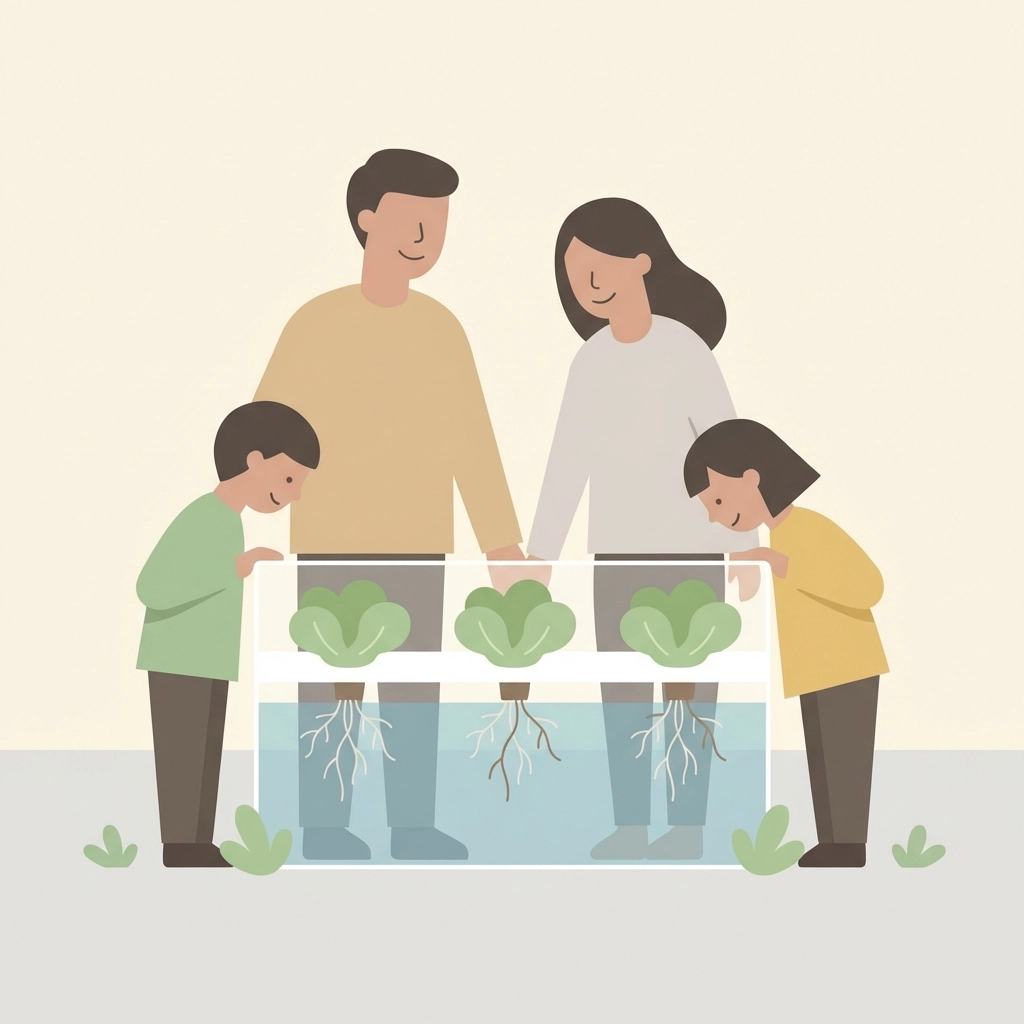
Children engage with visible systems. A clear DWC container shows roots growing in real time. A tower garden becomes a daily check-in activity.
Time requirements by system:
- Kratky: 5 minutes weekly
- DWC: 10-15 minutes weekly
- NFT: 15-20 minutes weekly
- Ebb and flow: 15-20 minutes weekly
The space commitment is flexible. The time commitment is minimal. Families choose systems that match both.
What Additional Space Do Maintenance and Equipment Require?
Growing area is not the only consideration.
Access clearance:
- 24 inches around all sides of the system
- Room to reach every plant for inspection and harvest
- Space for nutrient mixing and water changes
Vertical clearance:
- 12 inches between grow lights and plant canopy
- 24 additional inches for plant growth
- 12 inches between stacked growing levels
Equipment footprint:
- Nutrient reservoirs (varies by system size)
- Air pumps for DWC (small, fits beside reservoir)
- Water pumps for NFT and ebb and flow (inside reservoir)
- Grow lights (mounted above, no floor space)
A 4 square foot growing system needs 12-16 square feet total when access and equipment are included.
Planning for maintenance space prevents future frustration.
What Yields Are Realistic in Under 10 Square Feet?
Significant yields.
Leafy greens (10 sq ft vertical system):
- 40-60 plants at any time
- 80-120 harvests per month with succession planting
- Continuous salad supply for a household
Herbs (10 sq ft mixed system):
- 20-30 herb plants
- Daily fresh herbs for cooking
- Surplus for drying or sharing
Strawberries (10 sq ft tower):
- 30-50 plants
- Pounds of berries during peak production
- Extended harvest season indoors
Mixed system (10 sq ft):
- 2-3 tomato plants (trellised)
- 6-8 pepper plants
- 12-16 lettuce plants
- Rotating harvests year-round
Ten square feet of hydroponic growing replaces a significant portion of grocery store produce. The yield-per-square-foot ratio outperforms traditional gardening by multiples.
What Starter Layout Makes the Most Sense?
Start small. Scale based on results.
Beginner layout (under 4 square feet):
- Single DWC tub with 4-6 lettuce plants
- One grow light
- Basic nutrient kit
- Total cost under $50
Intermediate layout (4-8 square feet):
- Small vertical tower (20 plant sites)
- Timer-controlled lighting
- Quality nutrients
- Total cost $100-200
Advanced layout (8-12 square feet):
- Multiple system types
- Automated monitoring
- Succession planting schedule
- Total cost $200-500
Every layout fits in a spare corner, closet, or unused room. The starting point matters less than the starting action.
Where to Learn More About Specific Systems and DIY Builds?
Space requirements vary by system type. Each system has unique advantages for different situations.
Deep dives into DWC, NFT, Kratky, ebb and flow, aeroponics, and other methods reveal which fits best for available space and goals.
DIY builds reduce cost dramatically. A functional DWC system costs under $30 with household materials. Vertical towers build from PVC pipes. Ebb and flow tables repurpose storage containers.
The hydroponics blog series covers each system in detail. The DIY projects collection provides step-by-step instructions for budget-friendly builds.
Space is not the barrier. Knowledge removes the remaining obstacles.
The Bottom Line on Hydroponic Space Requirements
Productive hydroponic gardens fit in small spaces.
Under 10 square feet supports dozens of plants. Vertical systems push that to hundreds. Apartments, classrooms, and busy family homes all accommodate functional setups.
The footprint is smaller than expected. The yields are larger than imagined.
Growing food indoors requires less space than storing the groceries it replaces.
Disclaimer:
This article was generated in part by AI for informational purposes. While we strive for accuracy, always verify critical details using trusted sources before making decisions.



25 Comments
DIY Hydroponics for Kids 101: A Beginner's Guide to Soil-Free Growing – Tierney Family Farms
January 19, 2026, at 9:11 pm[…] you might be curious about how much space you actually need to scale up. Check out our guide on how much space you need for a productive hydroponic garden for tips on expanding your soil-free […]
How to Build a DIY Hydroponics System for Kids (Step-by-Step) – Tierney Family Farms
January 19, 2026, at 9:17 pm[…] For more hands-on family projects, check out our guide on how to create a DIY worm composting bin with children or explore how much space you actually need for a productive hydroponic garden. […]
Why Teaching Kids Food Security Will Change the Way Your Family Thinks About Meals – Tierney Family Farms
January 20, 2026, at 2:49 am[…] you want to level up, try a simple hydroponic setup: it's a great way to show kids that food production can happen anywhere, even without […]
DIY Hydroponics for Kids 101: A Beginner’s Guide to Soil-Free Growing – Tierney Family Farms
January 20, 2026, at 2:53 am[…] you might be curious about how much space you actually need to scale up. Check out our guide on how much space you need for a productive hydroponic garden for tips on expanding your soil-free […]
7 Mistakes Parents Make with Indoor Gardening Projects (and How to Fix Them) – Tierney Family Farms
January 20, 2026, at 2:57 am[…] you're doing a hydroponic project, skip soil entirely and use the appropriate growing […]
Vertical Farming for Small Spaces: 5 DIY Ideas Your Family Will Love – Tierney Family Farms
January 20, 2026, at 3:45 am[…] For more on hydroponic systems sized right for families, check out our guide on how much space you need for a productive hydroponic garden. […]
Indoor Herb Gardens: 3 Easy Ways to Grow Fresh Flavors All Winter – Tierney Family Farms
January 20, 2026, at 3:48 am[…] you're looking to expand your indoor growing adventures, check out our guide on how much space you need for a productive hydroponic garden or try building a DIY mini greenhouse from plastic bottles for even more indoor growing […]
The A-Frame Hydroponic System: Maximize Your Kitchen Space – Tierney Family Farms
January 20, 2026, at 2:49 pm[…] For more hydroponic guidance, check out our post on how much space you need for a productive hydroponic garden. […]
How to build a soda bottle hydroponic planter for under $5? – Tierney Family Farms
January 21, 2026, at 4:00 am[…] you're curious about expanding your hydroponic setup, check out our guide on how much space you need for a productive hydroponic garden for ideas on scaling […]
How to build a DIY plant light stand from PVC? – Tierney Family Farms
January 21, 2026, at 4:00 am[…] you're looking for more budget-friendly growing projects, check out our guide on how much space you need for a productive hydroponic garden, it pairs nicely with a setup like […]
How to build a DIY air-stone bubbler for a "Deep Water Culture" system? – Tierney Family Farms
January 21, 2026, at 4:01 am[…] For more budget-friendly hydroponic and gardening projects, check out our full library of Kids Crafts or learn how much space you actually need for a productive hydroponic garden. […]
The Tower Power: How Vertical Stacking Doubles Your Yield – Tierney Family Farms
January 21, 2026, at 4:02 am[…] For a complete guide on space-efficient hydroponic setups, check out our post on how much space you need for a productive hydroponic garden. […]
Mastering PH Testing: A Chemistry Lab in Your Vertical Farm – Tierney Family Farms
January 21, 2026, at 4:02 am[…] For a deeper dive into maintaining your hydroponic system, check out our guide on how much space you need for a productive hydroponic garden. […]
The Role of Oxygen in Vertical Hydroponic Roots – Tierney Family Farms
January 21, 2026, at 4:02 am[…] If you're curious about space requirements for different hydroponic setups, check out our guide on how much space you need for a productive hydroponic garden. […]
Growing Microgreens in a Vertical Tray System – Tierney Family Farms
January 21, 2026, at 4:02 am[…] For home growers, even adding one more shelf level doubles your output. If you're curious about maximizing small-space growing, check out our article on how much space you need for a productive hydroponic garden. […]
Gravity-Fed Vertical Gardens: How Water Moves in a Tower – Tierney Family Farms
January 21, 2026, at 5:42 am[…] Looking for more space-efficient growing projects? Check out our guide on how much space you need for a productive hydroponic garden. […]
How to Grow Vertical Strawberries Indoors Without Soil – Tierney Family Farms
January 21, 2026, at 5:43 am[…] Growing vertical strawberries without soil is one of the most rewarding projects a family can tackle together. You'll learn real chemistry, biology, and engineering: and eat the delicious results. For more hydroponic project ideas, explore our guides at Tierney Family Farms and see how much space you actually need for a productive setup. […]
The Quiet Garden: How to Soundproof Your Vertical Farm Pump – Tierney Family Farms
January 21, 2026, at 5:43 am[…] more indoor growing projects the whole family can enjoy, explore our hydroponic garden guides and DIY plant care […]
Managing Pests in an Indoor Vertical Garden Naturally – Tierney Family Farms
January 21, 2026, at 5:44 am[…] you're looking to expand your indoor growing setup, check out our guide on how much space you need for a productive hydroponic garden for more tips on indoor growing […]
Why Do Roots Grow Down? Gravity in Vertical Farming – Tierney Family Farms
January 21, 2026, at 5:45 am[…] families interested in more hands-on growing projects, check out our guide on how much space you need for a productive hydroponic garden, it pairs perfectly with this gravity […]
The Future of Food: How Vertical Farming Can Feed the World – Tierney Family Farms
January 21, 2026, at 5:46 am[…] tip: If you want to level up, check out our guide on how much space you need for a productive hydroponic garden for more advanced growing […]
Harvesting Your Vertical Garden: When and How to Pick – Tierney Family Farms
January 21, 2026, at 5:47 am[…] If you're looking to set up your own space-efficient growing area, check out our guide on how much space you need for a productive hydroponic garden. […]
Building a Wooden A-Frame Vertical Garden for Kids – Tierney Family Farms
January 21, 2026, at 5:49 am[…] For more ideas on maximizing small growing spaces, check out our guide on how much space you need for a productive hydroponic garden. […]
How to start seeds in a sponge? – Tierney Family Farms
January 21, 2026, at 5:51 am[…] you're interested in keeping things soil-free, check out our guide on How Much Space Do You Need for a Productive Hydroponic Garden? for your next […]
What is "Guttation"? – Tierney Family Farms
January 21, 2026, at 5:56 am[…] you're growing plants in a hydroponic system, you may notice guttation happening more frequently than in soil-based gardens. Why? Because […]