




A fairy garden planter requires a container, soil, small plants, and decorative natural materials. Total cost stays under $10 by using items already at home and gathering free materials from the yard. The project takes 30–45 minutes. Suitable for ages 3–15 with supervision.
What materials are needed for a budget fairy garden?
The supply list divides into four categories: container, growing medium, plants, and decorations.
Container options (free to $3):
- Old terracotta pot
- Plastic storage container
- Broken wheelbarrow
- Aluminum roasting pan
- Wooden crate
- Large plastic bowl
Any vessel with drainage works. Drill holes in the bottom if none exist.
Growing medium ($2–4):
- One small bag of potting mix
- Handful of pebbles for drainage layer
Standard potting soil from any garden center suffices. Premium blends are unnecessary.
Plants ($0–5):
- Moss from the yard
- Succulent cuttings
- Small fern sprigs
- Creeping thyme
- Seedling marigolds
- Johnny-jump-ups
- Alyssum
Free option: transplant ground cover or moss from existing garden beds.
Budget option: purchase one six-pack of seedlings and divide among multiple gardens.
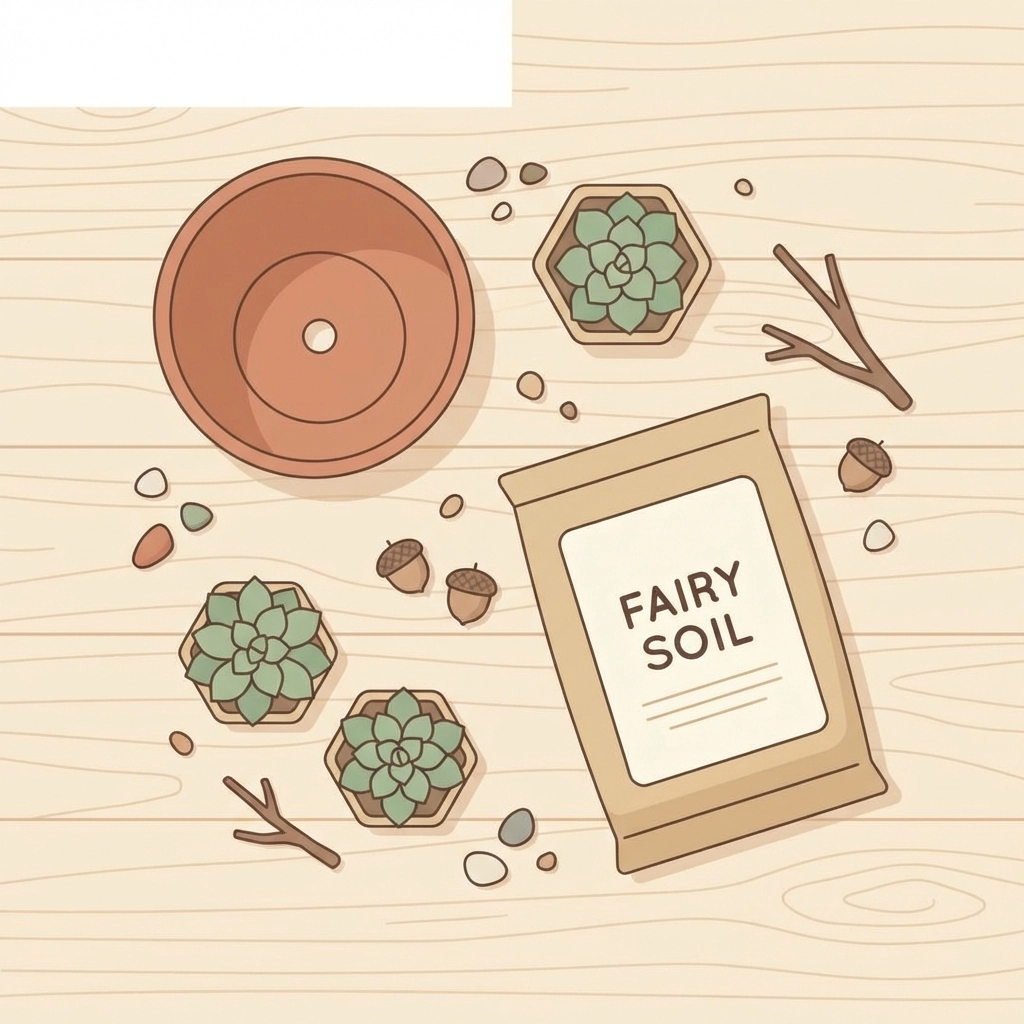
Decorations ($0–2):
- Twigs and sticks
- Small pebbles and stones
- Acorns and seed pods
- Shells and sea glass
- Bark pieces
- Craft sticks
- Small pinecones
Most decorative elements come from nature walks. Store-bought fairy accessories are unnecessary.
What tools does this project require?
Minimal equipment keeps setup simple.
- Small trowel or large spoon
- Scissors
- Child-safe craft glue (optional)
- Permanent markers (optional)
- Small paintbrush and acrylic paint (optional)
Nothing specialized. Kitchen utensils substitute for garden tools.
How do children prepare the container?
Preparation takes 5–10 minutes.
Step 1: Inspect the container for cracks or sharp edges. Sand down rough spots on terracotta or wood.
Step 2: Add drainage holes if missing. An adult handles drilling. Younger children watch from a safe distance.
Step 3: Place a layer of small pebbles at the bottom. Depth of one inch prevents waterlogging.
Step 4: Fill container with potting mix to within two inches of the rim. Leave space for plants and decorations.
Children age 3–5 scoop and pour soil with supervision.
Children age 6–10 handle the entire filling process independently.
Children age 11–15 assist younger siblings or lead the activity.
What is the planting process?
Planting establishes the garden’s living foundation.
Positioning matters:
- Taller plants go toward the back or center
- Ground cover spreads across the front
- Moss fills gaps between features
- Succulents anchor corners
Planting steps:
- Create small holes in the soil with fingers or a spoon
- Remove plants from containers gently
- Loosen root balls slightly
- Place plants in holes
- Press soil firmly around each base
- Water lightly to settle roots
Spacing allows room for growth. Crowded plants compete for resources.

Three to five small plants fill a medium container. One or two suffice for smaller vessels.
How are decorations arranged?
Decoration transforms planted containers into miniature worlds.
Create pathways:
- Line small pebbles in winding trails
- Use sand for beach-themed paths
- Arrange bark chips for woodland trails
Build structures:
- Craft stick fences require four sticks and glue
- Twig ladders need two long sticks and several short crosspieces
- Stone circles suggest fairy gathering spots
- Acorn caps become tiny bowls or seats
Add natural features:
- Moss patches represent lawns
- Flat stones serve as stepping stones
- Pinecone scales create roof shingles
- Seed pods become boats or baskets
Children choose their own themes. Woodland, beach, desert, and cottage gardens all work.
No rules govern fairy garden aesthetics. Imagination drives design choices.
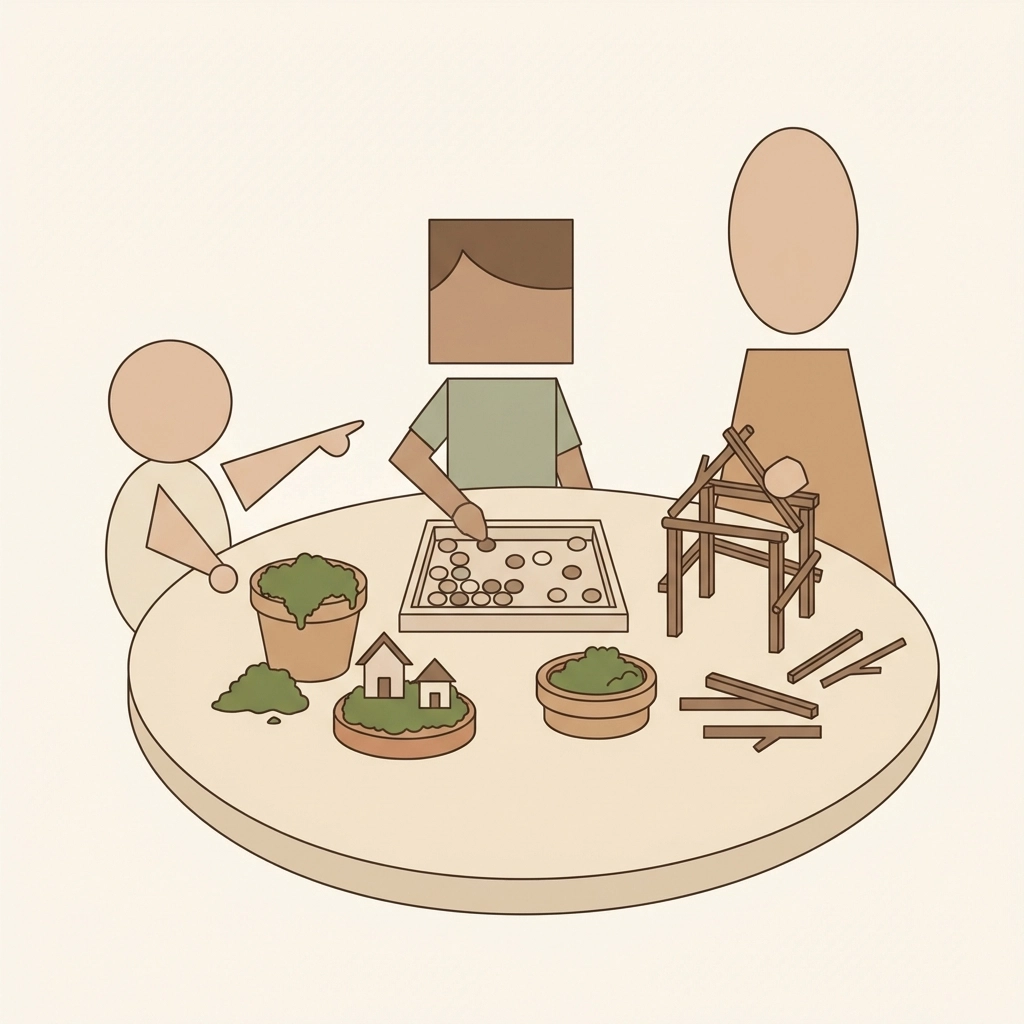
What tasks suit different age groups?
Age-appropriate delegation keeps all children engaged.
Ages 3–5:
- Scooping soil into containers
- Placing pebbles on pathways
- Choosing decorations from collected materials
- Watering with a small cup
- Pointing to where items should go
Direct supervision required. Small parts present choking hazards.
Ages 6–10:
- Planting seedlings independently
- Arranging pathway designs
- Building simple twig structures
- Painting rocks or craft sticks
- Planning garden layouts on paper first
Moderate supervision recommended. Check in every few minutes.
Ages 11–15:
- Leading the entire project
- Assisting younger children
- Using craft knives with permission
- Creating detailed miniature furniture
- Researching plant care requirements
Minimal supervision needed. Provide guidance when requested.
How does the project stay under $10?
Budget control relies on three strategies.
Strategy 1: Use existing containers
Every household contains potential fairy garden vessels. Check garages, basements, and recycling bins. Cracked pots work. Chipped dishes work. Imperfection adds character.
Strategy 2: Gather natural materials
Nature walks yield free decorations. Parks, beaches, and backyards supply:
- Interesting stones
- Fallen twigs
- Moss patches
- Seed pods
- Shells
- Bark pieces
One 20-minute walk produces enough materials for multiple gardens.
Strategy 3: Propagate plants
Succulent leaves root easily in soil. Moss transplants from shaded areas. Ground cover spreads from existing garden beds. Purchasing plants becomes optional.
Sample budget breakdown:
| Item | Cost |
|---|---|
| Container | $0 (repurposed) |
| Potting soil (small bag) | $3.50 |
| Seedling six-pack | $4.00 |
| Decorations | $0 (gathered) |
| Total | $7.50 |
Remaining budget allows for one small craft supply if desired.
What ongoing care do fairy gardens need?
Maintenance keeps the garden thriving.
Watering schedule:
- Check soil moisture every 2–3 days
- Water when top inch feels dry
- Avoid overwatering: root rot kills small plants quickly
- Use spray bottles for gentle moisture
Light requirements:
- Most fairy garden plants prefer partial shade
- Succulents tolerate more sun
- Moss needs consistent moisture and shade
- Rotate indoor gardens weekly for even growth
Seasonal considerations:
- Bring containers indoors before frost
- Replace annuals as seasons change
- Refresh soil annually
- Clean decorations with a soft brush
Children learn responsibility through plant care routines.
What educational value does this project offer?
Fairy gardens teach multiple skills simultaneously.
Science concepts:
- Plant biology and growth cycles
- Soil composition
- Water requirements
- Photosynthesis basics
Creative skills:
- Design and spatial planning
- Color coordination
- Narrative development
- Problem-solving
Life skills:
- Following instructions
- Delayed gratification
- Caring for living things
- Budget management
The project combines STEM education with artistic expression.
What common mistakes should families avoid?
Several errors compromise fairy garden success.
Overplanting: Too many plants crowd the space. Less is more.
Poor drainage: Waterlogged soil kills roots. Always ensure drainage holes exist.
Direct sunlight: Intense sun scorches delicate plants and fades decorations.
Overwatering: Small containers need less water than standard gardens.
Fragile decorations: Paper and cardboard disintegrate outdoors. Choose weather-resistant materials.
Toxic plants: Verify all plants are non-toxic if young children or pets access the garden.
Prevention eliminates frustration. Plan before planting.
Tierney Family Farms publishes this content for educational purposes. The information provided does not constitute professional, medical, or safety advice. Results vary based on growing conditions, seed quality, and care consistency. Some projects may involve sharp tools, small parts, or chemicals. Adult supervision is required for all children’s activities, and you must ensure each project is safe and age-appropriate for your situation. Attempt projects only if you are confident they are safe for your skill level and environment. Portions of this content may be generated with AI; information may contain errors or become outdated—always verify details independently. No guarantee of accuracy is made. Affiliate links may appear and commissions may be earned. By viewing or using these ideas, you assume all risks, and Tierney Family Farms is not responsible for any harm, injury, or loss.

2 Comments
How to Make a Simple DIY Compost Bin for Kids – Tierney Family Farms
January 20, 2026, at 2:40 am[…] For more hands-on family gardening projects, check out our guide on how to create a DIY worm composting bin with children or explore building a fairy garden planter with kids for under $10. […]
What Is Vertical Farming for Beginners and Families? – Tierney Family Farms
January 20, 2026, at 2:41 am[…] If you enjoyed this guide, check out our other beginner-friendly tutorials on our blog, including how to build a fairy garden planter with kids for under $10 and how to create a DIY worm composting bin with […]