



A DIY bug hotel requires one recycled container, natural materials from the backyard, and about 30 minutes.
Total cost: free to $10.
The project works for children ages 3 and up. Younger kids collect materials. Older kids handle assembly. Everyone learns about beneficial insects and habitat creation.
Bug hotels provide shelter for pollinators, pest-eating insects, and other garden helpers. Bees, ladybugs, beetles, and spiders use these structures for nesting and overwintering.
The process is simple. Gather materials. Fill a container. Place it outside. Watch visitors arrive.
What materials are needed for a bug hotel?
Two categories: a container and filling materials.
Container options (free or nearly free):
- Empty plastic water bottle
- Plastic juice container
- Clean tin can
- Old plant pot
- Plastic milk carton
- Cardboard tube
Plastic bottles work best for beginners. Easy to cut. Easy to handle. Lightweight for hanging.
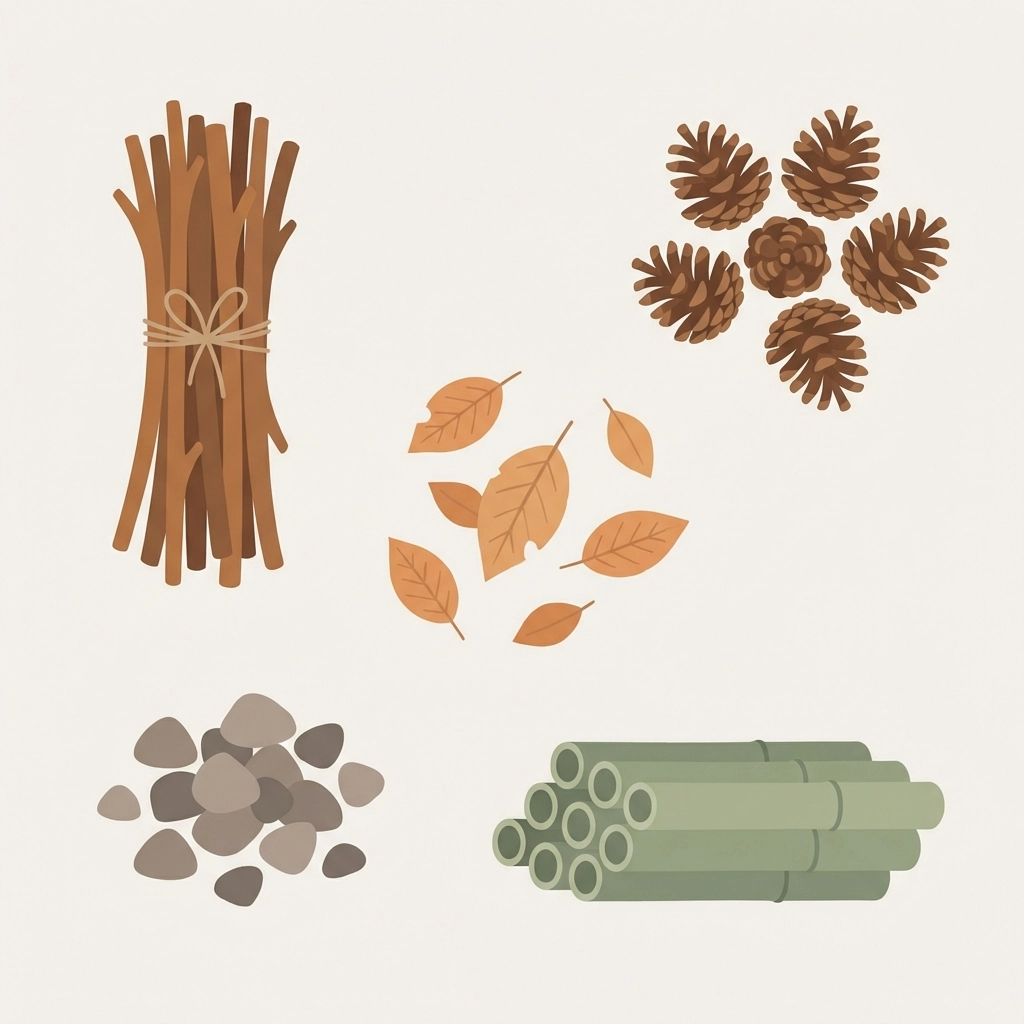
Natural filling materials (free):
- Sticks and twigs
- Pine cones
- Bark pieces
- Dried leaves
- Moss
- Grass clippings
- Hollow bamboo pieces
- Small stones
- Seed heads
- Dried flower stems
Every item on this list exists in most backyards. A nature walk provides everything needed.
Optional purchased items (under $10 total):
- Garden twine: $2-3
- Bamboo stakes: $3-5
- Craft sticks: $1-2
Most families complete this project without spending anything.
How do families collect bug hotel materials?
Turn material gathering into a nature scavenger hunt.
Create a simple checklist:
- 10 sticks (finger-width or smaller)
- 5 pine cones
- 1 handful of dried leaves
- 1 handful of bark pieces
- Small stones that fit in a palm
Children carry a bag or bucket. Adults supervise collection.
Best locations for gathering:
- Backyard
- Local park
- Sidewalk edges
- Garden beds
- Under trees
Fallen materials work best. Avoid pulling bark from living trees. Avoid disturbing existing insect homes.
Dry materials perform better than wet ones. Damp leaves and sticks can mold inside the hotel.
The gathering phase takes 15-20 minutes. Children stay engaged when given specific items to find.
What is the step-by-step assembly process?
Step 1: Prepare the container
Wash and dry the container completely.
For plastic bottles: Cut off the bottom third. An adult handles this step. Sharp scissors or a craft knife work best.
For tin cans: Remove the label. Check for sharp edges. Cover any sharp spots with tape.
For plant pots: No cutting required. The drainage hole provides ventilation.
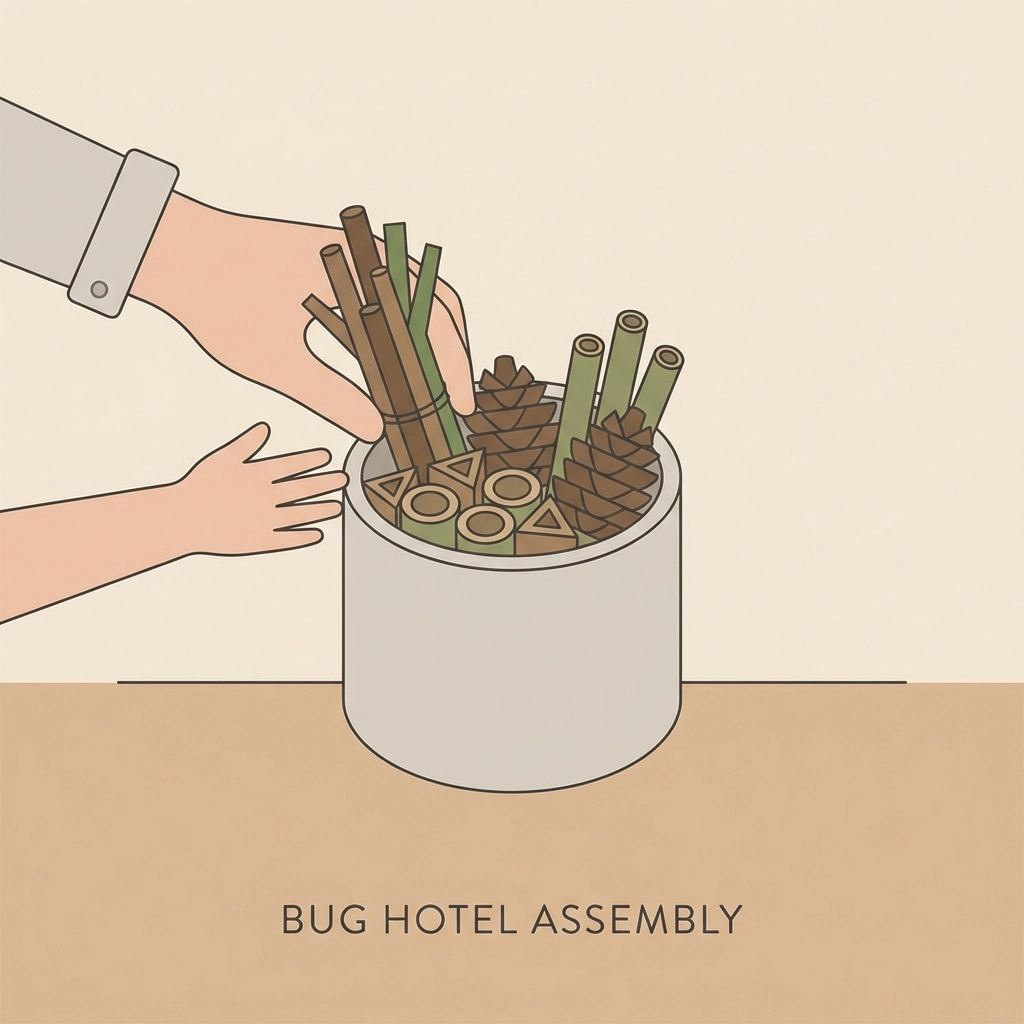
Step 2: Create the base layer
Place larger items first.
Start with stones or thick sticks at the bottom. This creates stability.
Step 3: Add the middle layers
Insert medium-sized materials next.
Pine cones fill space efficiently. Bark pieces create hiding spots. Bundles of thin sticks provide tunnels.
Roll bamboo pieces or hollow stems into tight bundles. Tie with string. Insert into the container. These hollow tubes attract solitary bees.
Step 4: Fill the gaps
Stuff smaller materials into remaining spaces.
Dried leaves work well. Moss adds texture. Grass clippings fill tiny holes.
Pack materials firmly. Loose filling shifts and falls out. Dense packing stays secure in wind and rain.
Step 5: Secure the structure
Wrap garden twine around the outside. This prevents materials from escaping.
For hanging: Create a loop at the top with extra twine.
For ground placement: No additional securing needed.
Where should families place the finished bug hotel?
Location determines which insects visit.
Ideal placement criteria:
- Sheltered from heavy rain
- Protected from strong wind
- Near plants and flowers
- Away from high-traffic areas
Height options:
Ground level attracts beetles, spiders, and ground-dwelling insects.
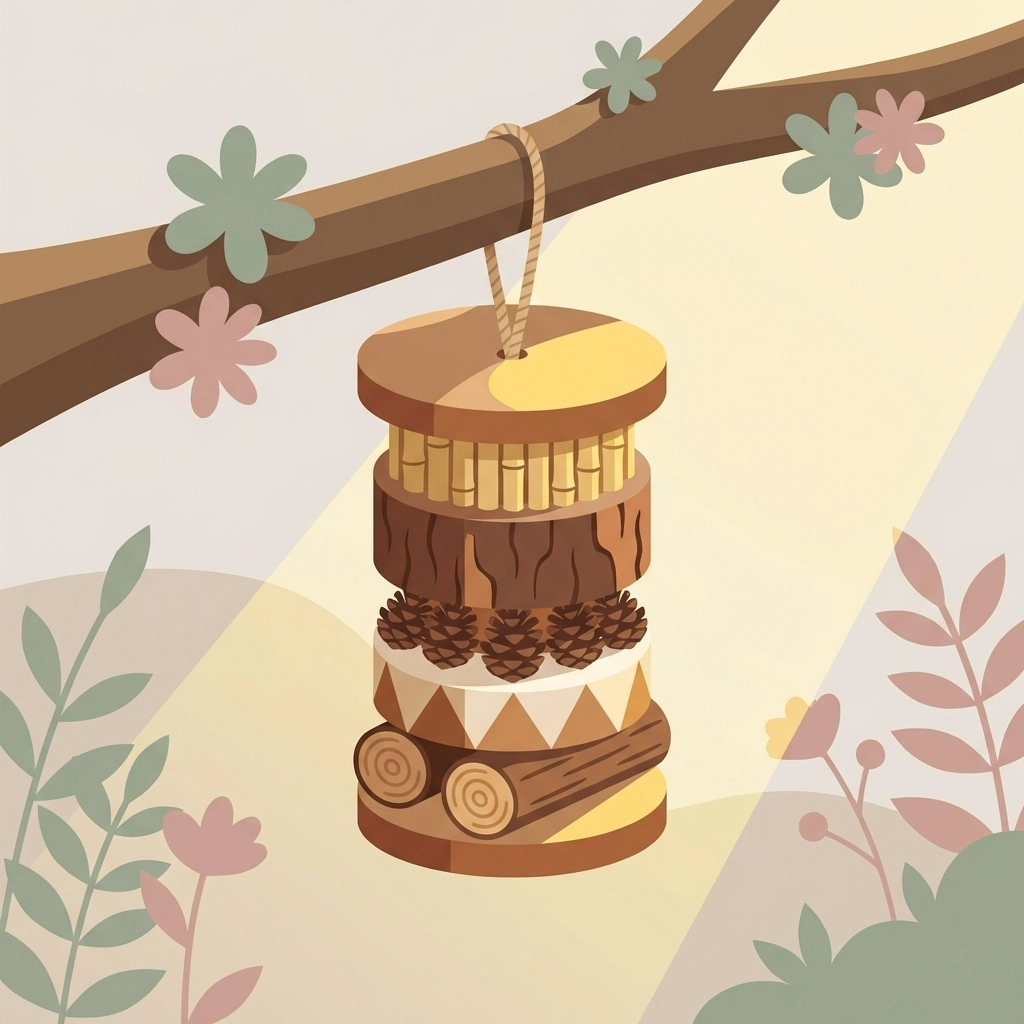
Elevated placement (1-3 feet) attracts bees and flying insects.
Tree branches work for hanging hotels.
Fence posts provide stable mounting points.
Orientation matters:
Face the opening away from prevailing winds.
Southeast-facing positions receive morning sun. Warmth attracts more visitors.
Avoid full sun all day. Excessive heat dries out materials and discourages occupancy.
What to avoid:
- Direct rainfall into the opening
- Locations near pesticide use
- Areas children and pets disturb frequently
- Unstable surfaces
The best spot: a quiet corner of the garden near flowering plants.
What insects will visit the bug hotel?
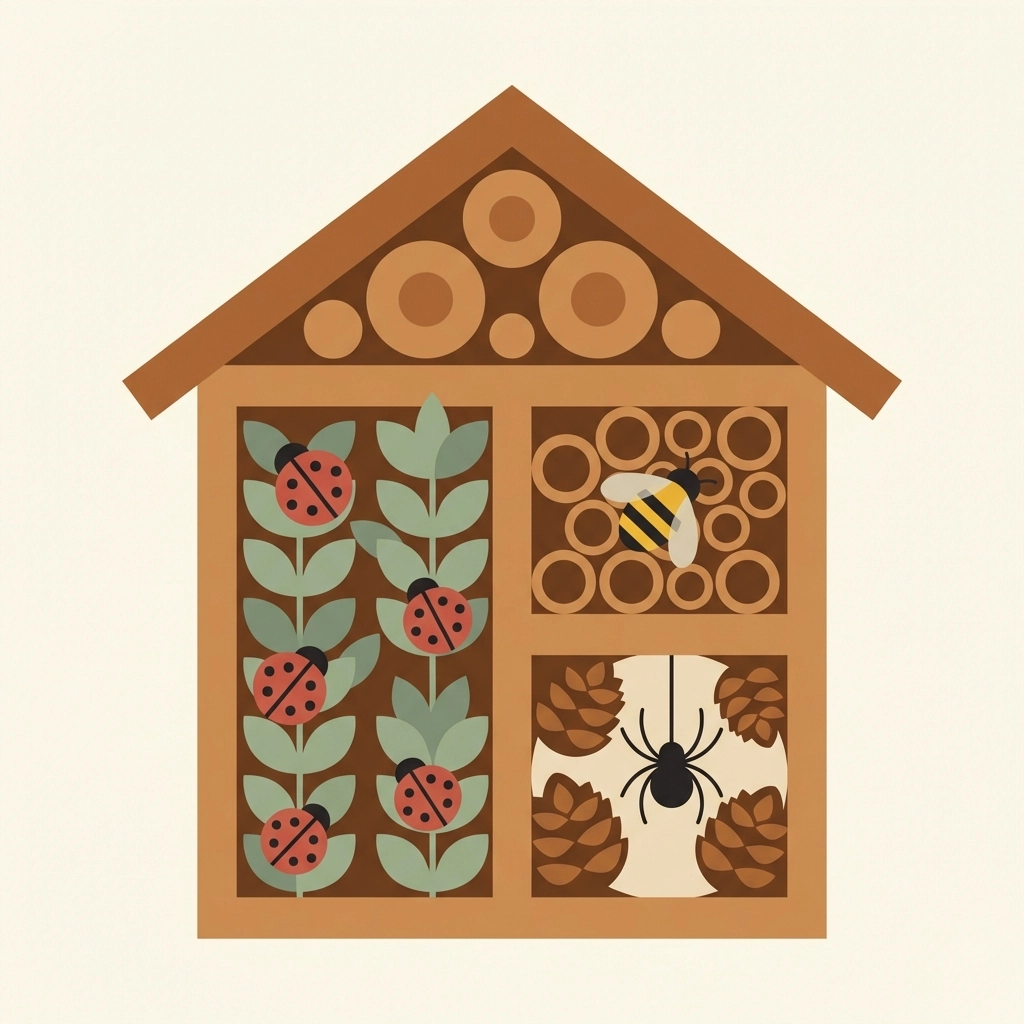
Different materials attract different species.
Hollow tubes attract:
- Solitary bees (mason bees, leafcutter bees)
- Small wasps
These beneficial insects pollinate gardens and control pests.
Pine cones and bark attract:
- Ladybugs
- Lacewings
- Earwigs
Ladybugs and lacewings eat aphids. Natural pest control.
Dried leaves and moss attract:
- Spiders
- Beetles
- Centipedes
These creatures break down organic matter and eat smaller pests.
Stones attract:
- Ground beetles
- Woodlice
Woodlice decompose dead plant material. Ground beetles eat slugs.
Every guest serves a purpose. Bug hotels support the entire garden ecosystem.
How do families maintain a bug hotel?
Maintenance requirements are minimal.
Weekly tasks:
- Observe from a distance
- Note which openings show activity
- Record insect sightings
Seasonal tasks:
- Replace moldy or rotting materials
- Add fresh dried leaves in autumn
- Check structural integrity after storms
What not to do:
- Move the hotel frequently
- Poke inside to check for occupants
- Spray with water or chemicals
- Handle insects directly
Undisturbed hotels attract more permanent residents.
Most bug hotels last 1-2 years before needing significant repairs. Outdoor conditions eventually break down natural materials.
What learning opportunities does this project provide?
Bug hotels teach multiple concepts through hands-on experience.
Science concepts:
- Insect life cycles
- Habitat requirements
- Ecosystem relationships
- Decomposition
Practical skills:
- Following instructions
- Using tools safely
- Observing nature
- Recording data
Create a simple observation journal. Draw pictures of visitors. Note dates and weather conditions.
Children develop patience. Insects take days or weeks to discover new hotels.
The project connects indoor learning to outdoor reality. Textbook insects become backyard neighbors.
What variations exist for different age groups?
Ages 3-5:
Focus on collecting materials and stuffing the container.
Use larger containers with bigger openings.
Adults handle all cutting.
Ages 6-9:
Include measuring and planning.
Create labeled sections for different insects.
Start an observation journal with drawings.
Ages 10+:
Research specific insects before building.
Design multi-chamber hotels.
Track data over weeks and months.
The core project stays the same. Complexity adjusts to ability level.
Why does this project cost under $10?
Every essential material exists for free.
Containers come from recycling bins. Natural materials come from outdoor spaces. Assembly requires no specialized tools.
Optional purchases enhance durability. Garden twine prevents material loss. Bamboo stakes create uniform tubes.
A family spending nothing creates a functional bug hotel.
A family spending $5-10 creates a more polished version.
Both versions attract insects equally well.
The project proves that meaningful learning experiences require creativity, not budgets.
What comes after building the first bug hotel?
Success with one hotel leads to expansion.
Build multiple hotels with different materials. Compare which designs attract more visitors.
Place hotels in different locations. Observe how placement affects occupancy.
Connect with neighbors. Create a neighborhood network of insect habitats.
Document findings online. Share observations with citizen science projects.
One $10 project becomes an ongoing exploration of local ecosystems.
The bug hotel is a starting point. The learning continues indefinitely.