



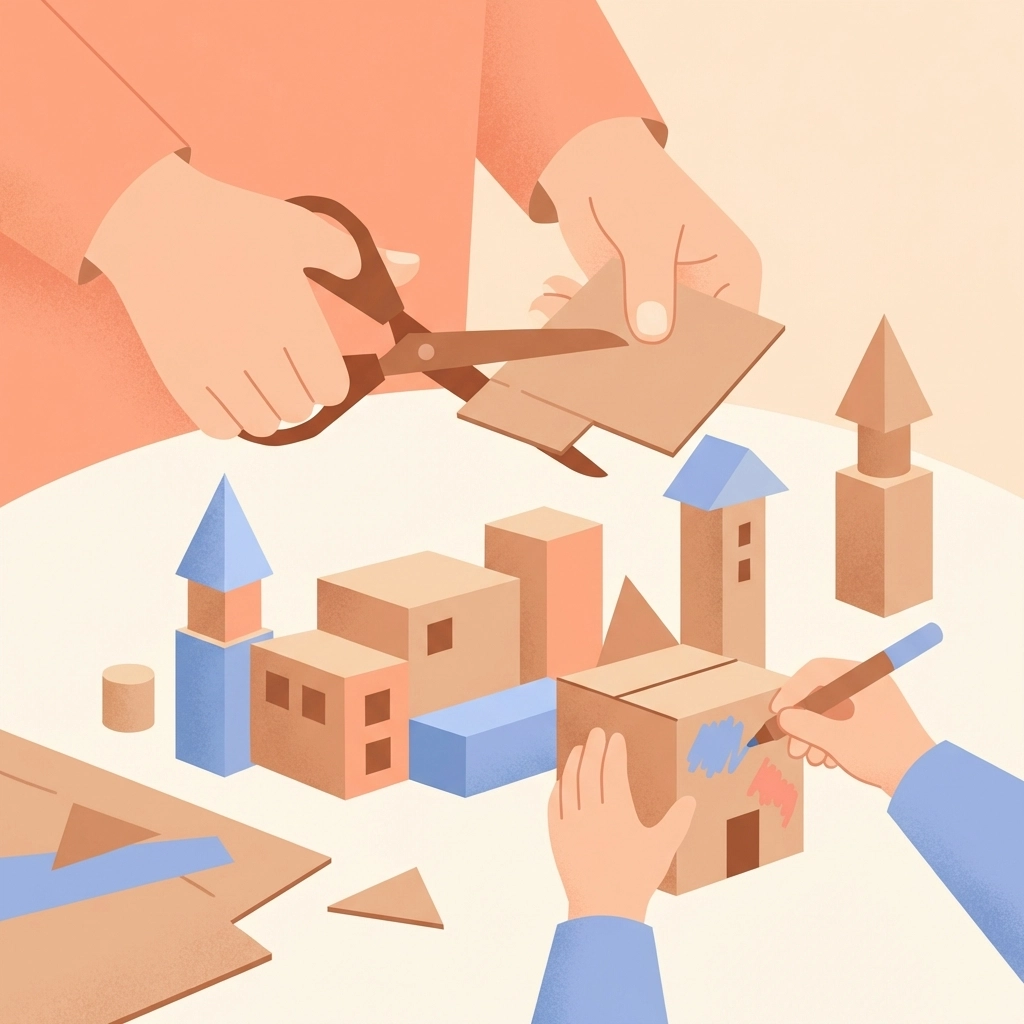
Gather boxes, markers, and tape. Arrange them on a flat surface. Draw roads. Add details. Done.
A cardboard city takes 30 minutes or less. Cost: $0 with recycled materials. Appropriate for ages 4 and up.
The process requires no special skills. No craft store trips. No Pinterest-perfect expectations.
Just boxes and imagination.
What Materials Are Needed?
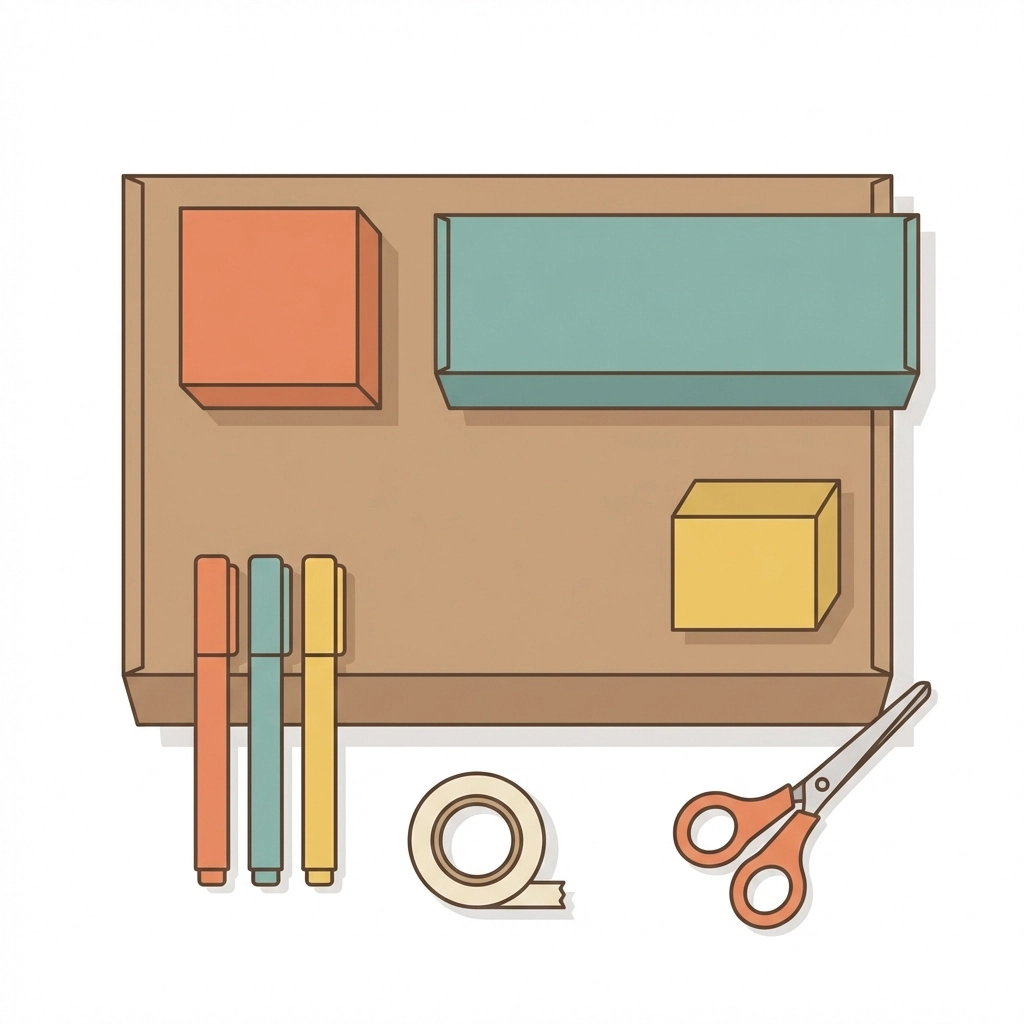
Everything comes from the recycling bin and junk drawer.
Essential supplies:
- Cardboard boxes (various sizes)
- One large flat cardboard piece for the base
- Markers or crayons
- Tape (masking or packing)
- Scissors (adult-supervised)
Optional additions:
- Construction paper scraps
- Toilet paper rolls
- Pipe cleaners
- Toy cars and figures
- Stickers
The base piece serves as the foundation. A flattened shipping box works well. So does the side of a large appliance box.
Small boxes become buildings. Cereal boxes. Tissue boxes. Shoe boxes. Amazon delivery boxes.
Size variety creates visual interest. Tall boxes become skyscrapers. Small boxes become houses. Medium boxes become shops.
How Does the 30-Minute Timeline Break Down?
Thirty minutes splits into four phases. Each phase has a specific purpose.
Minutes 0–5: Layout and Planning
Place the base on a table or floor. Arrange boxes without gluing first. Test different configurations.
Verbal planning replaces sketching. Ask simple questions:
- Where does the tallest building go?
- Where do cars drive?
- Where is the park?
Children decide placement. Adults facilitate. No wrong answers exist at this stage.
Tape boxes to the base once positions feel right.
Minutes 5–15: Building Details
Draw directly on boxes with markers. This saves time.
Windows require simple rectangles. Doors need basic outlines. Signs get single words or symbols.
Each building needs only three to five details. Perfection slows the process.
A door. Two windows. A sign. Complete.
Children handle decoration. Adults handle cutting if needed.
Minutes 15–25: Roads and Environment
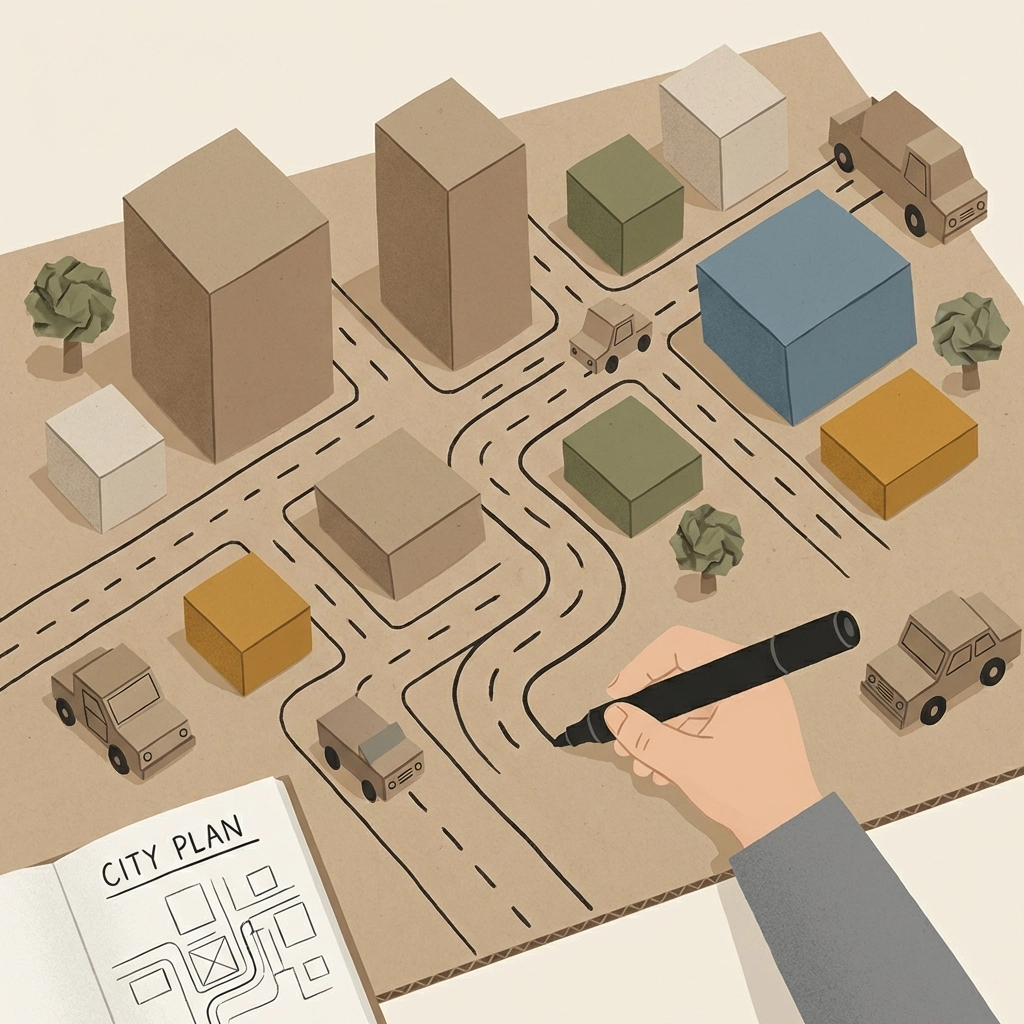
Draw roads directly on the cardboard base. Black or gray markers work. So does a regular pencil.
Straight lines connect buildings. Intersections add realism. Crosswalks require only a few white lines.
Add green spaces with green markers. A circle becomes a park. Squiggly lines become grass.
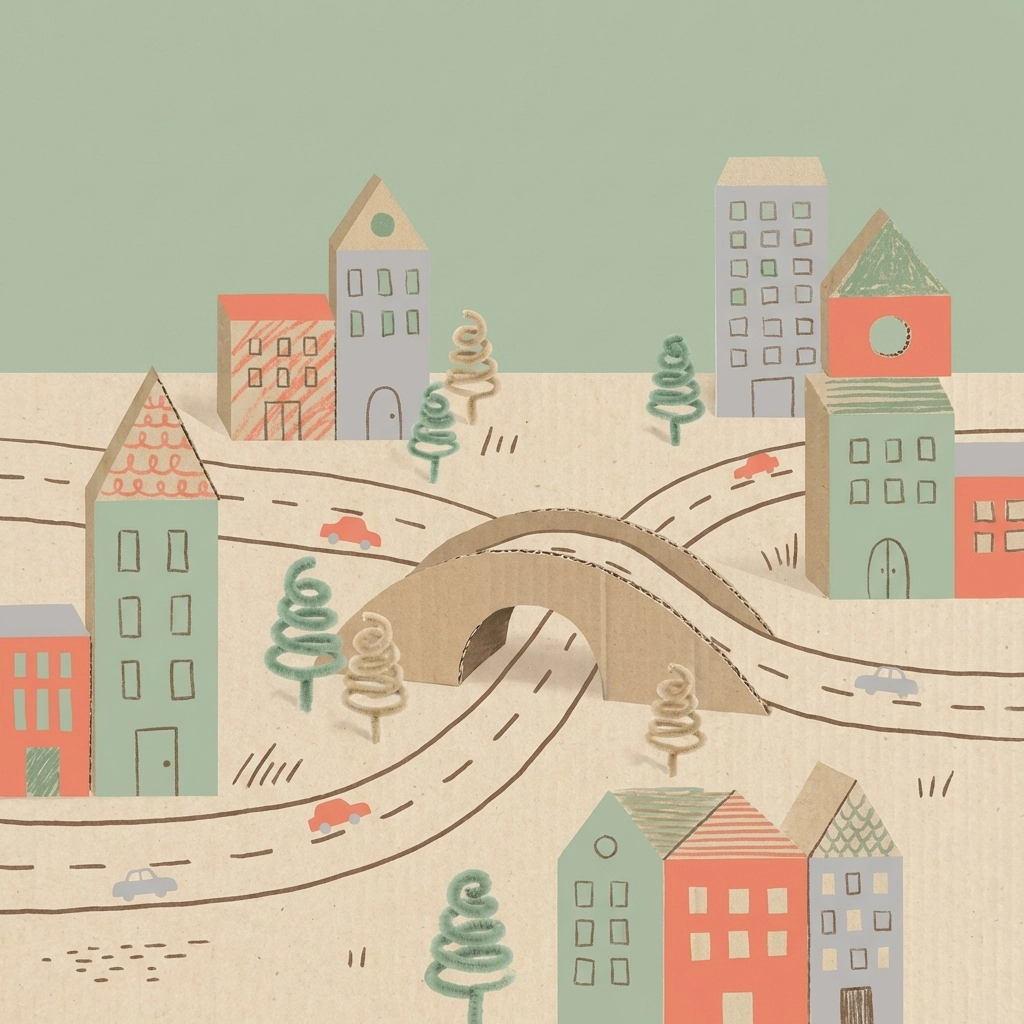
Pipe cleaners rolled into spirals create instant trees. Twist, stand upright, done.
Minutes 25–30: Immediate Play
Stop building. Start playing.
Add toy cars. Add action figures. Add small dolls or animals.
The city exists for play. Not display.
Engagement happens immediately. The reward follows the work without delay.
What Creative Twists Make Each City Unique?
The basic city serves as a starting point. Variations keep the activity fresh across multiple sessions.
Theme-Based Cities
Pick a single theme before starting.
- Space station city: Silver markers. Antenna made from straws. Alien figures.
- Underwater city: Blue base. Fish drawings. Bubble details.
- Dinosaur town: Prehistoric creatures roam. Volcano in the center. No cars.
- Holiday village: Seasonal decorations. Snowflakes or pumpkins depending on month.
Themes focus creative energy. Constraints spark creativity.
Functional Additions
Certain elements add play value beyond appearance.
- Garage doors: Cut on three sides, fold up. Cars park inside.
- Tunnels: Toilet paper rolls laid flat. Vehicles drive through.
- Bridges: Cardboard strips elevated by small boxes. Connect two areas.
- Ramps: Angled cardboard pieces. Roll cars down.
Movement adds engagement. Static cities entertain briefly. Interactive cities hold attention.
Light Integration
Battery-powered tea lights transform the city at dusk.
Place lights inside buildings with window cutouts. The city glows.
No real flames. No fire hazard. Just ambiance.
This works especially well for bedtime wind-down activities.
How Does Family Play Work with a Cardboard City?
The city becomes a shared narrative space. Multiple people participate simultaneously.
Role Assignment
Each family member claims a building or character. Stories emerge naturally.
One person runs the bakery. Another drives the fire truck. Someone lives in the tall apartment.
Roles create investment. Investment sustains attention.
Scenario Prompts
Open-ended prompts spark narrative without dictating outcomes.
- A new family moves to town.
- The pizza shop runs out of cheese.
- A parade happens on Main Street.
- Someone finds a lost puppy.
Children lead the story. Adults follow and participate.
Expansion Over Time
The city grows across multiple play sessions.
Day one: Four buildings and roads.
Day three: Add a school and playground.
Day seven: Build a bridge to a new neighborhood.
Expansion maintains novelty. The same base supports weeks of play.
Store the city flat when not in use. Reassemble in minutes.
What Age Considerations Matter?
Ages 4–6 require different support than ages 7–10.
Ages 4–6:
- Adults handle all cutting
- Simple shapes dominate
- Three buildings feel complete
- Play begins faster, lasts shorter
- Focus on large motor movements
Ages 7–10:
- Children use safety scissors
- Details become elaborate
- More buildings feel necessary
- Play sessions extend
- Fine motor skills increase precision
Mixed Age Groups:
Assign tasks by capability.
Older children cut and plan. Younger children color and place stickers. Everyone plays together.
Collaboration teaches patience. Shared creation builds bonds.
What Tips Ensure Success?
Certain practices prevent frustration and maximize enjoyment.
Prepare Materials in Advance
Gather everything before announcing the activity. Searching for tape mid-project kills momentum.
Thirty minutes means thirty minutes of building. Not thirty minutes including setup.
Accept Imperfection
Crooked lines work. Uneven windows work. Misspelled signs work.
The city reflects the builder. Child-made art looks child-made.
This is correct.
Limit Choices
Three marker colors reduce decision fatigue. Three to Five boxes prevent overwhelm.
More materials create more decisions. More decisions create more delays.
Constraints accelerate completion.
Consider a Timer Challenge
If you want to keep this a true 30‑minute build, turn it into a game. Set a timer and say, “You’re the construction crew, and I’m the Mayor. We need this little city built before the timer rings!” Kids often make faster decisions when they are “on the job” and racing the clock. The payoff can be simple: extra time to play in the city once it’s done, or a small “bonus” like a sweet treat or another reward that matters to your child.
Every child is different. If a timer sounds stressful for your kid, skip it and let them free‑build at their own pace. Just remember that any project has phases: gathering supplies, talking through the plan, building, playing, and cleaning up. Try to match the scope of the city to the time you actually have, or save big builds for low‑pressure days like snow days or long weekends. The goal is to have fun, not to beat the clock.
Document the Result
Take a photo before cleanup or storage.
Children see their work preserved. Adults capture the moment.
Photos become future conversation starters. Remember when we built that city?
Plan for Mess
Marker caps come off. Tape tangles. Cardboard scraps scatter.
Lay down newspaper or work on an easy-clean surface.
Cleanup takes five minutes. Factor this into expectations.
Why Does This Activity Work?
Cardboard cities succeed because they combine creation and play without separation.
The building phase has purpose. The play phase has foundation.
Children see immediate results. No waiting for paint to dry. No waiting for glue to set.
Materials cost nothing. Failure costs nothing. Experimentation costs nothing.
Low stakes enable high creativity.
The activity scales to available time. Ten minutes produces a small town. Thirty minutes produces a full city. An hour produces a metropolis. Remember, to account for total time, you need time to gather supplies, build the city, and then you’ll need time for play.
Flexibility serves real family schedules.
Screens compete for attention constantly. Cardboard cities offer an alternative.
Hands-on. Three-dimensional. Collaborative. Imaginative.
A box becomes a building. A marker stroke becomes a road. A child becomes a city planner.
60 minutes or less. Zero dollars for most families, usually with what you already have, worst case scenario, it should be a low cost build. Unlimited possibilities.