




Frogs undergo one of nature's most dramatic transformations.
Four distinct stages. Complete body restructuring. Gills replaced by lungs. Tails absorbed for nutrition.
A backyard observation pond brings this process into direct view. No textbooks required. Just patience, water, and a front-row seat to metamorphosis.
What Are the Four Stages of Frog Metamorphosis?
Egg, tadpole, froglet, adult frog.
Each stage looks entirely different from the last.
Stage 1: Eggs
Adult frogs lay eggs in water. The eggs cluster together in masses called frogspawn. Each egg contains a developing embryo visible through a clear jelly coating.
Hatching occurs within 1-3 weeks.
Temperature affects timing. Warmer water speeds development.
Stage 2: Tadpoles
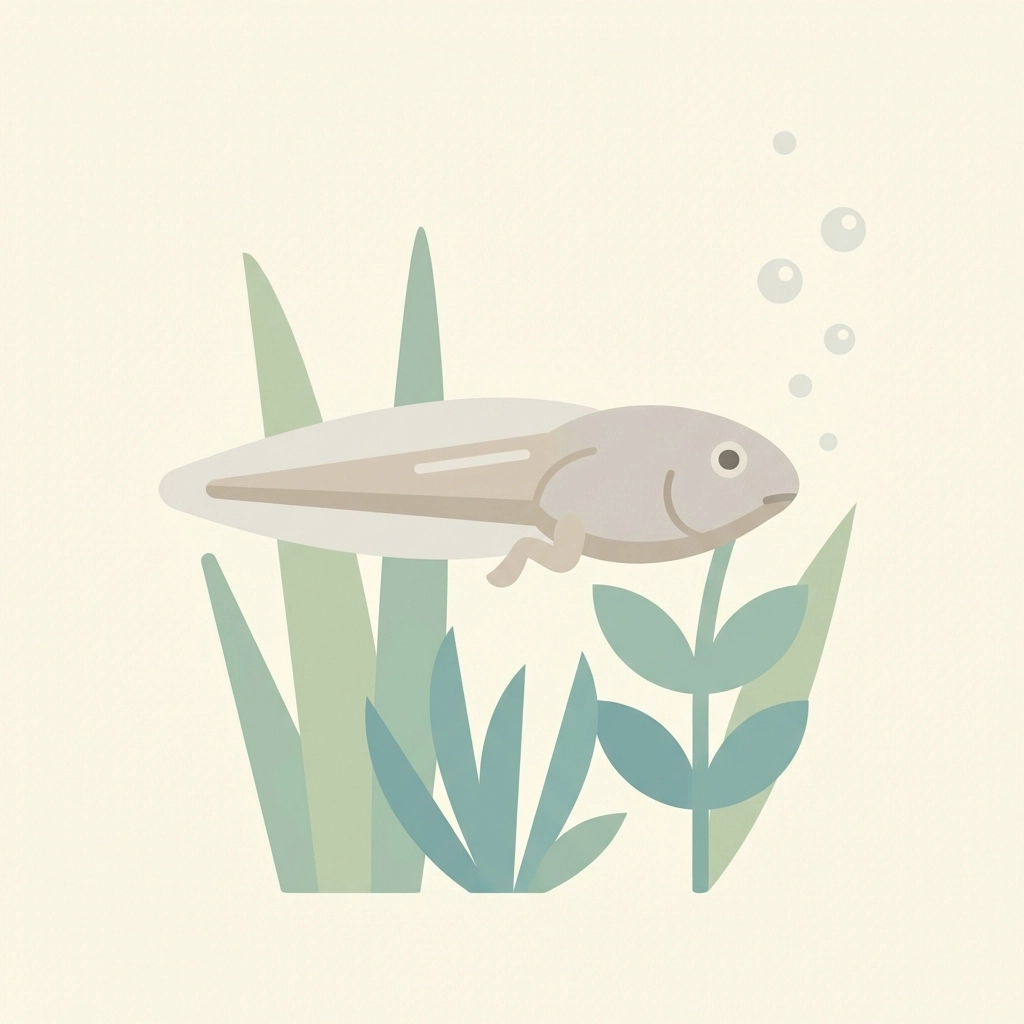
Tadpoles emerge fully aquatic. They breathe through gills. A long tail propels them through water.
The first weeks involve clinging to water plants. Diet consists of algae and plant material.
Around week four, skin covers the gills. Lungs begin forming.
Between weeks six and nine, hind legs appear first. Front legs follow.
Tadpoles can control their own metamorphosis rate. Predator threats speed it up. Cold temperatures slow it down.
Stage 3: Froglets
Week twelve brings visible tail shrinkage. The body reabsorbs the tail for nutrition.
Legs are now fully formed. Diet shifts from plants to insects.
Lungs enlarge enough to support life on land.
The final transformation from tadpole to froglet takes just 24 hours.
Stage 4: Adult Frog
Full maturity arrives in 2-4 years. Adult frogs live primarily on land. They return to water to lay eggs.
The cycle restarts.
What Materials Are Needed for a DIY Observation Pond?
A functional observation pond requires minimal supplies.
Container options:
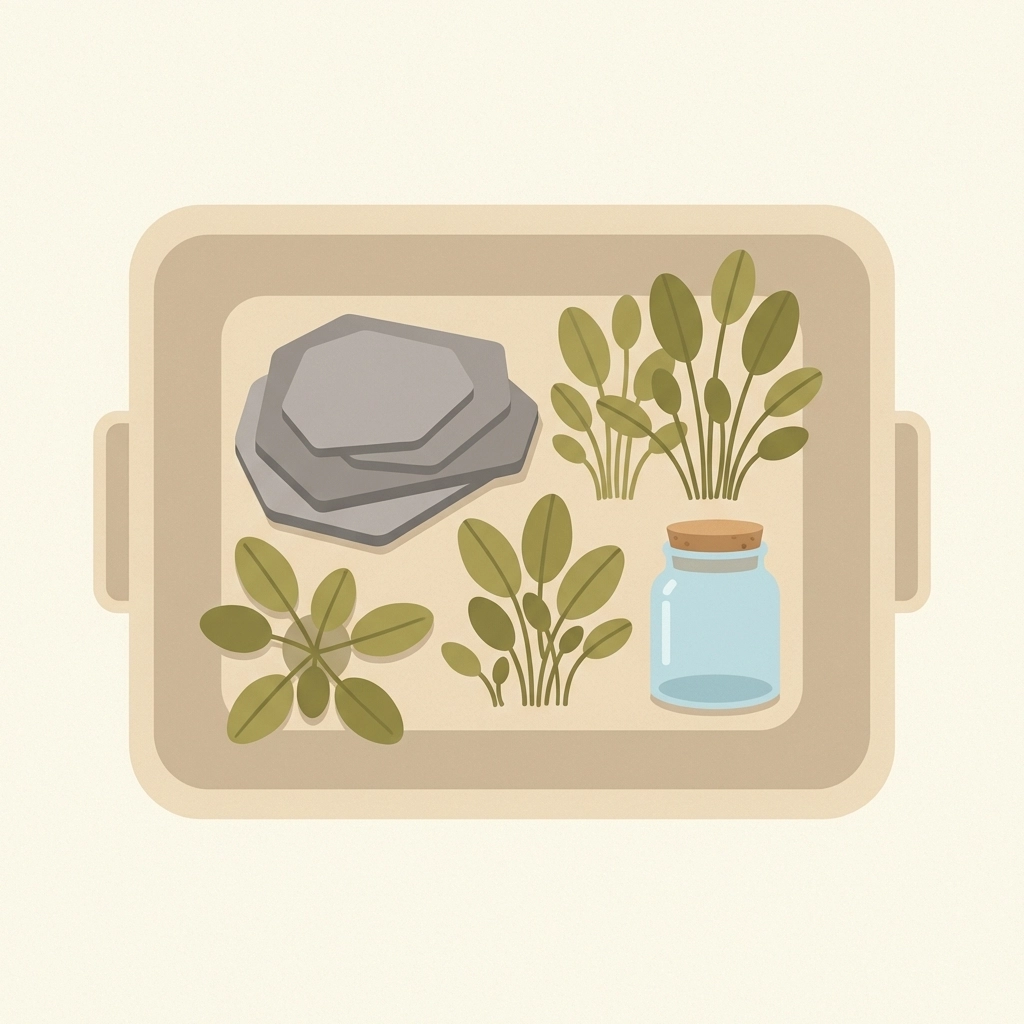
- Large plastic storage bin (20+ gallons)
- Half wine barrel with plastic liner
- Galvanized tub
- Pre-formed pond liner
Essential additions:
- Dechlorinated water or aged rainwater
- Aquatic plants (hornwort, elodea, or duckweed)
- Flat rocks for basking
- Partially submerged branches
- Fine gravel or sand substrate
Observation tools:
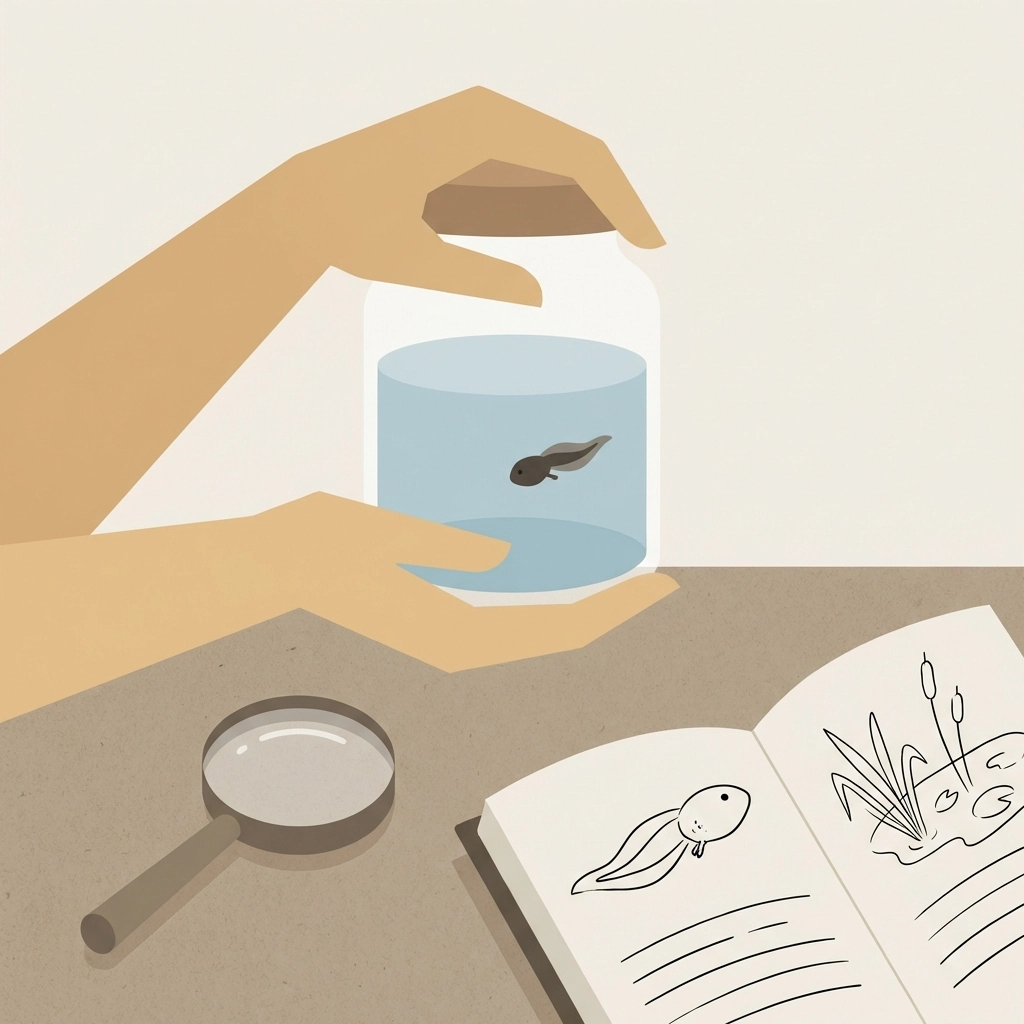
- Magnifying glass
- Clear jar for temporary viewing
- Nature journal
- Ruler for measuring growth
Total cost stays under $30 using recycled containers.
How to Build the Observation Pond Step by Step
Step 1: Choose a Location
Partial shade works best. Full sun overheats the water. Full shade slows development.
Place the container where daily observation is convenient.
Avoid areas with pesticide runoff or heavy foot traffic.
Step 2: Prepare the Container
Clean the container thoroughly. No soap residue. Rinse three times minimum.
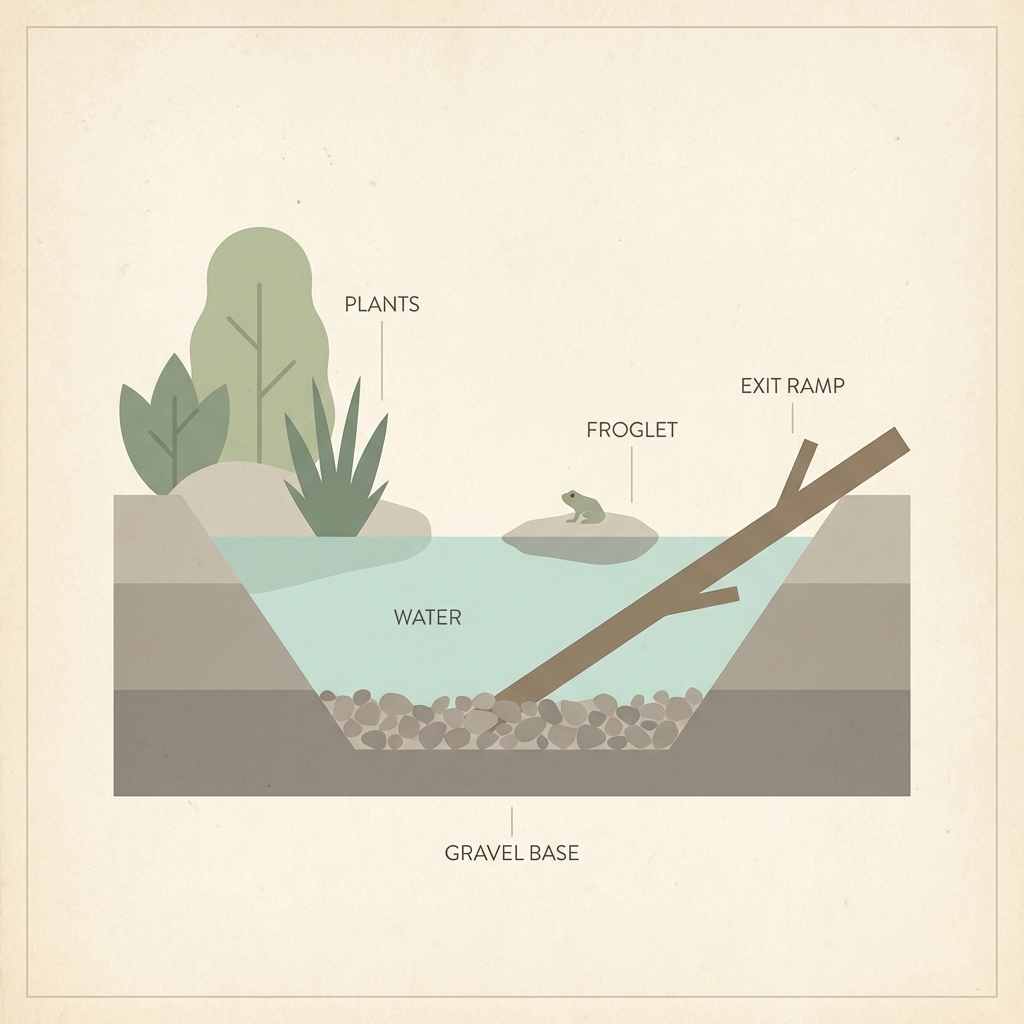
Add 2-3 inches of fine gravel or sand to the bottom.
Position flat rocks at varying heights. Some should break the water surface.
Step 3: Add Water
Tap water contains chlorine. Chlorine kills tadpoles.
Two options exist:
- Fill containers and let sit 24-48 hours for chlorine to dissipate
- Collect rainwater directly
Fill to 8-12 inches deep. Leave room for rocks and plants to emerge.
Step 4: Install Plants
Aquatic plants serve multiple purposes.
They oxygenate water. They provide food for tadpoles. They offer hiding spots from predators.
Anchor rooted plants in the gravel. Float surface plants freely.
A mix of submerged and floating plants creates the healthiest environment.
Step 5: Add Structure
Lean branches against the container edge. These become exit ramps for froglets.
Critical detail: froglets drown without land access.
Position sticks at gentle angles. Multiple exit points prevent crowding.
Step 6: Let the Pond Settle
Wait one week before adding eggs or tadpoles.
Beneficial bacteria need time to establish. Plants need time to root.
The water will likely cloud initially. This clears naturally.
Where Do Frog Eggs Come From?
Local ponds and wetlands contain frogspawn in spring.
Collect a small portion only. Never take entire egg masses.
Some nature centers provide tadpoles for educational purposes. Check local regulations first. Certain frog species have legal protections.
Native species adapt best to local conditions. Avoid pet store frogs for outdoor release.
What Does Daily Observation Look Like?
Consistent observation reveals details that sporadic checking misses.
Daily checklist:
- Water temperature
- Tadpole count
- Visible body changes
- Feeding behavior
- Water clarity
Weekly measurements:
- Body length (excluding tail)
- Tail length
- Leg bud development
A nature journal documents the timeline. Sketches capture details photographs miss. Date every entry.
What Timeline Should Observers Expect?
The complete cycle takes approximately 12-16 weeks from egg to froglet.
Weeks 1-3: Eggs hatch. Tiny tadpoles cling to plants.
Weeks 4-5: Tadpoles swim actively. Growth becomes visible.
Weeks 6-9: Hind legs emerge. Behavior changes.
Weeks 10-12: Front legs appear. Tail shrinkage begins.
Weeks 12-16: Froglets emerge onto land.
Environmental factors cause variation. Warmer temperatures accelerate development. Cooler temperatures extend it.
How to Maintain the Pond During Observation
Water quality determines survival rates.
Remove debris daily. Decaying matter depletes oxygen.
Top off water weekly. Evaporation concentrates waste products.
Partial water changes help. Replace 25% of water every two weeks with aged water.
Never fully empty the pond. Beneficial bacteria live in the substrate.
Feeding requirements change throughout development. Early tadpoles eat algae and plant matter. Later stages accept blanched lettuce or commercial tadpole food.
Overfeeding causes water quality problems. Small amounts every other day suffice.
What Happens When Froglets Are Ready?
Froglets climbing out of the water signal readiness for release.
Return them to the collection site if possible. Native habitat offers the best survival odds.
Release during evening hours. Cooler temperatures reduce stress. Moisture levels are higher.
Avoid releasing during extreme weather. No releases during drought, flood, or temperature extremes.
The observation pond remains useful for future cycles. Drain and store containers for winter in cold climates. Restart the process each spring.
Why This Project Matters
Direct observation builds understanding that reading cannot replicate.
Metamorphosis demonstrates adaptation. Survival strategies become visible. Ecosystem connections become clear.
A single frog pond teaches biology, responsibility, patience, and attention to detail.
The transformation from aquatic gill-breather to land-dwelling lung-breather ranks among nature's most complete redesigns.
Witnessing it firsthand changes how young naturalists see the world.