



Creature cards turn farm animal sightings into collectible art projects.
Each card documents one animal. Each design reflects what the observer noticed. The result is a growing deck of handmade wildlife records.
This craft combines observation skills with creative expression. No special materials required. Just paper, basic supplies, and access to farm animals.
What Are Creature Cards?
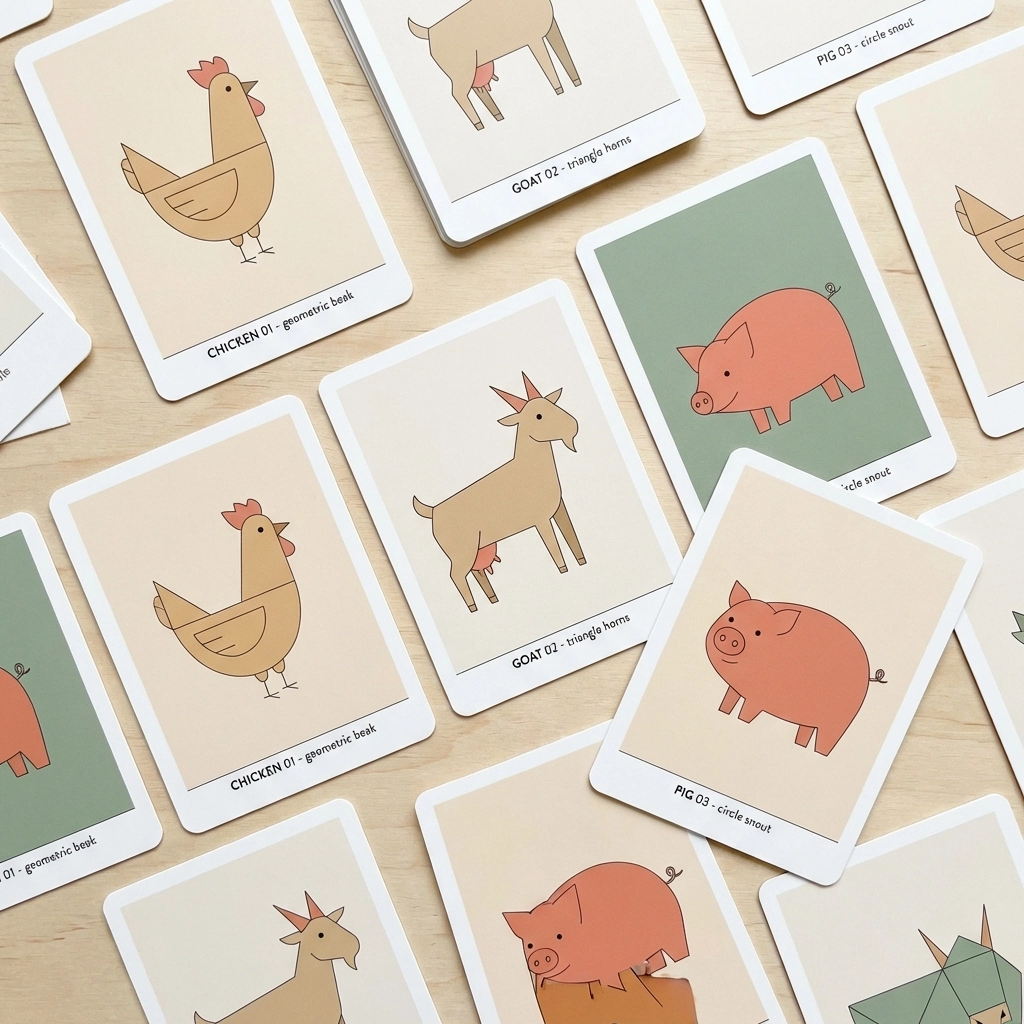
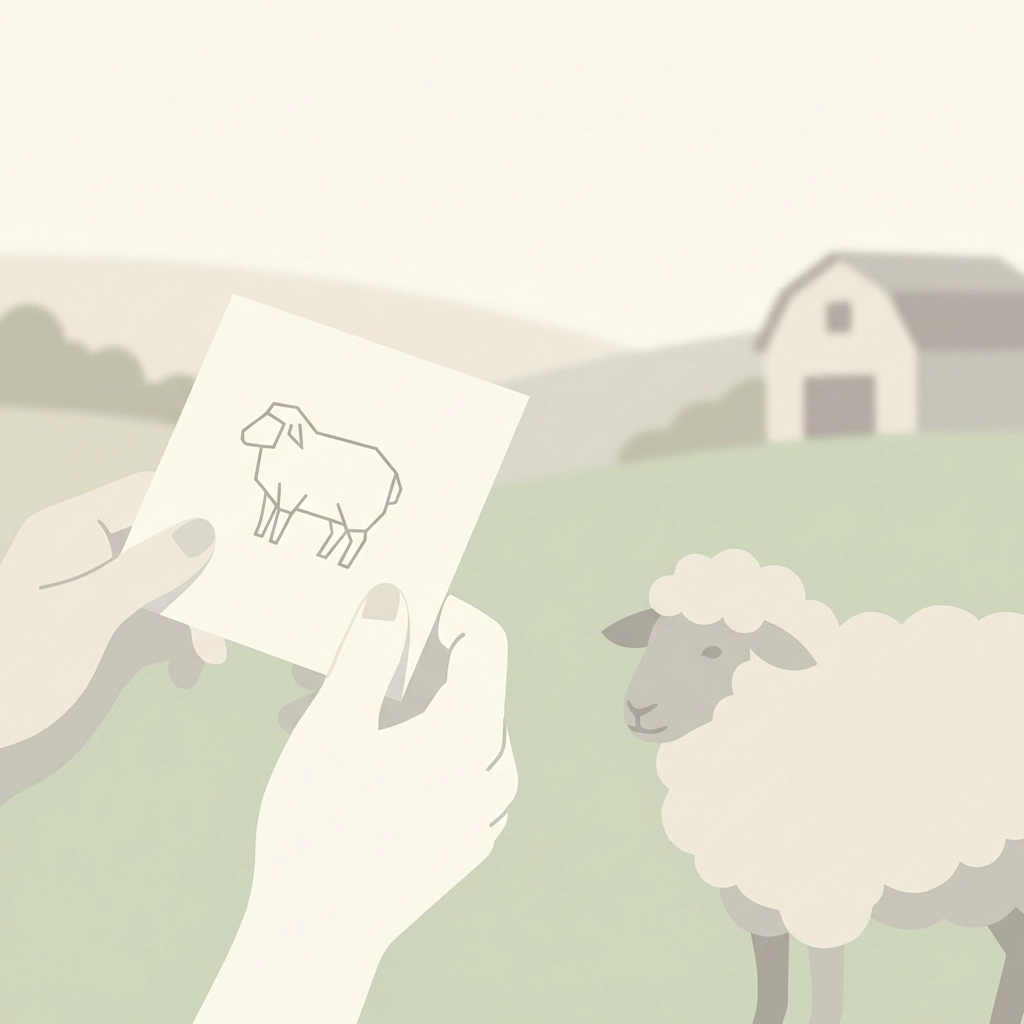
Creature cards are small, hand-designed cards that document individual animals.
Each card features:
- A drawing or illustration of the animal
- The animal’s name or species
- Key physical traits observed
- Date and location of sighting
- Any notable behaviors witnessed
The format stays consistent. The content changes with each new creature spotted.
Think of them as personal field guides. Built one observation at a time.
Why Document Farm Wildlife This Way?
Traditional nature journals work. Creature cards work differently.
Cards are portable. They stack. They shuffle. They display.
The card format encourages:
- Focused observation : One animal per card forces attention to detail
- Pattern recognition : Sorting cards reveals similarities between species
- Collection building : Each new sighting adds to a growing set
- Easy reference : Cards spread out faster than flipping journal pages
Farm animals offer ideal subjects. They stay in predictable locations. They exhibit distinct behaviors. They vary enough to keep the activity interesting.
Chickens. Goats. Pigs. Horses. Sheep. Ducks. Each species fills multiple cards as individual animals get documented.
What Materials Work Best?
Supplies stay simple. Most households already have what’s needed.
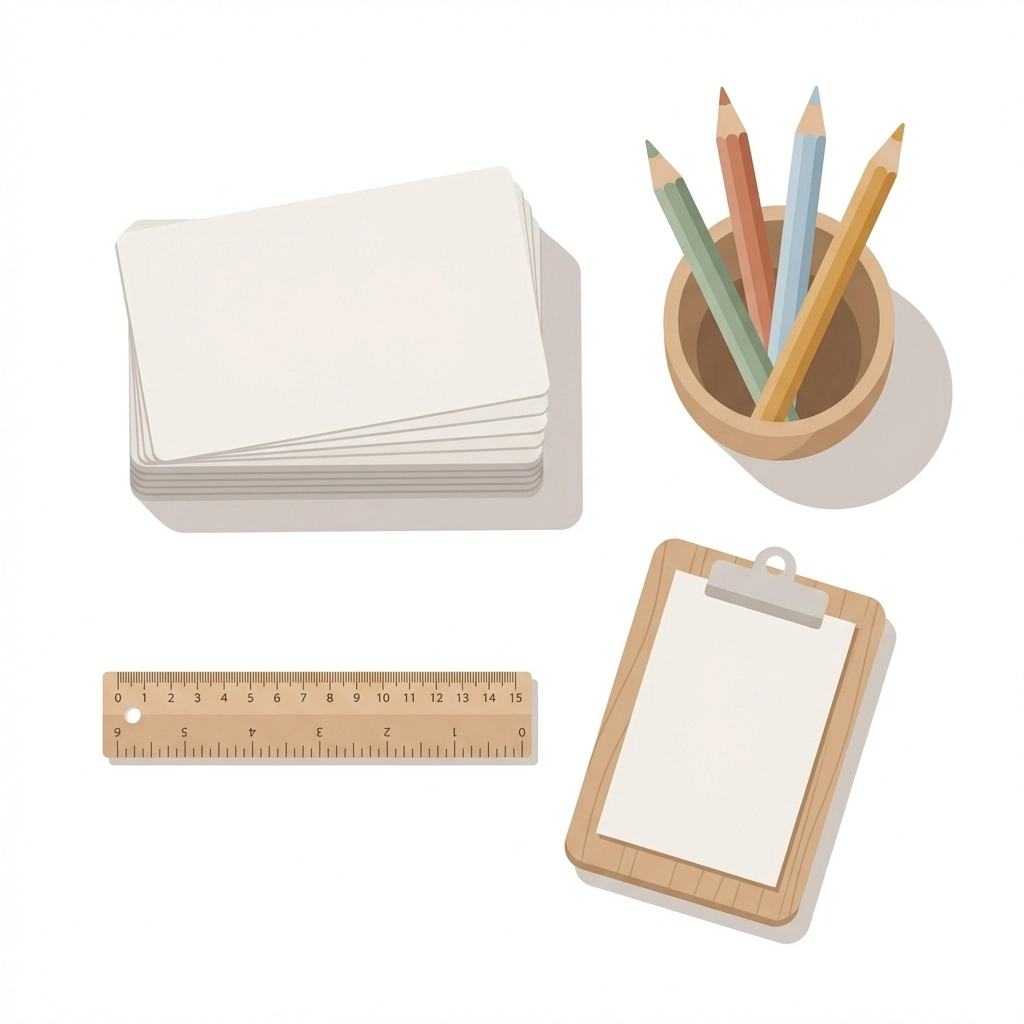
Essential materials:
- Blank index cards or cardstock cut to size
- Pencils for sketching
- Colored pencils or markers for finishing
- A ruler for consistent borders
Optional additions:
- Watercolor pencils for textured effects
- Fine-tip pens for outlining
- Hole punch and ring for card storage
- Small clipboard for field sketching
Standard index cards (3×5 inches) work well. Larger cards (4×6 inches) allow more detail. The size stays consistent within each collection.
Cardstock holds up better than paper. Laminating finished cards protects them from outdoor conditions.
How Does the Card Layout Work?
Consistency matters. A repeating structure makes each card readable and comparable.
Recommended layout:
- Top section: Animal illustration (takes up 50-60% of card space)
- Middle section: Species name and individual identifier
- Bottom section: Observation data in small text
Observation data to include:
- Date spotted
- Time of day
- Weather conditions
- Location on farm
- Behavior observed
- Distinctive markings
Leave a thin border around all edges. This frames the content and prevents cramped designs.
Some collectors add a numbering system. Card #001, #002, and so on. This tracks collection growth over time.
What Details Matter When Observing Farm Animals?
Good creature cards start with good observation.
Physical traits to notice:
- Overall body shape and size
- Color patterns and markings
- Eye color
- Ear shape and position
- Tail length and movement
- Leg structure
- Any unique features (spots, scars, tufts)
Behavioral traits to record:
- Movement patterns
- Sounds made
- Feeding habits
- Social interactions
- Reactions to surroundings
Spending five minutes watching before drawing improves accuracy. Quick glances miss details. Sustained observation catches them.
How Do Illustration Styles Affect the Cards?
No single style is correct. Different approaches serve different purposes.
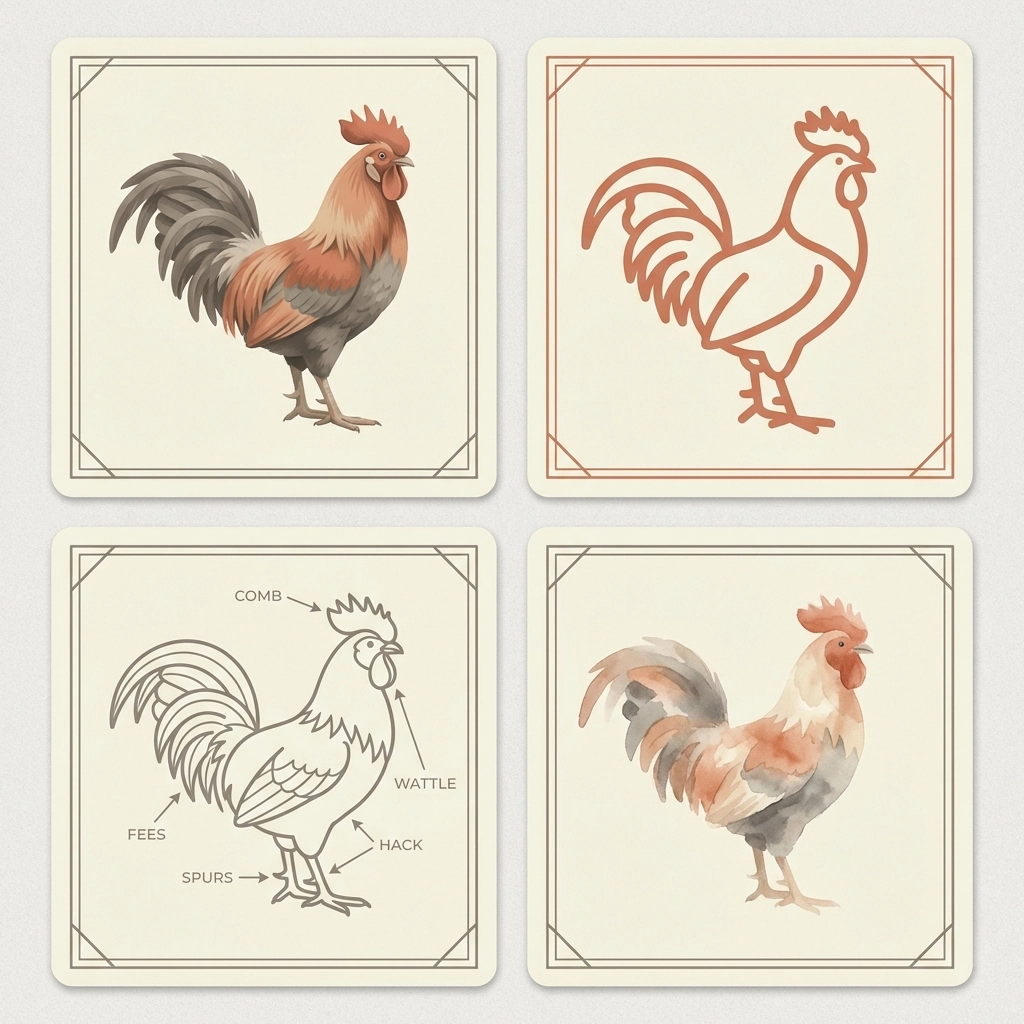
Realistic style:
- Focuses on accurate proportions
- Uses shading for dimension
- Requires more time per card
- Best for detailed species study
Simplified style:
- Emphasizes key identifying features
- Uses bold outlines and flat color
- Faster to complete
- Best for building large collections quickly
Diagrammatic style:
- Labels body parts directly on illustration
- Includes arrows pointing to notable features
- Educational in purpose
- Best for learning animal anatomy
Mixing styles within one collection is fine. The animal dictates the approach. A particularly striking rooster might deserve realistic treatment. A quick duck sighting gets a simplified sketch.
What Makes Farm Animals Good Subjects?
Farm animals offer advantages over wild wildlife.
Accessibility: They stay in enclosed areas. No tracking required.
Repeatability: The same animals appear daily. Multiple observation sessions per subject are possible.
Variety within species: A flock of chickens contains many individuals. Each bird gets its own card.
Behavioral diversity: Feeding time, rest periods, and social interactions all provide different documentation opportunities.
Safety: Supervised farm visits pose minimal risk compared to wilderness observation.
Common farm animals for creature cards:
- Chickens (endless variety in breeds and personalities)
- Ducks and geese
- Goats
- Sheep
- Pigs
- Horses and ponies
- Cattle
- Rabbits
- Turkeys
- Donkeys
Visiting farms, petting zoos, or agricultural fairs expands the collection beyond local options.
How Should Finished Cards Be Stored?
Storage protects the collection and keeps it usable.
Options for organization:
- Ring-bound: Punch holes in corners, thread onto a binder ring
- Box storage: Small recipe boxes or photo boxes work perfectly
- Album pages: Trading card sleeves hold standard-sized cards
- Display boards: Cork boards showcase favorite specimens
Sorting systems help locate specific cards later.
Sorting methods:
- By species (all chickens together, all goats together)
- By date observed
- By location
- By card number
- By color of animal
Divider cards between sections speed up navigation. Label dividers clearly.
What Variations Keep the Activity Fresh?
The basic format adapts to maintain interest over time.
Seasonal cards: Document how the same animal looks across different seasons. Winter coat versus summer coat. Molting patterns. Behavioral shifts.
Behavior-specific cards: One card per behavior observed. A chicken scratching. A goat climbing. A pig wallowing. Same animal, different cards.
Comparison cards: Side-by-side layouts showing two similar animals. Spot the differences.
Habitat cards: Document where the animal lives rather than the animal itself. Coop interiors. Pasture features. Water sources.
Sound cards: Instead of visual details, record audio observations. Written descriptions of calls, grunts, bleats.
Rotating between variations prevents repetition from setting in.
How Does This Connect to Broader Observation Skills?
Creature cards build transferable abilities.
Attention to detail improves with practice. Small differences become noticeable. Patterns emerge.
Visual memory strengthens. Drawing from observation requires holding mental images.
Patience develops naturally. Good cards require stillness and waiting.
Scientific thinking takes root. Hypothesis, observation, documentation, comparison. The process mirrors formal research methods without the formality.
These skills apply beyond farm animals. Nature walks. Travel documentation. Any context requiring careful looking benefits from creature card practice.
What’s the Simplest Way to Start?
Begin with one card. One animal. One observation session.
First session checklist:
- Bring three blank cards (extras for mistakes)
- Bring a pencil and one or two colored pencils
- Choose one animal to observe
- Watch for five minutes before drawing
- Complete the illustration
- Add observation notes
- Date the card
That’s it. One card exists. The collection has started.
Second sessions build momentum. Third sessions establish habit. By card ten, the process feels natural.
No pressure for perfection. Early cards document early skills. Later cards show growth. Both have value.
Creature cards turn passive encounters with farm animals into active documentation projects. The animals stay the same. The observation deepens with each new card added to the deck.