



Raised beds produce juicier tomatoes because the soil warms faster, drains better, and stays loose throughout the growing season.
The controlled environment means fewer weeds competing for nutrients.
Children can participate in every stage.
From filling the bed to harvesting ripe fruit.
This guide covers the complete process.
Why Do Raised Beds Work Better for Tomatoes?
Raised beds warm 2-3 weeks earlier than ground soil.
Tomatoes demand warm roots.
Cold soil stunts growth and delays fruit production.
A raised structure elevates the growing medium above the cold, compacted ground.
Water drains efficiently.
Roots never sit in soggy conditions.
The contained space also simplifies crop rotation tracking.
Children can help map out planting zones each year.
This prevents disease buildup in the soil.
How Deep Should a Raised Bed Be for Tomatoes?
Minimum depth is 12 inches.
Optimal depth is 16-18 inches.
Tomato roots extend 24-36 inches when healthy.
Deeper beds allow roots to reach down and anchor strong plants.
Shallow beds restrict root development.
Plants become dependent on frequent watering.
For families building new beds, 18 inches provides flexibility for other vegetables too.
What Is the Best Soil Mix for Raised Bed Tomatoes?
The ideal blend combines three components:
- 40% quality topsoil , provides structure and minerals
- 40% compost , delivers organic matter and beneficial microbes
- 20% coarse material , perlite or aged wood chips for drainage
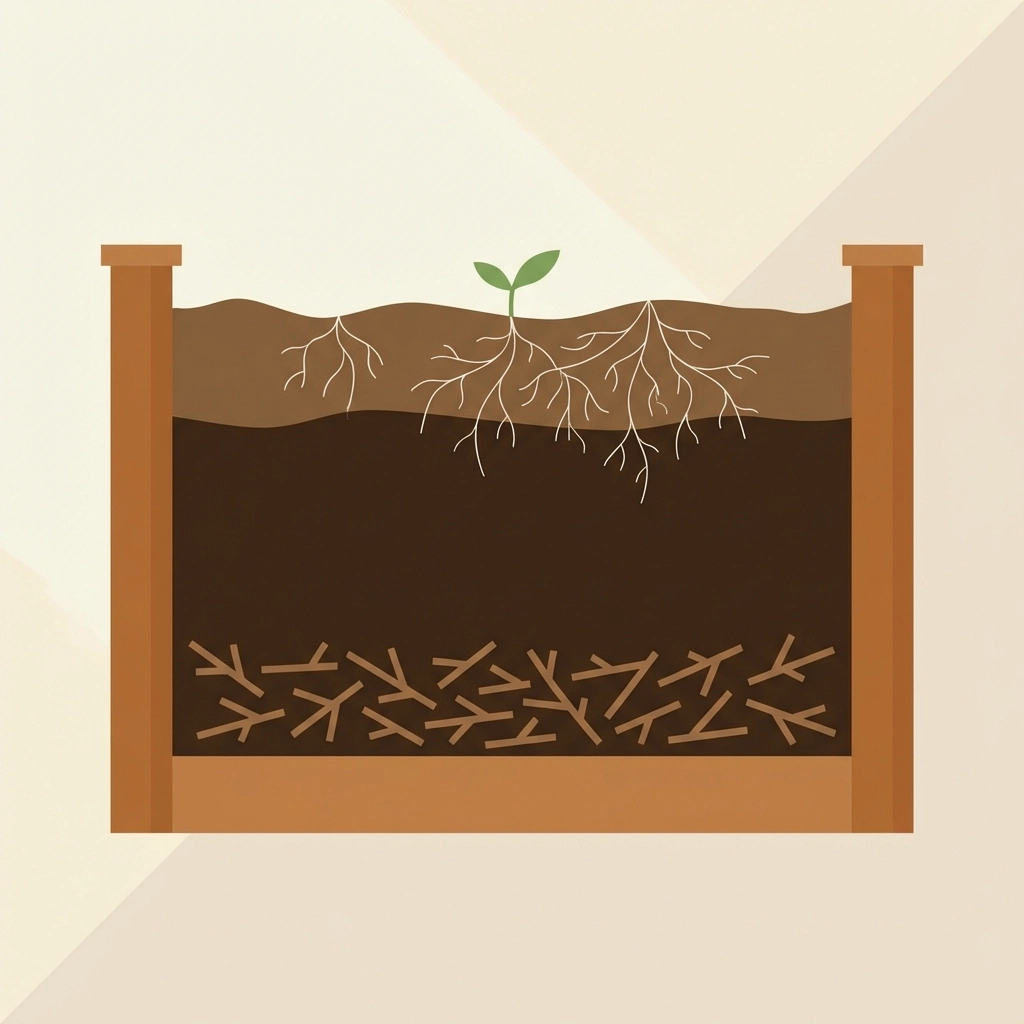
Layer the bed strategically:
| Layer | Material | Purpose |
|---|---|---|
| Bottom | Coarse branches, wood chips | Drainage and aeration |
| Middle | Aged compost | Water retention and nutrients |
| Top | Vegetable-grade soil mix | Root development zone |
Soil pH matters.
Tomatoes thrive between 6.0 and 6.8.
Test soil before planting each season.
Soil testing kits work well as a hands-on science activity for children.
They learn to measure, record, and interpret data.
Where Should a Raised Bed for Tomatoes Be Located?
Full sun is non-negotiable.
Tomatoes require 6-8 hours of direct sunlight daily.
South-facing locations receive maximum exposure in the Northern Hemisphere.
Avoid placement near large trees.
Root competition and shade reduce yields.
Also avoid areas where water pools after rain.
Even raised beds struggle with poor site drainage beneath them.
Children can help identify the sunniest spots by observing shadow patterns throughout a day.
Should Tomatoes Be Started from Seed or Seedling?
Both approaches work.
Each has distinct advantages.
Starting from seed:
- Lower cost per plant
- Access to rare and heirloom varieties
- Requires 6-8 weeks of indoor growing before transplant
- Children witness the entire germination process
Starting from seedlings:
- Faster path to harvest
- No indoor growing equipment needed
- Limited variety selection at nurseries
- Plants are already established
For families new to gardening, seedlings reduce variables.
For families seeking deeper learning, seeds provide more teaching opportunities.

When Is the Right Time to Plant Tomatoes in a Raised Bed?
Plant after the last frost date when nighttime temperatures remain at or above 50°F (10°C).
Seedlings should be at least 4 inches tall.
Hardening off is essential.
Move seedlings outdoors for 1-2 hours daily.
Gradually increase exposure over 7-10 days.
This acclimates plants to wind, sun intensity, and temperature fluctuation.
Skipping this step shocks transplants.
Growth stalls.
Some plants die.
Children can take responsibility for the hardening schedule.
It teaches consistency and observation.
How Far Apart Should Tomato Plants Be Spaced?
Space plants 18-24 inches apart.
This allows air circulation.
Crowded plants trap moisture.
Moisture breeds fungal disease.
In a standard 4×4 foot raised bed, plant one tomato in each corner.
Four plants fit comfortably.
Indeterminate varieties (those that grow continuously) need the full 24-inch spacing.
Determinate varieties (those that grow to a set size) can manage with 18 inches.
What Support Structures Work Best for Raised Bed Tomatoes?
Install supports at planting time.
Waiting damages roots.
Plants grow fast.
Late installation disturbs established root systems.
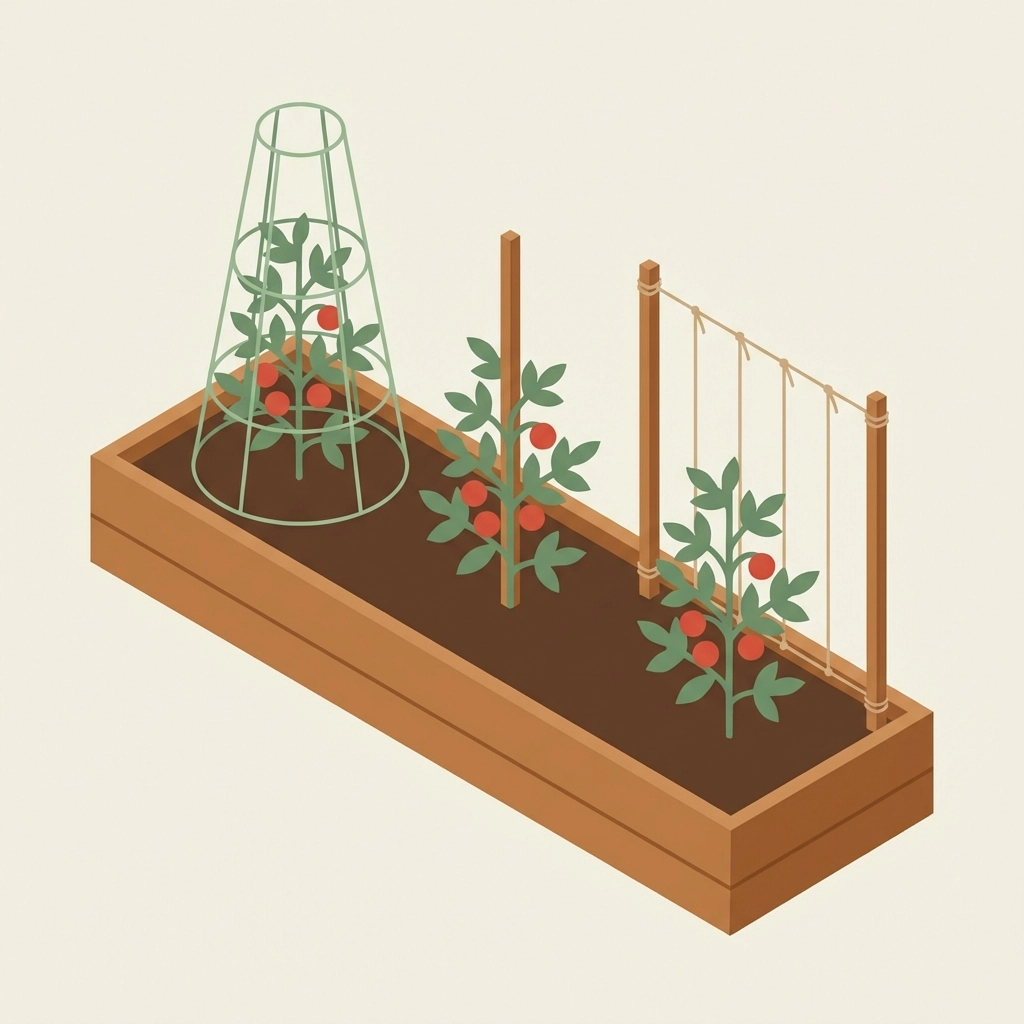
Common support options:
- Tomato cages , simple, self-contained, suitable for determinate varieties
- Stakes , single poles requiring regular tying as plants grow
- Trellises , ideal for indeterminate varieties, maximizes vertical space
- Florida weave , string system between stakes, efficient for multiple plants
Children can help press cage legs into soil one at a time.
Slow, careful insertion avoids bending metal or damaging stems.
How Should Raised Bed Tomatoes Be Watered?
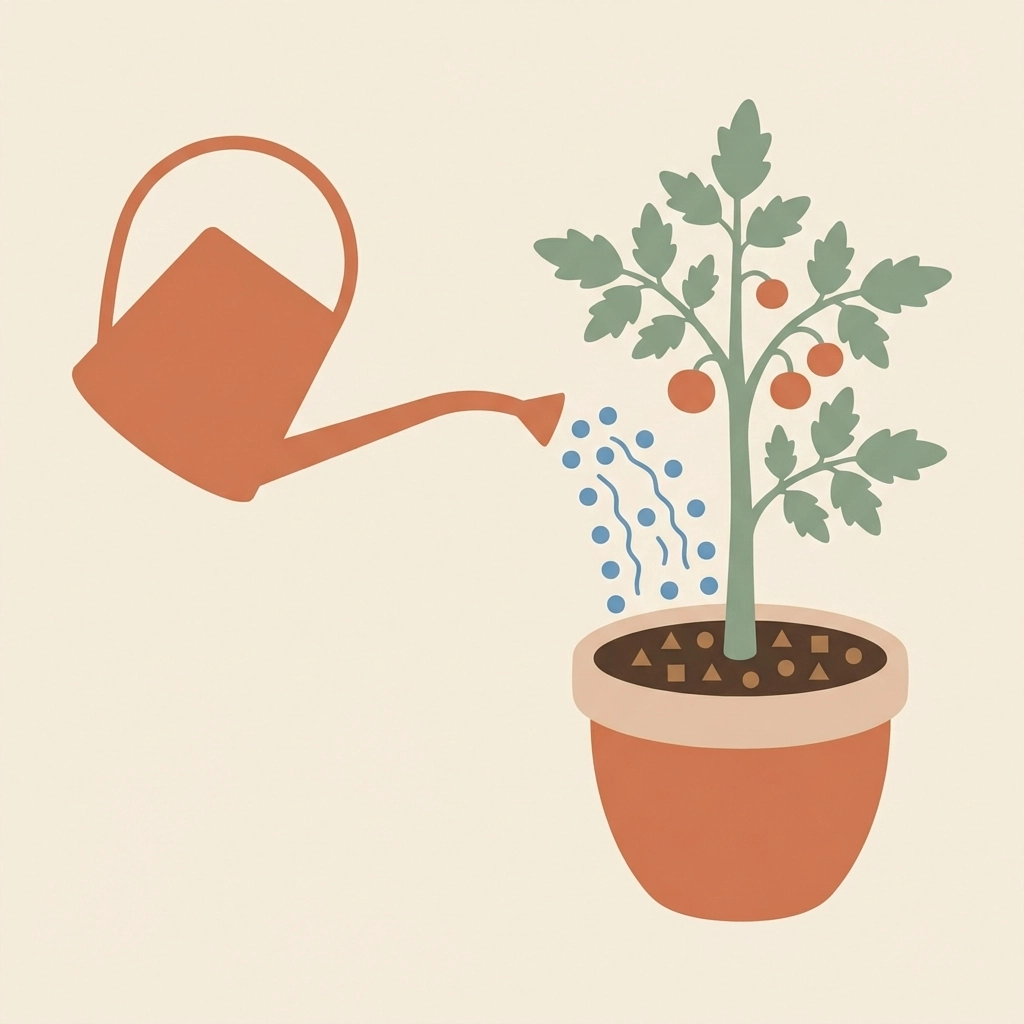
Water at soil level only.
Never water from above.
Wet foliage invites disease.
Fungal spores spread rapidly on damp leaves.
Watering guidelines:
- Provide 1-2 inches of water per week
- Water deeply and less frequently
- Morning watering allows soil surface to dry by evening
- Mulch retains moisture and reduces watering needs
Consistent moisture prevents fruit cracking.
Irregular watering causes uneven growth.
Tomato skins split when water intake spikes after dry periods.
Watering becomes a good supervised task for children.
They learn the difference between surface dampness and deep soil moisture.
What Causes Blossom End Rot and How Is It Prevented?
Blossom end rot results from calcium deficiency during early fruit development.
A dark, sunken spot appears on the bottom of the tomato.
The fruit is ruined.
Prevention starts before planting:
- Add crusite shell or gypsum to soil at bed preparation
- Maintain consistent watering schedules
- Avoid over-fertilizing with nitrogen (this blocks calcium uptake)
- Mulch to stabilize soil moisture levels
Blossom end rot is not a disease.
It is a nutritional disorder.
Once symptoms appear on a fruit, that fruit cannot recover.
Remove affected tomatoes so the plant redirects energy.
What Other Problems Affect Raised Bed Tomatoes?
Common issues and solutions:
| Problem | Cause | Fix |
|---|---|---|
| Yellowing lower leaves | Nitrogen deficiency | Apply balanced fertilizer |
| Wilting despite moist soil | Root rot or wilt disease | Remove plant, improve drainage |
| Small holes in leaves | Hornworms or flea beetles | Hand-pick pests, use row covers |
| Stunted growth | Cold soil or root damage | Wait for warmer weather, handle roots gently |
| Cracked fruit | Irregular watering | Maintain consistent moisture |
Crop rotation reduces recurring problems.
Avoid planting tomatoes in the same bed location for 2-3 consecutive years.
Pests and diseases overwinter in soil.
Moving crops breaks the cycle.
How Does Pruning Improve Tomato Yield?
Pruning directs plant energy toward fruit production.
Unpruned plants produce excessive foliage.
Foliage consumes resources.
Less energy reaches developing tomatoes.
Pruning basics:
- Remove suckers (small shoots growing between main stem and branches)
- Pinch suckers when small, before they exceed 2 inches
- Remove lower leaves that touch soil to prevent disease splash
- Limit indeterminate plants to 1-2 main stems for larger fruit
Children can learn to identify suckers.
Pinching them off requires no tools.
It becomes a regular garden task they can own.
What Kid-Friendly Activities Support Tomato Growing?
Gardening teaches patience, biology, and responsibility.
Age-appropriate tasks:
- Ages 3-5: Watering with supervision, dropping seeds into holes, picking ripe fruit
- Ages 6-9: Soil testing, measuring plant height weekly, identifying pests, recording observations
- Ages 10+: Planning crop rotation, calculating spacing, managing the watering schedule independently
Learning opportunities:
- Seed germination demonstrates plant life cycles
- Soil pH testing introduces basic chemistry
- Growth measurement builds math skills
- Pest identification develops observation habits
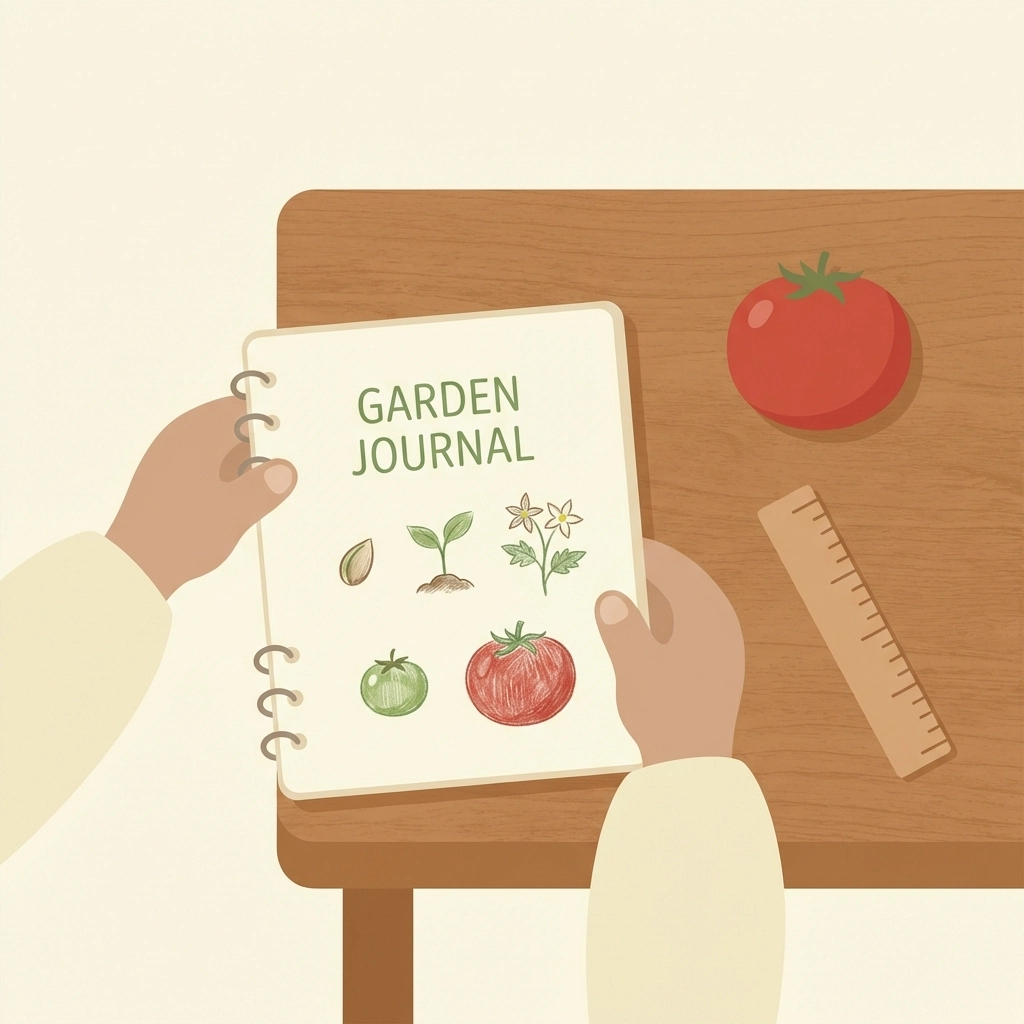
Create a simple garden journal.
Children draw plants at different stages.
They record first flower date, first fruit date, and total harvest count.
Data collection becomes tangible when the results are edible.
What Happens at Harvest Time?
Tomatoes are ready when fully colored and slightly soft to gentle pressure.
Ripe tomatoes detach easily from the vine.
Forcing removal damages the plant.
Harvest in morning hours.
Fruit holds firmness better when picked before afternoon heat.
Store at room temperature for best flavor.
Refrigeration degrades texture and taste.
Children take pride in eating food they grew.
This single experience often shifts attitudes toward vegetables entirely.
The Summary
Raised bed tomatoes thrive because the environment is controlled.
Soil warms early.
Drainage stays consistent.
Pests and diseases are easier to manage.
Children participate meaningfully at every stage.
The process teaches science, math, patience, and cause-and-effect thinking.
The reward is fresh, homegrown fruit that tastes better than anything from a store.
Start with one raised bed.
Four tomato plants.
One growing season.
The results speak for themselves.