




The best way to grow tomatoes depends on available space, time commitment, and growing goals.
Soil growing works best for beginners and families wanting a traditional gardening experience.
Hydroponic growing suits those seeking faster harvests, year-round production, and maximum control over plant nutrition.
Both methods produce excellent tomatoes when executed correctly.
This guide covers everything needed to succeed with either approach.
Why Grow Tomatoes at Home?
Homegrown tomatoes taste different from store-bought varieties.
Commercial tomatoes prioritize shipping durability over flavor.
Backyard and indoor tomatoes prioritize taste.
The difference is significant.
Growing tomatoes teaches children where food originates.
The process spans weeks, building patience and observation skills.
Families harvest together.
Kids eat vegetables they helped grow.
Tomatoes also provide excellent nutritional value:
- High in vitamin C
- Rich in lycopene
- Good source of potassium
- Low in calories
One tomato plant produces 10-30 pounds of fruit per season.
A family of four needs only 4-6 plants for fresh eating.
What Tomato Varieties Work Best for Beginners?
Determinate varieties work best for new growers.
These plants grow to a set height, produce fruit within a concentrated window, then decline.
Less pruning required.
Easier to manage.
Recommended determinate varieties:
- Roma , paste tomatoes, disease resistant
- Celebrity , medium slicers, widely adaptable
- Bush Early Girl , compact plants, early harvest
- Patio Princess , container-friendly, small spaces
Indeterminate varieties continue growing and producing until frost kills the plant.
More fruit overall.
More maintenance required.
Recommended indeterminate varieties:
- Cherokee Purple , heirloom flavor, purple-red color
- Sun Gold , orange cherry tomatoes, extremely sweet
- Better Boy , classic red slicers, reliable producers
- Brandywine , heirloom, exceptional taste
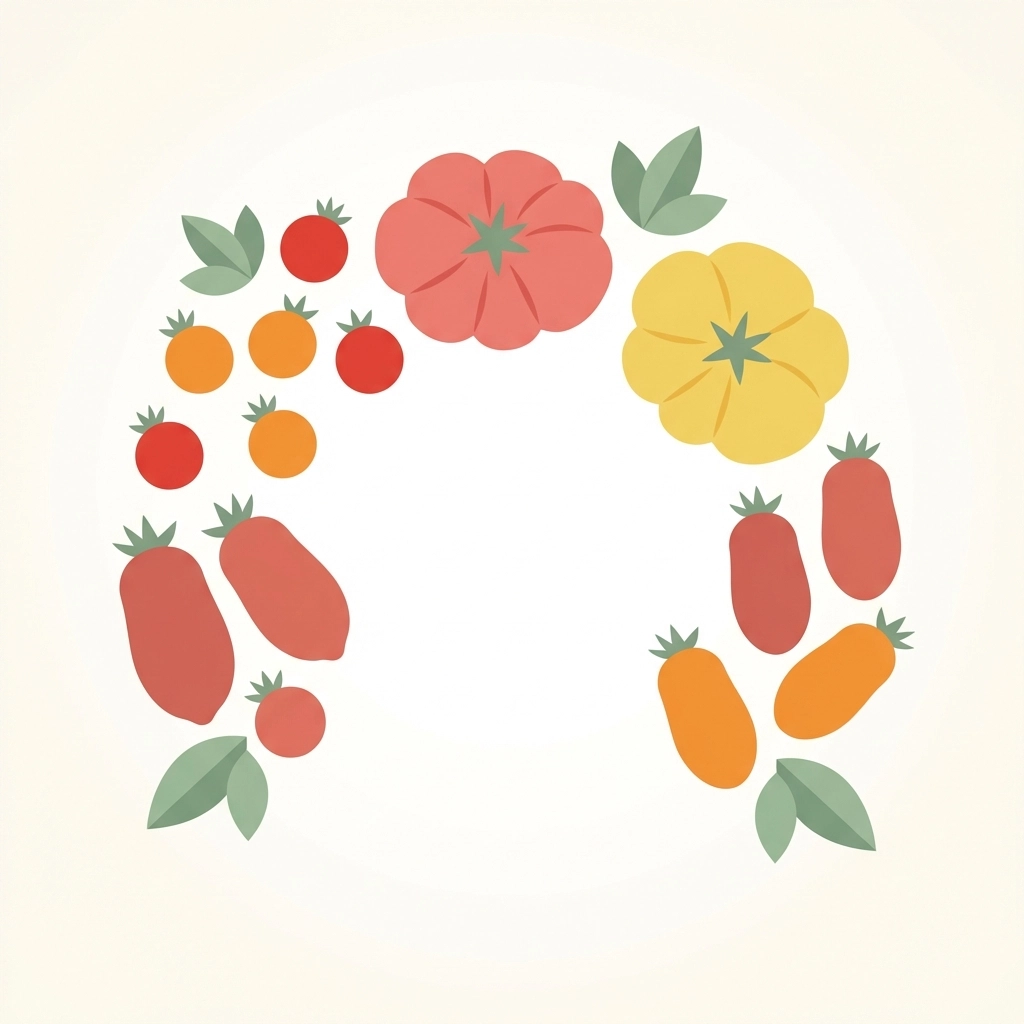
For indoor growing, compact varieties perform best:
- Tiny Tim , 12-18 inches tall
- Red Robin , 6-12 inches tall
- Tumbling Tom , trailing habit, good for hanging baskets
- Micro Tom , smallest variety, 6-8 inches tall
For hydroponic systems, cherry and grape tomatoes excel:
- Sweet Million , prolific cherry producer
- Juliet , grape tomato, crack-resistant
- Sungold , performs well in controlled environments
- Sakura , bred for greenhouse/hydro production
How Do Tomato Seeds Germinate?
Tomato seeds germinate in 5-10 days under proper conditions.
Temperature matters most.
Seeds require 70-85°F soil temperature for optimal germination.
Below 60°F, germination slows dramatically or fails entirely.
Germination requirements:
- Soil temperature: 70-85°F
- Moisture: consistently damp, never waterlogged
- Depth: ¼ inch below soil surface
- Light: not required until emergence
Step-by-step seed starting:
- Fill containers with seed-starting mix
- Moisten the mix thoroughly before planting
- Place 2-3 seeds per cell at ¼ inch depth
- Cover loosely with plastic wrap or humidity dome
- Position on heat mat set to 75-80°F
- Check moisture daily
- Remove cover immediately upon emergence
- Thin to one seedling per cell after first true leaves appear
Common germination mistakes:
- Planting too deep
- Soil too cold
- Overwatering causing rot
- Using garden soil instead of sterile seed mix
Garden soil contains pathogens harmful to seedlings.
Always use fresh, bagged seed-starting mix.
What Happens After Seeds Sprout?
Seedlings require different conditions than germinating seeds.
Light becomes critical.
Tomato seedlings need 14-16 hours of light daily.
Window light rarely suffices.
Supplemental grow lights positioned 2-4 inches above seedlings produce stocky, strong plants.
Post-germination care:
- Reduce temperature to 65-70°F
- Provide strong air circulation
- Water when top ½ inch of soil dries
- Begin fertilizing at half-strength after first true leaves
- Brush hands across seedlings daily to strengthen stems
True leaves versus seed leaves:
The first leaves that emerge are cotyledons (seed leaves).
Round, simple, identical on all tomato plants.
True leaves emerge next.
Serrated edges, distinct tomato shape.
Fertilizing begins when true leaves appear.
How Long Before Transplanting Seedlings?
Tomato seedlings require 6-8 weeks of indoor growth before transplanting outdoors.
Transplanting too early stunts growth.
Transplanting too late creates rootbound plants.
Signs seedlings are ready for transplant:
- 6-10 inches tall
- Stem thickness of a pencil
- 4-6 sets of true leaves
- Roots visible at container drainage holes
- Outdoor temperatures consistently above 50°F at night
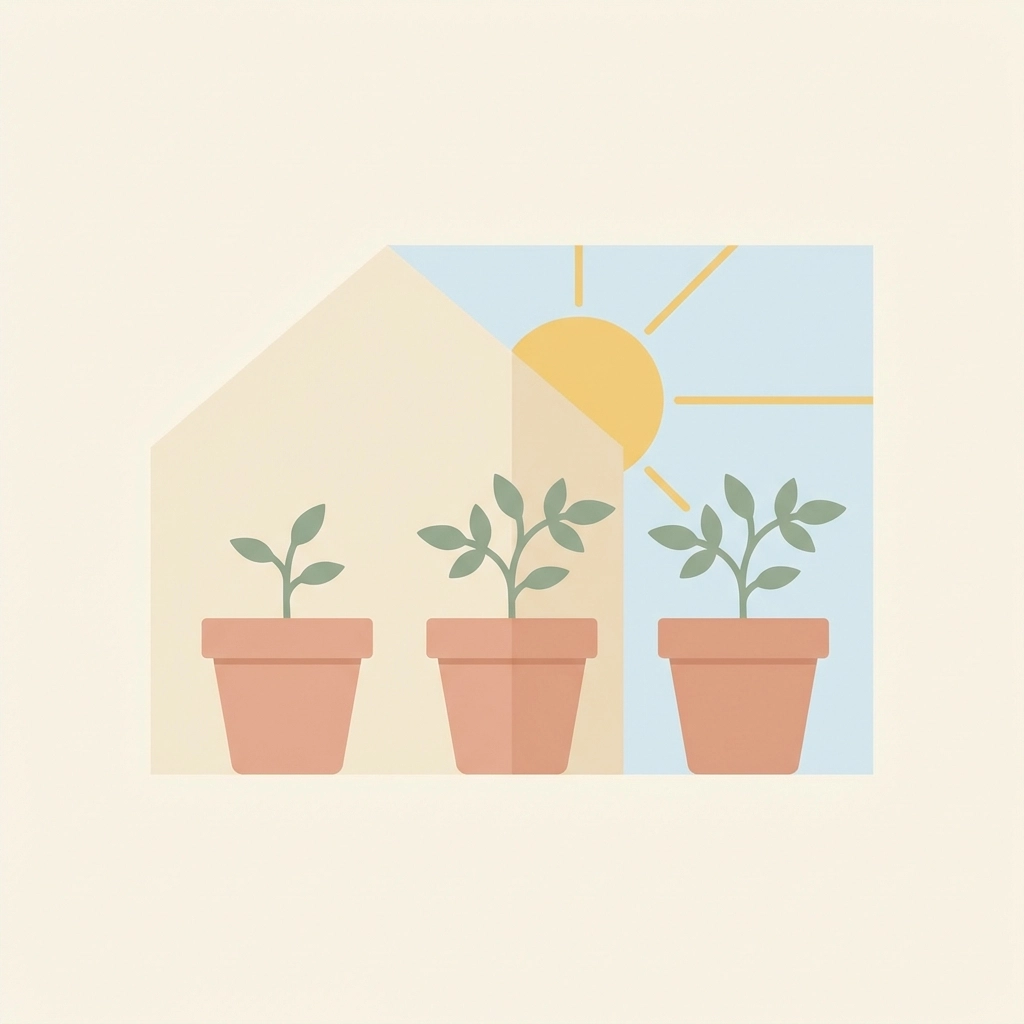
Hardening off is mandatory.
Indoor seedlings cannot handle outdoor conditions immediately.
Sun, wind, and temperature fluctuations shock unhardened plants.
Hardening off process:
- Day 1-2: Place seedlings outdoors in shade for 2 hours
- Day 3-4: Increase to 4 hours, introduce filtered sunlight
- Day 5-6: Increase to 6 hours, some direct morning sun
- Day 7-8: Full day outdoors, some direct afternoon sun
- Day 9-10: Leave outdoors overnight if temperatures permit
Plants that skip hardening off often die or suffer severe setback.
How Does Soil Growing Work for Tomatoes?
Soil growing remains the most common tomato cultivation method.
Plants grow in ground, raised beds, or containers filled with growing media.
Roots access nutrients through soil biology and added fertilizers.
Soil growing advantages:
- Lower startup cost
- More forgiving of mistakes
- Natural soil microbiome supports plant health
- Familiar process for most gardeners
- Works outdoors or indoors with sufficient light
Soil growing challenges:
- Soil-borne diseases accumulate over time
- Watering requires more attention
- Nutrient availability depends on soil pH and composition
- Slower growth compared to hydroponics
- Weather dependent when grown outdoors
What Soil Do Tomatoes Need?
Tomatoes perform best in well-draining soil rich in organic matter.
Ideal soil characteristics:
- pH between 6.2 and 6.8
- Loose, crumbly texture
- High organic matter content (5%+)
- Good water retention without waterlogging
- Free of soil-borne diseases
For in-ground planting:
Test existing soil pH before planting.
Amend with compost at a rate of 2-4 inches worked into the top 12 inches.
Add sulfur to lower pH or lime to raise pH as indicated by test results.
For containers and raised beds:
Use bagged potting mix, not garden soil.
Garden soil compacts in containers, suffocating roots.
Quality potting mix contains:
- Peat moss or coco coir
- Perlite for drainage
- Vermiculite for moisture retention
- Composted bark
Mix ratio for raised beds:
- 60% topsoil
- 30% compost
- 10% perlite or coarse sand
How Deep Should Tomatoes Be Planted?
Tomatoes should be planted deep.
Deeper than most vegetables.
Tomato stems produce roots along buried portions.
More roots create stronger, more productive plants.
Planting depth:
Bury the stem up to the first set of true leaves.
Remove lower leaves before planting.
A 10-inch seedling planted correctly has only 4-5 inches above soil level.
Trench planting works for leggy seedlings.
Dig a horizontal trench 4-6 inches deep.
Lay the stem horizontally in the trench.
Gently curve the top portion upward.
Roots develop along the entire buried stem length.
What Container Size Works for Tomatoes?
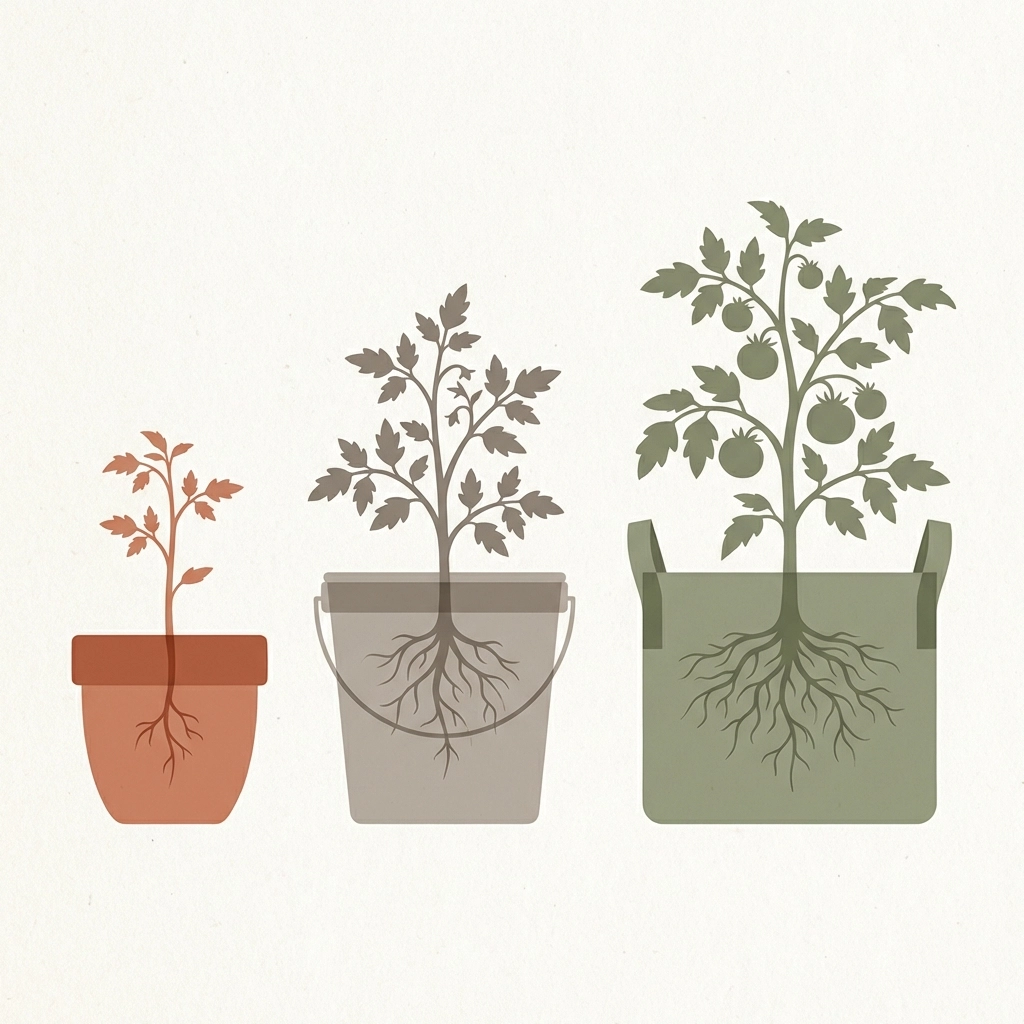
Minimum container size is 5 gallons.
Larger produces better results.
Container size by tomato type:
- Micro varieties (Micro Tom): 1-2 gallons
- Dwarf varieties (Tiny Tim): 3-5 gallons
- Determinate varieties: 5-10 gallons
- Indeterminate varieties: 10-20 gallons
Container requirements:
- Drainage holes mandatory
- Dark colors absorb heat , use light colors in hot climates
- Fabric pots provide excellent drainage and air pruning
- Self-watering containers reduce watering frequency
Tomatoes in containers require more frequent watering than in-ground plants.
Daily watering is common during peak summer.
Container soil dries faster than ground soil.
How Do Raised Beds Benefit Tomato Growing?
Raised beds offer advantages over both in-ground and container growing.
Raised bed benefits:
- Better drainage than in-ground
- Warmer soil temperatures in spring
- No soil compaction from foot traffic
- Ergonomic , less bending required
- Defined growing space
- Easier weed control
Recommended raised bed dimensions for tomatoes:
- Minimum depth: 12 inches
- Optimal depth: 18-24 inches
- Width: 3-4 feet maximum for easy reach
- Length: any practical size
Raised bed materials:
- Cedar , naturally rot-resistant
- Redwood , long-lasting, expensive
- Pine , affordable, shorter lifespan
- Galvanized steel , durable, modern appearance
- Concrete blocks , permanent, excellent thermal mass
Avoid pressure-treated lumber for food gardens.
Chemicals leach into soil over time.
How Does Hydroponic Tomato Growing Work?
Hydroponics grows plants without soil.
Roots sit in water or inert growing media.
Nutrients dissolve directly in water.
Plants access nutrition immediately without soil biology intermediaries.
Hydroponic advantages:
- 20-50% faster growth than soil
- Higher yields per square foot
- Precise nutrient control
- No soil-borne diseases
- Year-round production possible
- Water efficiency , uses 80-90% less water than soil
Hydroponic challenges:
- Higher startup cost
- Requires more technical knowledge
- System failures can kill plants quickly
- Electricity dependent
- pH and nutrient monitoring mandatory
What Hydroponic Systems Work for Tomatoes?
Multiple hydroponic system types suit tomato production.
Deep Water Culture (DWC):
Roots suspended in aerated nutrient solution.
Simple, effective, low-cost entry point.
Requires air pump running continuously.
Works well for 1-4 plants.
Nutrient Film Technique (NFT):
Thin film of nutrient solution flows past roots in channels.
Efficient for multiple plants.
Pump failure quickly damages plants.
Common in commercial production.
Dutch Bucket (Bato Bucket):
Individual containers filled with perlite or clay pebbles.
Nutrient solution drips in, drains out.
Excellent for indeterminate tomatoes.
Scalable from small to large operations.
Ebb and Flow (Flood and Drain):
Growing tray periodically floods with nutrient solution.
Solution drains back to reservoir.
Good for multiple plants.
Requires timer-controlled pump.
Kratky Method:
Passive system , no pumps or electricity.
Roots sit partially in static nutrient solution.
Air gap provides oxygen.
Best for determinate/compact varieties.
Beginner-friendly.
What Nutrients Do Hydroponic Tomatoes Need?
Hydroponic tomatoes require complete nutrition from the water supply.
No soil exists to buffer or supplement.
Essential macronutrients:
- Nitrogen (N) , leaf and stem growth
- Phosphorus (P) , root development, flowering
- Potassium (K) , fruit production, disease resistance
Essential secondary nutrients:
- Calcium , prevents blossom end rot
- Magnesium , chlorophyll production
- Sulfur , protein synthesis
Essential micronutrients:
- Iron
- Manganese
- Zinc
- Copper
- Boron
- Molybdenum
Pre-mixed hydroponic nutrients simplify the process.
Two-part or three-part liquid concentrates cover all requirements.
Follow manufacturer mixing instructions precisely.
Nutrient strength measurement:
EC (electrical conductivity) or TDS (total dissolved solids) meters measure nutrient concentration.
Target ranges for tomatoes:
- Seedlings: EC 1.0-1.5
- Vegetative growth: EC 1.5-2.0
- Flowering/fruiting: EC 2.0-3.0
What pH Do Hydroponic Tomatoes Require?
pH range for hydroponic tomatoes: 5.5-6.5
Optimal: 6.0
pH affects nutrient availability.
Wrong pH locks out nutrients even when present in solution.
pH testing:
Test daily initially.
Test every 2-3 days once system stabilizes.
Digital pH meters provide accurate readings.
Calibrate meters monthly.
pH adjustment:
Use pH Up (potassium hydroxide) to raise pH.
Use pH Down (phosphoric acid) to lower pH.
Add in small increments.
Test, adjust, retest.
How Much Light Do Tomatoes Need?
Tomatoes are full-sun plants.
Outdoor requirements:
- Minimum: 6 hours direct sunlight
- Optimal: 8-10 hours direct sunlight
- Maximum: no upper limit in temperate climates
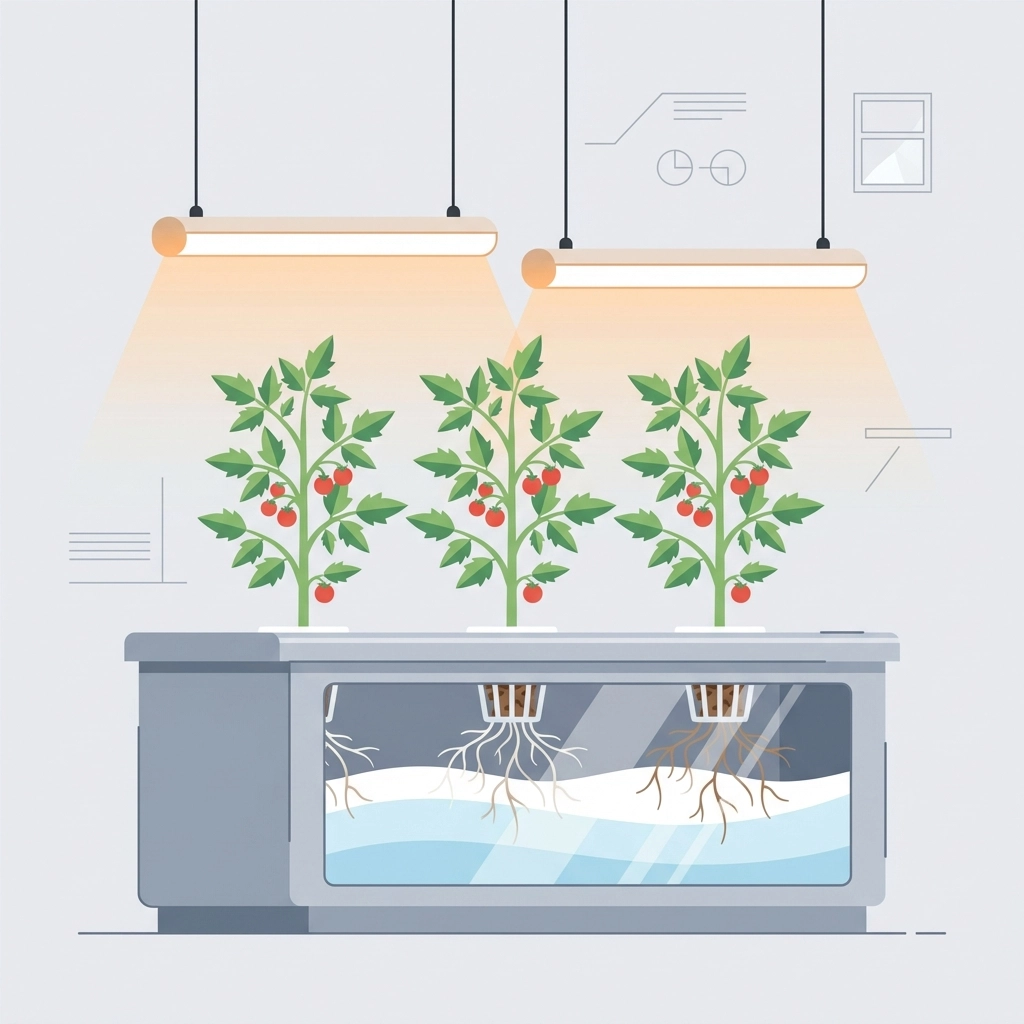
Indoor requirements:
- Minimum: 14 hours under grow lights
- Optimal: 16-18 hours under grow lights
- Dark period: 6-8 hours mandatory for plant recovery
Grow light specifications for tomatoes:
Light intensity measured in PPFD (photosynthetic photon flux density) or foot-candles.
Target PPFD values:
- Seedlings: 200-400 µmol/m²/s
- Vegetative growth: 400-600 µmol/m²/s
- Flowering/fruiting: 600-900 µmol/m²/s
Grow light types:
- LED , most efficient, lowest heat, highest cost
- T5 fluorescent , good for seedlings, moderate efficiency
- HPS (high-pressure sodium) , high output, high heat, high electricity
LED lights produce the best results for home growers.
Full-spectrum models support all growth stages.
What Temperature Range Suits Tomatoes?
Tomatoes originated in warm climates.
Temperature extremes limit production.
Optimal temperature ranges:
- Daytime: 70-85°F
- Nighttime: 60-70°F
- Soil/root zone: 65-75°F
Temperature problems:
Below 55°F:
- Growth stops
- Flowers drop
- Fruit fails to set
- Leaves purple
Above 95°F:
- Pollen becomes sterile
- Flowers drop
- Existing fruit may sunscald
- Plants wilt despite adequate water
Temperature management outdoors:
- Mulch insulates soil temperature
- Row covers protect from late frost
- Shade cloth reduces heat stress
Temperature management indoors:
- Climate control maintains steady conditions
- Hydroponic water chillers prevent root zone overheating
- Fans improve air circulation and temperature distribution
How Much Water Do Tomatoes Need?
Tomatoes require consistent, deep watering.
Outdoor soil growing:
- 1-2 inches per week minimum
- Deep watering less frequently beats shallow watering often
- Morning watering preferred
- Avoid wetting foliage
Container growing:
- Daily watering typical in summer
- Check soil moisture before watering
- Water until it runs from drainage holes
- Never let containers sit in standing water
Hydroponic growing:
- Reservoir maintains consistent water supply
- Monitor water level daily
- Replace nutrient solution every 1-2 weeks
- Maintain water temperature below 72°F
Signs of underwatering:
- Wilting in afternoon heat
- Leaf edges browning
- Blossom drop
- Small, tough fruit
Signs of overwatering:
- Wilting despite wet soil
- Yellow leaves starting at bottom
- Root rot smell
- Fungus gnats
How Do Tomatoes Get Pollinated?
Tomato flowers contain both male and female parts.
Self-pollinating.
Wind and vibration transfer pollen within flowers.
Outdoor pollination:
Wind provides natural vibration.
Bees visiting flowers enhance pollination.
Minimal intervention required.
Indoor pollination:
No wind or bees indoors.
Manual pollination necessary.
Pollination methods:
- Electric toothbrush touched to flower stems
- Gentle shaking of entire plant
- Small paintbrush swirled inside flowers
- Fan providing artificial air movement
Pollinate during midday when humidity is lower.
Pollen releases best at 60-70% relative humidity.
Pollinate every 2-3 days during flowering.
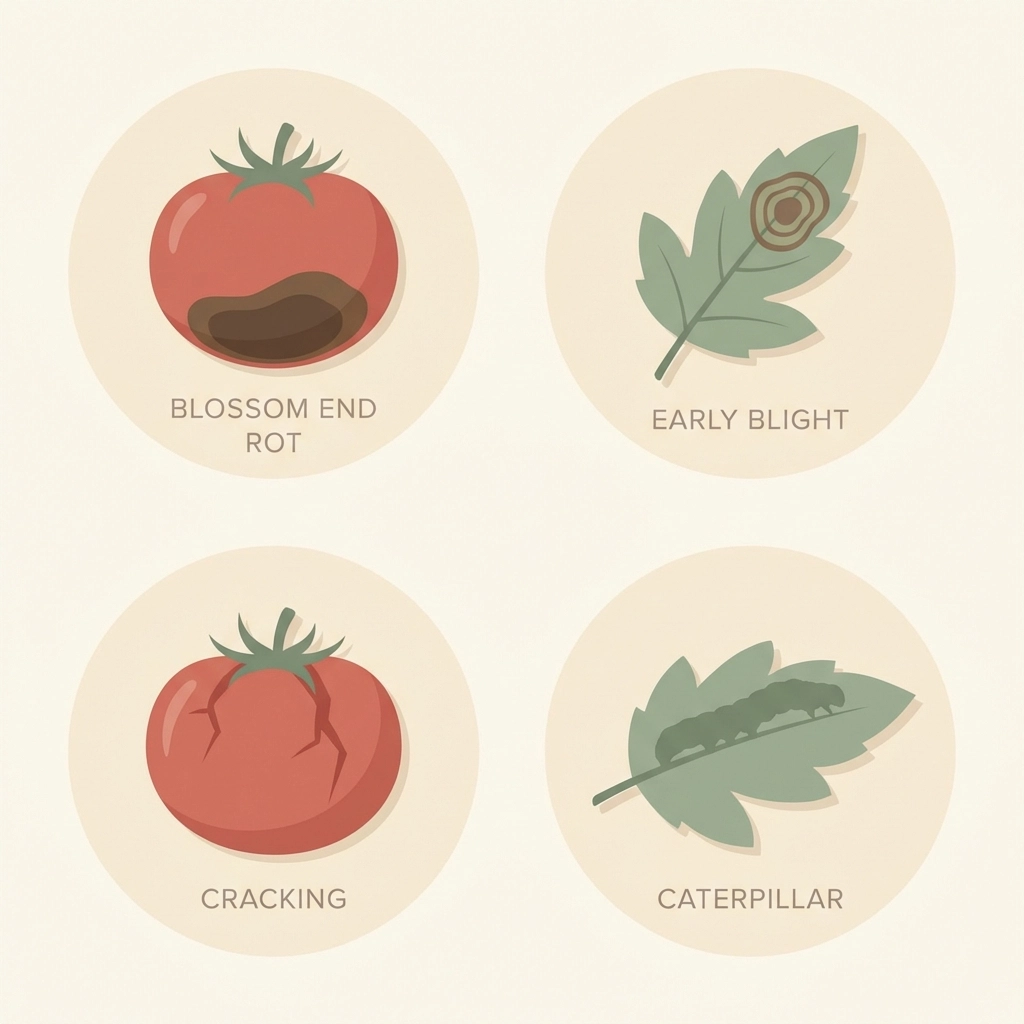
What Common Tomato Problems Occur?
Tomatoes face predictable challenges.
Recognition and prevention solve most issues.
Blossom End Rot:
Dark, sunken areas on fruit bottom.
Caused by calcium deficiency at cellular level.
Often triggered by inconsistent watering, not soil calcium shortage.
Prevention:
- Maintain consistent soil moisture
- Mulch to regulate moisture
- Add calcium to hydroponic nutrient solution
- Avoid excessive nitrogen fertilization
Early Blight:
Brown spots with concentric rings on lower leaves.
Fungal disease.
Progresses upward on plant.
Prevention:
- Remove lower leaves touching soil
- Water at soil level, not overhead
- Provide adequate plant spacing
- Rotate planting locations yearly
Late Blight:
Irregular grayish patches on leaves and stems.
Same pathogen that caused Irish potato famine.
Spreads rapidly in cool, wet conditions.
Prevention:
- Select resistant varieties
- Increase air circulation
- Remove infected plants immediately
- Avoid overhead watering
Tomato Hornworms:
Large green caterpillars with white stripes.
Consume massive amounts of foliage.
Droppings visible below feeding areas.
Control:
- Hand-pick and destroy
- Encourage parasitic wasps (leave hornworms with white cocoons)
- Bt (Bacillus thuringiensis) spray
Cracking:
Concentric or radial splits in fruit skin.
Caused by rapid water uptake after dry period.
Prevention:
- Consistent watering schedule
- Mulch to regulate soil moisture
- Harvest fruit slightly early during rainy periods
How Can Families Maximize Tomato Yield?
Several practices increase fruit production.
Pruning indeterminate varieties:
Remove suckers , shoots growing between main stem and branches.
Directs energy to fruit production rather than vegetation.
Leave 1-3 main stems on indeterminate plants.
Determinate varieties need minimal pruning.
Support structures:
Cages, stakes, or trellises keep plants upright.
Improved air circulation reduces disease.
Fruit stays clean and visible.
Easier harvesting.
Consistent fertilization:
Heavy feeders requiring regular nutrition.
Soil growing schedule:
- At transplant: balanced fertilizer or compost
- At first flowers: side-dress with compost or granular fertilizer
- Every 2-3 weeks during production: liquid fertilizer
Hydroponic schedule:
- Monitor EC levels weekly
- Adjust concentration as plants mature
- Complete nutrient solution change every 7-14 days
Succession planting:
Start new seedlings every 2-3 weeks.
Extends harvest season.
Later plantings replace declining early plants.
What Mistakes Do Beginners Make?
Planting too early outdoors:
Cold soil stunts growth.
Late frost kills plants.
Wait until soil reaches 60°F and frost danger passes.
Insufficient light indoors:
Window sills rarely provide enough light.
Invest in grow lights for indoor production.
Overcrowding:
Plants need 2-4 feet spacing.
Air circulation prevents disease.
Crowded plants compete for resources.
Overwatering seedlings:
Dampness causes damping off disease.
Allow soil surface to dry between waterings.
Ignoring pH:
Both soil and hydroponic systems require appropriate pH.
Test and adjust regularly.
Skipping hardening off:
Direct transplant from indoors to outdoors shocks plants.
Gradual transition prevents setback.
Inconsistent watering:
Fluctuating moisture causes blossom end rot and cracking.
Establish regular watering schedule.
What Fun Tomato Projects Work for Kids?
Gardening engages children when designed appropriately.
Seed-to-table tracking:
Plant seeds in clear plastic cups.
Observe root development through cup sides.
Measure and record plant height weekly.
Create growth charts.
Harvest and prepare simple tomato dishes together.
Cherry tomato taste test:
Grow multiple cherry tomato varieties.
Create blind taste test when ripe.
Rate each variety on sweetness, tartness, texture.
Determine family favorite.
Tomato tower challenge:
Competition to grow the tallest tomato plant.
Each family member tends one plant.
Measure weekly.
Prize for height winner, biggest tomato, most tomatoes.
Seed saving:
Save seeds from favorite tomatoes.
Ferment, dry, and store properly.
Plant saved seeds next season.
Multi-generational family tomato variety.
Kitchen science:
Make fresh salsa together.
Create sun-dried tomatoes.
Can tomato sauce with adult supervision.
Understand food preservation.
Soil vs. Hydro: Which Method Wins?
Neither method is universally superior.
Choose soil growing when:
- Budget is limited
- Outdoor space is available
- Traditional gardening experience is desired
- Forgiveness for mistakes matters
- Children are primary gardeners
Choose hydroponic growing when:
- Year-round production is the goal
- Indoor growing is necessary
- Maximum yield per square foot matters
- Technical challenges are enjoyable
- Faster harvests are prioritized
Hybrid approach works well:
Start seeds in soil.
Transplant to hydroponic system.
Grow outdoor soil tomatoes in summer.
Grow indoor hydroponic tomatoes in winter.
Final Growing Calendar Summary
Indoor seed starting: 6-8 weeks before last frost date
Hardening off: 7-10 days before transplant
Outdoor transplant: After last frost, soil above 60°F
First harvest (determinates): 60-80 days from transplant
First harvest (indeterminates): 70-90 days from transplant
Season end: First hard frost or when plants decline
Indoor hydroponic timeline: Year-round production possible with 80-100 days seed to harvest
Tomato growing rewards effort with fresh, flavorful fruit.
Both soil and hydroponic methods succeed when basic requirements are met.
Start with one method.
Master fundamentals.
Expand and experiment.
Every season brings improvement.