



Yes, you can start seeds with kids using items you probably already have in your recycling bin or kitchen! Toilet paper rolls, yogurt cups, citrus peels, newspaper, and clear plastic containers all make fantastic seed starters, and they cost next to nothing. This hands-on activity teaches kids about plant life cycles, sustainability, and the magic of watching a tiny seed become a living plant.
Age Range: 3–12 years (with varying levels of adult assistance)
Estimated Cost: $0–$5 (most materials are free from your recycling bin; you may need to purchase seeds and potting soil)
Why Use Recycled Materials for Seed Starting?
Before we dive into the how-to, let's talk about the why. Starting seeds with recycled materials isn't just budget-friendly, it's a powerful teaching moment for kids about reducing waste and reusing what we already have.
When children see a toilet paper roll transform into a mini greenhouse, or watch roots grow through a newspaper pot, they begin to understand that "trash" can have a second life. Plus, many of these materials are biodegradable, meaning you can plant them directly into the garden without disturbing delicate seedling roots.
It's science, sustainability, and hands-on fun all rolled into one afternoon project.
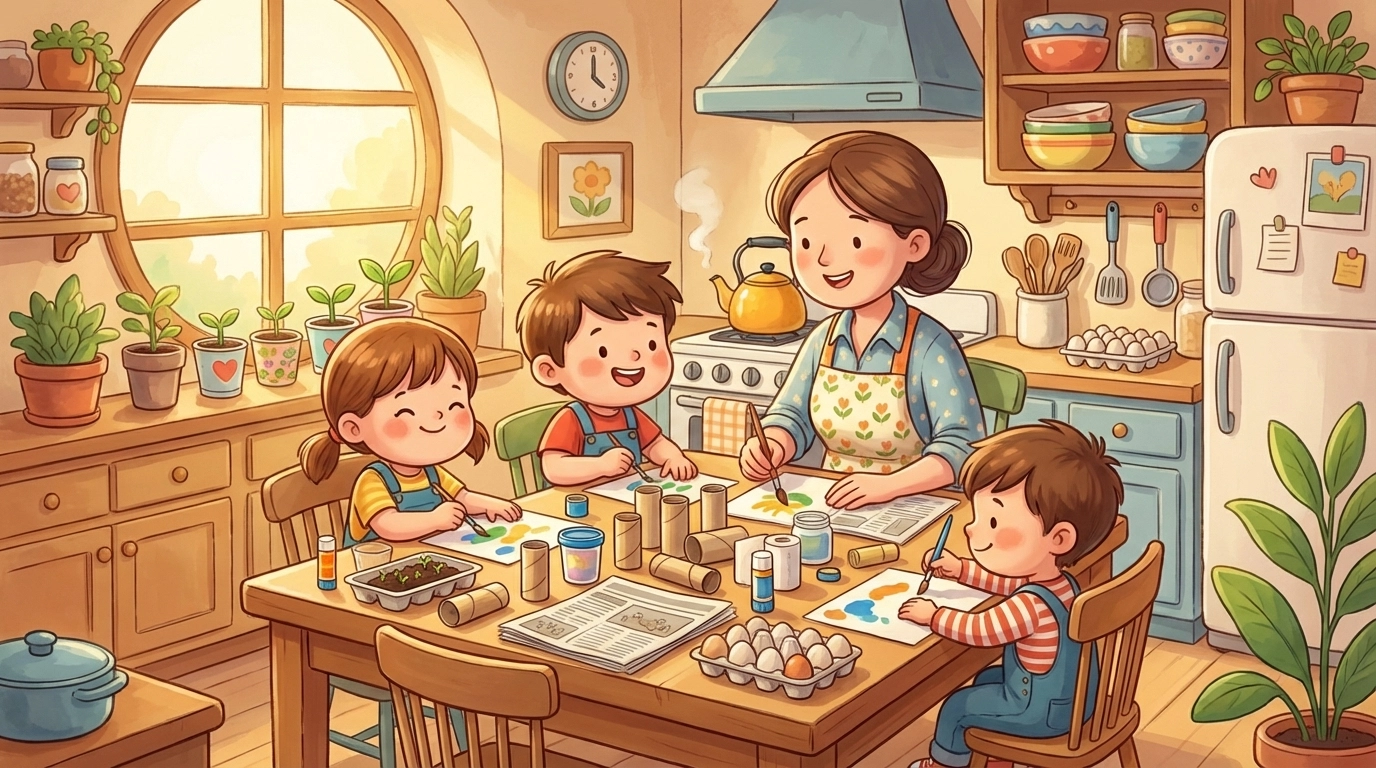
What Recycled Materials Work Best for Seed Starting?
Here's a quick rundown of household items that make excellent seed starters:
| Material | Biodegradable? | Best For |
|---|---|---|
| Toilet paper rolls | Yes | Deep-rooted plants like beans |
| Paper towel tubes (cut) | Yes | Larger seedlings |
| Newspaper pots | Yes | Transplanting directly to soil |
| Yogurt cups | No | Reusable starters |
| Clear plastic containers | No | Observing root growth |
| Citrus peels (halved) | Yes | Small herbs and greens |
| Plastic clamshell containers | No | Mini greenhouses |
Pro Tip: Avoid materials with heavy dyes, glossy coatings, or chemical treatments. Stick to plain cardboard, newspaper (black-and-white pages), and food-safe plastics.
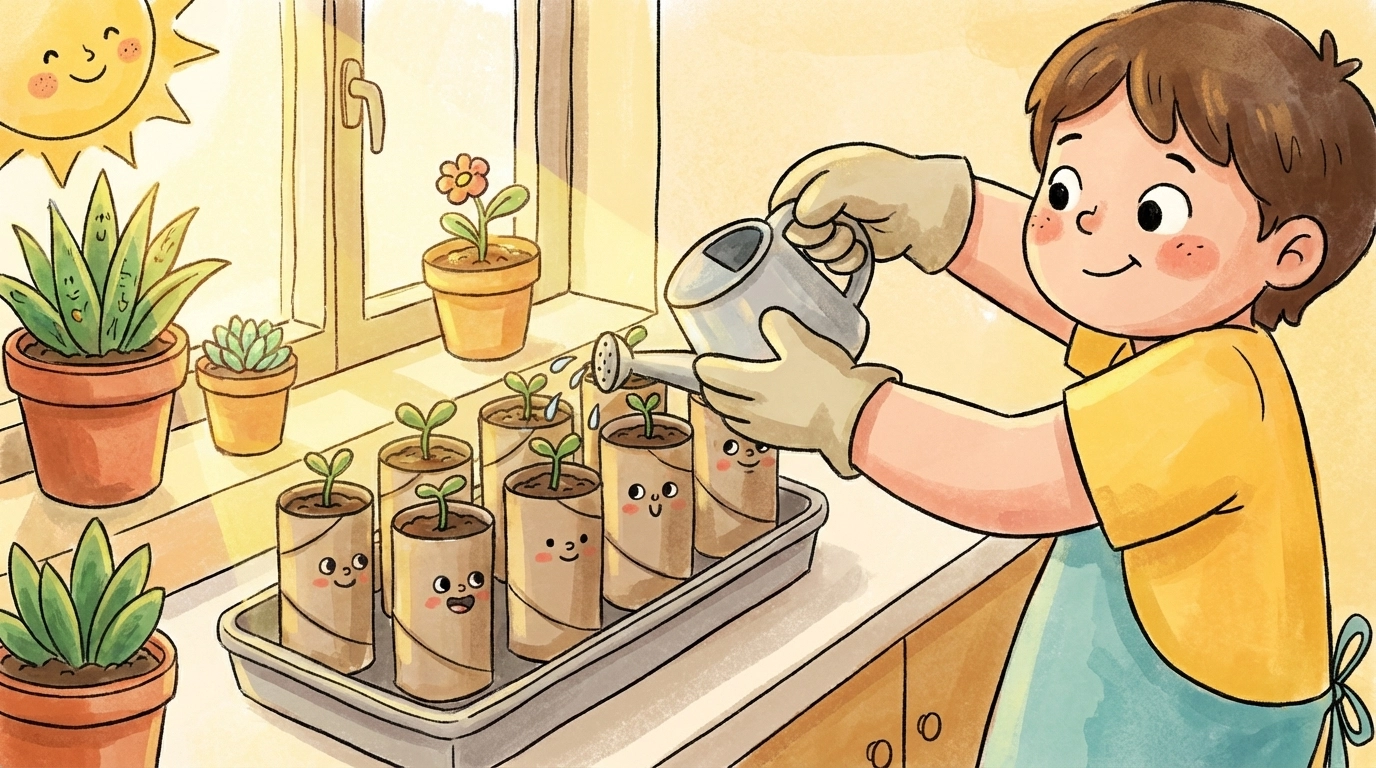
Method 1: Cardboard Tube Seed Starters
This is one of the easiest and most satisfying methods for families. Those empty toilet paper and paper towel rolls? They're about to become your new favorite gardening tool.
What You'll Need:
- Empty toilet paper rolls (or paper towel rolls cut into 2-inch sections)
- Scissors
- Potting soil
- Seeds
- A shallow tray or baking dish
Step-by-Step Instructions:
Prep your tubes. Take each cardboard tube and make four small cuts (about 1 inch deep) evenly spaced around one end.
Fold the flaps. Fold the cut sections inward, overlapping them like the bottom of a cardboard box. This creates a base so soil won't fall out.
Arrange in a tray. Stand your tubes upright in a shallow tray or old baking dish. Pack them snugly together so they support each other.
Fill with soil. Let kids scoop potting soil into each tube, filling it almost to the top. Gently press down to remove air pockets.
Plant your seeds. Make a small hole with your finger (about 1/4 inch deep for most seeds), drop in 2–3 seeds, and cover lightly with soil.
Water gently. Use a spray bottle or pour water slowly into the tray. The cardboard will absorb moisture from below.
Wait and watch! Place your tray in a warm, sunny spot and keep the soil moist. Germination typically takes 5–14 days depending on the seed type.
Why Kids Love It: The folding step feels like origami, and they get to see their tubes transform into real planters. When it's time to transplant, you can plant the whole tube directly into the ground: the cardboard breaks down naturally!
Method 2: Newspaper Pots
Making newspaper pots is a classic DIY activity that doubles as a fine motor skill exercise for younger kids. Plus, there's something almost magical about turning yesterday's news into tomorrow's tomato plant.
What You'll Need:
- Newspaper (black-and-white pages only)
- A small can or jar (for shaping)
- Potting soil
- Seeds
- A waterproof tray
Step-by-Step Instructions:
Cut your newspaper. Cut strips approximately 4 inches wide and 12 inches long.
Wrap around a can. Roll the newspaper around your can or jar, leaving about 2 inches hanging off the bottom.
Fold the bottom. Fold the overhanging newspaper inward and press firmly to create a flat base. Twist or tuck to secure.
Slide off the can. Carefully remove your new pot from the can. You now have a little newspaper cup!
Fill, plant, and water. Same as above: fill with soil, plant seeds, and water gently.
Age Tip: Kids ages 3–5 may need help with the folding and shaping. Ages 6 and up can usually manage independently with a quick demo.
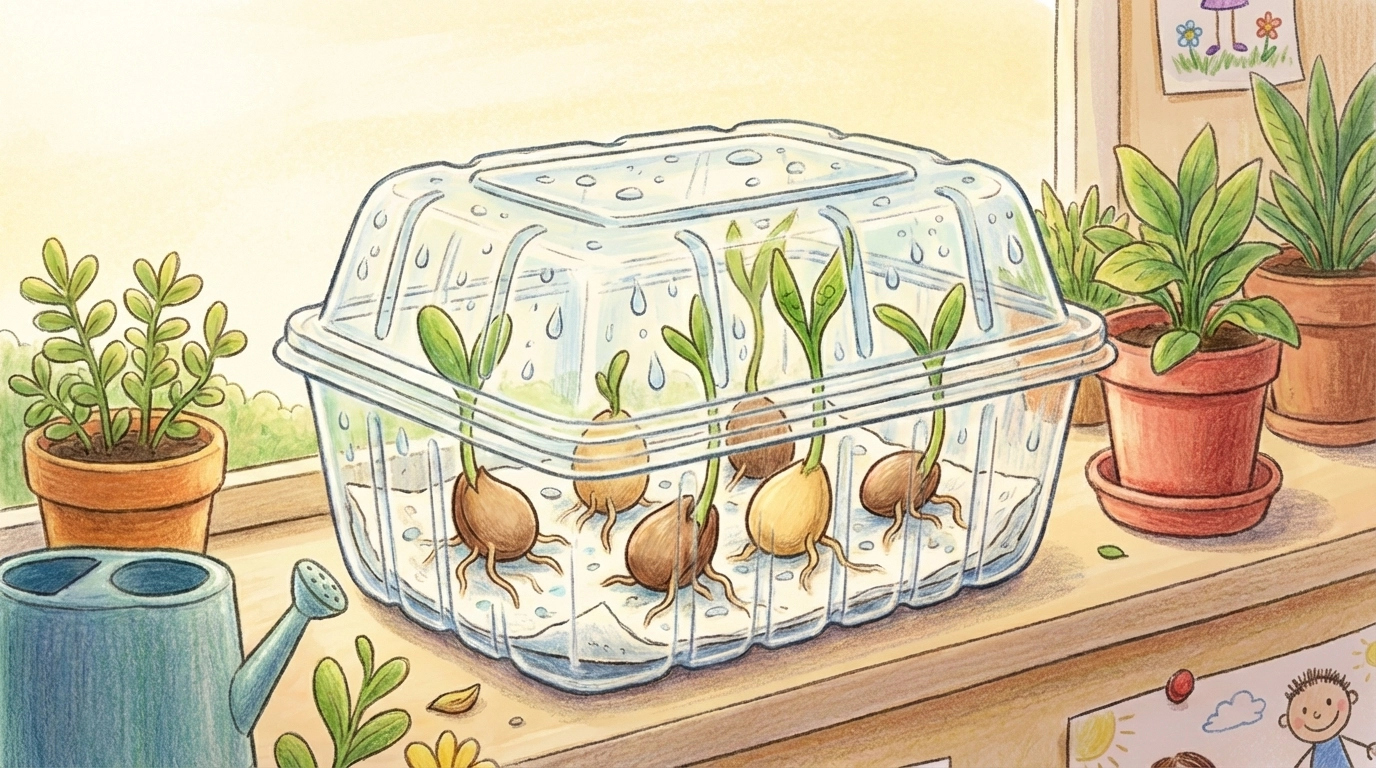
Method 3: Plastic Container Mini Greenhouses
Clear plastic containers: like those from strawberries, salad greens, or take-out meals: make incredible mini greenhouses. The clear lid traps humidity and warmth, creating ideal germination conditions.
What You'll Need:
- Clear plastic clamshell container (with lid)
- Small drainage holes (poke with a thumbtack or small nail)
- Potting soil or a damp paper towel
- Seeds
Step-by-Step Instructions:
Add drainage. Poke 4–6 small holes in the bottom of the container for drainage.
Add your growing medium. Fill the bottom half with 1–2 inches of potting soil, OR fold a damp paper towel flat inside for a see-through germination experiment.
Plant seeds. Press seeds gently into the soil or place them on the paper towel with spacing between each seed.
Close the lid. Snap the lid shut to create a humid environment.
Find a sunny spot. Place near a window with indirect sunlight. Open the lid briefly each day for air circulation.
Why Kids Love It: The clear container lets them watch roots and sprouts develop in real time. It's like having a front-row seat to nature's show!
Method 4: Citrus Peel Planters
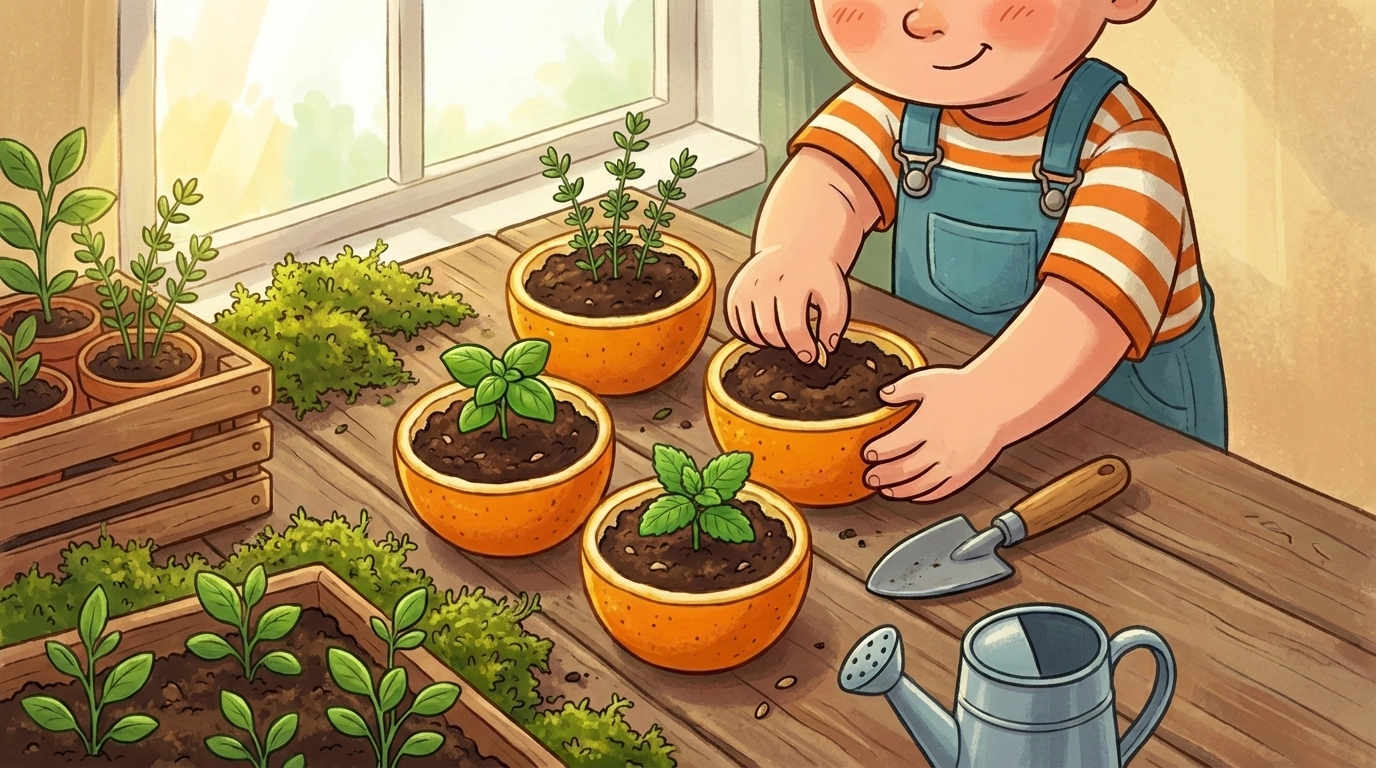
This one is as adorable as it is practical. Halved citrus peels (oranges, lemons, grapefruits) make tiny biodegradable pots perfect for starting herbs or small greens.
What You'll Need:
- Halved citrus peels (flesh scooped out)
- A small nail or toothpick (for drainage hole)
- Potting soil
- Seeds
Step-by-Step Instructions:
Prep your peels. After enjoying your orange or grapefruit, scoop out any remaining pulp. Poke a small drainage hole in the bottom.
Fill with soil. Add potting soil, leaving a little room at the top.
Plant and water. Drop in 2–3 seeds, cover lightly, and mist with water.
Transplant when ready. Once seedlings have their first true leaves, plant the entire peel into a larger pot or garden bed. The peel decomposes and adds nutrients to the soil!
Best Seeds for Citrus Peels: Basil, cilantro, chives, lettuce, and other small-rooted herbs.
Tips for Success with Any Method
No matter which recycled material you choose, keep these tips in mind:
- Label everything. Use popsicle sticks or strips of paper to mark what you planted and when.
- Keep soil moist, not soggy. Overwatering is the #1 seedling killer. A spray bottle gives kids control without flooding.
- Choose fast-germinating seeds for impatient gardeners. Radishes, beans, lettuce, and marigolds sprout quickly and keep excitement high.
- Embrace imperfection. Not every seed will sprout: and that's okay! It's all part of the learning process.
Turn It Into a Learning Moment
Starting seeds with recycled materials is more than a craft project. Use it as an opportunity to discuss:
- The plant life cycle: What does a seed need to grow?
- Sustainability: Why is reusing materials good for our planet?
- Patience and responsibility: What happens if we forget to water?
For more hands-on family gardening ideas and indoor growing projects, explore our blog at Tierney Family Farms.
Ready to Get Growing?
Grab those recycled materials, round up your little gardeners, and get planting! There's no wrong way to start seeds with kids: the mess is part of the memory, and watching that first green sprout push through the soil? Pure magic.
Happy growing from our family to yours!
FAQ
- What kind of recycled containers are best for starting seeds? Egg cartons, yogurt cups, and even toilet paper rolls (folded at the bottom) make excellent, free seed starters.
- Do I need to poke holes in the bottom of the containers? Yes! Drainage is very important. Making a small hole in the bottom ensures that extra water can escape so the seeds don't get "soggy feet."
- Can we plant the recycled containers directly in the ground? Toilet paper rolls and egg cartons made of cardboard can be planted directly! They will break down in the soil and turn into food for the garden.