



What Do You Need to Set Up a Stuffed Animal Vet Clinic?
Setting up a stuffed animal vet clinic at home takes about 15 minutes of prep time and costs between $0 and $5, depending on what you already have around the house. You'll need a collection of stuffed animals, some basic "medical supplies" (real or pretend), a designated exam area, and simple intake forms for check-ins. Once it's ready, this activity can keep kids entertained for hours of imaginative play.
This pretend play activity works well for children ages 3 to 8, though younger kids (around 3–4) will need help with the paperwork portions. Children in the 4–6 range tend to handle the forms and role-playing independently, while older siblings often enjoy taking on the "head veterinarian" role.
At a Glance
| Detail | Information |
|---|---|
| Skill Age Range | 4–6 years (for forms and independent play) |
| Enjoyment Age Range | 3–8 years |
| Setup Time | About 15 minutes |
| Play Time | 1–3+ hours (varies by child) |
| Budget | $0–$5 |
Materials List and Estimated Costs
Here's what you'll need to gather. Many families find they already own these items, so your total cost could easily be zero.
| Material | Notes | Estimated Cost |
|---|---|---|
| Stuffed animals | Use what you have: the more variety, the better | $0 (owned) |
| Bandages or fabric scraps | Gauze, old T-shirt strips, or adhesive bandages | $0–$3 |
| Paper and pencils | For intake forms and "prescriptions" | $0 (owned) |
| Clipboard (optional) | Makes the check-in feel official | $0–$1 |
| Toy doctor kit | Stethoscope, syringe, thermometer: plastic versions work great | $0–$5 (if purchasing) |
| Cotton balls | For pretend wound care | $0–$1 |
| Small blankets or washcloths | Recovery beds for patients | $0 (owned) |
| Painter's tape or masking tape | For securing bandages or marking areas | $0–$1 |
| Cardboard box (optional) | Can serve as a pet carrier or X-ray machine | $0 (recycled) |
Total estimated cost: $0–$5, depending on what you need to pick up.
Step-by-Step Setup Instructions
Step 1: Gather Your Patients
Round up a collection of stuffed animals from around the house. Encourage your child to pick out their favorites: teddy bears, plush puppies, stuffed dinosaurs, and even fabric dolls can all become patients. Having a variety of "animals" makes the play more interesting and gives kids choices when deciding who needs treatment.

Step 2: Create a Waiting Room
Designate a small area as the waiting room. This could be a corner of the living room with a few pillows on the floor, a small bench, or even a row of chairs. Add a couple of picture books (animal-themed ones work nicely if you have them) to keep the "patients" and their owners entertained while they wait.
This area helps establish the flow of the game: patients check in, wait their turn, and then move to the exam room.
Step 3: Set Up the Exam Table
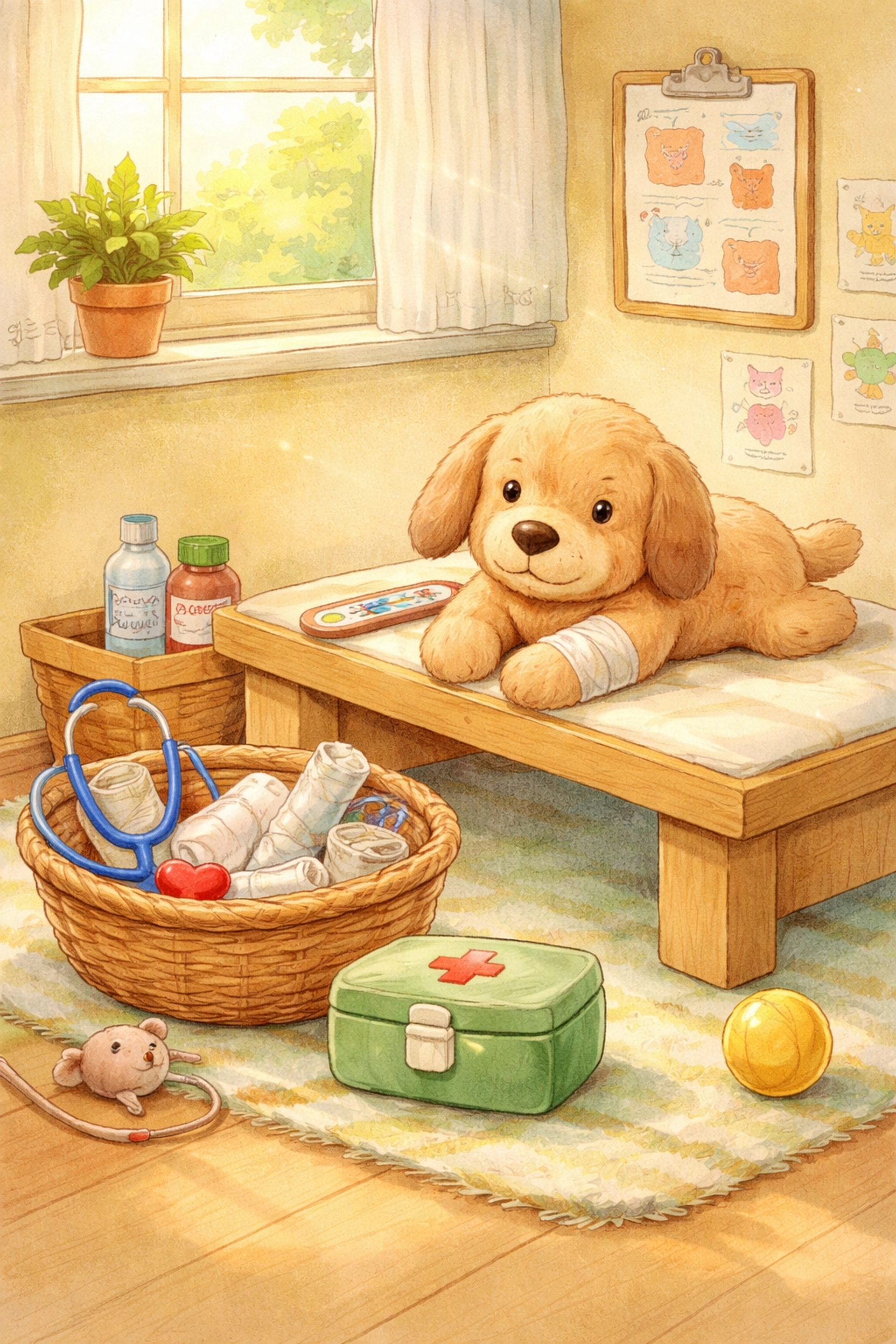
Choose a sturdy surface to serve as the examination table. An ottoman, a low bench, a step stool, or even a folded blanket on a coffee table works well. The key is having a dedicated spot where the veterinarian can examine each patient.
Place your medical supplies nearby so they're easy to reach. Arrange cotton balls in a small cup or jar, lay out bandages, and keep the toy stethoscope and thermometer within arm's reach.
Step 4: Prepare the Recovery Area
Set up a cozy recovery zone where animals can rest after their treatment. A shoebox lined with a soft washcloth, a small basket with a blanket, or a designated corner with pillows all work nicely. Kids tend to enjoy tucking in their patients and checking on them periodically throughout play.
Step 5: Make Simple Intake Forms
This is where the learning sneaks in. Create basic intake forms on regular paper: nothing fancy needed. Include fields like:
- Pet's name
- Type of animal
- Owner's name
- What seems to be wrong (symptoms)
- Treatment given
For children ages 4–6, filling out these forms helps practice writing, spelling, and thinking through problems. Younger kids (3–4) can draw pictures in the boxes or have an adult help with the writing while they dictate answers.
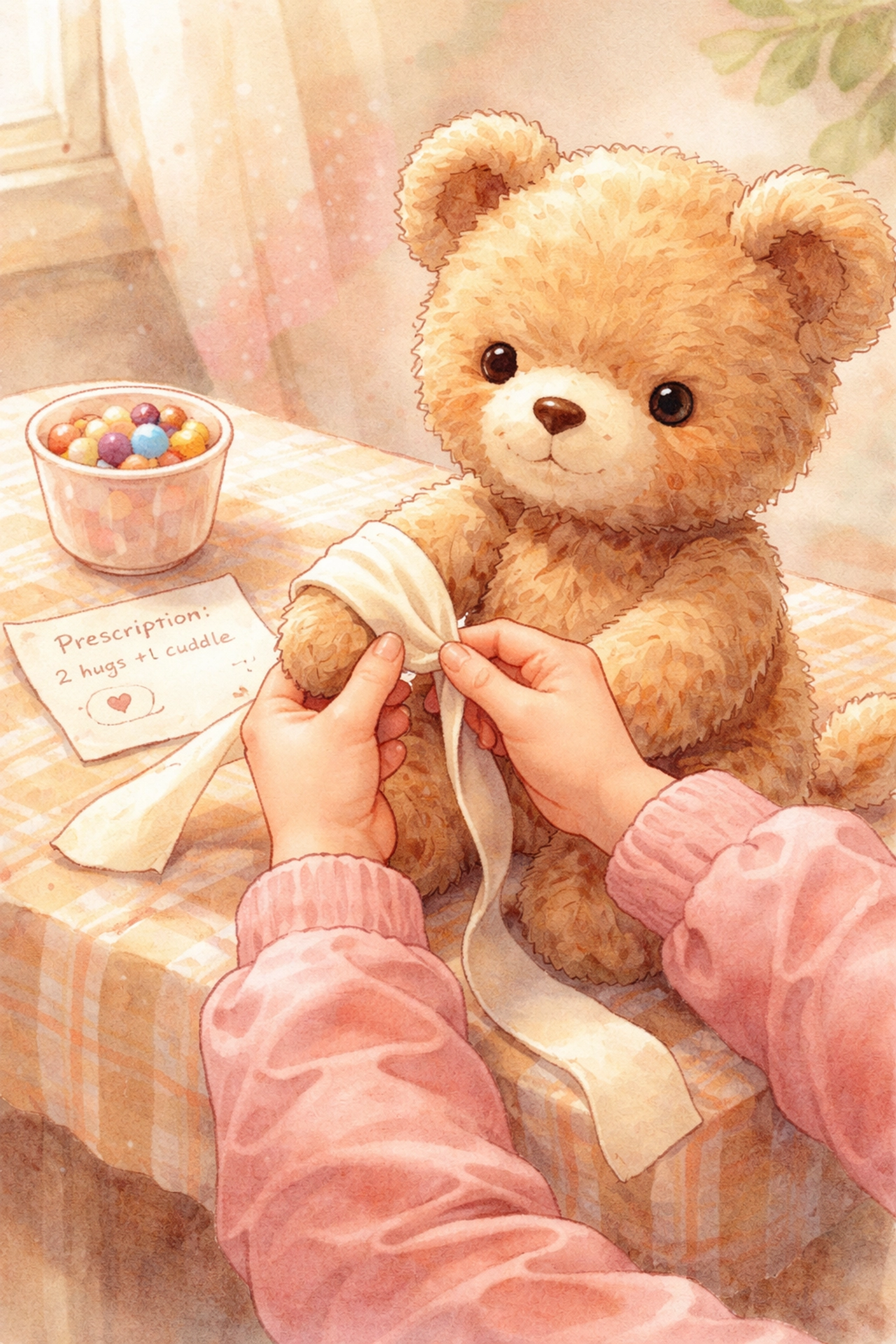
You can also make a simple "prescription pad" using sticky notes or small slips of paper. Kids can write or draw the medicine their patient needs: rest, extra snuggles, a pretend bandage change, etc.
Step 6: Add Optional Extras
If you want to expand the clinic, consider these additions:
- X-ray station: Draw simple bone outlines on paper and tape them to a cardboard box. Kids can slide their stuffed animals through to get "X-rays."
- Pet carrier: A small cardboard box with a handle cut into the top makes a great carrier for transporting animals to and from the clinic.
- Weight station: Use a kitchen scale (supervised) to weigh small stuffed animals and record the numbers on the intake forms.
- Medicine cups: Small bathroom cups can hold pretend pills (pom-poms, beads, or dry pasta pieces).
Activity Ideas to Try During Play
Once the clinic is set up, here are some scenarios to suggest if your child needs a jumping-off point:
The Check-Up
Have kids perform a full wellness exam: listen to the heartbeat with the stethoscope, check ears and eyes, take a temperature, and declare the patient healthy.
The Broken Leg
A stuffed animal has injured its leg! Wrap it carefully with bandages or fabric strips and prescribe rest in the recovery area.
The Tummy Ache
This patient ate too much pretend food. The vet might prescribe "tummy medicine" and suggest plenty of water and rest.
The New Adoption
Turn part of the play into an adoption center. Kids can interview potential "owners" (siblings, parents, or other stuffed animals) to find the right home for each pet.
Tips for Extended Play
Rotate the patients. If play starts to wind down, introduce a "new emergency case": grab a stuffed animal from another room and announce that it needs help right away.
Let kids lead. Resist the urge to direct every aspect of the game. Children often come up with creative scenarios and solutions when given space to play independently.
Join in occasionally. Playing the role of a worried pet owner who brings in a sick teddy bear can spark new storylines and extend play time.
Keep the setup accessible. Store the clinic supplies in a shoebox or basket so kids can pull it out again without adult help. The easier it is to access, the more likely they are to revisit the activity.
What Kids Learn From This Activity
While this is primarily a play activity, there are some educational benefits woven in:
- Literacy practice: Writing on forms and prescriptions builds early writing skills.
- Empathy building: Caring for "sick" animals encourages nurturing behavior.
- Problem-solving: Deciding what's wrong with a patient and how to help involves critical thinking.
- Social skills: If siblings or friends join, kids practice taking turns, sharing supplies, and cooperating.
Final Thoughts
A stuffed animal vet clinic is one of those activities that takes very little effort to set up but can provide hours of engaged, imaginative play. It's low-cost, uses materials you likely already have, and works well for a range of ages. Younger children enjoy the hands-on caregiving aspects, while older kids often get invested in the paperwork and more complex scenarios.
Give it a try on a rainy afternoon or when you need an activity that keeps little ones busy while you tackle something else nearby. You might be surprised how long the "clinic" stays open.
FAQ: Stuffed Animal Vet Clinic at Home
What materials do I need for a stuffed animal vet clinic? You mainly need stuffed animals, some "medical" supplies like bandages or cotton balls, and paper/pencils for intake forms. A toy doctor kit is a nice bonus but not required.
Is this activity good for siblings to play together? Yes! It’s perfect for group play. One child can be the vet while the other is the pet owner bringing in their animals. It’s a great way to practice sharing and cooperation.
How can I make a pretend vet clinic more realistic? Adding "official" forms, a waiting area with books, and a recovery zone with blankets makes the experience feel very real for kids. You can even use a cardboard box as a pet carrier or X-ray machine.
References:
- Research on pretend play vet clinic setups and educational benefits
- Activity recommendations for dramatic play scenarios
- Material suggestions for DIY veterinary play stations