



What Is the Best Way to Play Restaurant with Kids?
The best way to play restaurant with kids is to create simple picture menus from paper and crayons, assign roles like server and customer, and let children "order" by pointing to hand-drawn food items. This pretend play activity builds communication skills, encourages creativity, and can keep kids entertained for surprisingly long stretches: often much longer than the 20-30 minutes it takes to set up.
Picture menus work especially well because younger children who aren't reading yet can still participate fully. They point, they order, they feel like big kids running their own café. And the best part? You likely have everything you need sitting in a drawer right now.
Quick Overview
| Detail | Info |
|---|---|
| Skill Age Range | 4–7 years old |
| Enjoyment Age Range | 3–8 years old |
| Setup Time | 20–30 minutes |
| Play Time | Often 30–60+ minutes |
| Budget | $0 (uses household items) |
A note on ages: Children as young as 3 can enjoy being customers and pointing at pictures, though they may need help with the "server" role. Kids 4–7 tend to get the most out of creating menus and running the restaurant themselves. Some 8-year-olds still love this activity, especially if they get to be the head chef or manager.
Materials You'll Need
Good news: this activity costs nothing if you have basic craft supplies at home. Here's what to gather:
| Material | Purpose | Estimated Cost |
|---|---|---|
| Paper or cardstock | Menu bases | $0 (use what you have) |
| Crayons, markers, or colored pencils | Drawing food items | $0 (use what you have) |
| Index cards or scrap paper | Order tickets | $0 |
| Pencil or pen | Writing orders | $0 |
| Small notepad (optional) | Server's order pad | $0 |
| Play dishes or real plastic cups/plates | Serving "food" | $0 |
| Apron or dish towel (optional) | Server costume | $0 |
| Play food, blocks, or crumpled paper | Pretend meals | $0 |
If you had to buy everything new: You could spend around $5–10 at a dollar store for paper, crayons, and a small notepad. But most families can pull this together from supplies already in the house.
Step-by-Step Instructions
Step 1: Brainstorm Your Menu Items Together
Sit down with your kids and ask what kind of restaurant they want to run. Pizza place? Fancy French café? Pancake house? Taco stand? Let them lead.
Once you pick a theme (or go with a "serves everything" diner), make a list of 6–10 food items to include. Keep it simple:
- Hamburger
- Pizza slice
- Spaghetti
- Chicken nuggets
- Salad
- Ice cream sundae
- Lemonade
- Chocolate cake
Write these down so kids can reference them while drawing.
Step 2: Create the Picture Menus
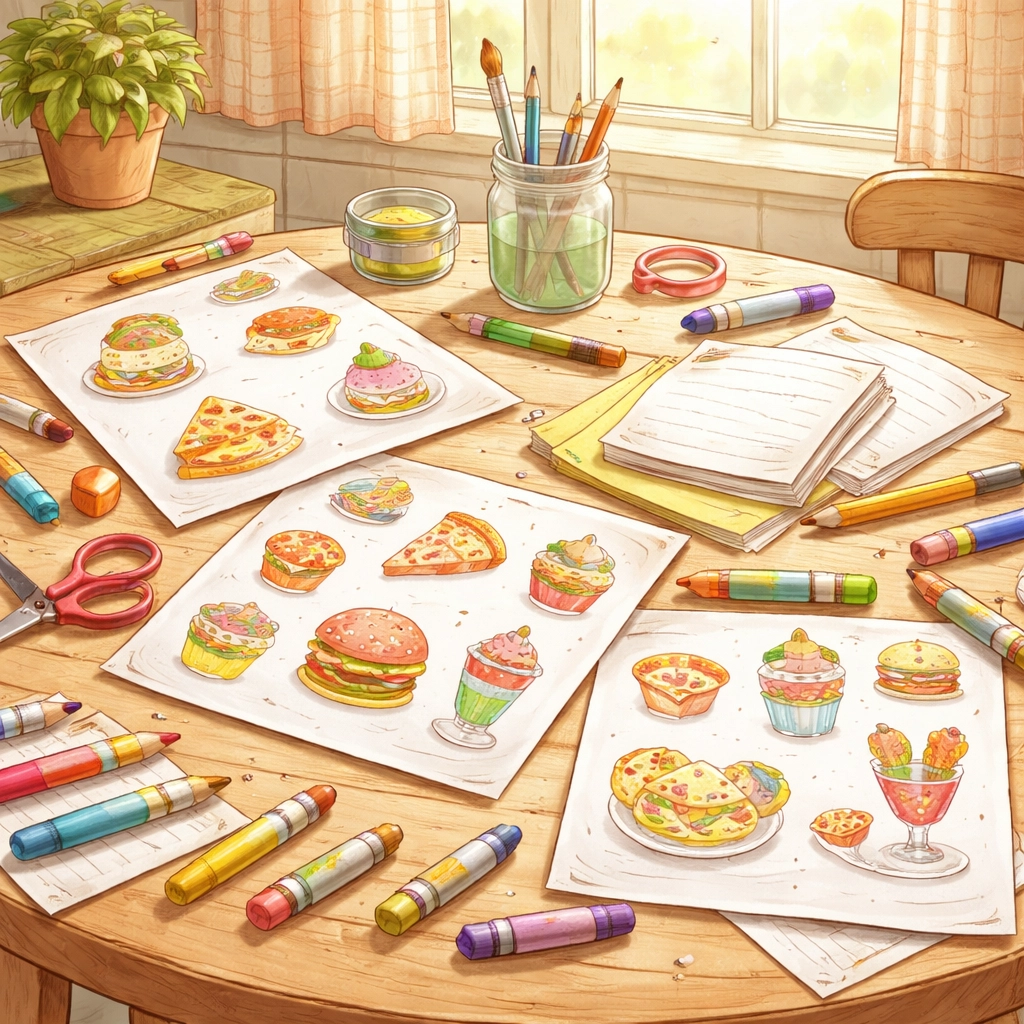
Fold a piece of paper in half like a book, or use a single sheet: whatever feels right. Have your child draw each food item with its name written below (you can write the words for younger kids).
Tips for menu-making:
- Draw pictures big enough to point at easily
- Add silly prices like "$2" or "5 coins" to practice number recognition
- Let kids decorate the menu cover with the restaurant name
- Make 2–3 copies if multiple kids want to be customers at once
Don't worry about artistic perfection here. Wobbly hamburgers and lopsided pizzas are part of the charm. Kids often prefer their own drawings to printed clipart anyway.
Step 3: Set Up the Restaurant Space
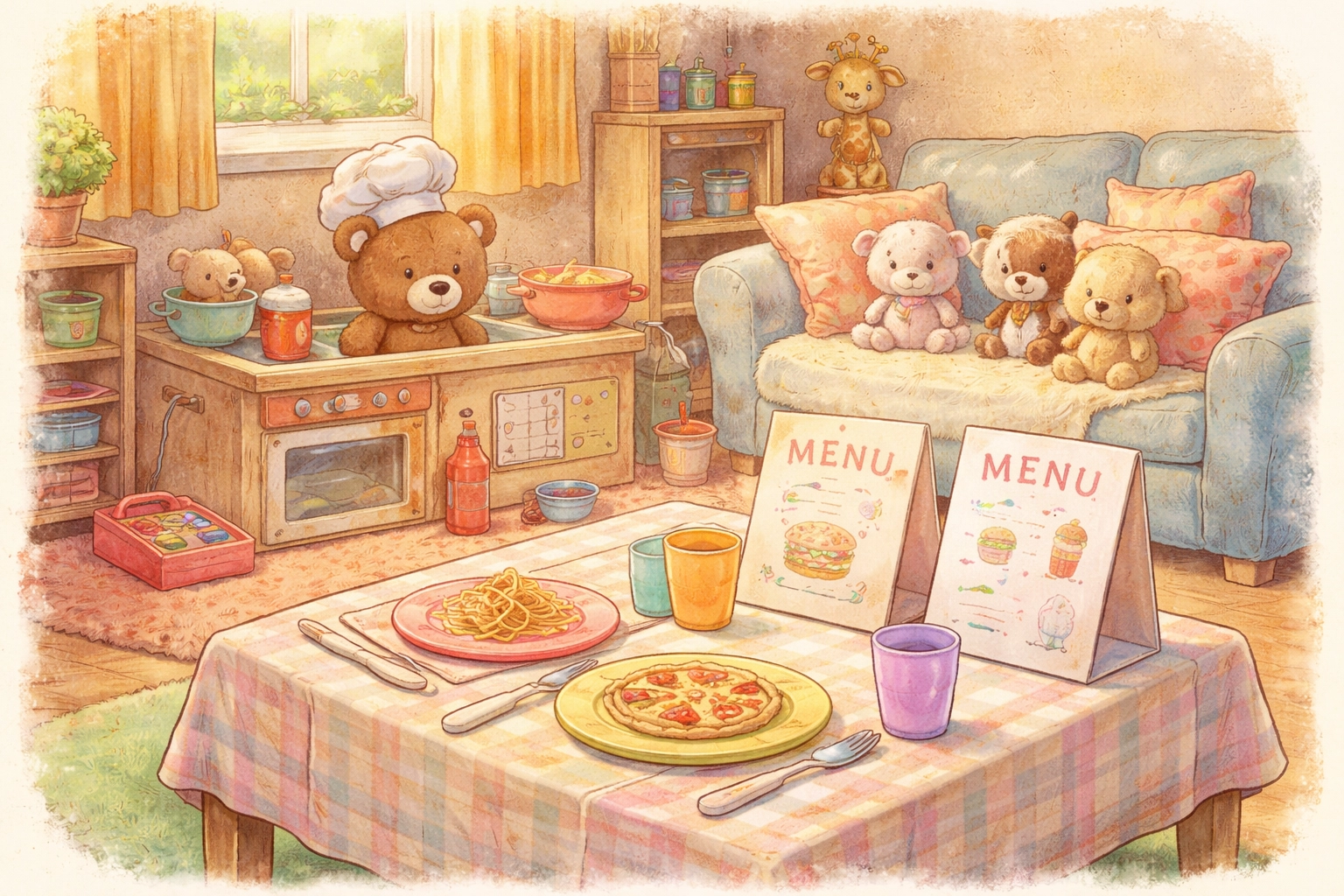
Clear off a small table or use a play kitchen area. Arrange:
- A "kitchen" zone where food gets "prepared" (this can just be a counter or chair)
- A "dining area" with seats for customers
- A spot for the server to stand and take orders
If you have a play kitchen, great. If not, a few plastic bowls and cups work fine. You can even use building blocks or crumpled paper balls as pretend food items.
Step 4: Assign Roles
Decide who plays which part:
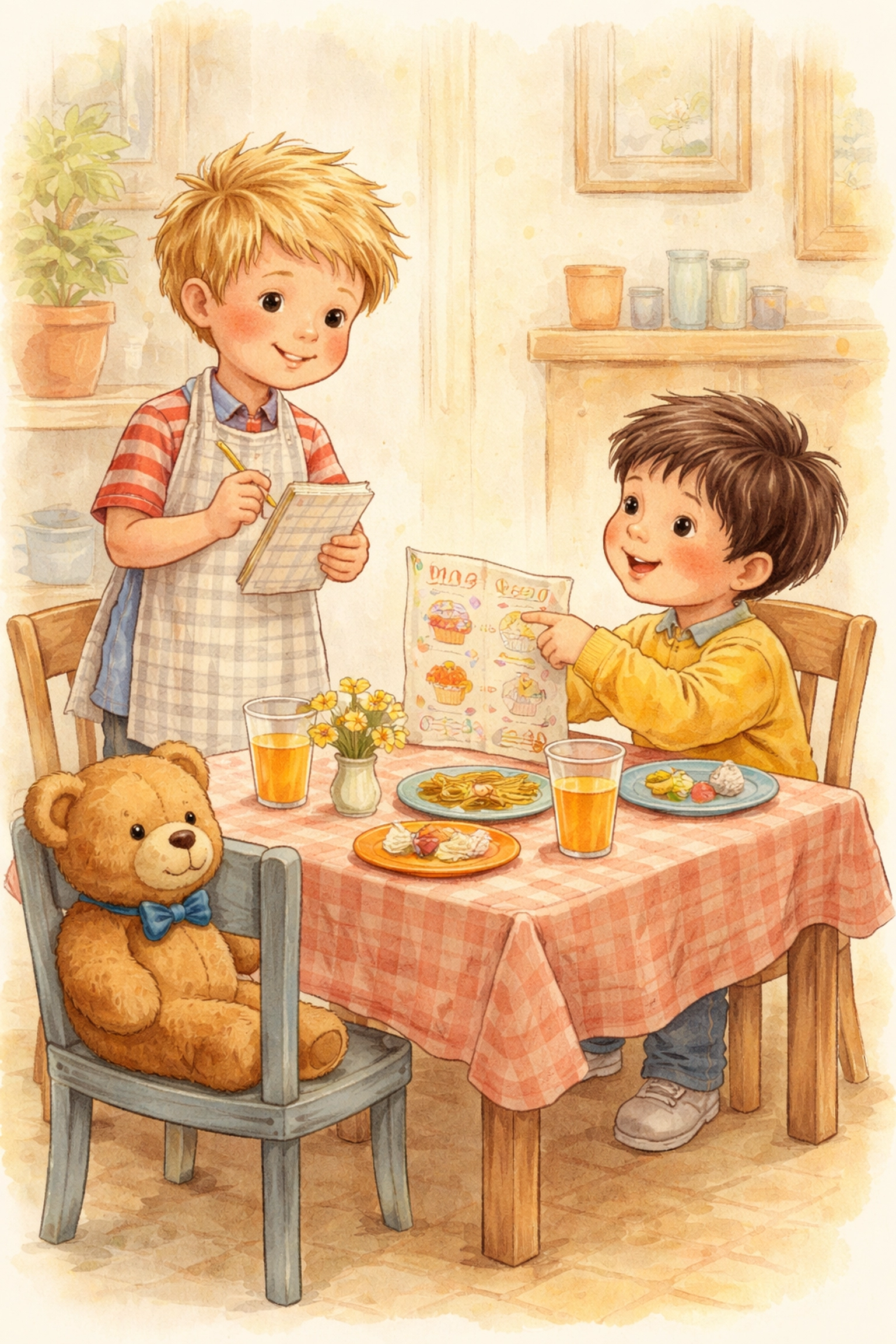
- Server/Waiter: Takes orders, brings food, maybe collects pretend money
- Chef/Cook: "Prepares" the meals in the kitchen area
- Customer(s): Orders from the menu and eats the pretend food
With two kids, one can be server/chef while the other is the customer, then swap. With more kids or adults, you can split roles further. Stuffed animals make excellent additional customers if you need to fill seats.
Step 5: Play!
Here's how a typical round might go:
- Customer sits down at the table
- Server brings a menu and says something like, "Welcome to [Restaurant Name]! Can I get you something to drink?"
- Customer points to pictures and places an order
- Server writes the order on scrap paper or an index card (or pretends to)
- Server takes the order to the "kitchen"
- Chef prepares the food (arranges play items on a plate)
- Server delivers the meal
- Customer eats, maybe orders dessert
- Server brings a pretend check
- Customer pays with play money, buttons, or just says "Here's my money!"
Then swap roles and start again.
Ways to Extend the Fun
Once kids get the basic flow down, you can add layers:
Create specials: Draw a "Today's Special" sign that changes each round.
Add a tip jar: Use a small cup where customers can leave extra "coins" (buttons or paper circles).
Make name tags: Cut rectangles from paper and write server names. Attach with tape or a safety pin on a shirt.
Include a waiting activity: If one child is "waiting for their food," give them a small drawing task or simple puzzle: just like real kid menus at restaurants.
Introduce problems to solve: The kitchen is "out of pizza!" Can the customer pick something else? This builds flexibility and problem-solving skills.
Why This Activity Works So Well
Playing restaurant hits several developmental sweet spots at once:
- Language practice: Kids learn to ask questions, respond politely, and use new vocabulary (order, menu, check, tip)
- Math exposure: Adding up prices, counting coins, and making change are natural fits
- Social skills: Taking turns, waiting patiently, and cooperating as a team
- Fine motor work: Drawing, writing orders, and handling small objects
It's also wonderfully open-ended. Some kids will play for 20 minutes and move on. Others will want to run their restaurant for an entire afternoon, adding new menu items and inventing elaborate backstories for their chef characters.
Troubleshooting Common Hiccups
"My 3-year-old wants to be the server but can't write orders."
No problem. They can draw a squiggle for each item ordered, or just remember verbally. The point is the pretend play, not the penmanship.
"My kids keep arguing over who gets to be what."
Set a timer for 5–10 minutes, then roles rotate. This also keeps the game feeling fresh.
"We don't have play food."
Crumpled paper balls, building blocks, pompoms, or even socks can become any food you need. A rolled-up sock is a surprisingly convincing burrito.
Wrapping Up
Playing restaurant with picture menus is one of those rare activities that costs nothing, takes minimal setup, and often entertains kids far longer than you'd expect. The menus your children create become keepsakes, the play builds real skills, and you might even get a pretend cup of coffee out of the deal.
If your family enjoys creative pretend play, you might also like our guide on how to make a DIY worm composting bin with children: it's another hands-on project that turns everyday materials into hours of learning and fun.
FAQ
- What if my child is too young to write down orders? No problem at all! They can use squiggles, draw symbols, or just point to the pictures on the menu. The goal is the pretend play, not the writing.
- How can I make play food if we don't have a toy kitchen set? You can get creative with household items: crumpled paper can be "scoops of ice cream," building blocks can be "sandwiches," and even rolled-up socks can be "burritos."
- Is this activity good for only one child? Yes! A single child can be the server while you (or even a stuffed animal) act as the customer. It's also fun for them to play both roles by setting the table and then "preparing" the meal for their toys.