




The future of farming combines artificial intelligence, sensors, and robotics to help grow more food using less water, land, and resources: and it's a fascinating topic to explore with your kids right now. Teaching children about high-tech agriculture opens their eyes to careers in STEM, environmental stewardship, and the incredible ways technology can solve real-world problems. Best of all, you can explore these concepts together through hands-on activities at home.
Why Should Families Learn About AI and High-Tech Farming?
Here's the deal: by 2050, our planet will need to feed nearly 10 billion people. Traditional farming methods alone won't cut it. That's where agricultural technology: sometimes called "AgTech": steps in.
Modern farms use GPS satellites, machine learning, and smart sensors to make better decisions about everything from when to water crops to which seeds will thrive in specific soil conditions. Farmers today aren't just working with tractors and shovels: they're partnering with robots and AI assistants that can analyze weather patterns and soil health in real time.
When you introduce these ideas to your kids, you're showing them that farming isn't old-fashioned. It's cutting-edge. And they might just be the generation that takes it even further.
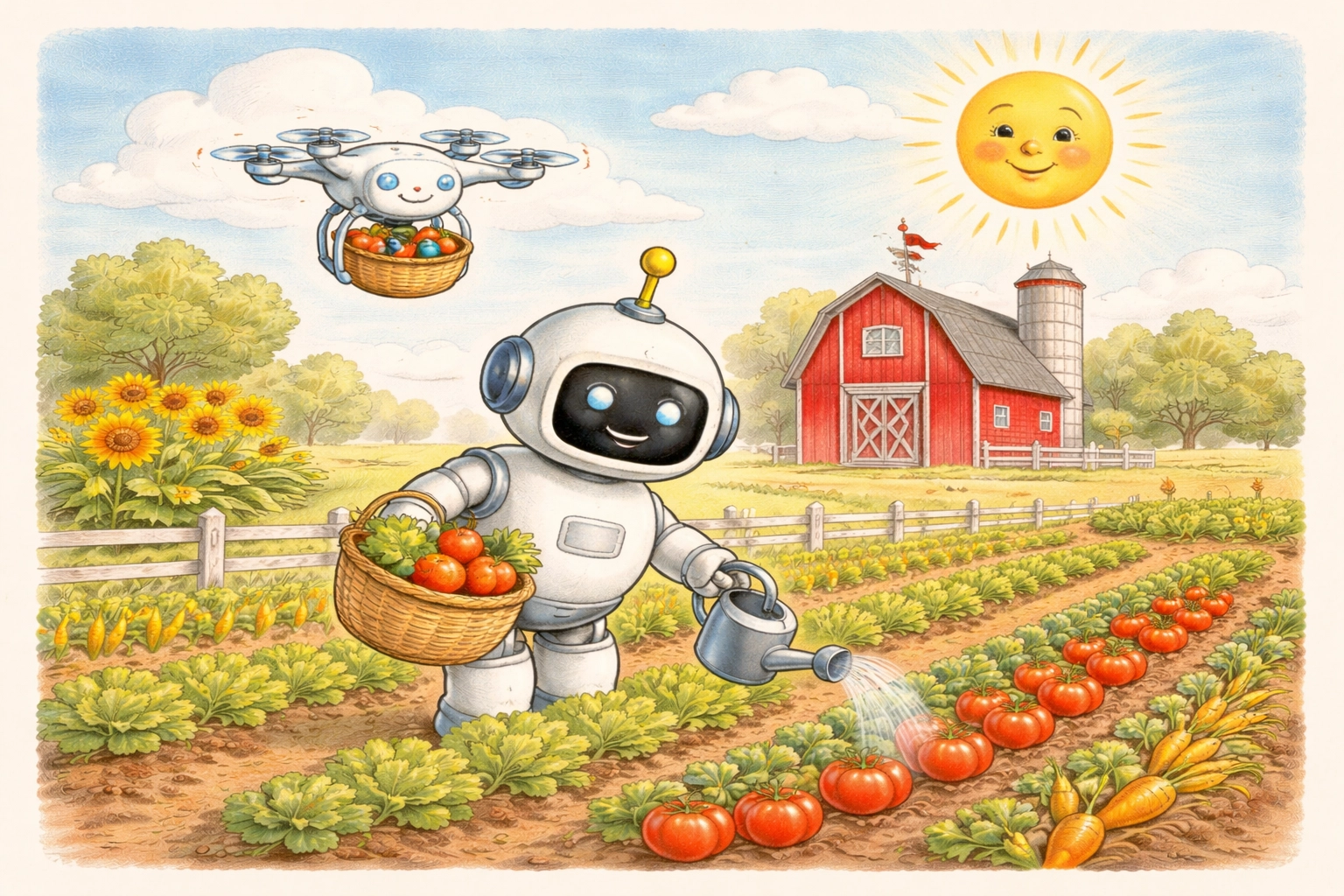
Breaking Down the Tech: What Kids Need to Know
Let's make this simple. Here are the main technologies changing how food grows:
Precision Agriculture
Imagine giving each plant exactly what it needs: not too much water, not too little fertilizer: just the right amount. That's precision agriculture. Farmers use satellite images and GPS to map their fields and treat different areas based on what each section actually needs.
Kid-friendly explanation: "It's like giving every plant its own special recipe instead of making everyone eat the same thing."
AI Farming Assistants
In 2026, farmers can talk to AI helpers that explain problems in plain language. Instead of staring at confusing data, a farmer can ask, "What should I focus on today?" and get a clear answer like, "Field 3 needs water, and there's a pest problem starting in the north corner."
Kid-friendly explanation: "It's like having a super-smart friend who never forgets anything about your garden and always knows what to do next."
Soil-Mapping Robots
Autonomous robots now roll through fields with sensors that measure soil moisture, nutrients, and composition. They create detailed maps showing farmers exactly where to add fertilizer and where the soil is already healthy.
Kid-friendly explanation: "These robots are like doctors giving the dirt a checkup!"
Smart Greenhouses and Vertical Farms
Some farms don't even need soil anymore. Vertical farms stack plants in towers inside buildings, using LED lights and computer-controlled environments to grow food year-round: even in cities.
If your family has explored hydroponic gardening or DIY aquaponics, you've already dipped your toes into this world.
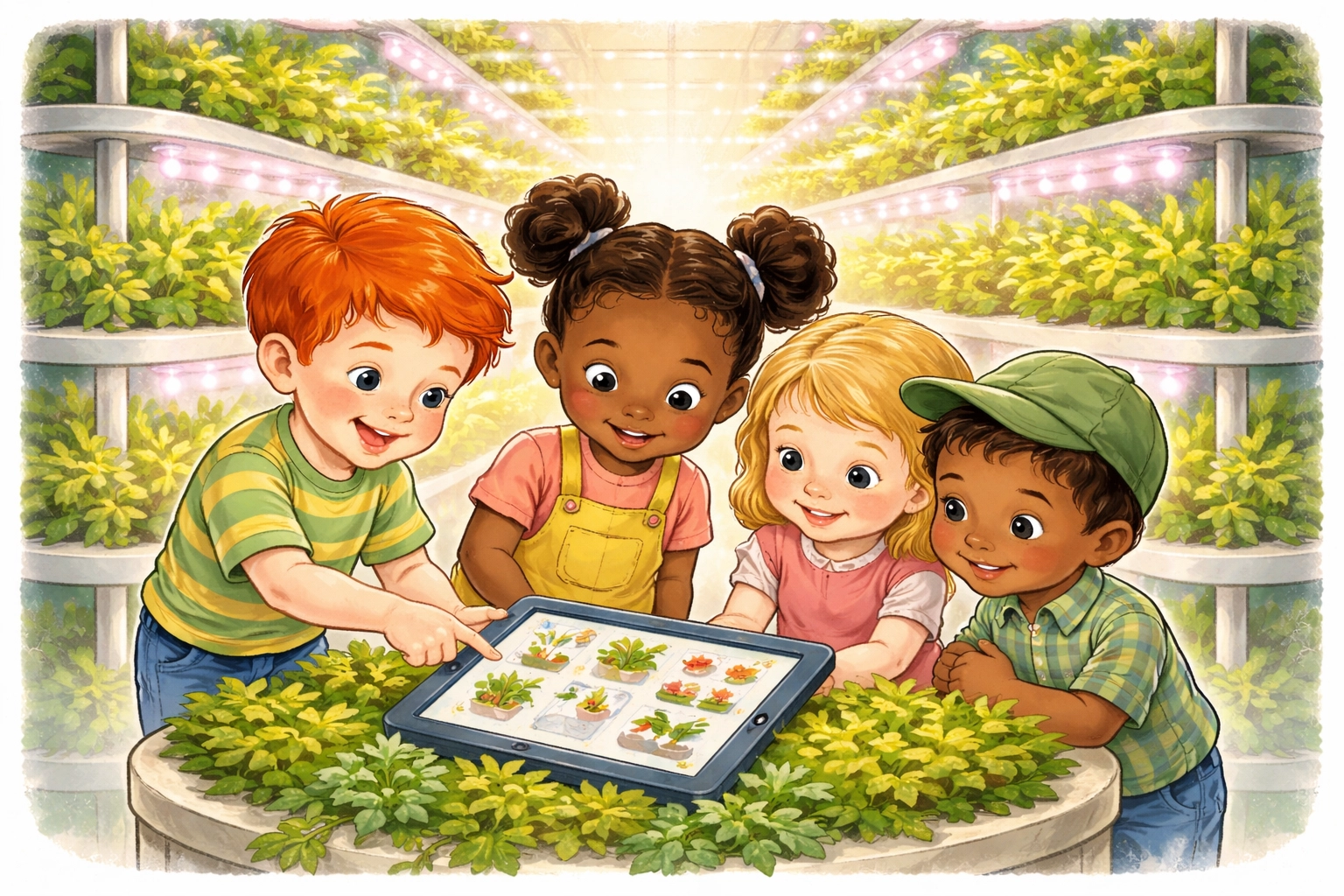
Hands-On Activities: Bring High-Tech Farming Home
You don't need a million-dollar robot to teach your kids about AgTech. Try these budget-friendly projects that capture the same concepts.
Activity 1: Build a Simple Soil Moisture Sensor Station
What you'll need:
- 3 small pots with the same type of plant (beans work great)
- 3 wooden popsicle sticks
- A notebook
- Water
What to do:
- Label your pots A, B, and C.
- Water pot A every day, pot B every three days, and pot C only when the soil feels completely dry.
- Each day, have your child stick a popsicle stick into the soil and observe: Is it wet? Dry? Somewhere in between?
- Record observations in the notebook with simple drawings or words.
- After two weeks, compare plant health across all three pots.
The tech connection: Real soil sensors do this automatically and send data to computers. Your child just acted as the "sensor" collecting information to make better watering decisions!
Activity 2: Create a "Precision Agriculture" Grid Garden
What you'll need:
- A seed tray or shallow container
- String or yarn
- Different types of seeds (radish, lettuce, herbs)
- Potting soil
- Index cards
What to do:
- Fill your container with soil.
- Use string to divide it into a grid of 6-9 squares.
- Plant a different seed type in each square.
- Create index cards for each square noting what's planted, the date, and any special care needed.
- Track which squares need more water, which sprout fastest, and which struggle.
The tech connection: Real precision agriculture divides massive fields into zones and treats each one differently. Your grid garden is a miniature version of the same concept!

Activity 3: Play "AI Farming Assistant"
This one needs zero supplies: just imagination.
How to play:
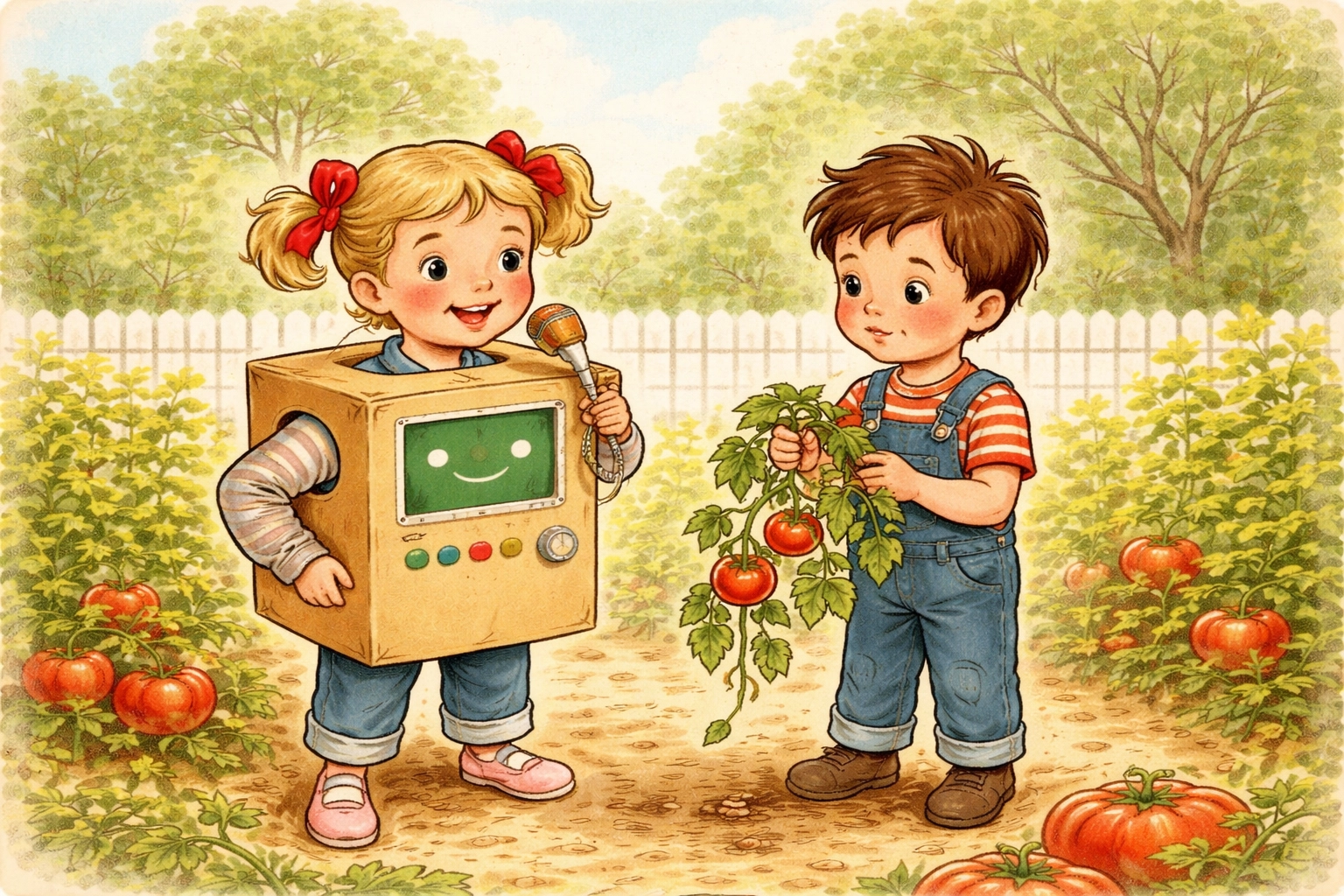
- One person plays the "farmer" and describes a problem: "My tomato leaves are turning yellow!"
- The other person plays the "AI assistant" and asks clarifying questions: "Are they yellow all over or just at the bottom? How much sun do they get? When did you last water them?"
- Based on the answers, the AI assistant gives a recommendation.
- Switch roles and try different farming problems.
The tech connection: This is exactly how conversational AI works on modern farms: asking questions, gathering data, and providing helpful answers in plain language.
Activity 4: Design a Farm of the Future
What you'll need:
- Paper and colored pencils
- Recycled materials (cardboard, bottle caps, straws)
- Imagination
What to do:
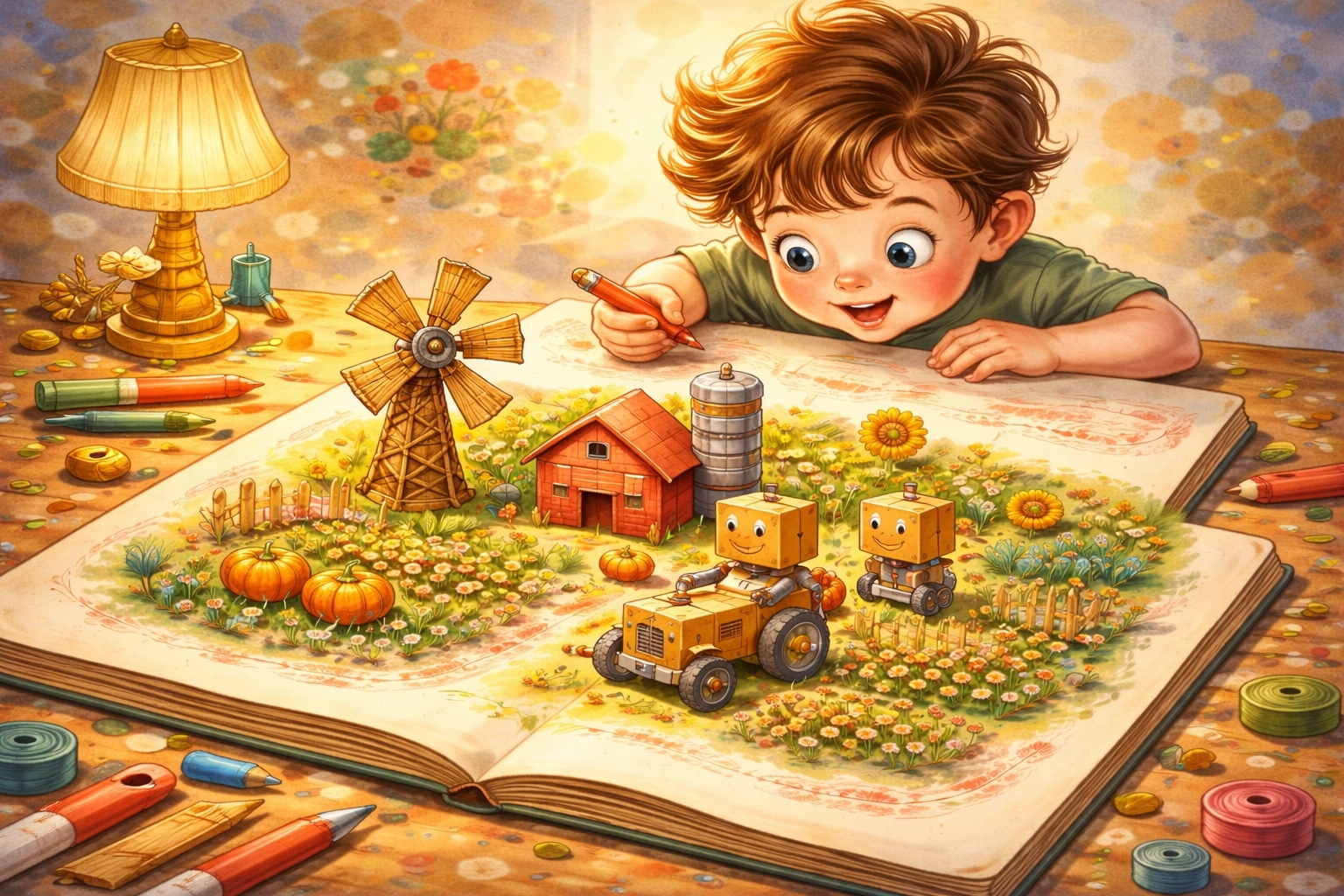
- Ask your child: "If you could design a farm that uses robots, computers, and any technology you can imagine, what would it look like?"
- Have them draw or build a model of their futuristic farm.
- Encourage them to label the technology: "This robot pulls weeds." "This drone checks for bugs." "This computer tells the sprinklers when to turn on."
The tech connection: Agricultural engineers do exactly this: they dream up solutions and then figure out how to build them. Your child is practicing real innovation skills.
What Skills Does This Teach?
When kids explore high-tech farming concepts, they're building more than just agricultural knowledge:
- Data collection and analysis: Recording observations and drawing conclusions
- Systems thinking: Understanding how different parts (water, soil, light, technology) work together
- Problem-solving: Diagnosing plant problems and testing solutions
- Future literacy: Getting comfortable with how technology shapes our world
- Environmental awareness: Seeing how innovation can help us grow more food sustainably
These aren't just "nice to have" skills. They're the foundation for careers in engineering, environmental science, computer programming, and yes: modern farming.
Keeping the Conversation Going
After trying these activities, keep the momentum alive:
- Visit a local farm that uses any kind of technology (even simple drip irrigation counts!)
- Watch family-friendly videos about vertical farms or agricultural robots
- Check out a mini greenhouse project to explore controlled-environment growing
- Ask your kids: "What problem on our farm (or garden) could a robot help solve?"
The future of farming is bright, techy, and full of opportunities for curious kids willing to dig in, literally and figuratively.
FAQ
- How is AI used in farming today? Farmers use AI to check on crop health from drones, manage water use precisely, and even help with harvesting. It’s like having a "super-smart assistant" for the whole farm!
- Can kids learn about high-tech farming at home? Yes! Simple projects like using a moisture sensor for your houseplant or exploring farming apps are great ways for kids to see how technology and nature work together.
- Why is tech important for the future of food? As the world grows, we need smarter ways to grow more food using less water and land. Technology helps make farming more sustainable and efficient for everyone.
References:
- Syngenta Group. "How AI is transforming farming." 2025.
- AgFunder News. "AI trends in agriculture for 2026." 2026.
- European SQAT Project. "Autonomous soil mapping technology." 2025.
- Farm Progress. "Conversational AI in modern agriculture." 2026.