




A bug hotel is a man-made shelter filled with natural materials like sticks, bamboo, pine cones, and dried leaves that provides nesting and hiding spots for beneficial insects. Building one takes about 30 minutes, costs almost nothing, and gives your family a front-row seat to the tiny creatures that keep gardens healthy and thriving.
Ready to roll up your sleeves and create a cozy home for ladybugs, solitary bees, and earwigs? Let's build one together!
Why Your Garden Desperately Needs Insect Friends
Here's something most folks don't realize: your garden is only as healthy as the bugs living in it.
Ladybugs munch on aphids that would otherwise destroy your tomato plants. Solitary bees pollinate your squash, cucumbers, and berry bushes. Earwigs, yes, those slightly creepy-looking fellows: actually eat plant pests and help break down organic matter into rich soil.
Without these tiny helpers, you'd spend a lot more time battling pests and a lot less time enjoying your harvest.

The problem? Modern yards often lack the natural hiding spots insects need. We rake up leaves, clear away dead wood, and tidy things so much that beneficial bugs have nowhere to go. A bug hotel solves this by giving them shelter, nesting spots, and a safe place to raise their young.
Plus, building one with your kids is an absolute blast. They'll learn about ecosystems, practice fine motor skills, and develop a healthy respect for the critters we share this planet with.
What You'll Need: Materials List
The beauty of a bug hotel is that you probably have most materials already lying around your yard or home. Here's what to gather:
For the Structure (choose one):
- An old wooden crate or shoebox
- A clean, cut plastic bottle
- An empty tin can
- A terracotta pot turned on its side
- Stacked wooden pallets (for a larger hotel)
For the Filling:
- Hollow bamboo canes or dried plant stems
- Small sticks and twigs
- Pine cones
- Dried leaves
- Pieces of bark
- Moss
- Straw or dried grass
- Small pieces of broken terracotta pots
Tools:
- Garden scissors or hand pruners
- Sandpaper (optional, for smoothing rough edges)
- Twine or wire (for hanging)
Step-by-Step: Building Your Family's Bug Hotel
Step 1: Choose Your Container
For beginners, start simple. Grab a clean tin can, an old wooden box, or even a large plastic bottle with the top cut off. This becomes the "frame" of your bug hotel.
If you're feeling ambitious, stack several wooden crates or build a simple frame from scrap wood. The bigger the structure, the more insect species you can accommodate!
Step 2: Prepare Your Natural Materials
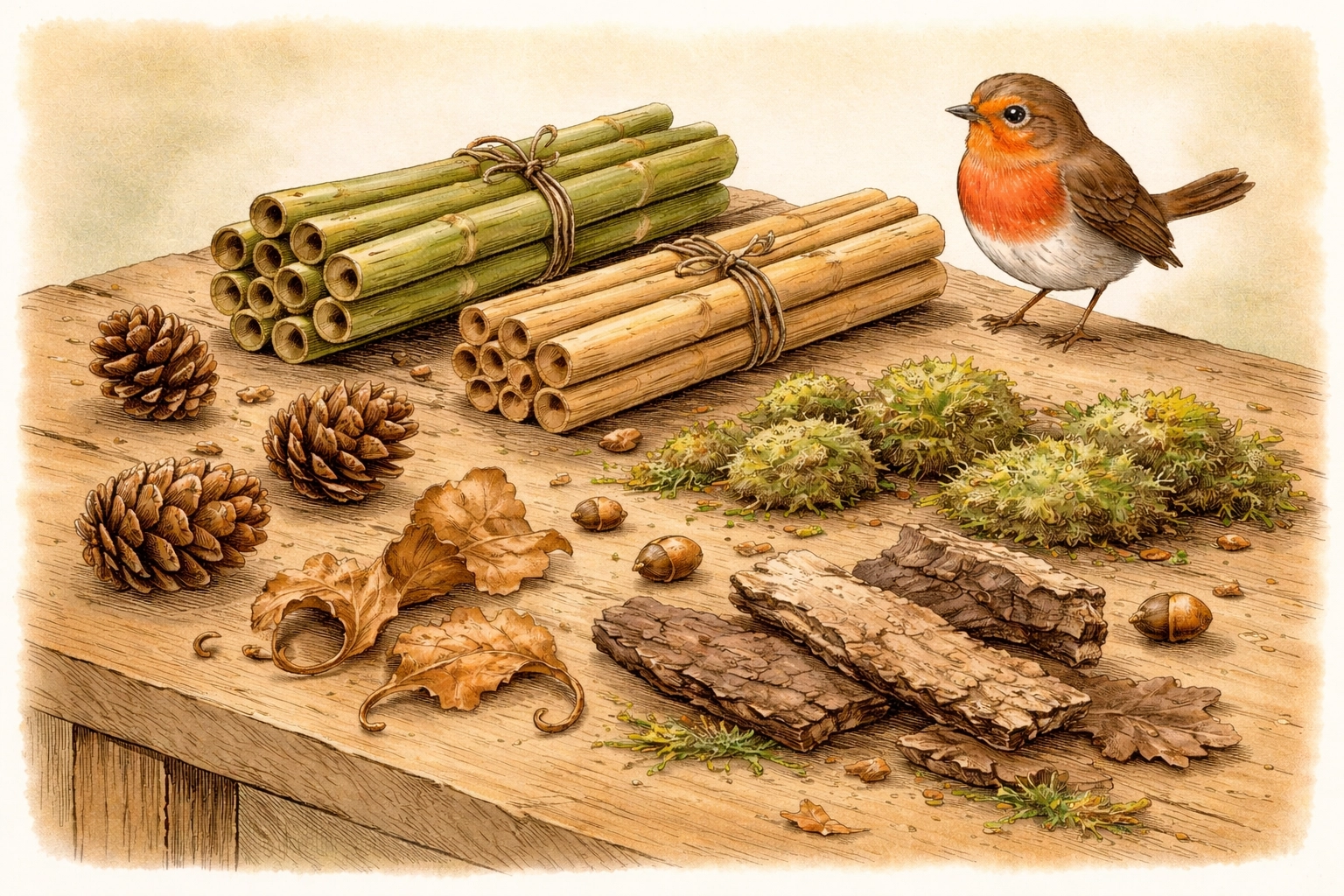
Head outside with your kids for a nature scavenger hunt. Collect:
- Bamboo canes or hollow stems – Cut these to the same length as your container. These become tunnels where solitary bees lay their eggs.
- Sticks and twigs – Bundle them loosely. Beetles and spiders love hiding in the gaps.
- Pine cones – Ladybugs and lacewings tuck themselves between the scales.
- Dried leaves and bark – These create cozy, insulated spaces for overwintering insects.
- Moss – Helps retain moisture and attracts ground beetles.
Pro tip: If using bamboo or hollow stems, run sandpaper lightly along any rough edges. Splinters can actually injure delicate bee wings!
Step 3: Pack Your Hotel Tightly
Here's the trick: pack materials snugly enough that everything stays put when you turn the container on its side, but not so tight that bugs can't crawl inside.
Start by filling the back of your container with larger items like pine cones or bark chunks. Then work forward with bundles of bamboo, sticks, and stems. Fill any remaining gaps with dried leaves, moss, or straw.
Give it a gentle shake. If everything stays in place, you're golden!

Step 4: Create Sections for Different Guests (Optional)
Want to attract a variety of insects? Create distinct "rooms" within your bug hotel:
| Section | Materials | Attracts |
|---|---|---|
| Bamboo bundles | Hollow stems, 3-8mm diameter | Solitary bees |
| Pine cone cluster | Tightly packed pine cones | Ladybugs, lacewings |
| Bark and wood chips | Loose bark pieces, wood shavings | Beetles, earwigs |
| Straw and dried grass | Loosely bundled | Butterflies, moths |
| Corrugated cardboard rolls | Rolled tubes | Lacewings |
You can separate sections with small pieces of wood or just layer them naturally.
Step 5: Find the Perfect Spot
Location matters! Place your bug hotel:
- 1-3 feet off the ground – Either mounted on a fence, hung from a tree, or set on a sturdy shelf
- In a sheltered spot – Protected from heavy rain and strong winds
- Near flowers and plants – Insects need food sources nearby
- Facing south or southeast – Morning sun helps warm up cold-blooded critters
Avoid placing it directly on wet ground, which can cause materials to rot and mold.
Step 6: Wait and Watch
Here's the hardest part: patience!
It may take a few weeks: or even a season: before insects discover and move into your hotel. Once they do, you might notice:
- Small mud "caps" covering bamboo tubes (solitary bees sealing their egg chambers)
- Ladybugs clustering in pine cones during cool weather
- Earwigs peeking out from bark crevices
Resist the urge to disturb them! The more you leave the hotel alone, the more residents you'll attract.
Who Might Check In? Meet Your New Guests
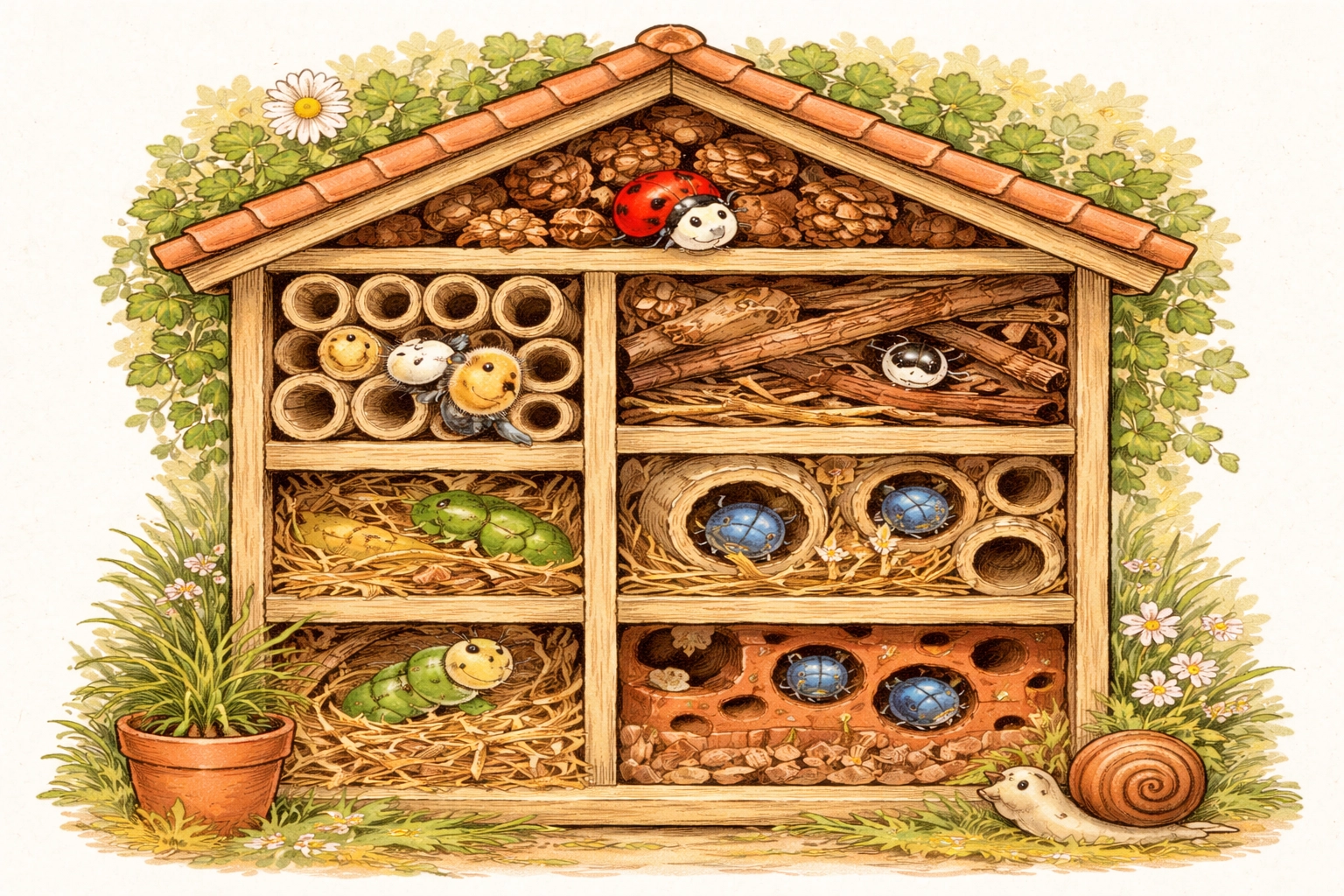
Solitary Bees – Unlike honeybees, these gentle pollinators don't live in hives. They lay eggs in hollow tubes, seal them with mud, and their offspring emerge the following spring. They rarely sting and are incredible pollinators.
Ladybugs – A single ladybug can eat up to 5,000 aphids in its lifetime. They love overwintering in sheltered spots like pine cone clusters.
Lacewings – Their larvae are nicknamed "aphid lions" because they're voracious pest-eaters. Adults tuck into rolled cardboard or straw.
Earwigs – Despite their scary-looking pincers, earwigs are mostly harmless and help control garden pests. They prefer dark, moist spaces like bark pieces.
Ground Beetles – These nighttime hunters eat slugs, snails, and caterpillars. They hide under bark and wood chips during the day.
Tips for Bug Hotel Success
Don't use treated wood. Chemicals in treated lumber can harm insects. Stick to natural, untreated materials.
Replace materials every 2-3 years. As natural materials break down, they become less effective. Swap in fresh bamboo, pine cones, and bark to keep your hotel inviting.
Add a "green roof." Plant sedum or moss on top of your bug hotel for extra insulation and visual appeal.
Keep it dry. A simple slanted roof made from bark or an old tile prevents water from pooling inside.
Observe, don't disturb. Once your hotel has guests, let them be. Constant poking around will drive them away.
Your Garden Will Thank You
Building a bug hotel isn't just a fun weekend project: it's an investment in your garden's health. Those tiny guests will pollinate your vegetables, devour plant-eating pests, and teach your kids that even the smallest creatures play an enormous role in our world.
So grab that old tin can, round up some pine cones, and get building. Your new insect friends are waiting for the vacancy sign to go up!
For more hands-on family garden projects, check out our guide to building a DIY worm composting bin with children or learn how to make a mini greenhouse from plastic bottles.
FAQ: Bug Hotel Questions Parents Ask
- What should we put inside a bug hotel? Hollow sticks, pinecones, dry leaves, and bits of bark are perfect. These provide different "rooms" for different types of helpful insects.
- Where is the best place to put a bug hotel? A quiet, sheltered spot in the garden is best. Most bugs like it a little bit dark and out of the wind.
- Do bug hotels attract 'bad' bugs? Mostly they attract helpful bugs like ladybugs and solitary bees that help your garden grow. Even if a few "pests" move in, the helpful bugs usually keep them in balance!
References:
- Royal Horticultural Society – Building Bug Hotels
- National Wildlife Federation – Creating Habitat for Beneficial Insects
- The Wildlife Trusts – How to Make a Bug Hotel