



The short answer: Most parents make the same handful of indoor gardening mistakes: overwatering, poor drainage, wrong lighting, and skipping the research on what each plant actually needs. The good news? Every single one of these is easy to fix once you know what to look for.
Indoor gardening with kids is one of the best ways to teach patience, responsibility, and a little bit of science. But nothing kills enthusiasm faster than watching a plant slowly turn yellow and mushy while your child asks, "Did I do something wrong?"
You didn't fail. You just need a few adjustments.
Here are the seven most common mistakes parents make with indoor gardening projects: and exactly how to turn things around.
Mistake #1: Overwatering (The Love Drowns Them)
This is the number one plant killer in family homes, and it usually comes from the best intentions. Kids want to help, parents want to encourage that helping, and suddenly your little basil plant is getting watered three times a day.
Why it happens: Many families water on a fixed schedule ("Every Sunday is plant day!") without actually checking if the soil needs it. Plants don't run on calendars.
How to fix it:
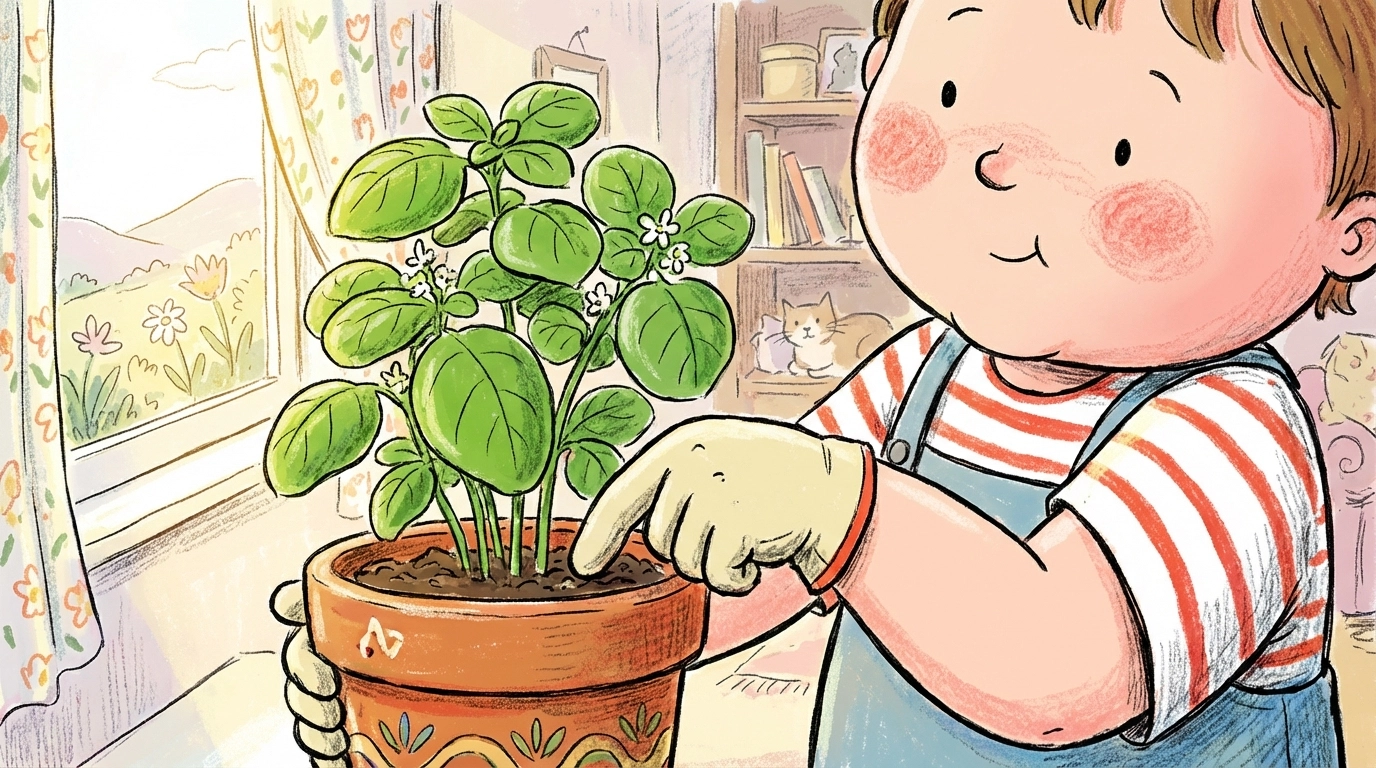
- Teach your child the "finger test": stick a finger about an inch into the soil. If it's dry, water. If it's damp, wait.
- Water thoroughly but less often. Let the water run through the drainage holes, then stop.
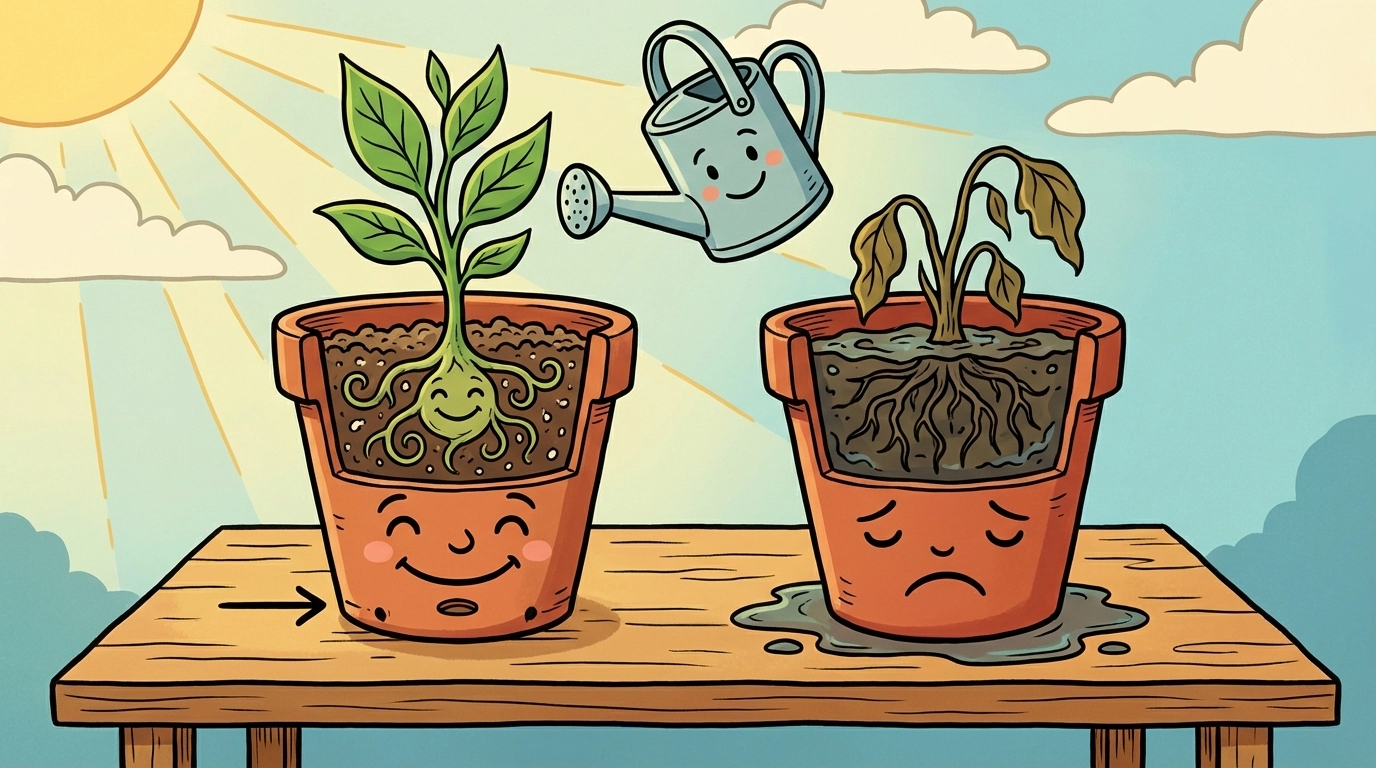
- Empty drip trays within 30 minutes after watering. Standing water leads to root rot faster than you'd think.
- In winter, cut back even more. Plants go semi-dormant and need less water when days are shorter.
Pro tip for kids: Make a simple chart where they check off whether the soil was dry or damp before watering. It turns plant care into a mini science observation.
Mistake #2: Using Pots Without Drainage Holes
Those adorable ceramic pots from the craft store? The painted mason jars from your last family project? They look great. But if they don't have holes in the bottom, you're setting yourself up for soggy, rotting roots.
Why it happens: Decorative pots are everywhere, and drilling holes feels like extra work. Plus, kids love to decorate their own containers.
How to fix it:
- Always choose pots with built-in drainage holes for your actual planting.
- If your child decorated a pot without drainage, use it as a "cache pot": put the plant in a plain grower pot with holes, then set that inside the decorative one.
- When watering, lift the grower pot out, water it over the sink, let it drain completely, then return it to the pretty pot.
This way, your child's artwork still shines, and the plant stays healthy.
Mistake #3: Going Too Big Too Fast (Wrong Pot Size)
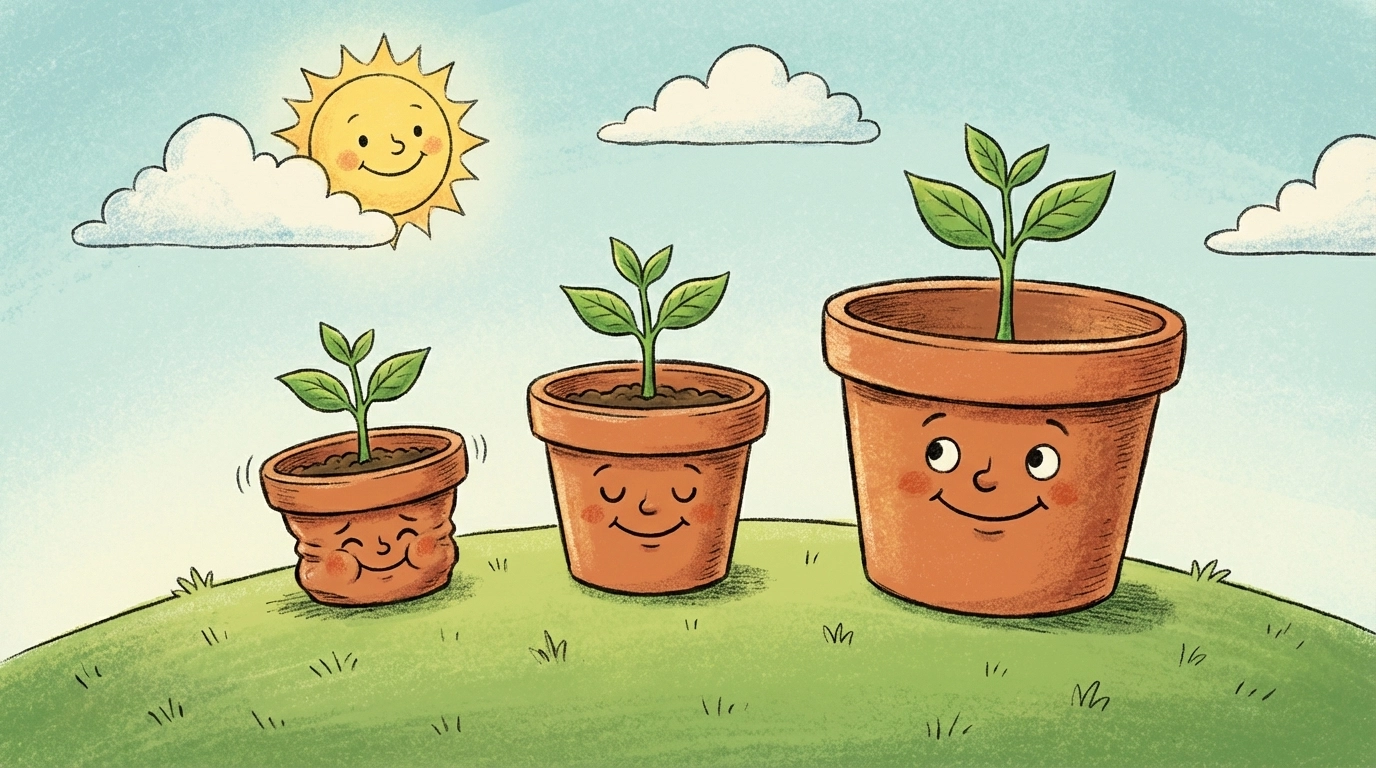
It seems logical: give the plant room to grow! But putting a small plant in an oversized pot is actually one of the sneakier mistakes parents make.
Why it happens: Bigger feels better. And buying a larger pot means you won't have to repot again soon, right?
The problem: When there's too much soil around a small root system, that soil stays wet for way too long. The roots can't absorb all that moisture, and rot sets in.
How to fix it:
- When repotting, only go up by about 2 inches in diameter. That's it.
- Check if roots are actually growing out of the drainage holes before deciding it's time to repot.
- Let the plant get a little snug in its current home before upgrading.
Teaching moment: This is a great opportunity to talk to kids about how "just right" is sometimes better than "bigger." It's the Goldilocks principle of gardening.
Mistake #4: Using the Wrong Soil
Garden soil from outside and potting mix from the store are not the same thing. Using outdoor soil for indoor plants is a recipe for waterlogged, unhappy roots.
Why it happens: It's free! It's right there in the backyard! And honestly, soil is soil… except it isn't.
The problem: Garden soil is designed for outdoor conditions where there's sun, wind, and natural drainage. Indoors, it holds moisture way too long and compacts in containers.
How to fix it:
- Always use potting soil labeled for houseplants or indoor containers.
- For succulents or cacti, grab a mix specifically designed for them: it drains even faster.
- If you're doing a hydroponic project, skip soil entirely and use the appropriate growing medium.
Bonus: Let your kids feel the difference between garden soil and potting mix. One is dense and heavy; the other is light and fluffy. It's a simple sensory lesson.
Mistake #5: Not Giving Plants Enough Light
That cute little plant on the bookshelf in the corner? It's probably stretching toward the window, getting leggy, and slowly losing its color. Light is food for plants, and most homes don't have as much as we think.
Why it happens: We place plants where they look good, not where they'll grow well.
How to fix it:
- Before buying a plant, assess your actual lighting. Which windows get direct sun? Which rooms stay dim?
- Match plants to your light. Low-light plants (pothos, snake plants) can handle darker corners. Herbs and most flowering plants need bright, direct light.
- Consider a small grow light for windowless spaces or dark winter months.
- Rotate your pots a quarter turn each week so all sides get equal light exposure.
Kid-friendly task: Put your child in charge of the weekly rotation. It's a small job that makes a big difference.
Mistake #6: Overdoing the Fertilizer
More food equals faster growth, right? Not with plants. Overfertilizing is like giving your plant a stomachache: it does more harm than good.
Why it happens: Parents see a struggling plant and want to "help" by adding nutrients. Or the fertilizer package makes it seem like frequent feeding is necessary.
The problem: Too much fertilizer burns roots and causes salt buildup in the soil. Your plant ends up worse off than before.
How to fix it:
- Follow the package instructions exactly. If it says once a month, stick to once a month.
- When in doubt, dilute to half strength.
- Never fertilize a stressed or wilting plant: figure out the real problem first (usually water or light).
- Most houseplants don't need fertilizer at all during winter.
Rule of thumb: Less is more. A healthy plant in good light with proper watering will do just fine with minimal feeding.
Mistake #7: Treating All Plants the Same
A cactus and a fern have about as much in common as a goldfish and a cat. Yet many families water, light, and care for every plant identically.
Why it happens: It's simpler. One routine, one schedule, one approach. But plants have wildly different needs.
How to fix it:
- Before bringing a plant home, look up its specific requirements: light, water, humidity, and soil type.
- Group plants with similar needs together. Your succulents can share a sunny windowsill; your tropical plants can hang out in the humid bathroom.
- Make a simple care card for each plant with your child. Write the plant's name, how often it likes water, and how much light it needs.
Teaching moment: This is a perfect chance to talk about how living things have individual needs: just like people, pets, and even the worms in your composting bin.
Quick Reference: The 7 Fixes at a Glance
| Mistake | Quick Fix |
|---|---|
| Overwatering | Use the finger test; water only when dry |
| No drainage holes | Use cache pots or drill holes |
| Pot too big | Go up only 2 inches when repotting |
| Wrong soil | Use indoor potting mix, not garden soil |
| Not enough light | Match plants to your actual lighting |
| Too much fertilizer | Follow directions; less is more |
| Same care for all plants | Research each plant's needs |
The Bottom Line
Indoor gardening with kids doesn't have to end in brown leaves and disappointment. Most mistakes come from caring too much in the wrong ways: too much water, too much fertilizer, too much space.
Scale it back. Pay attention. Let your kids observe and adjust.
That's where the real learning happens.
FAQ: Indoor Gardening with Kids
- What is the most common mistake with indoor plants? Overwatering is the number one issue. Most plants like to dry out a little between drinks, so checking the soil with your finger before watering is a great habit to teach kids.
- Why do indoor plants sometimes die even with water? Lack of light is a big reason. Most vegetables and herbs need 6-8 hours of direct sun. If your home is dark, using a simple grow light can make all the difference.
- Can kids really handle the cleanup of indoor gardening? Yes! Use a tray or a plastic tablecloth under your project to catch any stray dirt. It makes cleanup a quick 2-minute job and teaches kids to respect their workspace.
References:
- General houseplant care best practices
- Container gardening guidelines for indoor environments