




Quick answer: To set up a backyard camping scavenger hunt, gather your camping gear and nature items, create an age-appropriate checklist, define clear boundaries in your yard, and let your little explorers loose! This simple activity combines the thrill of a family camping adventure with the safety and convenience of your own backyard, no bug spray required (okay, maybe a little).
If you're looking for backyard activities for kids that spark curiosity and get everyone outside, a camping-themed scavenger hunt checks all the boxes. It's educational, active, and the kind of memory-making fun that kids talk about for weeks.
Let's set this up.
Why a Backyard Camping Scavenger Hunt Works So Well
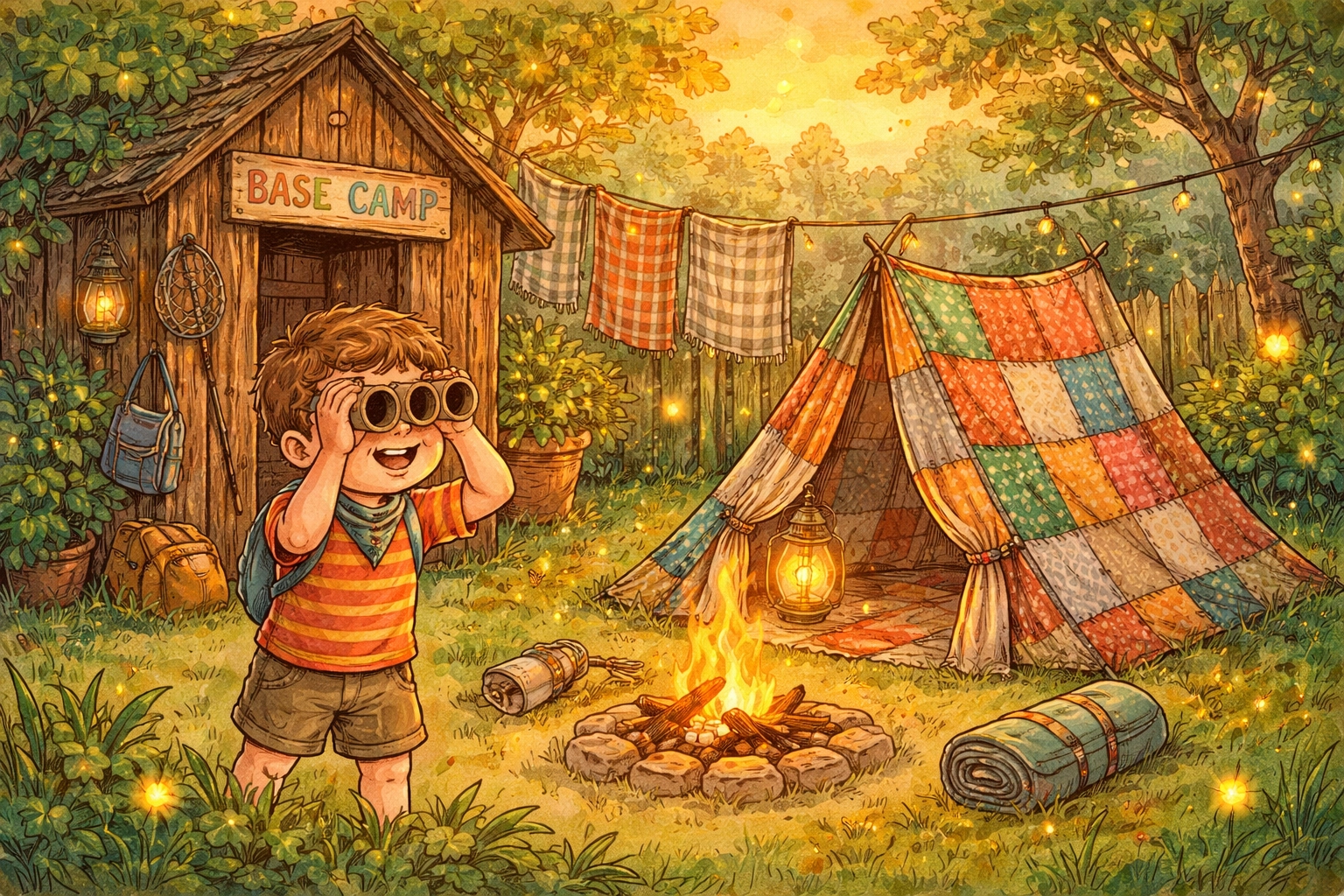
Here's the thing about scavenger hunts: they tap into every kid's natural desire to explore. Add a camping twist, and suddenly your backyard transforms into wilderness territory. The clothesline becomes a "forest boundary." The garden shed? Base camp.
This activity works for ages 3 to 12 (with some tweaks), requires minimal prep, and costs next to nothing. Plus, you don't have to actually sleep on the ground to give your family that family camping adventure feeling.
Materials You'll Need
Before you send your crew into the "wild," gather these supplies:
| Item | Purpose | Notes |
|---|---|---|
| Printed scavenger hunt lists | One per child | Use pictures for non-readers |
| Clipboards or cardboard backing | Writing surface | Makes checking items easier |
| Pencils or crayons | Marking off items | Crayons work better for little hands |
| Flashlights | For evening hunts | Optional but adds major fun |
| Collection bags or baskets | Gathering nature items | Paper bags work great |
| Small prizes | Motivation and celebration | Stickers, glow sticks, trail mix bags |
| Timer (optional) | Adds excitement | Phone timer works fine |
| Camping gear for display | Part of the hunt | Tent, sleeping bag, lantern, etc. |
Most of these you probably already have lying around. The magic is in the setup, not the spending.
Step 1: Scout Your Backyard First
Walk your yard alone before the kids get involved. Look at it through explorer eyes.
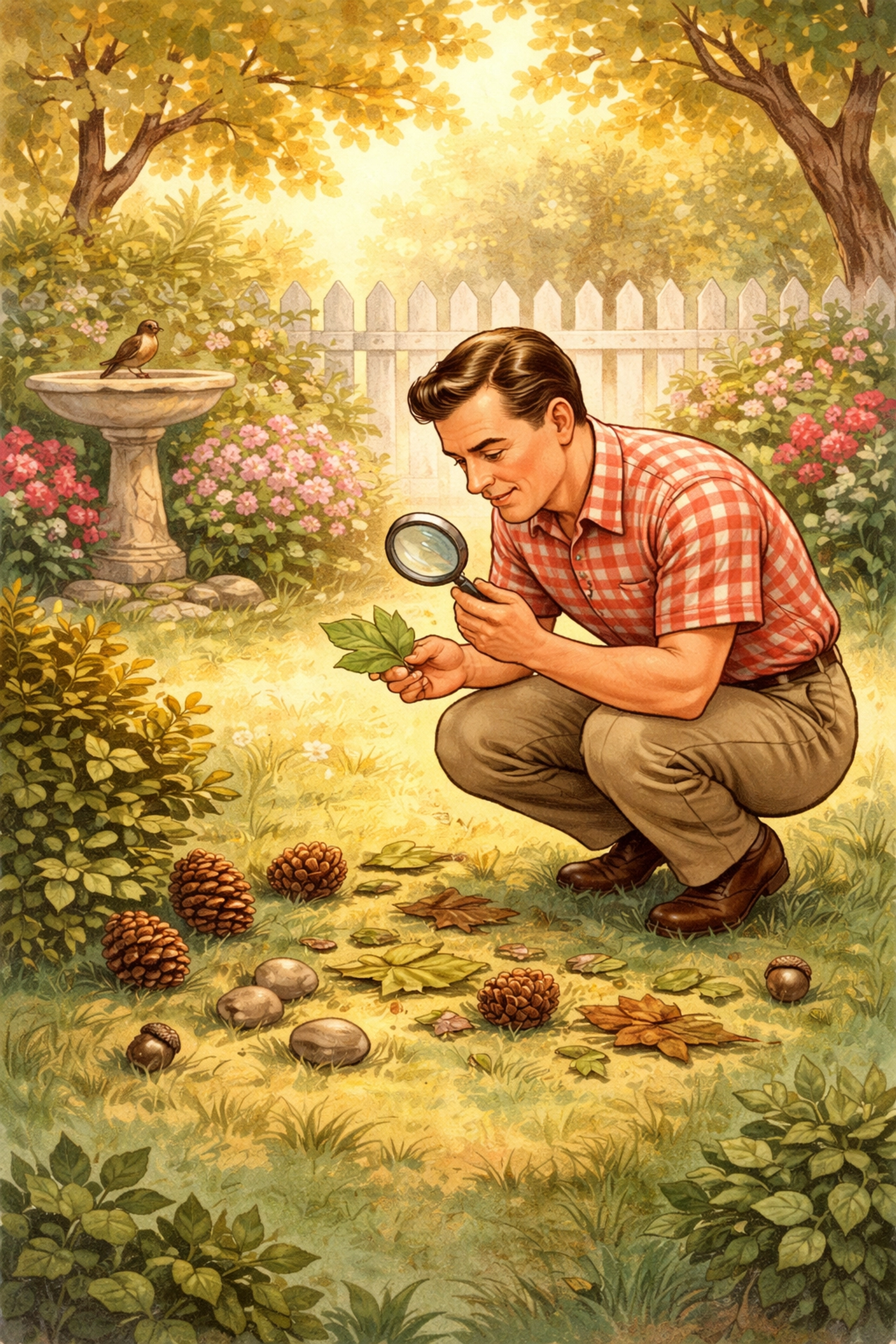
What's actually out there? Pinecones? Dandelions? A specific type of leaf? That old birdhouse you forgot about? Make note of 15-20 items that are genuinely findable. Nothing frustrates a kid faster than searching for something that doesn't exist.
Also, identify any off-limits zones. The vegetable garden. The neighbor's fence line. The area where the dog does his business. Clear boundaries keep everyone safe and prevent "But I thought I could go there!" meltdowns.
Step 2: Create Your Camping-Themed Checklist
Here's where the camping theme really shines. Mix nature finds with camping gear items you've strategically placed around the yard.
Sample Backyard Camping Scavenger Hunt List:
Nature Items:
- A smooth rock
- Something green
- A fallen leaf
- A flower (don't pick, just find!)
- Something that makes noise in the wind
- An insect (look, don't touch)
Camping Gear Items (pre-placed by you):
- A flashlight
- A sleeping bag
- A camping lantern
- A compass
- A water bottle
- A trail map (you can draw a silly one)
Experience Items:
- Find a cozy spot to "set up camp"
- Discover the best place to stargaze
- Locate a hiding spot for wildlife watching
For younger kids (ages 3-5), use pictures instead of words. Draw simple icons or print clip art. For older kids, add riddles or coordinates for an extra challenge.
Step 3: Set Up Your "Campsite" Stations
This is where parents get to have some fun too.
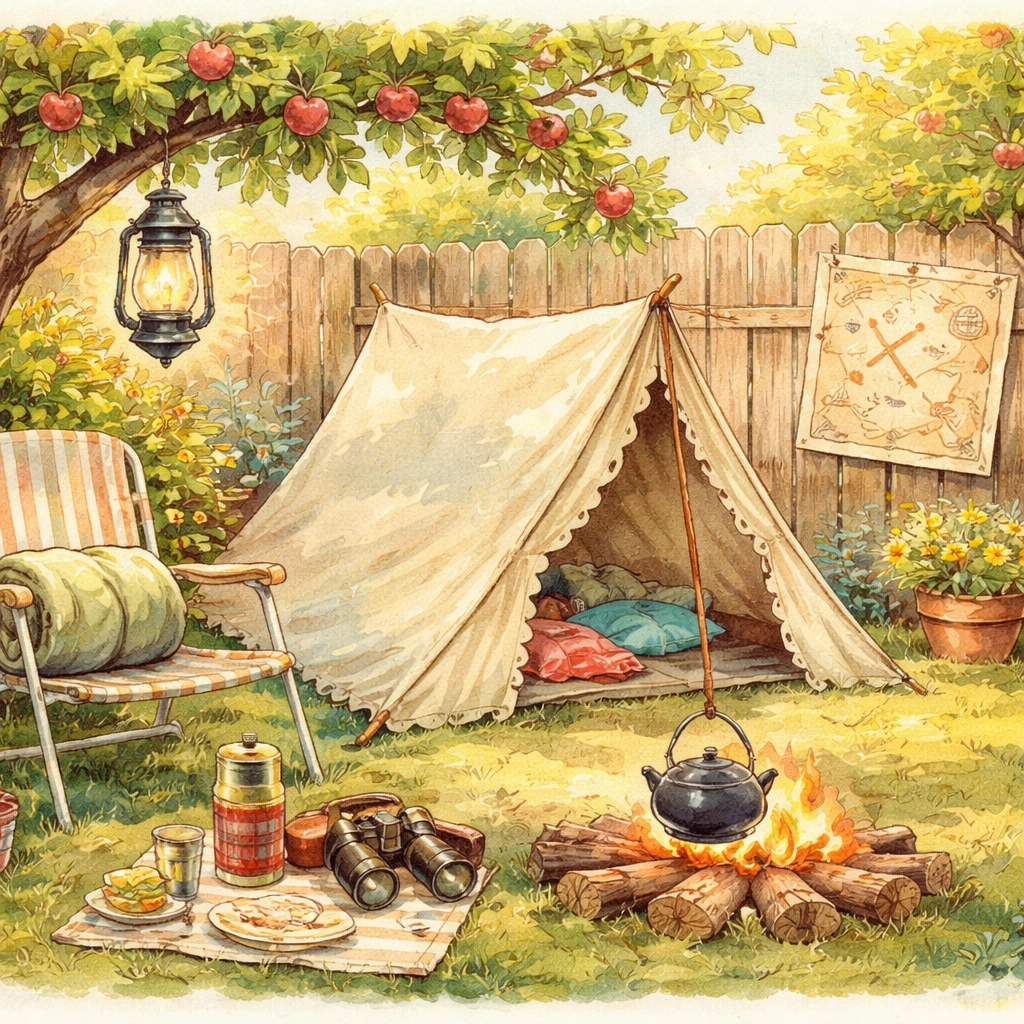
Scatter your camping gear items throughout the yard in semi-hidden spots. Tuck the flashlight behind a flower pot. Drape the sleeping bag over a lawn chair. Hang a lantern from a low tree branch.
Create a "home base" area with a small tent or blanket fort. This becomes mission control, where kids start the hunt, where they return with their finds, and where victory snacks await.
If you have multiple children, consider creating separate hunt zones so nobody's fighting over the same pinecone.
Step 4: Explain the Rules (Keep It Simple)
Gather your adventurers at home base and lay out the ground rules:
- Stay inside the boundaries (point them out clearly)
- Check off items as you find them (don't collect living things)
- No running near the garden/deck/pool (adjust for your yard)
- When the timer goes off, head back to base camp
- Everyone who participates gets a prize
That last rule matters. This isn't about competition, it's about exploration. Every kid should feel like a successful adventurer.
For evening hunts with flashlights, add a buddy rule: nobody explores alone. This builds teamwork and prevents tripping hazards when the sun goes down.
Step 5: Let Them Loose (And Resist the Urge to Help Too Much)
Here's the hardest part for us parents: step back.
Kids learn by doing. If they're struggling to find "something smooth," resist jumping in with hints immediately. Let them problem-solve. Let them look under things. Let them ask each other for help.
You can float nearby for safety, but try to be a passive observer rather than a hunt director. The discovery is the whole point.
Step 6: Celebrate and Extend the Fun
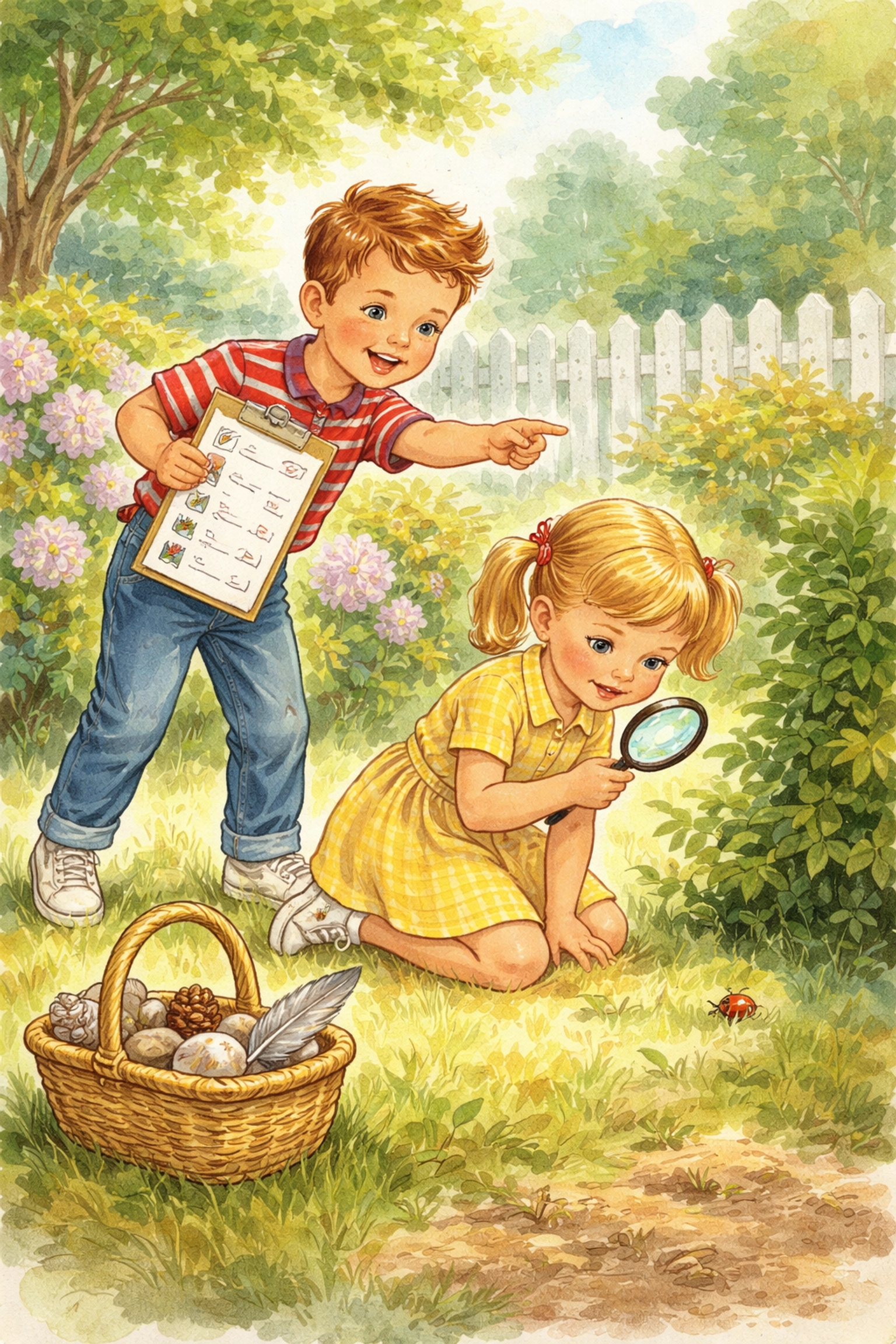
When everyone returns to base camp, make a big deal out of their finds. Ask questions:
- "Where did you find the smooth rock?"
- "What was the hardest thing to find?"
- "Did anything surprise you?"
Then break out the prizes and snacks. S'mores ingredients work perfectly with the camping theme (even if you're just using the microwave inside).
Want to extend the adventure? Consider adding these activities from our Kids Crafts collection:
- Have kids draw a "trail map" of the hunt
- Create a nature journal entry about their favorite find
- Build a mini campfire ring with collected rocks (no actual fire needed)
Tips for Different Ages
Ages 3-5: Use a picture-based list with only 6-8 items. Stay close. Focus on big, obvious finds. Skip the timer, let them explore at their own pace.
Ages 6-8: Add 10-12 items with a mix of easy and challenging finds. Introduce the timer for gentle competition. Let them work in pairs.
Ages 9-12: Ramp up the difficulty with riddles, GPS coordinates, or multi-step clues. Add a mystery element, maybe they're "searching for the lost camping supplies."
Rainy Day Backup Plan
Weather happens. If your hunt gets rained out, bring it indoors. Hide camping gear around the house, swap nature items for household objects ("find something red," "locate a book about animals"), and run a flashlight hunt with the lights dimmed.
Same adventure, different terrain.
Frequently Asked Questions
How long does a backyard camping scavenger hunt typically take?
Most hunts run 20-45 minutes, depending on the number of items and your child's age. Younger kids tire faster, so aim for the shorter end.
What if my yard is really small?
Small yards work great! Hide items in creative spots, behind pots, under chairs, tucked into bushes. The size of the adventure isn't measured in square feet.
Can I do this hunt at night?
Absolutely. A flashlight scavenger hunt adds major excitement. Just check your yard for tripping hazards first and keep kids in pairs.
How do I make the hunt fair for kids of different ages?
Give younger kids a head start, create age-specific lists, or pair older kids with younger siblings as "hunt buddies."
What are good prizes for a scavenger hunt?
Glow sticks, stickers, small flashlights, trail mix bags, or even "coupons" for special privileges (pick tonight's movie, stay up 15 minutes late) work wonderfully.
How do I keep kids from fighting over items?
Create duplicate items in separate zones, use individual lists with different colored pencils, or focus on experiential items ("find a cozy spot") that can't be "taken" by someone else.
What's the best time of day for this activity?
Late afternoon works well, warm enough to be comfortable, with evening light adding atmosphere. Dusk hunts with flashlights are particularly magical.
Can I reuse this hunt?
Yes! Change up the item list, hide gear in different spots, or add new challenges. Kids love revisiting favorite activities with fresh twists.