




Yes, you can grow a "stinky" garlic garden to help protect your other plants, and it typically costs under $10 to get started! Garlic's strong sulfur compounds and pungent aroma tend to deter many common garden pests like aphids, caterpillars, mites, and even some small mammals. By planting garlic strategically around your garden beds, you're creating a natural, budget-friendly defense system that smells a whole lot better than store-bought chemicals.
This is one of those projects that feels almost too good to be true: you spend a few dollars, plant some cloves, and your tomatoes, peppers, and roses may get extra protection from nibbling critters. Plus, you get to harvest garlic later for the kitchen. Win-win!
Let's dig into exactly how to set up your own stinky garlic fortress.
Why Does Garlic Work as a Natural Protector?
Garlic isn't just delicious, it's also a bit of a superhero in the garden. Here's the science made simple:
Sulfur accumulation: Garlic naturally draws sulfur into the soil around it. This sulfur can act as a mild fungicide, which may help reduce certain plant diseases in nearby crops.
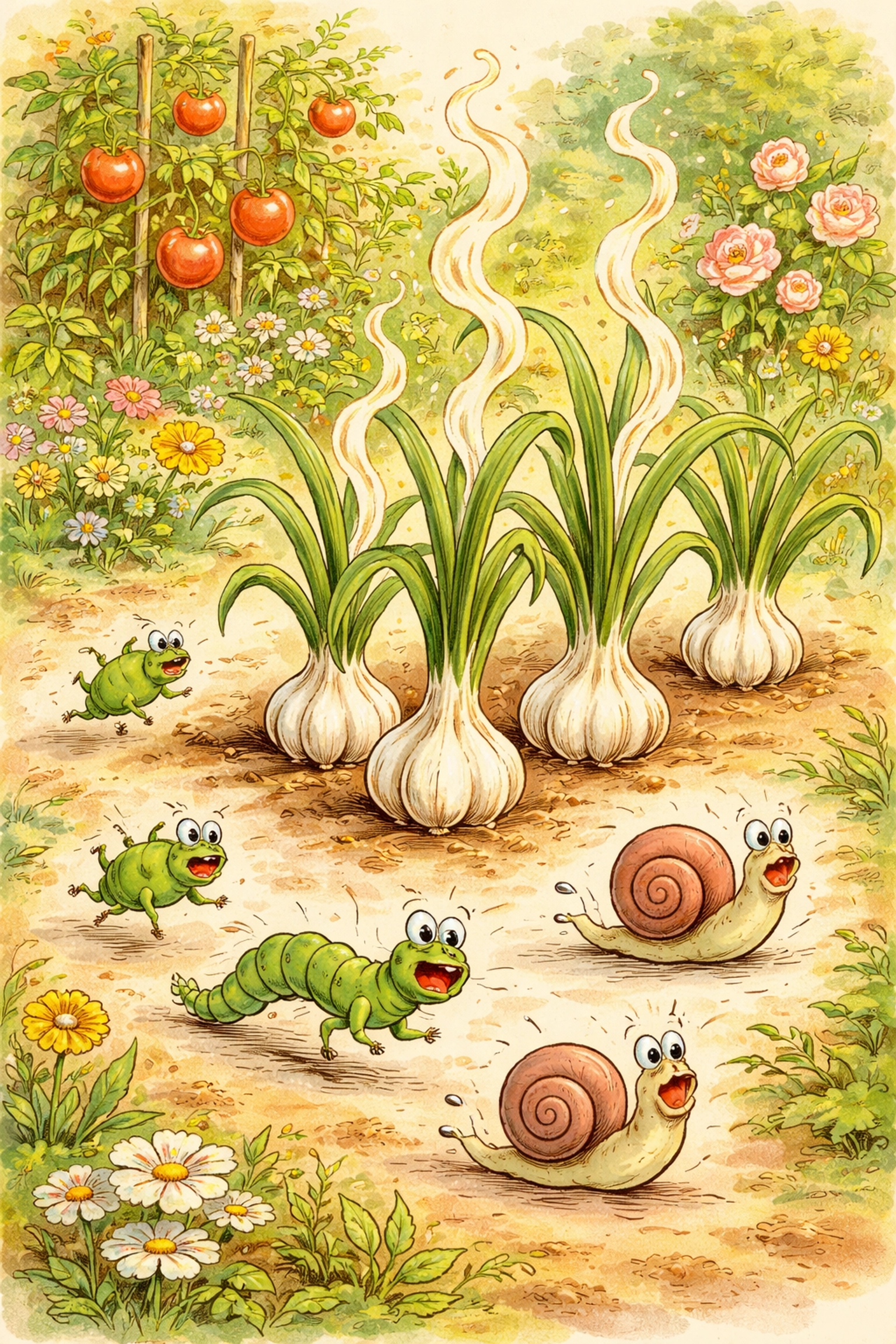
Potent odor: That unmistakable garlic smell comes from sulfur compounds called allicins. Many pests, including aphids, Japanese beetles, cabbage loopers, fungus gnats, snails, and even some deer and rabbits, tend to steer clear of areas with strong garlic aromas.
The protective effects can sometimes linger for weeks even after the garlic is harvested, so your "stinky shield" may keep working long after you've pulled the bulbs.
What You'll Need (Under $10)
Here's a simple materials table to get your garlic garden started without breaking the bank:
| Item | Estimated Cost | Notes |
|---|---|---|
| Garlic bulbs (2-3 heads) | $2–$4 | Look for organic garlic at the grocery store or farmer's market. Each head contains 8-12 cloves. |
| Small trowel or old spoon | $0–$2 | You likely have one already! |
| Compost or potting soil | $3–$5 | A small bag works fine for a starter garden. |
| Recycled containers (optional) | $0 | Old buckets, yogurt containers, or tin cans work great if you don't have garden beds. |
| Total | Under $10 |
Pro tip: Don't use garlic from the grocery store that's been treated with sprout inhibitors, it may not grow well. Look for "seed garlic" at garden centers or choose organic heads that haven't been chemically treated.
Step-by-Step: Planting Your Stinky Garlic Garden
Step 1: Choose Your Location
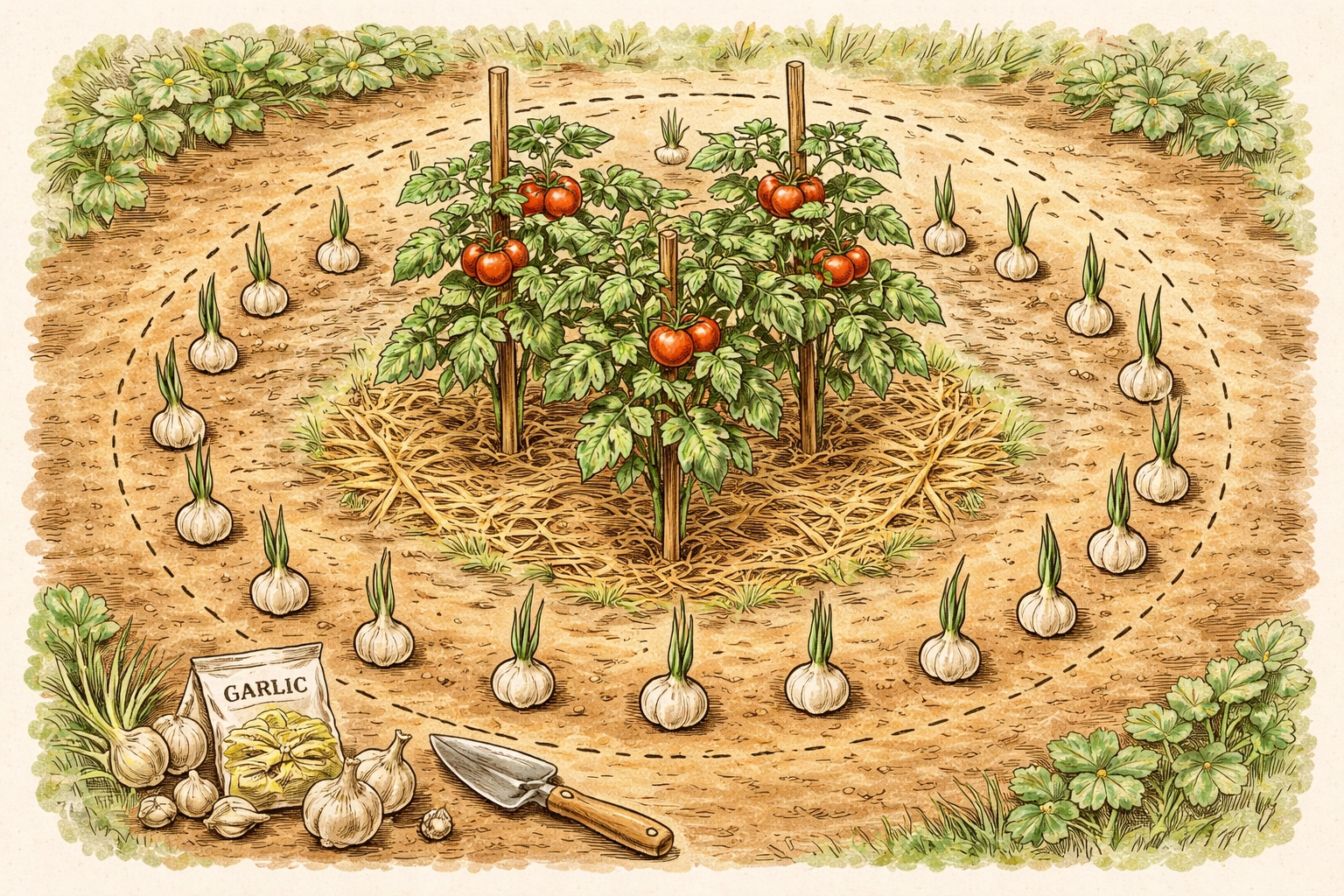
Garlic thrives in spots with good drainage and at least 6 hours of sunlight. If you're companion planting (growing garlic alongside other vegetables), consider placing your garlic:
- Around borders of garden beds for a protective "fence"
- In circles around vegetable hills like potatoes
- Between rows of vulnerable crops like tomatoes or peppers
- Behind tall plants on the north side so they won't shade the garlic
If you're working with containers, any sunny windowsill or porch corner can work.
Step 2: Prepare Your Soil
Garlic appreciates loose, well-draining soil. If your soil is heavy clay, mix in some compost or potting soil to lighten it up.
For container gardening, fill your recycled containers (make sure they have drainage holes!) with potting soil, leaving about an inch from the top.
Step 3: Separate the Cloves
Gently break apart your garlic heads into individual cloves. Keep the papery skin on each clove, it helps protect them as they grow. Choose the largest, healthiest-looking cloves for planting; save the smaller ones for cooking.
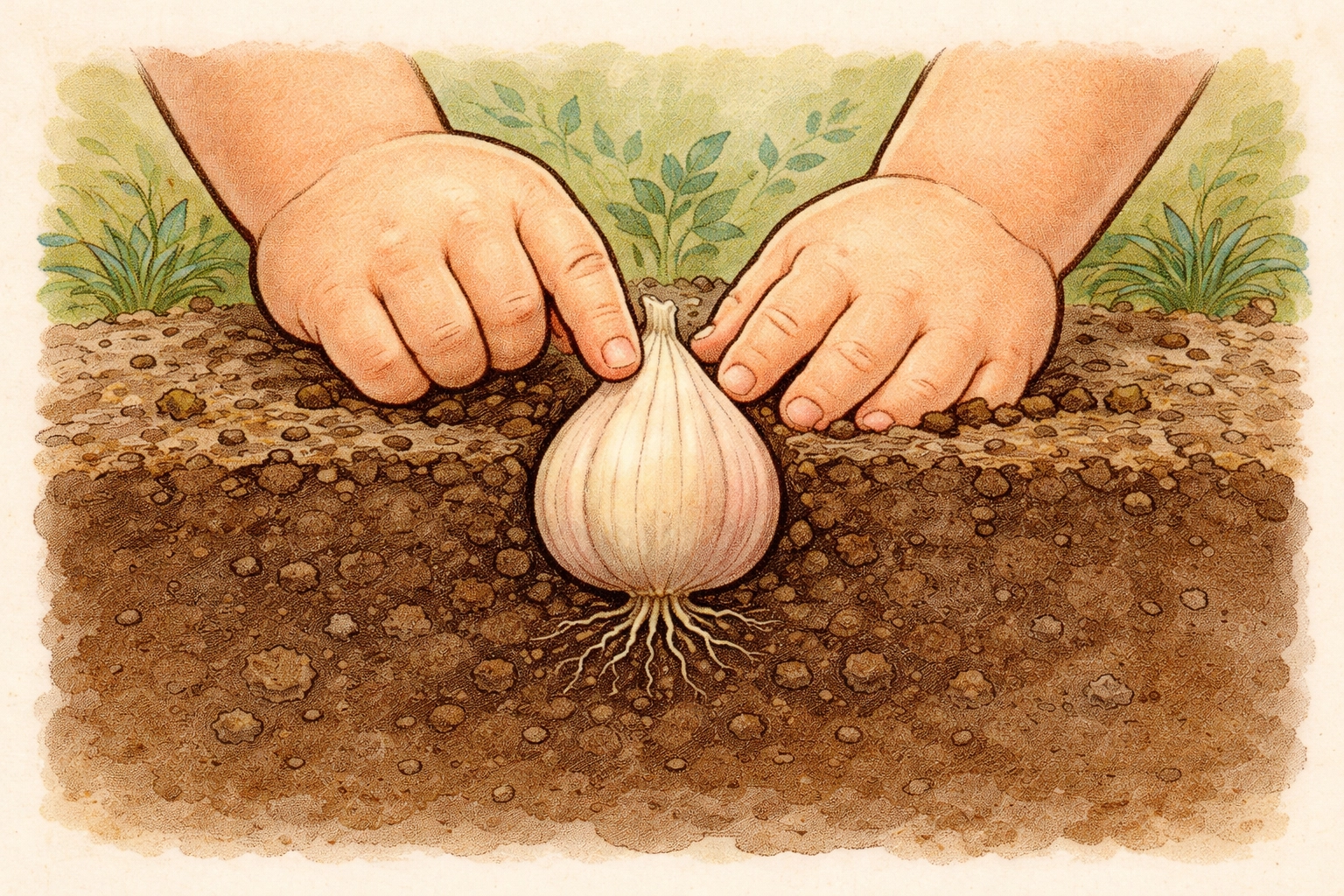
Step 4: Plant Pointy Side Up
This is the most important part! Each clove has a flat end (the root end) and a pointy end (where the shoot emerges).
- Poke a hole about 2 inches deep
- Drop the clove in with the pointy end facing up
- Cover with soil and gently pat down
- Space cloves about 4-6 inches apart
Step 5: Water and Wait
Give your newly planted cloves a good drink of water. Garlic doesn't like soggy soil, so water when the top inch feels dry.
In most climates, garlic planted in fall will be ready to harvest the following summer. If you're planting in early spring, you may get smaller bulbs but you'll still enjoy the pest-deterring benefits throughout the growing season.
Best Plants to Grow Near Your Garlic
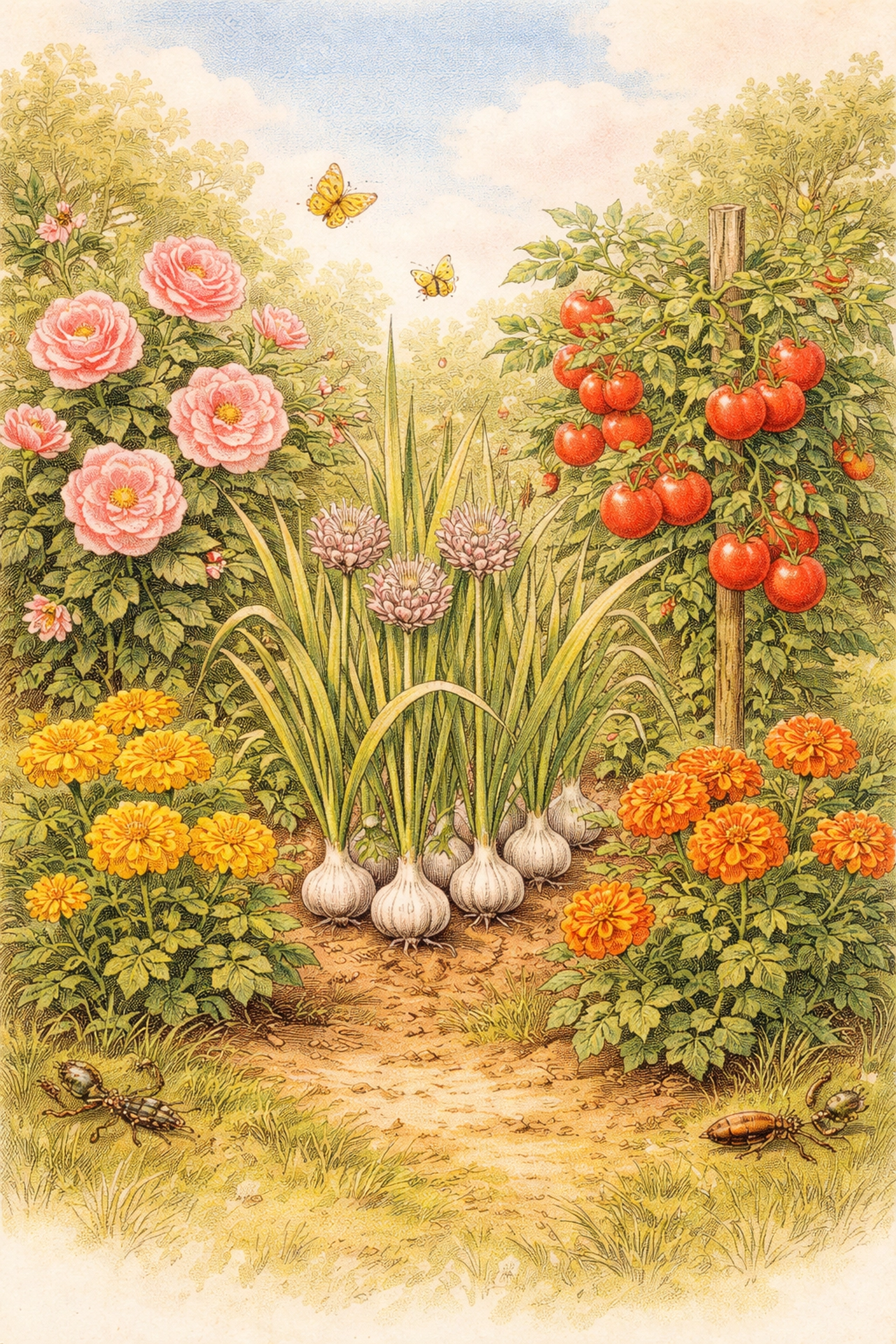
Garlic plays well with many garden favorites. Here are some excellent companions:
Vegetables:
- Tomatoes
- Peppers
- Potatoes
- Spinach
- Lettuce
- Broccoli and cauliflower
- Kale
- Beets and carrots
Flowers:
- Roses (garlic may help deter aphids)
- Marigolds
- Geraniums
- Nasturtiums
Fruit trees:
- Apple, peach, pear, and cherry trees may benefit from garlic planted at their base
Helpful herbs:
- Yarrow and tarragon can actually help garlic grow better
- Chamomile planted nearby may improve garlic's flavor
Plants to Keep Away from Garlic
Not everyone gets along with garlic! Keep these plants in separate areas:
- Beans and peas – Garlic can stunt their growth
- Asparagus – They don't make good neighbors
- Sage and parsley – May compete poorly with garlic
The strawberry debate: Some gardeners report garlic stunts strawberry growth, while others say the smell helps protect berries from pests. If you're curious, try a small test patch and see what works in your garden!
Tips for a Thriving Stinky Garden
Mulch lightly with straw or leaves to help retain moisture and suppress weeds.
Don't overwater – Garlic prefers to stay on the drier side. Soggy soil can lead to rot.
Harvest when leaves yellow – When about half the leaves have turned brown/yellow, it's usually time to pull your garlic.
Make garlic spray for extra protection – Blend a few cloves with water, strain, and spray on plants for an additional pest deterrent. This is a great way to use up smaller cloves!
Rotate your garlic – Try not to plant garlic in the same exact spot year after year to help prevent soil-borne diseases.
If you're looking for more budget-friendly garden projects to try with the kids, check out our guide on how to make a DIY mini greenhouse out of plastic bottles or learn how to regrow kitchen scraps for another under-$10 adventure.
Frequently Asked Questions
How long does it take for garlic to grow?
Garlic typically takes 8-9 months when planted in fall and harvested in summer. Spring-planted garlic may produce smaller bulbs in 3-4 months.
Can I grow garlic indoors?
Yes! Garlic grows reasonably well in containers on a sunny windowsill. You may get smaller bulbs, but you'll still enjoy the greens and pest-deterring benefits.
Does garlic really repel pests?
Many gardeners report success using garlic as a natural deterrent. While results can vary, garlic's sulfur compounds and strong odor tend to discourage aphids, caterpillars, snails, and some small mammals.
Can I use store-bought garlic for planting?
Organic, untreated garlic from the grocery store often works fine. Avoid garlic that may have been treated with sprout inhibitors, as it might not grow well.
How much garlic do I need to protect my garden?
A border of garlic around your beds or a row alongside vulnerable plants is often enough. You don't need to plant a full field: even a handful of cloves can help.
When is the best time to plant garlic?
Fall (about 4-6 weeks before the first frost) is ideal in most climates. Spring planting works too, though bulbs may be smaller.
Is garlic safe to grow around kids and pets?
Garlic plants are generally safe in the garden. However, raw garlic can be harmful to dogs and cats if eaten in large quantities, so keep harvested bulbs out of reach.
Can I eat the garlic I grow for pest control?
Absolutely! That's one of the best parts. Your protective garden doubles as a future pizza topping.
How do I store harvested garlic?
Cure garlic by hanging it in a dry, well-ventilated area for 2-3 weeks. Then store in a cool, dark place for several months.
Will garlic protect my plants forever?
The protective effects are strongest while garlic is actively growing and may linger for a few weeks after harvest. Replanting each season keeps your "stinky shield" working year-round.
References:
- Companion planting research on garlic and sulfur accumulation
- Traditional organic gardening practices for natural pest deterrence