



The quick answer: Gather 4-6 different types of seeds, place them in separate sections of a tray or muffin tin, and challenge your family to guess which plants they'll grow into before revealing the answers. It's a low-prep, high-fun activity that costs under $5 and works for all ages, from curious toddlers to know-it-all grandparents who think they've got this in the bag.
Here's the beautiful thing about seeds: they're tiny little mysteries wrapped in a shell. A wrinkly brown speck might become a towering sunflower. A flat pale disk could turn into a sprawling pumpkin vine. And unless you've got superhero-level plant knowledge, most folks can't tell a carrot seed from a celery seed without some serious squinting.
That's what makes this game so darn fun.
Why the Mystery Seed Game Works So Well
This isn't just a rainy-day time-killer (though it's perfect for that too). The Mystery Seed game sneaks in science, observation skills, and critical thinking while everyone's having a blast making wild guesses.
Kids learn that seeds come in all shapes, sizes, colors, and textures, and that appearances can be deceiving. That teeny-tiny speck? It might grow bigger than their head. That chunky bean? It might only produce delicate little flowers.
Plus, there's something deeply satisfying about shouting "I KNEW IT!" when you guess correctly. Or dramatically clutching your chest when you realize that weird fuzzy seed was actually a tomato.

What You'll Need (All for Under $10)
Here's your shopping list, and honestly, you probably have most of this stuff already:
Seeds (the stars of the show):
- 4-6 different seed varieties work best
- Raid your junk drawer for old seed packets
- Buy a few cheap packets from the dollar store
- Borrow from a gardening neighbor
Great beginner seeds to use:
- Sunflower (big and stripy, looks obvious but isn't!)
- Bean or pea (chunky and smooth)
- Radish (tiny reddish-brown spheres)
- Carrot (teeny and feathery)
- Corn (familiar to most kids)
- Pumpkin or squash (flat and pale)
- Lettuce (small and dark)
- Watermelon (flat black teardrops)
Display setup:
- A muffin tin, ice cube tray, egg carton, or paper plate with sections drawn on it
- Small bowls or cups work too
Optional fun extras:
- Magnifying glass (makes observation 10x more exciting)
- Paper and pencils for recording guesses
- Printouts or drawings of the mature plants for the big reveal
- A silly prize for the winner (bragging rights count!)
Total cost: Free to $5, depending on what you've got lying around.
Step-by-Step: How to Set Up and Play
Step 1: Gather Your Seeds in Secret
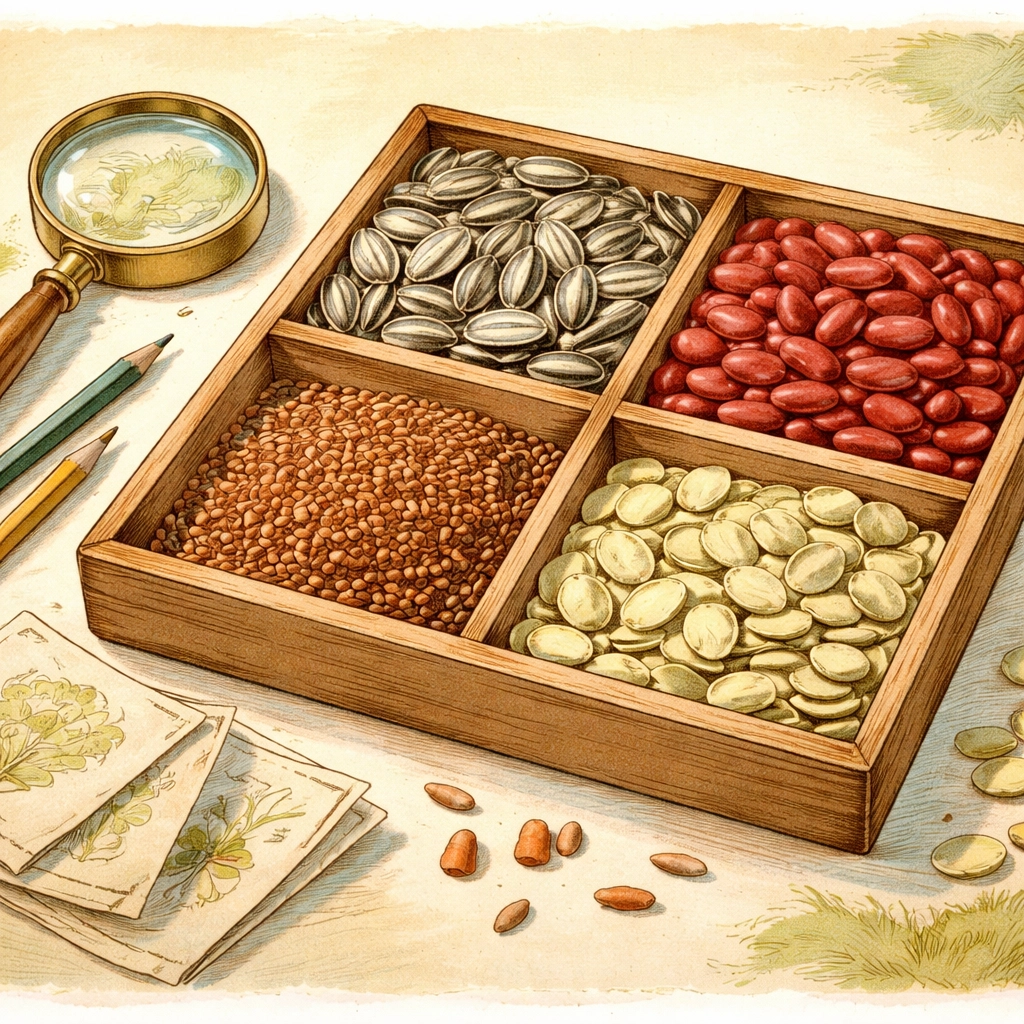
This is your covert operation moment. Sneak off to the kitchen table while the kids are distracted and set up your seed display. Place a small pile of each seed type into separate sections of your tray or muffin tin.
Pro tip: Number each section (1, 2, 3, etc.) so players can write down their guesses easily.
Keep the seed packets hidden! Stuff them in a drawer, sit on them, hide them under a tea towel, whatever it takes. The mystery is the whole point.
Step 2: Call Your Players to the Table
Gather the family around and explain the rules:
"Before you are several mystery seeds. Your mission, should you choose to accept it, is to figure out what plant each seed will grow into. Look closely. Think hard. No touching the seed packets until everyone has guessed!"
You can ham this up as much as you want. Dim the lights. Play dramatic music. Wear a lab coat. Or just casually announce it while making sandwiches. Your call.
Step 3: Observe Like Scientists
Give everyone a few minutes to really look at each seed. Encourage them to notice:
- Size: Is it tiny like a pinhead or chunky like a pebble?
- Shape: Round? Flat? Kidney-shaped? Pointy?
- Color: Black, brown, tan, striped, speckled?
- Texture: Smooth, wrinkled, fuzzy, ridged?
If you've got a magnifying glass, now's the time to break it out. Suddenly everyone becomes a detective examining evidence at a crime scene.

Step 4: Make Your Guesses
Have each player write down (or announce) their guesses for each numbered seed. No changing answers once they're locked in!
For younger kids who can't write yet, let them whisper their guesses to you or point to pictures of plants you've printed out.
Encourage reasoning: Ask "What made you think that?" or "What clues did you use?" This turns random guessing into actual thinking, sneaky education at its finest.
Step 5: The Big Reveal
This is the moment everyone's been waiting for. Go through each seed one by one, building suspense before revealing the answer.
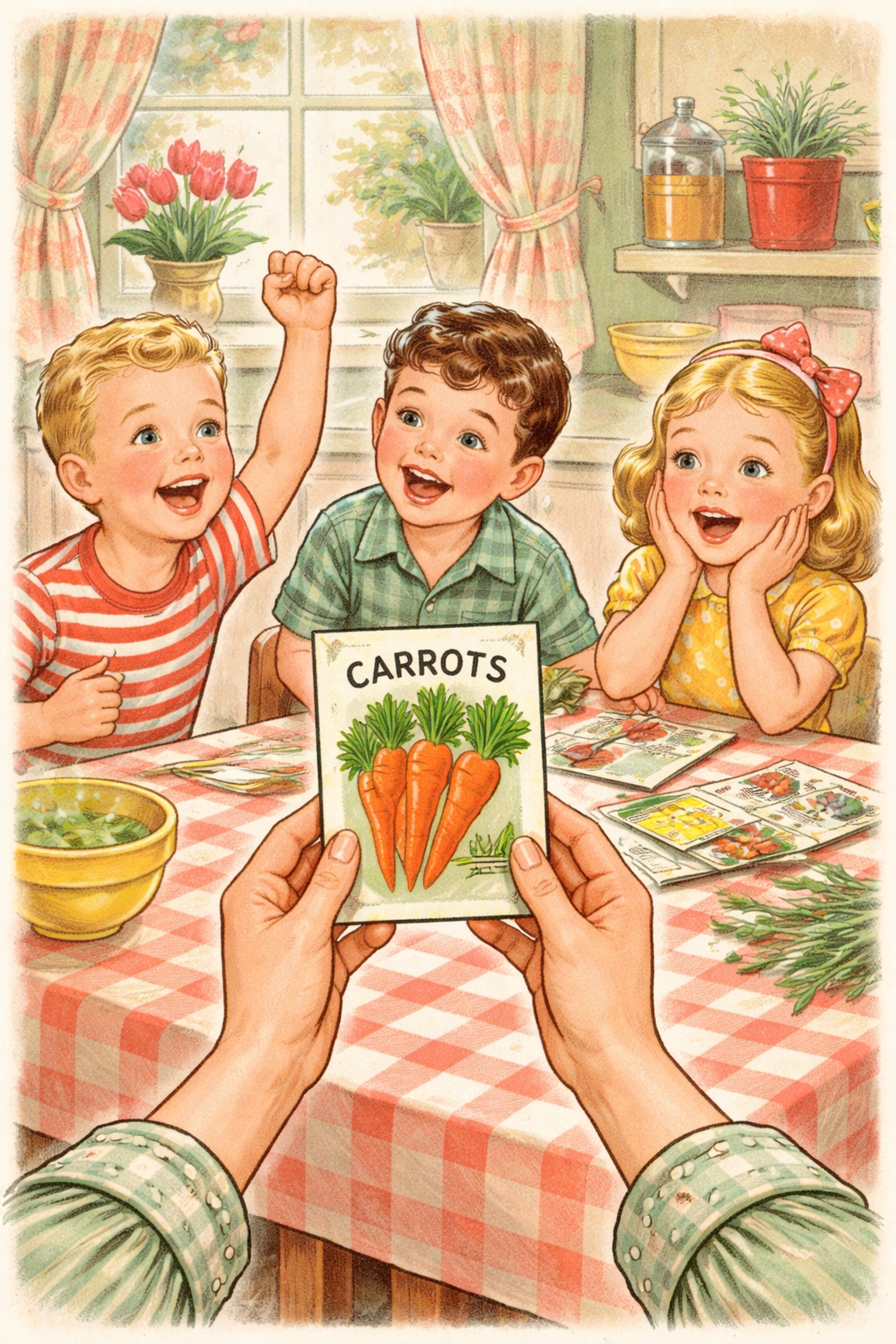
"Seed number three… you said tomato, Dad said pepper, and Grandma said 'some kind of weed'… and the answer is… CARROT!"
Celebrate correct guesses with cheers, high-fives, or victory dances. Discuss the surprising ones, why did that seed fool everyone?
Step 6: Plant the Evidence (Optional Bonus Round)
Want to extend the fun? Plant a few of the mystery seeds in small pots or a DIY mini greenhouse and watch them grow. Now you've got weeks of follow-up excitement as everyone checks on "their" seeds.
Tips to Make It Even More Fun
Theme it up: Do an "all vegetables" round, then an "all flowers" round, then a "wild card" round with random seeds.
Add a scoring system: 1 point per correct guess, 3 points if you can also name something interesting about the plant (like "sunflowers turn to face the sun!").
Make it a tournament: Play weekly and keep a running scoreboard on the fridge.
Involve the neighbors: Challenge another family to a Mystery Seed showdown. Loser brings snacks to the next game.
Level up the difficulty: Mix in some tricky seeds like parsley (looks like dust), beet (weird and wrinkly), or herbs that most people have never seen in seed form.
What Kids Actually Learn (Without Realizing It)
- Seeds are diverse and come in countless forms
- Observation skills matter, details tell stories
- Plants start from something small and grow into something amazing
- Science can be a game, not a chore
- Patience pays off (especially if you plant the seeds afterward)
Not bad for a $5 activity that takes 20 minutes to set up.
Frequently Asked Questions
Where can I get seeds for cheap?
Dollar stores, end-of-season garden center sales, or that drawer in your kitchen where random seed packets go to be forgotten. You can also save seeds from vegetables you eat, pumpkins, peppers, and tomatoes all have plantable seeds inside.
What age is this game best for?
Ages 3 and up can play with help. Kids around 6-10 tend to go absolutely wild for it. Teens and adults enjoy it too, especially when you add tricky seeds.
Can I reuse the seeds after the game?
Absolutely! Store them back in their packets or plant them. Seeds don't mind being looked at.
What if I only have 2-3 types of seeds?
That's fine! Start small. Even a two-seed guessing game is fun for little ones. Add more varieties as you collect them.
How do I make it harder for plant experts?
Use less common seeds like parsnip, leek, or kohlrabi. Throw in some flower seeds. Mix seeds that look similar (like different lettuce varieties).
Can we play this indoors?
Yes! This is a perfect kitchen table, living room floor, or rainy-day activity. No dirt required unless you decide to plant afterward.
What if nobody guesses correctly?
That's part of the fun! Seeds are tricky. Celebrate the learning moment and move on to the next one.
How long does the game take?
About 15-30 minutes depending on how many seeds you use and how much discussion happens. It's flexible; speed round or deep-dive, your choice.
Can this work for a classroom or party?
Definitely. Set up stations or give each team their own tray. It scales up beautifully for groups.
Now go raid that seed drawer and get guessing. May the best botanist win! 🌱