



Guttation is the process where plants release tiny droplets of water from the tips or edges of their leaves, usually during the night or early morning hours. Unlike dew (which comes from the air), these droplets come from inside the plant itself! It's basically a plant's way of releasing extra water pressure when it can't "breathe" it out through normal evaporation. Think of it like a tiny built-in pressure valve.
If you've ever spotted sparkling droplets on the tips of your tomato seedlings or lettuce leaves first thing in the morning, you've witnessed guttation in action. It's one of those "wow, plants are alive!" moments that makes gardening with kids so magical.
Why Do Plants "Sweat" in the Morning?
Here's the deal: plants are constantly moving water from their roots, up through their stems, and out through their leaves. During the day, most of this water escapes as invisible vapor through tiny pores called stomata, a process called transpiration.
But at night? Those stomata close up shop.
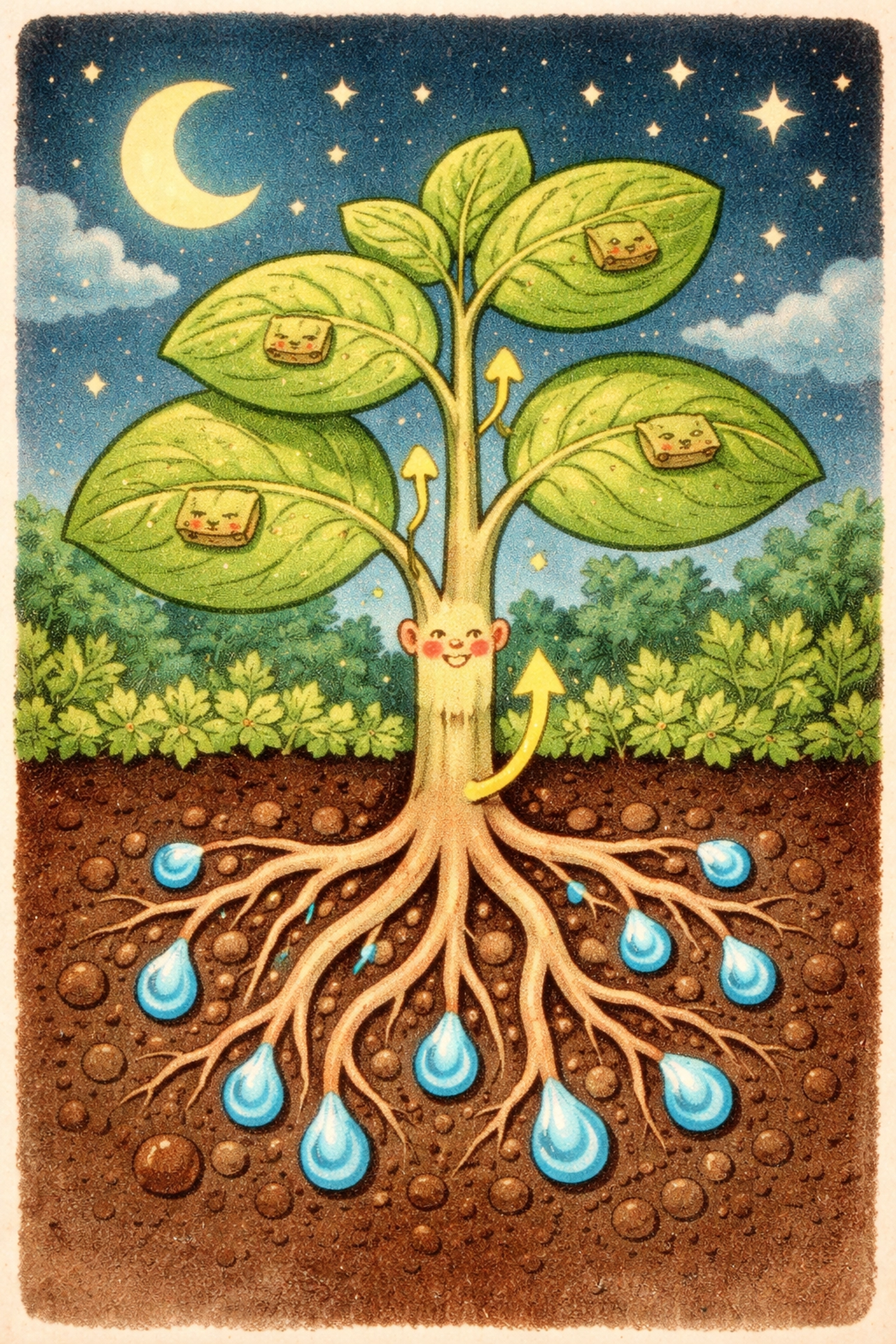
When the soil is nice and moist (hello, hydroponic systems!) and humidity is high, the roots keep absorbing water even though the leaves can't release it as vapor. This creates root pressure, water keeps pushing upward with nowhere to go.
So what does the plant do? It pushes that extra water out through special structures called hydathodes. These are like tiny water faucets located at the tips and edges of leaves. The result? Those beautiful little droplets you see glistening in the early morning light.
Guttation vs. Dew vs. Transpiration: What's the Difference?
Kids (and adults!) often confuse guttation with dew or transpiration. Here's a quick breakdown:
| Process | What It Is | When It Happens | Where the Water Comes From |
|---|---|---|---|
| Guttation | Liquid droplets pushed out of leaf tips | Night/early morning | Inside the plant (roots) |
| Dew | Water condensation on leaf surfaces | Night/early morning | The air (humidity) |
| Transpiration | Water vapor released through stomata | Mostly during the day | Inside the plant (leaves) |
Here's a fun way to remember it: Dew lands ON the leaf. Guttation comes OUT of the leaf.
The liquid from guttation isn't pure water, either! It contains dissolved minerals like potassium, calcium, and magnesium, plus some sugars. When those droplets evaporate later in the day, they sometimes leave behind a faint white, crusty residue on the leaves. That's totally normal, it's just mineral deposits.
Why Guttation is Extra Cool in Hydroponics
If you're growing plants in a hydroponic system, you may notice guttation happening more frequently than in soil-based gardens. Why? Because hydroponic roots have constant access to water and nutrients. There's no "dry spell" between waterings, so root pressure tends to build up more consistently.
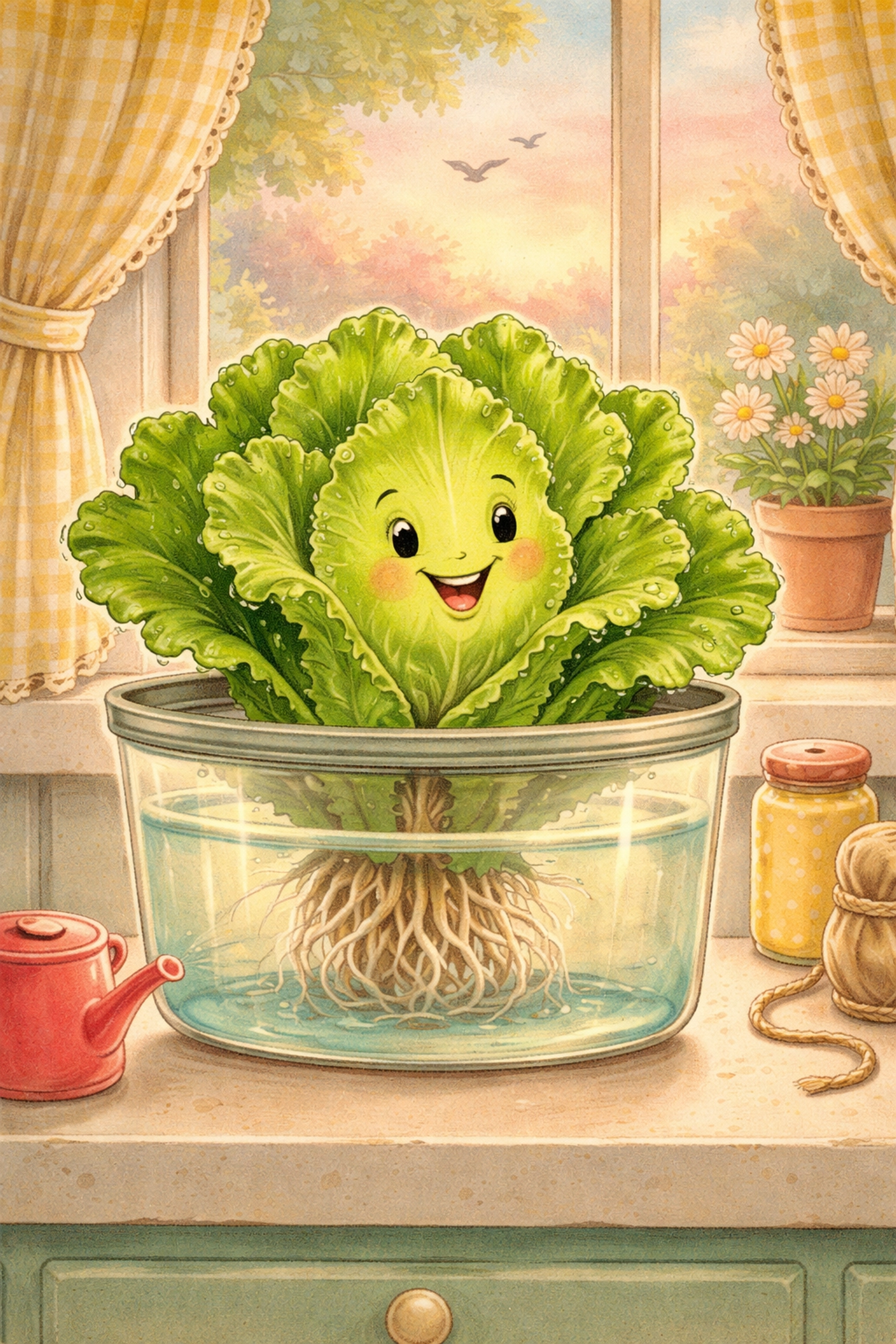
This makes hydroponic setups the perfect classroom for observing guttation with your kids! Lettuce, tomato seedlings, and strawberry plants are particularly good "guttators."
DIY Guttation Observation Activity for Kids
Ready to turn your little ones into plant scientists? This simple observation activity requires almost no supplies and zero fancy equipment. You probably have everything you need already!
What You'll Need
| Item | Estimated Cost | Notes |
|---|---|---|
| A healthy leafy plant (lettuce, tomato seedling, strawberry, or houseplant like a Pothos) | $0–$5 | Use what you have! Kitchen scrap regrows work great. |
| A spray bottle with water | $0–$1 | Optional, to increase humidity |
| A magnifying glass | $1–$3 | Dollar store finds work perfectly |
| A notebook and pencil | $0–$1 | For recording observations |
| A flashlight | $0 | Use your phone! |
Total Estimated Cost: $0–$10
If you don't have a leafy plant on hand, check out our guide on regrowing kitchen scraps to grow your own lettuce from a stump!
Step-by-Step Instructions
Step 1: Pick Your Plant
Choose a healthy plant with broad leaves. Lettuce, tomato seedlings, and strawberry plants are fantastic for this experiment. Many common houseplants (like Pothos or Philodendron) also show guttation. Avoid succulents, they're built to conserve water and rarely guttate.
Step 2: Water Thoroughly in the Evening
Give your plant a good drink of water in the late afternoon or early evening. If you're using a hydroponic setup, make sure the reservoir is topped off. The goal is to make sure the roots have plenty of water to absorb overnight.
Step 3: Increase Humidity (Optional but Helpful)
If your home is dry, lightly mist the air around your plant (not directly on the leaves) or place a clear plastic bag loosely over the plant to trap humidity. This mimics the conditions that encourage guttation.
Step 4: Set Your Alarm!
Here's the tricky part, you need to observe the plant early in the morning, ideally right after sunrise or even a bit before. Guttation droplets evaporate quickly once the sun comes up and the air warms.
Step 5: Observe and Record
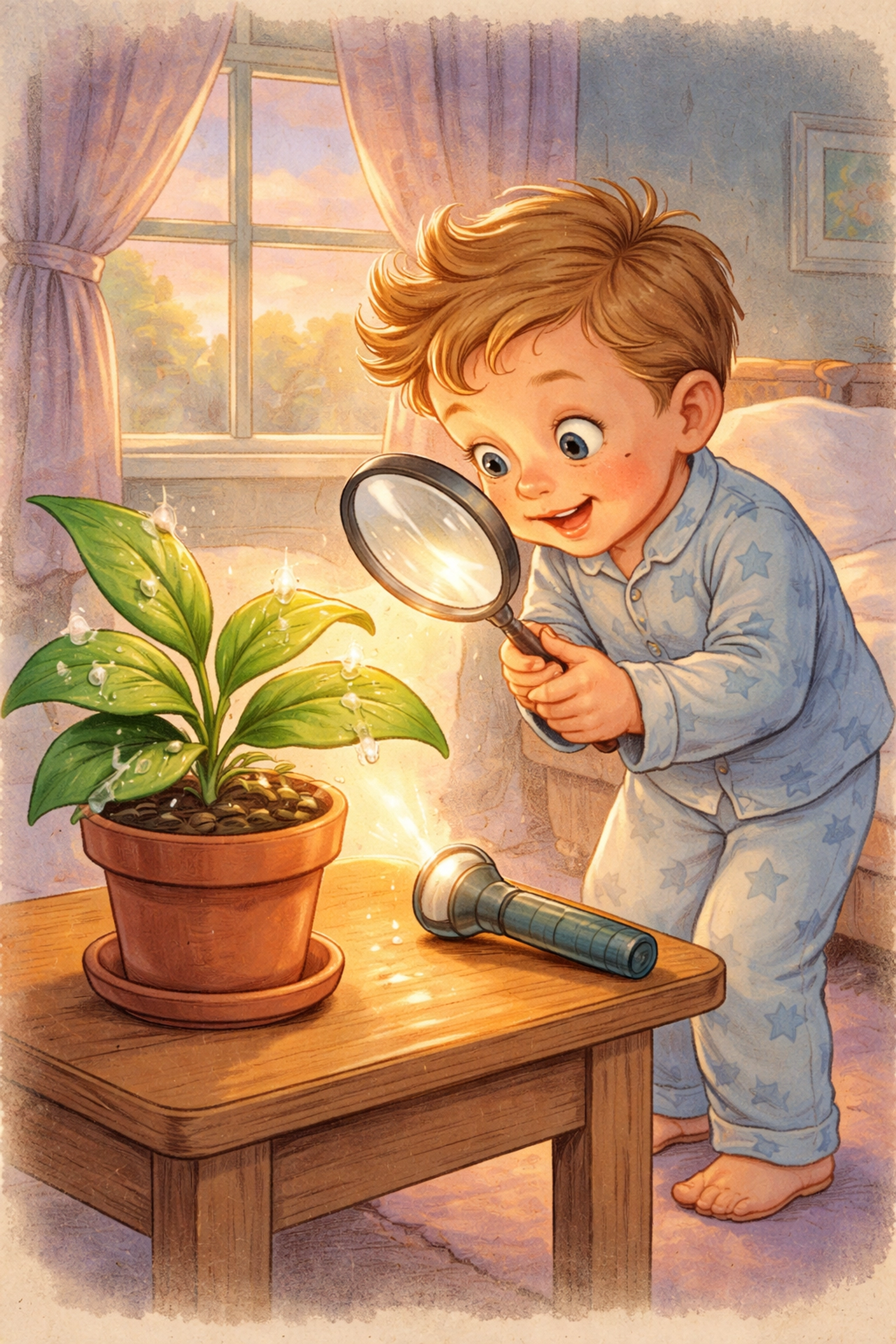
Grab your magnifying glass and flashlight. Look closely at the tips and edges of the leaves. Do you see tiny, clear droplets? Those are guttation droplets!
Have your child sketch what they see and write down:
- Which leaves have droplets?
- Are the droplets at the tips, edges, or both?
- How big are the droplets?
- What happens to the droplets over the next hour?
Step 6: Compare to Dew
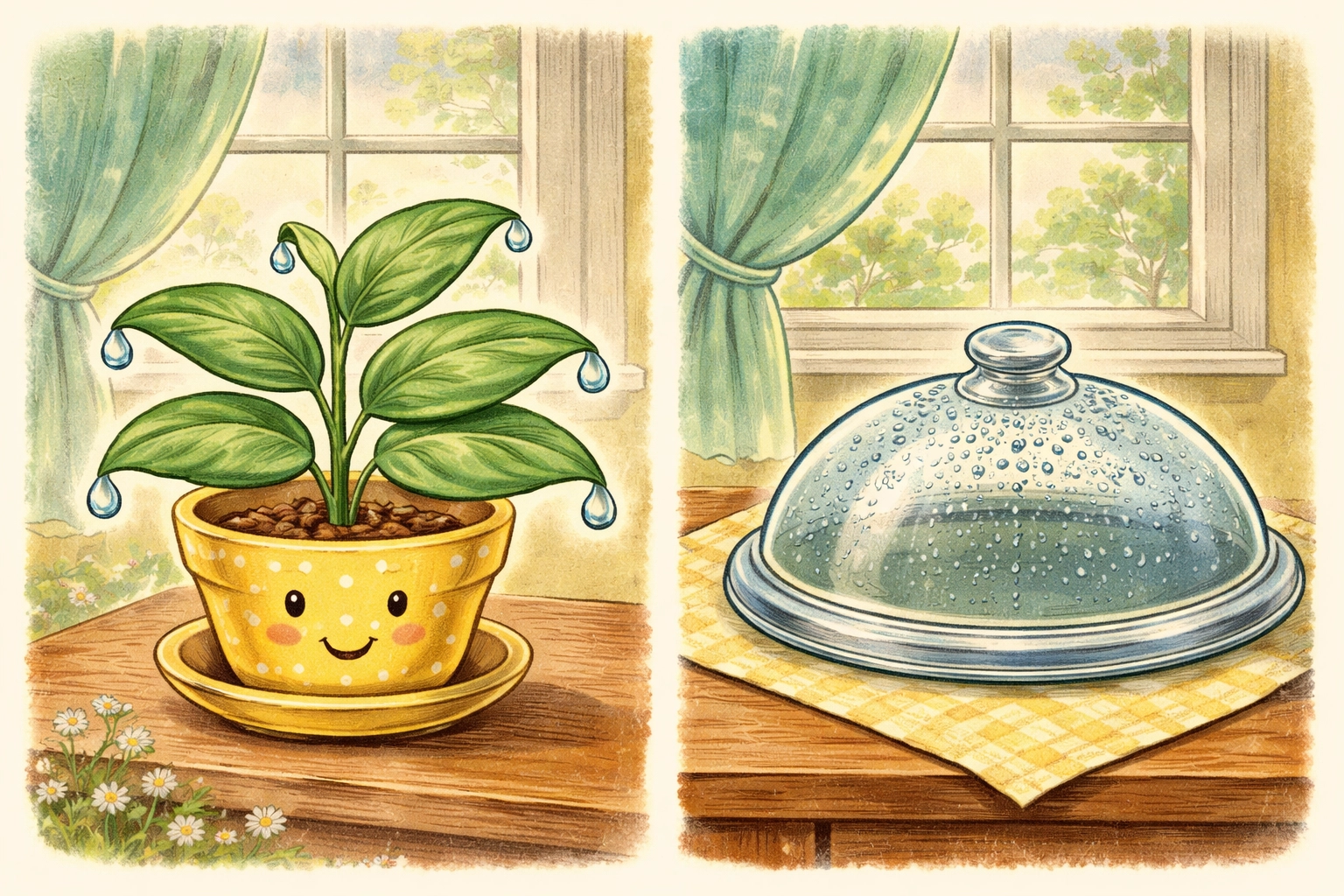
For bonus learning, place a smooth object (like a glass or plastic lid) next to your plant overnight. In the morning, compare: Does the lid have water droplets too? That's dew! Notice how dew covers the whole surface, while guttation droplets appear only at specific spots on the leaf.
What to Tell Your Kids
Here are some kid-friendly talking points to make this lesson stick:
- "Plants drink water through their roots, just like you drink through a straw!"
- "At night, plants close their tiny breathing holes, so extra water has to sneak out another way."
- "Those droplets aren't just water, they have vitamins and minerals in them, like a tiny plant smoothie!"
- "Guttation is a sign of a happy, well-watered plant."
Is Guttation Bad for Plants?
Nope! Guttation is completely normal and generally a sign that your plant is healthy and well-hydrated. However, if you notice guttation happening constantly and excessively, it might indicate you're overwatering (especially in soil-based setups). In hydroponics, it's usually nothing to worry about.
The mineral residue left behind can occasionally attract fungal growth if leaves stay wet for too long, so good air circulation is always a good idea.
Frequently Asked Questions
Is guttation the same as dew?
No! Dew forms when moisture from the air condenses on cool surfaces. Guttation comes from inside the plant, pushed out through special structures called hydathodes.
What time of day does guttation occur?
Guttation typically happens at night and is most visible in the early morning hours before the droplets evaporate.
Which plants show guttation most often?
Leafy plants like lettuce, tomatoes, strawberries, grasses, and many tropical houseplants tend to show guttation more frequently than others.
Can guttation happen in dry climates?
It's less common in dry environments because low humidity and dry soil reduce the root pressure needed for guttation. However, hydroponic systems can still produce guttation even in drier climates.
Is the liquid from guttation safe to touch?
Yes, it's generally harmless, just water with dissolved minerals and sugars. However, if you've recently applied fertilizers or pesticides, those could be present in the guttation fluid, so it's best to wash your hands afterward.
Does guttation mean I'm overwatering?
Not necessarily! It's a normal process. However, if you see excessive guttation combined with yellowing leaves or root rot, you may want to ease up on watering.
Can guttation hurt my plants?
In most cases, no. The only potential issue is if the mineral residue left behind encourages fungal growth. Good airflow helps prevent this.
Why do hydroponic plants guttate more?
Because their roots have constant access to water, root pressure builds more consistently, making guttation more frequent compared to soil-grown plants.
References
- Taiz, L., & Zeiger, E. (2010). Plant Physiology (5th ed.). Sinauer Associates.
- Raven, P. H., Evert, R. F., & Eichhorn, S. E. (2005). Biology of Plants (7th ed.). W.H. Freeman and Company.
- University of Illinois Extension. "Guttation." Illinois Extension Horticulture.
- Royal Horticultural Society. "Why are there water droplets on my plant leaves?" RHS Gardening Advice.
Happy observing, and may your mornings be filled with sparkly, science-filled discoveries! 🌱💧