




The quick answer: You can grow basil in a recycled pasta jar by placing fresh basil cuttings in about an inch of water, setting the jar on a sunny windowsill, and changing the water weekly. Roots typically appear within 7–10 days, and you can keep your basil growing in water indefinitely or transplant it into soil once the roots are established. This zero-budget project is perfect for kids learning about plant propagation!
Why Grow Basil in a Pasta Jar?
Before you toss that empty marinara jar into the recycling bin, consider giving it a second life as a tiny indoor garden. Growing basil in a recycled pasta jar is one of the easiest (and cheapest!) ways to introduce kids to the magic of plant propagation without needing a single bag of soil.
Here's why we love this project:
- It costs almost nothing. You likely have everything you need in your kitchen right now.
- It teaches patience. Kids get to watch roots slowly appear over days, a gentle lesson in how plants grow.
- It's low-maintenance. No watering schedules to forget. No dirt on the counter. Just water, sunlight, and a little curiosity.
- Fresh basil tastes amazing. Once your plant is thriving, you can harvest leaves for homemade pizza, pasta, or caprese salads.
This project pairs wonderfully with our DIY Kitchen Scrap Regrow Garden if you want to expand your windowsill garden even further!
Budget Breakdown
| Item | Estimated Cost |
|---|---|
| Recycled pasta jar (cleaned) | Free |
| Fresh basil (from grocery store or garden) | $2–$4 |
| Tap water | Free |
| Optional: Small pebbles or marbles for decoration | $0–$3 |
| Total | $2–$7 |
Most families can complete this project for under $5, especially if you already have basil growing in your garden or snag a bundle from the farmers market.
What You'll Need
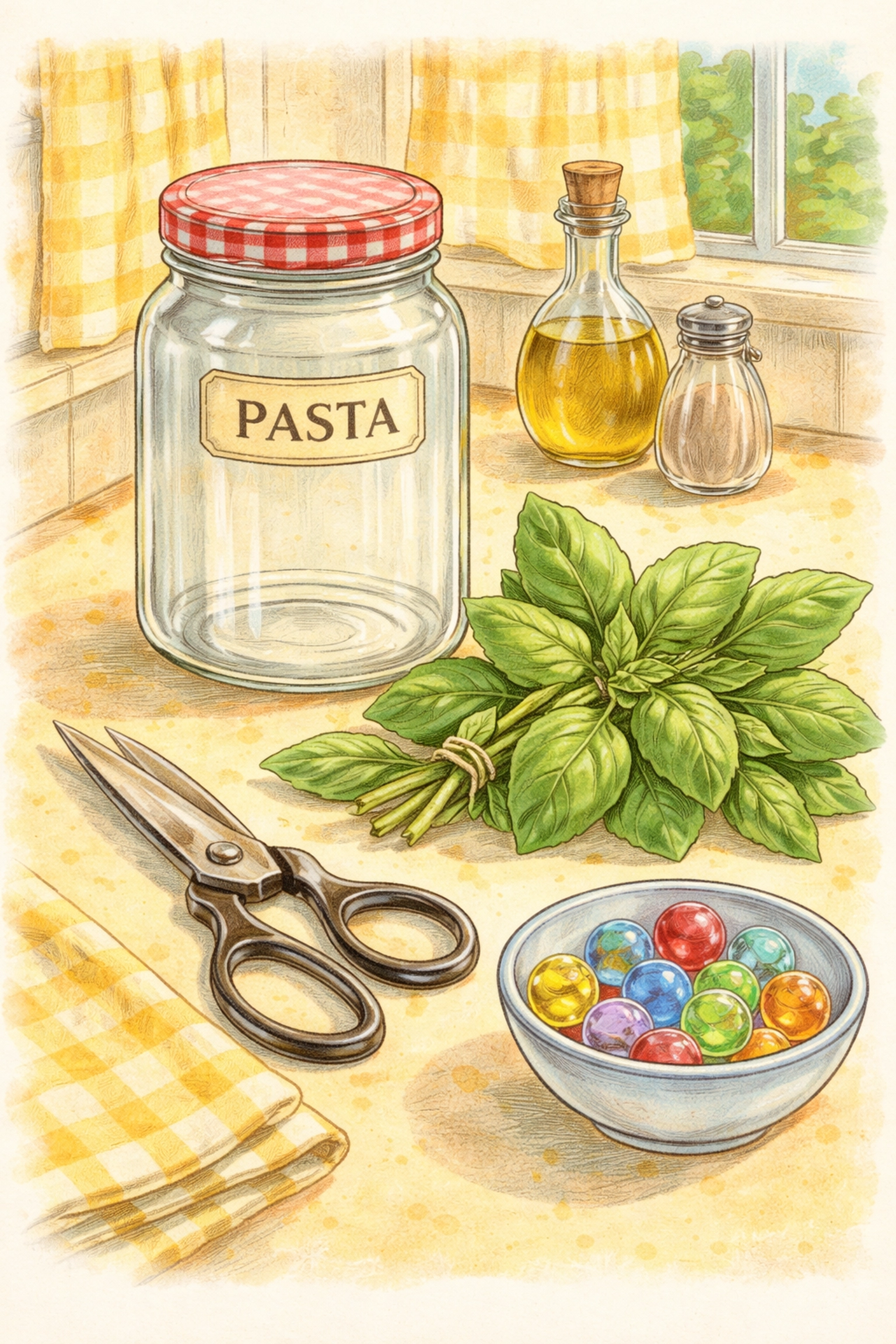
Gather these simple supplies before you get started:
- 1 clean pasta jar (any glass jar works, spaghetti sauce, salsa, or pickle jars are all great)
- Fresh basil cuttings (4–6 stems, about 4 inches long)
- Room temperature water (tap water is fine, but see our tip below)
- A sunny windowsill (south-facing windows tend to work best)
- Optional: Small pebbles, glass beads, or marbles for decoration and stem support
Pro Tip: If your tap water contains chlorine (most city water does), fill your jar and let it sit uncovered for 24 hours before adding your basil. This allows the chlorine to evaporate, which can help your cuttings root more successfully.
Step-by-Step Instructions
Step 1: Clean Your Jar
Give your pasta jar a good wash with warm, soapy water. Remove any labels and sticky residue. A clean jar helps prevent bacteria from growing in the water and harming your basil cuttings.
Rinse thoroughly, you don't want any soap left behind!
Step 2: Prepare Your Basil Cuttings
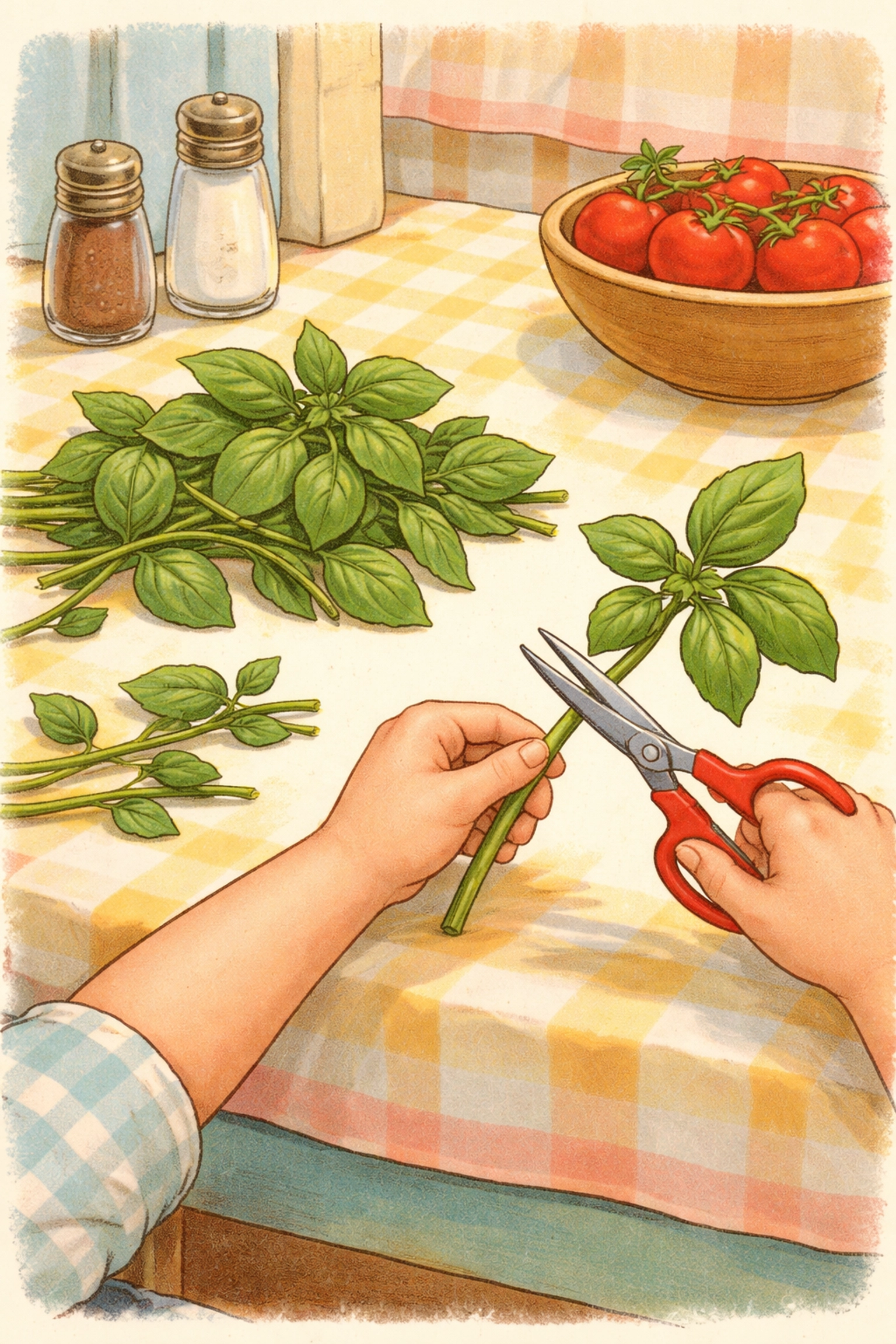
If you're starting with a fresh bunch of basil from the grocery store, look for stems that are healthy and green (avoid any that are wilted or have brown spots).
Using clean scissors or kitchen shears:
- Cut each stem to about 4 inches long.
- Snip just below a leaf node (that's the little bump where leaves grow from the stem).
- Remove the leaves from the bottom 2 inches of each stem. You want bare stem submerged in water, leaves sitting in water can rot.
Aim for 4–6 cuttings per jar. This gives you a nice, full look and increases your chances of success.
Step 3: Add Water to the Jar
Fill your jar with about 1–2 inches of room temperature water. You want enough to cover the bare stems, but not so much that the remaining leaves are touching the water.
If you'd like, add a layer of small pebbles or glass marbles to the bottom of the jar first. This looks pretty and can help keep your stems upright.
Step 4: Place the Cuttings in the Jar
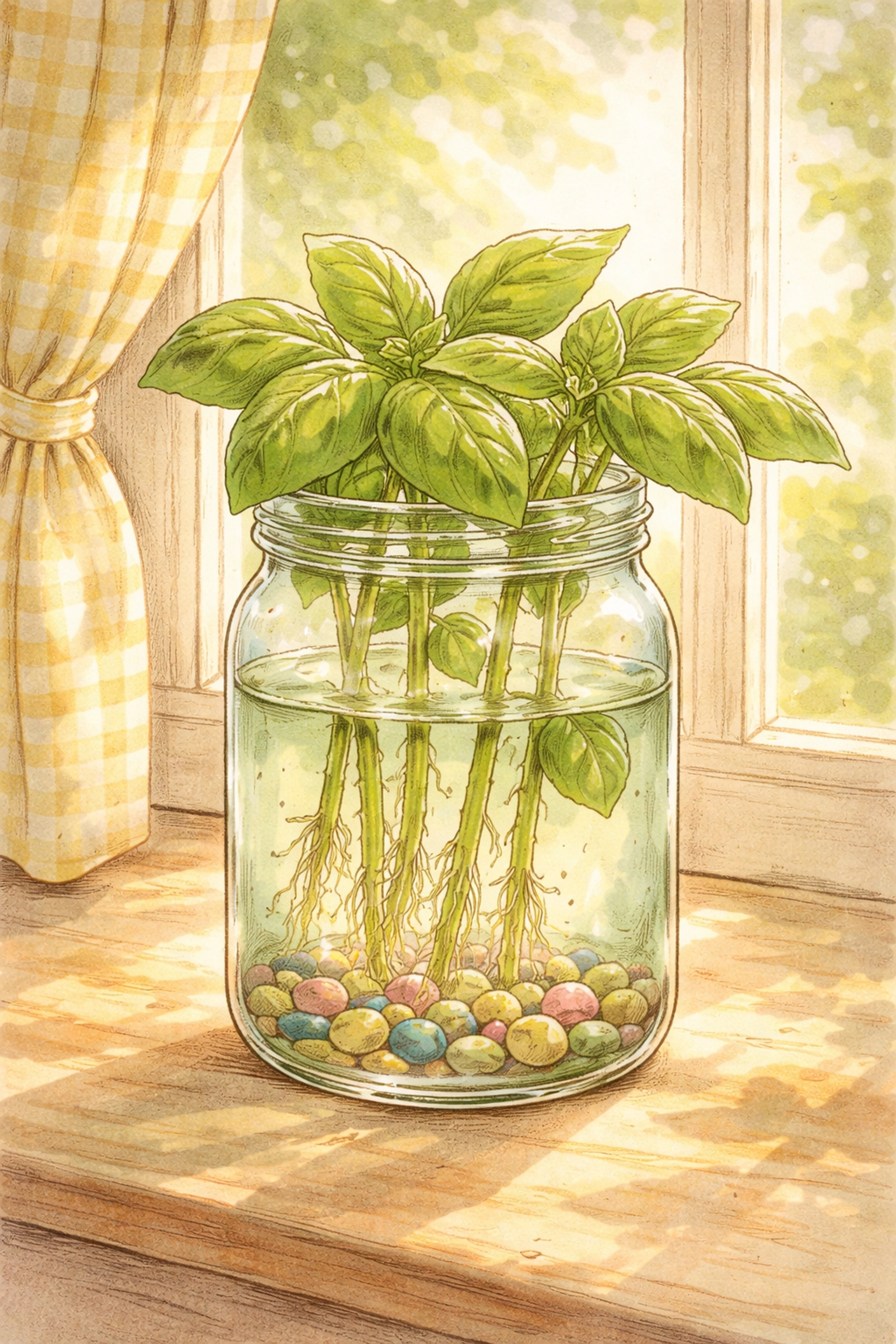
Gently place your basil cuttings into the water, making sure the bare stems are submerged. Arrange them so they're not too crowded, each cutting needs a little breathing room.
Step 5: Find the Perfect Sunny Spot
Basil loves sunlight! Place your jar on a bright, sunny windowsill. A kitchen window is ideal since you'll see it every day and remember to check on it.
Basil typically needs about 6–8 hours of sunlight daily to thrive. If your home doesn't get much natural light, a spot near a grow light can work too.
Step 6: Change the Water Weekly
Here's the secret to keeping your water-grown basil healthy: fresh water matters.
Once a week (or whenever the water starts looking cloudy), dump out the old water and refill with fresh, room-temperature water. This prevents bacteria and algae from building up and keeps your basil happy.
Step 7: Watch for Roots!
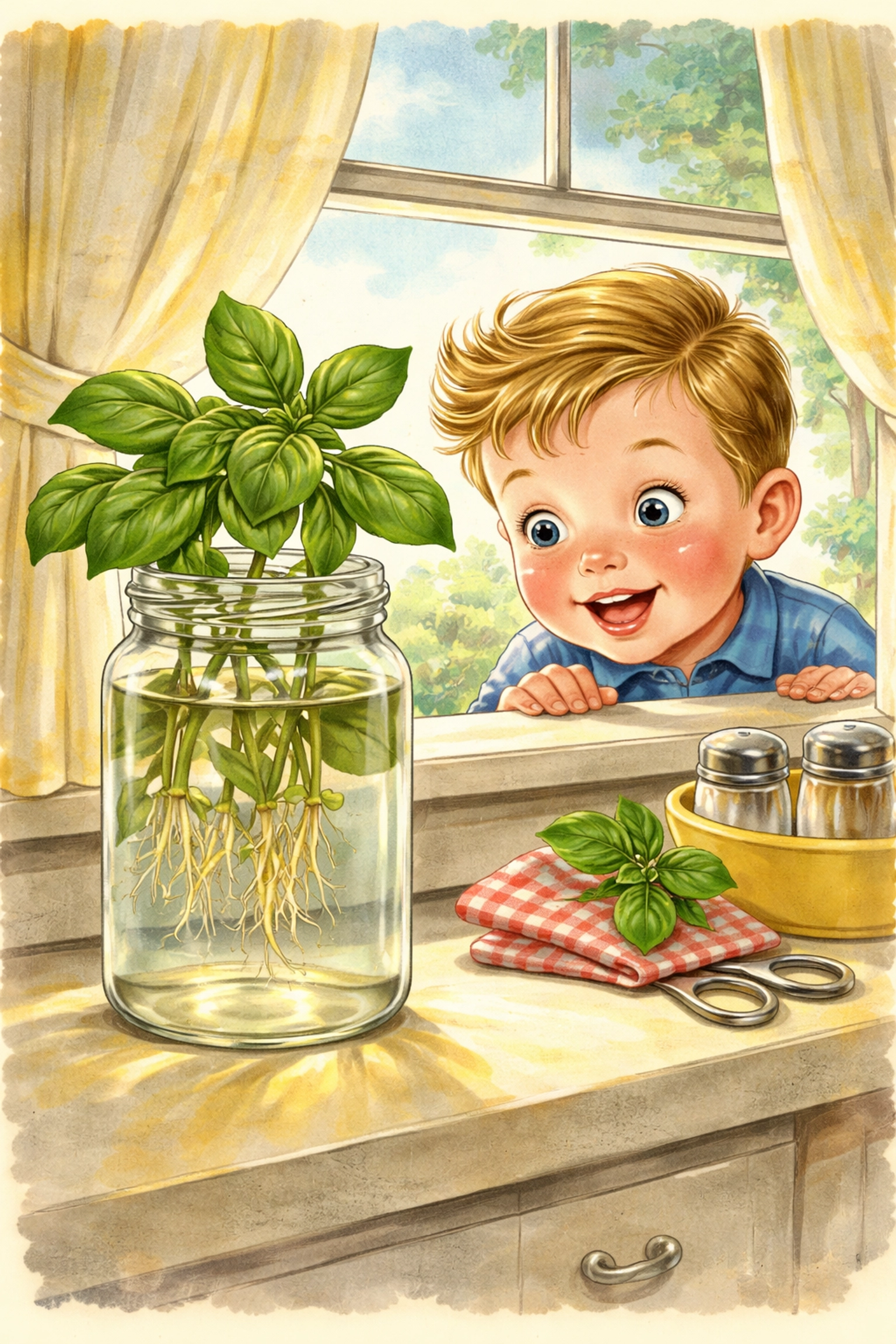
Within about 7–10 days, you should start to see tiny white roots sprouting from the bottom of your stems. This is the exciting part, your basil is officially growing!
Once the roots are 1–2 inches long, you have two options:
Keep growing in water. Basil can live in water indefinitely as long as you keep the water fresh. This is especially convenient during winter months since you don't have to worry about soil care.
Transplant to soil. If you prefer a more traditional setup, you can move your rooted basil into a small pot with drainage holes and potting soil.
Step 8: Harvest and Enjoy!
Once your basil plant is established and growing new leaves, you can start harvesting! Pinch off leaves from the top of the plant to encourage bushier growth. If you see flowers starting to form, pinch those off too, flowering can make the leaves taste bitter.
Use your fresh basil in pasta, on pizza, in salads, or blended into homemade pesto. There's nothing quite like cooking with herbs you grew yourself!
Tips for Success
- Avoid cold drafts. Basil is a warm-weather herb and doesn't appreciate chilly windowsills during winter. Keep it away from drafty windows or air conditioning vents.
- Don't overcrowd. Give your cuttings space to breathe. Crowded stems can lead to poor air circulation and potential rot.
- Rotate your jar. Turn the jar a quarter turn every few days so all sides of the plant get equal sunlight.
- Start with healthy cuttings. The healthier your original basil, the better your results. Avoid stems that are yellowing or wilted.
Frequently Asked Questions
Can I grow basil from seeds in a pasta jar?
While it's possible, starting from cuttings is much faster and more beginner-friendly. Seeds require soil and take several weeks longer to produce a harvestable plant.
How long can basil live in water?
With proper care (fresh water, good sunlight), basil can live in water for several months. Some gardeners keep water-grown basil thriving for a year or more!
Why are my basil cuttings turning brown?
Brown or mushy stems usually indicate bacterial growth from stagnant water. Make sure you're changing the water at least once a week and that no leaves are submerged.
Can I use any type of basil for this project?
Yes! Sweet basil, Thai basil, lemon basil, and purple basil all root well in water. Experiment with different varieties for fun flavors.
Does the jar need drainage holes?
Not for water propagation! Drainage holes are only necessary if you're growing in soil. For this project, a sealed jar works perfectly.
How much sunlight does basil need?
Basil thrives with 6–8 hours of bright, indirect to direct sunlight daily. A sunny kitchen window is usually ideal.
Can I grow other herbs this way?
Absolutely! Mint, oregano, and lemon balm also root easily in water. This method works well for many soft-stemmed herbs.
Why does my basil taste bitter?
Bitter basil is often caused by the plant flowering. Pinch off any flower buds as soon as you see them to keep the leaves sweet and flavorful.
Is tap water okay to use?
Tap water works fine for most people. If your water is heavily chlorinated, let it sit out for 24 hours before using, or use filtered water instead.
When should I transplant my basil to soil?
Once roots are 1–2 inches long, your basil is ready for soil if you choose to transplant. However, there's no rush: it can happily stay in water!
References
- Royal Horticultural Society. "Growing Herbs in Containers." RHS Gardening Advice.
- University of Florida IFAS Extension. "Basil: Ocimum basilicum." Gardening Solutions.
- The Old Farmer's Almanac. "How to Grow Basil." Almanac.com.
Ready to expand your indoor garden? Check out more budget-friendly projects in our Kids Crafts section or learn how much space you need for a hydroponic garden as your next step!