



Aquaponics is a closed-loop food production system that combines fish farming (aquaculture) with soil-less plant growing (hydroponics) in one interconnected ecosystem. In simple terms, fish and plants team up to help each other thrive, fish waste feeds the plants, and plants clean the water for the fish. It's nature's recycling program, and it works beautifully in backyards, classrooms, and even on kitchen counters.
If you've ever wanted to grow fresh vegetables while also keeping fish, aquaponics lets you do both at once. And the best part? You can build a simple starter system with your kids for under $10. Let's dive in.
How Does Aquaponics Actually Work?
The magic of aquaponics comes down to a natural process called the nitrogen cycle. Here's how it flows:
Fish produce waste – As fish eat their food and go about their fishy business, they release ammonia through their waste and gills.
Beneficial bacteria get to work – Tiny bacteria (the invisible heroes of the system) colonize surfaces in your setup and convert that ammonia into nitrates, a form of nitrogen that plants love.
Plants absorb nutrients – Plant roots soak up those nitrates along with other trace minerals, using them as natural fertilizer to grow quickly and stay healthy.
Clean water returns to the fish – As plants filter out the nutrients, the water becomes clean and oxygen-rich, cycling back to the fish tank to start the process all over again.
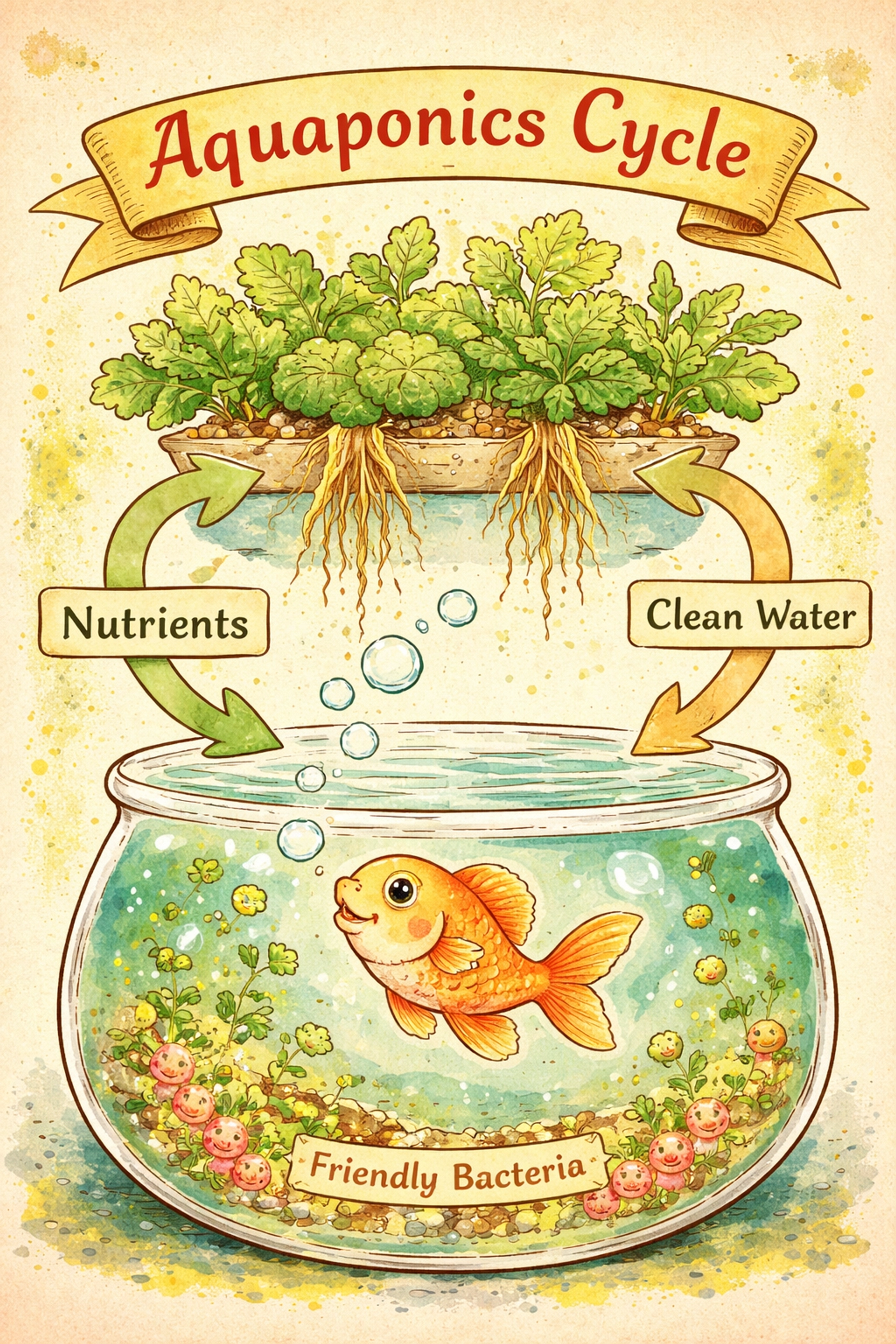
This creates what scientists call a symbiotic relationship, fish, bacteria, and plants all depend on each other. Remove one piece, and the whole system struggles. Keep them balanced, and you've got a self-sustaining mini-ecosystem right in your home.
Why Families Love Aquaponics
Aquaponics isn't just a cool science project, it offers real advantages that make it worth exploring:
- No soil needed – Say goodbye to soil-borne pests and diseases
- No chemical fertilizers – The fish provide all the nutrients naturally
- Uses up to 90% less water – Water recirculates instead of draining away
- Year-round growing – Indoor systems don't care what season it is
- Hands-on learning – Kids see biology, chemistry, and ecology in action
- Fresh food + pet fish – You get vegetables AND a living aquarium
For families interested in sustainable living or teaching kids where food comes from, aquaponics checks a lot of boxes. It's also surprisingly low-maintenance once established.
Three Main Types of Aquaponics Systems
Before you build, it helps to know your options:
Media Bed Systems
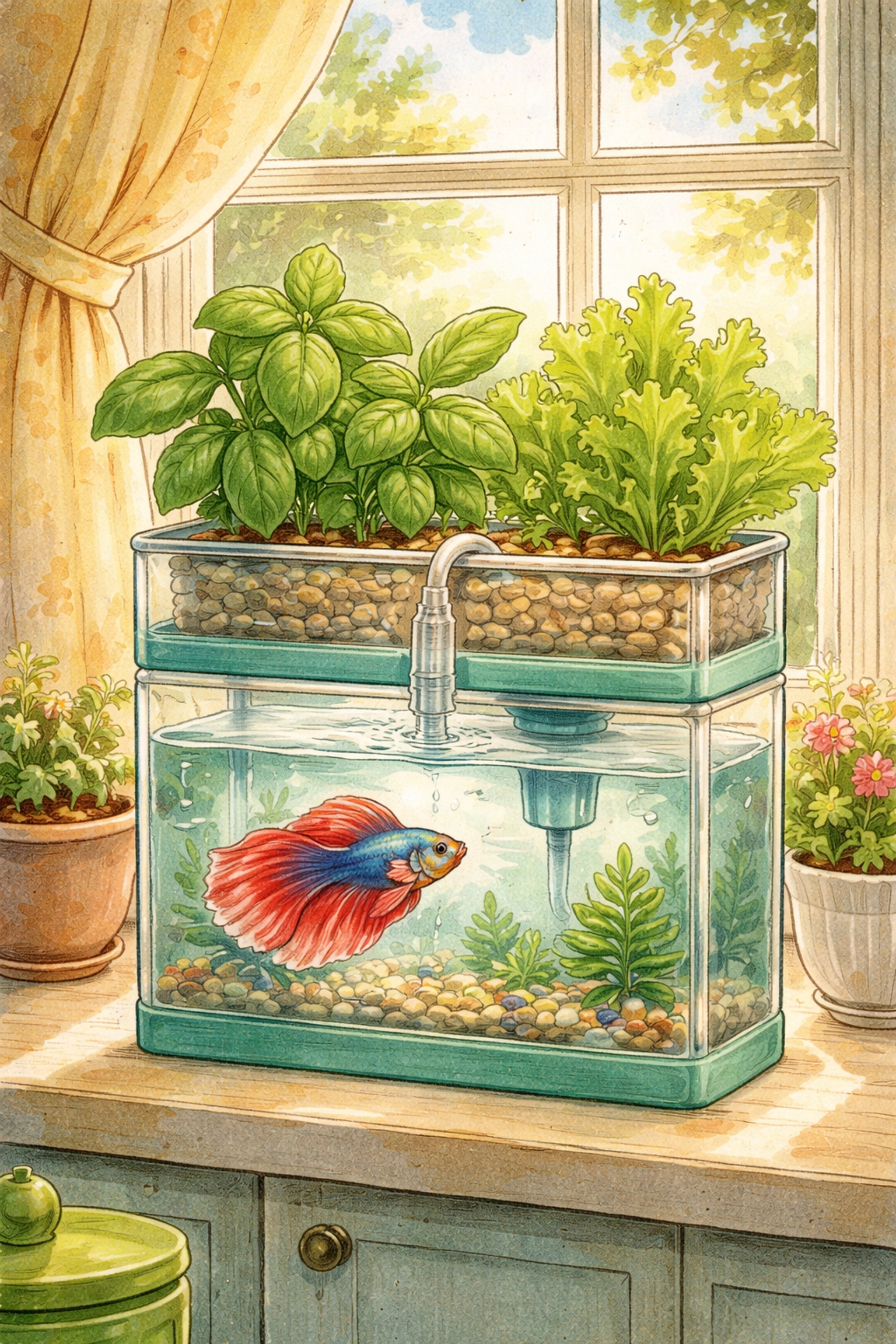
Plants grow in containers filled with gravel, clay pebbles, or similar materials. Water floods the bed periodically, then drains back to the fish tank. This is the most beginner-friendly option and great for home setups.
Deep Water Culture (Floating Rafts)
Plants float on foam boards directly in nutrient-rich water. Their roots dangle down and absorb what they need. Commercial farms often use this method for leafy greens.
Nutrient Film Technique (NFT)
A thin layer of water continuously flows over plant roots in sloped channels. This works well for herbs and small vegetables but requires more precise setup.
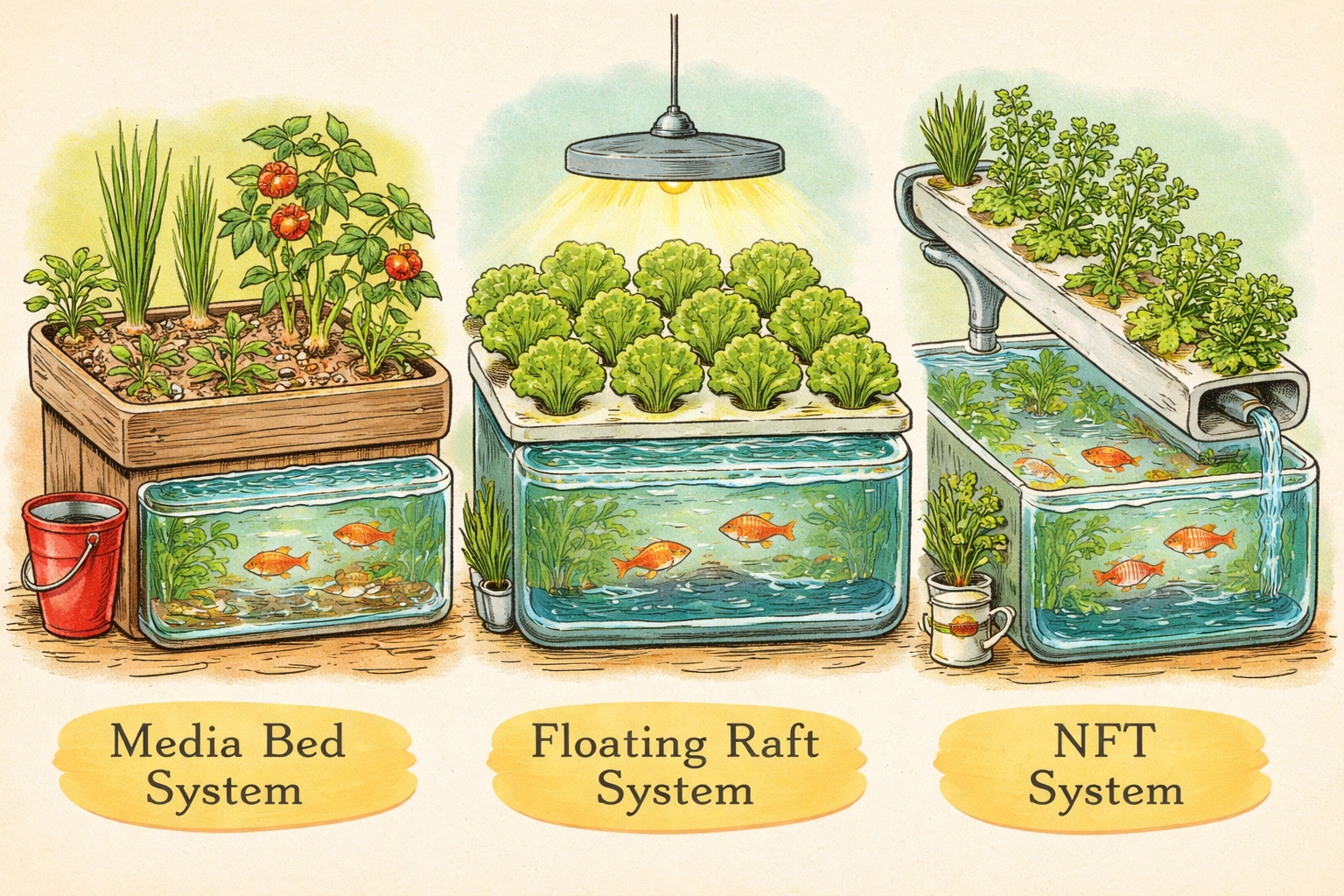
For a family-friendly first project, we recommend starting with a simple media bed system. It's forgiving, affordable, and perfect for learning the basics.
DIY Aquaponics System for Under $10
Ready to build? Here's a beginner setup you can create with your kids using budget-friendly materials. This mini system is perfect for growing herbs or lettuce while keeping a small fish (like a betta) happy.
Materials You'll Need
| Item | Estimated Cost |
|---|---|
| Large plastic container or old fish tank (repurposed) | $0–$2 |
| Small plastic colander or mesh pot | $1 |
| Aquarium gravel or small stones (1–2 lbs) | $2–$3 |
| Small aquarium air pump with tubing | $3–$4 |
| Herb seedling or lettuce start | $1–$2 |
| Total | Under $10 |
Note: If you already have an old fish tank or plastic bin, your cost drops even further. Check thrift stores for deals on aquarium supplies.
Step-by-Step Instructions
Step 1: Prepare Your Container
Clean your plastic container or fish tank thoroughly with warm water, no soap. Soap residue can harm fish. This will be your fish tank and the base of your system.
Step 2: Set Up the Grow Bed
Take your colander or mesh pot and rinse the gravel thoroughly until the water runs clear. Fill the colander with gravel. This is where your plant will live.
Step 3: Position the Grow Bed
Rest the colander on top of your container so it sits partially submerged. The bottom inch or so should dip into the water once filled. You may need to prop it on the container's edges or use a small support.
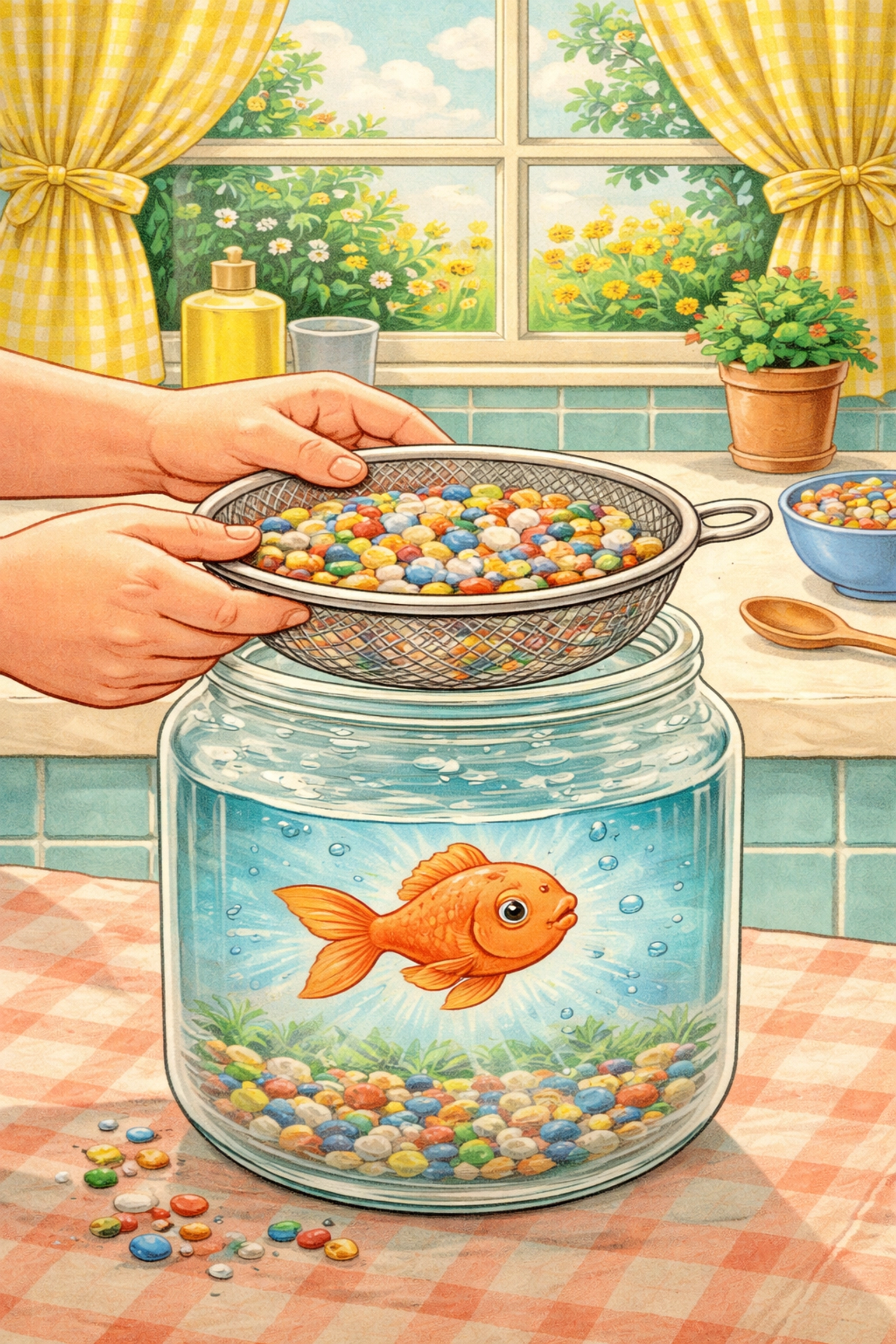
Step 4: Add Water
Fill the container with dechlorinated water. If you're using tap water, let it sit uncovered for 24–48 hours so chlorine evaporates, or use a water conditioner from the pet store.
Step 5: Install the Air Pump
Connect your air pump and place the air stone or tubing end at the bottom of the tank. This keeps water oxygenated for your fish and helps circulate nutrients.
Step 6: Add Your Fish
Start with one small, hardy fish like a betta or a few feeder goldfish. Let the fish acclimate by floating the bag in the water for 15–20 minutes before releasing them.
Step 7: Plant Your Seedling
Gently remove soil from your seedling's roots and rinse them clean. Nestle the plant into the gravel so roots reach toward the water. Leafy greens, basil, and mint work great for beginners.
Step 8: Wait for the Magic
It takes 2–4 weeks for beneficial bacteria to establish (this is called "cycling"). During this time, feed your fish sparingly and watch for plant growth. Once bacteria colonies build up, the system becomes self-sustaining.
Best Plants and Fish for Beginners
Not sure what to grow or which fish to keep? Here are family-friendly options:
Easy Plants:
- Lettuce
- Basil
- Mint
- Kale
- Swiss chard
- Watercress
Beginner Fish:
- Betta fish (great for small systems)
- Goldfish (hardy and inexpensive)
- Guppies (colorful and fun for kids)
- Tilapia (for larger outdoor systems)
Avoid overfeeding your fish, uneaten food creates excess ammonia before bacteria can handle it. A pinch of food once or twice daily is plenty for most small setups.
Tips for Keeping Your System Healthy
- Check water levels daily – Evaporation happens, especially indoors
- Test water weekly – Basic aquarium test strips help monitor ammonia and pH
- Don't overcrowd – One inch of fish per gallon of water is a good rule
- Harvest regularly – Picking leaves encourages new growth
- Keep fish fed consistently – Healthy fish = happy plants
If you're looking for more ways to get kids involved in growing their own food, check out our guide on how to make a DIY kitchen scrap regrow garden for another budget-friendly project.
Frequently Asked Questions
Do aquaponics systems smell bad?
A healthy system has little to no odor. If you notice strong smells, it usually means something is off-balance, like overfeeding or insufficient oxygen.
Can I use any fish for aquaponics?
Most freshwater fish work, but beginners should start with hardy species like goldfish, bettas, or tilapia. Avoid saltwater fish entirely.
How long until I can harvest vegetables?
Leafy greens like lettuce can be ready in 4–6 weeks. Herbs take slightly longer. Fruiting plants like tomatoes need 8–12 weeks.
Do I need to change the water?
Rarely. Top off evaporated water as needed, but the closed-loop system recycles water continuously. Major water changes are only needed if something goes wrong.
Can aquaponics work indoors?
Absolutely. Many families run countertop or windowsill systems year-round. Just ensure plants get adequate light, a sunny window or small grow light works well.
Is aquaponics safe for kids?
Yes! It's a fantastic hands-on learning experience. Just supervise young children around water and remind them to wash hands after touching tank components.
What if my fish die?
It happens, especially early on. Check water quality, avoid overfeeding, and try again. The bacteria will still cycle, and you can add new fish once conditions stabilize.
How much electricity does it use?
A small air pump uses minimal energy; often less than a nightlight. Larger systems with water pumps use more but are still quite efficient.
References
- University of the Virgin Islands Aquaponics Research Program
- FAO – Small-scale Aquaponic Food Production (Technical Paper 589)
- Backyard Aquaponics Magazine – Beginner's Guide to Media Bed Systems
- USDA National Agricultural Library – Aquaponics Information Resources