




Quick Answer: Vertical farming: growing crops in stacked layers indoors: has roots stretching back thousands of years to ancient civilizations like the Babylonians and Aztecs. However, the modern concept we know today was pioneered in 1999 by Columbia University professor Dickson Despommier. Since then, vertical farming has evolved from a classroom thought experiment into a global industry addressing food security, urban space limitations, and environmental sustainability.
Let's take a journey through time to see how humans have been reaching for the sky to grow their food: and how your family can try a simple version at home for under $10!
What Were the Ancient Origins of Vertical Farming?
Long before electricity, LED lights, or climate-controlled warehouses, clever farmers were already experimenting with growing food in creative vertical spaces.
The Hanging Gardens of Babylon (circa 600 BCE)
Many historians believe the legendary Hanging Gardens of Babylon: one of the Seven Wonders of the Ancient World: may have been an early form of vertical agriculture. Though their existence is debated, ancient texts describe terraced gardens rising high into the sky, with an intricate system of aqueducts channeling water from the Euphrates River to plants growing on multiple levels.
Whether myth or reality, this concept planted a seed (pun intended) for future generations thinking about space-efficient growing.

The Aztec Floating Gardens (12th Century)
In the Xochimilco region of Mexico, Aztec farmers developed "chinampas": floating gardens built on shallow lake beds. These ingenious structures allowed farmers to grow crops without traditional soil, relying instead on nutrient-rich water and organic matter. This soilless cultivation method became a foundational principle for modern hydroponics.
How Did the Industrial Revolution Change Everything?
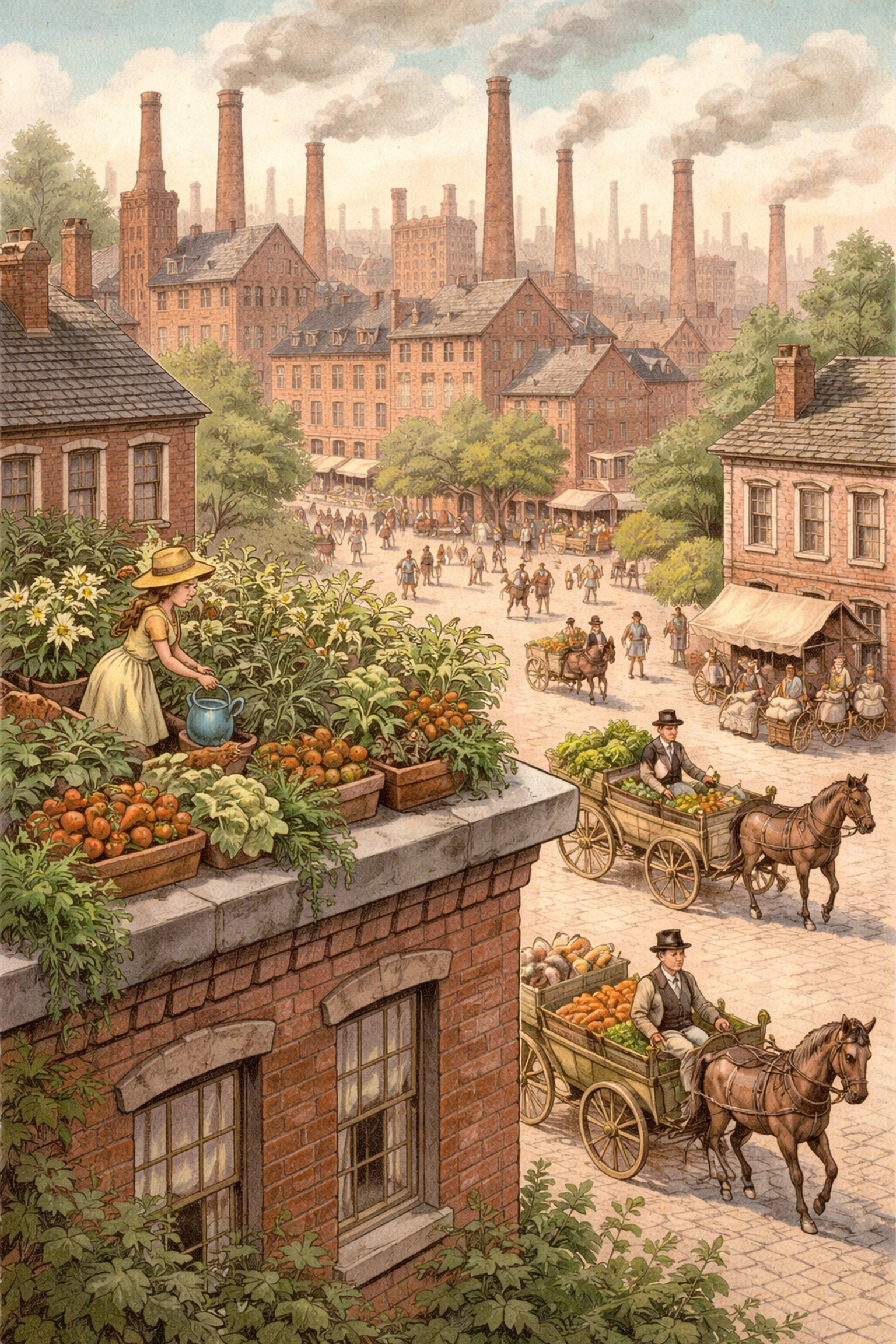
Fast forward to the 1800s, and the world was transforming. Cities were exploding in population, factories were churning, and suddenly there was a new problem: how do you feed millions of people crammed into urban centers when farmland is miles (or hundreds of miles) away?
The Industrial Revolution created three major agricultural challenges:
- Spatial constraints – Cities simply ran out of room for farms
- Distance issues – Food traveled far, losing freshness along the way
- Population growth – More mouths to feed with less available land
These pressures sparked early experiments with indoor growing, though most remained small-scale and experimental. The groundwork was being laid, but the technology wasn't quite there yet.
When Was Modern Vertical Farming Actually Invented?
Here's where the story gets exciting for us modern folks!
The Despommier Revolution (1999)
In 1999, Dickson Despommier, a professor of microbiology and public health at Columbia University, gave his graduate students a challenge: design a system to feed Manhattan's population using only rooftop gardens.
The students crunched the numbers and hit a wall. Rooftop gardens could only feed about 2% of Manhattan's residents. That's when Despommier asked the game-changing question: "What if we grew food vertically, inside buildings, on multiple floors?"
This simple question launched the modern vertical farming movement. Despommier and his students designed theoretical multi-story buildings capable of producing food using a fraction of the land required by traditional farms. He later published his influential book, The Vertical Farm: Feeding the World in the 21st Century, which became a blueprint for the industry.
How Did Vertical Farming Go Commercial?
Turning a classroom concept into a working business took another decade of technological development.
The First Commercial Operations
Sky Greens (Singapore, 2012) became one of the world's first commercial vertical farms, proving that urban food production could actually work as a business model in land-scarce environments.
By 2014, several major operations were up and running:
- Vertical Fresh Farms in Buffalo, New York focused on salad greens, herbs, and sprouts
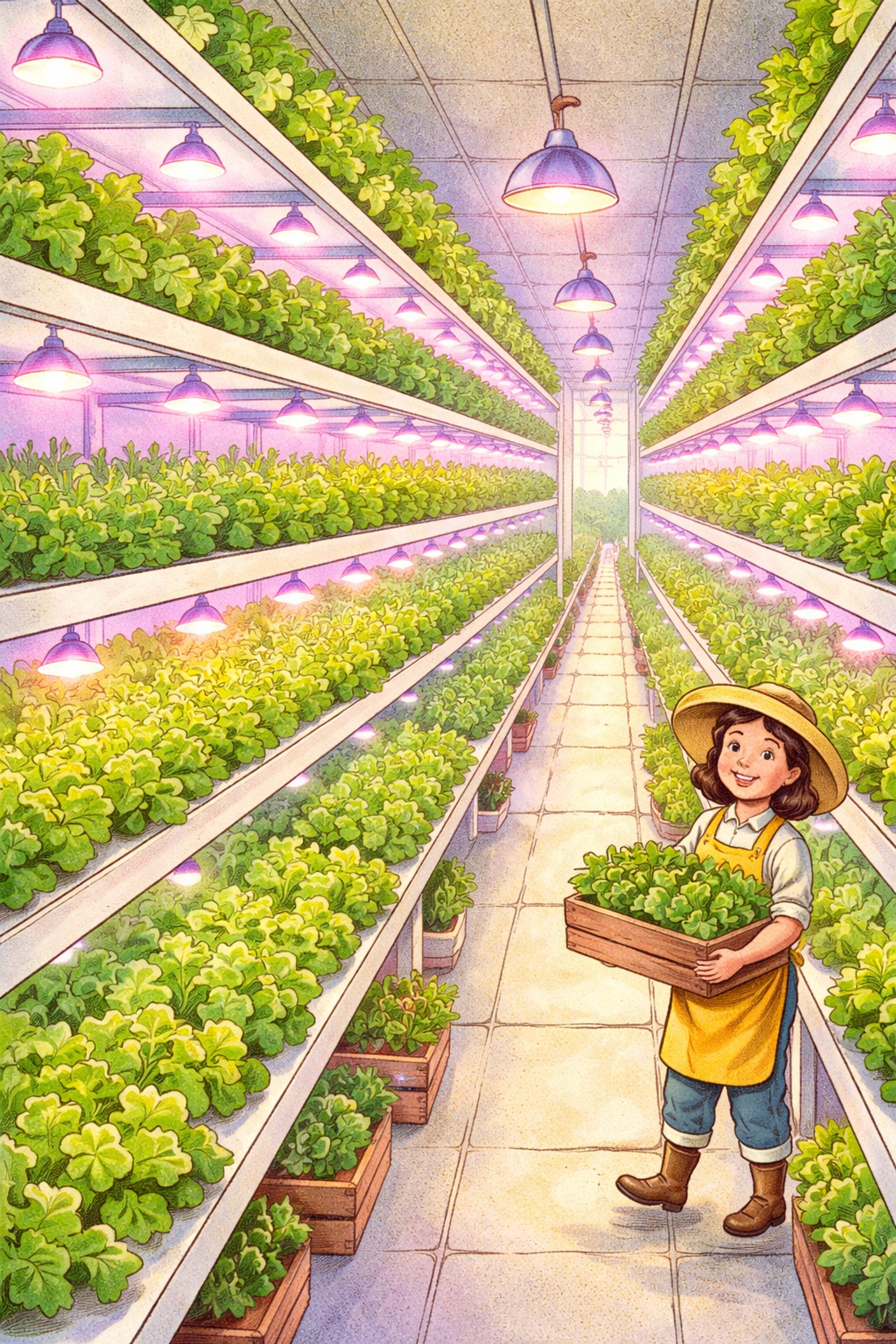
- Green Spirit Farms in Scranton, Pennsylvania opened what was then the world's largest vertical farm: a single-story facility covering 3.25 hectares with racks stacked six levels high, housing 17 million plants capable of producing 14 lettuce crops per year
What Technologies Made Vertical Farming Possible?
Modern vertical farming relies on several key innovations working together:
| Technology | What It Does |
|---|---|
| Hydroponics | Grows plants in nutrient-rich water without soil |
| LED Lighting | Provides precise light spectrums for optimal growth |
| Climate Control | Manages temperature, humidity, and CO2 levels |
| Nutrient Monitoring | Tracks and adjusts plant nutrition in real-time |
| Automation | Uses sensors and computers to optimize growing conditions |
Interestingly, some of this technology came from an unexpected source: space exploration research. The British Interplanetary Society developed early "hydroponicums" designed to grow food on the moon, and NASA continues advancing controlled-environment agriculture for future Mars missions.
DIY Project: Build a Simple Vertical Garden Tower With Your Kids (Under $10!)
Want to experience a tiny taste of vertical farming history with your family? Here's an easy project you can do together this weekend.
Materials You'll Need
| Item | Approximate Cost |
|---|---|
| 2-liter plastic bottles (3-4) | Free (recycled) |
| Potting soil (small bag) | $3-4 |
| Herb seeds or small seedlings | $2-3 |
| Twine or string | $1-2 |
| Scissors or craft knife | Already own |
| Total | Under $10 |
Step-by-Step Instructions
Step 1: Prepare Your Bottles
Cut a rectangular "window" in the side of each bottle (about 3 inches wide by 4 inches tall). This is where your plants will grow. Have an adult handle cutting for younger children.
Step 2: Add Drainage Holes
Poke 3-4 small holes in the bottom of each bottle for water drainage.
Step 3: Connect Your Tower
Remove bottle caps. Thread strong twine through the neck of each bottle, creating a vertical chain. Space bottles about 6-8 inches apart. Tie a sturdy loop at the top for hanging.
Step 4: Add Soil and Plant
Fill each bottle halfway with potting soil. Plant seeds or small herb seedlings (basil, lettuce, and chives work great) in each window opening.
Step 5: Hang and Grow
Hang your tower near a sunny window or porch. Water from the top: gravity will help distribute moisture down through the bottles.

Pro tip: This project connects beautifully with our kitchen scrap regrow garden guide for even more hands-on growing fun!
What Does the Future of Vertical Farming Look Like?
Vertical farming continues to evolve rapidly. Today's facilities produce millions of pounds of leafy greens annually, and the technology is expanding to include tomatoes, strawberries, and even some grains. As LED efficiency improves and renewable energy becomes more accessible, vertical farms may eventually become a standard feature of cities worldwide.
Your backyard bottle tower won't feed a metropolis, but it connects your family to a tradition of innovative growing that stretches from ancient Babylon to the skyscrapers of tomorrow.
Frequently Asked Questions
Who invented vertical farming?
The modern concept was developed by Columbia University professor Dickson Despommier in 1999, though ancient civilizations like the Babylonians and Aztecs used early vertical growing techniques.
When did commercial vertical farming start?
Commercial vertical farming began in earnest around 2012, with Singapore's Sky Greens being one of the first successful operations.
What's the difference between vertical farming and hydroponics?
Hydroponics is a growing method using water instead of soil. Vertical farming uses hydroponics (and sometimes other methods) in stacked, indoor systems to maximize space.
Can you do vertical farming at home?
Absolutely! Simple DIY vertical gardens using recycled bottles or stacking planters make great family projects.
What crops grow best in vertical farms?
Leafy greens like lettuce, spinach, and herbs are most common. Strawberries and some vine crops are becoming more viable as technology improves.
Why is vertical farming important for the future?
It uses up to 95% less water than traditional farming, requires no pesticides, and can operate year-round in any climate; making it valuable for feeding growing urban populations.
Is vertical farming expensive?
Commercial operations require significant startup costs for lighting and climate systems, but home projects can be done for under $10 with recycled materials.
References
- Despommier, D. (2010). The Vertical Farm: Feeding the World in the 21st Century. Thomas Dunne Books.
- Columbia University. "The Vertical Farm Project." Public Health archives.
- Britannica. "Chinampa: Aztec Agriculture."
- Association for Vertical Farming. "History of Vertical Farming."
- Sky Greens Singapore. Company history and operations documentation.