




The short answer: Vertical farming can feed the world by growing up to nine times more food per acre than traditional farms, using 98% less water, producing crops year-round regardless of weather, and bringing fresh food directly into cities where people actually live. It's not science fiction, it's already happening, and you can even build a mini version at home with your kids for under $10.
What Exactly Is Vertical Farming?
Picture a skyscraper, but instead of offices, every floor is packed with leafy greens, herbs, and vegetables growing under special lights. That's vertical farming in a nutshell.
Traditional farming spreads out horizontally across fields. Vertical farming stacks growing layers on top of each other, inside warehouses, shipping containers, old factories, or even underground tunnels. Plants grow in nutrient-rich water (hydroponics) or mist (aeroponics) instead of soil, with LED lights mimicking sunlight.
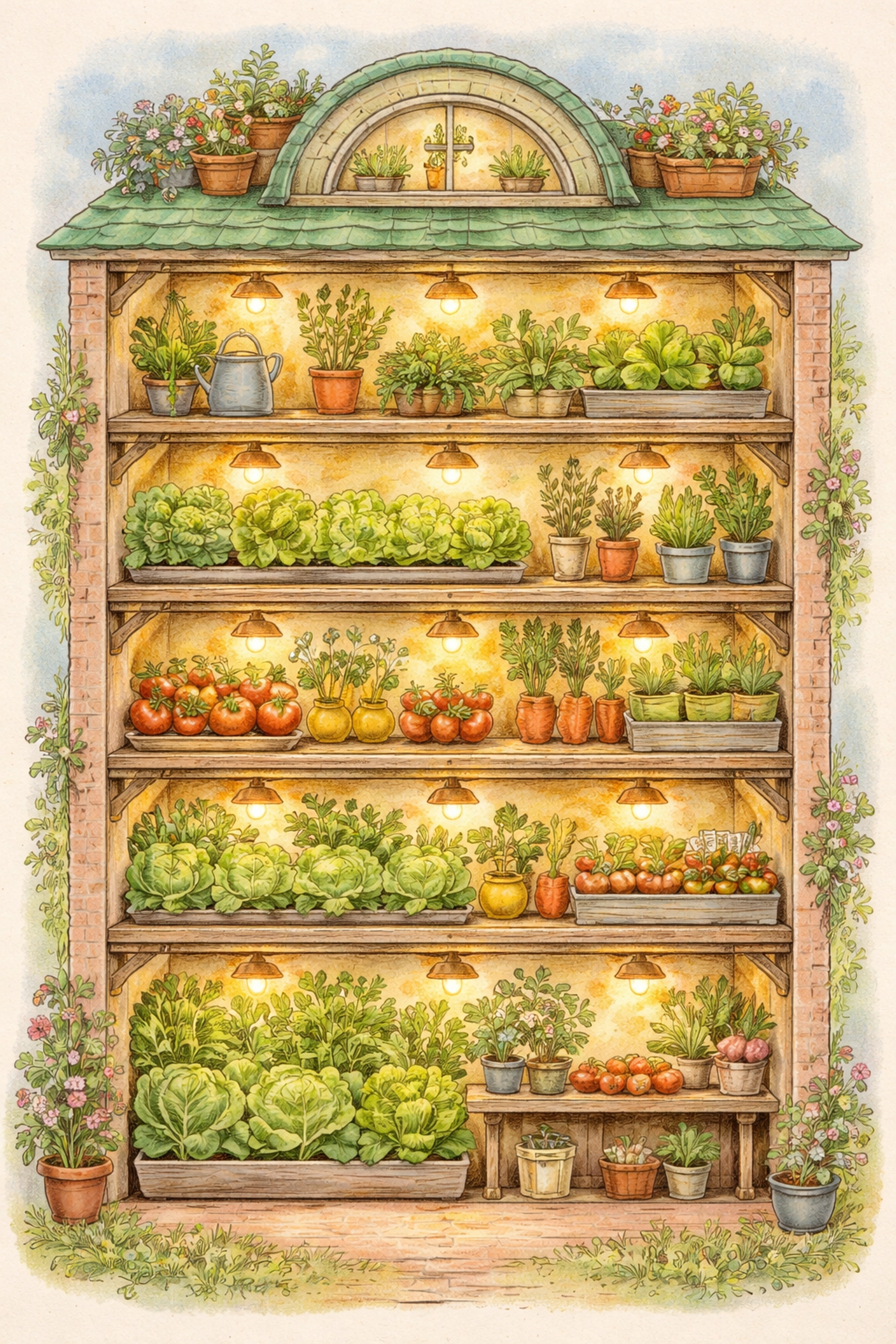
The magic happens in the controlled environment. No droughts. No floods. No pests sneaking in to munch your lettuce. Just perfectly calibrated conditions that let plants thrive 365 days a year.
Why Vertical Farming Matters for Our Future
We're Running Out of Room
Here's a sobering fact: the global population is expected to hit nearly 10 billion by 2050, and we're losing farmable land to urbanization every single day. Traditional agriculture already uses about 50% of the world's habitable land.
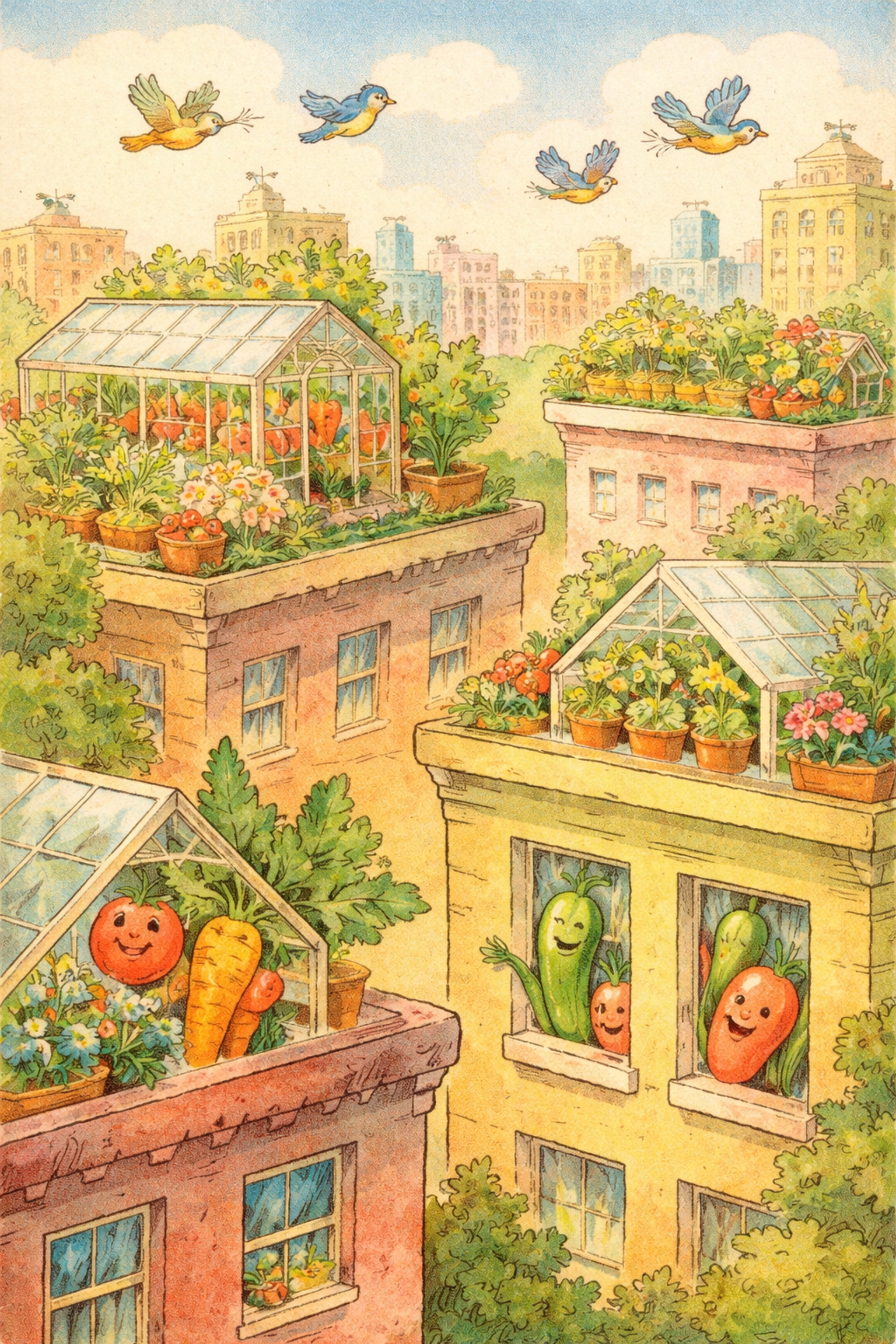
Vertical farms flip this problem on its head. One acre of vertical farming can produce the equivalent of twenty acres of traditional crops. That's not a typo, twenty times the output from the same footprint. Suddenly, those abandoned warehouses and empty parking structures look pretty valuable.
Water Is Precious
Traditional farming is thirsty work, accounting for roughly 70% of global freshwater use. Vertical farms recirculate their water in closed-loop systems, using up to 98% less water than conventional methods. In a world where water scarcity is becoming increasingly real, that efficiency isn't just impressive, it's essential.

Weather-Proof Food Production
Climate change is making traditional farming increasingly unpredictable. Droughts, floods, unexpected frosts, and heat waves can wipe out entire harvests. Vertical farms don't care what's happening outside. Rain or shine, blizzard or heat wave, the lettuce keeps growing.
Fresher Food, Closer to Home
When your salad travels 1,500 miles from farm to plate (the average for produce in the United States), it loses nutrients, requires refrigerated trucking, and generates significant carbon emissions. Vertical farms can operate right in the middle of cities, delivering produce that was harvested hours, not days, before you eat it.
The Environmental Win
Beyond feeding more people, vertical farming offers some serious environmental benefits:
- Zero pesticides needed: The sealed environment keeps bugs out naturally
- No agricultural runoff: No fertilizers washing into rivers and streams
- Reduced transportation emissions: Local production means shorter trips to grocery stores
- Year-round local food: Even in northern climates during winter months
- Preservation of natural habitats: Less pressure to convert forests and wetlands into farmland
Build Your Own Mini Vertical Farm at Home (Under $10!)
Ready to show your kids how vertical farming works? This simple project creates a working vertical garden that demonstrates the core principles, stacking plants to maximize space and using recycled materials to grow food.
What You'll Need
| Item | Estimated Cost |
|---|---|
| 3 plastic bottles (2-liter, recycled) | Free |
| Cotton string or yarn (3 feet) | $1.00 |
| Potting soil (small bag) | $3.00 |
| Herb seeds (basil, lettuce, or chives) | $2.00 |
| Scissors | Already own |
| Nail and hammer (for drainage holes) | Already own |
| Sturdy stick or dowel (2 feet) | $1.50 |
| Small stones or pebbles | Free (from yard) |
| Total | $7.50 |
Step-by-Step Instructions
Step 1: Prepare Your Bottles
Cut each plastic bottle horizontally, about one-third from the bottom. You'll use the bottom portions as your planting containers. Poke 3-4 small drainage holes in the bottom of each section using a nail.
Step 2: Create the Wicking System
Cut three 8-inch pieces of cotton string. Thread one piece through a drainage hole in each bottle section, leaving about 3 inches hanging out the bottom. This string will draw water up to your plants' roots, just like how commercial vertical farms deliver nutrients.
Step 3: Add Your Growing Medium
Place a thin layer of small stones at the bottom of each container for drainage. Fill the rest with potting soil, leaving about an inch of space at the top.
Step 4: Stack Your Containers
This is where creativity comes in! You can:
- Thread all three containers onto a vertical dowel through holes in their sides
- Hang them at different heights from a sunny window frame
- Attach them to a wooden board propped against a wall
The key is creating vertical layers, just like a real vertical farm.

Step 5: Plant Your Seeds
Follow the seed packet instructions for depth and spacing. Leafy greens and herbs work best for this project, they're fast-growing and don't need deep roots.
Step 6: Water and Watch
Water gently from the top. The wicking strings will help distribute moisture evenly. Place your vertical farm near a sunny window (south-facing is ideal) and watch your urban farm come to life!
Pro tip: If you want to level up, check out our guide on how much space you need for a productive hydroponic garden for more advanced growing ideas.
What Can Vertical Farms Actually Grow?
Currently, vertical farms excel at producing:
- Leafy greens (lettuce, spinach, kale, arugula)
- Herbs (basil, cilantro, mint, parsley)
- Microgreens and sprouts
- Strawberries
- Tomatoes
- Peppers
The technology is advancing rapidly, with researchers working on everything from wheat to tree fruits. While we probably won't see vertical corn fields anytime soon (those stalks get tall!), the range of crops suitable for vertical farming expands every year.
The Bottom Line
Vertical farming isn't going to replace traditional agriculture entirely, we'll still need outdoor farms for grains, large fruits, and many other crops. But as one crucial piece of the food security puzzle, it offers something remarkable: a way to grow more food, using fewer resources, in places we never thought possible.
And the coolest part? You can start teaching your kids about this technology today with nothing more than some recycled bottles and a handful of seeds. That's the future of food, growing right in your kitchen window.
Frequently Asked Questions
Is vertical farming actually sustainable?
Yes! Vertical farms use up to 98% less water than traditional farming, require no pesticides, eliminate agricultural runoff, and can run on renewable energy. When located near consumers, they also dramatically reduce transportation emissions.
Can vertical farms grow enough food to matter?
Absolutely. A single vertical farm can produce yields equivalent to 20 times the same land area used for traditional farming. While they currently focus on leafy greens and herbs, the technology is rapidly expanding to more crop types.
Why don't we see more vertical farms?
The main barriers are startup costs (the LED lights and climate control systems are expensive) and energy usage. However, costs are dropping as technology improves, and many facilities now use solar power.
What foods can't be grown in vertical farms?
Currently, crops that need lots of space or grow very tall: like corn, wheat, and fruit trees: aren't practical for vertical farming. Root vegetables are also challenging, though some facilities are experimenting with them.
Is vertically farmed produce as nutritious as traditional produce?
Often more so! Because the produce travels shorter distances and is harvested closer to when you eat it, vertically farmed greens typically retain more nutrients than conventionally shipped produce.
Can I visit a vertical farm?
Many vertical farming companies offer tours! Search for facilities in your area: they're increasingly common in major cities.
How much does it cost to start a commercial vertical farm?
Commercial operations can cost anywhere from $500,000 to several million dollars to establish. However, smaller community or restaurant-scale systems are much more affordable.
Do vertical farms use GMO seeds?
Not necessarily. Many vertical farms use conventional or organic seeds. The growing method itself doesn't require genetic modification.
References
Benke, K., & Tomkins, B. (2017). Future food-production systems: Vertical farming and controlled-environment agriculture. Sustainability: Science, Practice and Policy, 13(1), 13-26.
Despommier, D. (2010). The Vertical Farm: Feeding the World in the 21st Century. Thomas Dunne Books.
Kalantari, F., et al. (2018). Opportunities and challenges in sustainability of vertical farming. Journal of Urban Technology, 25(1), 3-20.
Association for Vertical Farming. (2023). State of the Industry Report.
USDA Economic Research Service. (2022). Vertical Farming and Urban Agriculture Data.