




The short answer: Roots grow downward because of a fascinating process called gravitropism, plants have built-in gravity sensors that tell them which way is "down." Tiny starch-filled structures in root tips physically settle toward gravity, triggering hormones that make roots bend and grow earthward. This matters a lot for vertical farming, where we're asking plants to grow in all sorts of non-traditional orientations!
If your kiddo has ever planted a bean seed sideways and watched the root still find its way down (while the stem headed up), you've witnessed gravitropism in action. It's one of nature's most reliable tricks, and understanding it can help families get better results from vertical gardens, tower systems, and even windowsill hydroponic setups.
Let's dig into the science, then build a simple experiment to see gravity's pull on roots with your own eyes.
How Do Plants Know Which Way Is Down?
Picture this: deep inside every root tip, there are special cells containing tiny, heavy balls called statoliths (also known as amyloplasts). These are basically starch-filled gravity detectors. When a root changes position, say you tip a potted plant on its side, those little balls physically roll and settle toward the lowest point of the cell.
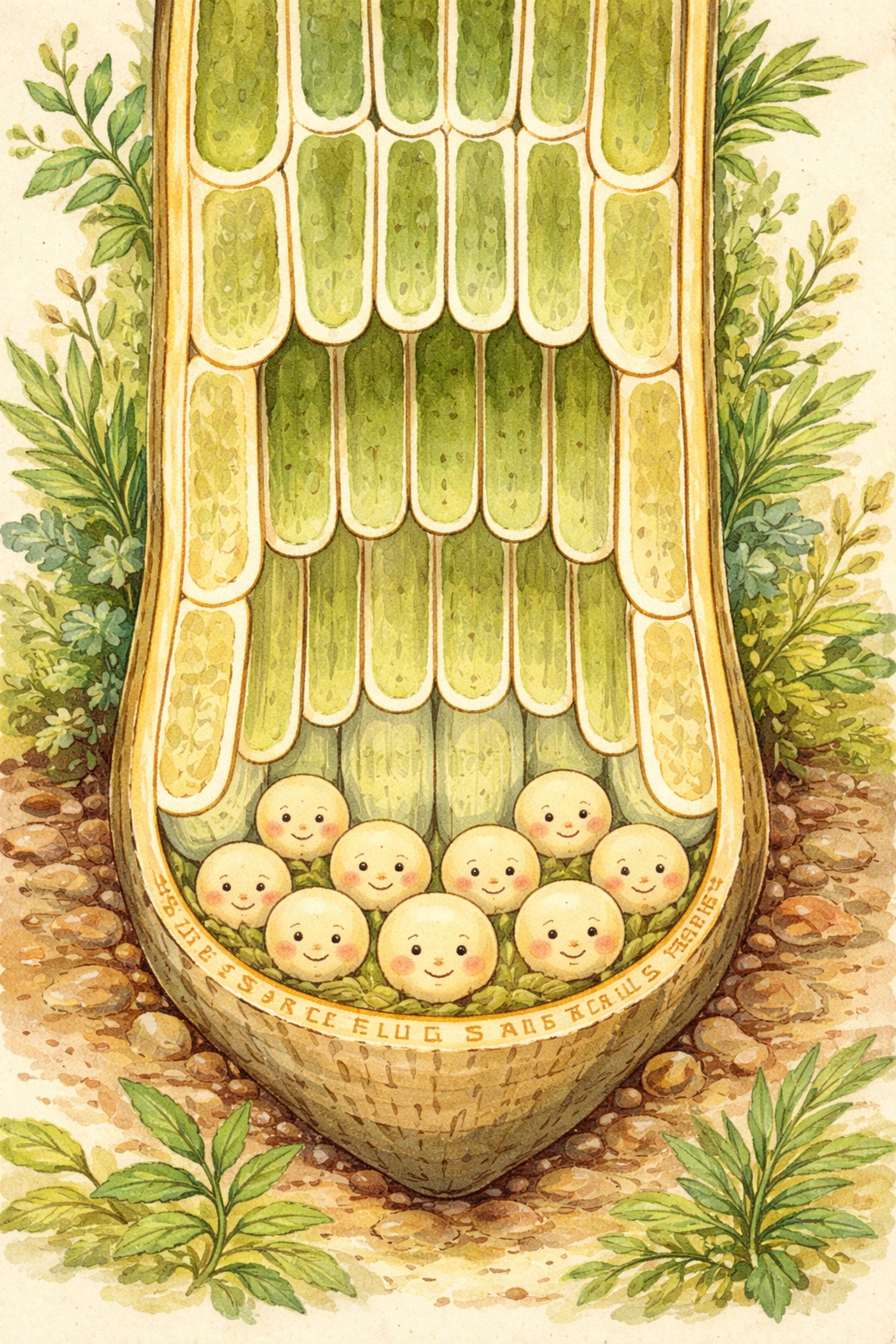
This settling triggers a chain reaction. The plant hormone auxin starts accumulating on the lower side of the root. Here's where it gets clever: in roots, auxin actually slows down cell growth. So the lower side of the root grows slower while the upper side keeps stretching normally. The result? The root curves and bends downward, following gravity like a compass needle pointing north.
Recent 2025 research discovered something even more amazing, auxin activates a specific gene that strengthens cell walls on the lower side of roots. This means roots can muscle their way around rocks and obstacles in soil while still knowing which direction to grow.
What Does This Mean for Vertical Farming?
Vertical farming flips traditional gardening on its head, sometimes literally! When you're growing in towers, wall-mounted planters, or stacked hydroponic systems, plants face gravity from unusual angles.
Here's the good news: plants are remarkably adaptable. Even astronauts growing lettuce on the International Space Station have found that roots still orient themselves and grow away from the seed, even in microgravity conditions. Scientists discovered that plants respond to multiple cues, not just gravity, but also light sources and moisture gradients.
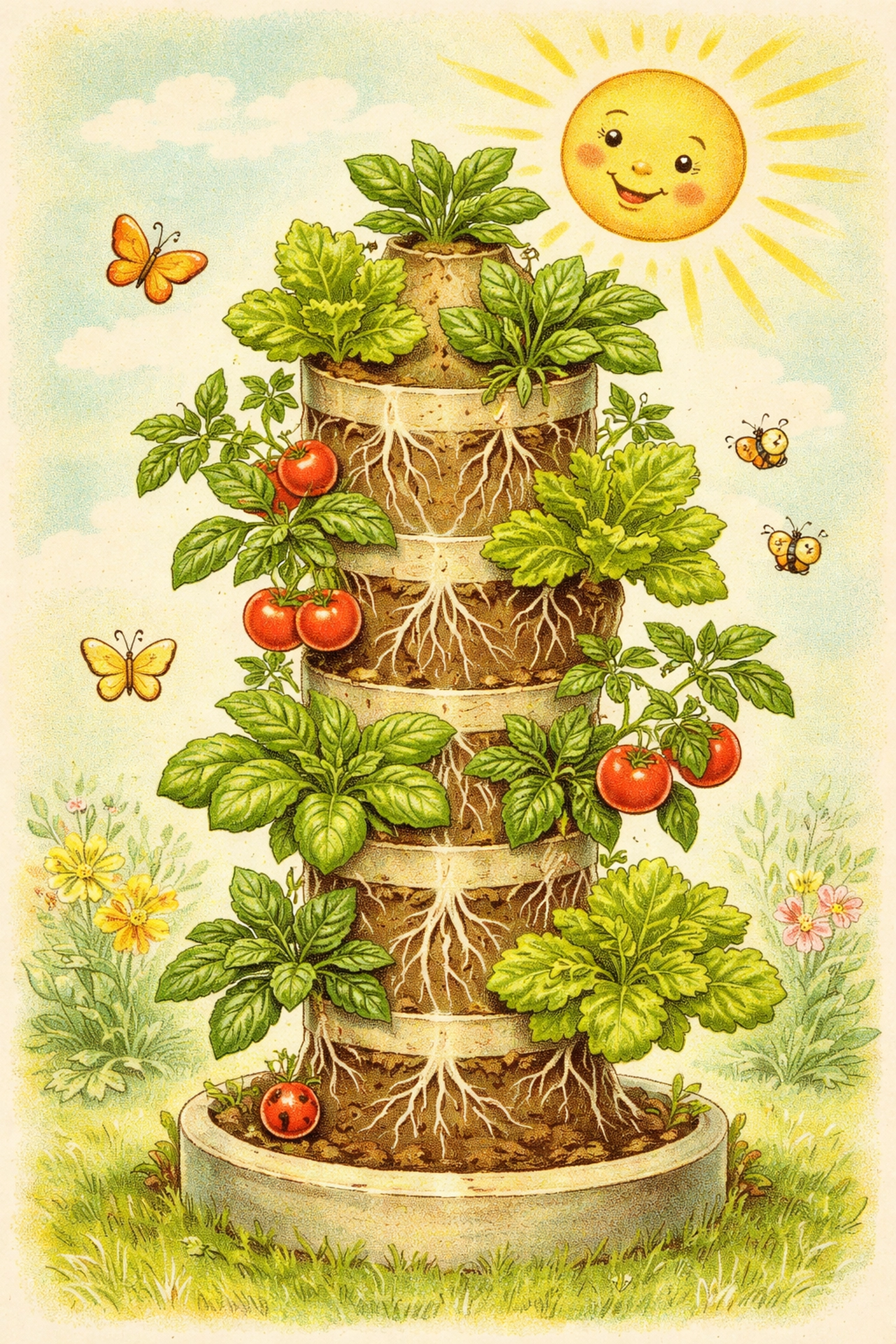
For home vertical farmers, this means:
- Roots will find their way. Even in a sideways tower garden, roots will curve toward moisture and growing medium.
- Stems still reach for light. The shoot's gravitropism works opposite to roots, stems grow upward, away from gravity.
- Proper orientation helps. While plants adapt, giving roots a clear "down" direction and leaves a clear "up" reduces stress and speeds growth.
This is why well-designed vertical systems angle their planting pockets or use gravity-fed water flow, they work with plant biology rather than against it.
DIY Gravity Experiment: Watch Roots Respond in Real Time
Ready to see gravitropism happen right at your kitchen table? This simple project takes about a week and costs less than $10. It's perfect for curious kids ages 5 and up.
Materials You'll Need
| Item | Estimated Cost |
|---|---|
| Dried bean seeds (lima or kidney work great) | $1.50 |
| Clear plastic cups or mason jars (3-4) | $2.00 |
| Paper towels | $1.00 |
| Tape | $0.50 |
| Permanent marker | Already own or $1.00 |
| Water | Free |
| Total | Under $6.00 |
Step-by-Step Instructions
Step 1: Prepare Your Seeds
Soak 4-6 dried bean seeds in room-temperature water overnight. This kickstarts germination and softens the seed coat.
Step 2: Set Up Your Observation Chambers
Take your clear cups or jars. Fold paper towels and press them against the inside walls. The paper towel should fit snugly, this will hold your seeds in place while staying visible through the clear container.
Step 3: Position Your Seeds
Tuck 1-2 pre-soaked seeds between the paper towel and the glass, about halfway down the cup. The seeds should be clearly visible from outside. Moisten the paper towel thoroughly but don't leave standing water at the bottom.

Step 4: Create Different Orientations
Here's where the experiment gets fun:
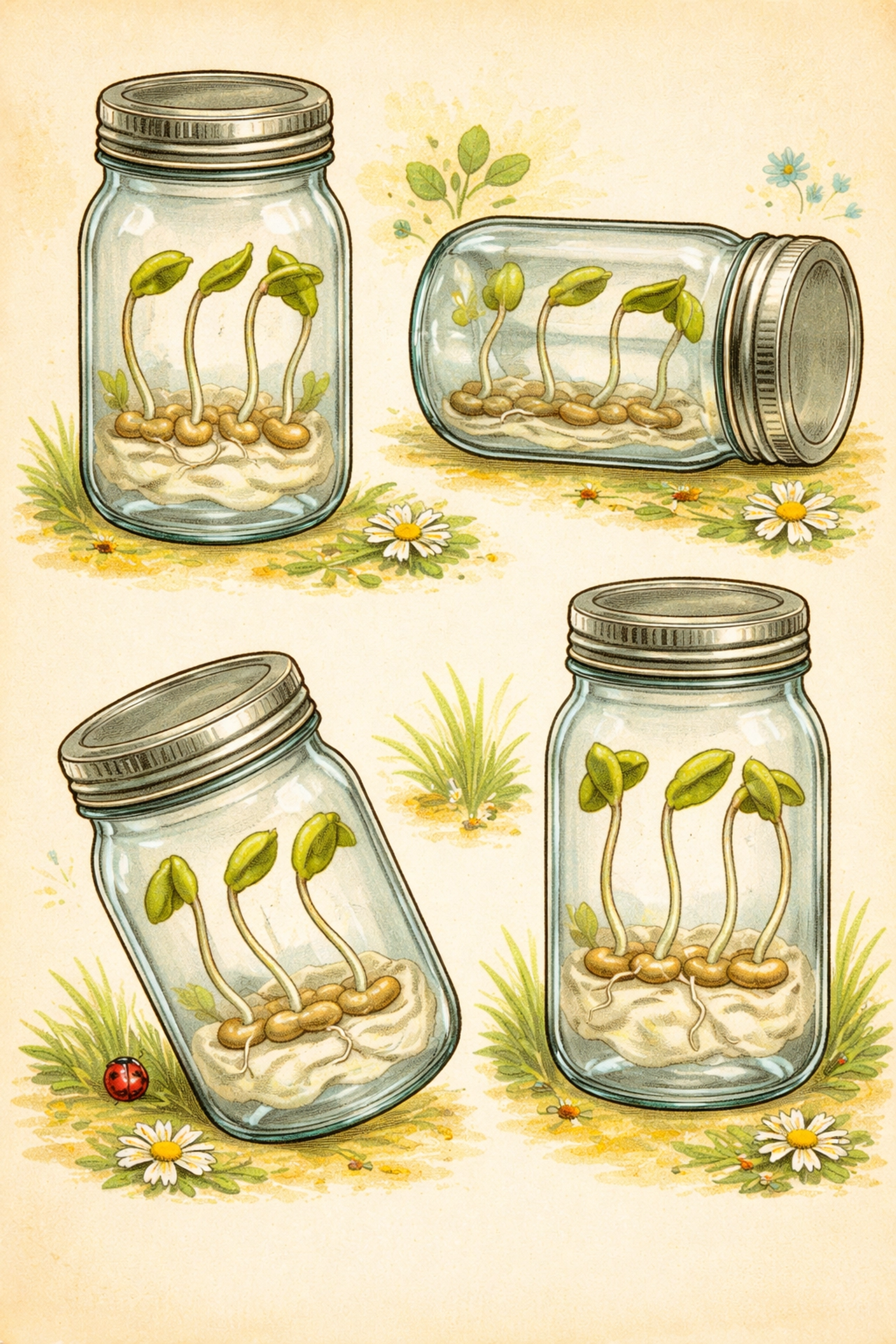
- Cup A: Place upright (control group)
- Cup B: Lay on its side
- Cup C: Tape to a window at a 45-degree angle
- Cup D: Turn completely upside-down (you'll need to secure it somehow)
Label each cup with your marker.
Step 5: Observe and Record
Check your seeds daily. Within 3-5 days, you'll see roots emerge. Watch carefully, no matter which direction the cup faces, roots will curve downward toward gravity. Stems will curve upward.
Keep a simple journal with drawings or photos. Ask your kids: "Which direction did the root grow? Did it change direction?"
Step 6: Discuss What You See
After a week, gently remove the seedlings and compare root shapes. Seeds that started sideways or upside-down will have curved, J-shaped roots, direct evidence of gravitropism at work!
Tips for Success
- Keep it moist. Check paper towels daily and add water as needed. Dry seeds won't germinate.
- Choose a warm spot. 65-75°F is ideal for bean germination.
- Be patient. Some seeds take longer than others, that's normal biology!
- Try multiple seeds. Not every seed germinates, so starting with extras ensures success.
For families interested in more hands-on growing projects, check out our guide on how much space you need for a productive hydroponic garden, it pairs perfectly with this gravity lesson.
Why Kids Love This Experiment
There's something magical about watching a seed "know" which way to grow, even when you've tried to trick it. This experiment teaches:
- Scientific observation skills (predicting, recording, comparing)
- Plant biology basics (roots vs. shoots, hormones, growth)
- Critical thinking ("What would happen if we tried it underwater?")
Plus, it's a living experiment. Unlike building something static, your gravity garden changes every single day, perfect for short attention spans and daily check-ins.
Frequently Asked Questions
Q: Will seeds germinate if planted upside-down?
A: Yes! Seeds contain enough stored energy to germinate regardless of orientation. The root will curve downward and the shoot will curve upward thanks to gravitropism: it just takes a little extra energy for the plant.
Q: Do all plants respond to gravity the same way?
A: Most plants show gravitropism, but the strength of response varies. Some tropicals and vining plants have weaker gravitropic responses, which is why they sprawl or climb more easily.
Q: Can roots grow sideways in vertical farming systems?
A: Roots will grow toward moisture and nutrients even if it means growing sideways. In well-designed vertical systems, roots follow the water and growing medium while still responding somewhat to gravity.
Q: What hormone makes roots grow down?
A: Auxin is the key hormone. Interestingly, auxin makes stems grow faster but makes roots grow slower: so when it accumulates on the lower side of a root, that side slows down and the root bends downward.
Q: How long does it take to see gravitropism?
A: In most seedlings, you can observe root curvature within 24-48 hours of reorienting the plant. Bean seeds show dramatic results within 3-5 days.
Q: Does gravity affect how tall plants grow?
A: Somewhat. In microgravity experiments, plants often grow taller but with weaker stems. On Earth, gravity helps plants develop stronger structural tissues.
Q: Why do some vertical farmers use rotating systems?
A: Rotating systems (like rotary gardens) expose all sides of plants to light evenly and can help roots receive consistent gravitational cues, promoting balanced growth.
Q: Can kids do this experiment safely?
A: Absolutely! This experiment uses only seeds, water, and paper towels: completely safe for all ages with basic supervision.
References
Blancaflor, E.B. & Masson, P.H. (2003). Plant gravitropism: Unraveling the ups and downs of a complex process. Plant Physiology.
Su, S.H., et al. (2025). Auxin-mediated cell wall modification in root gravitropism. Nature Plants.
International Space Station Research Program. (2024). Plant growth experiments in microgravity conditions. NASA Technical Reports.
Kiss, J.Z. (2015). Plant biology in reduced gravity on the Moon and Mars. Plant Biology.
Morita, M.T. (2010). Directional gravity sensing in gravitropism. Annual Review of Plant Biology.