




Quick Answer: Oxygen is absolutely essential for healthy vertical hydroponic roots because it powers cellular respiration, nutrient absorption, and disease resistance. Unlike soil-grown plants that access oxygen through air pockets in the ground, hydroponic roots depend entirely on dissolved oxygen in the nutrient solution. When oxygen levels drop below 3–4 mg/l, roots turn brown, growth stalls, and root rot sets in. Maintaining dissolved oxygen through aeration devices and proper temperature management (65–75°F) keeps your vertical garden thriving.
Why Do Hydroponic Roots Need Oxygen So Badly?
Here's something that surprises a lot of new hydroponic gardeners: plant roots breathe. Just like you and me, they consume oxygen to perform respiration, the process that converts sugars into usable energy. Without adequate oxygen, roots simply can't do their job.
In a traditional garden bed, soil naturally contains tiny air pockets that supply roots with oxygen. But in a vertical hydroponic system, roots are suspended in or regularly bathed by nutrient solution. That means your plants are completely dependent on how much oxygen is dissolved in that water.

When oxygen levels are healthy, your roots can:
- Absorb nutrients efficiently – Oxygen powers the active transport of minerals like nitrogen, phosphorus, and potassium into root cells
- Produce energy – Cellular respiration requires oxygen to generate ATP (the energy currency of cells)
- Fight off pathogens – Well-oxygenated roots are far more resistant to harmful bacteria and fungi
- Grow vigorously – Oxygen-rich environments promote strong, white, healthy root development
When oxygen drops too low? You'll see brown, slimy roots, nutrient deficiencies (even with a perfectly balanced solution), and eventually complete crop failure.
The Temperature-Oxygen Connection
Here's where things get a little tricky, and understanding this relationship can save your vertical garden from disaster.
Cooler water holds more dissolved oxygen than warm water. At the same time, warmer temperatures cause roots to respire faster, meaning they need more oxygen precisely when less is available. It's a double whammy.
For every 10°C (18°F) increase in temperature, root respiration roughly doubles. So if your nutrient solution creeps up to 80°F or higher on a hot summer day, your roots are working overtime while oxygen availability plummets. This is why maintaining solution temperatures between 65–75°F is so important in vertical hydroponics.
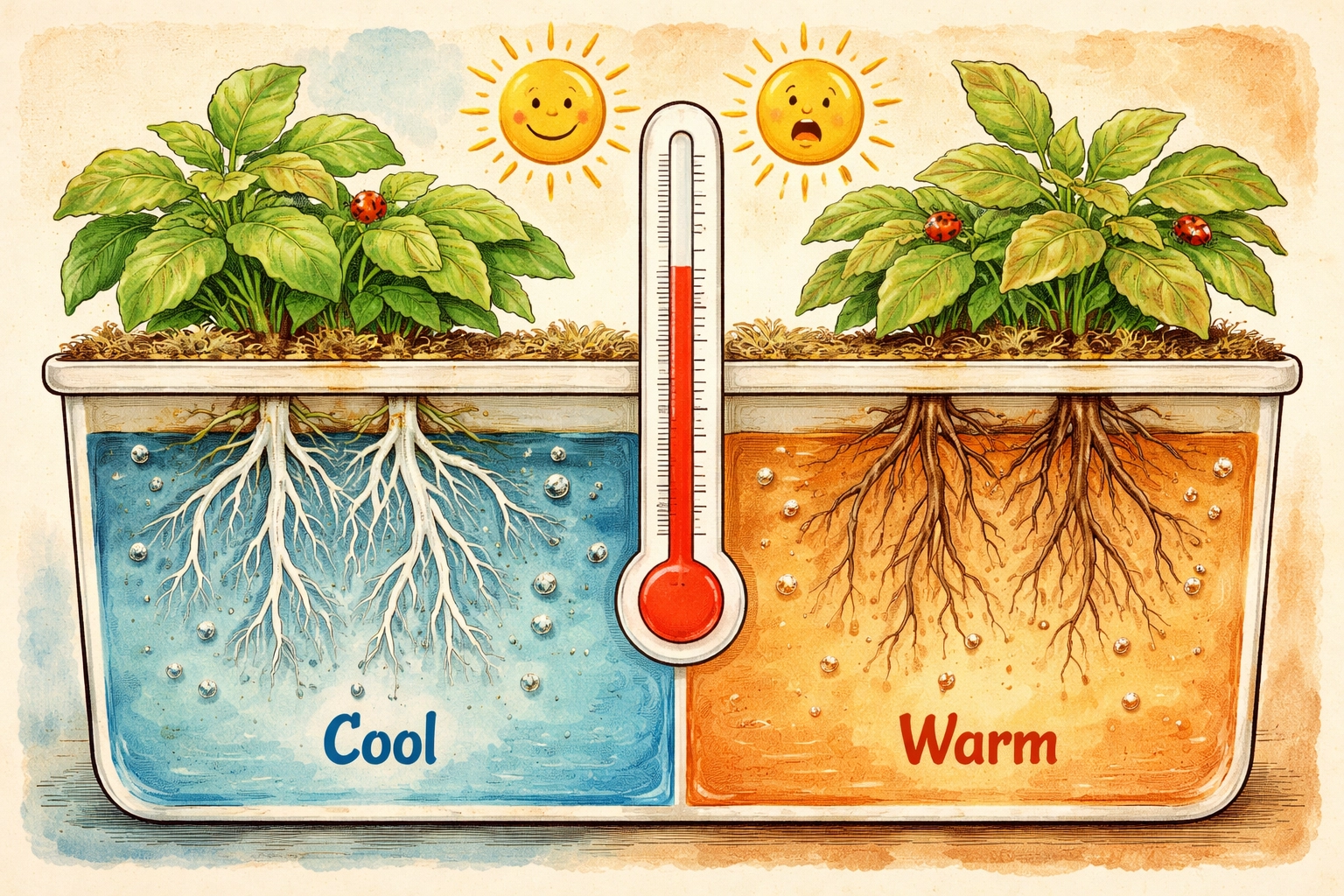
At room temperature (around 68–72°F), water can hold approximately 8 mg/l of dissolved oxygen under ideal conditions. That sounds like plenty, but busy roots in a productive system can deplete that oxygen quickly if you're not actively replenishing it.
How to Build a DIY Root Oxygenation System (Under $10)
Good news: keeping your hydroponic roots happy doesn't require expensive equipment. A simple air stone setup will dramatically improve dissolved oxygen levels and help prevent the dreaded root rot.
Materials You'll Need
| Item | Approximate Cost |
|---|---|
| Aquarium air pump (small) | $4–6 |
| Air stone (1–2 inch) | $1–2 |
| Airline tubing (3 feet) | $1–2 |
| Total | Under $10 |
You can find all of these at pet stores, dollar stores, or online. Many families already have an old fish tank pump gathering dust somewhere!
Step-by-Step Instructions
Step 1: Gather your materials
Make sure your air pump is rated for the size of your reservoir. For small vertical systems (under 5 gallons), even the tiniest aquarium pump works great.
Step 2: Connect the airline tubing
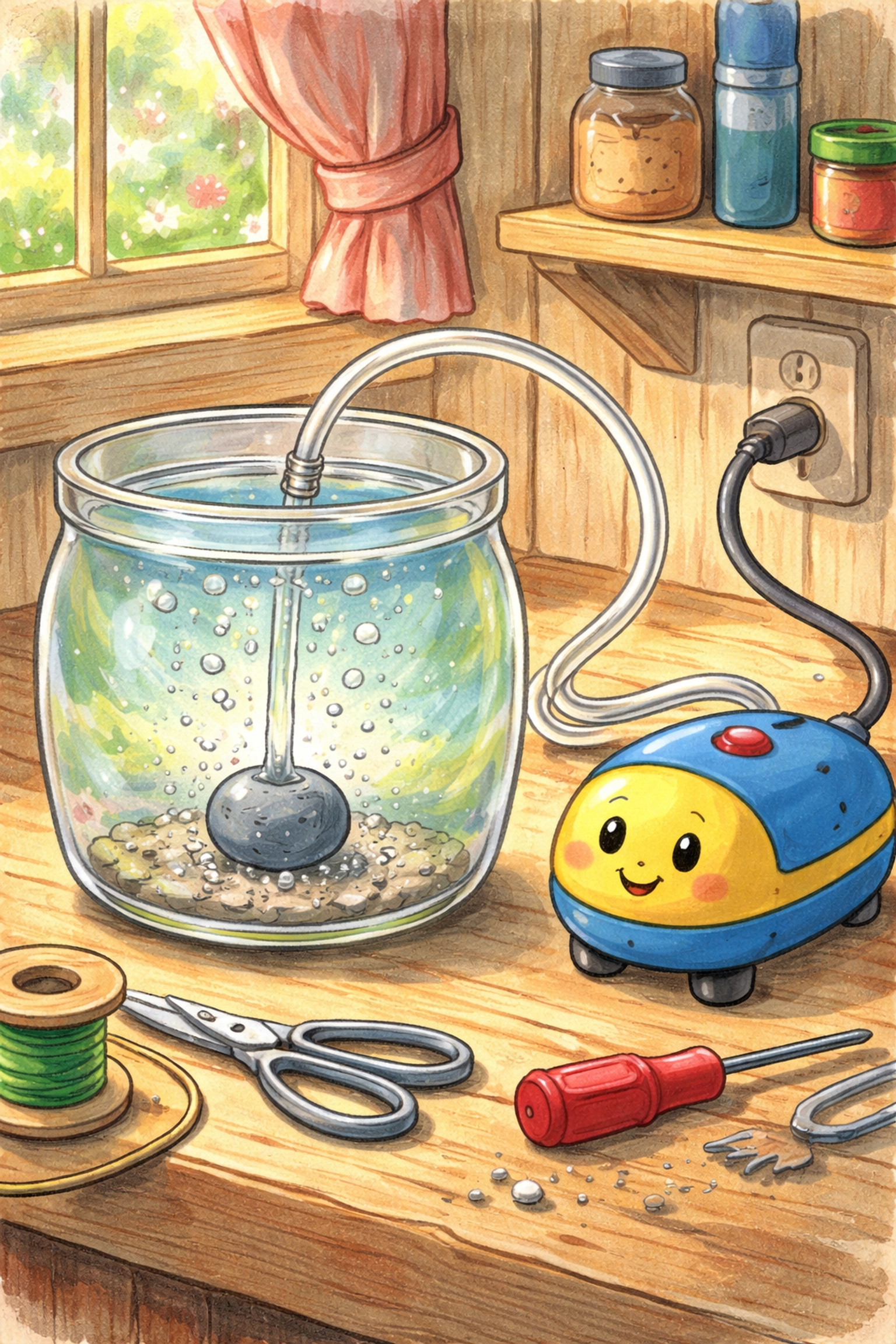
Attach one end of the tubing to the air pump outlet. Cut the tubing to reach from your pump to the bottom of your nutrient reservoir with a little slack.
Step 3: Attach the air stone
Connect the other end of the tubing to your air stone. The stone's porous material breaks the air into tiny bubbles, which dramatically increases oxygen transfer to the water.
Step 4: Position the air stone
Place the air stone at the bottom of your nutrient reservoir. The bubbles need to travel through as much water as possible to maximize oxygenation.
Step 5: Plug in and test
Turn on the air pump. You should see a steady stream of fine bubbles rising through your solution. If the bubbles are large and sparse, your air stone may be clogged or low quality, fine, champagne-like bubbles are what you're after.
Step 6: Run continuously
For best results, run your air pump 24/7. Roots don't take breaks from breathing, and neither should your aeration system. The electrical cost is minimal (these pumps use very little power).
Signs Your Roots Aren't Getting Enough Oxygen
Catching oxygen problems early can save your entire crop. Here's what to watch for:
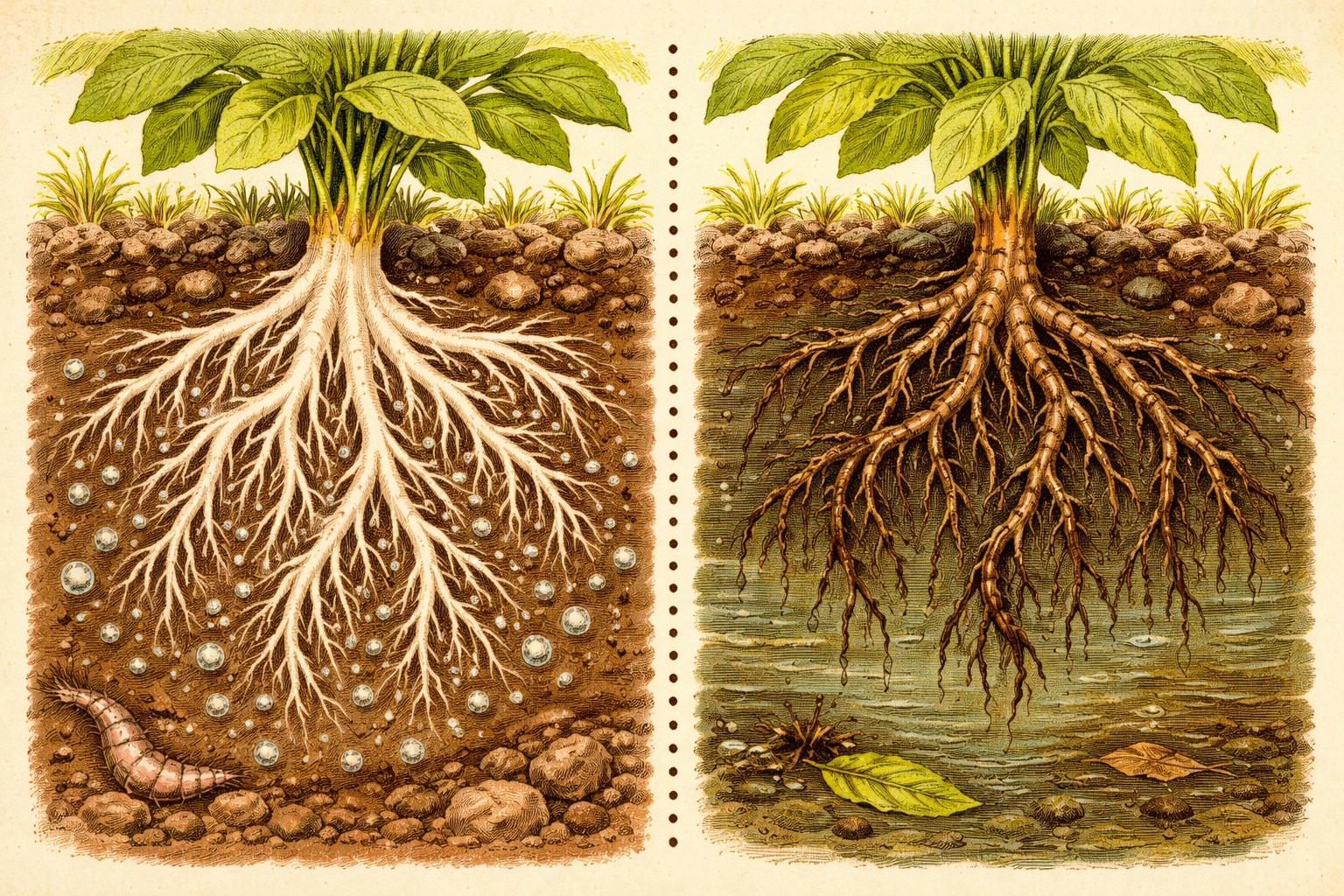
Brown or tan root coloration – Healthy hydroponic roots should be bright white or cream-colored. Brown roots are the first warning sign of oxygen starvation.
Slimy root texture – Oxygen-deprived roots become soft and slimy as anaerobic bacteria take over. Healthy roots feel firm and slightly fuzzy.
Foul smell from reservoir – A rotten egg or swampy odor indicates anaerobic conditions. Your reservoir should smell fresh or have no smell at all.
Wilting despite adequate water – When roots can't absorb nutrients due to oxygen deprivation, plants wilt even when surrounded by nutrient solution.
Stunted growth – If your vertical garden suddenly stops growing or new leaves look pale and small, oxygen might be the culprit.
Aeroponics: The Ultimate Oxygen Delivery
If you want to take root oxygenation to the next level, consider aeroponic systems. In aeroponics, roots hang freely in air and are periodically misted with nutrient solution. This provides maximum oxygen exposure since roots are surrounded by air (21% oxygen) rather than water (which holds far less).
Aeroponic systems produce the fastest growth rates of any hydroponic method, largely because oxygen is never a limiting factor. However, they're more complex to build and maintain than simpler deep water culture or nutrient film systems. For most family gardens, a good air stone setup provides excellent results without the added complexity.
If you're curious about space requirements for different hydroponic setups, check out our guide on how much space you need for a productive hydroponic garden.
Quick Tips for Oxygen Success
- Keep it cool – Monitor reservoir temperature, especially in summer. Add frozen water bottles if needed.
- Don't overcrowd roots – Dense root masses can create oxygen-depleted zones.
- Change solution regularly – Fresh nutrient solution contains more dissolved oxygen.
- Clean air stones monthly – Mineral buildup reduces bubble production over time.
- Consider multiple air stones – Larger reservoirs benefit from aeration at multiple points.
Frequently Asked Questions
How often should I run my air pump in hydroponics?
Run your air pump continuously, 24 hours a day. Roots respire constantly, and consistent aeration prevents oxygen depletion during nighttime when plants aren't photosynthesizing.
Can you over-oxygenate hydroponic water?
Practically speaking, no. Water can only hold so much dissolved oxygen before it reaches saturation. Extra bubbles simply escape into the air without causing harm to your plants.
What's the ideal dissolved oxygen level for hydroponics?
Aim for 5–8 mg/l of dissolved oxygen. Levels below 3–4 mg/l will inhibit root growth and can quickly lead to root rot.
Why are my hydroponic roots turning brown?
Brown roots typically indicate oxygen starvation, root rot, or both. Check your aeration system, lower your water temperature, and trim any severely damaged roots.
Does water temperature affect oxygen in hydroponics?
Absolutely. Warm water holds less dissolved oxygen than cool water. Keep nutrient solution between 65–75°F for optimal oxygen capacity.
Can I use hydrogen peroxide to add oxygen?
Hydrogen peroxide (H2O2) does release oxygen, but it's a temporary fix and can damage beneficial microbes. Mechanical aeration with an air stone is more effective and sustainable.
What causes root rot in vertical hydroponics?
Root rot is primarily caused by oxygen-deprived conditions that allow harmful anaerobic bacteria and fungi (like Pythium) to thrive. Proper aeration is your best prevention.
Do air stones wear out?
Yes, air stones become clogged with mineral deposits over time and produce fewer, larger bubbles. Replace them every few months or when you notice reduced bubble production.
References
- Epic Gardening. "Hydroponic Oxygenation: Why Dissolved Oxygen Matters." epicgardening.com
- University of Arizona Controlled Environment Agriculture Center. "Oxygen and Root Zone Temperature in Hydroponics." ceac.arizona.edu
- Maximum Yield. "The Importance of Oxygen in Hydroponic Systems." maximumyield.com
- Wageningen University Research. "Dissolved Oxygen in Nutrient Solutions." wur.nl
- Cornell University Cooperative Extension. "Hydroponic Root Health and Aeration." cornell.edu
- Upstart University. "Managing Dissolved Oxygen in Hydroponic Systems." upstartfarmers.com