




Yes, you can absolutely grow delicious strawberries vertically indoors without a single scoop of soil. Using hydroponic methods, where plants grow in nutrient-rich water instead of dirt, you can harvest fresh, sweet strawberries year-round, right in your kitchen, basement, or spare room. The secret lies in choosing the right varieties (day-neutral types like Albion or Seascape), maintaining a pH between 5.5 and 6.5, providing 12-16 hours of grow light daily, and hand-pollinating your flowers since there are no bees indoors.
Let's walk through exactly how to set this up with your family, step by step.
Why Grow Strawberries Vertically Without Soil?
Traditional strawberry patches take up a lot of horizontal real estate. Vertical hydroponic systems flip that equation, literally. By stacking plants upward in towers or wall-mounted channels, you can grow ten times more strawberries per square foot than a traditional garden bed.
Hydroponic systems also use up to 80% less water than soil-based growing because the nutrient solution recirculates rather than draining away. There's no weeding, no soil-borne pests, and no guessing about whether your plants are getting enough nutrients. Everything is controlled and measurable.
For families, this means a year-round science project that actually produces food. Your kids can observe root development through clear reservoirs, test pH levels like real chemists, and witness the full lifecycle from flower to fruit, all without stepping outside.
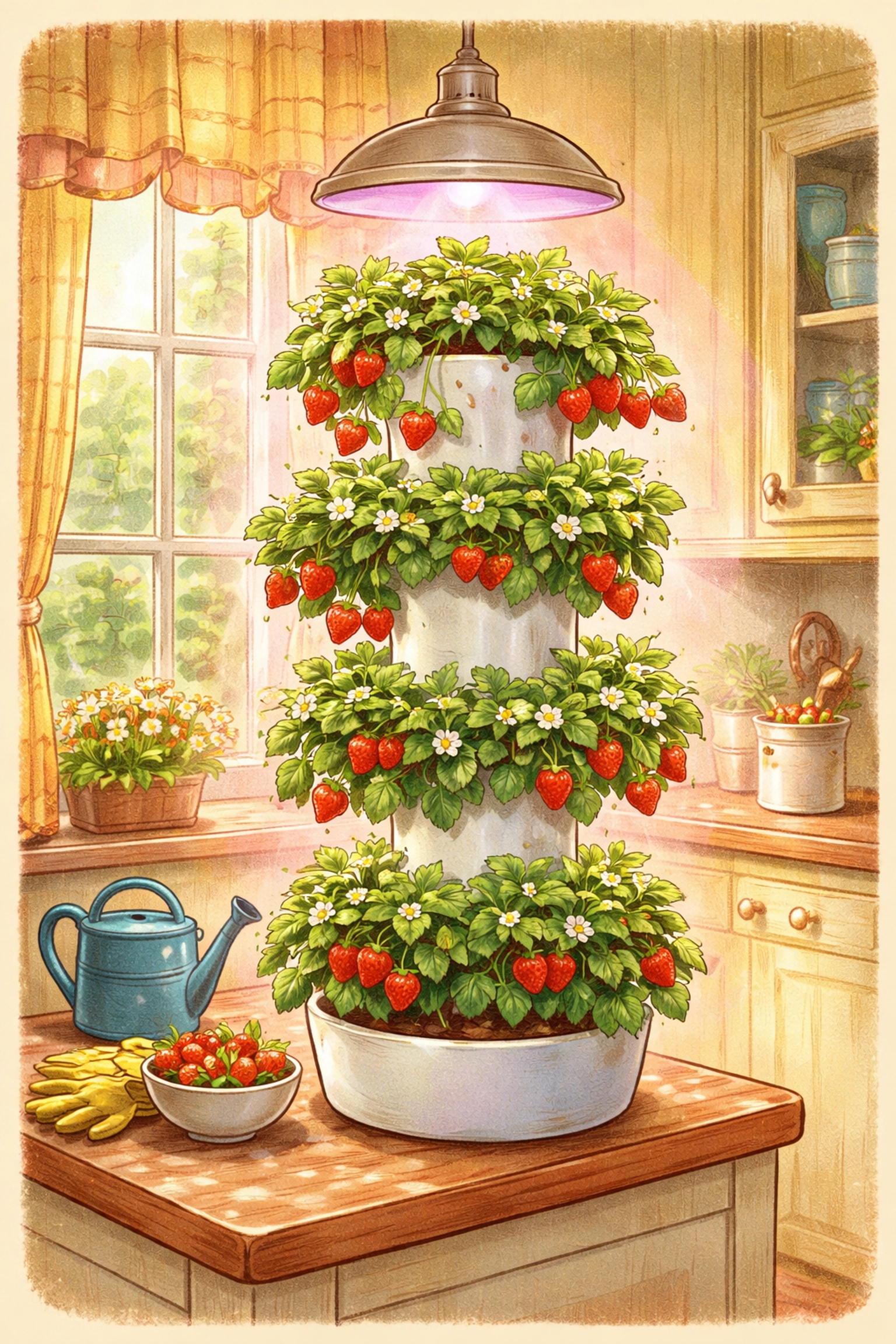
Choosing the Right Strawberry Varieties
Not all strawberries work well for indoor vertical growing. You want day-neutral or everbearing varieties that produce fruit continuously throughout the year rather than just once in early summer.
Best varieties for indoor vertical hydroponics:
- Albion – Large, firm berries with exceptional sweetness. Disease-resistant and productive over long seasons. Developed by the University of California specifically for extended harvest.
- Seascape – Another UC-developed variety. Produces medium-to-large berries with excellent flavor. Adapts well to controlled indoor environments.
- Tristar – Compact plants perfect for tight vertical spacing. Sweet berries and reliable production.
- Tribute – Hardy and disease-resistant with consistent yields in hydroponic setups.
Avoid June-bearing varieties like Chandler or Earliglow for indoor systems. These require specific cold dormancy periods and only fruit once per year, making them poorly suited for climate-controlled indoor growing.
Understanding Your Hydroponic Options
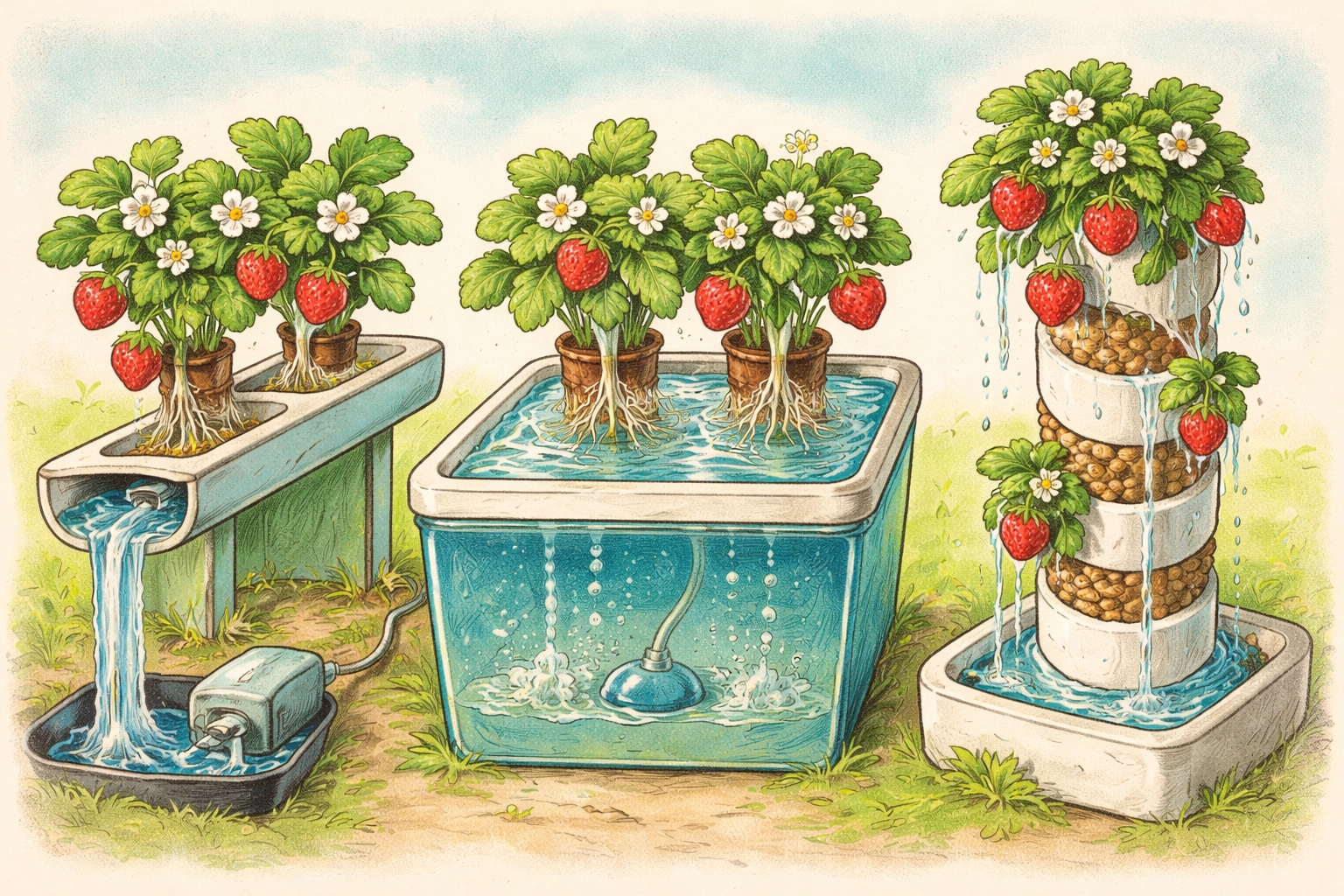
There are three main soil-free methods for growing vertical strawberries indoors. Each has advantages depending on your budget, space, and how hands-on you want to be.
Nutrient Film Technique (NFT)
A thin stream of nutrient solution flows continuously through shallow, angled channels. Strawberry roots sit in this moving film of water, absorbing nutrients while the upper roots get plenty of oxygen from the air above. NFT systems are efficient and popular for leafy greens and strawberries alike.
Deep Water Culture (DWC)
Plants sit on floating rafts or net pots suspended over a reservoir of nutrient-rich, oxygenated water. An air pump and air stones keep the water bubbling so roots don't suffocate. DWC is simple and beginner-friendly but works best for smaller vertical setups.
Drip Systems
Nutrient solution drips slowly onto a growing medium like coconut coir, rockwool cubes, or clay pebbles. The medium holds moisture around the roots while allowing airflow. Drip systems are forgiving and work well in tower-style vertical gardens where gravity helps move water downward through stacked planting sites.
For most families starting out, a vertical tower with a drip system offers the best balance of simplicity, cost, and results.
Setting Up Your Vertical Strawberry System
Here's the step-by-step process for building a functional indoor vertical strawberry garden.
Step 1: Choose Your Location
Pick a spot with stable temperatures between 60-80°F (15-27°C). Strawberries prefer slightly cooler nights around 60°F for best fruit development. Avoid placing your system near heating vents or drafty windows.
You'll need access to an electrical outlet for your grow lights and water pump. A waterproof tray or mat beneath the system catches any drips or spills.
Step 2: Assemble Your Vertical Tower
Commercial hydroponic towers like the Tower Garden, Lettuce Grow, or Mr. Stacky work great for beginners. You can also build a DIY tower using food-safe PVC pipes with holes drilled for net pots.
A typical family-sized tower holds 20-30 planting sites and stands 4-6 feet tall. Make sure it's stable, a top-heavy tower full of mature strawberry plants can tip if not properly anchored.
Step 3: Install Your Grow Lights
Strawberries need 12-16 hours of light daily to flower and fruit properly. Full-spectrum LED grow lights work best, providing the red and blue wavelengths plants crave while staying energy-efficient and cool.
Position lights 6-12 inches above the top of your tower and use a timer to maintain consistent day length. Inconsistent lighting confuses the plants and reduces berry production.
Step 4: Mix Your Nutrient Solution
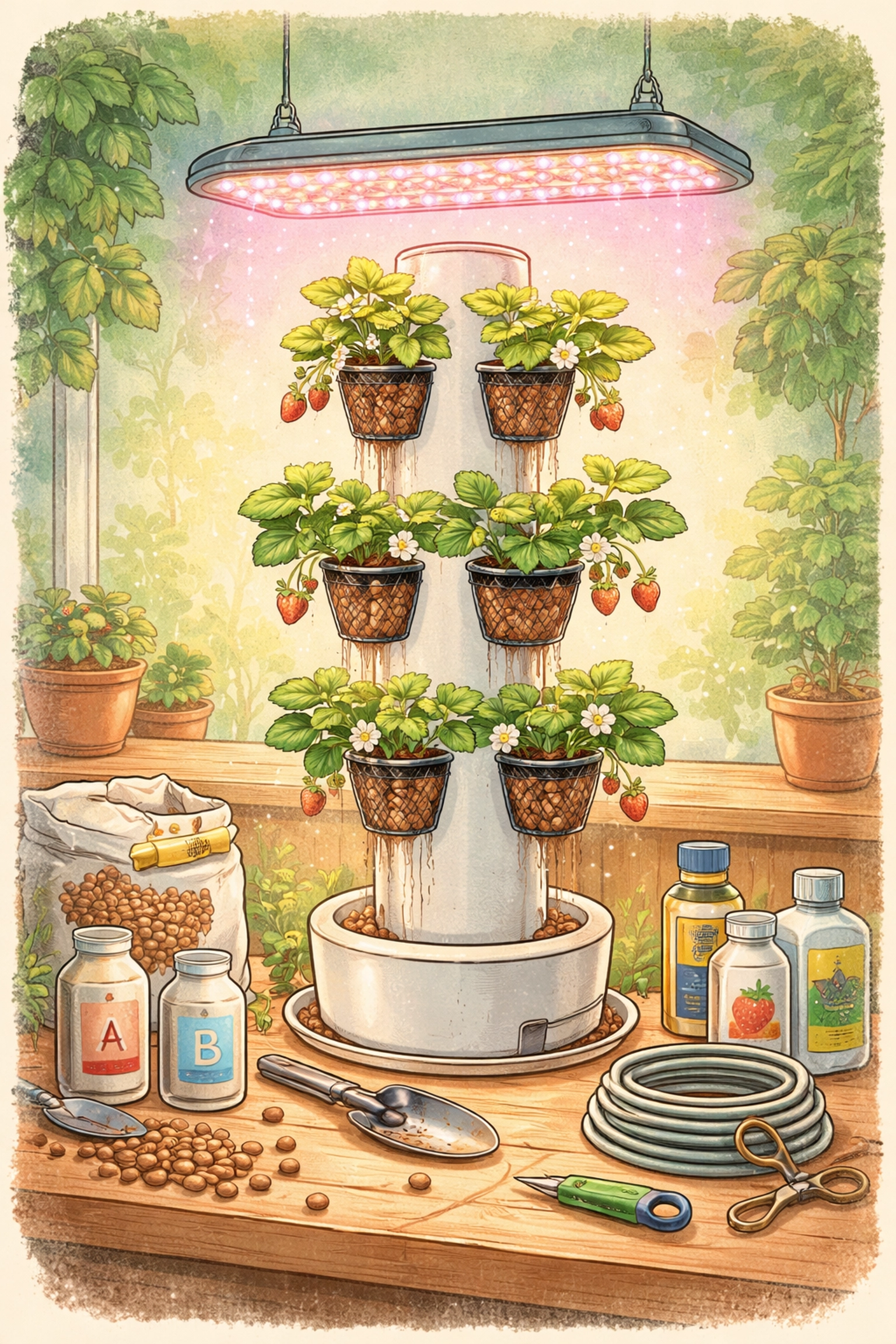
Use a hydroponic nutrient formula designed for fruiting plants. Strawberries need balanced nitrogen, phosphorus, and potassium, plus calcium and magnesium for strong cell walls and sweet fruit.
Critical water chemistry targets:
- pH: 5.5-6.5 (check daily with a digital pH meter and adjust with pH up/down solutions)
- EC (electrical conductivity): 1.0-1.5 during vegetative growth, 1.5-2.0 during flowering and fruiting
Change your nutrient solution completely every 1-2 weeks to prevent salt buildup and nutrient imbalances.
Step 5: Plant Your Strawberries
Start with bare-root strawberry crowns or established starter plants from a nursery. If using soil-grown starts, gently wash all soil from the roots before transplanting, soil particles can clog your hydroponic system.
Place each plant in a net pot filled with clay pebbles or rockwool, with the crown (where stems meet roots) sitting just above the growing medium. Roots should dangle freely into the nutrient flow.
Step 6: Hand-Pollinate Your Flowers
Here's the step many new indoor growers forget: strawberries need pollination to produce fruit, and there are no bees in your living room.
When flowers appear (small white blooms with yellow centers), use a soft paintbrush, cotton swab, or even a clean mascara wand to gently brush the center of each flower. Move from flower to flower, transferring the yellow pollen between blooms. Do this every 2-3 days while plants are flowering.
Without pollination, you'll get flowers but no berries, or small, misshapen fruit.

Maintenance Schedule for Healthy Plants
| Task | Frequency |
|---|---|
| Check pH and EC levels | Daily |
| Top off reservoir with fresh water | Every 2-3 days |
| Complete nutrient solution change | Every 1-2 weeks |
| Hand-pollinate open flowers | Every 2-3 days |
| Inspect roots for rot or discoloration | Weekly |
| Trim dead leaves and runners | As needed |
| Clean pump and tubing | Monthly |
Budget Breakdown for a Family Vertical Strawberry Garden
| Item | Estimated Cost |
|---|---|
| Vertical tower system (commercial) | $150-$400 |
| DIY PVC tower materials | $40-$80 |
| Full-spectrum LED grow light | $60-$150 |
| Digital pH and EC meters | $30-$50 |
| Hydroponic nutrients (starter kit) | $20-$40 |
| Strawberry starter plants (10-20) | $25-$50 |
| Timer for lights | $10-$15 |
| Net pots and growing medium | $15-$25 |
| Total (DIY route) | $200-$410 |
| Total (commercial tower) | $310-$730 |
Frequently Asked Questions
How long until I harvest strawberries from a hydroponic tower?
Expect your first ripe berries 8-12 weeks after transplanting healthy starter plants. Plants grown from bare-root crowns may take a few weeks longer to establish before flowering.
Can I grow strawberries from seeds hydroponically?
Technically yes, but it's not recommended. Strawberry seeds are slow and inconsistent germinators, often taking 2-3 weeks to sprout and 4-6 months before fruiting. Starter plants or bare-root crowns give much faster results.
Why are my hydroponic strawberries small or misshapen?
Incomplete pollination is the most common cause. Make sure you're hand-pollinating every open flower. Nutrient deficiencies (especially calcium or boron) can also cause deformed fruit.
How many strawberries will one plant produce?
A healthy day-neutral strawberry plant in a hydroponic system can produce 1-2 pounds of fruit per year: significantly more than soil-grown plants due to optimized growing conditions.
Do I need to give strawberry plants a rest period?
Day-neutral varieties like Albion and Seascape don't require dormancy and will produce continuously under proper light and temperature conditions. However, production may slow after 12-18 months, at which point replacing older plants with fresh starts improves yields.
Growing vertical strawberries without soil is one of the most rewarding projects a family can tackle together. You'll learn real chemistry, biology, and engineering: and eat the delicious results. For more hydroponic project ideas, explore our guides at Tierney Family Farms and see how much space you actually need for a productive setup.