




Direct Answer: In a gravity-fed vertical garden, water moves from a reservoir at the top of the tower and flows downward through each growing level, driven entirely by gravitational force. The water cascades from tier to tier, moistening plant roots along the way before collecting at the bottom for recirculation. This downward flow harnesses a fundamental law of physics, gravity pulls water at a constant rate of 9.8 meters per second squared, making it an energy-efficient and elegantly simple irrigation method.
Now let's dig into exactly how this works, why it matters for your family's indoor garden, and how you can build one that actually functions properly.
Why Does Gravity Make Vertical Gardens Possible?
Here's the beautiful simplicity of it: water always wants to flow downhill. In a vertical tower garden, we use this natural tendency to our advantage.
When you place a water reservoir at the very top of your tower, gravity immediately begins pulling that water downward. As it descends through channels, tubes, or growing media, it passes by plant roots, delivering moisture and dissolved nutrients along the way. No complex pumping required for the distribution phase, physics handles the heavy lifting.
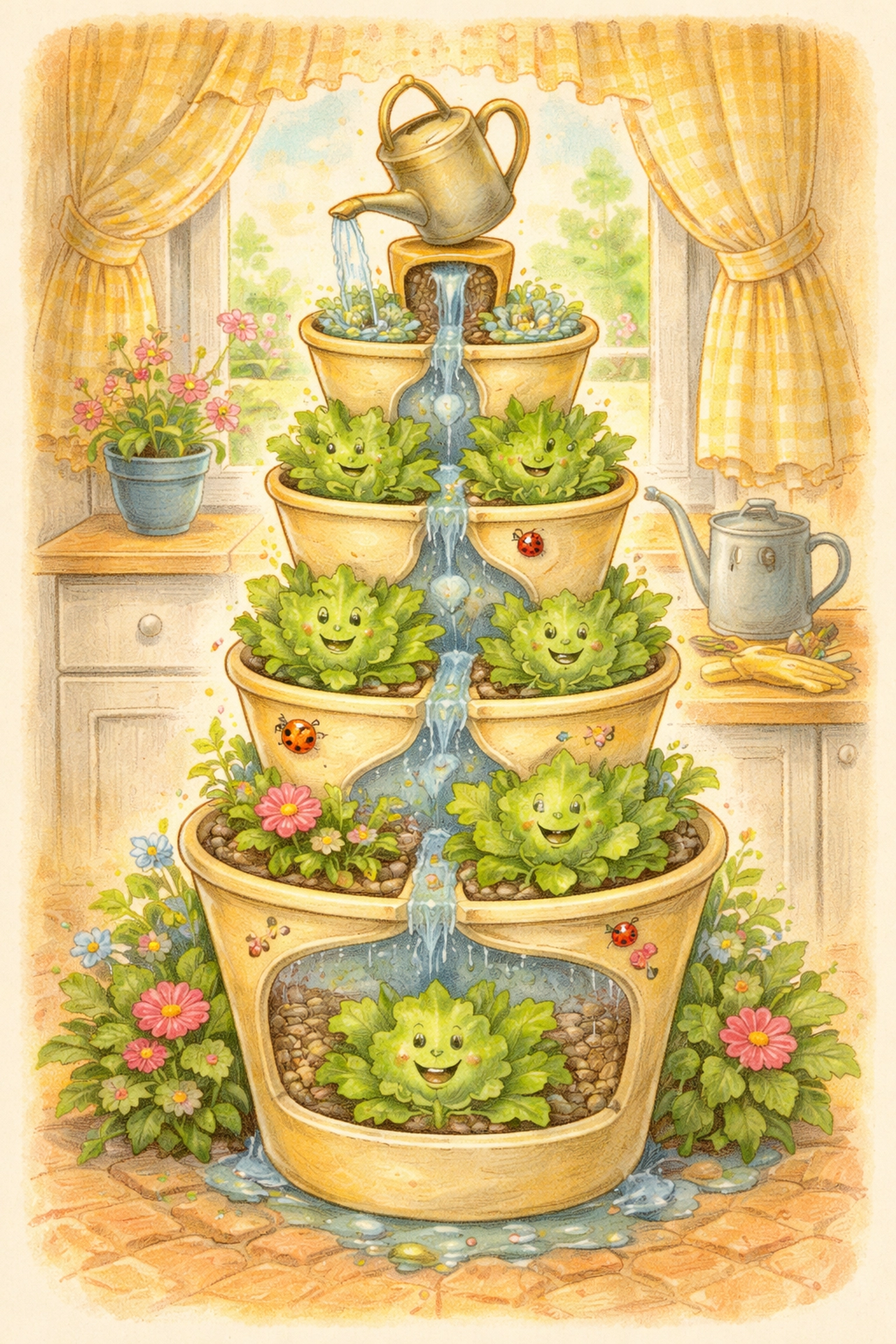
The key insight is that gravity-fed systems work most efficiently when water flows downward naturally. This is why the tower design matters so much. You're essentially creating a controlled waterfall inside your growing structure.
The Two-Part System: Lift Then Drop
Here's where many beginners get confused. A "gravity-fed" vertical garden still needs a way to get water to the top initially. The system works in two distinct phases:
Phase One – The Lift: Water must travel from your bottom collection basin up to the top reservoir. This typically requires a small submersible pump. Some gardeners prefer to manually pour water into the top reservoir, eliminating electricity entirely.
Phase Two – The Gravity Cascade: Once water reaches the top, gravity takes over completely. The water flows downward through your tower, level by level, without any additional energy input.
This hybrid approach is what makes vertical towers remarkably water-efficient. Recirculating hydroponic systems like these can use up to 90% less water than traditional soil gardening because the same water cycles through repeatedly rather than draining away into the ground.
Understanding Pressure Differentials in Your Tower
When water sits in a vertical column, something interesting happens with pressure. The water at the bottom of the column experiences more pressure than the water at the top. This is called hydrostatic pressure, and it increases by approximately 0.43 PSI (pounds per square inch) for every foot of water depth.
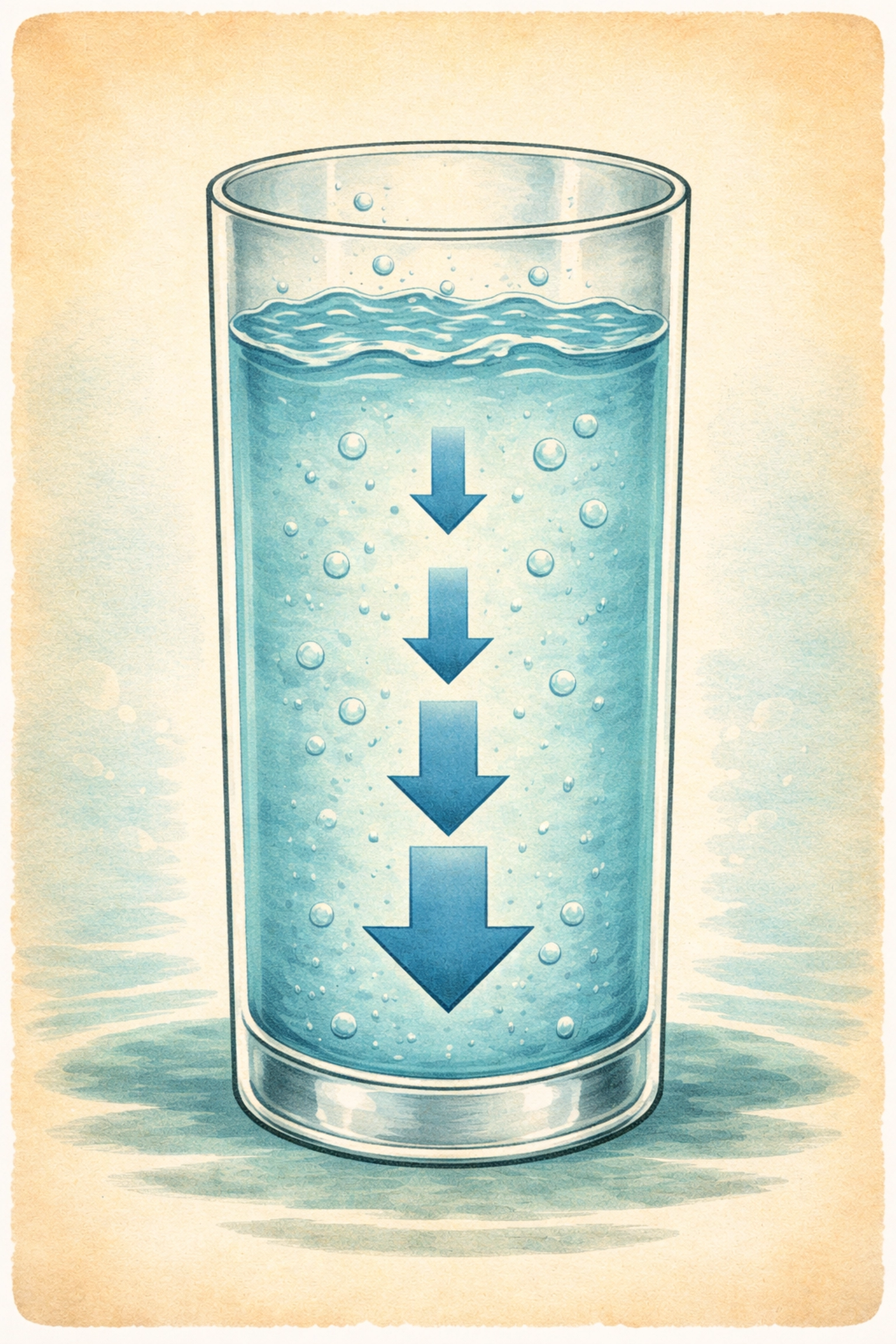
Why does this matter for your garden? This natural pressure differential helps push water through your system more consistently. In a four-foot tower, the water at the bottom experiences roughly 1.7 PSI more pressure than at the top. This pressure encourages steady flow through any channels or growing cups.
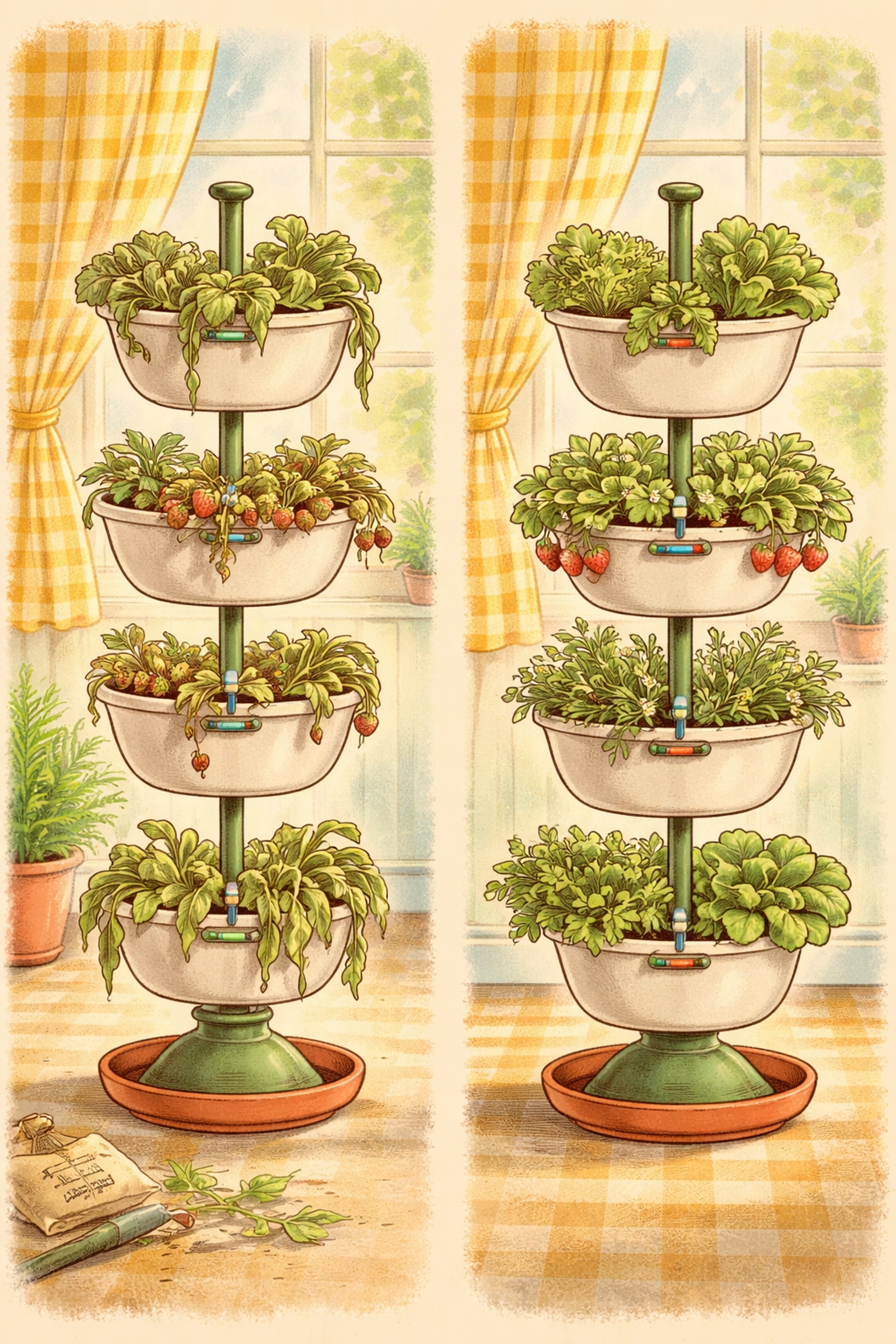
However, this same principle creates a challenge: plants at the top of your tower naturally receive water first (and often more generously), while plants lower in the tower may receive less if the system isn't designed properly.
The Uneven Distribution Problem (And How to Fix It)
One of the biggest challenges with gravity-fed vertical gardens is ensuring every plant gets adequate water. Research on vertical growing systems consistently identifies uneven water distribution as a primary concern, foliage at the top often receives generous watering while plants lower down receive significantly less.
This happens because of:
- Gravity imbalance – Upper plants intercept water before it reaches lower levels
- Pressure loss – Friction in tubing reduces flow as water travels
- Blockages – Roots, algae, or sediment can partially clog passages
Solutions That Actually Work
Install inline valves: Small adjustable valves at each growing level let you fine-tune how much water flows to each tier. This is the most reliable fix for uneven distribution.
Use flow meters: These inexpensive devices help you monitor exactly how much water reaches each section, taking the guesswork out of troubleshooting.
Design with transitional bowls: Instead of straight vertical drops, incorporate small collection bowls at each level. Water pools briefly, ensuring roots get soaked, before overflowing to the next tier.
Keep tubes clean: Sediment and algae buildup in tubing is one of the most common causes of reduced flow. A monthly flush with diluted hydrogen peroxide (3% solution) keeps passages clear.
Building a Family-Friendly Gravity-Fed Tower
Ready to build one with your kids? Here's a straightforward approach that teaches real physics while growing real food.
Materials You'll Need
| Item | Approximate Cost | Notes |
|---|---|---|
| 4-inch PVC pipe (6 feet) | $15-20 | Food-safe schedule 40 |
| Net cups (10 pack) | $8-12 | 3-inch diameter works well |
| Small submersible pump | $15-25 | 100-200 GPH capacity |
| Flexible tubing (10 feet) | $8-10 | Match to pump outlet size |
| 5-gallon bucket | $5-8 | Bottom reservoir |
| Growing media (clay pebbles) | $15-20 | Reusable and pH neutral |
| Basic timer | $10-15 | For pump automation |
| Total Estimated Cost | $76-110 |
Assembly Steps
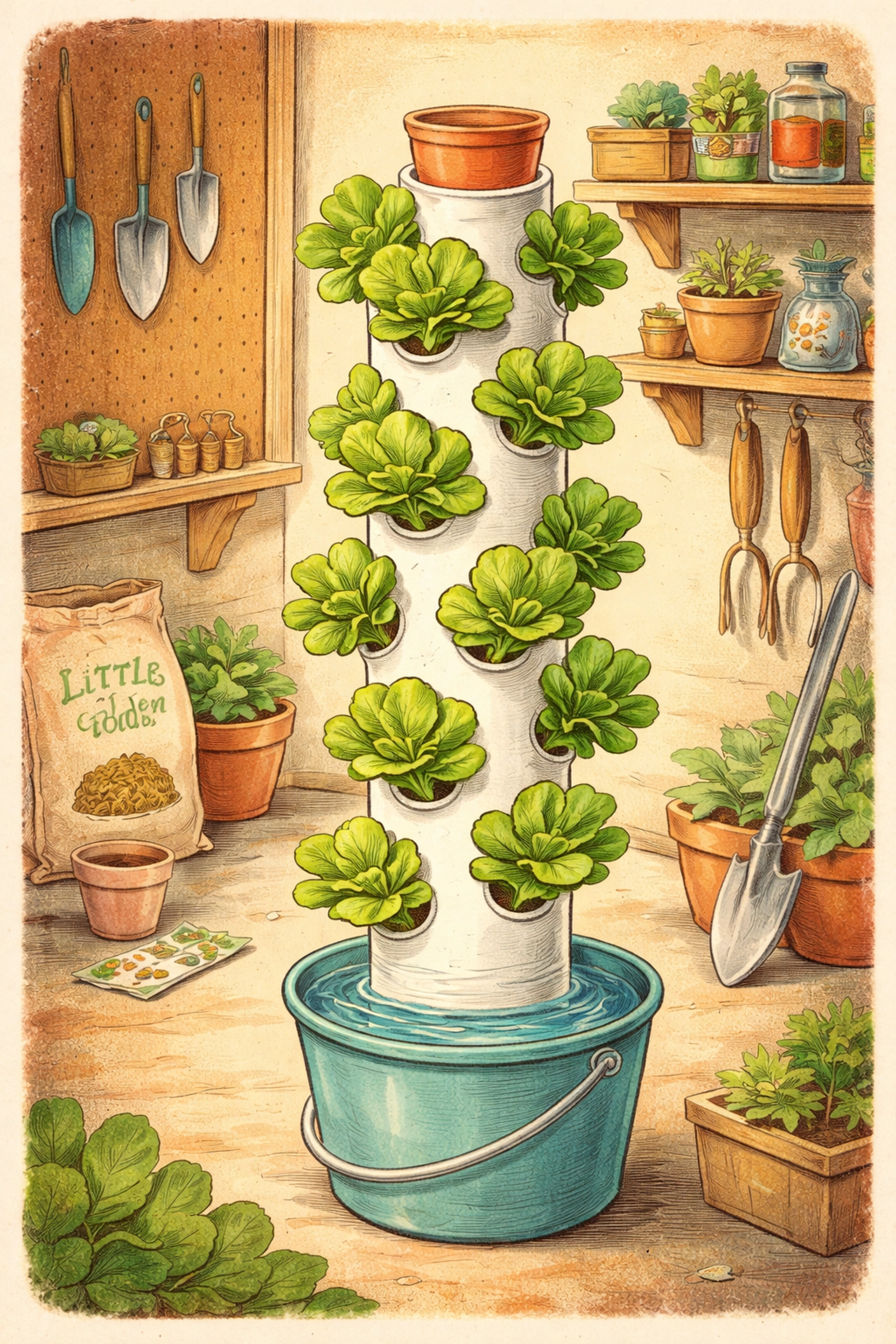
Cut planting holes – Using a hole saw, cut 3-inch holes along your PVC pipe, spacing them about 8-10 inches apart. Stagger them in a spiral pattern so each plant gets light access.
Cap the bottom – Secure a PVC end cap with a small drainage hole to the bottom of your tower.
Position your tower – Set the tower into your 5-gallon bucket, which serves as your collection reservoir.
Run your water line – Connect tubing from the submersible pump (sitting in the bucket) up through the center of the tower to the very top.
Add a drip ring or spray head – At the top, install a simple drip emitter that distributes water evenly before it begins its gravity-fed journey down.
Insert net cups and media – Place net cups in each hole, fill with clay pebbles, and add your seedlings.
Set your timer – Most leafy greens thrive with 15 minutes of water flow every 2-3 hours during daylight.
What Plants Thrive in Gravity-Fed Towers?
Leafy greens and herbs perform exceptionally well because their root systems don't need deep media. Great choices include:
- Lettuce (all varieties)
- Spinach
- Kale
- Basil
- Cilantro
- Mint
- Bok choy
Avoid heavy fruiting plants like tomatoes or peppers in smaller towers, their root mass can block water flow, and the fruit weight may destabilize your structure.
The Science Lesson Hidden in Your Tower
Building a gravity-fed garden gives kids hands-on experience with multiple scientific principles:
- Gravitational force – Observing how water always moves downward
- Fluid dynamics – Watching flow rates change based on tube diameter
- Pressure relationships – Understanding why bottom plants might get different water amounts
- The water cycle – Seeing evaporation, collection, and recirculation in miniature
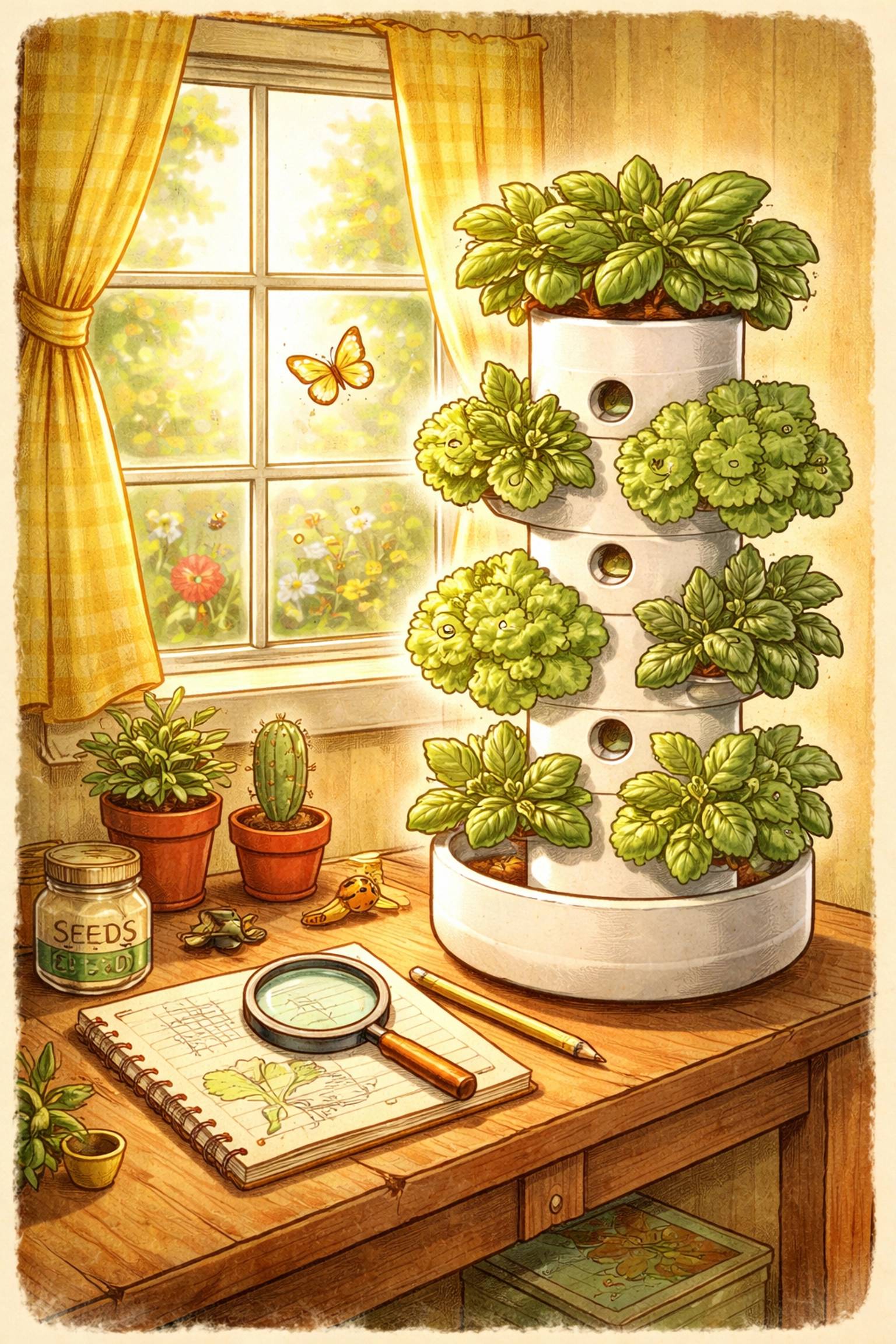
Consider keeping a garden journal to track flow rates, plant growth, and any adjustments you make. This transforms your tower into a genuine STEM laboratory.
Frequently Asked Questions
How often should I run the pump in a gravity-fed system?
For most leafy greens, running the pump 15 minutes every 2-3 hours during the day provides adequate moisture. Roots need wet and dry cycles, constant water flow can promote root rot.
Can I build a completely pump-free gravity system?
Yes, but you'll need to manually refill the top reservoir regularly. Some gardeners use elevated rain barrels or large containers positioned above the tower, refilled once or twice daily.
Why are my bottom plants getting less water?
This is the most common gravity-fed challenge. Check for blockages first, then consider adding flow-control valves at each level to balance distribution.
What causes algae buildup in my tower?
Light exposure on wet surfaces promotes algae growth. Use opaque tubing and cover any exposed water surfaces. A small amount of food-grade hydrogen peroxide in your reservoir also helps.
How much water does a gravity-fed tower actually save?
Recirculating systems typically use 80-90% less water than traditional soil gardens because water cycles continuously rather than draining away.
Looking for more space-efficient growing projects? Check out our guide on how much space you need for a productive hydroponic garden.