



Setting up a stuffed-animal vet clinic at home is one of the simplest ways to help children practice empathy, gentle care, and responsibility, all while having a blast. With about $10 worth of supplies (most of which you probably already own), you can create a play space that encourages kids to think about how others feel, solve problems, and nurture their favorite plush patients back to health.
This project works wonderfully for kids ages 3–8, though older siblings often love jumping in as "senior veterinarians" or clinic managers. Let's walk through everything you need to get your family's vet clinic up and running.
What Materials Do You Need for a Stuffed-Animal Vet Clinic?
You can set up a fully functional pretend vet clinic for under $10, and many families find they already have most items at home. The key is gathering supplies that feel "real" enough to spark imagination without breaking the bank.

Here's a simple materials checklist with estimated costs:
| Item | Estimated Cost | Notes |
|---|---|---|
| Stuffed animals | $0 | Use what you have at home |
| Toy stethoscope | $1–3 | Dollar store or toy medical kit |
| Bandages/gauze | $1 | From first aid kit or dollar store |
| Cotton balls | $1 | Multi-use craft supply |
| Popsicle sticks (tongue depressors) | $1 | Craft aisle |
| Empty medicine bottles | $0 | Clean, label-free containers |
| Clipboard + paper | $1–2 | For patient charts |
| Markers/crayons | $0 | Use what you have |
| Small blanket or towel | $0 | For recovery beds |
| Total | Under $10 |
Pro tip: If you have an old white button-up shirt, it makes a fantastic vet coat. Just roll up the sleeves and add a name tag!
How Do You Set Up the Clinic Zones?
Organizing your play space into distinct "zones" helps children understand how real veterinary clinics work and keeps the play flowing smoothly. You don't need a lot of space, a corner of the living room or a cleared-out section of a bedroom works perfectly.
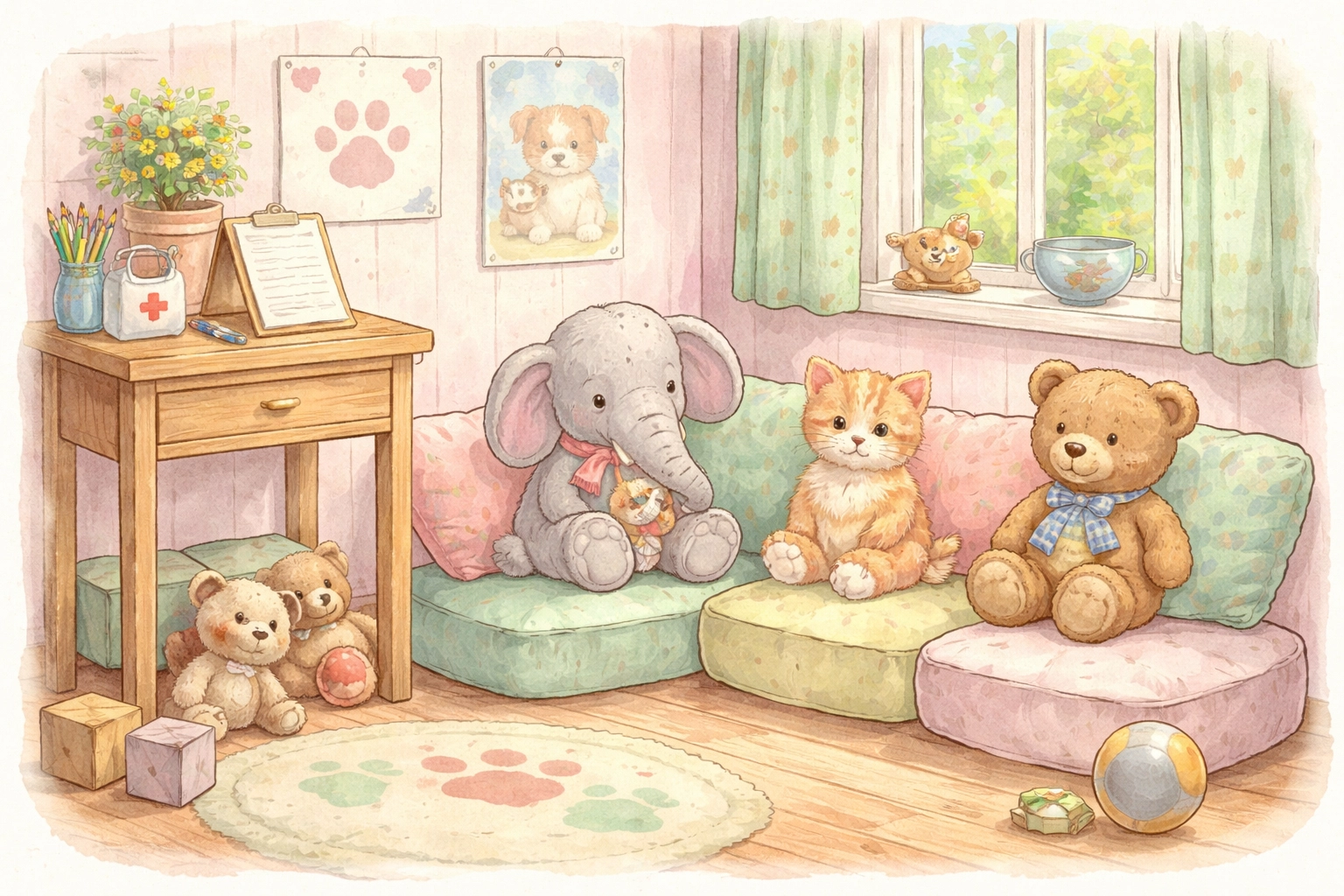
Reception and Waiting Area
This is where pet owners (other family members, dolls, or imaginary friends) check in their animals. Set up a small desk or overturned box with:
- A clipboard for sign-in sheets
- Paper and markers for patient intake forms
- A few chairs or cushions for "waiting" pets
Encourage kids to ask questions like "What's your pet's name?" and "What seems to be bothering them today?"
Examination Room
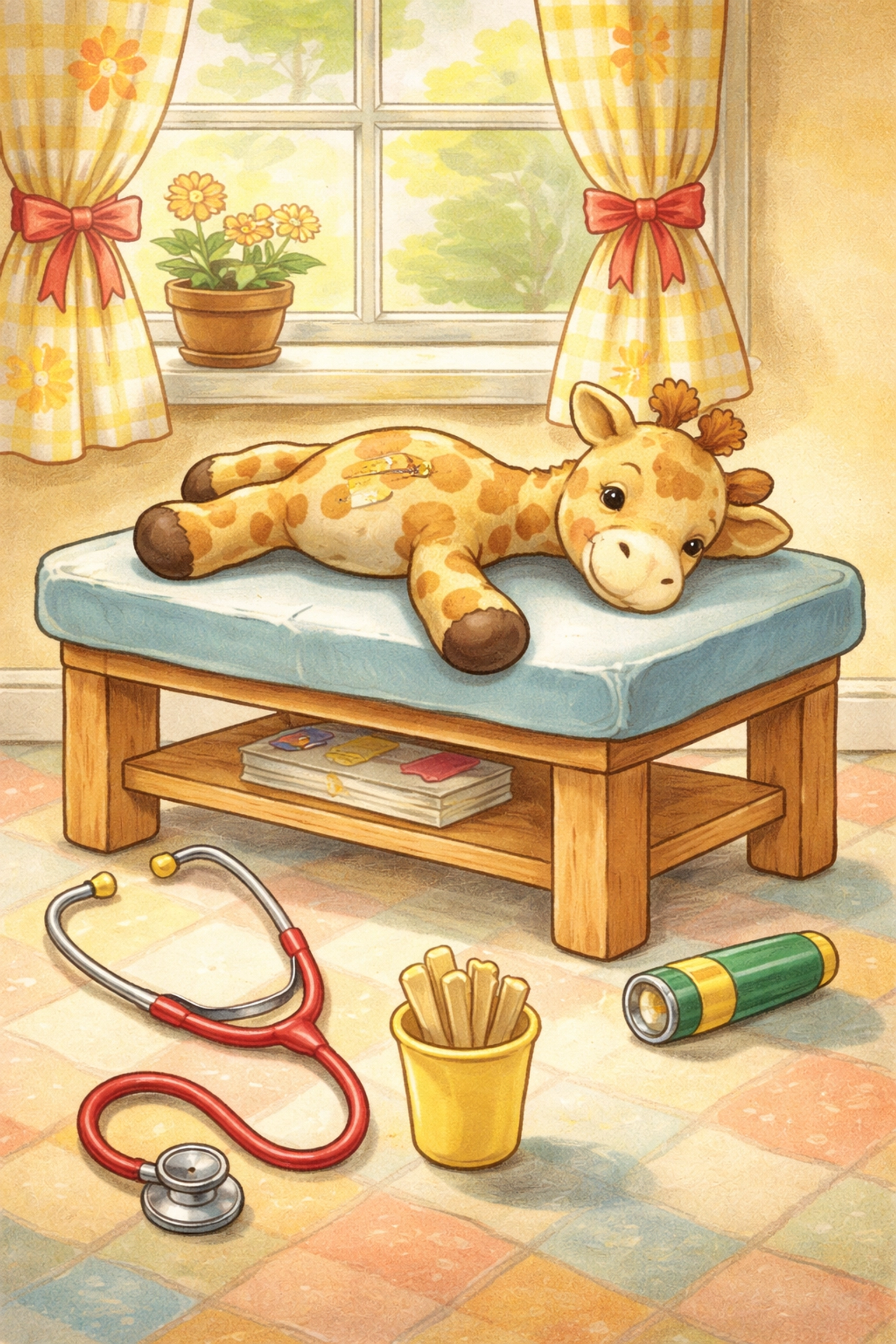
The heart of your clinic! Use a small table, bench, or even a sturdy cardboard box as your exam table. Stock it with:
- Toy stethoscope
- Cotton balls and popsicle sticks
- A flashlight for checking ears and eyes
- Pretend thermometer
This is where the gentle care really happens. Kids can listen to heartbeats, check temperatures, and discuss what might be making their patient feel unwell.
Treatment and Recovery Area
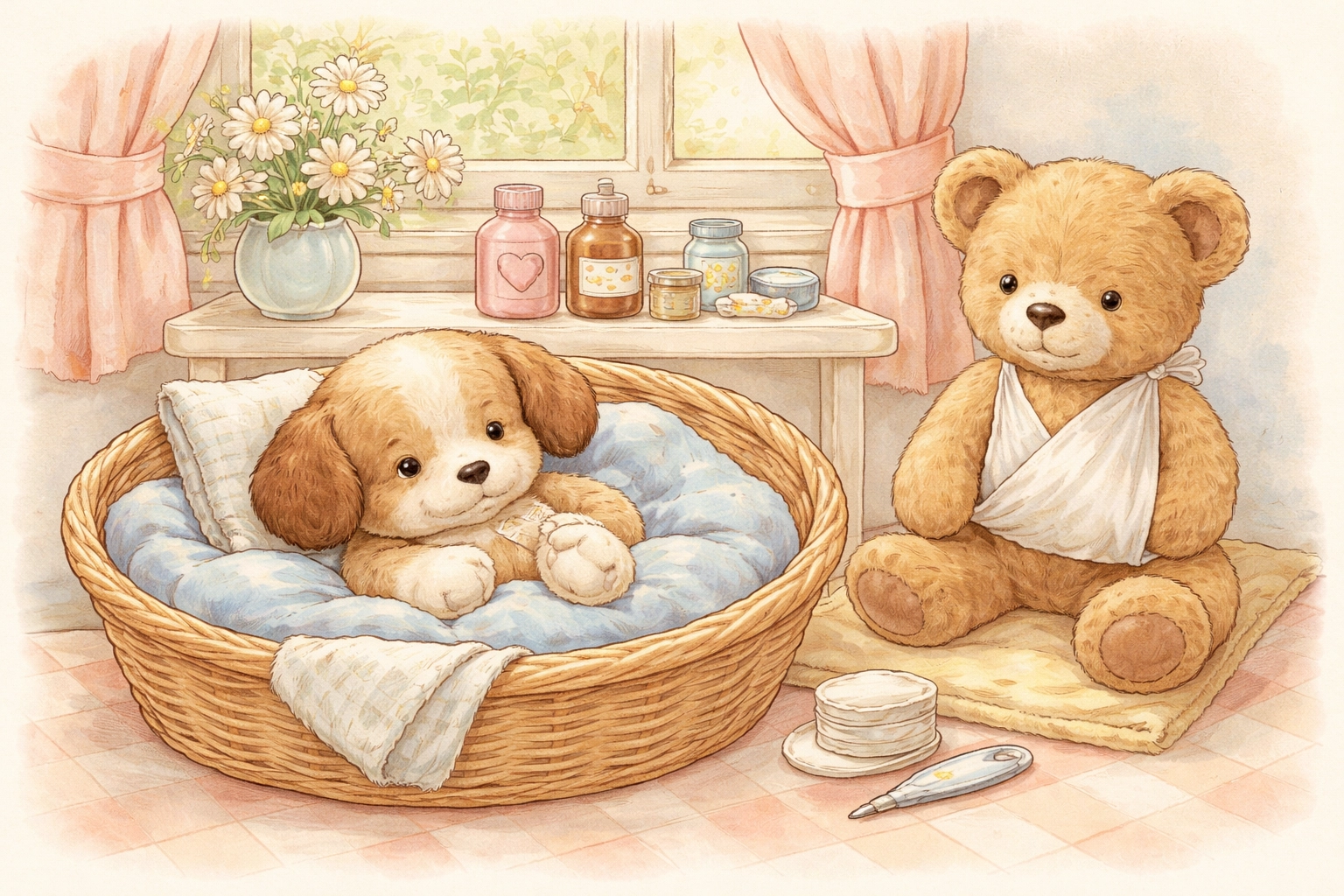
Set up a cozy corner with small blankets or towels where "recovering" patients can rest. Include:
- Bandages and gauze for wrapping injuries
- A small pillow or cushion
- Empty bottles labeled "medicine"
This zone naturally teaches children about patience and the importance of rest when healing.
What Activities Work Best in a Pretend Vet Clinic?
The magic of dramatic play is that children often guide the activities themselves, but having a few structured ideas can help spark their imagination.
Patient Check-In
Create simple intake forms where kids write (or draw) the pet's name, species, and symptoms. Questions might include:
- What is your pet's name?
- How old is your pet?
- What seems to be wrong today?
This builds early literacy skills and helps children think about their patient's needs.
Health Examinations
Walk through a basic checkup routine:
- Listen to the heart with the stethoscope
- Check the ears with a flashlight
- Look at the teeth using a popsicle stick
- Take a temperature (pretend!)
- Feel gently for any "sore spots"
Narrating these steps out loud helps children understand the purpose of each action.
Bandaging and Treatment
"Injured" stuffed animals can receive bandages, splints (popsicle sticks work great), or slings made from fabric scraps. This is wonderful for fine motor development and teaches gentle handling.
Writing Prescriptions
Older children often enjoy writing out treatment plans: "Rest for two days. Drink lots of water. Three belly rubs daily." This adds literacy practice and encourages creative thinking about care.
Why Does Pretend Vet Play Help Build Empathy?
When children care for a "patient," they naturally practice perspective-taking, imagining how another being might feel. This type of dramatic play has been linked to social-emotional development in early childhood research.
Here's what kids often learn through this type of play:
- Compassion: Treating a stuffed friend gently because "they're not feeling well"
- Responsibility: Following through on care routines
- Communication: Explaining symptoms, asking questions, and listening
- Problem-solving: Figuring out what might be wrong and how to help
You might notice children talking softly to their patients, covering them with blankets, or checking on them throughout the day. These small moments reflect big emotional growth.
Frequently Asked Questions
What Age Is Best for a Stuffed-Animal Vet Clinic?
Most children between ages 3 and 8 tend to enjoy this type of dramatic play. Younger children might focus on simple care tasks like bandaging, while older kids often enjoy the administrative side, filling out forms, keeping records, and managing the "clinic."
Can This Activity Work for Multiple Children?
Absolutely! Assign different roles: one child can be the veterinarian, another the receptionist, and others can be pet owners bringing in their animals. Rotating roles helps everyone practice different skills.
How Long Does Setup Take?
Most families can set up a basic clinic in 15–20 minutes. Once the zones are established, children often play independently for extended periods, refreshing the setup as needed.
What If My Child Is Scared of Real Vet Visits?
Pretend play can sometimes help children process and prepare for real-life experiences. By acting out veterinary scenarios in a safe, controlled environment, some children feel more comfortable when it's time for their own pet's checkup, or even their own doctor visits.
How Can I Keep the Play Fresh Over Time?
Rotate the stuffed animal patients regularly and introduce new "ailments" or scenarios. One week might focus on checkups, while another could involve a "pet spa day" with grooming and brushing. Seasonal themes (like caring for animals in winter) can also add variety.
Does This Activity Have Educational Benefits Beyond Empathy?
Yes! Children often practice early literacy (reading and writing forms), math (counting bandages, measuring "medicine"), fine motor skills (bandaging, using tools), and verbal communication throughout play.
Can I Print Patient Forms?
You can create simple forms together as part of the activity, or search online for free printable veterinary play sheets. Many families find that hand-drawn forms add to the creative experience.
Wrapping Up Your Family Vet Clinic
A stuffed-animal vet clinic is one of those beautifully simple projects that costs almost nothing but delivers hours of meaningful play. Children practice kindness, develop problem-solving skills, and learn that caring for others: even pretend patients: feels good.
Keep your clinic supplies in a box or basket so kids can set up whenever the mood strikes. You might be surprised how often those stuffed animals need a checkup!
Tierney Family Farms Disclaimer: The information provided here is for educational and entertainment purposes. Every family's situation is unique, and we encourage you to adapt activities to your children's ages, abilities, and interests. Adult supervision is recommended for all projects.
References
- Nemours KidsHealth. (2023). "The Power of Play: How Fun and Games Help Children Thrive."
- Zero to Three. (2022). "Dramatic Play and Social-Emotional Development."
- American Academy of Pediatrics. (2018). "The Power of Play: A Pediatric Role in Enhancing Development in Young Children."