



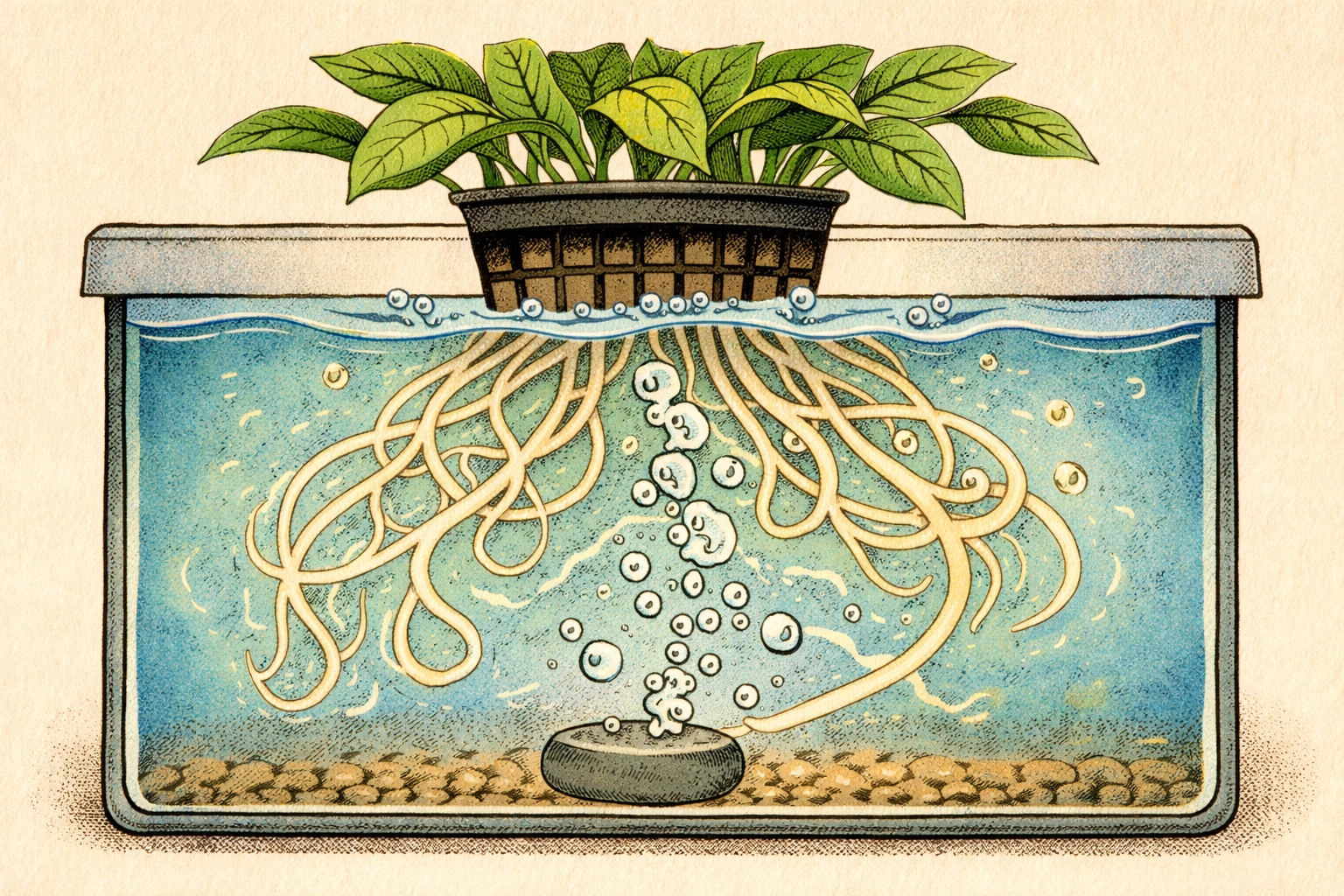
Just like you, plant roots need to breathe! They use Dissolved Oxygen (DO) found in water to turn nutrients into energy. When you see those cheerful bubbles rising through a hydroponic tank, you’re watching oxygen delivery in action, a tiny, fizzy life-support system keeping your plants healthy and happy.
If you’ve ever wondered why hydroponic setups need air pumps and bubbly air stones, you’re about to discover the invisible science happening beneath the water’s surface. Grab your lab notebook, Junior Engineers, it’s time to explore the physics of breath!
Root Respiration: Why Roots “Breathe” and What Happens When They Can’t
Here’s something that surprises a lot of people: roots need oxygen just as much as leaves need carbon dioxide.
When you breathe in, your lungs pull oxygen from the air. Your body uses that oxygen to convert food into energy through a process called respiration. Plant roots do the exact same thing, except they’re underwater, which makes getting oxygen a bit trickier.
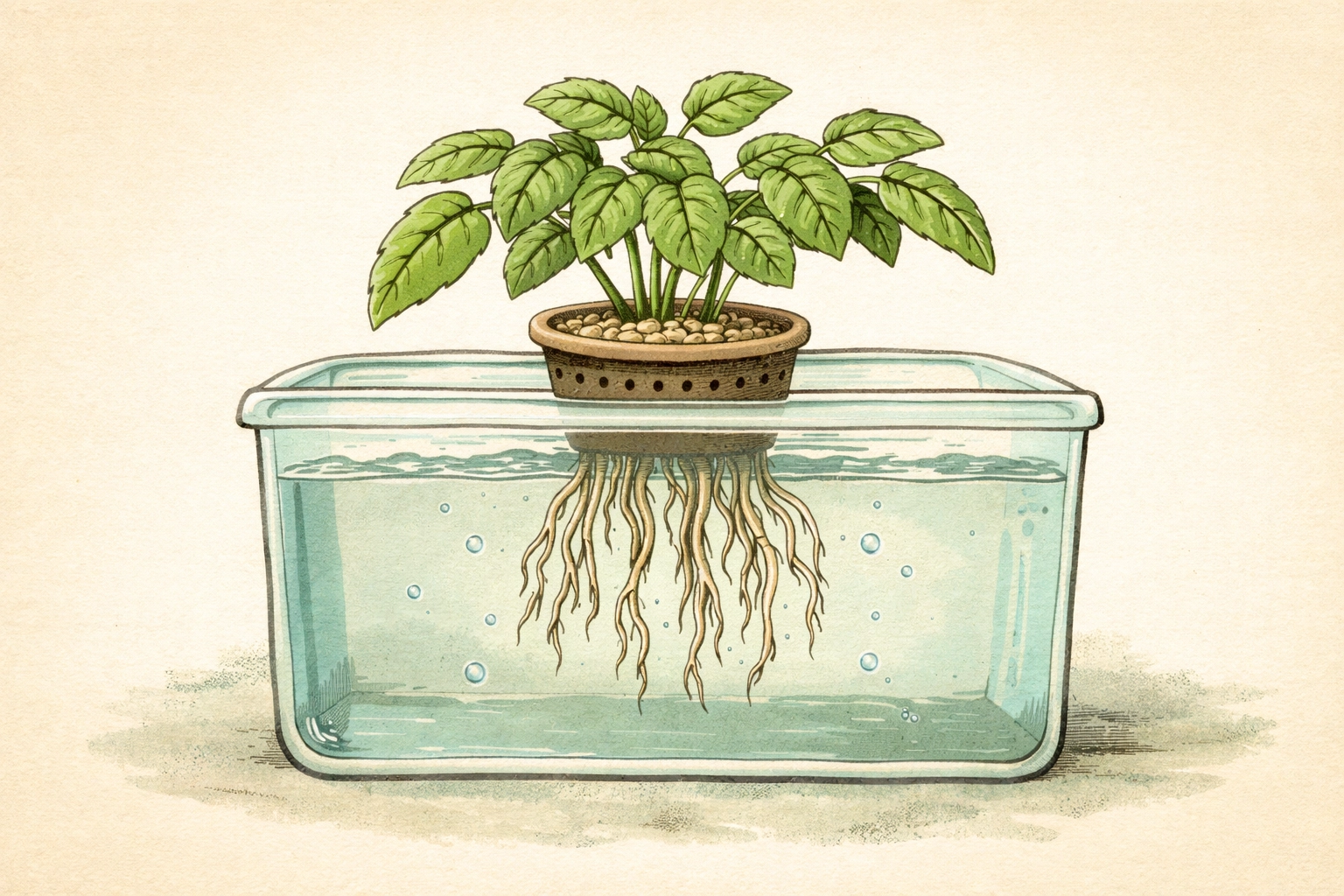
In soil gardens, tiny air pockets between dirt particles provide the oxygen roots need. But in hydroponics, roots are submerged in nutrient solution with no soil pockets to help. Without a steady supply of dissolved oxygen, roots essentially suffocate.
What Happens When Roots Can’t Breathe?
When dissolved oxygen levels drop too low, a cascade of problems begins:
- Reduced Nutrient Uptake: Oxygen-starved roots become less permeable, meaning they can’t absorb water or nutrients effectively.
- Stunted Growth: Without energy from respiration, the plant simply can’t grow.
- Root Rot: Low-oxygen environments become breeding grounds for harmful fungi and bacteria. Those slimy, brown roots? That’s suffocation showing up as disease.
- Plant Death: If the problem persists, the plant will eventually die.
The good news? This is completely preventable with proper aeration, which is exactly what those bubbles are for!
The Temperature Trap: Cold Water Holds More Oxygen Than Warm Water
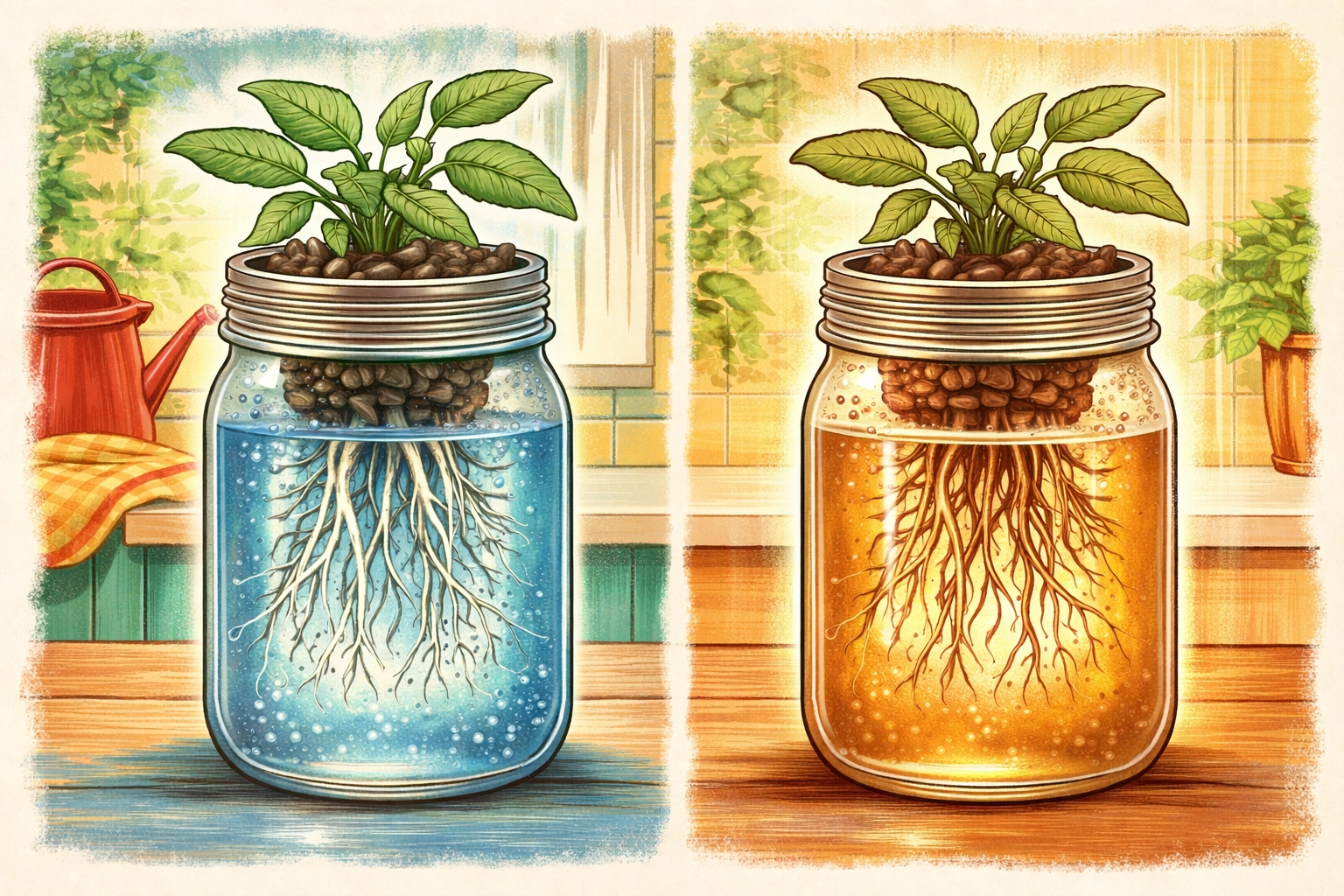
Here’s a physics fact that every Junior Engineer should tattoo on their brain (figuratively, of course): cold water holds more dissolved oxygen than warm water.
This isn’t just a random rule, it’s basic thermodynamics.
The Science Behind the Temperature Trap
Water molecules are constantly moving. When water is cold, those molecules move slowly and stay relatively close together. This creates more “room” for oxygen molecules to dissolve and hang out in the water.
When water warms up, molecules start bouncing around faster and faster. This increased energy actually pushes oxygen out of the water. Think of it like a crowded dance floor, when everyone starts dancing wildly, some people get bumped right out the door.
What This Means for Your Hydroponic System
| Water Temperature | Oxygen-Holding Capacity |
|---|---|
| 50°F (10°C) | High |
| 68°F (20°C) | Moderate |
| 80°F (27°C) | Low |
| 86°F+ (30°C+) | Dangerously Low |
Most hydroponic plants thrive in water temperatures between 65-75°F (18-24°C). This range provides a good balance: warm enough for healthy root activity, but cool enough to hold adequate dissolved oxygen.
Pro tip: If your grow room runs hot (hello, summer!), you may need to add extra aeration or consider a water chiller to keep oxygen levels safe.
Surface Area & Gas Exchange: How Tiny Bubbles Save the Day
Now we get to the really fun physics: gas exchange and why your choice of air stone actually matters.
When an air pump pushes air through an air stone, it creates bubbles. As those bubbles rise through the water, oxygen transfers from inside the bubble to the surrounding water. This is called gas exchange, and it happens at the surface of each bubble.
Why Smaller Bubbles Are Better
Here’s where Junior Engineers get to flex their math muscles.
Imagine you have a fixed amount of air. You can release it as:
- One giant bubble, or
- Thousands of tiny bubbles
Which delivers more oxygen? The tiny bubbles, by a landslide!
Why? Because smaller bubbles have more total surface area than one big bubble with the same volume of air. More surface area means more places for oxygen to transfer into the water.
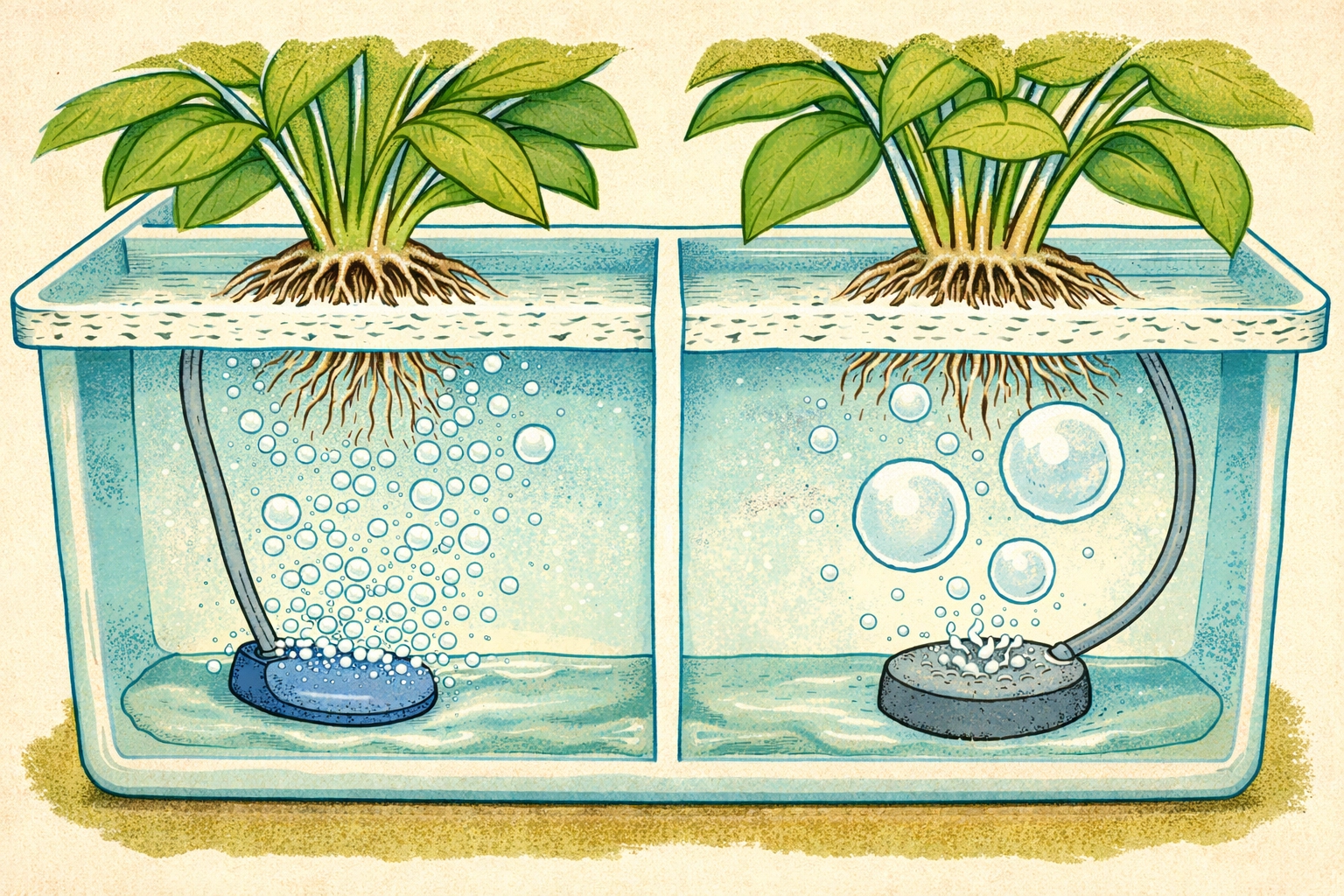
Additionally, tiny bubbles rise more slowly through the water. This gives them more contact time with the nutrient solution, allowing more oxygen to dissolve before the bubble reaches the surface and pops.
Choosing the Right Air Stone
Not all air stones are created equal:
- Cheap air stones (often made from porous rock) produce larger, less efficient bubbles
- Quality air stones (made from materials like silicon carbide) produce fine, champagne-like bubbles that maximize oxygen transfer
The difference might seem small, but over days and weeks, better bubbles mean healthier roots.
Measuring PPM: What a Healthy Root Zone Looks Like
So how do you know if your plants are getting enough oxygen? Scientists measure dissolved oxygen in Parts Per Million (PPM) or sometimes in milligrams per liter (mg/L), which are essentially the same thing for water.
Understanding PPM
“Parts Per Million” sounds intimidating, but it’s just a way to measure very small concentrations. If you have 5 PPM of dissolved oxygen, that means for every million “parts” of water, 5 of those parts are oxygen molecules.
The Target Range
For healthy hydroponic plants, you want dissolved oxygen levels between 5-8 PPM. Here’s a quick reference:
| DO Level (PPM) | Root Health Status |
|---|---|
| Below 4 | Danger zone, risk of root rot |
| 5-6 | Acceptable, but monitor closely |
| 6-8 | Optimal range for most plants |
| 8+ | Excellent, your roots are thriving |
How to Measure Dissolved Oxygen
Junior Engineers can measure DO levels using:
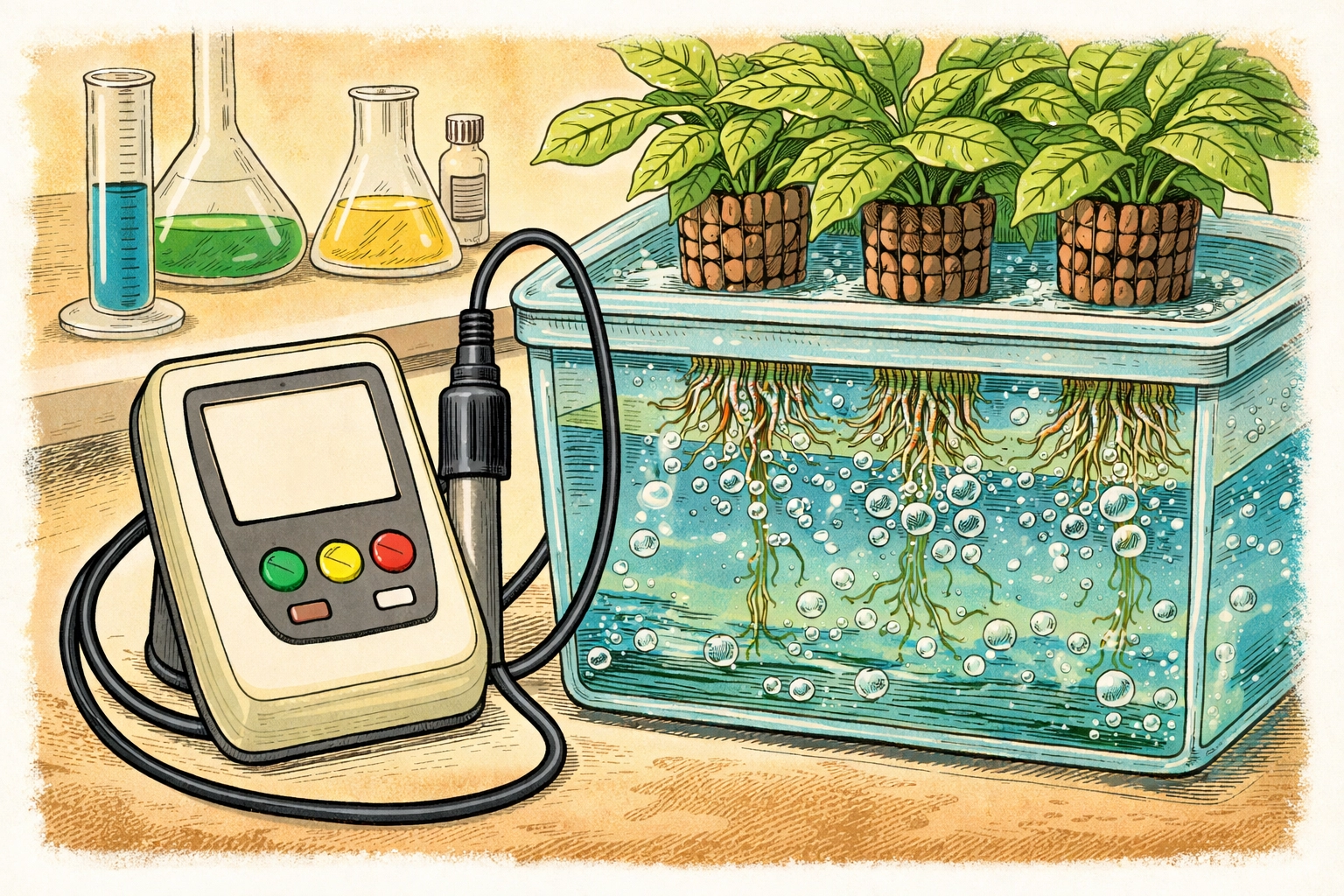
- Digital DO Meters: The most accurate option, though they require calibration
- Test Kits: Affordable chemical test kits that use color-changing reagents
- Observation: Healthy white roots and vigorous growth often indicate good oxygen levels (though this isn’t precise)
If you’re serious about productive hydroponic gardening, investing in a DO meter is worth considering as your skills advance.
Putting It All Together: The Bubble Equation
Let’s recap the dissolved oxygen formula for success:
✅ Aerate consistently , Run your air pump 24/7 (roots breathe around the clock!)
✅ Keep water cool , Aim for 65-75°F to maximize oxygen capacity
✅ Use quality air stones , Tiny bubbles = more surface area = more oxygen transfer
✅ Monitor your levels , Target 5-8 PPM for happy, healthy roots
✅ Watch for warning signs , Brown, slimy roots mean oxygen levels have dropped too low
🔬 Science Lab: References & Further Reading
Want to dive deeper into the research? Here are peer-reviewed sources and university extensions for the curious Junior Engineer:
- Effect of Dissolved Oxygen Concentration on Lettuce Growth in Floating Hydroponics , ResearchGate study examining how DO levels directly impact lettuce development
- Water Recirculation and Dissolved Oxygen in Sustainable Systems , MDPI Sustainability journal exploring oxygen dynamics in recirculating hydroponic systems
- Root Respiration in Hydroponically Grown Lettuce , J-Stage research on the oxygen consumption patterns of lettuce roots
- Hydroponic Systems Basics , Virginia Tech Extension guide covering fundamental hydroponic principles
Frequently Asked Questions
Can I over-oxygenate my hydroponic water?
In practical terms, no. It’s nearly impossible to add “too much” oxygen with standard aquarium air pumps. The water will simply reach saturation and stop absorbing more.
How long can roots survive without oxygen?
It depends on the plant and temperature, but most hydroponic roots will begin showing stress within 24-48 hours of oxygen deprivation. Some sensitive plants show damage even sooner.
Do I need to run my air pump at night?
Yes! Roots respire continuously, day and night. Keep your air pump running 24/7 for consistent oxygen delivery.
Why does my water get warmer in summer?
Ambient room temperature directly affects water temperature. Grow lights also add heat. In summer, both factors combine to warm your reservoir.
Can I use hydrogen peroxide to add oxygen?
Hydrogen peroxide (H₂O₂) does release oxygen, but it’s primarily used as a sterilizing agent, not a primary oxygen source. It can harm beneficial microbes and should be used carefully, if at all.
What size air pump do I need?
A general rule: 1 watt of air pump power per gallon of nutrient solution. For a 10-gallon reservoir, a 10-watt pump is a good starting point.
Are some plants more sensitive to low oxygen?
Yes! Leafy greens like lettuce and herbs tend to be more sensitive to low DO levels than fruiting plants like tomatoes or peppers.
Do water chillers help with oxygen?
Absolutely. By keeping water temperatures lower, chillers increase the water’s capacity to hold dissolved oxygen: a double win for root health.
The information provided by Tierney Family Farms is for educational and entertainment purposes only. It is not intended to be a substitute for professional advice. Always do your own research and consult with qualified professionals before starting any gardening or farming project.