



A field journal is a personal record of what happens on the land.
It captures data, observations, sketches, and small details that otherwise slip away. The practice sharpens attention. It turns a walk across the property into an act of discovery.
Making one takes less than an hour. Using it becomes a habit that transforms how farm life looks and feels.
What Is an Adventure Field Journal?
A field journal is a dedicated notebook for recording observations made outdoors.
Not a planner. Not a to-do list. A record of what exists right now in a specific place.
The format stays flexible. Some pages hold sketches. Others hold tallies of birds spotted or weeds emerging. Some pages contain nothing but weather notes and timestamps.
The journal belongs to whoever keeps it. There are no grades. No right answers. Just attention paid and captured.
Why Keep an Observation Book?
Observation sharpens over time.
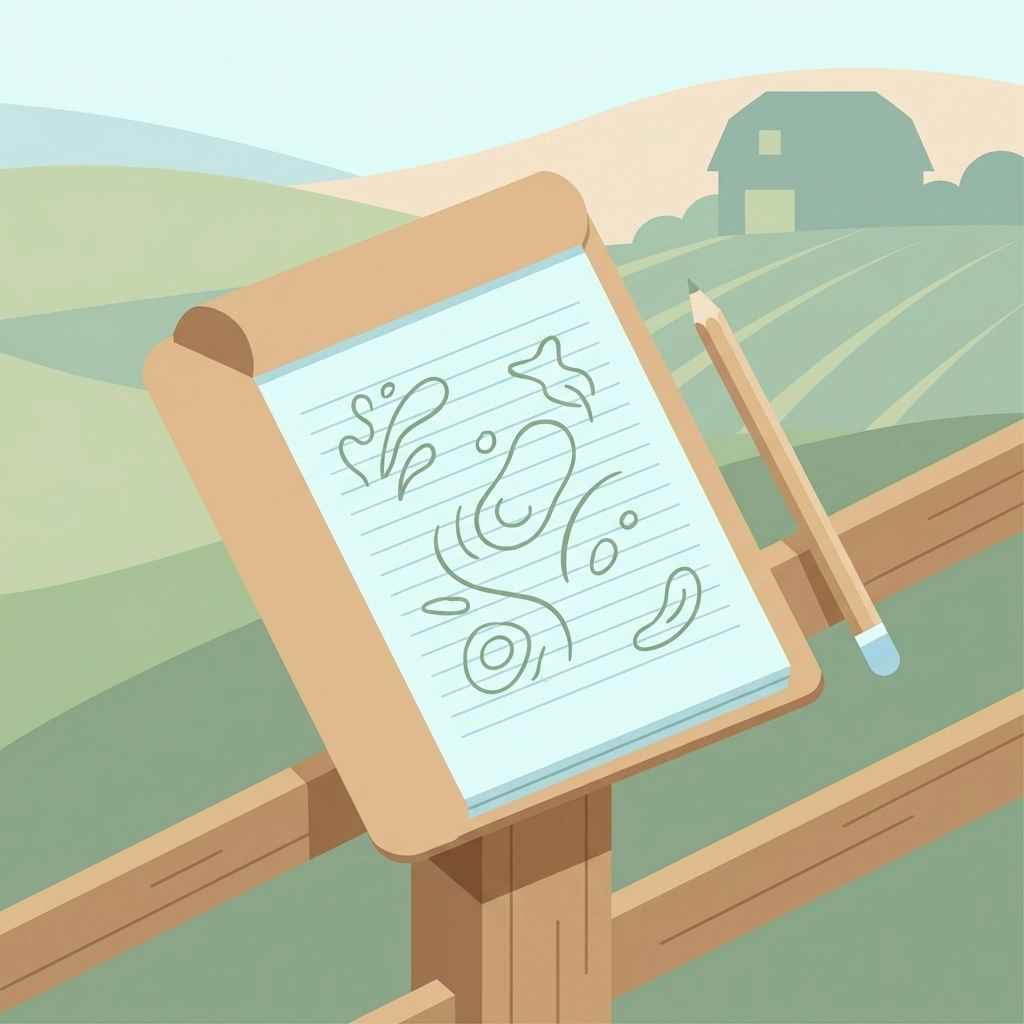
The first entries in a field journal often feel sparse. A note about the weather. A quick sketch of a leaf. A comment about mud.
Weeks later, patterns emerge. The same bird returns to the same fencepost. A particular weed appears after every rain. The light changes at the treeline around 4 p.m. in autumn.
These details exist whether anyone writes them down or not. The journal makes them visible.
Benefits of consistent field journaling:
- Enhanced observation skills : Attention improves with practice
- Sharpened drawing ability : Sketching forces close looking
- Better memory of seasonal patterns : Written records outlast mental ones
- Curiosity stimulation : Questions arise from details noticed
- Personal connection to place : The land becomes familiar in new ways
A field journal is evidence of presence. Proof that someone stood in a particular spot and paid attention.
What Materials Work Best?
The supplies stay simple.
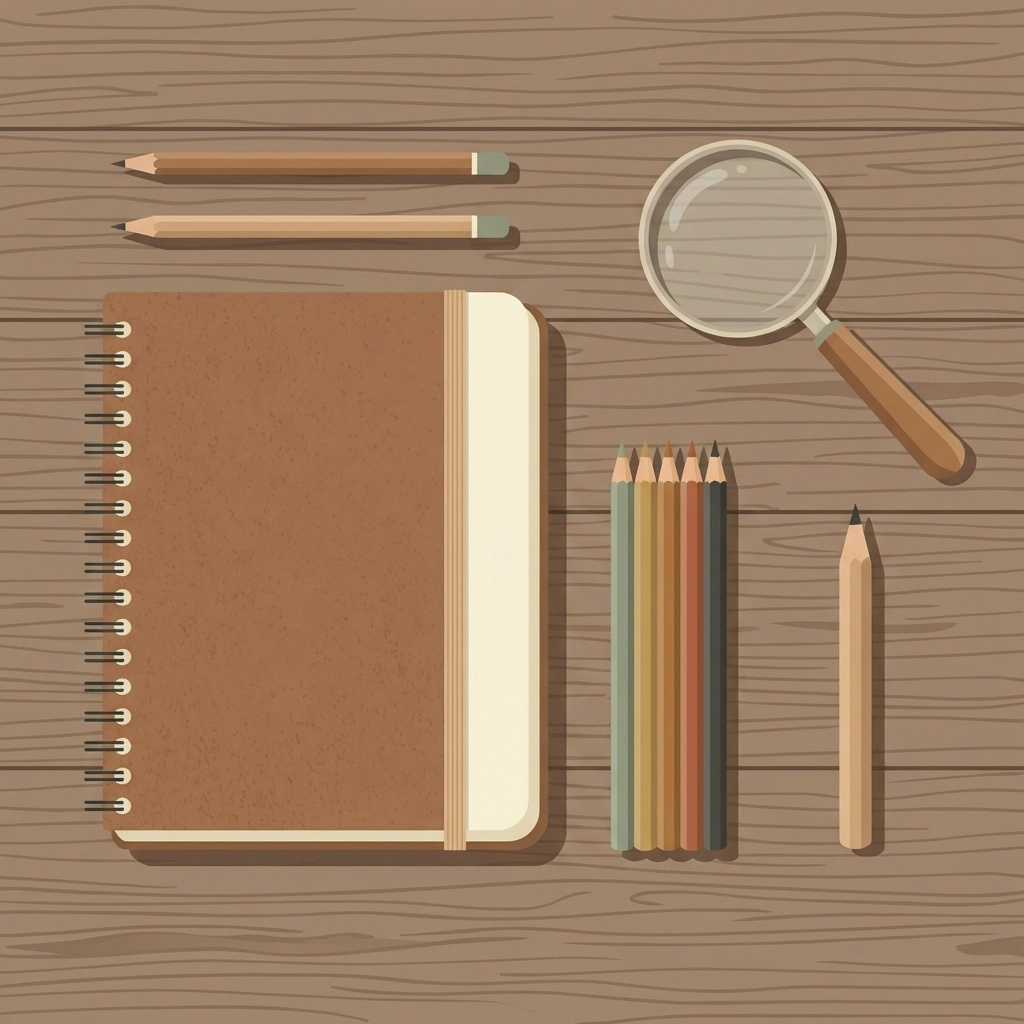
A notebook with sturdy pages handles outdoor conditions. Spiral-bound works. Sewn binding works. Waterproof covers help but aren’t required.
Pencils outperform pens in wet or cold weather. Graphite doesn’t smear or freeze. A few colored pencils add dimension to sketches without adding bulk.
Basic supply list:
- Notebook (any size that fits in a pocket or bag)
- Pencil with eraser
- Optional: colored pencils, ruler, small magnifying glass
- Optional: plastic bag to protect the notebook
Fancy supplies are unnecessary. A composition notebook and a No. 2 pencil work fine.
The barrier to starting stays low on purpose.
How to Set Up the First Pages
Structure helps without restricting.
The first page serves as an identification page. Name, year, and location of the observations go here. Nothing elaborate.
The second page becomes a key or legend. Symbols for common sightings save time later. A small bird shape for bird sightings. A leaf shape for plant notes. A cloud for weather.
After that, each entry follows a loose format:
- Date and time
- Weather conditions (temperature, sky, wind, recent precipitation)
- Location on the property (north pasture, near the barn, by the creek)
- Observations (what appeared, what changed, what seemed unusual)
- Sketches or tallies (optional but encouraged)
This structure repeats. The consistency makes comparison possible across weeks and seasons.
What to Observe on your adventures
Everything qualifies.
The obvious subjects include animals, plants, and weather. The less obvious subjects include soil texture, insect activity, shadow length, and sound.
A partial list of observable details:
- Bird species and behavior
- Insect presence and movement patterns
- Plant growth stages
- Weed emergence
- Soil moisture and color
- Cloud formations
- Wind direction
- Animal tracks
- Fence condition
- Water levels in ponds or streams
- Light quality at different times of day
No single walk covers all of these. The journal accumulates over time. Each entry adds one small piece.

How to Sketch Without Drawing Skills
Sketching is notation, not art.
A circle with two lines becomes a bird on a wire. A rectangle with triangles becomes a barn. A wavy line becomes a hill.
The goal is recognition, not beauty. A sketch made in the field reminds the observer what appeared there. That’s enough.
Useful sketching techniques:
- Contour drawing : Follow the outline of an object without lifting the pencil
- Gesture sketching : Capture movement with fast, loose lines
- Diagram labeling : Draw a simple shape and add arrows with notes
- Symbol systems : Create personal shorthand for repeated subjects
Stick figures work. Blobs with labels work. Anything that triggers memory works.
Perfection slows down the process. Speed and frequency matter more.
How Often Should Entries Happen?
Consistency beats intensity.
A five-minute entry three times a week builds a richer record than a one-hour session once a month. If you love doing this and want to take it to the next level, the key is consistency. The closer you can get to daily or near‑daily notes will allow you to treat it as actual phenology or weather “data” rather than an occasional impressions book.
Short entries stay sustainable. Long gaps make the journal feel like a chore.
Ideal rhythm:
- Brief notes after any outdoor walk
- Slightly longer entries once a week
- Seasonal review pages every few months
The journal stays close to the door. It goes outside with the observer. It lives where it gets used.
Skipped days happen. They don’t ruin the project. The next entry picks up where the last one stopped.
How to Use Collected Observations
Data without review stays inert.
Every few weeks, flip back through recent pages. Look for repetition. Look for change. Look for surprises.
Questions emerge from patterns:
- Which birds appear most often?
- When did the first wildflower bloom?
- How many days passed between rain events?
- What changed after the temperature dropped?
These questions lead to more focused observation. The journal sharpens itself over time.
Some observers upload findings to citizen science databases. Platforms exist for bird counts, insect sightings, and plant phenology. Personal data joins a larger pool. Local observation contributes to global understanding.
The journal serves the keeper first. It can serve science second.
What Makes a Field Journal Different from a Diary
A diary records feelings and events. A field journal records external reality.
The distinction matters.
A diary entry might say: “Felt peaceful near the creek today.”
A field journal entry might say: “Creek running high. Three blackbirds on the east bank. Mud soft near the water. Temperature around 60°F.”
Both have value. They serve different purposes.
The field journal trains attention outward. It asks: what exists here, right now, independent of mood or opinion?
This discipline strengthens observation everywhere. The habit transfers to other settings.
How to Keep the Practice Going
The journal survives through simplicity.
No pressure to fill every page. No expectation of beautiful drawings. No requirement to observe daily.
The only rule: bring it outside and write something down.
A single sentence counts. A quick sketch counts. A temperature and a date count.
Over months, these fragments accumulate into something substantial. A record of a place across seasons. A document of attention paid.
The farm changes constantly. The journal captures what otherwise disappears.
That’s the whole point.