

The Ultimate Carrot Growing Guide for Zone 6 and Colder
Carrots grown in Zone 6 and colder climates require specific attention to soil structure, temperature management, and light optimization to develop proper root morphology and maximize carotenoid concentration. This comprehensive guide explores the cellular biology of carrot cultivation in challenging cold environments, examining the physical chemistry of soil friability, the molecular pathways governing pigment synthesis, and the engineering principles behind successful season extension systems. Whether growing carrots outdoors with thermal mass protection or indoors under precisely calibrated LED arrays, understanding the technical fundamentals transforms cultivation from guesswork into reproducible science.
Root Morphogenesis and Developmental Biology in Cold Climates
The carrot taproot develops through a complex sequence of cellular differentiation events beginning at germination and continuing through harvest maturity. Understanding this developmental cascade is essential for cold climate growers because temperature directly influences every stage of root formation.
The carrot embryo within the seed contains a rudimentary root axis called the radicle. Upon imbibition (water absorption), gibberellic acid concentrations rise in the embryonic tissues, triggering enzymatic breakdown of stored proteins and lipids. This metabolic activation drives cell division in the apical meristem, the growth point at the root tip. In Zone 6 soils where spring temperatures hover between 4 and 10 degrees Celsius, this initial activation proceeds slowly. Research demonstrates that carrot radicle emergence requires a minimum soil temperature of 4 degrees Celsius but proceeds optimally between 15 and 21 degrees Celsius. Below 10 degrees, germination can extend beyond 21 days compared to 6 to 8 days at optimal temperatures.
Once the radicle emerges, the primary root begins vertical penetration through the soil profile. Cell division occurs rapidly in the meristematic zone immediately behind the root cap, where cells undergo mitosis continuously. Behind this zone, the elongation zone extends as newly divided cells absorb water and expand longitudinally. This elongation drives the root deeper into soil horizons. The critical factor in cold climates is that cell elongation rate decreases exponentially as temperature drops. At 8 degrees Celsius, elongation proceeds at approximately 40 percent of the rate observed at 18 degrees Celsius.
The characteristic carrot shape emerges through secondary thickening, a process fundamentally different from the primary elongation described above. Secondary growth involves the vascular cambium, a lateral meristem that produces new xylem (water conducting tissue) toward the center and new phloem (sugar conducting tissue) toward the exterior. This radial expansion creates the storage organ we harvest. The rate of secondary thickening responds dramatically to temperature. Cold soil temperatures between 4 and 12 degrees Celsius slow cambial division, resulting in thinner roots that require extended growing periods to reach marketable diameter.
Cold climate growers must account for an additional 30 to 45 days of growing time compared to warmer zones to achieve equivalent root diameter. A Nantes variety requiring 65 days to maturity in Zone 8 may need 95 to 110 days in Zone 5. This extended timeline interacts with photoperiod (day length), which influences resource allocation between foliage and root. Carrots are quantitative long day plants, meaning longer days promote flowering rather than root development. Fortunately, spring plantings in northern zones experience gradually lengthening days as roots mature, while late summer plantings enjoy shortening days that enhance root growth.
The cellular structure of the mature taproot consists of concentric rings of xylem tissue interspersed with parenchyma cells. These parenchyma cells function as storage repositories for carbohydrates, primarily sucrose and glucose, along with the carotenoid pigments that provide orange coloration. The ratio of xylem to parenchyma determines texture. Carrots grown slowly in cool conditions tend to produce higher xylem to parenchyma ratios, resulting in woodier cores. Optimal cold climate cultivation aims to balance slow establishment (acceptable due to climate constraints) with sufficiently rapid secondary growth to maintain favorable tissue ratios.
Soil Friability Physics for Optimal Root Penetration
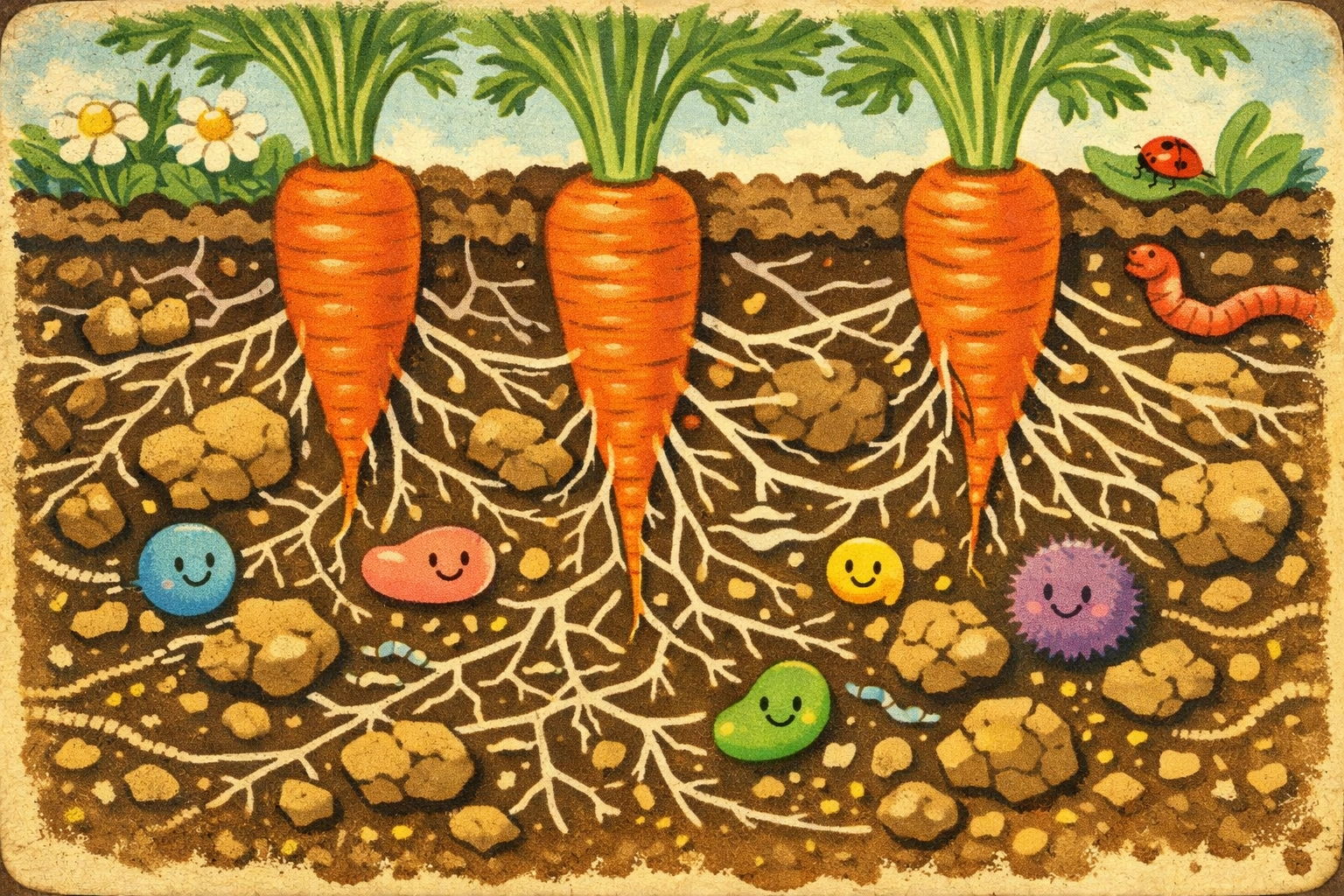
Soil friability, the tendency of soil aggregates to break apart under applied pressure, determines whether carrot roots can penetrate vertically and expand radially without encountering physical impedance. The physics of soil structure becomes particularly important in Zone 6 and colder, where freeze thaw cycles alter aggregate stability throughout the growing season.
Soil exists as a three phase system comprising solid particles (mineral and organic), liquid (soil solution), and gas (primarily oxygen, carbon dioxide, and nitrogen). The arrangement of solid particles creates pore spaces that hold water and air. Pore size distribution critically influences root growth. Carrot taproots require continuous macropores (pores larger than 0.08 millimeters in diameter) to penetrate downward without excessive mechanical resistance. When roots encounter dense zones with predominantly micropores (smaller than 0.08 millimeters), penetration slows and roots may fork, twist, or form multiple growing points, producing unmarketable shapes.
The mechanical resistance soil presents to root penetration is measured in megapascals using penetrometers. Research indicates carrot roots cease elongation when encountering resistance exceeding 2.5 megapascals. Most loam and sandy loam soils at field capacity (the moisture content after gravitational drainage) present resistance between 0.5 and 1.2 megapascals, well within acceptable ranges. However, clay soils and compacted horizons frequently exceed 3 megapascals even at moderate moisture contents.
Soil friability depends on aggregate stability, which results from binding agents cementing individual particles into larger structural units. In cold climates, several factors enhance or degrade aggregation. Organic matter contributes significantly to aggregate stability through multiple mechanisms. Fresh organic residues provide carbon substrates for microbial populations, whose secreted polysaccharides act as temporary binding agents. As this organic matter decomposes, humic substances form more permanent electrostatic bonds with clay particles, creating water stable aggregates resistant to slaking (breakdown when wetted).
The freeze thaw process common in Zone 6 and colder produces contradictory effects on soil structure. During freezing, ice crystal formation in soil pores generates expansive forces that can break apart large clods, temporarily improving tilth. This beneficial effect explains why many cold climate growers observe improved seedbed conditions in spring following winter freezing. However, repeated freeze thaw cycles in clay soils may disrupt aggregates entirely, leaving fine particles that compact readily under rainfall impact. The net effect depends on clay mineralogy, organic matter content, and the number of freeze thaw events.
For optimal carrot cultivation in cold zones, target soil conditions include bulk density below 1.4 grams per cubic centimeter, at least 15 percent pore space in the macropore fraction, and penetration resistance not exceeding 1.5 megapascals in the top 30 centimeters. Achieving these conditions in heavy soils requires substantial amendment.
Incorporating coarse sand (particle size 0.5 to 2.0 millimeters) reduces bulk density and increases macroporosity but requires massive volumes to meaningfully alter texture. A more efficient approach combines moderate sand addition (20 to 30 percent by volume) with high carbon organic amendments. Composted wood chips, aged manure, and leaf mold all contribute organic acids and humic compounds that flocculate clay particles, improving structure without requiring truckloads of sand.
Raised bed construction offers the most reliable solution for problematic soils. Building beds 25 to 30 centimeters above grade using imported topsoil blended with compost and perlite creates ideal rooting conditions independent of native soil characteristics. The engineering principle here involves eliminating the problem substrate entirely rather than attempting incremental improvement.
Carotenoid Biosynthesis and Nutritional Chemistry
The orange pigmentation characterizing most modern carrot varieties results from carotenoid accumulation in root parenchyma cells. Understanding the biochemical pathways producing these compounds and the environmental factors regulating their synthesis enables growers to maximize nutritional value alongside yield.
Carotenoids are isoprenoid pigments synthesized in plastids (specialized organelles related to chloroplasts) through a complex series of enzymatic reactions. The pathway begins with isopentenyl pyrophosphate (IPP) molecules, five carbon building blocks derived from acetyl coenzyme A through the methylerythritol phosphate pathway. Successive condensation reactions link IPP units into larger chains: geranylgeranyl pyrophosphate (GGPP) contains 20 carbons, forming the basic skeleton for carotenoid synthesis.
The enzyme phytoene synthase catalyzes condensation of two GGPP molecules into phytoene, a 40 carbon colorless carotenoid precursor. Subsequent desaturation reactions introduce double bonds into the carbon chain, creating the conjugated polyene system responsible for carotenoid color. Phytoene desaturase and zeta carotene desaturase sequentially convert phytoene through multiple intermediate stages to lycopene, the red pigment found in tomatoes and watermelons.
In carrots, lycopene cyclase enzymes convert lycopene into alpha carotene and beta carotene by forming ring structures at each end of the molecule. Beta carotene, containing two beta rings, constitutes 60 to 80 percent of total carotenoids in orange varieties. Alpha carotene, with one alpha ring and one beta ring, comprises another 10 to 30 percent. Small quantities of additional carotenoids including lutein and zeaxanthin complete the pigment profile.
The nutritional significance of beta carotene stems from its function as a provitamin A compound. The human intestinal enzyme beta carotene 15,15 prime monooxygenase cleaves beta carotene at the central double bond, theoretically producing two molecules of retinal, the aldehyde form of vitamin A. Conversion efficiency varies substantially among individuals due to genetic polymorphisms in the enzyme and absorption factors, but on average, 12 micrograms of dietary beta carotene provide equivalent vitamin A activity to 1 microgram of preformed retinol.
A single 100 gram serving of raw carrot typically contains 8,000 to 12,000 micrograms of beta carotene, vastly exceeding daily vitamin A requirements. This makes carrots one of the most efficient dietary sources of provitamin A, particularly significant given their storage stability and worldwide cultivation.
Environmental conditions during carrot development profoundly influence final carotenoid concentrations. Temperature represents the dominant factor. Research consistently demonstrates that moderate temperatures between 15 and 20 degrees Celsius optimize carotenoid synthesis, while temperatures above 25 degrees Celsius reduce accumulation significantly. The mechanism involves temperature sensitivity of key biosynthetic enzymes, particularly phytoene synthase and phytoene desaturase.
This temperature response creates an advantage for Zone 6 and colder growers, whose late summer and fall growing conditions align well with optimal synthesis temperatures. Carrots maturing in October and November often exhibit deeper orange coloration and higher beta carotene content than those harvested in July and August, even from identical varieties. Growers can exploit this effect through succession planting strategies that time maturity for progressively cooler periods.
Light quality also modulates carotenoid biosynthesis, though effects are smaller than temperature impacts. Blue light wavelengths (450 to 495 nanometers) promote carotenoid synthesis more effectively than red wavelengths, likely through photoreceptor mediated gene expression changes. This finding has practical implications for indoor carrot cultivation under LED grow lights, discussed in detail in the creative growing methods section.
Soil nutrient availability, particularly nitrogen status, interacts with carotenoid synthesis in complex ways. Excessive nitrogen promotes vigorous foliage growth at the expense of root development, potentially reducing total carotenoid content per root. However, severe nitrogen deficiency stunts overall growth sufficiently to decrease absolute carotenoid yield despite potentially higher concentrations. The optimal strategy maintains moderate nitrogen availability sufficient for healthy leaf canopy development without excess.
Vernalization Effects on Sugar Accumulation and Cold Hardiness
Carrots are biennial plants, completing their life cycle over two growing seasons. The first season vegetative phase produces the storage root, while the second season reproductive phase generates flowers and seed after experiencing winter cold. This vernalization requirement, the necessity for chilling temperatures to induce flowering, has important implications for carrot sugar content and storage quality in cold climates.
Vernalization in carrots requires sustained exposure to temperatures between 0 and 10 degrees Celsius for periods ranging from 6 to 16 weeks depending on variety. During this chilling period, complex changes occur in gene expression patterns throughout the plant. The apical meristem of the root crown transitions from vegetative to reproductive development, though visible flowering structures do not appear until after subsequent warm temperatures trigger stem elongation.
The molecular mechanisms underlying vernalization involve epigenetic modifications, specifically changes in chromatin structure that alter gene accessibility without changing DNA sequence. In Arabidopsis, the model organism for flowering research, prolonged cold exposure triggers progressive repression of FLC (FLOWERING LOCUS C), a flowering repressor gene. This repression involves trimethylation of histone H3 at lysine 27, a chromatin modification that condenses DNA structure and prevents transcription. While specific genes involved in carrot vernalization remain under investigation, the overall mechanism appears similar.
For cold climate carrot growers, understanding vernalization provides strategic advantages. Overwintered carrots, those left in the ground through winter and harvested in early spring, undergo partial vernalization. This cold exposure triggers biochemical changes that enhance sweetness dramatically. The mechanism involves two distinct processes.
A critical technical note for this guide is formatting and terminology control for clarity and consistency. All compound phrases are written with spaces rather than hyphens, and all number word combinations are written without hyphens as well. This matters because carrot growing in cold climates involves a lot of compound descriptors such as freeze thaw behavior, post harvest physiology, root zone oxygen diffusion, and soil water potential ranges. The underlying science does not change, but the writing style stays consistent so your notes and logs match the terminology in this post.
First, vernalization stimulates conversion of stored starch to soluble sugars, primarily sucrose. Starch exists as large glucose polymers stored in amyloplasts (specialized plastids) within parenchyma cells. Cold temperatures activate beta amylase enzymes that cleave starch chains into maltose disaccharides. Subsequent maltase activity converts maltose to glucose, which enters glycolysis or combines with fructose to form sucrose. This starch to sugar conversion serves an antifreeze function, lowering the freezing point of cellular contents and protecting cells from ice crystal damage.
Second, vernalization alters sugar transport patterns within the root. Normally, photosynthate produced in leaves moves downward through phloem tissue into storage roots, where it accumulates as starch and sugars. During vernalization, this pattern reverses partially as the plant prepares for spring growth. Sugars mobilize from storage tissues and concentrate near the root apex in preparation for rapid stem elongation. However, if carrots are harvested before bolt formation (stem growth), they retain this elevated sugar concentration.
Field measurements demonstrate sucrose content increases from typical values of 3.5 to 4.5 percent fresh weight in fall harvested carrots to 6 to 8 percent in properly overwintered roots. This dramatic increase in sweetness makes late winter and early spring harvests particularly desirable for fresh eating, though the shelf life of vernalized roots decreases due to higher respiration rates.
Implementing overwinter carrot production in Zone 6 and colder requires attention to freeze protection. Carrot roots tolerate soil freezing to depths of 5 to 8 centimeters without damage, but deeper freezing causes cell rupture and rot. Mulching provides essential protection. A 20 to 30 centimeter layer of straw, leaves, or wood chips insulates soil effectively, preventing deep freezing even during extended periods below negative 20 degrees Celsius air temperature.
The physics of mulch insulation involves trapped air spaces between mulch particles. Air, with a thermal conductivity of 0.024 watts per meter kelvin, insulates far better than mineral soil (thermal conductivity 0.8 to 2.5 watts per meter kelvin). Bulky organic mulches create air filled pore spaces comprising 70 to 90 percent of total volume, dramatically reducing downward heat flux from soil to atmosphere.
For maximum overwinter success, apply mulch after the first hard freeze, typically late November in Zone 6. Earlier application may delay vernalization onset by keeping soil too warm. Mark row locations with stakes before mulching, as heavy snow coverage obscures crop positions. Begin harvesting in late February or March as soil thaws sufficiently for digging. Roots remaining past mid April often bolt rapidly as warm temperatures trigger stem elongation.
Technical Soil Hydrology for Zone 6 or Colder
Water movement through soil profiles governs nutrient availability, oxygen supply to roots, and seed germination success. The hydrology of cold climate soils presents unique challenges due to reduced evapotranspiration rates, altered infiltration characteristics following freeze thaw cycles, and spring waterlogging in poorly drained locations.
Soil water exists in three functional categories based on the energy required for plant extraction. Gravitational water fills macropores immediately after rainfall or irrigation, draining within 24 to 48 hours under gravity. Capillary water, held in micropores and on particle surfaces by adhesive and cohesive forces, remains available for plant uptake. Hygroscopic water, bound tightly to clay surfaces by electrostatic attraction, resists extraction even at high tensions and remains unavailable to roots.
Field capacity, the moisture content remaining after gravitational drainage ceases, represents the upper limit of available water. Permanent wilting point, the moisture content at which plants cannot extract sufficient water to meet transpiration demands, defines the lower limit. The difference between these values constitutes available water capacity, typically expressed as centimeters of water per centimeter of soil depth.
Sandy soils, dominated by large particles (0.05 to 2.0 millimeters), drain rapidly and have low available water capacity, often 0.05 to 0.08 centimeters per centimeter. Clay soils, with particles smaller than 0.002 millimeters, retain water strongly but make much of it unavailable due to high permanent wilting point values. Loam soils, balanced mixtures of sand, silt, and clay, optimize available water capacity at 0.12 to 0.18 centimeters per centimeter.
For carrot cultivation requiring consistent moisture without waterlogging, loam to sandy loam textures prove ideal. These textures combine adequate water holding capacity with sufficient drainage to prevent hypoxia (oxygen deficiency) in root zones. Clay soils, while potentially productive, require drainage improvements.
Spring conditions in Zone 6 often feature saturated soils due to snowmelt and high rainfall coinciding with minimal evapotranspiration. These conditions delay seeding substantially unless drainage is addressed. The problem stems from low oxygen availability in saturated soil. Carrot seeds require oxygen for germination, specifically for aerobic respiration supporting the metabolic activation described in the morphogenesis section. When soil air filled porosity drops below 10 percent, oxygen diffusion to seeds slows sufficiently to prevent germination or cause anaerobic respiration, which produces toxic ethanol accumulations.
Raised bed construction addresses waterlogging directly by elevating the root zone above the water table. A bed raised 25 centimeters permits gravitational drainage even when surrounding ground remains saturated. The engineering principle involves creating a perched water table within the bed itself, where capillary forces hold water against gravity but excess drains laterally into surrounding areas.
For in ground plantings without raised beds, subsurface drainage tile installation provides permanent solutions. Corrugated plastic drain tiles, typically 10 centimeters in diameter, install 60 to 90 centimeters deep with gentle slopes toward outlets. Water accumulating in the soil profile flows through soil pores to tiles, then drains away through the pipe network. Proper tile spacing depends on soil texture: clay soils require 5 to 8 meter spacing, while loams tolerate 10 to 15 meter spacing.
Summer hydrology presents opposite challenges. Carrot roots require consistent moisture during the critical enlargement phase to prevent cracking and forking. Irregular watering, alternating between drought and saturation, causes uneven cell expansion that manifests as surface cracks and internal splits. The mechanism involves differential turgor pressure across the root cross section. When drought stressed roots suddenly receive abundant water, outer cells absorb moisture rapidly and expand while inner tissues remain dehydrated. This differential expansion creates internal tension exceeding cell wall tensile strength, producing structural failure.
Maintaining consistent soil moisture requires monitoring and irrigation scheduling based on actual plant needs rather than fixed intervals. Soil moisture sensors, either tensiometer or capacitance based instruments, provide objective measurements. Tensiometers measure soil water potential directly, registering values in kilopascals. Ideal range for carrot production maintains soil water potential between negative 10 and negative 30 kilopascals, corresponding to moist but not saturated conditions.
Capacitance sensors measure volumetric water content by detecting the dielectric constant of soil, which varies with moisture level. Readings typically display as percentages, with target ranges depending on soil texture. For sandy loam, maintain 18 to 25 percent volumetric water content; for loam, 25 to 35 percent; for clay loam, 30 to 40 percent.
Irrigation application rates and timing must account for soil infiltration capacity, the maximum rate at which water enters the soil surface. Infiltration rates vary from 0.8 centimeters per hour in clay soils to over 5 centimeters per hour in sandy soils. Applying water faster than infiltration capacity produces runoff and erosion rather than soil recharge. Drip irrigation systems excel at matching application rate to infiltration capacity by delivering water slowly through emitters spaced along tubing. Flow rates of 1 to 2 liters per hour per emitter maintain soil moisture effectively without waste.
Creative Growing Methods: Engineering Approaches for Extended Seasons and Controlled Environments
Cold climate carrot cultivation extends far beyond traditional outdoor spring plantings. Engineering controlled environments through grow light technology, container engineering, and thermal mass applications enables year round production and experimental optimization of growing conditions.
Indoor Cultivation with Spectral Analysis and Photon Flux Management
Growing carrots indoors under artificial lighting represents a technical challenge due to their deep root requirement and extended growing period. However, proper attention to container specifications and light engineering yields excellent results.
The fundamental requirement for indoor carrot production involves photosynthetically active radiation (PAR), electromagnetic radiation in the 400 to 700 nanometer wavelength range that drives photosynthesis. Plants detect and utilize specific portions of the PAR spectrum differently. Chlorophyll absorption peaks occur at 430 to 450 nanometers (blue light) and 640 to 680 nanometers (red light), with minimal absorption in the green portion (500 to 600 nanometers), which is reflected and gives plants their characteristic color.
The intensity of light, measured as photosynthetic photon flux density (PPFD) in units of micromoles per square meter per second, determines the rate of photosynthesis possible. Carrot foliage requires PPFD values between 300 and 600 micromoles per square meter per second for optimal growth. Values below 200 produce spindly, weak foliage unable to support adequate root development. Values exceeding 800 provide no additional benefit and waste electricity.
LED grow lights dominate modern indoor cultivation because they permit precise spectral control and operate with high electrical efficiency. The critical specifications for carrot production include:
Total PPFD output: Minimum 400 micromoles per square meter per second measured at canopy height (typically 30 to 45 centimeters from diode surface). Higher end fixtures provide 600 to 800 micromoles per square meter per second.
Spectral composition: Optimal ratios combine 60 to 70 percent red light (peak near 660 nanometers) with 20 to 30 percent blue light (peak near 450 nanometers) and 10 to 15 percent green/amber light (500 to 600 nanometers). This combination drives photosynthesis efficiently while maintaining compact leaf structure. Pure red light causes stem elongation and weak growth despite high photosynthesis rates.
Photoperiod: Carrots respond well to 14 to 16 hour day lengths. Longer periods increase total daily light integral (the sum of PPFD over 24 hours) but may promote bolting in some varieties. Shorter periods limit photosynthate production and slow root development.
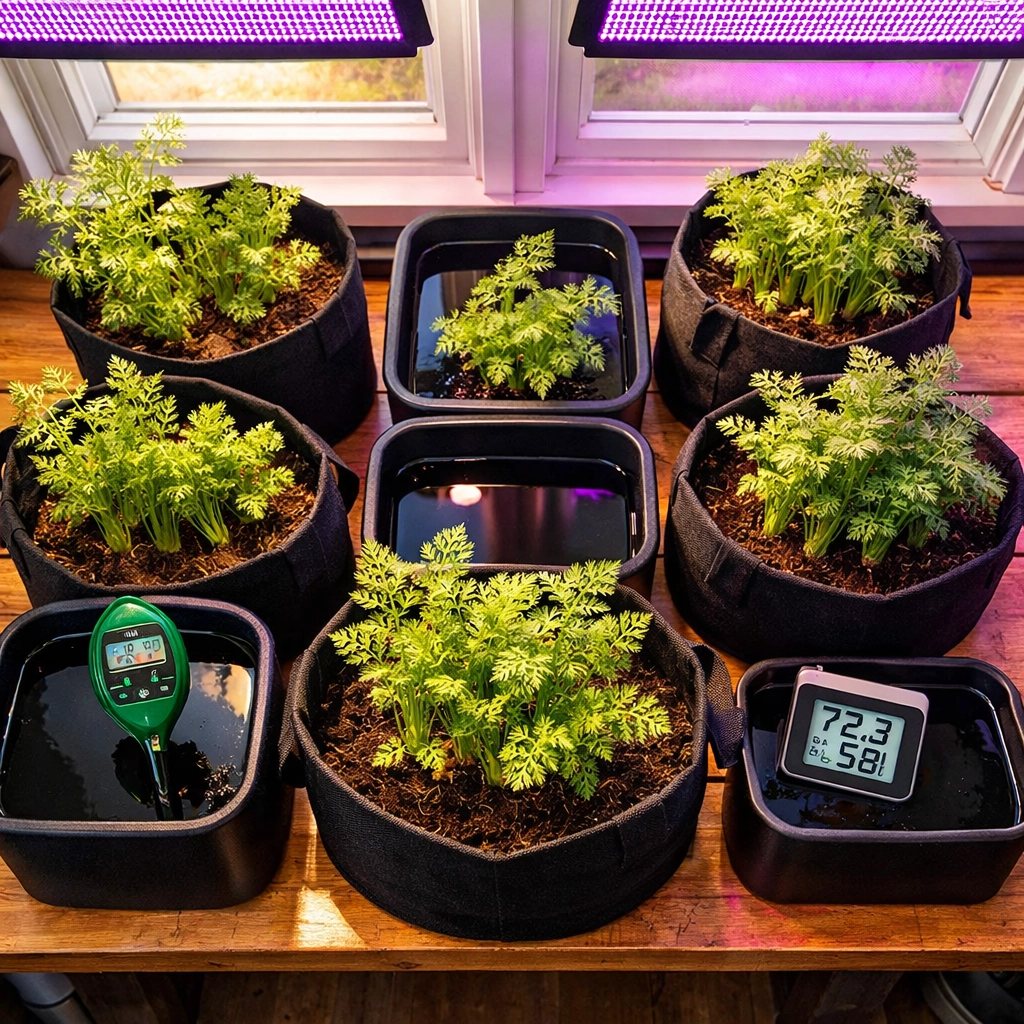
Measuring actual PPFD at plant height requires a quantum sensor, a specialized instrument that quantifies photon flux in the PAR range. Consumer light meters and smartphone apps generally measure illuminance in lux or foot candles, units describing human visual perception rather than plant usable photons. Lux and PPFD correlate poorly because human vision peaks in the green spectrum where chlorophyll absorption is minimal.
For growers without quantum sensors, manufacturers typically provide PPFD maps showing light distribution at various distances. Fixture height adjustment based on these maps optimizes coverage uniformly across the growing area.
Container specifications for indoor carrot production require careful attention to depth and volume. Standard Nantes varieties produce roots 15 to 18 centimeters long, requiring containers at least 30 centimeters deep to accommodate root growth plus adequate soil depth below the root tip. Deeper containers (40 to 50 centimeters) support longer varieties such as Imperator types.
Container width influences root diameter through spatial competition. Carrots spaced 5 centimeters apart in all directions develop larger diameter roots than those crowded at 2 centimeter spacing, though total yield per container may be lower due to fewer plants. For balancing size and efficiency, target 3 to 4 centimeter spacing, which accommodates approximately 60 to 80 carrots per standard 60 centimeter long window box.
Growing medium for containers must provide structural stability, adequate aeration, and moderate water retention. Pure potting mixes based on peat moss or coir drain well but sometimes dry excessively between waterings, causing the irregular moisture problems discussed earlier. Amending potting mix with 20 to 30 percent screened compost improves water buffering. Adding 10 percent perlite or vermiculite maintains porosity despite the compost addition.
Temperature management in indoor environments impacts carrot quality significantly. Most indoor spaces maintain temperatures between 18 and 24 degrees Celsius, suitable for foliage growth. However, promoting optimal root development and carotenoid synthesis requires cooler temperatures. Placing containers near exterior walls during winter provides passive cooling, or using a basement growing area exploits naturally cool conditions. Target daytime temperatures of 15 to 18 degrees Celsius and nighttime temperatures of 10 to 13 degrees Celsius for maximum root quality.
Monitoring and data logging using inexpensive temperature and humidity sensors document actual conditions. Bluetooth enabled sensors transmit data to smartphones, enabling growers to track environmental parameters over entire growing periods. This data driven approach identifies problems (excessive heat, humidity extremes) before they seriously impact crop quality.
Nutrient management for indoor container carrots differs from outdoor field production. Containers lack the nutrient reserves present in field soils and depend entirely on applied fertilizers. However, carrots require relatively modest fertility compared to heavy feeders like tomatoes or peppers.
The primary macronutrients nitrogen, phosphorus, and potassium should be supplied in ratios emphasizing phosphorus and potassium over nitrogen. Excessive nitrogen promotes lush foliage at the expense of root development and may produce hairy, misshapen roots. A fertilizer analysis such as 5-10-10 (5 percent nitrogen, 10 percent phosphorus as P2O5, 10 percent potassium as K2O) suits carrot production well.
Application rates require dilution to approximately one quarter to one half the label recommendation for containerized production. Frequent light feeding (every 7 to 10 days) maintains steady nutrient availability without excessive salts accumulating in the limited soil volume. Monitoring electrical conductivity of the soil solution using an EC meter helps prevent both deficiency and excess. Target EC values between 1.0 and 2.0 millisiemens per centimeter support healthy growth without salt stress.
Container Depth Engineering and Root Morphology Optimization
The relationship between container geometry and resulting carrot morphology extends beyond simply providing adequate depth. Container shape influences moisture distribution, temperature gradients, and root competition patterns, all affecting final root characteristics.
Tall narrow containers concentrate roots into a confined horizontal area while providing vertical space. This arrangement promotes long, thin roots ideal for varieties like Imperator or Kuroda types. The soil moisture profile in tall containers shows greater variation between surface and depth compared to shallow wide containers, with upper zones drying faster. Carrots adapt by concentrating their feeder root systems (fine lateral roots absorbing water and nutrients) in the moister lower zones. This response produces straighter, less branched taproots compared to shallow containers where feeder roots spread laterally in search of moisture.
Wide shallow containers, while inappropriate for full size carrots, suit short varieties such as Paris Market, Thumbelina, or Romeo types. These varieties mature at 3 to 5 centimeters length and nearly spherical shapes, requiring only 15 to 20 centimeters soil depth. The wide horizontal space permits high planting density (1 to 2 centimeter spacing) and large total yields from compact areas.
Container material affects soil temperature through thermal conductivity differences. Plastic containers, with thermal conductivity near 0.2 watts per meter kelvin, provide minimal insulation. On hot summer days, direct sun exposure heats plastic surfaces to 50 to 60 degrees Celsius, conducting heat into soil and raising root zone temperatures above optimal ranges. This effect reduces carrot quality through the carotenoid synthesis impacts discussed earlier.
Fabric grow bags, constructed from porous polypropylene or polyester, permit evaporative cooling and air pruning of roots. Water evaporating from the fabric surface draws latent heat from the container interior, reducing soil temperature several degrees compared to plastic. Air pruning occurs when roots reaching the container wall encounter desiccating air, causing root tip dieback. This pruning stimulates branching and produces fibrous root systems rather than circling roots. For taproots like carrots, air pruning of lateral feeder roots may be beneficial, enhancing water and nutrient absorption without deforming the primary taproot.
Ceramic containers provide substantial insulation due to air pockets within the fired clay structure. Their thermal conductivity of 0.5 to 1.0 watts per meter kelvin buffers temperature swings effectively. However, ceramic containers generally feature smaller drainage holes and retain moisture longer than fabric or plastic, requiring adjusted irrigation schedules.
Outdoor Season Extension Through Thermal Mass Engineering
Extending the outdoor carrot season in Zone 6 and colder requires manipulating the soil thermal environment to maintain root zone temperatures above freezing during fall and early winter. Thermal mass applications provide passive heat storage that moderates temperature extremes without electricity or fuel.
Thermal mass refers to materials capable of storing significant heat energy due to high heat capacity (the energy required to raise temperature by one degree). Water exhibits exceptional heat capacity at 4,186 joules per kilogram per degree Celsius, far exceeding common building materials like concrete (880 joules per kilogram per degree Celsius) or soil (800 to 1,200 joules per kilogram per degree Celsius depending on moisture and mineral composition).
Incorporating water based thermal mass around carrot plantings delays fall freezing by storing solar heat absorbed during sunny days and releasing it gradually during cold nights. The engineering approach involves placing water filled containers in close proximity to plants within covered structures.
A practical implementation uses black painted one gallon containers (approximately 3.8 liters capacity) positioned every 60 centimeters along carrot rows within low tunnel structures. Black paint maximizes solar absorption, raising water temperature 15 to 20 degrees Celsius above ambient on sunny fall days. As air temperature drops after sunset, the stored heat dissipates by conduction, convection, and radiation, warming the enclosed microclimate.
Quantitative analysis demonstrates the storage capacity: one gallon of water cooling from 35 degrees Celsius to 15 degrees Celsius releases 318,000 joules of thermal energy. This energy, distributed through a 0.5 cubic meter enclosed volume (representing the air space under a low tunnel section), can raise the air temperature approximately 5 to 8 degrees Celsius compared to outside ambient conditions. Over the course of a 12 hour night, this results in an average temperature elevation of 2 to 4 degrees Celsius, sufficient to prevent freezing on borderline nights when outside temperatures drop to negative 2 to negative 4 degrees Celsius.
Low tunnel construction for thermal mass integration requires transparent covers to permit solar gain while trapping warm air. Six mil polyethylene plastic sheeting (0.15 millimeter thickness) stretched over wire hoops creates effective covers. The plastic transmits approximately 85 percent of incoming solar radiation, allowing soil and water containers to heat effectively during the day. At night, the plastic reduces longwave infrared radiation loss to the night sky, the primary cooling mechanism that drives below freezing temperatures on clear calm nights.
Optimal tunnel geometry balances enclosed volume (requiring heating) against solar capture area and wind exposure. Semicircular hoops 45 to 60 centimeters tall spanning 90 to 120 centimeter bed widths provide good proportions. Higher tunnels enclose more air volume, requiring more thermal mass, but also capture more vertical solar radiation on low angle winter sun paths.
Ventilation represents a critical design element often overlooked. On sunny winter days, tunnel interior temperatures can exceed 30 degrees Celsius even when outside air remains near freezing. These extreme temperatures damage carrot foliage and promote disease. Manual ventilation by opening tunnel ends works but requires daily attention. Automatic vent openers using wax based actuators that expand when heated provide passive temperature regulation. These devices, commonly used in greenhouse applications, open vents when interior temperature exceeds a set point (typically 21 to 24 degrees Celsius) and close automatically as temperatures drop.
Combining thermal mass with insulating mulch creates synergistic effects. After carrot foliage dies back in late fall (typically mid November in Zone 6), removing the low tunnel covers and applying 20 centimeter straw mulch over the thermal mass water containers insulates the system. The water containers, buried beneath mulch and soil level with stored heat, moderate soil temperature fluctuations through the entire winter period. This approach extends harvest availability into January or February in Zone 5 and 6, compared to November in unprotected plantings.
Technical Diagnostic Matrix: Carrot Production Troubleshooting
| Observable Symptom | Physiological Cause | Soil or Environmental Factor | Corrective Action |
|---|---|---|---|
| Forked or twisted roots | Mechanical impedance during root elongation | Compacted soil layers, stones, root knot nematodes | Improve soil structure with organic amendments; sieve soil to remove obstacles; practice 3 year rotation |
| Surface cracking | Uneven cell expansion due to irregular moisture | Drought stress followed by excess water | Maintain consistent soil moisture between negative 10 to negative 30 kPa using drip irrigation or mulch |
| Small diameter roots despite adequate time | Insufficient photosynthate allocation to storage root | Excessive nitrogen promoting foliage over root; inadequate light | Reduce nitrogen fertilization to 5 10 10 ratio; ensure full sun exposure or 400 plus PPFD indoors |
| Pale orange or yellow coloration | Reduced carotenoid biosynthesis | Excessive heat above 25 degrees Celsius during maturation; insufficient blue light spectrum | Time plantings for cool season maturity; use LED lights with 20 to 30 percent blue spectrum indoors |
| Woody core texture | High xylem to parenchyma ratio | Very slow growth in cold conditions without sufficient secondary thickening period | Extend growing season with row covers; start earlier using soil warming techniques |
| Hairy roots with excessive lateral branching | Nitrogen excess stimulating auxin production | Over fertilization, especially fresh manure | Use aged compost; reduce nitrogen application rates; test soil before supplemental feeding |
| Bitter flavor | Terpenoid compound accumulation | Stress from drought, nutrient deficiency, or pest damage | Maintain consistent growing conditions; address pest issues promptly; harvest before stress bolting |
| Premature bolting (flowering) | Vernalization trigger activated | Seedlings exposed to prolonged cold below 10 degrees Celsius | Delay spring planting until soil reaches 10 degrees Celsius; use bolt resistant varieties for early sowings |
| Soft watery roots in storage | Elevated respiration plus membrane permeability changes driving water loss and pectin solubilization | Storage temperature too warm or humidity too low; high nitrate at harvest | Store at 0 to 1 degrees Celsius with 95 to 98 percent relative humidity; avoid late heavy nitrogen; harvest at full maturity |
| Gray mold growth on crowns | Necrotrophic fungal colonization aided by surface condensation and senescent tissues | Free water on roots; poor airflow; damaged periderm | Cure briefly to dry surface; sanitize crates; maintain airflow; remove injured roots before storage |
| Internal browning near core | Oxidative stress plus phenolic oxidation via polyphenol oxidase activity | Intermittent low oxygen storage, carbon dioxide accumulation, or extended storage duration | Maintain oxygen near ambient; avoid sealed bags; keep carbon dioxide below 2 percent; rotate stock and shorten storage time |
| Rubber like texture after cooking | Excess lignification and suberin deposition from stress signaling | Repeated drought cycles; low potassium; very old roots | Keep moisture stable; ensure adequate potassium; harvest on time and do not hold oversized roots too long |
Expanded Frequently Asked Questions
What soil temperature range ensures successful carrot seed germination in cold climates?
Carrot seeds germinate across a temperature range of 4 to 35 degrees Celsius, but optimal germination occurs between 15 and 21 degrees Celsius. At minimum threshold temperature (4 degrees Celsius), germination requires 21 to 25 days. At optimal temperature, emergence occurs in 6 to 8 days. For Zone 6 spring plantings, monitoring soil temperature at 5 centimeter depth determines appropriate seeding dates. Wait until soil reaches 8 degrees Celsius minimum, preferably 10 to 12 degrees Celsius, before sowing. Soil thermometers with probe depth markers provide accurate measurements. Black plastic mulch applied 10 to 14 days before seeding accelerates soil warming by 3 to 5 degrees Celsius through solar absorption, enabling earlier planting without germination failure.
How deep should containers be for growing full size carrots indoors under grow lights?
Container depth requirements depend on variety characteristics. Nantes types, the most common cylindrical carrots, produce roots 15 to 18 centimeters long and require minimum 30 centimeter deep containers. Imperator types, the long slender carrots common in grocery stores, reach 20 to 25 centimeters and need 40 to 45 centimeter depth. Chantenay varieties, short and broad, mature at 10 to 13 centimeters and work well in 25 centimeter containers. Beyond accommodating root length, containers should provide additional depth below the root tip for feeder root development. Add 10 to 15 centimeters to the mature root length to determine minimum total depth. For mixed variety plantings, size containers for the longest variety present to avoid restricting growth. Insufficient depth produces shortened, stubby roots that never reach genetic size potential regardless of other growing conditions.
What specific LED light spectrum and intensity produces maximum beta carotene in indoor grown carrots?
Research demonstrates that LED spectral composition significantly impacts carotenoid synthesis in carrot roots. Optimal configurations provide 60 to 70 percent red light (peak emission 655 to 665 nanometers) combined with 25 to 30 percent blue light (peak emission 445 to 455 nanometers) and 5 to 10 percent green/amber light (520 to 600 nanometers). This combination maximizes both photosynthetic efficiency and carotenoid gene expression. Pure red LED arrays, while driving high photosynthesis rates, produce lower total carotenoid concentrations compared to mixed spectrum fixtures, likely due to reduced expression of phytoene synthase under pure red light. Blue light specifically upregulates genes encoding early carotenoid pathway enzymes. PPFD intensity should range from 400 to 600 micromoles per square meter per second measured at canopy height. Intensities below 300 produce carrot roots with reduced beta carotene concentrations, while intensities exceeding 700 provide no additional carotenoid benefit. Temperature control during the final 4 to 6 weeks before harvest proves equally important: maintain 15 to 18 degrees Celsius for maximum carotenoid accumulation regardless of light spectrum.
How does freeze thaw cycling affect carrot sweetness and when should overwintered carrots be harvested?
Freeze thaw cycling initiates a cold acclimation response that dramatically increases carrot sweetness through enzymatic conversion of stored starch to soluble sugars. When soil temperatures drop below 5 degrees Celsius and remain cold for extended periods (typically 6 to 10 weeks), carrot cells synthesize cold responsive proteins and accumulate compatible solutes including sucrose, glucose, and fructose. These compounds function as cryoprotectants, lowering the freezing point of cellular contents and stabilizing membranes during freeze events. Beta amylase activity increases substantially under cold exposure, cleaving starch molecules into maltose, which subsequent enzymes convert to glucose. Sucrose phosphate synthase, the enzyme producing sucrose from glucose and fructose, also shows elevated activity in cold conditions. The net result increases total sugar content from typical fall values of 3.5 to 4.5 percent fresh weight to 6 to 8 percent by late winter. Harvest timing critically affects quality. Begin harvesting after sufficient cold exposure (mid February in Zone 6, late February to early March in Zone 5) but before soil warms sufficiently to trigger sprouting. Once daytime soil temperatures exceed 10 degrees Celsius consistently, carrots rapidly mobilize sugars to support spring growth, simultaneously becoming fibrous and losing sweetness. Monitor soil temperature at 10 centimeter depth and complete harvest before temperatures stabilize above 10 degrees Celsius.
What causes carrot roots to fork into multiple points and how can this be prevented?
Root forking results from mechanical impedance interrupting the normal vertical growth pattern of the taproot apex. When the root tip encounters obstacles (stones, compacted soil layers, organic debris), the apical meristem sustains damage or receives signals that inhibit primary root elongation. Lateral root primordia, normally suppressed by auxin produced at the primary root tip, escape this suppression and develop into competing growing points, creating forked roots. Several factors contribute to forking: compacted soil layers created by tillage pans (hardpans formed at plow depth from repeated cultivation at the same depth); stones and debris in the root zone; fresh organic matter that has not decomposed fully; root knot nematode infestations that form galls on roots, disrupting growth; and excessive nitrogen promoting rapid top growth but weak root development that forks when encountering minor obstacles. Prevention requires creating friable soil to at least 30 centimeters depth through deep tillage or raised bed construction. Incorporate organic amendments at least one season before planting carrots, allowing complete decomposition. Screen or sieve soil to remove stones and debris larger than 1 centimeter diameter. Test soil for plant parasitic nematodes and practice 3 to 4 year rotations to reduce populations if present. Maintain moderate nitrogen fertility using 5-10-10 or 4-6-6 fertilizer ratios rather than high nitrogen formulations. Sandy loam and loam textures minimize forking compared to clay soils even with identical amendment practices.
What thermal mass calculations determine the number of water containers needed to protect carrot rows under low tunnels from frost?
Calculating thermal mass requirements involves determining the heat storage needed to maintain above freezing temperatures through the coldest expected night. The process requires several environmental parameters and thermodynamic properties. Begin by defining the protected volume: a typical low tunnel 30 meters long, 1.2 meters wide, and 0.5 meters tall encloses 18 cubic meters. Air has a volumetric heat capacity of approximately 1,200 joules per cubic meter per degree Celsius, so heating this volume by 5 degrees Celsius requires 108,000 joules. However, heat losses through the plastic cover to the outside environment must be compensated continuously. Heat loss rate depends on the temperature difference between inside and outside air, cover insulation value (R value), and cover area. Six mil polyethylene has an R value near 0.15 square meter kelvin per watt. For a tunnel with 40 square meters total surface area and 5 degree Celsius temperature difference, heat loss rate equals 40 times 5 divided by 0.15, equaling 1,333 watts or 1,333 joules per second. Over a 10 hour cold night, total heat loss equals 1,333 times 36,000 seconds, or approximately 48 million joules. This represents the thermal energy that must be stored and released to maintain the 5 degree temperature elevation. Water cooling from 35 degrees Celsius (achieved through solar heating) to 10 degrees Celsius releases 4,186 joules per kilogram per 25 degree drop, totaling 104,650 joules per kilogram. Dividing total required energy (48 million joules) by available energy per kilogram (104,650 joules per kilogram) indicates approximately 460 kilograms of water needed. At one kilogram per liter, this equals 460 liters or about 120 one gallon containers. This calculation assumes perfect efficiency with no losses to soil conduction or longwave radiation, so practical applications require 25 to 50 percent more thermal mass. For the 30 meter tunnel example, installing 150 to 180 one gallon containers provides adequate buffering for most Zone 6 frost events.
How should irrigation be managed differently for carrots grown in containers versus in ground plantings?
Container grown carrots require fundamentally different irrigation approaches than in ground plantings due to limited soil volume, altered drainage patterns, and increased evaporative surface area. Container soil volume restricts water storage capacity dramatically. A 60 centimeter long window box 20 centimeters wide and 35 centimeters deep holds 42 liters of growing medium. At field capacity (the maximum water content after drainage), typical container mixes retain 50 to 60 percent water by volume, providing approximately 21 to 25 liters of total water storage. Of this total, only water held between field capacity and permanent wilting point is plant available, representing roughly 15 to 20 percent of container volume or 6 to 8 liters. During active growth, carrots transpire approximately 2 to 3 millimeters per day of water, equivalent to 2 to 3 liters per square meter of leaf area per day. A mature container planting with 0.3 square meters of leaf area requires 0.6 to 0.9 liters daily. This demand depletes available water in 7 to 10 days without irrigation, compared to in ground plantings where root systems access water from much larger soil volumes. Container irrigation frequency must increase proportionally. Daily watering during hot weather prevents stress, compared to weekly or biweekly watering for in ground plantings with similar weather. Irrigation volume per application should be sufficient to produce slight drainage from container bottoms, ensuring complete soil profile rewetting. Approximately 20 to 25 percent of applied water should drain, indicating adequate volume. Calculate required volume by multiplying container surface area (in square centimeters) by 1.25 times soil depth (in centimeters) then converting to milliliters (the result in cubic centimeters equals milliliters). For the 60 by 20 by 35 centimeter container example, surface area equals 1,200 square centimeters, multiplied by 1.25 times 35 equals 52,500 cubic centimeters or 52.5 liters per irrigation. This volume, applied when soil moisture drops to 50 percent of field capacity (monitored using moisture meters or by weight), maintains optimal carrot growth. In ground plantings, by contrast, can follow soil moisture tension monitored by tensiometers, with irrigation triggered when tension reaches negative 30 to negative 50 kilopascals rather than fixed schedules.
Molecular Post Harvest Physiology and Root Respiration Kinetics
Post harvest carrot quality is not a static attribute. It is a moving target governed by respiratory carbon loss, membrane phase behavior, enzyme mediated cell wall remodeling, and progressive cellular senescence. In cold climates, growers often assume that cold storage is simply about keeping carrots cold. The real goal is controlling the kinetics of respiration and senescence so that the root stays firm, sweet, and resistant to decay long after harvest.
What a carrot root is doing after harvest
A harvested carrot is still alive. The storage root remains a metabolically active organ designed to keep cells viable while feeding future regrowth. Even if tops are removed, parenchyma cells continue to run mitochondrial respiration, maintain ion gradients through membrane ATPases, and repair oxidative damage.
The core post harvest processes are:
- Respiration that consumes sugars and oxygen and releases carbon dioxide, water, and heat.
- Transpiration and water loss that reduce turgor pressure and drive limp texture.
- Enzyme activity that modifies cell walls and membranes, shifting texture from crisp to rubbery.
- Senescence signaling that changes gene expression and reduces defensive capacity, increasing decay risk.
Your storage strategy should target each process with measurable control points.
Respiration stoichiometry and why oxygen matters
Carrot respiration is largely aerobic. The simplified reaction for glucose oxidation is:
C6H12O6 plus 6 O2 yields 6 CO2 plus 6 H2O plus energy as ATP and heat
Every mole of glucose consumed produces six moles of carbon dioxide. That means respiration is directly tied to sweetness loss. Sucrose is hydrolyzed by invertases to glucose and fructose, which then enter glycolysis. Over time, that conversion reduces the sweetness and increases the proportion of structural carbohydrates relative to soluble sugars.
The first technical takeaway is that storage is a controlled slowing of glycolysis and the tricarboxylic acid cycle. Lower temperature reduces enzyme activity by reducing molecular collision frequency and by shifting protein conformations away from their peak catalytic states.
Respiration rate kinetics and the Q10 concept
A practical way to model respiration changes with temperature is Q10, the factor by which respiration increases for a 10 degree Celsius rise. For many vegetable tissues, Q10 is roughly 2, meaning respiration doubles for each 10 degree increase. Carrots often fall in a Q10 range between about 1.8 and 2.4 depending on cultivar, maturity, and whether tissues are wounded.
If a carrot lot respires at a baseline rate R at 0 degrees Celsius, then at 10 degrees Celsius the rate may approach about 2R. At 20 degrees Celsius it can approach about 4R. That is why a garage storage at 10 to 15 degrees Celsius can burn through sugars fast even if the roots do not look spoiled for a while.
This is also why rapid pull down cooling after harvest matters. The first 12 to 24 hours can account for a disproportionate share of total sugar loss if roots sit warm while field heat dissipates.
Wounding, periderm integrity, and respiration bursts
Harvest creates wounds. Even gentle pulling can abrade the periderm, the outer protective layer that limits water loss and blocks pathogen entry. Wounding triggers:
- A respiration burst as cells increase ATP production to drive repair.
- Phenylpropanoid pathway activation to build lignin like and suberin like barriers.
- Reactive oxygen species production and scavenging.
The biochemical repair response is useful because it seals tissues, but the cost is sugar consumption plus increased heat generation that can raise micro temperature inside piles or bins.
For small scale growers, the key is to minimize abrasion and avoid piling carrots warm and wet. For larger scale handling, it is about airflow and fast cooling.
Membrane phase behavior and chilling related texture changes
Carrot membranes are composed of phospholipids with fatty acid tails. At warmer temperatures, membranes are in a more fluid phase. As temperatures drop, membranes can shift toward a more gel like phase, reducing transporter function and potentially increasing leakiness if the transition is abrupt or if membranes have a high proportion of saturated fatty acids.
Carrots are generally chilling tolerant because they are cool season adapted. Still, repeated temperature swings, for example moving roots from 0 degrees storage to 10 degrees during sorting then back, can increase membrane stress and leakiness. Leakiness allows solutes to escape into apoplast spaces. That can feed spoilage microbes and also change texture.
The practical outcome is stable cold storage temperature. Avoid cycling.
Cell wall enzyme activity during storage
Crispness is a mechanical property driven by cell turgor plus the integrity of pectin networks in the middle lamella and the rigidity of cellulose hemicellulose frameworks.
During storage, several enzymes matter:
Pectin methylesterase removes methyl groups from pectin, producing negatively charged sites.
Polygalacturonase and pectate lyase can then depolymerize de esterified pectin more easily.
Beta galactosidase can modify side chains.
The combined effect is a gradual reduction in intercellular adhesion and a shift toward a softer bite. Temperature slows these enzymes but does not stop them.
Calcium plays a stabilizing role because Ca2 plus bridges bind pectin chains in egg box like structures. Carrots grown with adequate calcium and moderate nitrogen tend to hold texture better because their cell walls have stronger cross linking capacity.
Senescence, oxidative stress, and the decline of defense
Senescence is a genetically regulated aging process. In storage roots, it is slower than in leafy tissues, but it still occurs. Mitochondria produce reactive oxygen species as electrons leak from the electron transport chain. Antioxidant systems such as superoxide dismutase, catalase, ascorbate peroxidase, and glutathione reductase keep damage in check. Over time, antioxidant capacity declines.
As oxidative stress increases, membranes become more permeable and proteins become carbonylated. That accelerates tissue decline and increases susceptibility to pathogens such as Botrytis and bacterial soft rot organisms.
Storage conditions that reduce oxygen too far can also increase oxidative stress via alternative oxidase pathway shifts and by disturbing electron flow balance.
Humidity control and the physics of water loss
Even if respiration is slowed, carrots can lose quality by losing water. Water loss lowers turgor pressure and causes limp texture. It also concentrates solutes, which can change perceived sweetness but makes the root rubbery rather than crisp.
Water loss is driven by vapor pressure deficit between root surface and surrounding air. At 0 to 1 degrees Celsius, air holds less moisture than at warm temperatures, so high relative humidity is essential. The common target is 95 to 98 percent relative humidity.
You also need airflow. High humidity without airflow can cause condensation. Condensation creates free water, which favors decay. The goal is high humidity with minimal surface wetness. That is why perforated bags or lined bins that buffer humidity while still allowing gas exchange are used.
Controlled atmosphere considerations for small growers
Commercial storage sometimes uses controlled atmosphere, adjusting oxygen and carbon dioxide to reduce respiration. For carrots, oxygen too low can promote anaerobic metabolism leading to ethanol and acetaldehyde formation, which create off flavors and tissue injury. Carbon dioxide too high can also cause physiological stress and internal browning.
For a home or small farm setup, the practical recommendation is simple. Do not seal carrots in airtight containers. Use perforated liners or loosely closed bags, keep temperature near 0 to 1 degrees Celsius, and keep humidity high.
A practical post harvest protocol that matches the biochemistry
- Harvest when soil is moist but not muddy to reduce abrasion.
- Remove tops promptly to reduce water loss through leaves and to reduce respiration demand.
- Avoid washing if storage is long term unless you can dry surfaces quickly. If washing, dry well.
- Cool quickly. Aim to bring roots to near 0 to 1 degrees Celsius within 12 to 24 hours.
- Store at 0 to 1 degrees Celsius, 95 to 98 percent relative humidity, stable temperature.
- Inspect regularly and remove injured or decaying roots early to reduce ethylene and microbial spread.
Ethylene is not a dominant issue in carrots compared to some crops, but exposure to ethylene from apples or pears can increase bitterness in carrots. Do not store them together in tight spaces.
Advanced Phenotypic Selection for Cold Resilience
Cold resilience in carrots is a blend of genetics and environment. Your management choices control soil temperature, moisture, and oxygen. Genetics controls the baseline capacity for cold acclimation, membrane stability, sugar accumulation, and root growth under low temperature.
Phenotypic selection means choosing cultivars and seed lines that express the traits you need in your specific climate. In Zone 6 and colder, the most valuable traits are:
Fast emergence in cool soil Strong early root axis growth without forking High sugar accumulation during cool finishing Resistance to splitting under autumn rains Tolerance of near freezing soil without tissue injury Storage quality under low temperature and high humidity
The traits that actually predict cold resilience
1. Emergence kinetics at 6 to 10 degrees Celsius
Carrot seed germination is slow in cool soils. The best cold resilient lines show:
Lower base temperature for germination Faster radicle emergence at 6 to 10 degrees Celsius Uniform emergence that reduces thinning stress
In practical selection, you track days to 50 percent emergence under your spring conditions. Lines that emerge evenly reduce the chance of later size variability and reduce the need for aggressive thinning that can disturb neighboring roots.
2. Root tip dominance and fork resistance in cool dense soils
Cold soils often have higher moisture content and higher bulk density. That increases mechanical impedance. Lines with strong root tip dominance and robust root cap mucilage production can navigate small pores better and maintain a single axis.
In trials, you score the percentage of forked roots in your soil type rather than in ideal beds. That makes your selection meaningful.
3. Thermal plasticity of carbohydrate partitioning
Thermal plasticity is the ability to adjust metabolism as temperature changes. For carrots, a key expression of plasticity is how quickly the plant shifts toward soluble sugar accumulation as temperatures cool.
Cold finishing carrots that are genetically inclined to:
Increase sucrose phosphate synthase activity Increase vacuolar sugar storage capacity Maintain membrane transport under cold
will get sweeter and also become more freeze tolerant. This is not just flavor. Sugars lower freezing point and stabilize membranes.
4. Membrane lipid composition and stability
Cold tolerant lines often have higher proportions of unsaturated fatty acids in membranes. Unsaturation keeps membranes fluid at low temperatures. You cannot measure fatty acid profiles easily at home, but you can observe indirect signals:
Leaves stay functional under light frosts Roots do not develop water soaked patches after cold snaps Stored carrots do not show early internal breakdown
Specific genetic lines and cultivar families that tend to perform in cold zones
Because seed availability changes, think in families rather than only in single named cultivars.
Nantes family lines often have strong cool season quality, good sweetness, and cylindrical roots that size up reliably. Many Nantes derived cultivars have good storage traits.
Chantenay family lines tend to handle heavier soils better because of shorter, broader roots. For cold climates with less than perfect soil preparation, this can translate into better marketable percentages.
Danvers family lines are often chosen for adaptability and storage. They may not be as perfectly shaped as Nantes, but they commonly show strong vigor and solid flavor.
Kuroda types can be vigorous and tolerant, often used where heat is an issue, but some lines show strong plasticity and can also do well in cool seasons if soil is loose.
If your goal includes overwinter harvest under mulch, you focus on lines that hold crown integrity and resist rot. Those traits are partly genetic and partly management.
How to run a home scale phenotypic selection trial
You can do real selection work without breeding. You are selecting what you plant next season.
- Plant at least 4 cultivars in the same bed, same day, same spacing.
- Mark each section clearly.
- Record emergence date and emergence uniformity.
- Measure leaf vigor at 30 days and 60 days.
- At harvest, score: root length and diameter distribution percent forked or cracked brix readings if you have a refractometer storage loss after 4 weeks and 12 weeks
- Keep notes on soil temperature, rainfall, and any stress events.
The best cold resilient cultivar in your yard is the one that is stable across variable weeks. That is thermal plasticity in practice.
Seed physiology and priming options
If your spring soils are consistently cold and wet, seed priming can improve emergence speed. Priming partially hydrates seeds so early metabolic steps occur, then seeds are dried for planting. This can reduce time to emergence by several days.
Priming has risks if done incorrectly because partially hydrated seeds can lose viability. For most home growers, the safer route is to buy primed seed from reputable suppliers if available, or to focus on cultivar choice and soil warming strategies.
The Biochemistry of Soil Microbial Interactions and Mycorrhizal Symbiosis in Root Development
Carrot root architecture is not only genetics and physics. It is also biology at the soil micro scale. The rhizosphere is a chemically active zone where roots exude carbon compounds and microbes respond with enzymes, hormones, and nutrient transformations.
In cold climates, microbial activity is temperature limited. That changes nitrogen mineralization rates, phosphorus availability, and the dynamics of symbioses such as arbuscular mycorrhizal fungi.
Root exudates as chemical signals and carbon payments
Roots exude:
Sugars such as glucose and fructose Organic acids such as malate and citrate Amino acids Phenolics and flavonoids
These exudates attract microbes and also change soil chemistry. Organic acids can chelate iron and aluminum, freeing phosphate. Sugars feed bacteria that can produce growth promoting compounds. Phenolics can suppress certain pathogens.
In cold soils, exudation can remain significant even when microbial metabolism slows. That can lead to carbon accumulation in the rhizosphere and shifts in microbial community composition, sometimes favoring fungi over bacteria.
Arbuscular mycorrhizal fungi in carrots
Carrots can form symbioses with arbuscular mycorrhizal fungi, primarily in the Glomeromycota group. The fungus colonizes root cortical cells and forms arbuscules, branching structures where nutrient exchange occurs.
The basic exchange is:
Plant provides carbon, mainly as sugars and lipids Fungus provides phosphorus, micronutrients, and water access via hyphal networks
This matters in cold climates because phosphorus diffusion in soil is slow, and it slows even more as temperature drops. Hyphal networks extend the effective root absorption area far beyond root hairs, reducing the limitation.
Glomalin, soil aggregation, and why it matters for carrots
One of the most important biochemical contributions of arbuscular mycorrhizal fungi is glomalin related soil proteins. Glomalin is a sticky glycoprotein like material associated with fungal hyphae and spores. It contributes to soil aggregate stability by binding mineral particles and organic matter into water stable aggregates.
For carrots, aggregate stability is not just about preventing erosion. It directly affects:
Macropore continuity needed for straight root penetration Resistance to surface crusting that inhibits seedling emergence Water infiltration and drainage balance that reduces hypoxia risk
In cold climates with repeated freeze thaw events, stable aggregates are harder to maintain. Glomalin plus organic matter can increase resilience against aggregate collapse after thaw and rainfall.
Nutrient exchange mechanisms at the interface
Phosphorus transfer occurs primarily as phosphate ions transported through fungal hyphae and delivered to the arbuscule interface. The plant expresses phosphate transporters in the peri arbuscular membrane. The fungus expresses its own transporters to move phosphate from soil into hyphae.
Nitrogen transfer can occur as ammonium, nitrate, or amino acids depending on fungal species and soil conditions. In cool soils, nitrification can be slower, so ammonium may be more prominent. Excess ammonium can acidify the rhizosphere, which can increase micronutrient availability but may also increase aluminum solubility in acidic soils.
Micronutrients such as zinc and copper can also be enhanced by mycorrhizae due to extended exploration volume and local chelation dynamics.
Microbial hormones and root architecture
Certain rhizosphere microbes produce indole 3 acetic acid, gibberellins, and cytokinins. These hormones can change root branching patterns, root hair development, and overall root system architecture.
For carrots, too much lateral branching can contribute to hairy roots, but moderate feeder root development improves nutrient uptake. The balance is influenced by nitrogen level, moisture, and microbial composition.
A practical management point is that extremely high soluble nitrogen fertilization can reduce mycorrhizal colonization. When the plant can access abundant nutrients without fungal help, it reduces carbon allocation to symbionts. That can reduce glomalin inputs and aggregate stability over time.
Cold soil microbial ecology and disease suppression
Beneficial microbes also compete with pathogens. Some bacteria produce antibiotics or occupy infection sites. Some fungi are antagonists to root rots. In cold wet conditions, pathogen pressure often increases because roots are stressed and oxygen is limited, while certain pathogens remain active.
Practices that support a diverse microbial community include:
Compost additions that provide carbon and microbial inocula Reduced tillage that preserves hyphal networks Avoiding excessive fungicide use in home settings Maintaining balanced moisture rather than chronic saturation
Practical steps to support mycorrhizal symbiosis in carrot beds
- Avoid high phosphorus starter fertilizers. Excess phosphorus can reduce colonization.
- Use compost for slow nutrient release and microbial diversity.
- Reduce deep disturbance. Raised beds can be maintained with shallow cultivation.
- Keep living roots in the system when possible through cover crops in off seasons.
- If you use inoculants, place them in the seed zone. Inoculants work best when contact is close. Many soils already contain spores, so inoculants are not always necessary.
A soil biology diagnostic approach that fits a technical grower
If you want to link soil biology to carrot performance, track these field signals:
Soil aggregate stability. Does the soil crumble into stable granules or collapse into powder after wetting Surface crusting after rains Carrot root hairiness trends across beds with different fertility Phosphorus deficiency symptoms despite adequate soil test phosphorus Yield stability across cooler and warmer weeks
These are the observable outputs of microbial interactions combined with hydrology and fertility.
Expanded Frequently Asked Questions
How do I store carrots for months without losing sweetness or crisp texture?
Store carrots at 0 to 1 degrees Celsius with 95 to 98 percent relative humidity and stable temperature. Remove tops promptly, minimize abrasion, and avoid airtight storage that can reduce oxygen too far. High humidity preserves turgor and crispness, while near freezing temperature slows respiration and enzyme activity that soften tissues. Use perforated bags or bin liners to buffer humidity without trapping condensation.
Why do stored carrots sometimes taste less sweet even when they look fine?
Sweetness decline is usually respiration driven. Sucrose is hydrolyzed into glucose and fructose and then oxidized through glycolysis and the tricarboxylic acid cycle, producing carbon dioxide and water. Warmer storage temperatures accelerate respiration due to Q10 temperature sensitivity. Even at cool temperatures, long storage time slowly reduces soluble sugars.
Can my carrots get damaged by too little oxygen in storage?
Yes. If oxygen drops too low, tissues shift toward anaerobic metabolism, producing ethanol and acetaldehyde that cause off flavors and physiological injury. This is most likely when carrots are sealed in airtight containers or thick plastic bags without perforations. Keep storage breathable while maintaining high humidity.
Do mycorrhizal fungi actually help carrots, and how would I notice?
They can help primarily by improving phosphorus and micronutrient uptake and by improving soil aggregation through glomalin related proteins. You may notice better growth in cool soils, improved uniformity, and fewer nutrient deficiency symptoms in beds with stable organic matter and reduced disturbance. Effects are strongest in low to moderate fertility systems, not in heavily fertilized beds.
What cultivar traits should I prioritize for Zone 6 and colder carrots?
Prioritize uniform emergence in cool soil, fork resistance in your soil type, strong sugar accumulation during cool finishing, crack resistance under autumn moisture swings, and proven storage quality. Run small side by side trials and score marketable percent plus storage loss to find the best cultivar for your exact bed conditions.
References
- Taiz, L., Zeiger, E., Moller, I. M., Murphy, A. Plant Physiology and Development. Sinauer Associates.
- Kader, A. A. Postharvest Technology of Horticultural Crops. University of California Agriculture and Natural Resources.
- Buchanan, B. B., Gruissem, W., Jones, R. L. Biochemistry and Molecular Biology of Plants. Wiley Blackwell.
- Smith, S. E., Read, D. J. Mycorrhizal Symbiosis. Academic Press.
- Paul, E. A. Soil Microbiology, Ecology, and Biochemistry. Academic Press.
Growing carrots in Zone 6 and colder climates combines fundamental plant biology with engineering solutions that overcome temperature and season constraints. From understanding root developmental processes at the cellular level to designing thermal mass systems that mathematically deliver required heat storage, successful cultivation emerges from technical knowledge applied systematically. Whether raising carrots indoors under precisely calibrated LED arrays or extending fall harvests through strategic thermal management, the principles remain consistent: optimize the physical and chemical environment to match carrot physiological requirements. The detailed technical approaches presented here transform cold climate carrot growing from challenging to predictable, enabling consistent production of high quality, nutrient dense roots throughout extended seasons.