

Recycled Bottle Bird Feeder Build
A recycled bottle bird feeder is a gravity-fed seed dispenser built from a plastic bottle with cut feeding ports and a perch.
Yes, you can build a fully functional bird feeder from a plastic bottle in your recycling bin. With a few simple modifications, a standard 1- or 2-liter bottle becomes a gravity-fed feeder that holds plenty of seed and protects it from rain. The project takes about 30 minutes, costs nothing, and gives your family a view of nature right in your own backyard.
Key takeaway: A clean plastic bottle with two feeding holes, a stick perch, and drainage holes becomes a weatherproof feeder that lasts a season. Rinse monthly and toss soggy seed.
A nice March project in central Ohio — hang it as the spring migrants return.
Why Recycled Materials Make the Best Bird Feeders
Before we grab the scissors, let's talk about why this project matters. Every year, millions of plastic bottles end up in landfills. By turning a bottle into a bird feeder, you're teaching kids two lessons at once: caring for wildlife and reducing waste.
Plus, there's something special about watching a cardinal or chickadee land on something your child made with their own hands. That pride sticks with them.
The best part? These feeders actually work. Birds aren't picky about aesthetics, they care about easy access to seeds and a safe place to perch. Your recycled bottle delivers both.
What You'll Need
- Clean plastic bottle (1- or 2-liter)
- Wooden spoon, stick, or dowel for the perch
- Birdseed
- String or twine for hanging
- Masking or washi tape
- Scissors
- Thumbtack or craft knife (adult use)
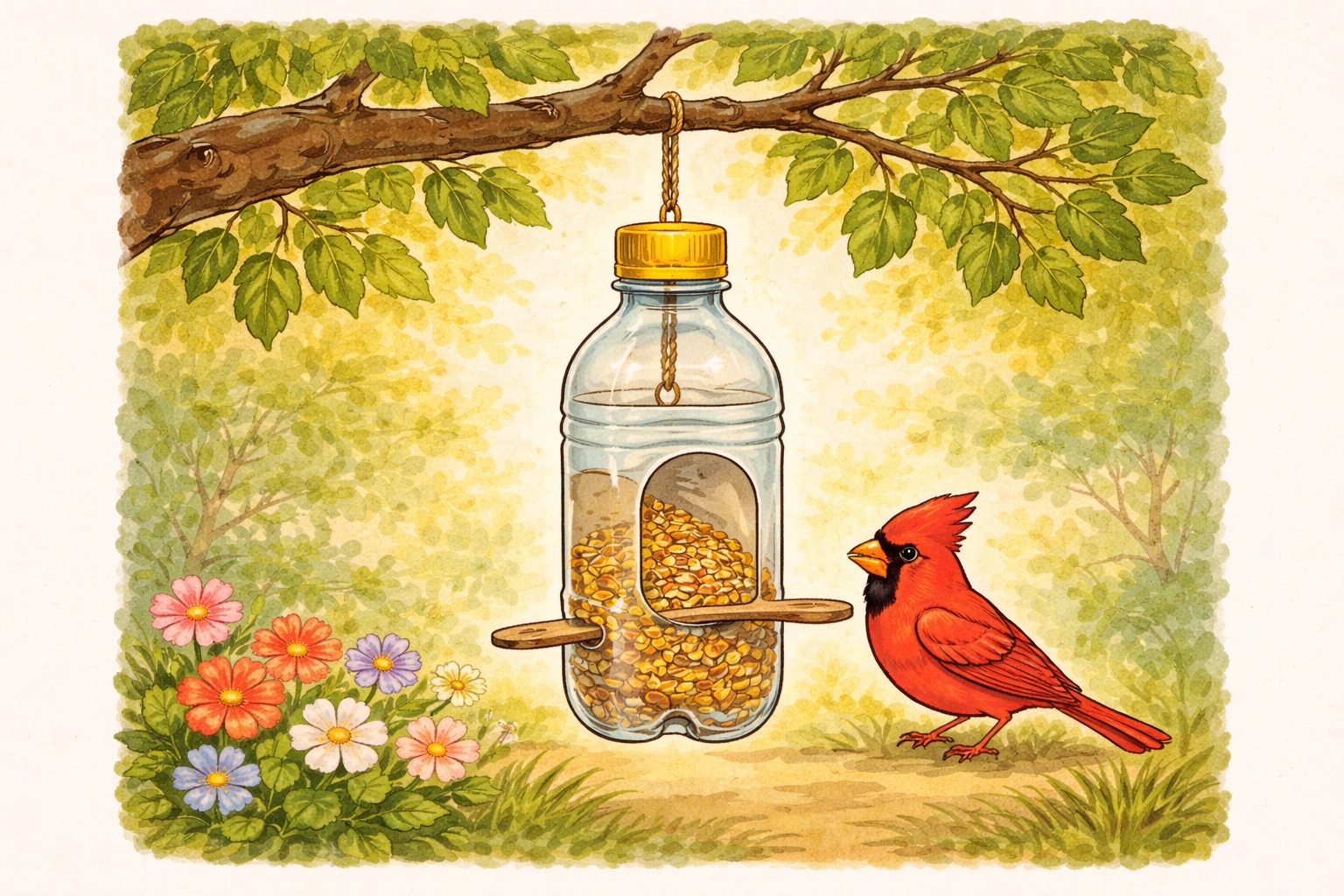
Build the Feeder: Step by Step
Adults cut every hole. An adult handles the thumbtack, scissors, and any craft knife work. Tape every cut edge so birds and fingers don't get scratched. Poke drainage holes in the bottom — standing water grows mold, and moldy seed can sicken birds. Use natural string or twine for hanging, not fishing line (entanglement risk).
Step 1: Clean and Dry the Bottle
Rinse the bottle thoroughly, remove all labels, and let it dry completely. Moisture plus seed equals mold, so don't rush this part.
Step 2: Add the Perch (Adult)
An adult pokes two opposite holes 3 inches from the bottom and slides a stick through for a perch. The stick should fit snugly so it doesn't wobble.
Step 3: Cut Feeding Holes (Adult)
An adult cuts small holes about 4 centimeters above each perch, 7 to 8 millimeters wide. Big enough for seeds to come through, not so big they all spill out.
Step 4: Tape Edges and Add Drainage
Tape every cut edge so birds and fingers don't get scratched. Poke tiny drainage holes in the very bottom of the bottle. This prevents seeds from getting soggy if any moisture sneaks in.
Step 5: Add the Hanger
Poke two holes near the cap, thread string through, and tie a secure hanging loop.
Step 6: Fill and Hang
Fill with seed through the top, screw the cap on, and hang 5 to 6 feet up near cover where you can see it from a window.
Other Recycled Builds
Want to try a different recycled container? These builds use the same cut, tape, and hang approach:
- DIY Bird Feeder Build: Step-by-Step — a sturdy milk-jug feeder with perches and a three-point hanger
- Pinecone Bird Feeder: 10-Minute Nature Craft — the fastest natural feeder, ready in 10 minutes
- The Bird Feeder Collection: 5 Builds Compared — compare all five builds by time, age, and cost
Tips for Attracting More Birds
Location matters.
Hang feeders near trees or shrubs where birds can quickly escape if a predator appears. Keep them far enough from branches that squirrels can't jump aboard.
Be patient.
It usually takes a day or two for birds to discover a new feeder. Once one finds it, word spreads fast.
Keep it clean.
Check feeders weekly and remove any wet or moldy seed. A dirty feeder can make birds sick.
Offer variety.
Sunflower seeds attract cardinals and finches. Millet brings in sparrows. Suet appeals to woodpeckers.
Safety Reminders for Families
- Adults should handle all cutting with scissors or craft knives
- Wash hands after handling birdseed
- Check feeders regularly for sharp edges that might develop over time
- Keep feeders out of reach of family pets
More bird feeders
Frequently Asked Questions
What bottle works best?
A 1- or 2-liter plastic soda bottle. Thicker walls hold up longer; always rinse and dry it fully first.
What seed should I use?
Black oil sunflower seeds please the most birds. A basic wild bird mix works for beginners.
Where should I hang it?
Near trees or shrubs for cover, 5-6 feet up, out of cat range, where you can see it from a window.
Why aren't birds coming?
Give it several days to two weeks. New feeders look suspicious to birds. Keep it filled and visible.
How often should I clean it?
Monthly. Dump old seed, scrub with diluted white vinegar, rinse, dry fully, refill. Clean more often in wet weather.
Hang It This Weekend
Building a bird feeder from a recycled bottle is a simple project with real payoff: less waste, more birds, and kids who made it happen.
Be safe and have fun!