

Growing Strawberries Vertically: A Sweet DIY Project
Can You Really Grow Strawberries Going Up Instead of Out?
Absolutely! Vertical strawberry gardening lets you grow heaps of delicious berries in a tiny footprint by stacking plants upward instead of spreading them across your yard. It's perfect for balconies, patios, small backyards, or just for making gardening more fun with your kids. Best of all, you can build a simple vertical strawberry planter for under $10 using materials you probably already have at home.
Growing strawberries vertically isn't just practical, it's also a fantastic hands-on project for families. Kids get to see exactly how plants grow, water them at eye level, and (the best part) pick sun-warmed berries right off the vine. Let's dig into how to build your own vertical strawberry garden this weekend.
Why Grow Strawberries Vertically?
Before we grab tools, here's why vertical growing is such a sweet deal:
- Space-saving: No yard? No problem. Vertical planters fit on porches, decks, and even sunny apartment balconies.
- Fewer pests: Lifting berries off the ground keeps them away from slugs and soil-borne diseases.
- Easy harvesting: No bending or kneeling, kids and adults alike can pick berries at a comfortable height.
- Eye-catching displays: A tower or wall of strawberry plants is genuinely beautiful (and delicious).
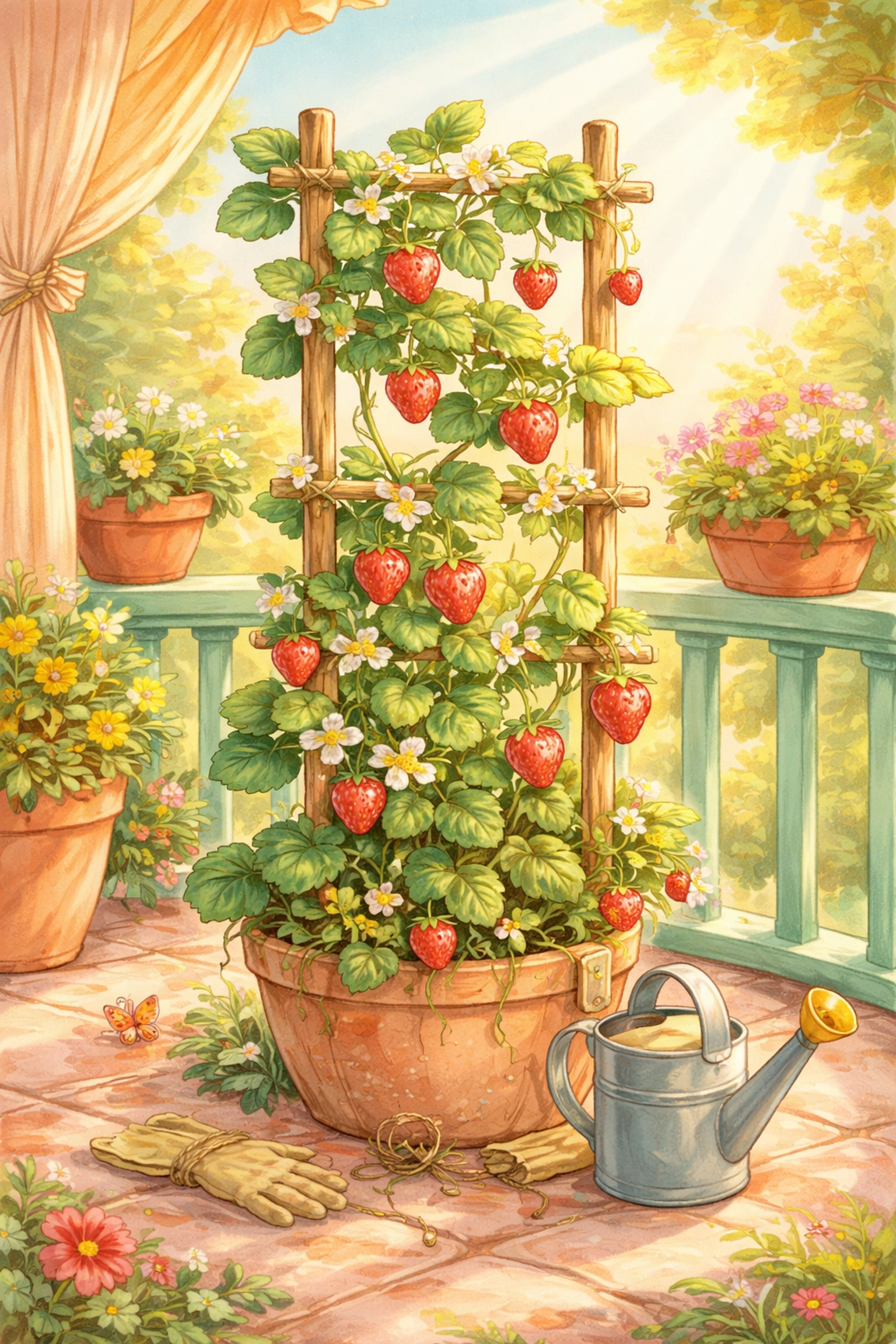
Choosing a Vertical Method: Three Easy Options
There are several ways to go vertical. Here are three beginner-friendly methods that work great for families:
1. PVC Pipe Tower
A tall PVC pipe with holes drilled along its length creates a freestanding tower. You plant strawberries in each hole, and a central watering tube delivers moisture from top to bottom. These can sit in your garden, on a porch, or even indoors with a drainage pan and supplemental light.
2. Gutter Planter Wall
Mount several rain gutters horizontally on a fence or wall in tiers. Space each gutter at least 30 cm (about 12 inches) apart so plants have room to grow. This method is especially easy to water and maintain, and it looks fantastic along a sunny wall.
3. Recycled Bottle Planter
Cut openings in large plastic bottles, fill them with soil, and attach them to a fence, pallet, or lattice. This is the cheapest option and a terrific way to teach kids about recycling and reusing.
For this tutorial, we'll focus on the recycled bottle planter, it's the most budget-friendly and kid-friendly option.
DIY Recycled Bottle Vertical Strawberry Planter: Step-by-Step
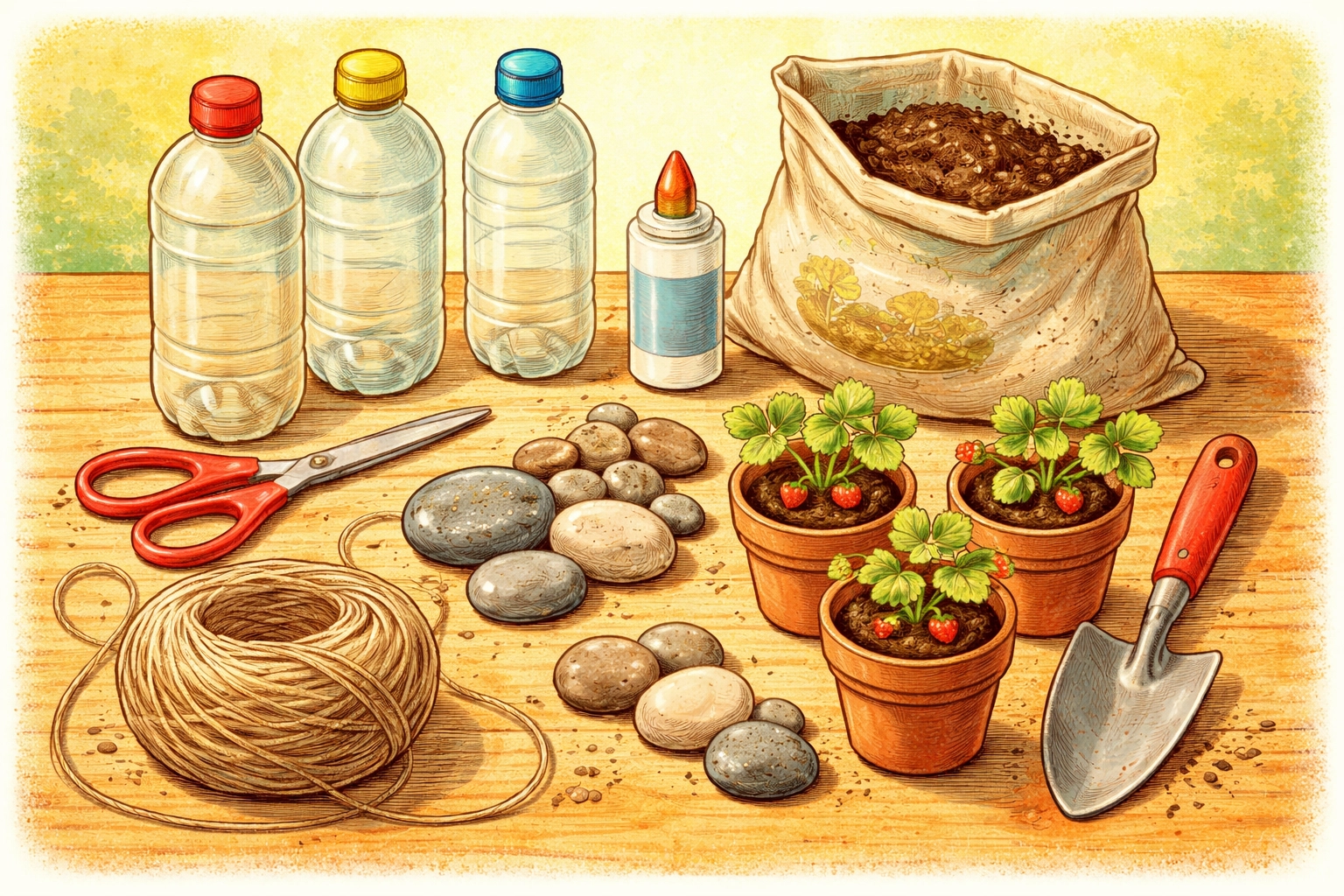
This project is easy enough for kids to help with and can be finished in an afternoon. Here's what you'll need:
Materials & Budget Table
| Item | Estimated Cost |
|---|---|
| 6 large plastic bottles (2L) | Free (recycle) |
| Potting soil (small bag) | $4.00 |
| Strawberry seedlings (6-pack) | $4.00 |
| String or zip ties | $1.00 |
| Small stones for drainage | Free (collect) |
| Total | Under $10 |
Tip: Many dollar stores carry potting soil and seedlings in spring. You can also ask neighbors for extra bottles!
Step 1: Prepare Your Bottles
Rinse out six large plastic bottles (2-liter soda bottles work great). Remove any labels.
Using scissors or a box cutter (adults only for this step), cut a rectangular opening on one side of each bottle, about 3 inches wide and 4 inches tall. This is where your strawberry plant will grow out.
Poke 3–4 small drainage holes in the bottom of each bottle.
Step 2: Add Drainage Layer
Drop a thin layer (about 1 inch) of small stones, pebbles, or broken terracotta into the bottom of each bottle. This keeps the roots from sitting in soggy water.
Step 3: Fill With Soil
Fill each bottle with nutrient-rich potting soil, leaving about an inch of space at the top. Don't pack it too tightly, strawberry roots like to breathe.
Step 4: Plant Your Strawberries
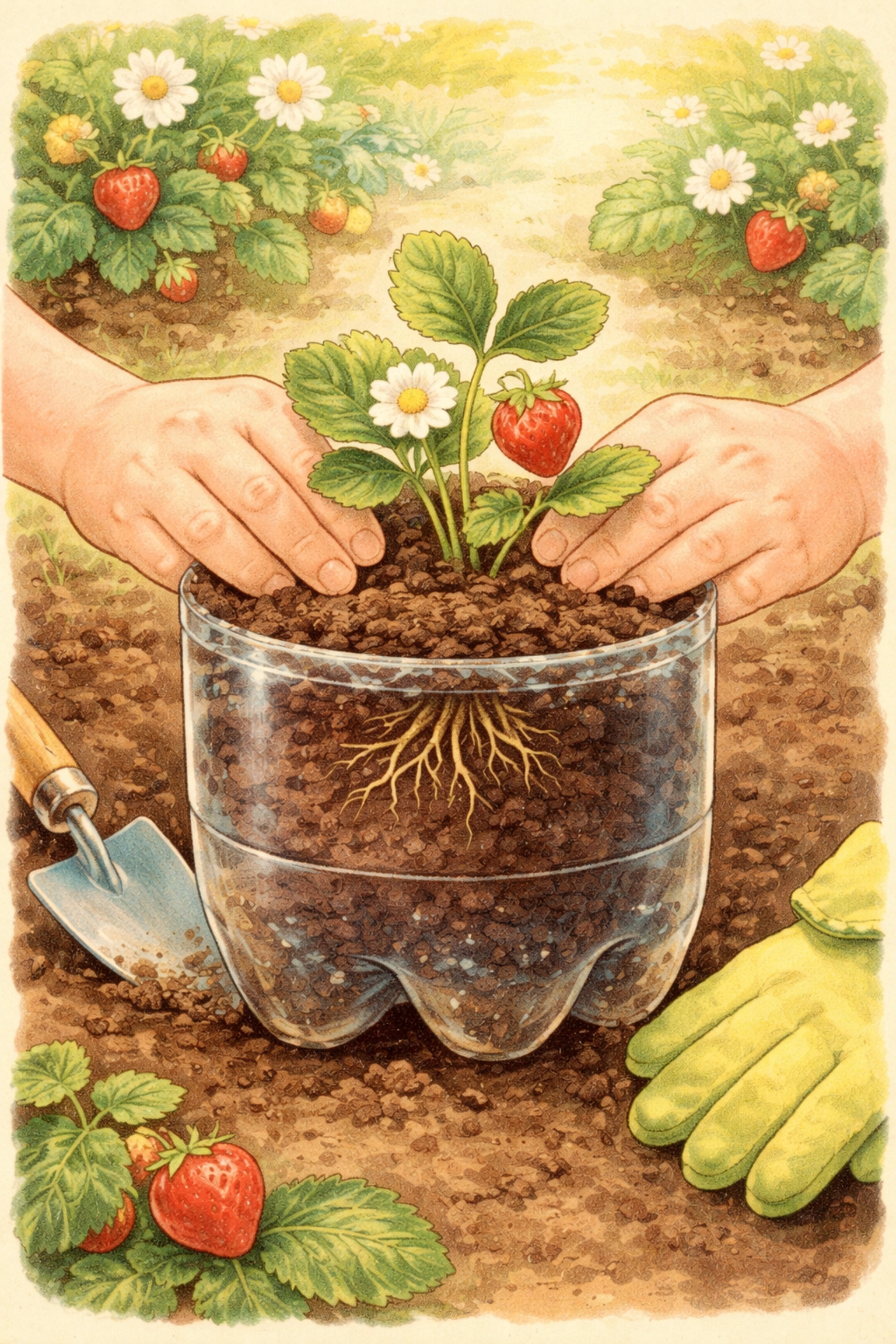
Gently remove a strawberry seedling from its container. Place it in the soil so the crown (the point where stems meet roots) sits right at soil level. Only the roots should be buried, never cover the crown, or the plant may rot.
Space plants 4 to 6 inches apart if you're planting more than one per bottle (for larger containers).
Step 5: Attach Bottles to Your Vertical Surface
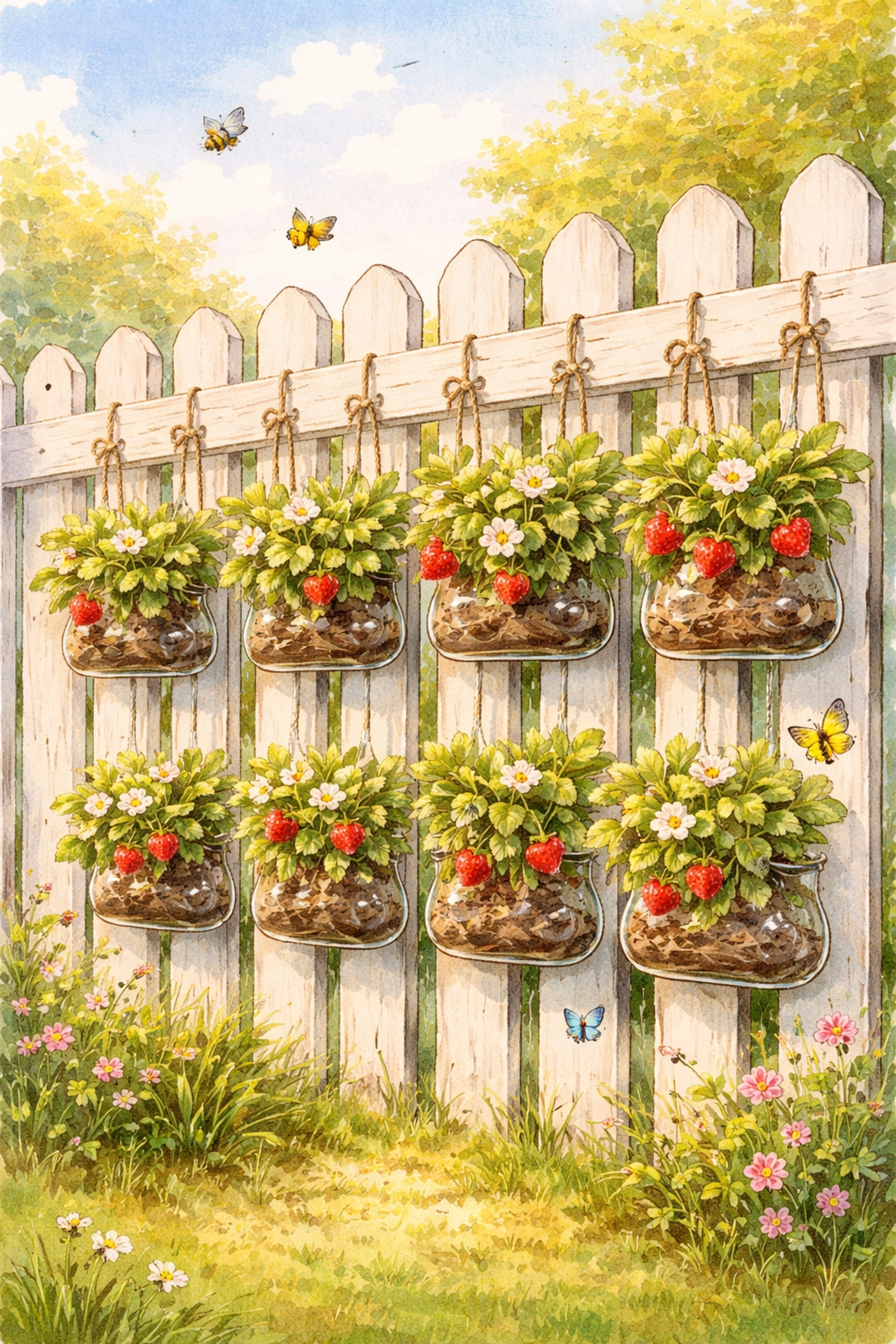
Here's where the magic happens! Use string, zip ties, or sturdy wire to attach each bottle to a fence, wooden pallet, or lattice. Stagger them in a zigzag pattern, leaving about 8–10 inches between each bottle so plants have room to grow and get sunlight.
Make sure the planting holes face outward and the bottles are secure.
Step 6: Water Thoroughly
Give each bottle a good drink of water. Vertical planters dry out faster than ground beds, so check soil moisture every day, especially in hot weather. Stick your finger an inch into the soil; if it's dry, it's time to water.
Caring for Your Vertical Strawberry Garden
Vertical strawberries need a little extra attention compared to ground-level plants, but it's nothing you can't handle:
- Water frequently: Soil in small containers dries out fast. Daily watering may be needed in summer.
- Feed regularly: Apply a potassium-rich liquid fertilizer every two to three weeks to encourage fruiting.
- Watch for runners: Strawberries send out "runners" (long stems with baby plants). You can snip them off to focus energy on berries, or let them dangle for a whimsical look!
- Rotate for sunlight: If your planter is portable, rotate it every few days so all sides get equal sun.
Tips for Growing Success
- Pick the right variety: Day-neutral or everbearing strawberries produce fruit throughout the season, perfect for vertical growing.
- Give them sun: Strawberries love at least 6–8 hours of direct sunlight daily.
- Mulch if possible: A thin layer of straw or shredded leaves on top of the soil helps retain moisture.
- Harvest often: Pick ripe berries right away. This encourages more fruit and keeps critters from nibbling first!
For more small-space gardening ideas, check out our post on how much space you need for a productive hydroponic garden.
Frequently Asked Questions
How many strawberries can you grow vertically in a small space?
A vertical planter with 6–10 pockets can produce as many strawberries as a traditional 4x4 foot garden bed, sometimes more, since you're maximizing sunlight and airflow.
Do vertical strawberries taste different from ground-grown ones?
Nope! As long as they get enough sun, water, and nutrients, vertically grown strawberries taste just as sweet.
Can I grow strawberries indoors using a vertical planter?
Yes, but you'll need a very sunny window (south-facing is best) or a grow light. Drainage pans are a must to protect your floors.
How often should I water vertical strawberries?
Check daily. In hot weather, you may need to water once or even twice a day since vertical containers dry out quickly.
What's the best time of year to start vertical strawberries?
Early spring (after the last frost) is ideal. You can also plant in early fall for a head start next season.
Do I need to bring my vertical planter inside for winter?
In cold climates, yes. Strawberry roots are vulnerable to freezing in small containers. Move planters to a garage or cover them with insulating material.
Can kids help with this project?
Absolutely! Kids can rinse bottles, add soil, plant seedlings, and water. Just have adults handle sharp tools.
References
- Vertical Strawberry Gardening Methods – Home & Garden Research Compilation
- PVC Pipe Tower Planting Guides – DIY Gardening Resources
- Strawberry Spacing and Care – University Extension Gardening Publications
- Container Strawberry Growing – Small Space Agriculture Studies
- Planting Depth for Strawberries – Horticultural Best Practices