

How to Create a Mini Construction Site Bin for Kids
A mini construction site bin is a contained sensory play station filled with sand or a sand alternative, toy construction vehicles, and loose building materials that lets kids dig, scoop, haul, and build to their heart's content. You can put one together in about 15-20 minutes using items you likely already have around the house, and the whole setup typically costs less than $10 if you need to grab a few supplies.
This is one of those activities that tends to keep little hands busy for surprisingly long stretches. The combination of tactile sensory play, imaginative scenarios, and fine motor challenges hits a sweet spot for toddlers through early elementary-aged kids. Plus, cleanup is straightforward since everything stays contained in one bin.
Materials You'll Need (Under $10 Total)
| Material | Approximate Cost | Notes |
|---|---|---|
| Plastic bin or container (shoebox size or larger) | $1-3 | A storage bin, baking dish, or large Tupperware works well |
| Sand, kinetic sand, or alternative base | $2-4 | Dry rice, coffee grounds, or dried beans are budget-friendly swaps |
| Mini construction vehicles | $1-3 | Check dollar stores or use toys you already own |
| Loose parts (rocks, craft sticks, corks, blocks) | $0-2 | Raid your junk drawer and backyard |
| Scoops and containers | $0-1 | Measuring cups, spoons, and small bowls from the kitchen |
Total estimated cost: $4-10 depending on what you already have on hand.

Age Range: Who Will Enjoy This Most?
Skill-appropriate ages: Around 2-6 years old
- Toddlers (2-3 years): Focus on scooping, pouring, and pushing vehicles around. Keep an eye out for mouthing, you may want to skip very small loose parts for this age group.
- Preschoolers (3-5 years): This is often the sweet spot. Kids this age love loading dump trucks, building roads, and creating elaborate construction scenarios.
- Early elementary (5-7 years): Older kids may enjoy more complex building challenges, like constructing bridges or creating obstacle courses for their vehicles.
Kids outside this range can still have fun, younger toddlers may enjoy supervised tactile exploration, while older kids sometimes get into it when building challenges are involved.
Time Estimate
- Setup time: 15-20 minutes
- Active play time: 30 minutes to well over an hour (varies widely by child)
- Cleanup time: 5-10 minutes
Step-by-Step: Building Your Mini Construction Site
Step 1: Choose Your Container
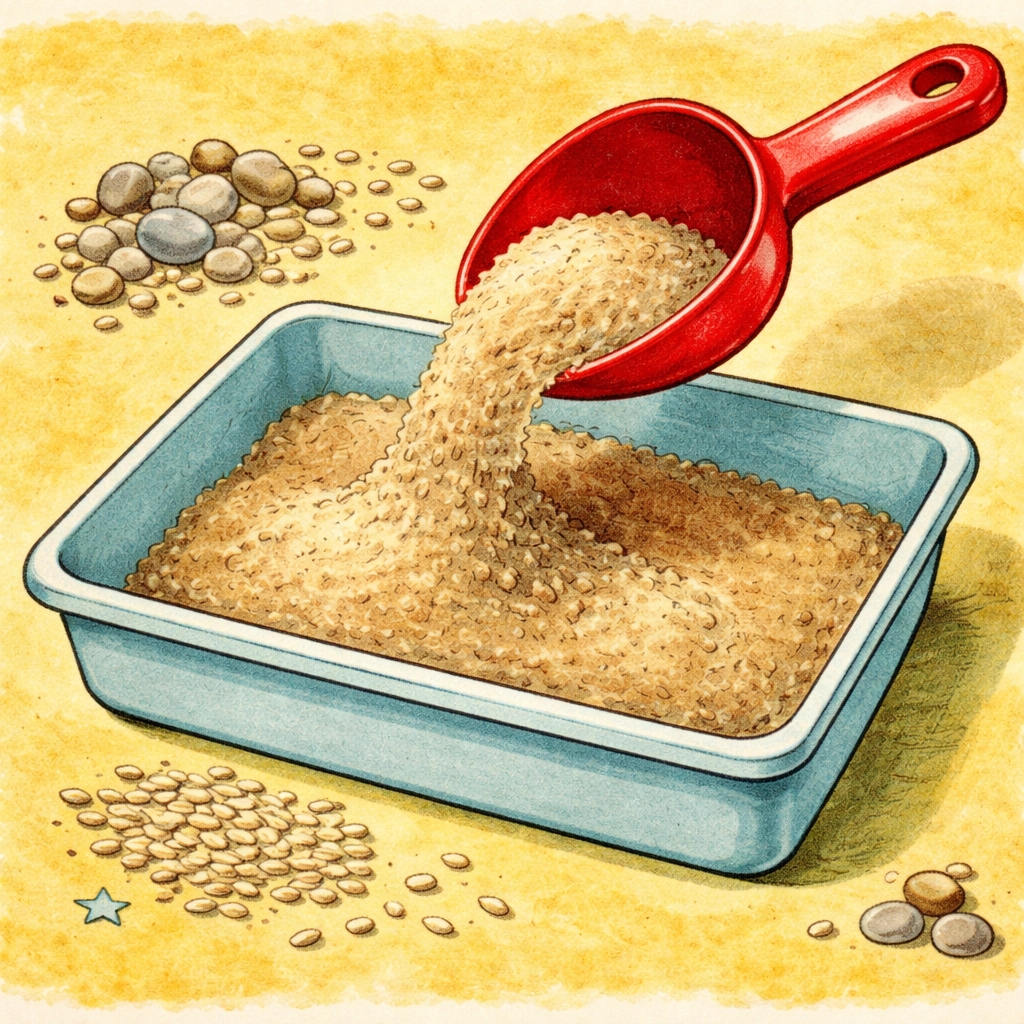
Grab a bin that's large enough for your child to comfortably reach into and move things around. A plastic storage container, large baking dish, or even a cardboard box lined with a trash bag can work. Aim for something with sides at least 3-4 inches high to help contain the mess.
If you're working with a toddler who tends to get enthusiastic, consider placing the whole bin inside a larger sheet or on a washable mat to catch overflow.
Step 2: Add Your Base Material
Fill the bottom of your bin with 1-2 inches of your chosen base material. Here are your main options:
- Play sand or craft sand: The classic choice. Provides authentic construction site vibes.
- Kinetic sand: Molds nicely and tends to stick together, which some kids prefer.
- Dry rice: Budget-friendly and easy to vacuum up. You can dye it brown with a bit of cocoa powder or food coloring for a more "dirt-like" look.
- Coffee grounds (dried): Free if you're a coffee drinker, and the texture is interesting. Just make sure they're fully dried out first.
- Dried beans or lentils: Another pantry option that adds variety.
You can also mix materials, a layer of rice with some real pebbles on top creates nice texture variation.
Step 3: Gather Your Construction Vehicles
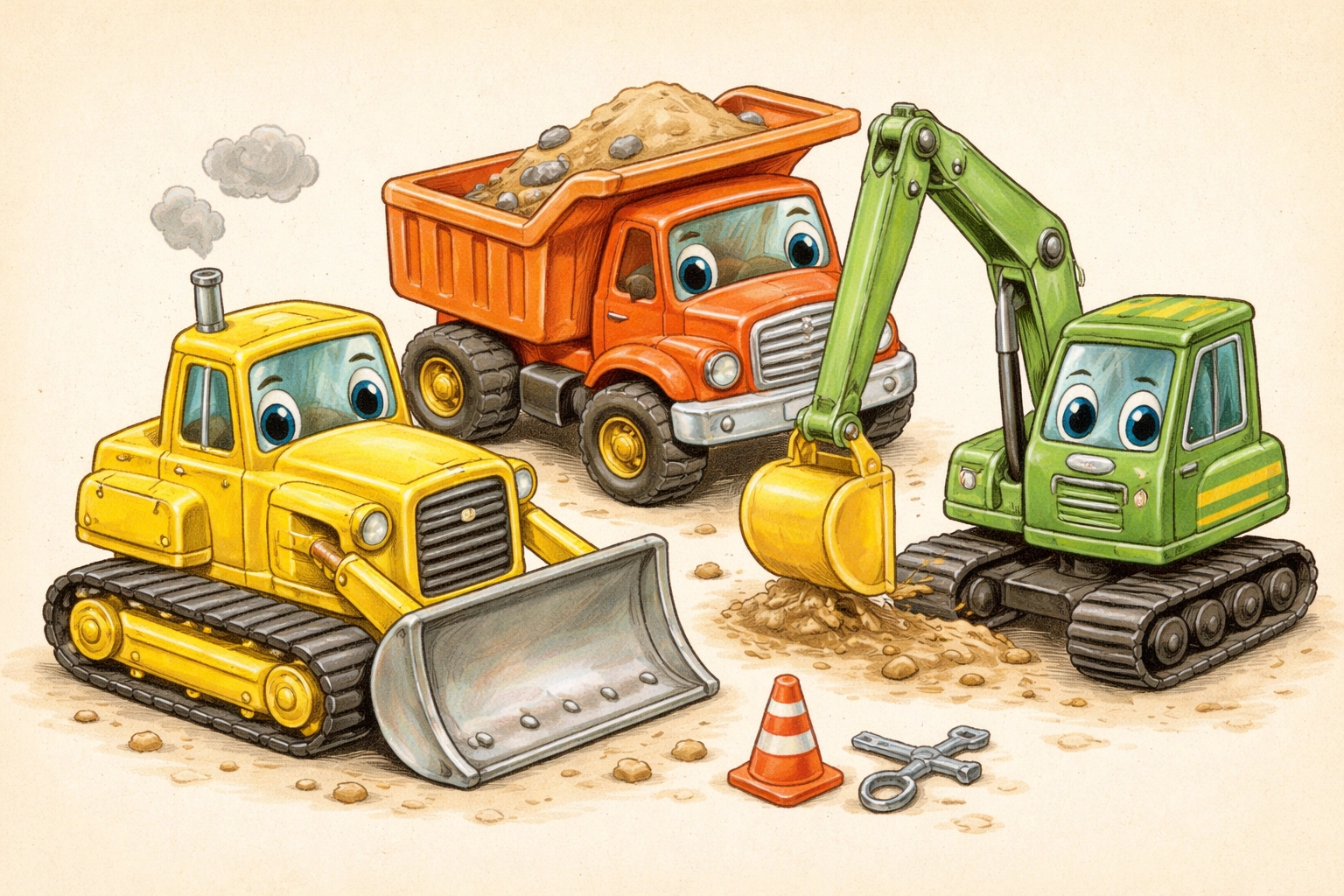
This is where the magic happens. Round up whatever construction-themed vehicles you have:
- Dump trucks
- Bulldozers
- Excavators
- Front loaders
- Cement mixers
- Cranes
Don't have construction vehicles? Regular toy cars, trucks, or even plastic animals can work, kids are remarkably good at adapting their play. Dollar stores often carry basic construction vehicle sets for $1-3 if you want to add to your collection.
Step 4: Add Loose Parts and Building Materials
This is where you can get creative with items from around the house:
- Small rocks and pebbles: Great for hauling and dumping
- Wooden blocks: Perfect for building structures to knock down
- Craft sticks (popsicle sticks): Can become fences, bridges, or lumber
- Wine corks: Work as pylons, logs, or building materials
- Small containers: Yogurt cups, bottle caps, or condiment cups for filling and pouring
- Gems or large beads: Fun to "excavate" from the sand (skip these for kids who still mouth objects)
The goal is variety in shapes, sizes, and textures. Raid your junk drawer, recycling bin, and backyard for interesting additions.
Step 5: Include Tools for Fine Motor Development
Add some scooping and transferring tools to expand the play possibilities:
- Measuring spoons and cups
- Kitchen tongs
- Funnels
- Small bowls
- Tweezers (for older kids)
- A small dustpan and brush
These tools encourage fine motor practice while kids transfer materials from one spot to another.
Step 6: Set the Scene and Step Back
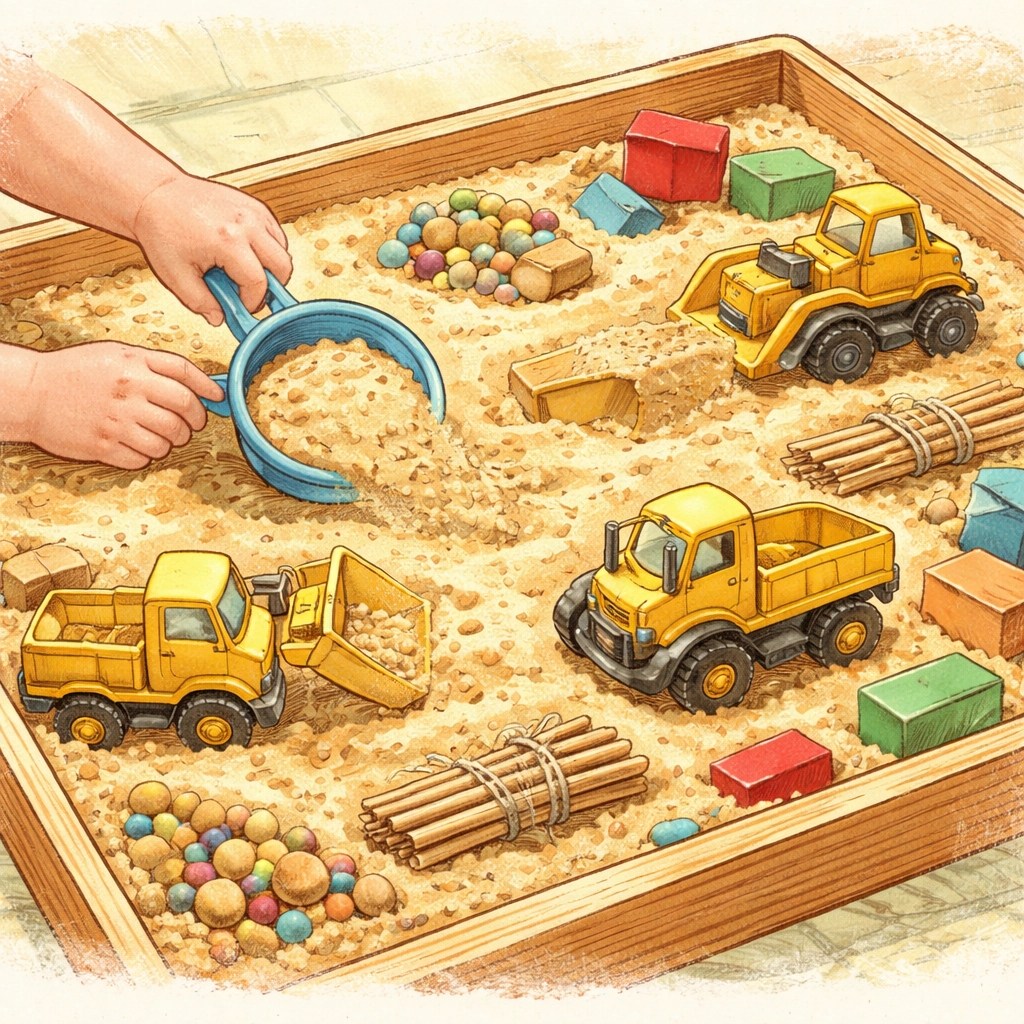
Arrange a few items to spark interest, maybe park a dump truck next to a pile of rocks, or set up a few blocks like a building in progress. Then let your child take over. Resist the urge to direct the play too much; part of the value here is open-ended exploration.
Play Ideas to Extend the Fun
Once your construction site is set up, here are some ways to keep engagement going:
- Treasure hunts: Bury small items in the sand for kids to excavate using tools
- Build and demolish: Stack blocks into towers, then knock them down with vehicles (a perennial favorite)
- Load and haul challenges: See how much material fits in each truck bed
- Road building: Use craft sticks to create roads and pathways through the sand
- Problem-solving scenarios: "The bridge is out! How can we get the truck across?"
Tips for Success
- Contain the mess: Play on a sheet, tray, or outdoor surface if sand spreading is a concern
- Rotate materials: Swap out vehicles or loose parts every few weeks to renew interest
- Store for reuse: Keep the whole bin sealed with a lid between play sessions, these can last for months
- Join in occasionally: Sitting down to play alongside your child (without taking over) often extends engagement
Frequently Asked Questions
How long will kids typically play with a construction site bin?
Most children stay engaged for 30-60 minutes, though this varies significantly. Some kids will return to a well-stocked bin repeatedly over days or weeks.
What's a good sand alternative for kids who might put things in their mouth?
Dry oatmeal or large dried pasta shapes are generally considered safer options for very young children who are still in the mouthing phase. You can also try edible kinetic sand recipes made from flour and oil.
Can I use this activity outdoors?
Outdoor play works wonderfully for construction bins, less mess concern, and you can incorporate natural materials like dirt, sticks, and leaves.
How do I store the bin between play sessions?
A lidded plastic container keeps everything contained. Store in a dry spot to prevent moisture buildup if using rice or sand.
What if my child loses interest quickly?
Try adding one new element, a different vehicle, some water (if your base material allows), or a specific challenge like "build the tallest tower you can."
Is kinetic sand worth the extra cost?
Many families find kinetic sand worthwhile for its moldability and reduced mess, though regular sand or rice work just as well for basic construction play.
How do I clean up sand that escapes the bin?
A handheld vacuum or dustpan and brush handles most spills quickly. Playing on a sheet makes this even easier, just gather the corners and pour back into the bin.
Can siblings of different ages play together with this?
Generally yes: older kids often enjoy helping younger siblings or taking on more complex building challenges while toddlers focus on scooping and dumping.