

The $10 Lesson: The $10 Garden Budget (A Kid-Friendly Planning Worksheet)
Can Kids Really Plan a Garden With Only $10?
Yes! Kids can absolutely plan and grow a real garden with just ten dollars: and the planning process teaches them valuable life skills along the way. By using recycled containers, choosing budget-friendly seeds, and making smart decisions about what to grow, young gardeners can stretch a small budget into something green and growing.
This guide includes everything you need: example prices, three ready-to-use garden plans, and a fill-in worksheet your child can use to design their own $10 garden. Since we're in Zone 6 and thinking about February, all of these plans focus on things kids can start indoors or winter sow right now.
Let's grab a pencil and start planning.
Why Planning a Garden Budget Matters (The Life Skills Part)
Before we dig into seeds and soil, let's talk about why this activity is so valuable.
When kids plan a garden on a budget, they practice:
- Decision-making: Should I buy two seed packets or one plus some soil?
- Prioritizing: What do I want most? What can I skip?
- Math skills: Adding prices, making change, staying under a limit
- Delayed gratification: Planning now for something that grows later
These are real-world skills wrapped in a fun project. Your child isn't just planting seeds: they're learning how to make choices, weigh options, and work within limits. That's powerful stuff disguised as gardening.
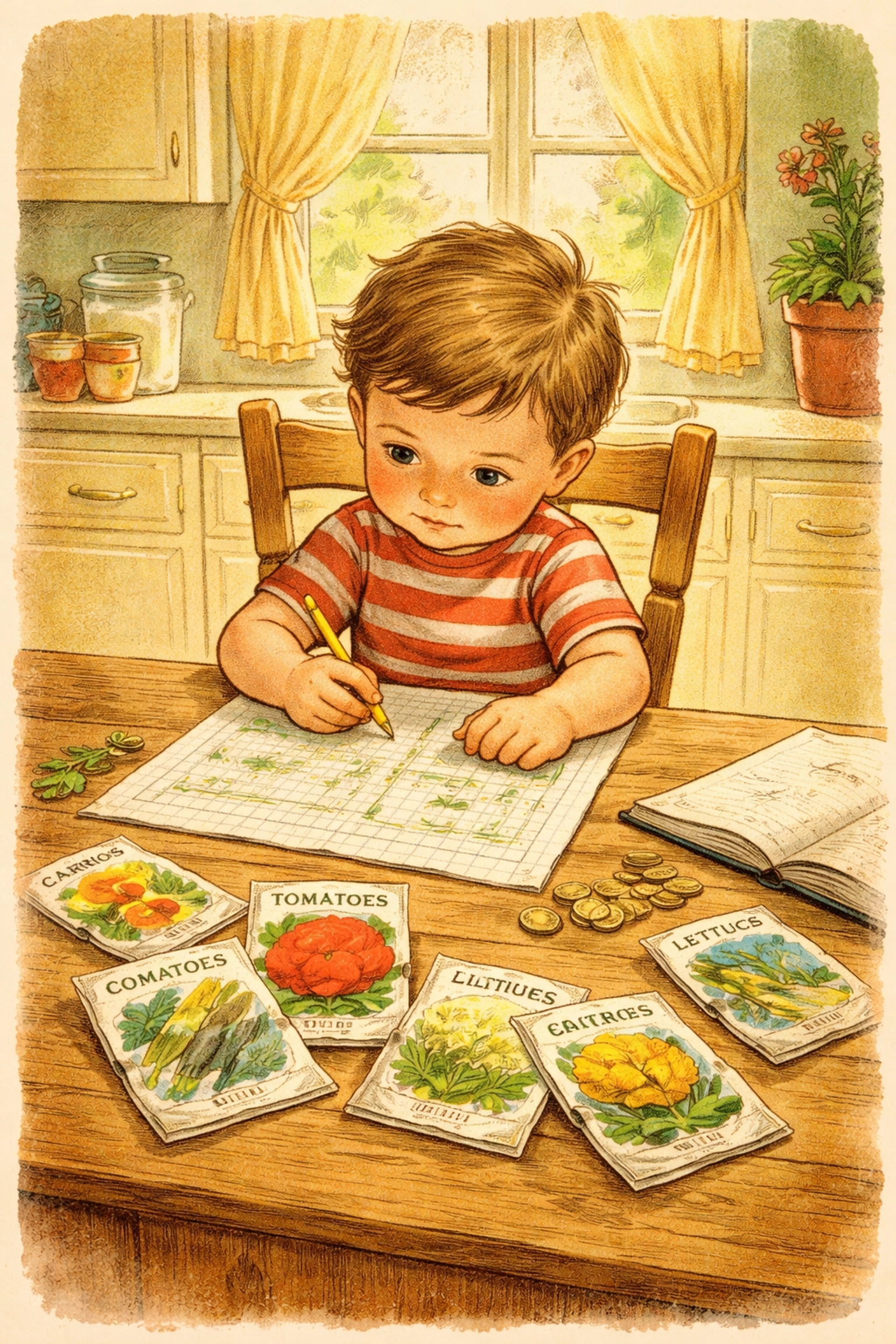
What You'll Need to Get Started
Before your child fills out their budget worksheet, gather these basics:
Free or already-at-home items:
- Pencil and paper (or print the worksheet below)
- Recycled containers (yogurt cups, egg cartons, takeout containers, milk jugs)
- A sunny windowsill or a spot under a basic shop light
- Water and a spray bottle
Items that cost money (this is where the $10 goes):
- Seeds
- Seed-starting mix or potting soil
- Small pots or trays (if not using recycled containers)
The secret to staying under $10? Use recycled containers whenever possible. A clean yogurt cup with drainage holes works just as well as a fancy pot: and it's free.
The $10 Garden Shopping List (With Example Prices)
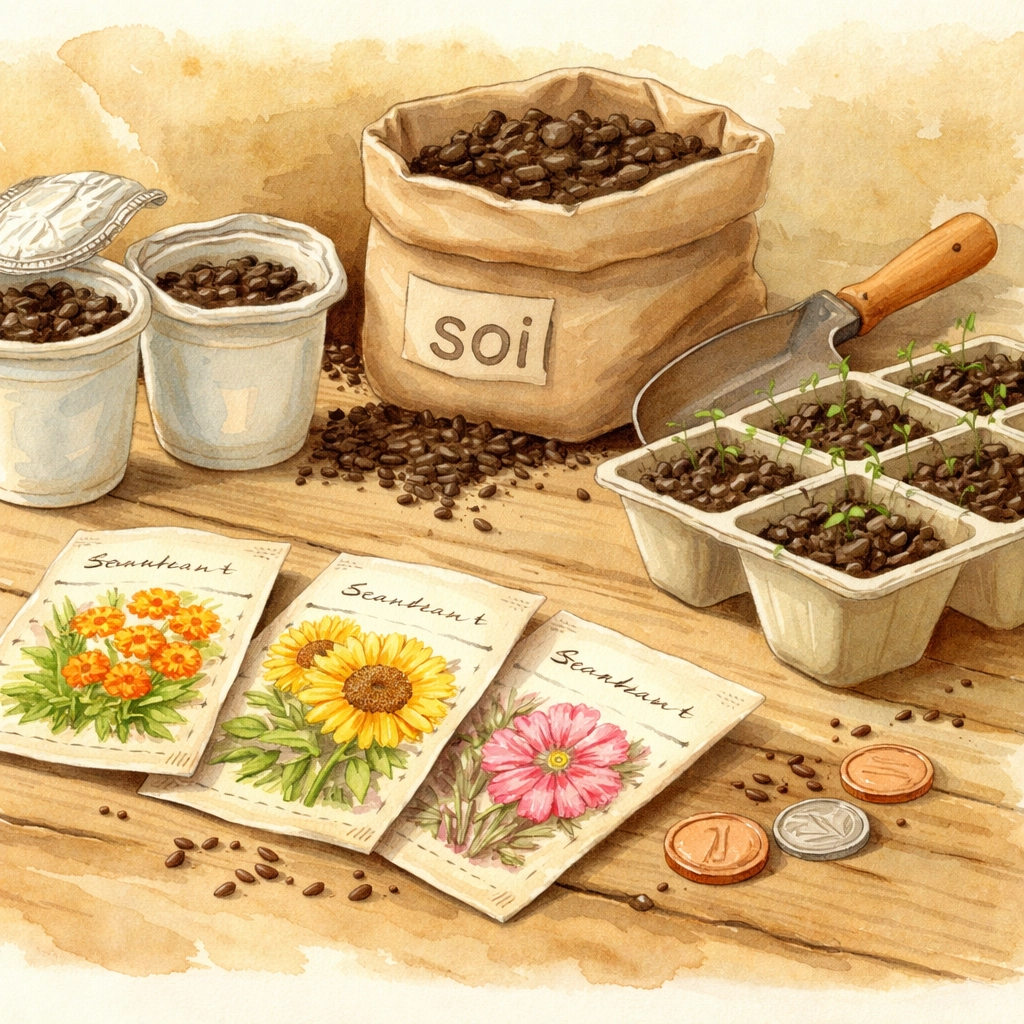
Here's a realistic price guide based on what you'll find at garden centers, dollar stores, and hardware stores in late winter. Prices vary by location, but these are solid estimates.
| Item | Typical Price Range |
|---|---|
| Seed packet (basic vegetables/herbs) | $1.00 – $3.00 |
| Seed packet (dollar store) | $0.25 – $1.00 |
| Seed-starting mix (small bag, 4-8 qt) | $3.00 – $5.00 |
| Potting soil (small bag) | $2.00 – $4.00 |
| Peat pots (pack of 10-12) | $2.00 – $3.00 |
| Plastic plant tray | $1.00 – $2.00 |
| Microgreen seeds (small packet) | $2.00 – $4.00 |
| Spray bottle (dollar store) | $1.00 |
Budget tip: Dollar stores often carry seed packets for $0.25–$1.00 each. This is a great place to stretch your $10 further.
Three Example Garden Plans Under $10
Here are three complete garden plans kids can follow. Each one stays under budget and works perfectly for Zone 6 in February (starting indoors).
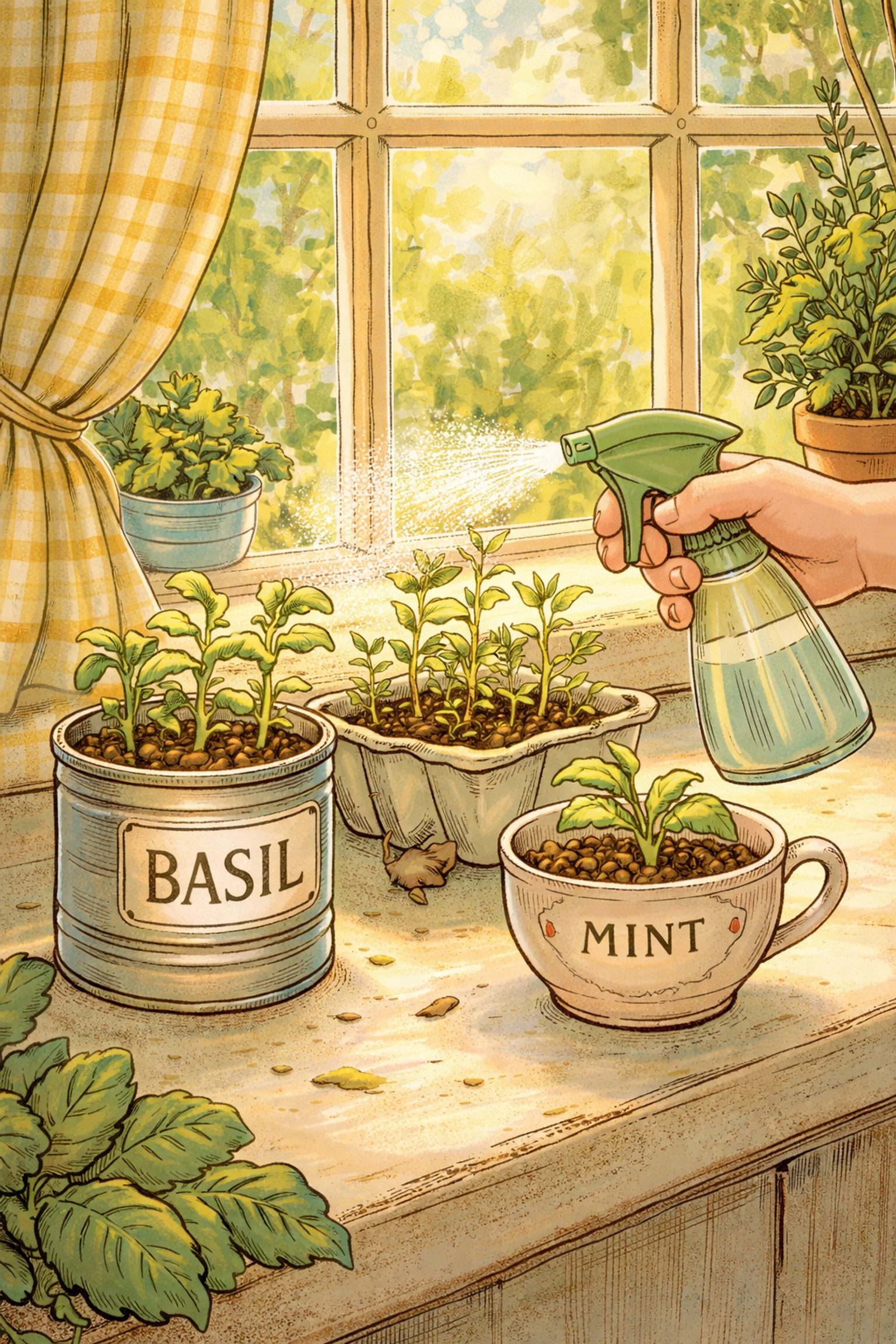
Plan A: The Windowsill Herb Garden
Perfect for: Kids who want to grow something they can eat
| Item | Cost |
|---|---|
| Basil seeds (dollar store) | $0.50 |
| Chives seeds (dollar store) | $0.50 |
| Parsley seeds (dollar store) | $0.50 |
| Small bag seed-starting mix | $4.00 |
| 3 recycled yogurt cups | FREE |
| Spray bottle (dollar store) | $1.00 |
Total: $6.50
What's left over: $3.50 for extra seeds or a small watering can
Zone 6 timing: Start basil, chives, and parsley indoors in February. They'll be ready to transplant outside after the last frost (mid-May) or stay on your windowsill year-round.
Plan B: The Microgreens Kitchen Garden
Perfect for: Kids who want fast results (harvest in 7-14 days!)
| Item | Cost |
|---|---|
| Microgreen seed mix (radish, broccoli, or sunflower) | $3.50 |
| Small bag seed-starting mix | $4.00 |
| Recycled takeout container with lid | FREE |
| Spray bottle (dollar store) | $1.00 |
Total: $8.50
What's left over: $1.50 for a second seed variety
Zone 6 timing: Microgreens grow indoors any time of year. No waiting for warm weather: just sunshine and patience.
Plan C: The Winter Sowing Starter Garden
Perfect for: Kids who want to try the "set it and forget it" method
| Item | Cost |
|---|---|
| Lettuce seeds (dollar store) | $0.50 |
| Spinach seeds (dollar store) | $0.50 |
| Kale seeds (dollar store) | $0.50 |
| Small bag potting soil | $3.00 |
| 3 recycled milk jugs (cut in half) | FREE |
| Duct tape to seal jugs | (borrow from home) |
Total: $4.50
What's left over: $5.50 for more seeds or a real seed tray
Zone 6 timing: Winter sowing works from January through March. Set your milk-jug greenhouses outside, and nature does the work. Seeds sprout when the weather is right.
The $10 Garden Budget Worksheet (Print and Fill In!)
Here's a simple worksheet your child can use to plan their own garden. Print it out or copy it onto paper.
MY $10 GARDEN PLAN
My name: ____________________________
Today's date: ____________________________
My budget: $10.00
WHAT I WANT TO GROW:
MY SHOPPING LIST:
| Item | Price |
|---|---|
| ______________________________ | $_______ |
| ______________________________ | $_______ |
| ______________________________ | $_______ |
| ______________________________ | $_______ |
| ______________________________ | $_______ |
MY TOTAL: $____________
MONEY LEFT OVER: $____________
RECYCLED CONTAINERS I'LL USE:
- Yogurt cups
- Egg cartons
- Milk jugs
- Takeout containers
- Other: ______________________
MY PLAN:
Where will I put my garden? ______________________________
When will I plant my seeds? ______________________________
Who will help me water? ______________________________

Frequently Asked Questions
What's the cheapest way for kids to start a garden?
The cheapest way is to use recycled containers (free), dollar store seeds ($0.25–$1.00 each), and a small bag of seed-starting mix ($3–$5). Skip fancy pots and trays: yogurt cups and egg cartons work great.
What can kids grow indoors in February in Zone 6?
Great indoor options for February include herbs (basil, parsley, chives), lettuce, spinach, and microgreens. These can all start on a sunny windowsill and don't need warm outdoor temperatures yet.
How do you teach kids to budget for a garden?
Give them a fixed amount (like $10), a price list, and a worksheet. Let them make their own choices about what to buy. The hands-on decision-making is where the real learning happens.
Are dollar store seeds worth buying?
Yes! Dollar store seeds are often the same varieties you'll find at garden centers, just in smaller quantities. They're perfect for budget gardening and kid projects.
What recycled containers work best for starting seeds?
Yogurt cups, egg cartons, takeout containers, and cut milk jugs all work well. Just poke drainage holes in the bottom and you're ready to plant.
Final Tips for Your $10 Garden
- Let your child lead. This is their garden and their budget. Offer guidance, but let them make the final choices.
- Celebrate the planning. Filling out the worksheet is part of the project: not just a step to get through.
- Start small. Three plants is plenty for a first budget garden. Success builds confidence.
- Track what happens. After planting, have your child record when seeds sprout. It's science and journaling rolled into one.
A $10 garden isn't about growing the most vegetables. It's about learning to plan, make choices, and watch something grow because of your own effort.
That's worth way more than ten bucks.
Related Projects: