

How to Start a Pretend Ice Cream Shop at Home
What Do You Need to Set Up a Pretend Ice Cream Shop?
A pretend ice cream shop can be set up in about 20 minutes using items you likely have around your house: crumpled paper or pom-poms for scoops, paper cones, small cups, and a simple menu. This activity works well for children ages 4–6 from a skill standpoint, though kids as young as 3 and as old as 8 tend to enjoy it. The budget ranges from $0 if you use recycled materials to around $5 if you need to pick up a few craft supplies.
Below you'll find a materials list, step-by-step setup instructions, and ideas to keep the play going once your little ice cream shop is open for business.
Quick Reference
| Detail | Information |
|---|---|
| Skill Age Range | 4–6 years |
| Enjoyment Age Range | 3–8 years |
| Setup Time | Approximately 20 minutes |
| Budget | $0–$5 |
| Supervision | Light supervision recommended for younger children |
Materials List and Estimated Costs
Here's what you'll need. Many families find they have most of these items on hand, so your actual cost may be closer to zero.
| Material | Purpose | Estimated Cost |
|---|---|---|
| Pom-poms, crumpled tissue paper, or play dough | Ice cream scoops | $0–$2 (or free if using crumpled paper) |
| Brown paper, cardstock, or construction paper | Cones | $0–$1 |
| Small cups, bowls, or muffin liners | Serving containers | $0 (household items) |
| Kitchen scoop, large spoon, or ice cream scoop | Scooping tool | $0 (household item) |
| Index cards or scrap paper | Menu and price signs | $0–$1 |
| Crayons, markers, or colored pencils | Decorating menus and signs | $0 (likely on hand) |
| Small container or shoebox | Cash register | $0 (recycled) |
| Coins, buttons, or paper money | Pretend currency | $0 (household items) |
| Optional: beads, sequins, or small pom-poms | Toppings (sprinkles, cherries) | $0–$1 |
| Optional: apron or old t-shirt | Uniform | $0 |
Total estimated cost: $0–$5
Step-by-Step Instructions
Step 1: Talk Through the Plan Together
Before diving into setup, sit down with your child for a few minutes and chat about what an ice cream shop looks like. Ask questions like:
- What flavors should our shop have?
- What do we need to serve ice cream?
- Should we have toppings?
This conversation helps kids feel ownership over the project and gets their creative wheels turning. It also gives you a sense of what materials to gather based on their ideas.

Step 2: Make the Ice Cream Scoops
The "ice cream" is the star of the show. Here are a few simple options:
Pom-pom scoops:
If you have a bag of craft pom-poms, these work nicely as colorful scoops. Assign colors to flavors: pink for strawberry, brown for chocolate, white for vanilla.
Crumpled paper scoops:
No pom-poms? No problem. Crumple up tissue paper, newspaper, or scrap paper into ball shapes. You can wrap them loosely in colored tissue paper or let kids color white paper before crumpling.
Play dough scoops:
Homemade or store-bought play dough can be rolled into balls. This option is especially satisfying for kids who like to shape and mold.
Aim to make 10–15 scoops in various "flavors" so your shop has a decent inventory.
Step 3: Create Paper Cones
Cut brown paper, kraft paper, or cardstock into rough semi-circles (about 6–8 inches across). Roll each piece into a cone shape and secure with a small piece of tape. These don't need to be perfect: wonky cones add character.
If you'd rather skip this step, small cups or muffin liners work just as well for serving.

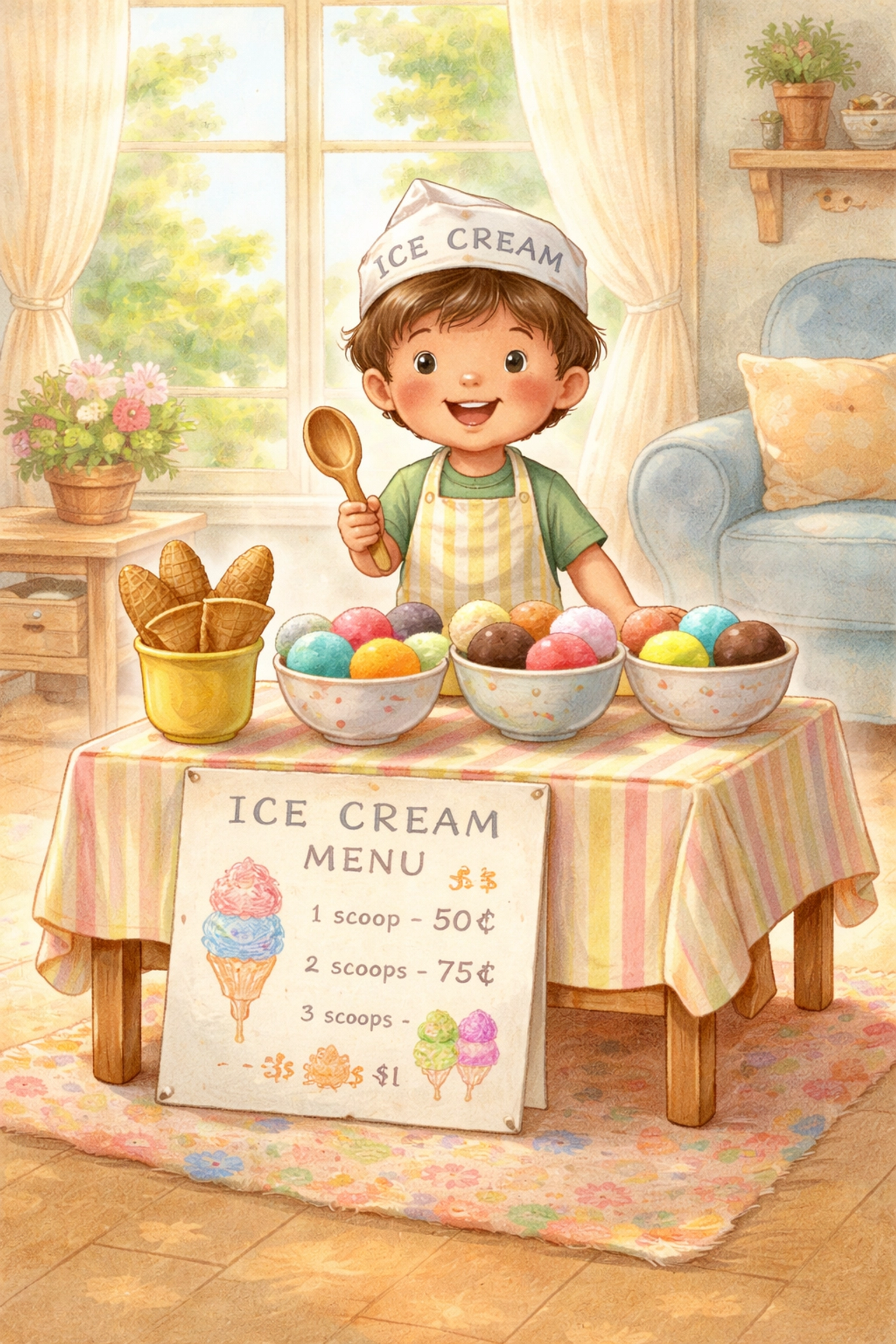
Step 4: Set Up the Shop Counter
Look around for a surface that can serve as your ice cream counter. Some options:
- A coffee table or end table
- A cardboard box turned on its side
- A bookshelf with a towel draped over it
- A small desk or play table
Arrange your ice cream scoops in bowls or containers on the counter, grouped by "flavor." Place the serving cups, cones, and scooping utensil within easy reach.
Step 5: Make a Simple Menu
Hand your child some index cards or scrap paper and let them create a menu. They can draw pictures of ice cream cones, write flavor names (with help if needed), and add prices.
Keeping prices simple: like $1, $2, or $3: makes the math accessible for younger kids. Older children might enjoy adding more complex pricing or even creating a "specials" board.
Tape or prop the menu where customers can see it.
Step 6: Create a Cash Register
A shoebox, small container, or even an empty tissue box makes a fine pretend cash register. Add some coins, buttons, or homemade paper money inside.
If your child wants to get fancy, they can decorate the box with buttons for "keys" or draw a screen on the lid.
Step 7: Add Toppings (Optional)
For extra fun, set out small containers of "toppings":
- Small beads or sequins as sprinkles
- Red pom-poms as cherries
- Tiny pieces of brown paper as chocolate chips
- Cotton balls as whipped cream
This step is entirely optional but can extend playtime and add more creative choices.
Step 8: Open for Business
Now comes the fun part. Take turns being the customer and the shop owner. Practice ordering, scooping, counting money, and making change.
Some kids love assigning roles: one person scoops, another works the register, someone else cleans up. Others prefer to run the whole operation solo while you play the customer over and over (and over).
What Skills Does This Activity Build?
Pretend play like this offers several learning opportunities without feeling like "school":
Early math practice:
Counting scoops, adding up prices, and making change all involve basic math concepts.
Communication skills:
Taking orders, asking clarifying questions ("One scoop or two?"), and explaining the menu all build verbal skills.
Problem-solving:
What happens when you run out of strawberry? How do you handle a picky customer? Kids work through these small challenges naturally during play.
Fine motor practice:
Scooping, placing scoops on cones, and handling small "toppings" all involve hand coordination.
Social skills:
Taking turns, negotiating roles, and practicing patience all come into play, especially when siblings or friends join in.
Tips for Keeping the Play Going
Rotate roles frequently.
If your child tends to hog the shopkeeper role, gently suggest switching so they can practice being a polite customer, too.
Introduce new scenarios.
Maybe there's a "rush hour" with lots of customers, or perhaps the shop needs to close for cleaning. Small storylines keep the play fresh.
Add a delivery option.
Give kids a small tray and let them "deliver" orders to stuffed animals or family members in other rooms.
Create a loyalty card.
Make a simple punch card where customers earn a free scoop after a certain number of purchases. This adds another layer of pretend and some counting practice.

Variations to Try
Frozen treats stand:
Swap ice cream for popsicles made from craft sticks and paper.
Toppings bar:
Focus the play on a build-your-own sundae station with lots of topping choices.
Seasonal themes:
Adjust the shop for different occasions: pumpkin spice flavors in fall, peppermint in winter, or fruit flavors in summer.
Final Thoughts
A pretend ice cream shop is one of those activities that comes together quickly and can entertain kids for a surprisingly long stretch. With household materials and about 20 minutes of setup, you'll have a play experience that encourages creativity, conversation, and a bit of sneaky math practice.
And the best part? Cleanup is simple, and you can pack everything into a box for repeat play on another day.
FAQ
What age is best for a pretend ice cream shop?
Most children aged 3–8 enjoy this activity. Preschoolers (4–6) benefit the most from the role-playing and basic math aspects, but younger toddlers love the sensory play of scooping, and older kids enjoy designing the menus.
What can I use for ice cream if I don't have pom-poms?
Crumpled tissue paper, balls of play dough, or even balled-up socks work perfectly. Anything that is round and can be "scooped" will keep the fun going.
How can I make this activity more educational?
You can introduce basic math by giving each item a price and using pretend money. You can also work on literacy by helping your child write out a menu or signs for their shop.
References:
- Early childhood pretend play research and activity guides
- DIY dramatic play setup resources for families
Safety note: Keep small topping pieces (beads, sequins) away from children under 3 — choking hazard. Adults help with cutting.
Keep Exploring
Be safe and have fun!