

Egg in a Bottle: Air Pressure and Temperature Science
At-a-Glance Experiment Overview
| Attribute | Details |
|---|---|
| Mess Level | 3 out of 5 |
| Time Needed | 15–20 minutes |
| Estimated Cost | $1–$3 |
| Safety Gear | Safety glasses recommended |
| Best For | Middle and older kids |
| Core Concept | Air pressure and temperature change |
| Adult Supervision | Required , Adult handles all fire and flame |
Why Does the Egg Get Sucked Into the Bottle?
The egg isn't really "sucked" in, it's pushed into the bottle by the air pressure outside. When you heat the air inside the bottle and then let it cool, the air contracts and creates lower pressure inside than outside. The outside air (which has higher pressure) pushes down on the egg and forces it through the bottle's neck. It's a classic demonstration of how temperature changes affect air pressure, and it looks like magic every single time.
What You'll Need
Gather these simple supplies before you start:
- 1 glass bottle with a neck opening slightly smaller than your egg (old-fashioned milk bottles or juice bottles work great)
- 1 hard-boiled egg, peeled
- Matches or a small strip of paper (to create the flame)
- Safety glasses for everyone watching
- A grown-up to handle the fire part (non-negotiable!)
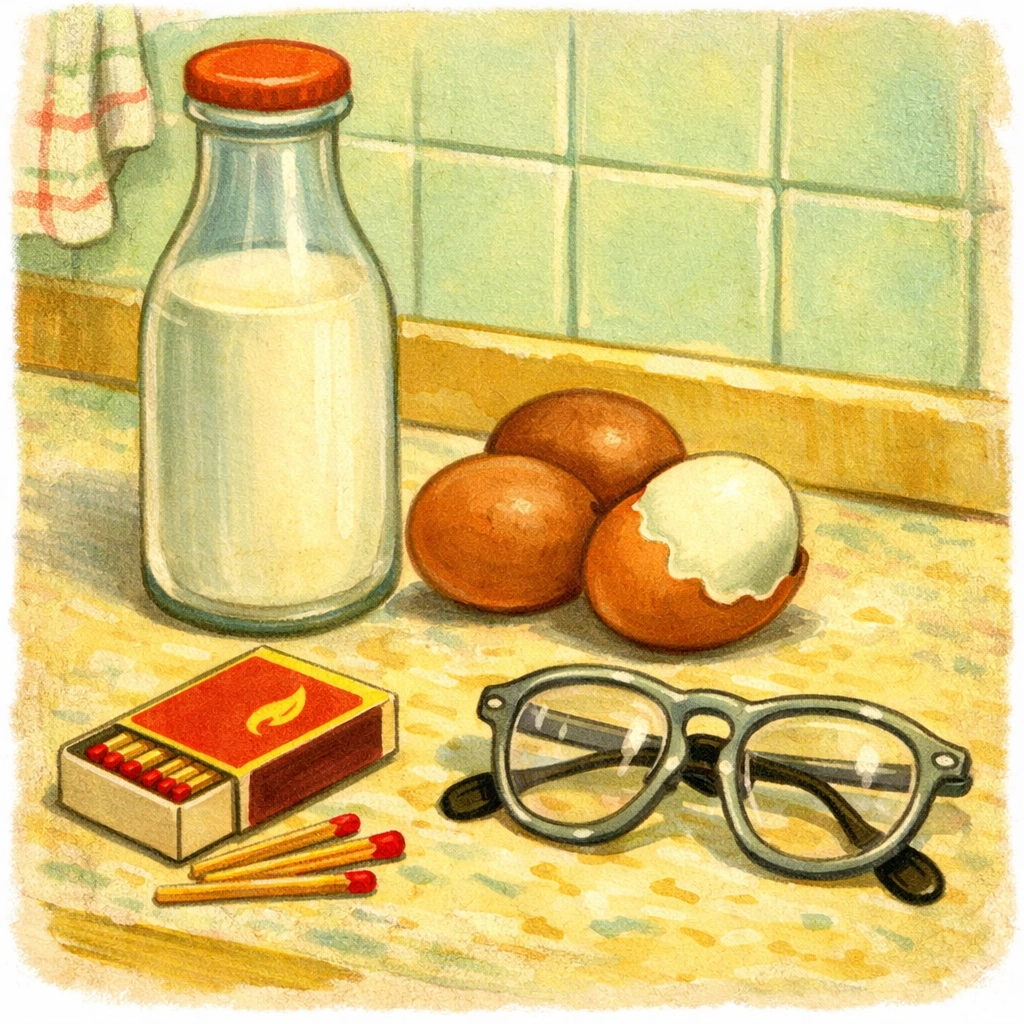
Pro Tip: Test your egg size first. Hold it over the bottle opening, it should sit on top without falling through. If the egg is too small, it'll just drop in without the cool air-pressure action. If it's too big, it won't fit no matter what you do.
Step-by-Step Instructions
Step 1: Prep Your Egg
Boil your egg until it's completely hard, then peel it carefully. Make sure there are no shell bits left, you want a smooth surface so it can slide into the bottle once the science kicks in. Rinse it under cool water and set it aside.
Step 2: Set Up Your Workspace
Place your glass bottle on a stable, flat surface like a kitchen counter or table. Make sure the area is clear of anything flammable. This experiment involves fire, so safety comes first. Everyone observing should put on safety glasses.
Step 3: Adult Step , Light the Paper
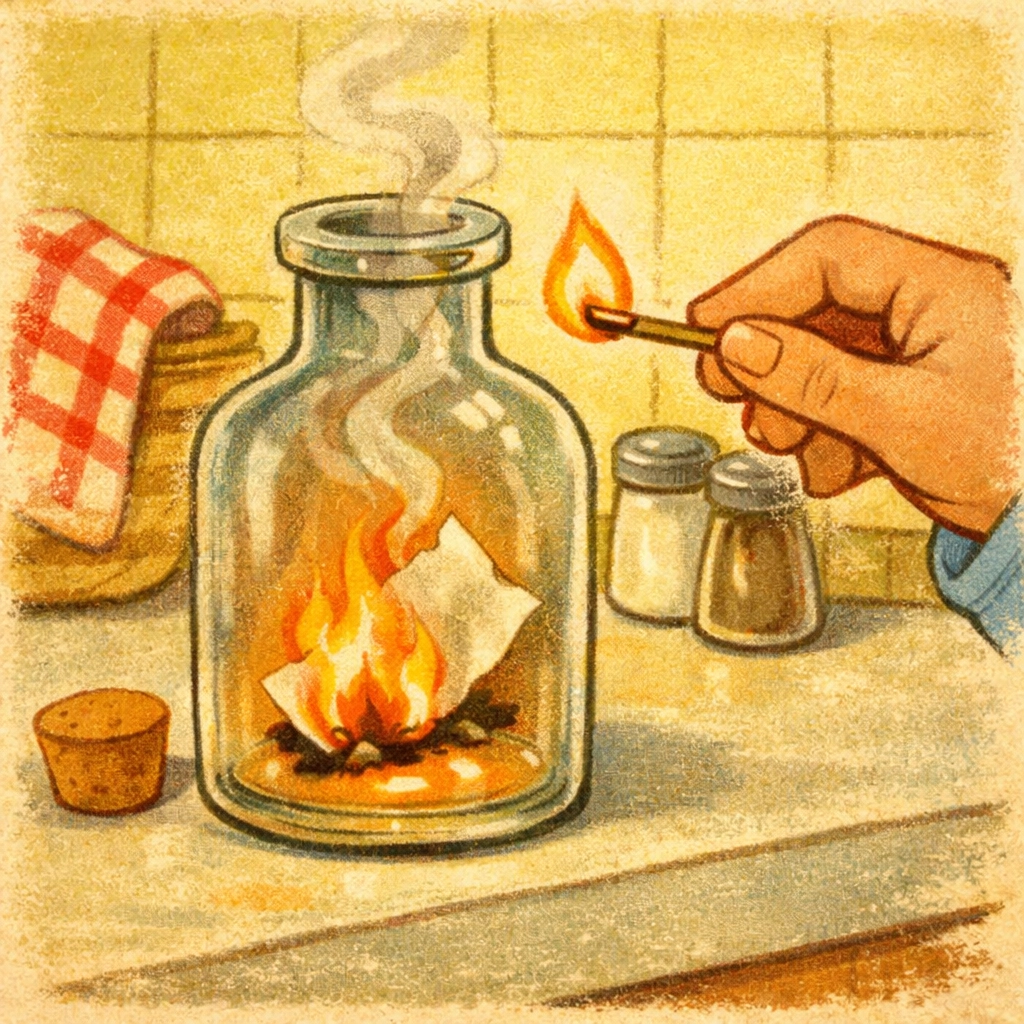
This part is for adults only. Light a small strip of paper (about the size of a matchbook) using a match. Carefully drop the burning paper into the bottle. The flame will heat the air inside and use up some of the oxygen.
Important: The adult should be the only person handling matches, lighters, or any open flame. Kids should stand back and observe from a safe distance.
Step 4: Quickly Place the Egg on Top
As soon as the paper is inside and burning, place the peeled egg on top of the bottle's opening, pointy side down. The egg should sit snugly on the rim, forming a seal.
Step 5: Watch the Magic Happen
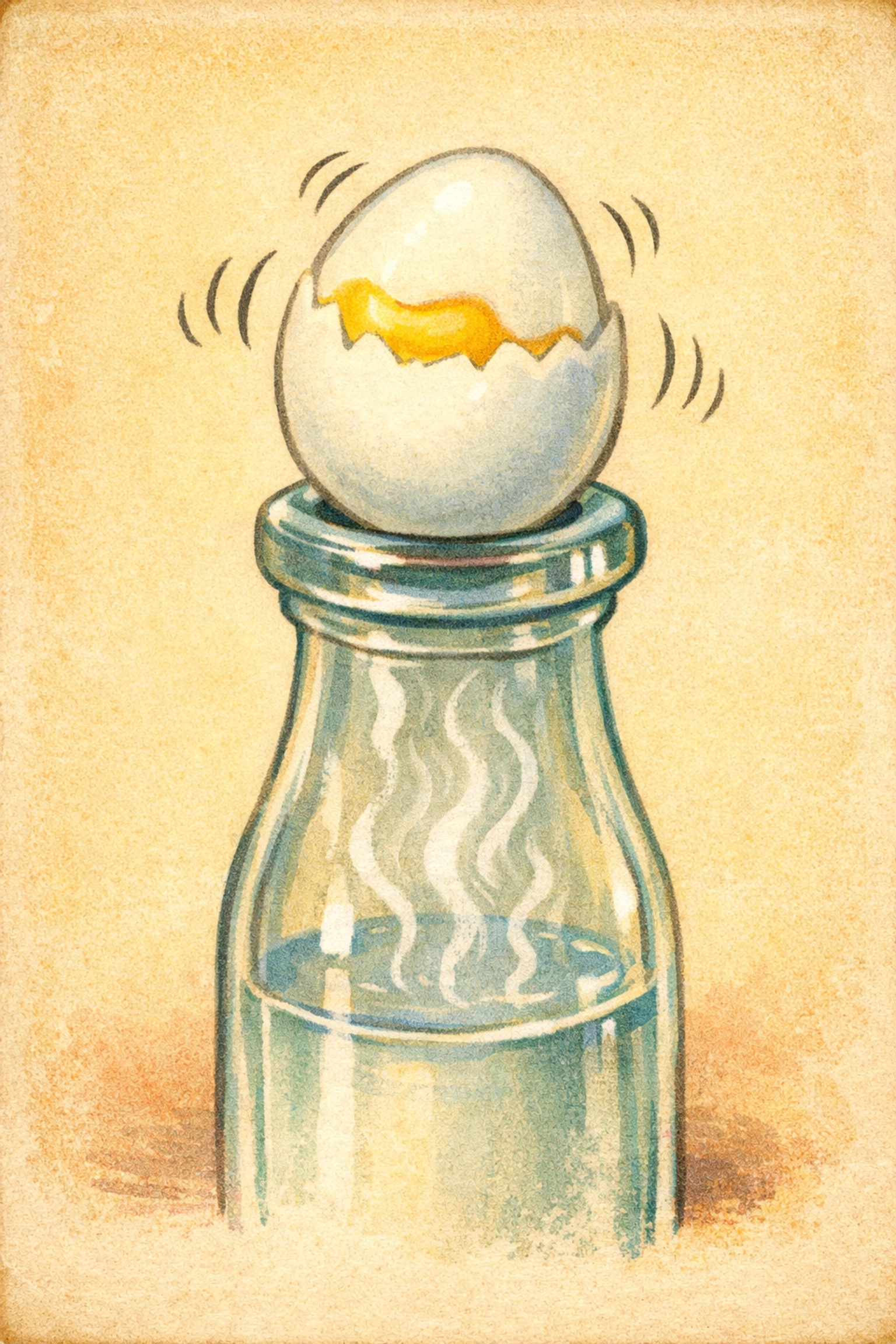
Within a few seconds, the flame will go out (because it runs out of oxygen). As the air inside the bottle cools down, you'll see the egg start to wiggle and shake. Then, pop!, it gets pushed down into the bottle.
Step 6: Get the Egg Out (Optional Challenge)
Want to reverse the trick? Turn the bottle upside down so the egg settles near the neck. Blow forcefully into the bottle to increase the air pressure inside. The egg will shoot back out. (Do this over a bowl or sink in case it gets messy!)
What's Happening Here? The Science Behind the Squeeze
This experiment is all about air pressure and how it changes with temperature.
When the adult lights the paper and drops it into the bottle, the flame heats up the air inside. Hot air expands and takes up more space. Some of that expanding air escapes around the edges of the egg (that's why you might see the egg wiggle or vibrate slightly).
Once the flame goes out, the air inside the bottle starts to cool down. Cool air contracts, it takes up less space than warm air. As the air inside contracts, it creates lower pressure inside the bottle compared to the normal air pressure outside.
Here's the key part: air pressure always tries to balance out. The higher-pressure air outside the bottle pushes down on the egg, forcing it through the neck and into the bottle. The egg acts like a plug, sealing the bottle so outside air can't rush in to equalize the pressure.
Some people say the bottle "sucks" the egg in, but that's not quite right. There's no vacuum pulling the egg, it's the outside air actively pushing it. Scientists like to say, "Vacuums don't suck; air pushes."
Try This: Egg-periment Variations
Once you've mastered the basic egg-in-a-bottle trick, try these twists:
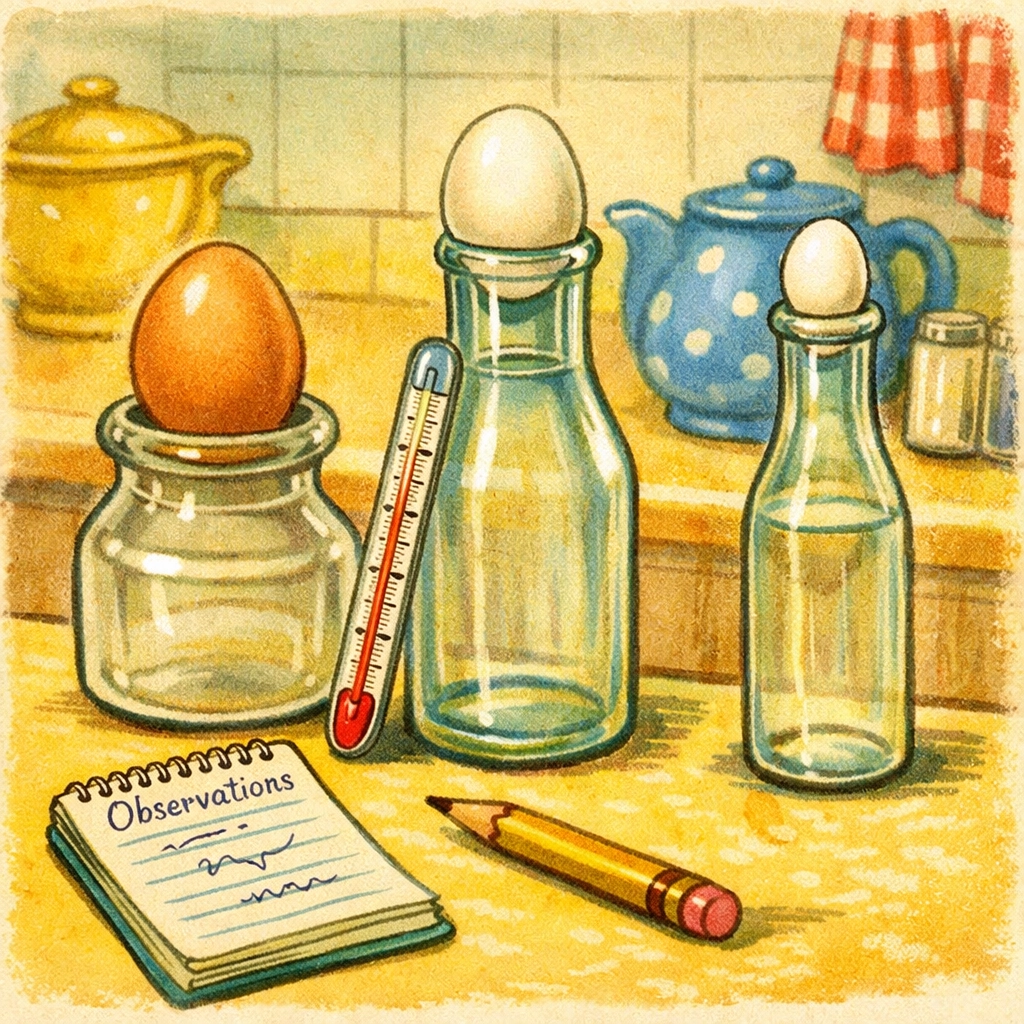
- Use Different Bottle Sizes: Find bottles with different neck diameters and see how egg size affects the experiment. A wider neck might need a bigger egg to form a good seal.
- Measure the Temperature: Use a thermometer (if you have one that fits) to measure the air temperature inside the bottle before and after the flame goes out. You'll see the temperature drop as the air cools and contracts.
- Predict and Record: Before you start, have your kids predict what will happen. Will the egg go in fast or slow? Will it break? Write down their guesses and compare them to what actually happens.
Frequently Asked Questions
Can I use a raw egg instead of a hard-boiled one?
Technically yes, but it's a lot messier if something goes wrong. Hard-boiled eggs are sturdier and easier to clean up if they break. Plus, you can reuse the same egg for multiple tries.
Why does the egg wiggle before it goes in?
The wiggling happens because hot air is escaping around the edges of the egg as it expands. Once the flame goes out and the air starts cooling, the wiggling stops and the egg gets pushed in.
What if my egg breaks when it goes into the bottle?
If the egg breaks, it usually means the opening was a little too small or the egg was pushed in too forcefully. Try a slightly larger bottle or a smaller egg next time. The goal is a snug fit, not a super-tight squeeze.
Can I do this experiment without fire?
You could try using very hot water inside the bottle instead of flame, but it's trickier to get the temperature change dramatic enough. The flame method tends to work more reliably for this particular demo.
Is it safe for kids to blow the egg back out?
Yes, but do it over a sink or bowl. The egg can shoot out quickly, and you don't want it landing on the floor (or someone's face). Make it a fun challenge to catch it in a bowl!
Safety Disclaimer
This experiment involves fire and requires direct adult supervision at all times. The adult should handle all matches, lighters, and flaming materials. Children should wear safety glasses and stand at a safe distance during the flame portion of the experiment. Never leave a lit flame unattended, and always have a way to extinguish the fire nearby (such as a damp cloth or access to water). Use heat-resistant glass bottles only: thin or decorative glass may crack under temperature changes. If the bottle feels too hot to touch, let it cool before attempting to handle it. As with all science experiments, results may vary based on materials, technique, and environmental conditions. Tierney Family Farms provides educational content and assumes no liability for accidents, injuries, or damages that may occur during or after attempting the activities described.
References
- "Egg in a Bottle Experiment," Science World, accessed February 2026.
- "Air Pressure Demonstrations," Physics Classroom Online Resources.
- "Classic Science Demos: Temperature and Pressure," NSTA Science Teacher Archive.
- Atmospheric Pressure Basics, NOAA Education Resources.
Ready for more hands-on science fun? Check out our growing collection of kitchen chemistry and backyard physics experiments that bring learning to life( one curious question at a time.)