

The Rolling Can Race: A Lesson in Inertia and Friction
What Makes One Can Roll Faster Than Another?
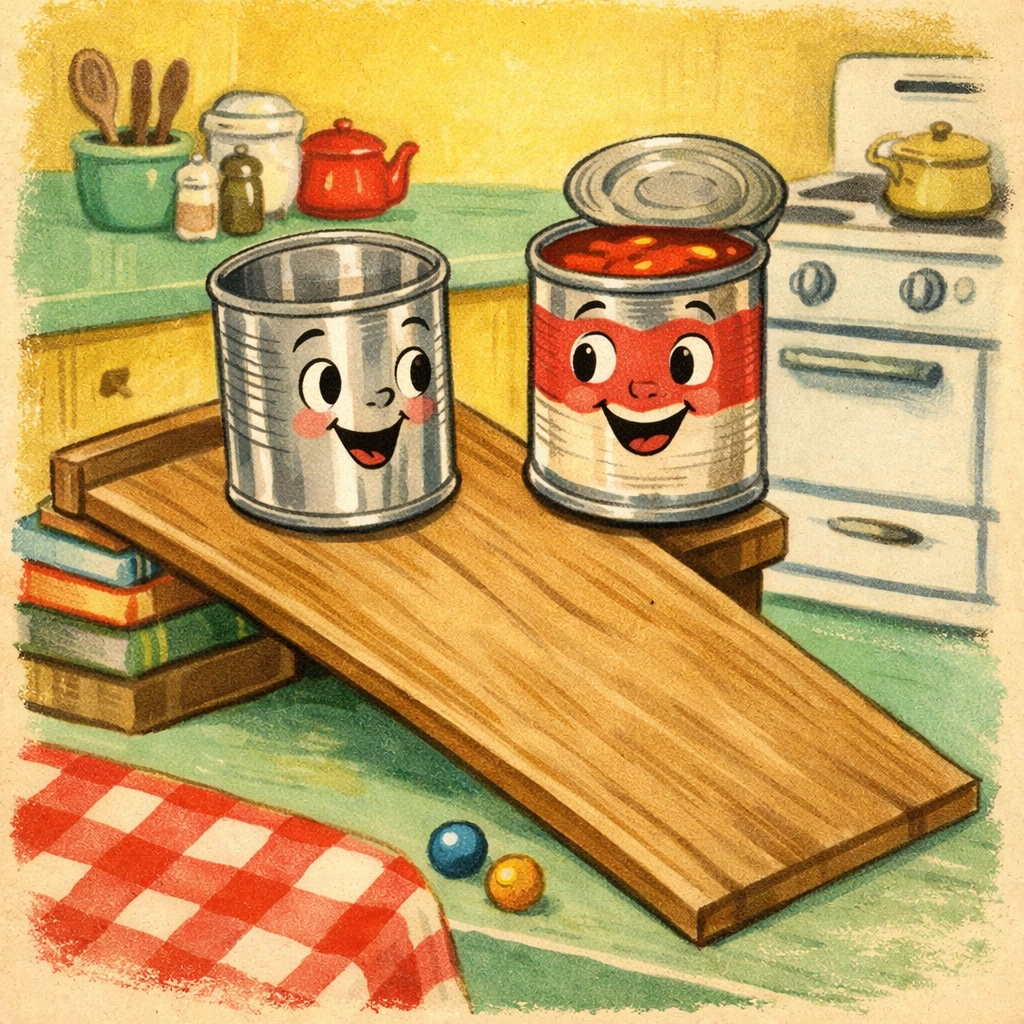
When you set two cans at the top of a ramp and let them go, you might expect them to race neck-and-neck to the bottom. But here's the twist: the can with less stuff inside often reaches the finish line first. The secret lies in how weight is distributed inside each can and how friction works when something rolls. This simple race teaches kids about inertia (an object's resistance to changing its motion), friction (the force that slows things down), and mass distribution (where the weight sits inside an object). Best of all, you can set up the entire experiment in your kitchen or garage in about fifteen minutes, and the results tend to surprise everyone, even grown-ups.
At-a-Glance Experiment Overview
| Category | Details |
|---|---|
| Mess Level | 2 out of 5 |
| Time Needed | 15–20 minutes |
| Estimated Cost | $1–$3 |
| Safety Gear | None required |
| Best For | Young and middle-aged kids |
| Core Concepts | Inertia, friction, mass distribution |
| Indoor or Outdoor? | Either works; a hallway or driveway ramp is ideal |
Gather Your Racing Materials
You likely have everything you need sitting in your pantry or recycling bin right now:
- Two identical empty cans (soup cans, vegetable cans, or similar sizes work great)
- Dry filling material (like sand, rice, dried beans, or small pebbles)
- Strong tape (duct tape or packing tape to seal the lids tightly)
- A simple ramp (a sturdy piece of cardboard, a wooden board, or even a cookie sheet propped at an angle)
- Something to prop the ramp (a stack of books, a box, or a low stool)
- Optional: a stopwatch or timer (for extra data-gathering fun)
Make sure both cans are the same brand and size if possible. That way, you're comparing apples to apples, or in this case, cans to cans.
Set Up Your Rolling Can Raceway
Step 1: Prepare the Empty Can
Rinse out one can and let it dry completely. Leave this can empty. If it has a removable lid, tape the lid back on securely so nothing rattles around inside. This lightweight racer is your control can.
Step 2: Prepare the Filled Can
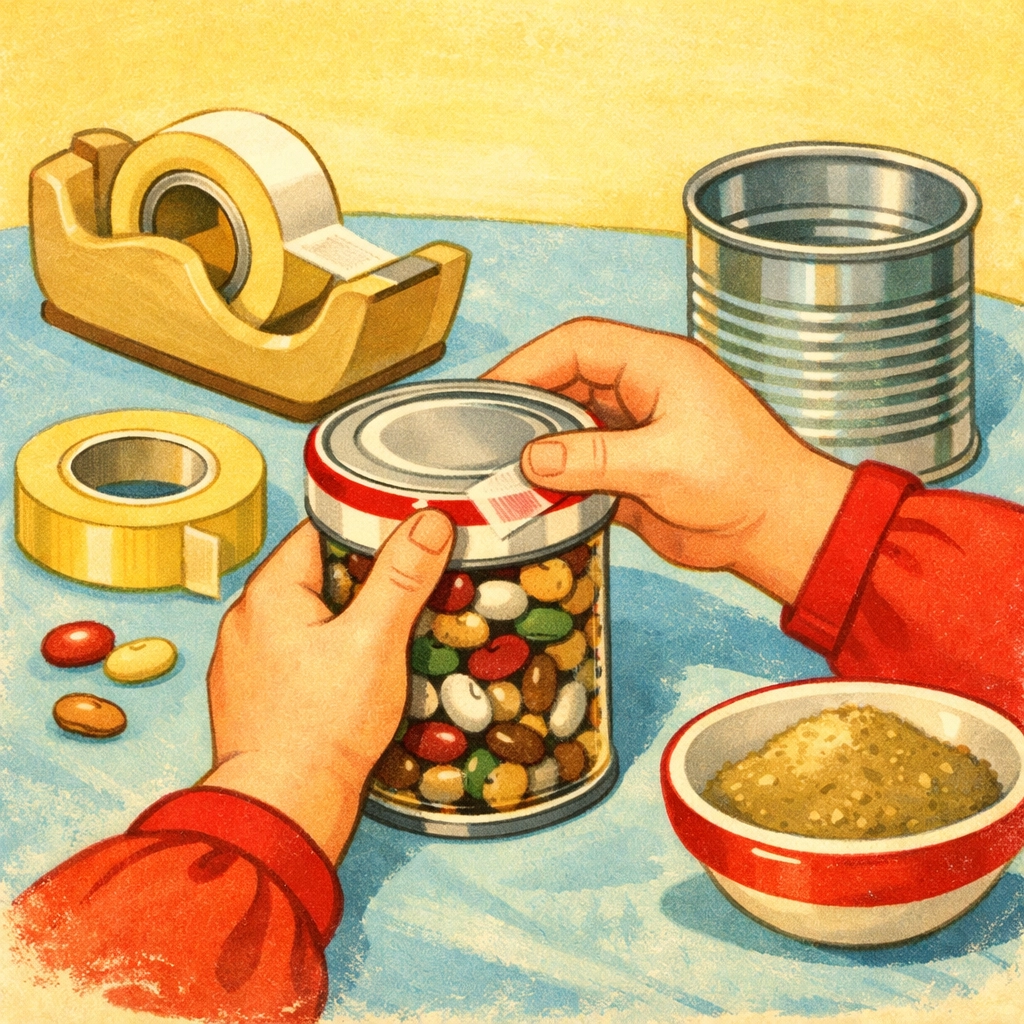
Take the second identical can and fill it about halfway to three-quarters full with sand, rice, beans, or another dry material. You want enough weight to make a noticeable difference, but not so much that the can becomes impossible to roll smoothly. Once filled, tape the lid on tightly. Give it a gentle shake to make sure nothing leaks out. An adult can help younger kids with the taping step to avoid spills during the race.
Step 3: Build Your Ramp
Prop your board or cardboard at a moderate angle against a stack of books or a sturdy box. A gentle slope (around 20 to 30 degrees) works well, steep enough to let the cans pick up speed, but not so steep that they fly off the ramp. Test the angle by rolling one can down solo to make sure it travels smoothly without tipping over.
Step 4: Mark a Starting Line
Use a piece of tape or a marker to create a clear starting line at the top of the ramp. This helps ensure both cans begin from the exact same spot, making your race fair and repeatable.
Race Time: Let the Cans Roll
Step 5: Make Your Predictions
Before you release the cans, ask everyone to guess which one will win. Will the heavier, filled can zoom down faster because it has more "oomph"? Or will the lighter, empty can take the lead because it has less weight to drag along? Write down everyone's predictions on a piece of paper. This builds anticipation and turns the experiment into a fun family debate.
Step 6: Release Both Cans at Once
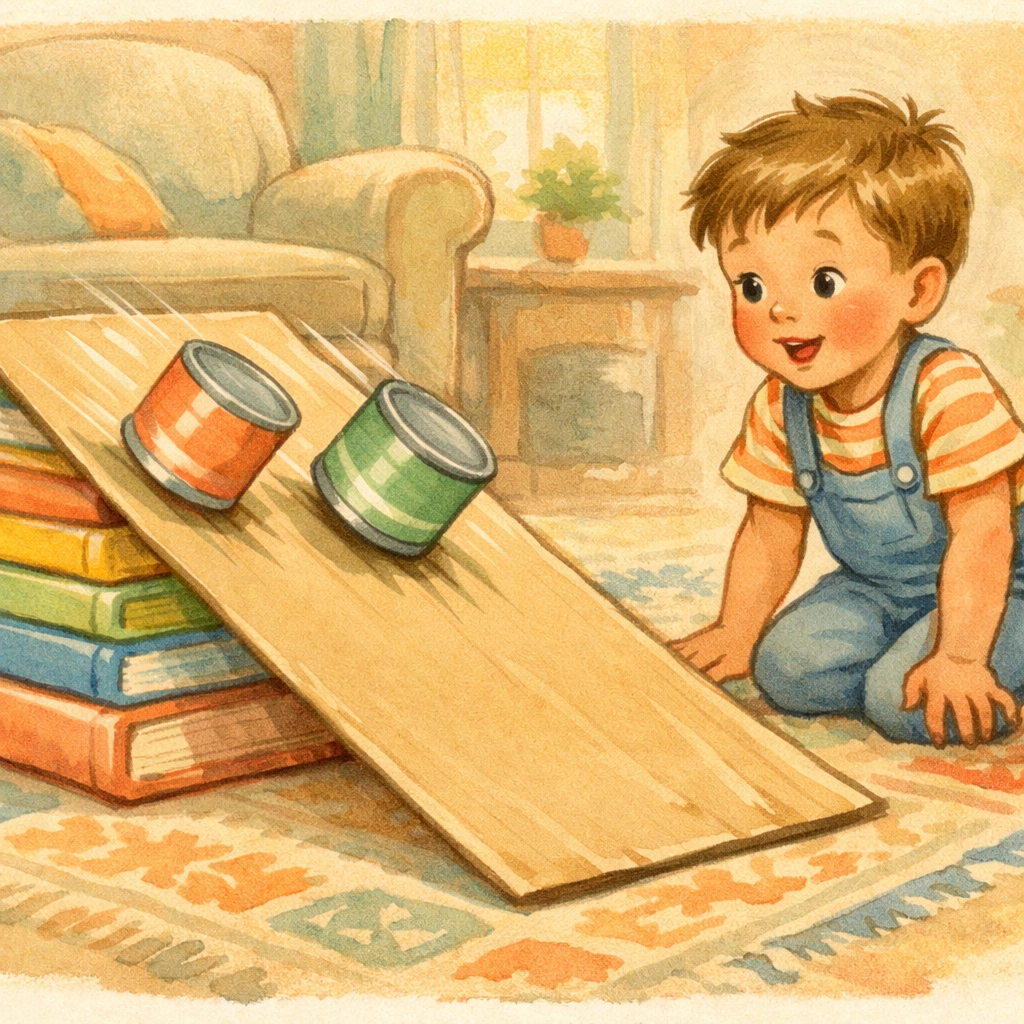
Place both cans side by side at the starting line. Hold them steady with your hands, then let go at the same moment (you can count "3, 2, 1, go!" for dramatic effect). Watch closely to see which can crosses the finish line first.
Step 7: Run Multiple Trials
One race might not tell the whole story. Roll the cans three to five times and keep track of the results. Does the same can win every time? If so, you've found a consistent pattern. If the results vary, think about what might be changing, did one can wobble more on a certain run, or did the ramp shift slightly?
Step 8 (Optional): Add a Timer
If you want to turn this into a data project, time each can's trip down the ramp. Record the seconds (or even fractions of seconds) for each race. You can create a simple chart showing which can was faster and by how much.
Why Does the Empty Can Often Win?
At first glance, it seems like the heavier can should win because it has more mass and gravity pulls harder on heavier objects. But rolling objects behave differently than sliding objects. When a can rolls, some of its energy goes into spinning the can itself (rotational motion), and some goes into moving the can forward down the ramp (translational motion).
Here's where inertia and mass distribution come into play:
- The empty can has most of its mass concentrated in the thin metal walls. When it rolls, those walls spin easily, and nearly all the can's energy goes into rolling forward.
- The filled can has extra mass spread throughout the inside. That sand or rice resists spinning as quickly, so more energy gets "used up" making the contents rotate along with the can. Less energy remains for forward motion, which tends to slow the can down.
Think of it like this: imagine running while carrying a heavy backpack that shifts around as you move. The shifting weight makes it harder to run fast because you're working against that extra motion. The filled can faces a similar challenge, it's fighting internal friction as the contents try to keep up with the rolling motion.
Friction also plays a role, though in a subtle way. The contact between the can and the ramp creates friction that helps the can roll instead of slide. But inside the filled can, the grains of sand or beans rub against each other and against the can's walls, creating internal friction that resists smooth rolling.
Ways to Extend the Experiment
Once your kids grasp the basic race, try these variations to dig deeper into the science:
Race Cans with Different Fillings
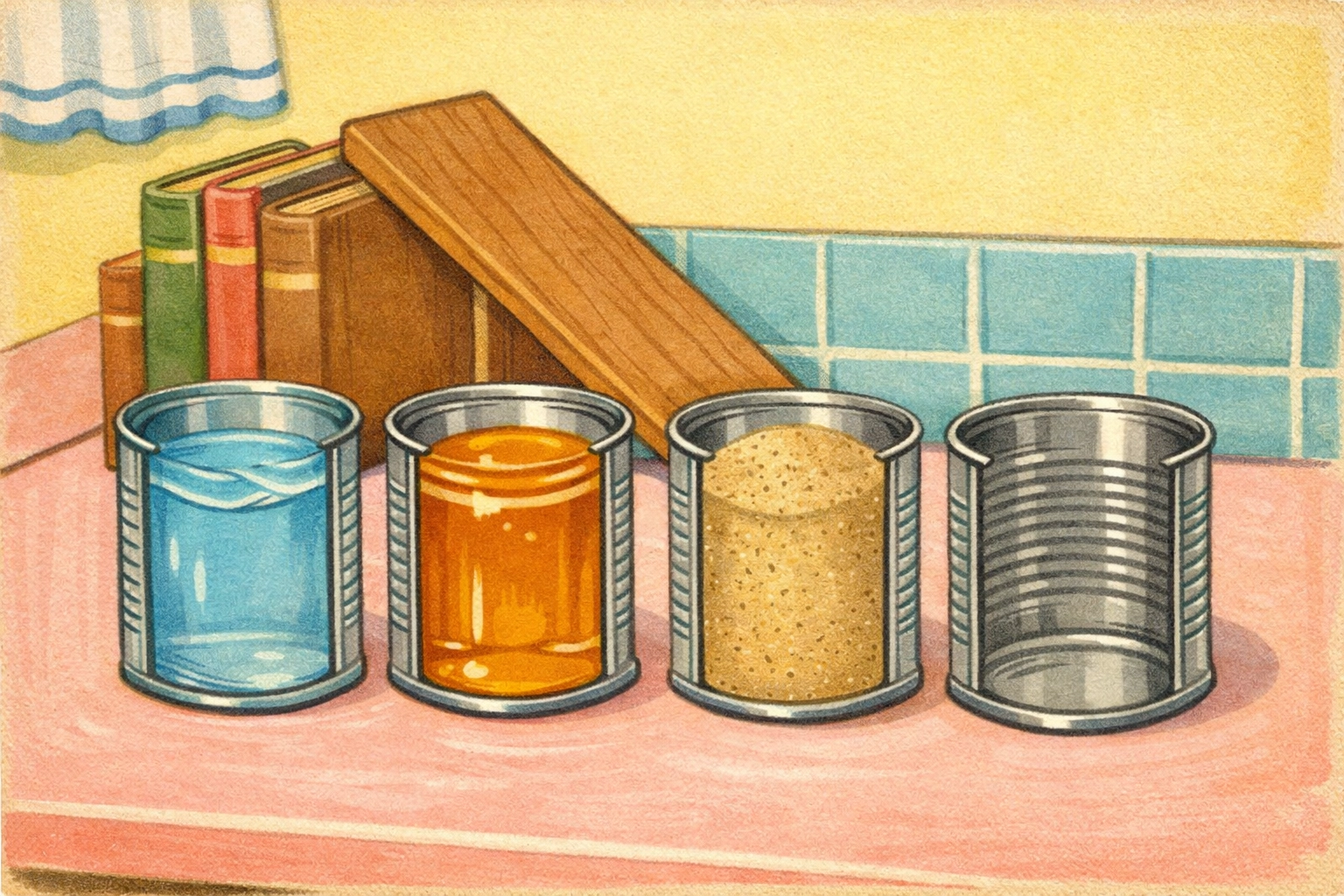
Fill one can with water, another with honey or syrup, and leave a third empty. Liquids behave differently than solids when they roll. A watery liquid might slosh around and not spin with the can at all, while a thick syrup clings to the sides and rotates more. Compare the results and talk about why different materials produce different race times.
Change the Ramp Angle
Does the winner change if you make the ramp steeper or more gradual? A steeper slope gives both cans more speed, but does that speed difference become more obvious or less obvious? Test it and see.
Try Different Can Sizes
If you have a short, wide can and a tall, narrow can, race them against each other (both empty, or both filled the same way). The shape of the can affects how the mass is distributed, which can change the outcome.
Add Obstacles
Place a small bump or a textured surface (like a towel) on part of the ramp. See if one type of can handles the obstacle better than the other. This introduces another variable: how does uneven terrain affect rolling objects with different mass distributions?
Real-World Connections
Understanding how weight distribution affects rolling motion isn't just a neat party trick, it shows up in everyday life:
- Car and Truck Design: Engineers carefully balance where heavy parts (like engines and fuel tanks) sit in a vehicle to improve handling and fuel efficiency.
- Sports Equipment: Bowling balls, baseballs, and even bicycle wheels are designed with specific weight distributions to control how they roll, spin, or fly through the air.
- Toy Design: Ever notice how some toy cars roll farther than others? The placement of the weight inside the toy affects how smoothly it moves.
When kids see these principles in action with simple soup cans, they start to notice the same physics at work in the world around them.
Frequently Asked Questions
What if both cans seem to tie every time?
This can happen if the cans are very similar in weight or if the ramp angle is too gentle. Try making the ramp a bit steeper or filling one can more than the other to create a clearer difference. You can also try timing the races with a stopwatch to catch differences that are too small to see with the naked eye.
Can I use liquid instead of sand or beans?
Yes, and it often produces interesting results. A can filled with water might roll differently than one filled with a thick liquid like honey. Liquids that don't stick to the can's sides tend to stay still while the can spins around them, which can make the can roll faster. Just make sure the lid is sealed tightly to avoid spills.
Why do I need an adult to help with taping the lids?
Younger kids might struggle to get the lids taped securely enough to prevent leaks during the race. An adult can use strong tape to make sure everything stays sealed, especially if you're using messy materials like sand or rice. This keeps the experiment fun and avoids cleanup headaches.
Does the type of ramp surface matter?
It can. A smooth surface (like a wooden board) creates less friction than a rough surface (like corrugated cardboard). Less friction tends to make both cans roll faster, but it doesn't usually change which can wins the race. If you want to explore friction more, try racing the cans on different surfaces and compare the results.
What if my can tips over instead of rolling straight?
Make sure the ramp isn't too steep and that both cans are released gently without a push. If a can is wobbly, check that the lid is centered and taped evenly. Sometimes an uneven fill (like all the sand settled to one side) can cause a can to tip. Give it a shake before taping to distribute the filling evenly.
Safety and Clean-Up Tips
This experiment is low-risk, but a few reminders help keep it smooth:
- Use dry filling materials to avoid rust or mold inside the cans. If you use water or another liquid, be prepared to open and clean the cans afterward.
- Make sure the ramp is stable and won't slide or collapse during the race. A tumbling ramp can send cans rolling in unexpected directions.
- If you're racing outdoors on a driveway, watch for cans that might roll into the street. Set up a barrier or choose a flat area away from traffic.
- When you're finished, save the cans for future experiments or recycle them. The sand or beans can be poured back into a container and reused.
Disclaimer
The activities described here are intended for educational and recreational purposes. Adult supervision is recommended, especially for younger children. While this experiment involves minimal risk, participants should use common sense and follow basic safety practices (such as securing ramps and avoiding tipping hazards). Tierney Family Farms and the author are not responsible for any injuries, accidents, or damages that may occur during or as a result of conducting this experiment. Always prioritize safety and adapt the activity to suit your child's age and abilities.
Final Thoughts
The Rolling Can Race turns a simple question: "Which can is faster?": into a hands-on exploration of physics that kids can see, feel, and measure. It teaches prediction, observation, and the scientific method without requiring fancy equipment or a lot of prep time. Plus, it's one of those experiments that tends to surprise everyone at least once, making it perfect for family science nights, classroom demos, or a rainy afternoon when you want to sneak some learning into playtime.