




A bug hotel provides shelter and nesting spaces for beneficial insects.
Bees, butterflies, ladybirds, and earwigs move in.
These insects pollinate crops, control pests, and improve soil health.
The best part: construction requires only farm scrap materials and upcycled containers.
No trip to the hardware store necessary.
What Exactly Is a Bug Hotel?
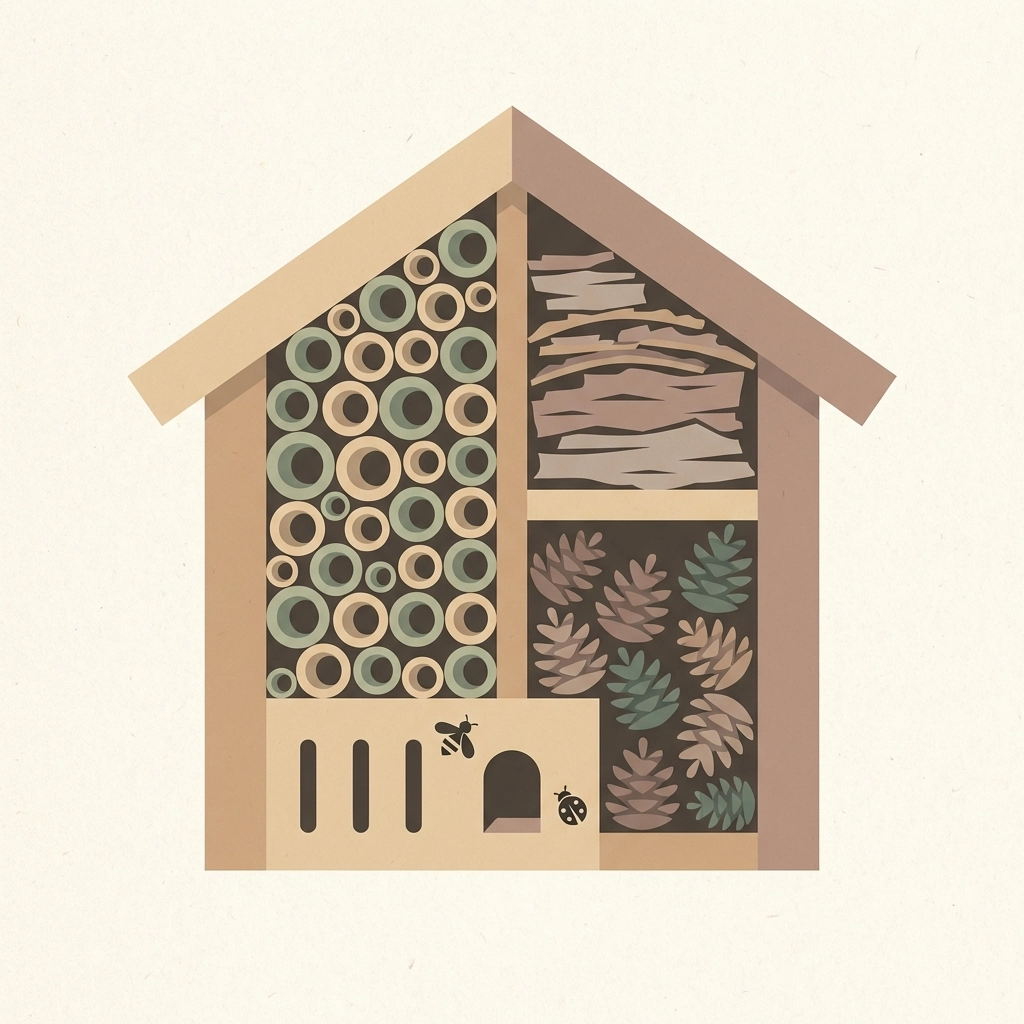
A bug hotel is a man-made structure filled with natural materials.
It mimics the nooks, crevices, and hollow spaces insects seek in the wild.
Different compartments attract different species.
Hollow tubes bring solitary bees.
Loose bark draws beetles.
Pine cones welcome earwigs.
The structure works year-round. Insects nest in spring, shelter in summer heat, and overwinter when temperatures drop.
A single bug hotel supports dozens of species across all seasons.
Why Build One on the Farm?
Beneficial insects need habitat.
Modern farming often removes the brush piles, dead wood, and overgrown hedges where insects naturally live.
A bug hotel restores that habitat in a controlled, intentional way.
Pollinators increase crop yields. Solitary bees and hoverflies visit flowers, carrying pollen between plants.
Predators reduce pest populations. Ladybirds eat aphids. Earwigs consume mites. Lacewings target whiteflies.
Decomposers improve soil. Ground beetles and woodlice break down organic matter into nutrients.
One well-placed bug hotel creates a micro-ecosystem. The insects that move in provide free labor.
What Materials Work Best?
Farm scrap and upcycled materials form the foundation.
Avoid treated wood, painted surfaces, and anything containing chemicals. These harm insects on contact.
Frame Options
- Wooden crates – sturdy, weatherproof, easy to stack
- Plastic bottles – cut into cylinders for smaller structures
- Shoe boxes – suitable for temporary or indoor hotels
- Logs – cut lengthwise and hollowed for a rustic look
- Old dresser drawers – repurpose into multi-compartment units
Fill Materials
| Material | Target Insects |
|---|---|
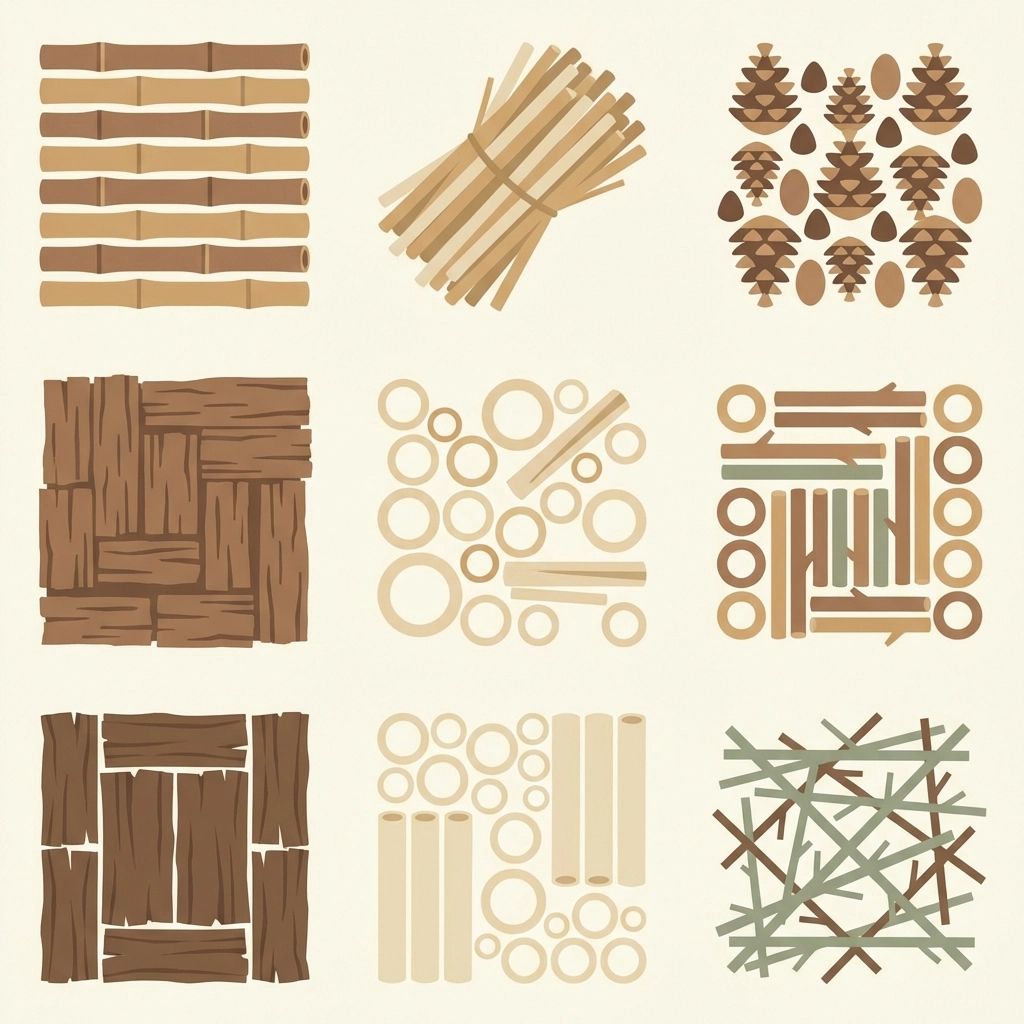
| Hollow stems and reeds | Solitary bees |
| Bamboo canes | Mason bees, leafcutter bees |
| Bark and bark mulch | Beetles, spiders |
| Dried grasses and straw | Lacewings, earwigs |
| Pine cones | Earwigs, ladybirds |
| Sticks and twigs | Various overwintering insects |
| Dried leaves and moss | Ground beetles, woodlice |
| Wood shavings | Ladybirds |
| Toilet paper rolls | Fill with leaf litter for general habitat |
| Old roof tiles | Butterflies, moths |
Every farm has most of these materials already.
Collection takes an afternoon. Assembly takes less.
How Big Should a Bug Hotel Be?
Size depends on available space and materials.
A small hotel fits in a single plastic bottle. A large hotel spans an entire wall.
Small Hotels
- Dimensions: 15-30 cm across
- Best for: gardens, patios, balconies, educational projects
- Frame: single container or small wooden box
- Capacity: a handful of species
Medium Hotels
- Dimensions: 30-60 cm across
- Best for: farm edges, orchards, vegetable plots
- Frame: wooden crate or stacked containers
- Capacity: dozens of species
Large Hotels
- Dimensions: 1 meter or more
- Best for: dedicated pollinator habitats, demonstration sites
- Frame: multiple pallets or custom-built frames
- Capacity: entire beneficial insect communities
Bigger hotels attract more diversity.
Start small. Expand over time.
How to Build a Basic Bug Hotel
Construction follows a simple pattern: build the frame, fill the compartments, secure everything, and position in the right location.
Step 1: Prepare the Frame
Select an untreated wooden crate or build a rectangular frame from scrap lumber.
Attach four sections of wood using screws. Nails loosen over time.
Ensure the back is solid. The front remains open for insect access.
Add a sloped roof or overhang. Rain destroys bug hotels quickly. A dry interior keeps insects alive through winter.
Step 2: Create Compartments
Divide the interior into sections using thin wooden boards, cardboard, or stacked materials.
Each compartment holds a different fill material.
Variety increases species diversity.
Step 3: Fill Each Section
Pack materials tightly. Loose fill falls out when the hotel stands upright.
Cut bamboo and reeds to match the compartment depth. Flush ends look tidy and function better.
Layer bark, straw, and leaves in separate areas.
Insert pine cones with the open end facing outward.
Roll dried leaves inside toilet paper tubes for easy placement.
Step 4: Drill Bee Holes
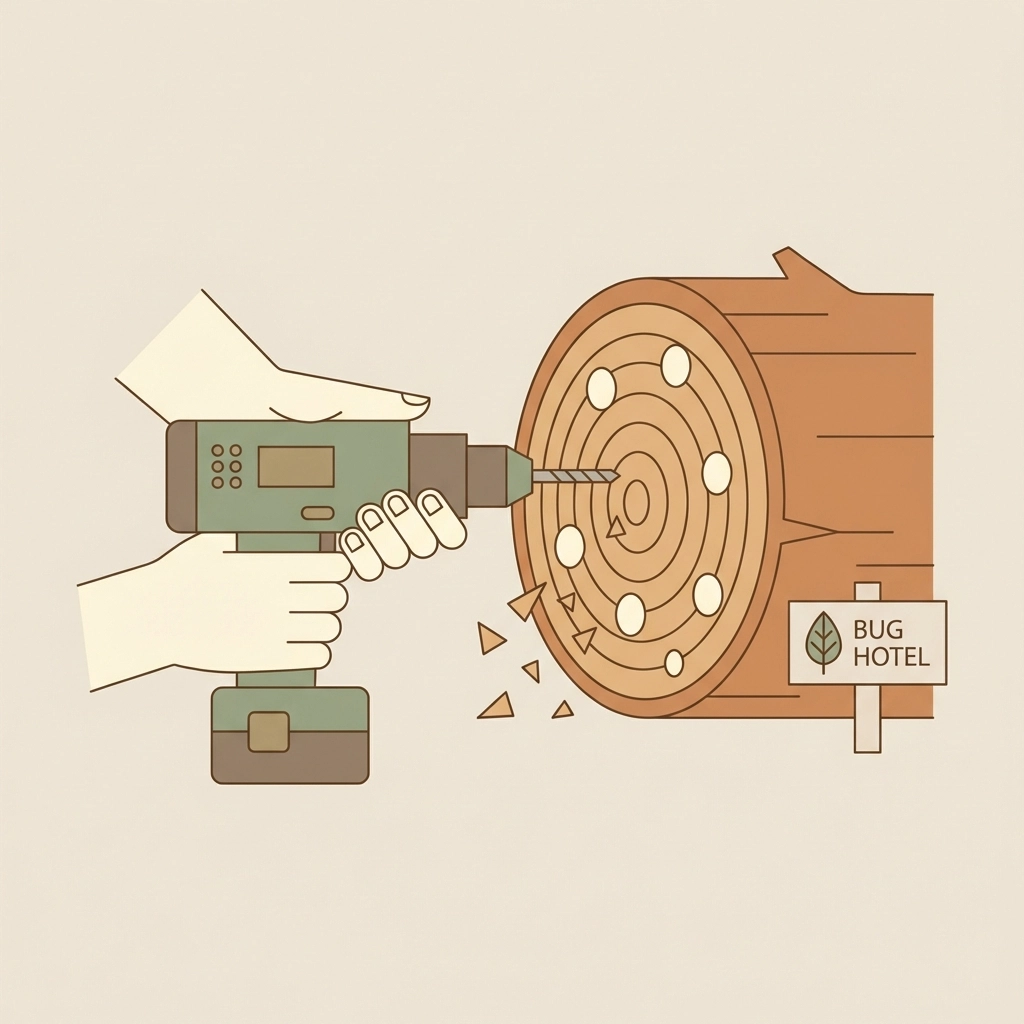
Solitary bees require specific hole sizes.
Drill into solid wood sections or log rounds at the back of the hotel.
- 3-5 mm diameter – attracts smaller species
- 6-8 mm diameter – attracts larger mason bees
- Depth of 10-15 cm – provides adequate nesting space
Sand all holes smooth. Rough edges damage delicate bee wings.
Angle holes slightly upward to prevent water pooling.
Step 5: Add Protective Mesh
Cover the front with wire mesh or chicken wire.
This keeps birds from raiding the hotel. Woodpeckers and tits target insect larvae.
Mesh openings must remain large enough for insects to pass through. 2-3 cm gaps work well.
Where to Position a Bug Hotel
Location determines success.
The wrong spot attracts no insects. The right spot fills up within weeks.
Ideal Conditions
- Sheltered from wind – a wall, fence, or hedge provides protection
- Dappled shade to full sun – direct south-facing exposure works in cooler climates
- Near flowering plants – insects need food sources within easy flight range
- Off the ground – position at least 1 meter high to avoid moisture and ground predators
- Stable mounting – secure to a post, wall, or tree to prevent swaying
Proximity to trees and shrubs matters. Insects use these as reference points for navigation.
Avoid placing the hotel near pesticide application areas.
What Maintenance Does a Bug Hotel Require?
Bug hotels need minimal upkeep.
Annual inspection in late winter keeps the structure functional.
Check for moisture damage. Replace soggy materials. Reinforce the roof if leaking occurs.
Remove old nesting materials every 2-3 years. Accumulated debris harbors parasites and disease.
Replace bamboo tubes when holes appear blocked. Bees cap completed nests with mud. After emergence, old tubes degrade.
Inspect for unwanted residents. Wasps occasionally colonize bug hotels. Remove nests if they pose a safety concern.
Add fresh materials as old ones decay. Straw compresses. Bark crumbles. Pine cones disintegrate.
A well-maintained bug hotel lasts 5-10 years.
Which Insects Arrive First?
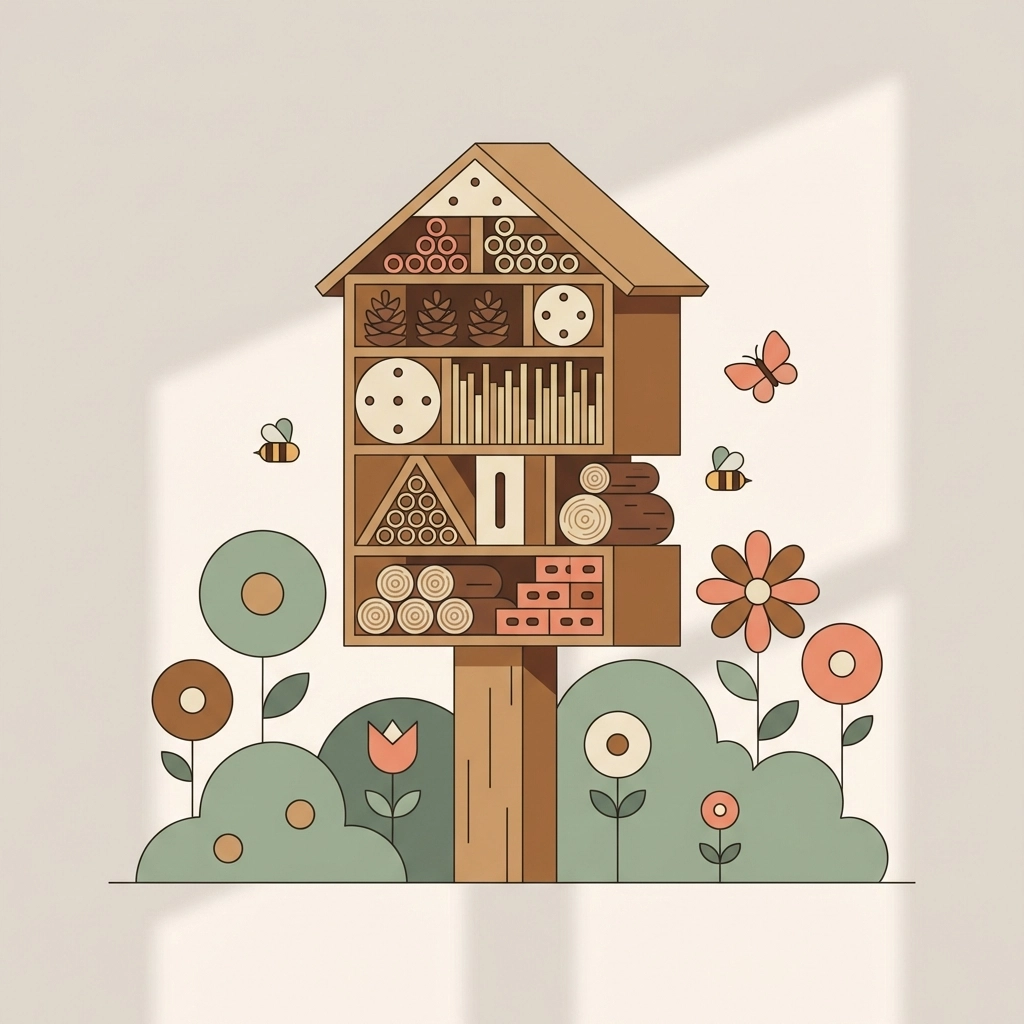
Expect activity within days of installation.
Earwigs appear almost immediately. They seek dark, tight spaces.
Solitary bees investigate within the first week if flowering plants are nearby.
Ladybirds arrive in autumn looking for overwintering sites.
Lacewings move in during late summer.
Butterflies and moths use the hotel during temperature extremes.
Population builds over seasons. The first year establishes pioneers. The second year sees full colonization.
Patience produces results.
Common Mistakes to Avoid
Several errors reduce bug hotel effectiveness.
- Using treated or painted wood – chemicals repel or kill insects
- Leaving materials loose – fill falls out, leaving empty compartments
- Placing in deep shade – most beneficial insects prefer warmth
- Positioning on the ground – moisture rots materials, slugs move in
- Forgetting drainage – water pools destroy nesting sites
- Skipping the roof – rain soaks through, causing mold and decay
- Using uniform materials – diversity attracts diversity
Avoid these errors from the start. Fixing problems later disrupts established insect populations.
Final Observations
A bug hotel transforms farm scraps into valuable habitat.
Construction costs nothing but time.
Beneficial insects provide pollination, pest control, and soil improvement in return.
Every farm, garden, and backyard benefits from this simple structure.
Build one this season. Insects will find it.