



Butterflies drink from mud.
Not just water. Mud.
This behavior has a name: puddling.
A butterfly mud puddle station recreates this natural phenomenon in any backyard. It takes thirty minutes to build. Costs under ten dollars. Creates a living science observation post.
The project combines wildlife habitat creation with hands-on discovery. No special skills required. No rare materials. Just sand, water, minerals, and a shallow container.
What Is a Butterfly Mud Puddle Station?
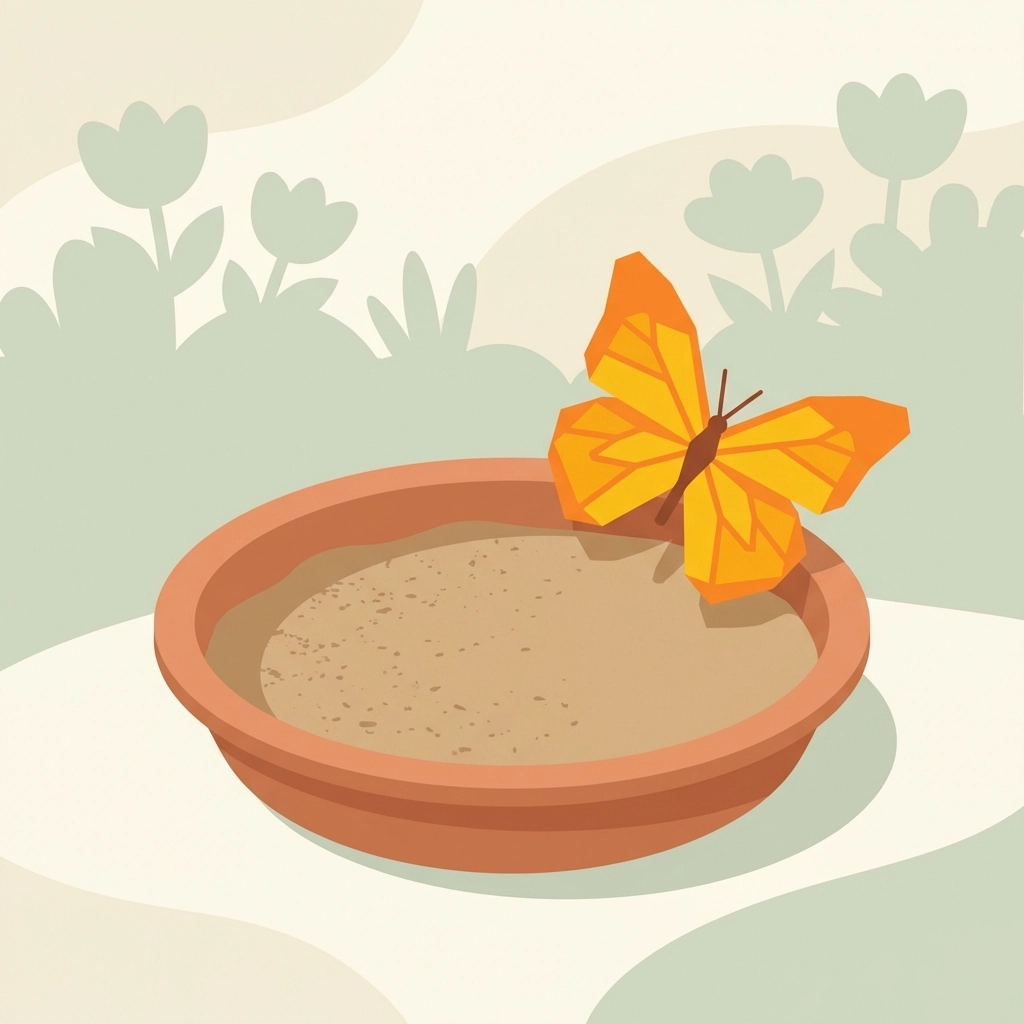
A shallow container filled with moist sand, soil, and minerals.
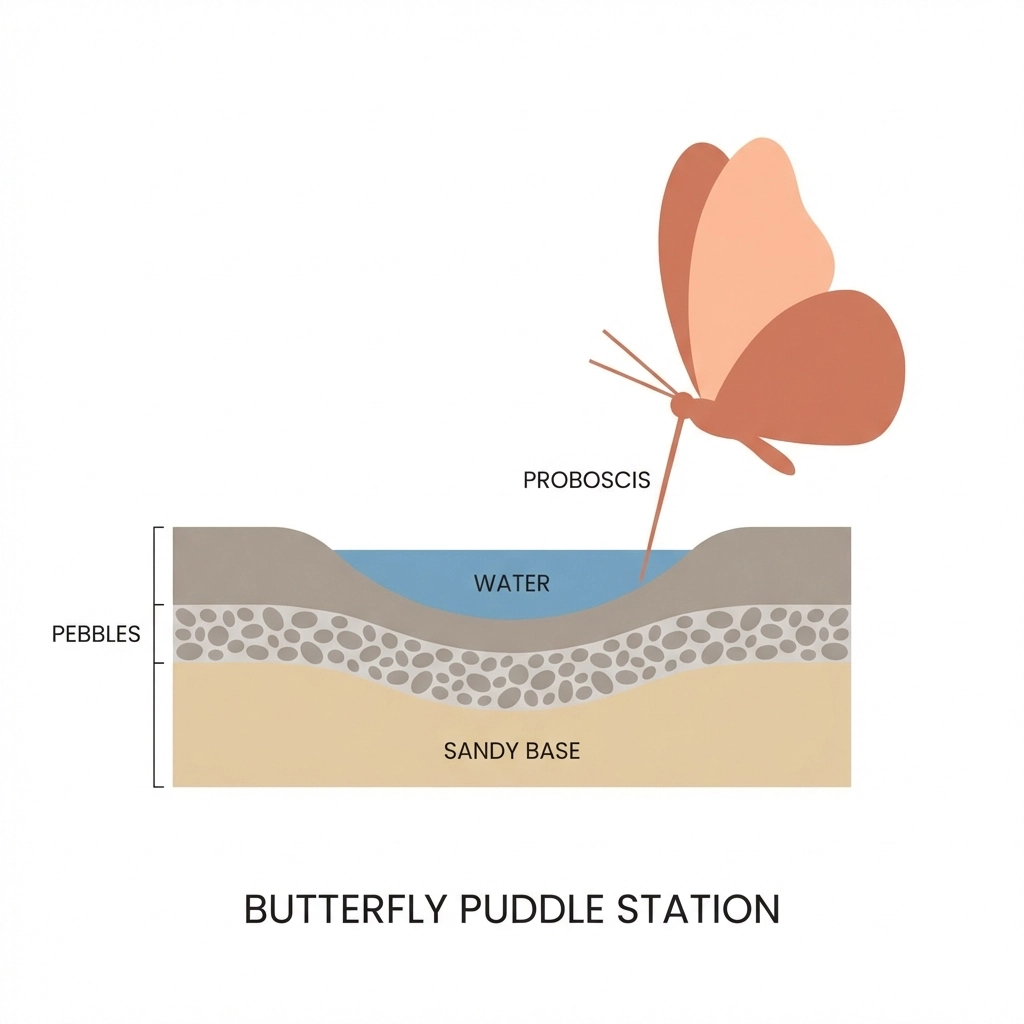
Butterflies land on the damp surface. They extend their proboscis: a long, tube-shaped tongue: and suck up dissolved nutrients.
The station mimics natural muddy puddles found along stream banks, dirt roads, and garden edges. These wet spots concentrate salts and amino acids that butterflies need but cannot obtain from flower nectar alone.
A puddle station brings this resource directly to the garden. Butterflies arrive. Observation begins.
Why Do Butterflies Need Minerals?
Flower nectar provides sugar. Energy for flight.
Minerals provide something different. Sodium. Potassium. Amino acids.
These compounds support:
- Reproduction
- Muscle function
- Egg development
- Overall health
Male butterflies puddle more frequently than females. The minerals transfer to females during mating. This increases egg viability.
Natural puddles disappear during dry spells. Paved surfaces eliminate muddy patches. A dedicated station ensures consistent access to these essential nutrients regardless of weather or landscape changes.
What Materials Are Needed?
The supply list remains simple.
Required:
- Shallow container (clay saucer, plastic tray, pie pan, or birdbath base)
- Sand (play sand works well)
- Soil or composted manure
- Small rocks or pebbles
- Water
Optional additions:
- Pinch of sea salt or Epsom salt
- Garden compost
- Organic fertilizer
The container depth matters. Two to three inches works best. Deeper containers hold too much water. Shallower ones dry out too quickly.
Clay saucers from garden centers cost a few dollars. Terra cotta breathes, helping regulate moisture. Plastic alternatives work fine and last longer in freeze-thaw climates.
How to Build the Station Step by Step
Step 1: Prepare the container
Clean the container. Remove any soap residue or chemical coatings. Rinse thoroughly.
Step 2: Add the sand base
Fill the container with sand. Leave about half an inch of space at the top. Pack lightly. Do not compress tightly.
Step 3: Mix in mineral sources
Add one to two tablespoons of composted manure, garden soil, or a pinch of salt. Mix into the top layer of sand. These ingredients provide the salts and nutrients butterflies seek.
Step 4: Create a water depression
Press a shallow indentation into the center of the sand. About one inch deep. Water collects here.
Step 5: Add landing spots
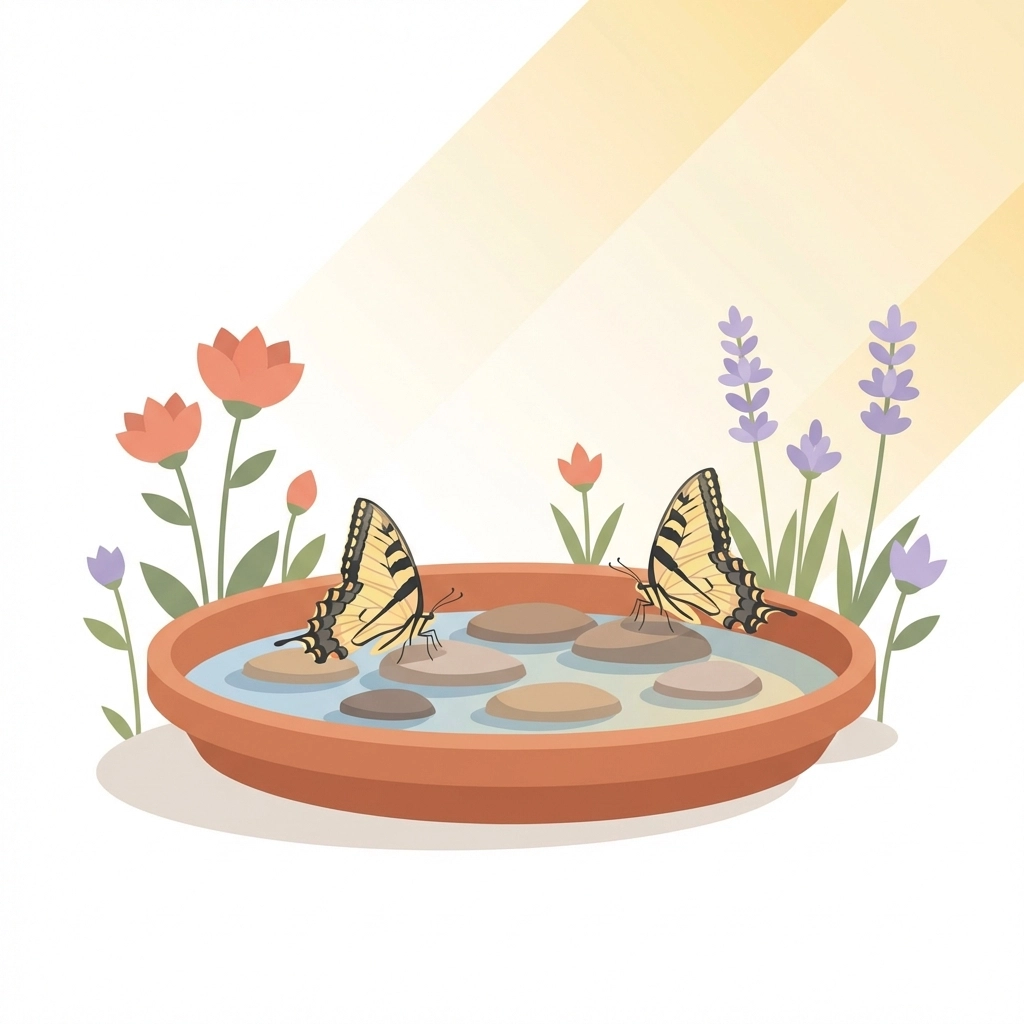
Place three to five small rocks or pebbles on top of the sand. Flat stones work best. These serve as perches. Butterflies land here while extending their proboscis into the moist sand.
Step 6: Moisten the mixture
Add water slowly. The goal: damp sand, not standing water. The consistency resembles a wrung-out sponge. Thick. Muddy. Not soupy.
Step 7: Position outside
Place the station in a sunny spot near flowering plants. Ground level works. A low pedestal works too. Avoid deep shade.
Construction complete.
Where Should the Station Go?
Location affects visitation rates.
Ideal placement characteristics:
- Full sun to partial sun (butterflies need warmth to fly)
- Near nectar plants (within twenty feet)
- Protected from strong wind
- Away from bird feeders (reduces predation risk)
- Visible from a window or seating area (for observation)
Ground placement attracts the most visitors. Butterflies naturally puddle at ground level. Raised stations still work but may take longer to discover.
Avoid placing the station under trees where debris accumulates. Falling leaves cover the sand surface. Decomposing matter changes the mineral composition.

How Often Does the Station Need Maintenance?
Regular attention keeps the station functional.
Daily or every other day:
Check moisture levels. Add water if the sand surface appears dry. The top layer should glisten slightly.
Weekly:
Remove debris. Leaves, twigs, and dead insects accumulate. A quick clearing maintains the surface.
Monthly:
Refresh the mineral content. Add another small amount of salt, compost, or manure. Mix lightly into the top layer.
Every three to four weeks:
Replace the sand and compost mixture entirely. Old mixtures lose mineral content. Fresh materials attract more visitors.
Neglected stations still function. Active maintenance increases butterfly traffic. The difference becomes noticeable within days of refreshing materials.
What Can Be Observed at the Station?
The puddle station transforms into a field research site.
Observable behaviors:
- Proboscis extension and feeding
- Wing positioning during rest
- Territorial interactions between males
- Species identification
- Time of day preferences
- Weather condition correlations
Data collection opportunities:
- Species count per visit
- Duration of feeding sessions
- Number of simultaneous visitors
- Response to station refreshment
- Seasonal variation in traffic
A nature journal turns casual watching into structured observation. Date. Time. Weather. Species. Behavior notes. Patterns emerge over weeks.
Photography adds another dimension. Close-up images reveal wing patterns for species identification. Time-lapse captures feeding behavior.
Which Butterflies Visit Puddle Stations?
Species vary by region and season.
Common visitors in North America:
- Swallowtails (tiger, black, spicebush)
- Sulphurs (clouded, orange)
- Blues (eastern tailed, spring azure)
- Whites (cabbage, checkered)
- Skippers (various species)
Males dominate puddle station traffic. Some females visit, but the behavior skews heavily male.
Other pollinators appear too. Bees investigate the moisture. Moths visit during cooler hours. Wasps occasionally stop by.
The station supports the broader pollinator ecosystem. Every visitor plays a role in garden health.
What Variables Can Be Tested?
The setup allows for simple experiments.
Salt type comparison:
Create two stations. Add table salt to one. Add Epsom salt to the other. Compare visitation rates over two weeks.
Color preference:
Use containers of different colors. Track which attracts more butterflies. Research suggests lighter colors may perform better.
Moisture level effects:
Maintain one station at high moisture. Keep another drier. Document which receives more traffic.
Location testing:
Move the station to different spots over several weeks. Note which position attracts the most visitors.
Fruit addition:
Place overripe fruit near one station. Compare butterfly traffic to a station without fruit. Some species prefer rotting fruit to puddling.
Each experiment follows the scientific method. Hypothesis. Controlled test. Observation. Conclusion.
What Makes This Project Valuable?
Three outcomes from one simple build.
Habitat creation. The station provides a resource butterflies need. Gardens lacking natural puddles gain a mineral source.
Scientific observation. Real behaviors unfold daily. Species identification sharpens. Patterns reveal themselves over time.
Connection to natural systems. Understanding why butterflies puddle leads to broader ecological awareness. One behavior links to reproduction, nutrition, and population health.
The puddle station costs almost nothing. Takes minimal space. Requires basic maintenance.
Returns exceed the investment. Every visitor demonstrates a biological process in real time.
Build one this weekend. Position it by Monday. Expect visitors within days.
The science starts immediately.