



Yes, you can: though the balloon itself isn't what races. Instead, you use the static charge from a rubbed balloon to move lightweight objects (like empty aluminum cans) across a finish line without ever touching them. It's a simple, satisfying way to introduce kids to the invisible forces of static electricity, and it usually takes less than 15 minutes to set up and play.
This activity works well for younger kids who enjoy the "magic" of making things move without touching them, while older siblings can start understanding the science behind why it happens.
Quick Project Overview
| Detail | Information |
|---|---|
| Skill Age Range | 4–6 years old |
| Enjoyment Age Range | 3–8 years old |
| Time to Complete | 10–15 minutes |
| Budget | $0–$2 |
| Difficulty | Easy (with minimal adult help) |
What You'll Need
Most families can pull this together with items already in the house. If you need to grab a few things, you're still looking at a couple of dollars at most.
| Material | Purpose | Estimated Cost |
|---|---|---|
| Balloons (2–4) | Create the static charge | $0–$1 (often already on hand) |
| Empty aluminum cans | The "racers" that move | $0 (recycled from pantry) |
| Wool sweater, fleece blanket, or hair | Rub against balloon to build charge | $0 (use what you have) |
| Smooth floor or table surface | Racing track | $0 |
| Painter's tape or string (optional) | Mark start and finish lines | $0–$1 |
Total estimated cost: $0 if you have balloons on hand, up to $2 if you need to buy a small pack.
Why Does This Work?
Here's the short version you can share with curious kids:
When you rub a balloon against your hair or a wool sweater, tiny invisible particles called electrons move from your hair onto the balloon. This gives the balloon a negative charge: kind of like it's been loaded up with extra energy.

When you hold that charged balloon near an aluminum can, something interesting happens. The positive charges inside the can get attracted to the balloon's negative charge. Since the can is lightweight and sitting on a smooth surface, it actually rolls toward the balloon: even though you're not touching it.
Metal cans work particularly well because the electrons inside aluminum can move around freely, making the can very responsive to the balloon's charge.
Important note: This works best on dry days. Humidity in the air can reduce the static charge, so if it's been raining or the air feels damp, results may vary.
Step-by-Step Instructions
Step 1: Gather Your Materials
Round up your balloons, empty cans, and something woolly to rub against. Clean aluminum soda or seltzer cans work great: just make sure they're empty and rinsed out so they don't attract ants later.
Step 2: Set Up Your Race Track
Find a smooth, flat surface. Hardwood floors, tile, or a large table tend to work better than carpet because the cans can roll more easily.
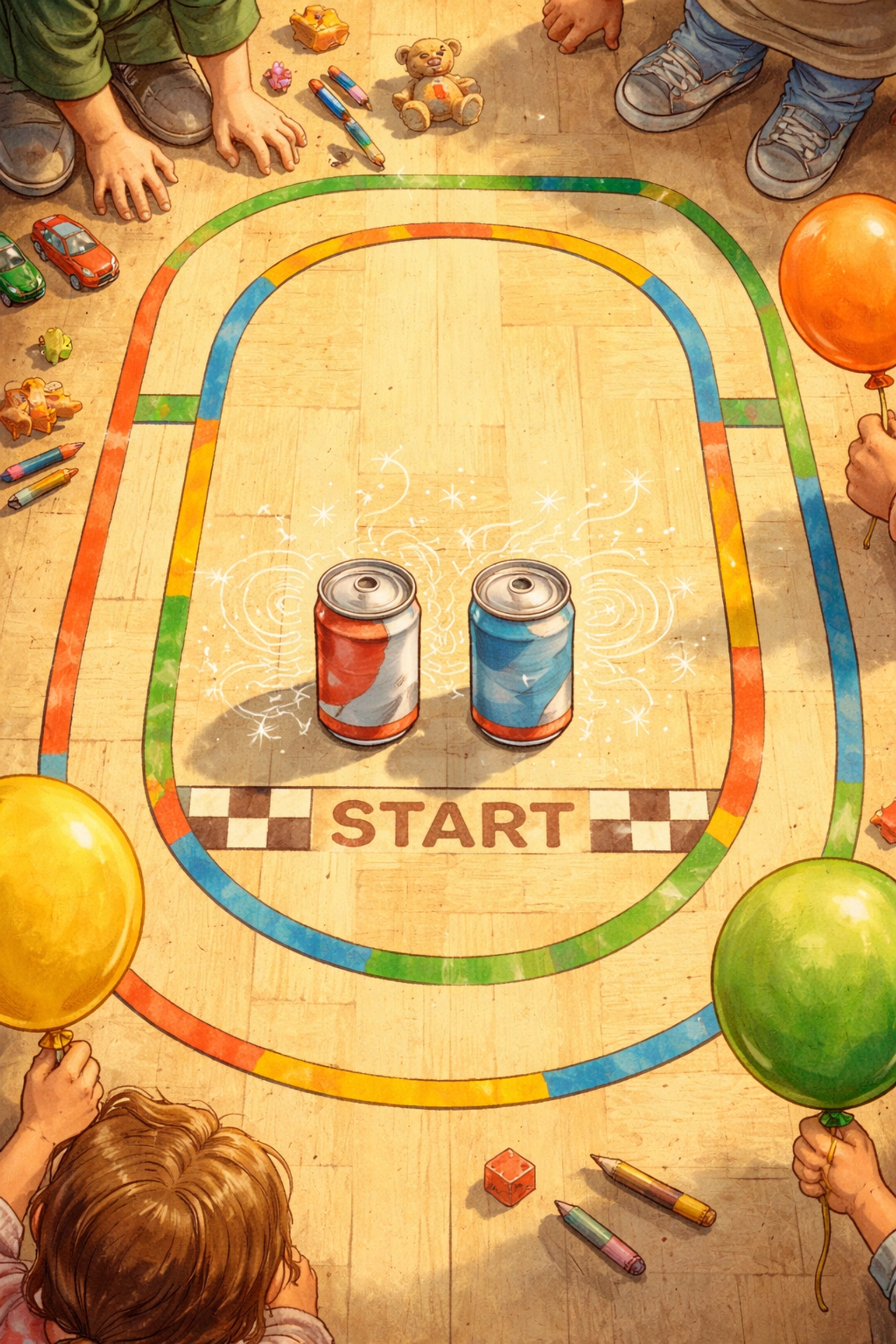
Use painter's tape or string to mark a starting line and a finish line about 3–4 feet apart. You can adjust the distance based on how much space you have and how patient your racers are.
Step 3: Inflate Your Balloons
Blow up one balloon per racer. You don't need them super full: medium inflation is fine. Tie them off securely.
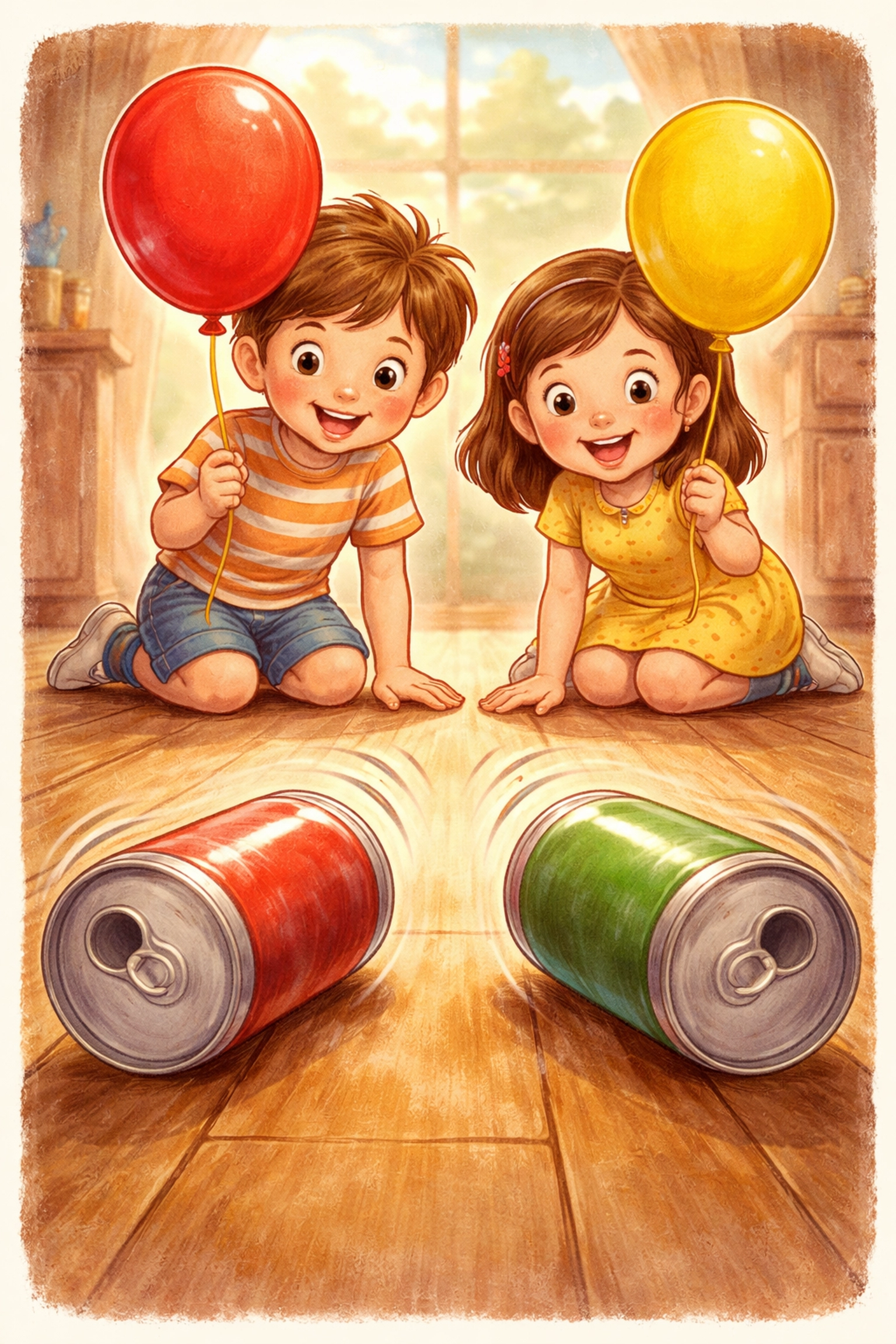
Step 4: Charge Your Balloon
This is where the fun starts. Have each racer rub their balloon vigorously against their hair, a wool sweater, or a fleece blanket for about 10–15 seconds. The more you rub, the stronger the charge tends to be.
Tip for younger kids: If a child has very short hair, a wool blanket or stuffed animal works just as well for building up the charge.
Step 5: Position the Cans
Place each empty can on its side at the starting line. Make sure the cans are balanced and ready to roll: give them a gentle tap to confirm they move freely.
Step 6: Ready, Set, Race!
On "go," racers hold their charged balloons close to their can (without touching it) and try to "pull" the can across the finish line using only the electrostatic attraction.
The balloon should hover about 1–2 inches from the can. If you get too close, you might accidentally bump it. Too far away, and the attraction may not be strong enough to move the can.
Step 7: Declare a Winner (or Just Keep Playing)
The first can to cross the finish line wins! But honestly, most kids find the "moving things without touching them" part so entertaining that winning becomes secondary.
Tips for Better Results
Recharge often. The static charge fades after a few seconds, so racers may need to pause and rub their balloons again mid-race.
Try different surfaces. If cans aren't moving well, experiment with a smoother table or floor. Textured surfaces create more friction and slow things down.
Use fresh balloons. Older balloons that have been sitting around may not hold a charge as well as newly inflated ones.
Lower humidity helps. If you're attempting this on a humid summer day, you might find the effect is weaker. Dry winter days tend to produce stronger results.
Variations to Try
Once you've mastered the basic can race, here are a few ways to keep it interesting:
Paper Ball Race
Crumple small pieces of paper into loose balls and see if you can move them with your charged balloon. They're lighter than cans but also less predictable.
Obstacle Course
Set up small obstacles (blocks, books, cardboard tunnels) and guide your can through the course using only the balloon's charge.
Distance Challenge
Instead of racing against each other, see who can move their can the farthest with a single charge. Mark the distances with tape and keep track of records.
Two-Balloon Repel Test
If you're feeling experimental, try charging two balloons and bringing them close together. Since they both have negative charges, they should push away from each other. It's a different demonstration of how static electricity works: like charges repel.
What Kids Learn
This activity sneaks in some real science concepts without feeling like a lesson:
- Cause and effect: Rubbing creates charge, charge creates movement
- Invisible forces: Not everything that affects objects can be seen
- Basic physics: Introduction to electrons, charges, and attraction
- Experimentation: Adjusting variables (distance, rubbing time, surface) to get different results
For kids on the younger end of the enjoyment range (3–4), the "magic" of making cans move is usually enough. Older kids (6–8) often want to understand why it works and may enjoy testing different materials to see which holds a charge best.
Cleanup and Storage
This one's easy. Deflate and recycle the balloons when they lose their bounce. Rinse out the cans and toss them in recycling. Roll up your tape. Done in about two minutes.
If you want to keep the activity ready for repeat play, store a few uninflated balloons and clean cans in a bin. It's a great rainy-day option that requires almost no prep the second time around.
Final Thoughts
Balloon static racers hit a nice sweet spot: quick to set up, cheap (or free), and genuinely entertaining for a range of ages. Younger kids get the thrill of "invisible magic," while older ones can dig into the science of why it all works.
And because it uses materials you likely have around the house, it's perfect for those moments when someone announces they're bored and you need an activity in the next five minutes.
For more hands-on projects like this, check out our other DIY builds at Tierney Family Farms.
FAQ
- Why does the balloon need to be rubbed on hair or wool? Rubbing the balloon creates static electricity by transferring electrons. This gives the balloon a negative charge, which allows it to attract or repel other objects.
- Does the size of the balloon matter? Not really, but medium-sized balloons are usually easiest for kids to handle and rub. The most important thing is that the balloon is well-inflated and dry.
- What if it's a rainy day? Will the experiment still work? Static electricity works best when the air is dry. If it's very humid or rainy, the moisture in the air can make it harder for the charge to build up, so the "race" might be a little slower.
References
- Science experiments with static electricity and aluminum cans
- Electrostatic force demonstrations for elementary-age children
- Basic electron transfer principles in everyday materials