



Yes, you can absolutely grow fresh basil and mint in just water, no soil required! With a simple hydroponic setup, your family can harvest homegrown herbs in about 30 days. All you need is a container, some water, a basic nutrient solution, and a sunny windowsill or grow light. It's one of the easiest indoor gardening projects for kids and parents alike, and the payoff is delicious herbs for your kitchen year-round.
Let's walk through exactly how to get your water garden growing.
Why Grow Herbs Hydroponically?
Growing herbs in water might sound like science fiction, but it's actually one of the oldest and simplest forms of gardening. Hydroponics just means growing plants without soil, their roots sit directly in nutrient-rich water instead.
Here's why this method is perfect for families:
- No messy dirt. Your kitchen counter stays clean.
- Faster growth. Plants get nutrients directly, so they grow quicker than in soil.
- Year-round harvests. Doesn't matter if it's snowing outside, your herbs keep thriving indoors.
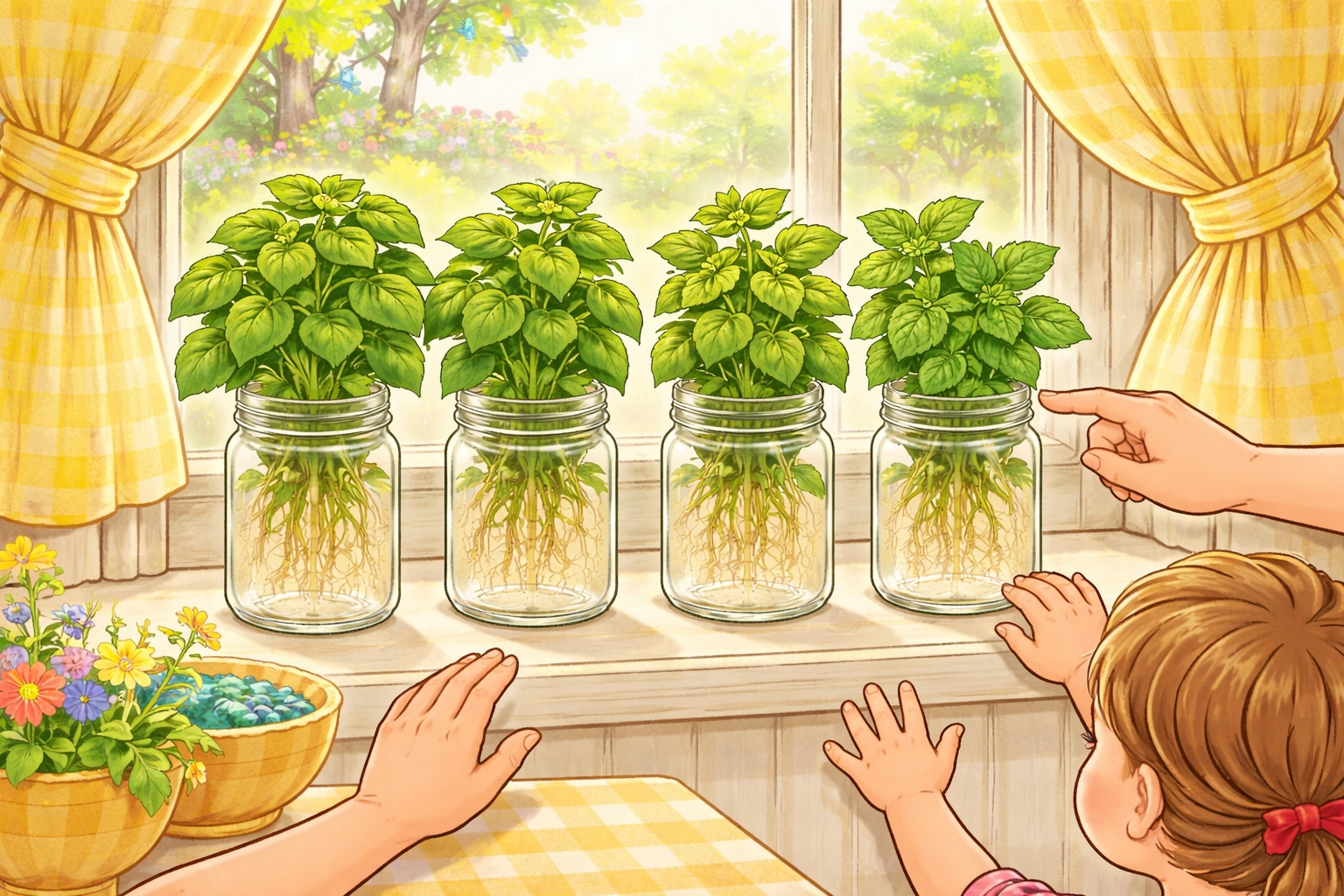
- Kids can watch the roots grow. It's like a live science experiment on your windowsill.
Basil and mint are two of the best starter herbs for hydroponics because they're forgiving, fast-growing, and smell amazing.
What You'll Need to Get Started
Before you dive in, gather these supplies. Most of them you probably already have around the house, and the rest are easy to find at any garden center or online.
Basic Supplies List
- Glass jars or containers (mason jars work great)
- Net pots (small plastic cups with holes also work in a pinch)
- Growing medium (clay pebbles, rockwool cubes, or even clean pebbles)
- Hydroponic nutrient solution (liquid fertilizer made for water growing)
- Basil and mint cuttings or seedlings
- A sunny windowsill or LED grow light
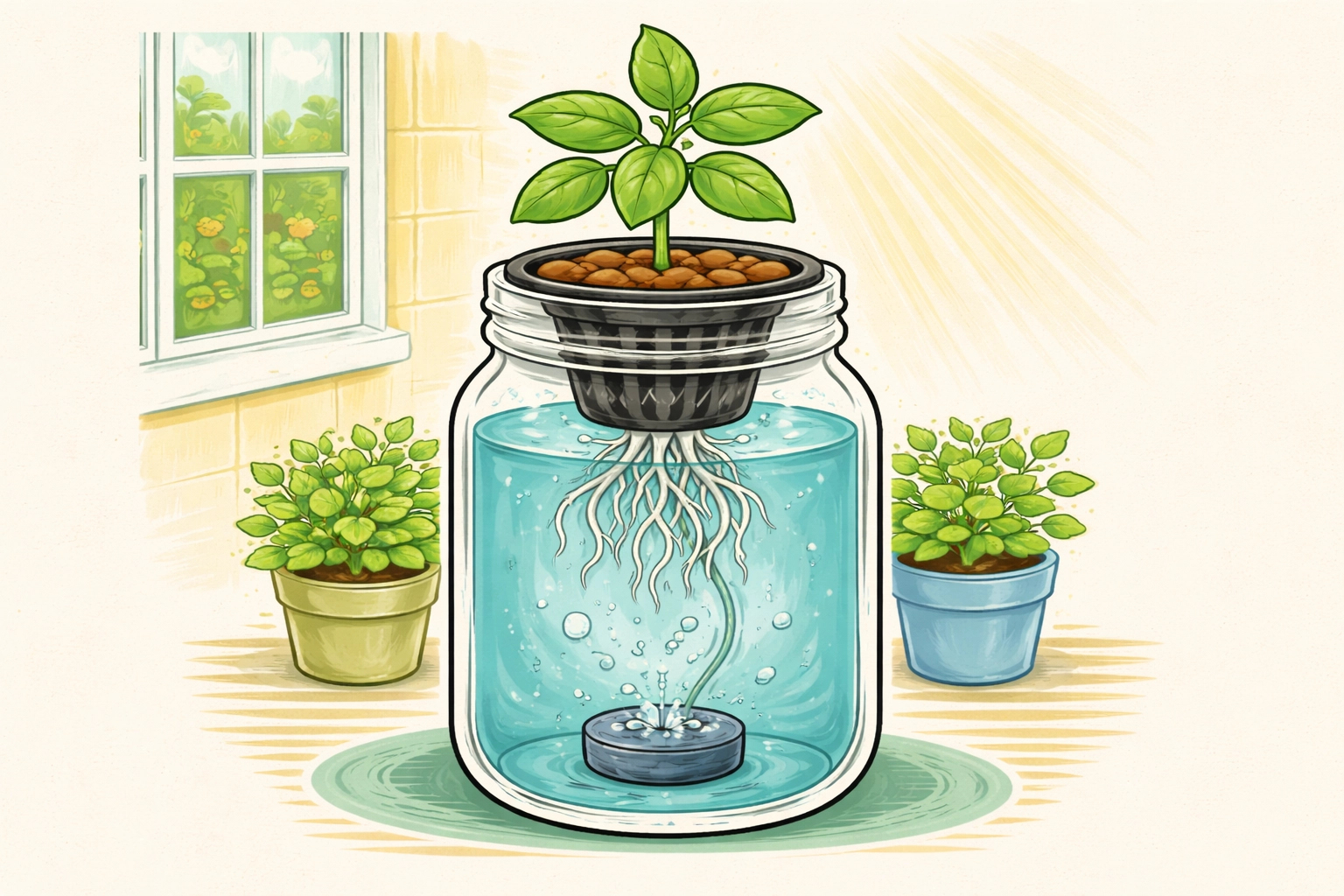
- Optional: small air pump and air stone (helps oxygenate the water)
That's it! You don't need fancy equipment to grow herbs this way. Start simple and upgrade later if you want to expand your indoor garden.
Step-by-Step: Setting Up Your Hydroponic Herb Garden
Let's break this down into easy steps the whole family can follow together.
Step 1: Prepare Your Containers
Grab your glass jars or containers. If you're using mason jars, the wide-mouth variety works best because you can easily fit a net pot in the opening.
Clean your containers thoroughly with warm water, no soap residue, please! Herbs are sensitive little guys.
If you're crafty, you can cut a hole in a plastic lid to hold your net pot suspended over the water. The roots will dangle down into the liquid while the leaves stay dry up top.
Step 2: Add Your Growing Medium
Fill your net pots about halfway with clay pebbles or rockwool cubes. This gives your plant's roots something to grip onto while they reach down into the water.
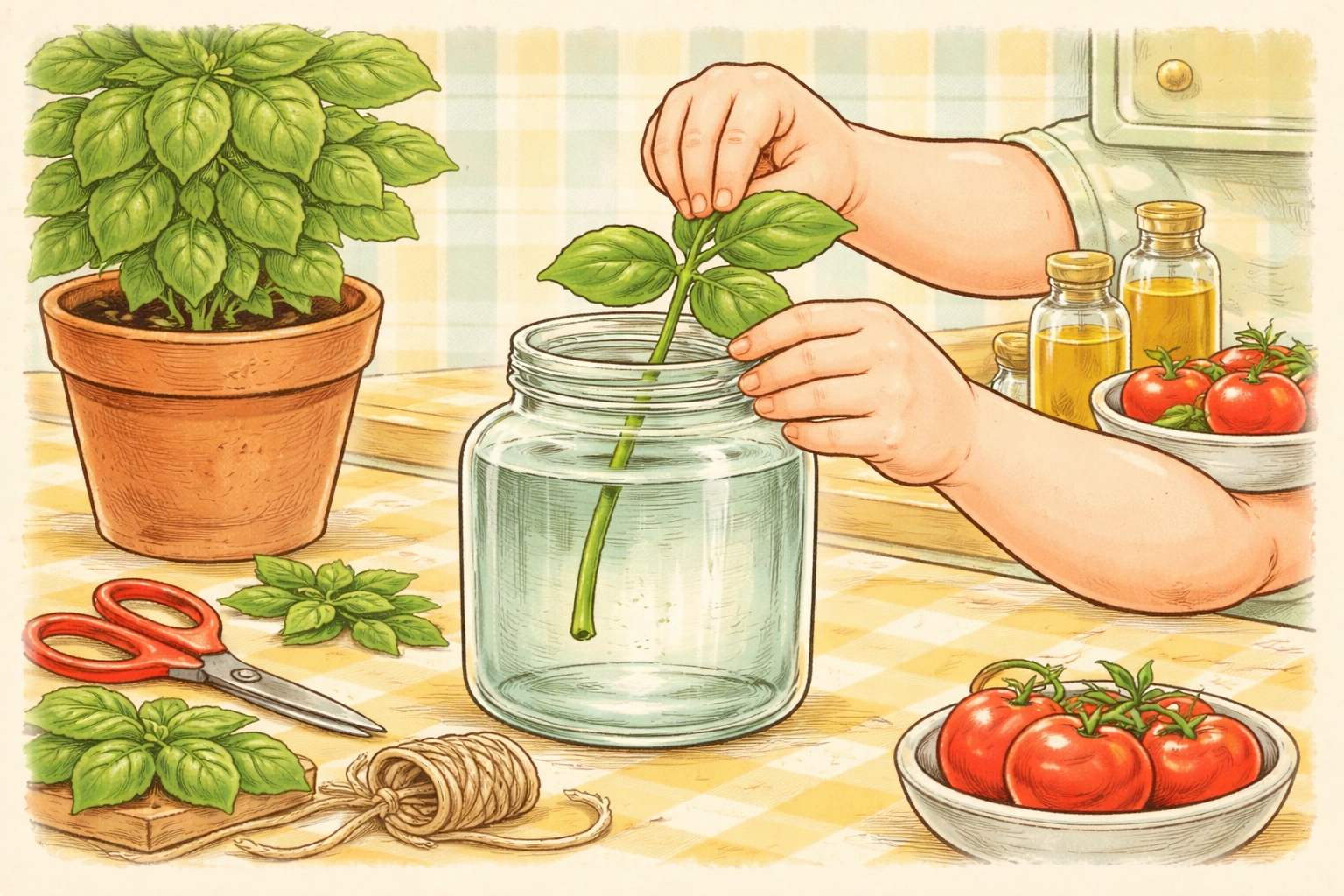
If you're starting from cuttings (snipped stems from an existing plant), you can skip the growing medium entirely at first: just pop the stems directly into the water until roots form.
Step 3: Mix Your Nutrient Solution
Here's where the magic happens. Fill your containers with room-temperature water, then add hydroponic nutrients according to the package instructions.
Pro tip: Aim for an EC (electrical conductivity) between 1.2-1.8 mS/cm, or a PPM of 600-900. If that sounds like gibberish, don't worry: most beginner nutrient solutions have simple dosing instructions like "1 teaspoon per gallon."
Check your water's pH level. You want it between 5.5 and 6.5 for best nutrient absorption. pH testing strips or a simple digital meter will help you monitor this. If it's too high or low, pH adjustment drops are cheap and easy to use.
Step 4: Plant Your Herbs
Now for the fun part!
If using cuttings: Snip a 4-6 inch stem from a healthy basil or mint plant, just below a leaf node (that little bump where leaves attach). Remove the bottom leaves so only the top few remain. Place the cutting in your net pot or directly in the water.
If using seedlings: Gently rinse off any soil from the roots, then nestle the seedling into your net pot with the growing medium supporting it. The roots should dangle into the nutrient solution below.
Make sure the water level touches the bottom of the roots but doesn't submerge the stem or leaves: that's a recipe for rot.
Step 5: Provide the Right Light
Basil and mint need plenty of light to thrive. Place your containers on a sunny south-facing windowsill where they'll get at least 6-8 hours of natural light.
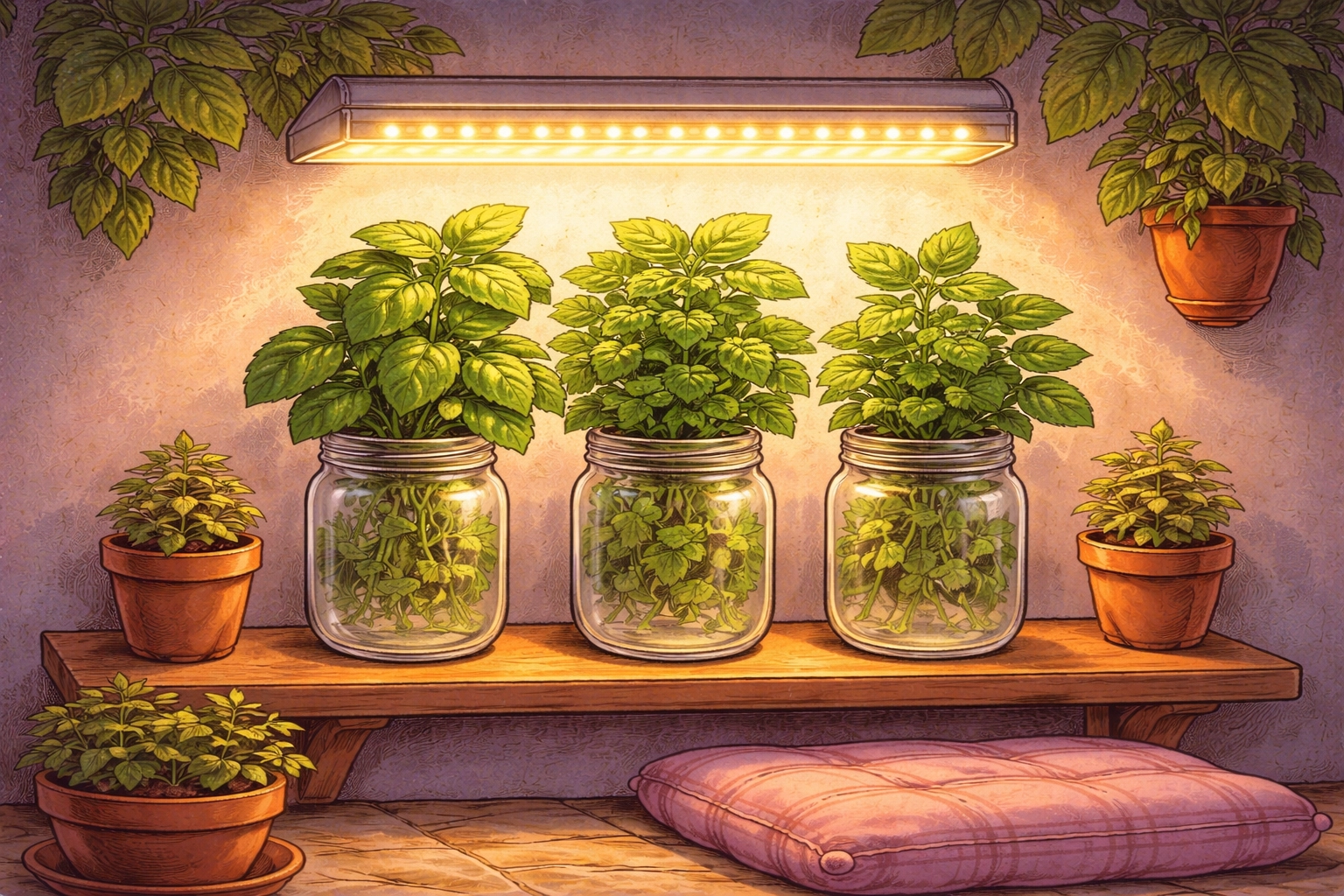
No sunny window? No problem. An LED grow light works wonders. Set it on a timer for 14-16 hours per day to mimic long summer days. Your herbs will think they're on vacation.
Step 6: Maintain Your Water Garden
Here's your weekly checklist to keep those herbs happy:
- Top off the water as it evaporates or gets absorbed by roots
- Check and adjust pH weekly (that 5.5-6.5 sweet spot)
- Refresh your nutrient solution completely once a month
- Watch for algae growth in clear containers: if you see green gunk, give the jar a good scrub
- Keep the temperature comfortable: between 60-70°F is ideal
If you added an air pump and air stone, let it bubble away. The extra oxygen helps roots stay healthy and prevents stagnant water problems.
Troubleshooting Common Problems
Even the best hydroponic gardeners run into hiccups. Here's how to handle the most common issues:
Yellow leaves? Usually means a nutrient deficiency. Check that your solution is fresh and at the right concentration.
Slimy roots? Too much water on the stem or not enough oxygen. Make sure only roots are submerged and consider adding an air stone.
Leggy, weak stems? Not enough light. Move closer to the window or increase your grow light hours.
Pests? Even indoor plants can attract aphids or fungus gnats. A gentle spray of water usually knocks them off, or use a diluted neem oil solution.
Harvesting Your Hydroponic Herbs
The best part! Around day 30, your basil and mint should be lush and ready for their first trim.
For basil: Pinch off leaves from the top of the plant, just above a leaf pair. This encourages the plant to branch out and get bushier rather than tall and spindly.
For mint: Snip stems just above a set of leaves. Mint is practically indestructible: the more you harvest, the more it grows.
Use your fresh herbs immediately for maximum flavor, or store them in a damp paper towel in the fridge for a few days. Nothing beats homegrown basil on pizza night or fresh mint in your lemonade!
Ready to Grow More?
Once you've mastered basil and mint, the hydroponic world is your oyster. Try lettuce, cilantro, or even cherry tomatoes. If you're curious about scaling up your indoor garden, check out our guide on how much space you need for a productive hydroponic garden or learn how to build a DIY aquaponics system on a budget.
Growing food with your kids doesn't require a backyard or perfect weather. Just a jar, some water, and a little curiosity. Happy growing!
FAQ
- Do indoor herbs need special grow lights? While special lights help, many herbs like basil and mint can grow perfectly well on a sunny windowsill that gets at least 6 hours of light a day.
- How often should I change the water in my hydroponic jar? It's a good idea to refresh the water every 1–2 weeks to keep it clean and ensure your plants are getting the fresh oxygen and nutrients they need.
- When can I start harvesting my herbs? Once your plant has several sets of leaves and is about 4–6 inches tall, you can start snipping off what you need. Just be sure never to take more than a third of the plant at once!
- Can I grow hydroponic herbs from store-bought cuttings? Yes! Many herbs like basil and mint will grow roots if you place a fresh cutting in a jar of water. It’s an easy and free way to start your hydroponic garden.
- Do hydroponic herbs taste different from soil-grown ones? Most people find they taste just as fresh and flavorful! Because they get exactly the nutrients they need, they are often very healthy and aromatic.
- How long does it take to see roots on a cutting? For herbs like mint or basil, you can often see tiny white roots starting to grow in just 5 to 7 days. It’s a very fast and exciting process for kids to watch.
References:
- General hydroponic herb growing guidelines and timeline
- Basic hydroponic system setup components
- Optimal pH, lighting, and environmental conditions for hydroponic herbs