



Direct Answer: Garden leaves work like solar panels because they capture sunlight and transform it into energy the plant can use. Solar panels turn sunlight into electricity for our homes, while leaves turn sunlight into sugar (glucose) that feeds the entire plant. This magical process is called photosynthesis: and it happens millions of times every second in your backyard garden!
What Exactly Is Photosynthesis?
Picture this: every single green leaf in your garden is running a tiny food factory. No smoke, no noise, no trucks delivering supplies. Just sunshine, water, and air working together to create plant food from scratch.
Photosynthesis is the process where plants take three simple ingredients: sunlight, water, and carbon dioxide from the air: and combine them to make glucose (a type of sugar). This sugar is the plant's breakfast, lunch, dinner, and midnight snack all rolled into one.
And here's the bonus: while plants are busy making their food, they release oxygen as a byproduct. That's the very same oxygen you're breathing right now! Pretty generous of them, wouldn't you say?
The Leaf: Nature's Most Incredible Solar Panel
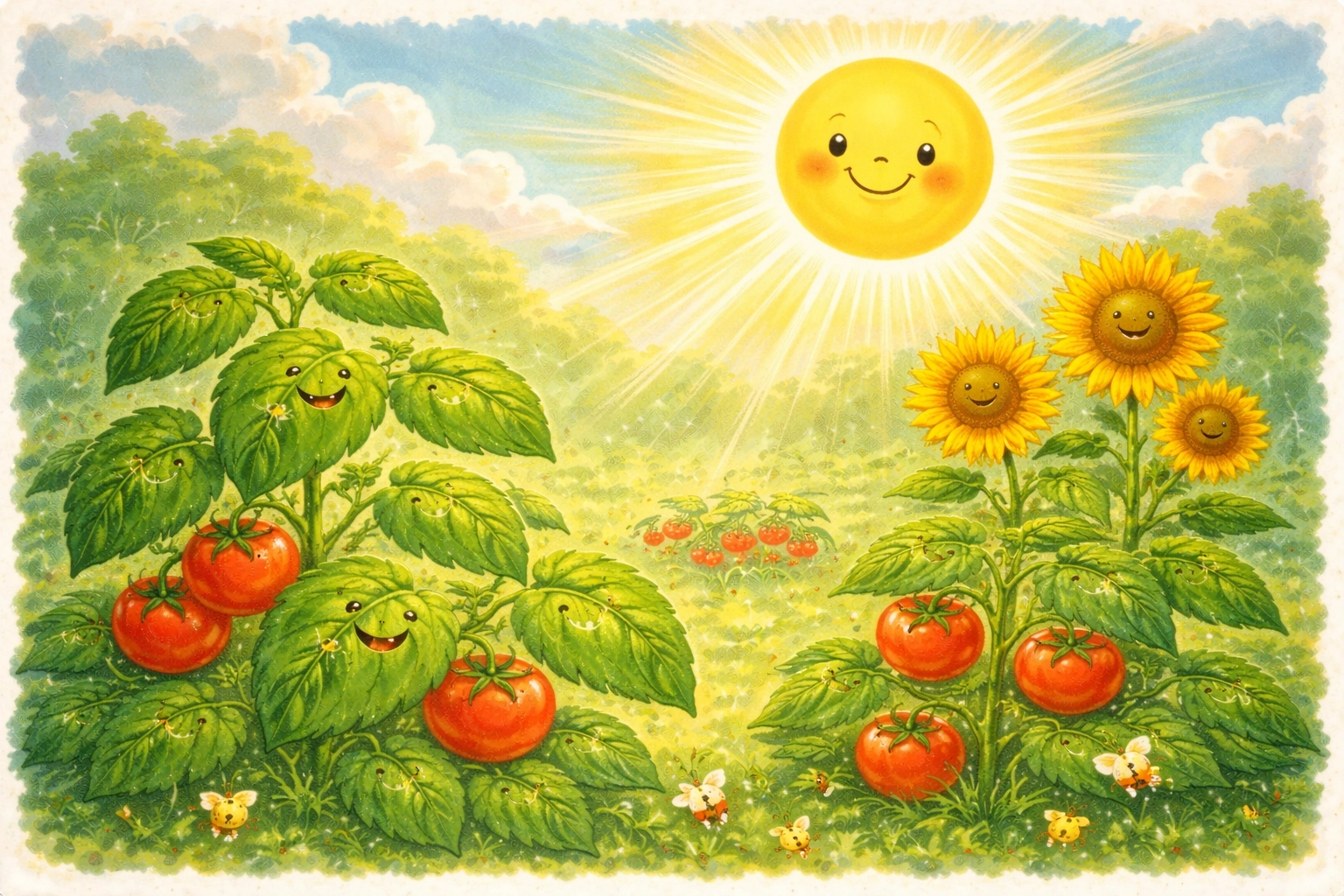
Let's compare a garden leaf to a solar panel on someone's roof.
Solar panels are flat, positioned toward the sun, and filled with special cells that capture light energy. They convert that light into electricity that powers televisions, refrigerators, and video games.
Leaves are flat, position themselves toward the sun, and are packed with special cells called chloroplasts that capture light energy. They convert that light into glucose that powers roots, stems, flowers, and fruits.
See the similarities? Nature invented solar technology about 3 billion years before humans figured it out!
Why Are Leaves Green?
Here's a fun fact to impress your family at dinner: leaves are green because of a pigment called chlorophyll inside those chloroplasts. Chlorophyll is excellent at absorbing red and blue light from the sun, but it bounces green light back to your eyes. That's why plants look green: they're reflecting the one color they don't use as much!
Leaves actually absorb about 80% of the light that hits them. Red and blue light gets grabbed by chloroplasts near the surface, while green light travels deeper into the leaf to reach chloroplasts tucked inside. It's like the leaf has a whole team of workers at different depths, all catching light and putting it to use.
How Does Photosynthesis Actually Work?
Let's break this down into steps your whole family can follow. Imagine you're watching a time-lapse video of a single leaf doing its job:
Step 1: Water Travels Up from the Roots
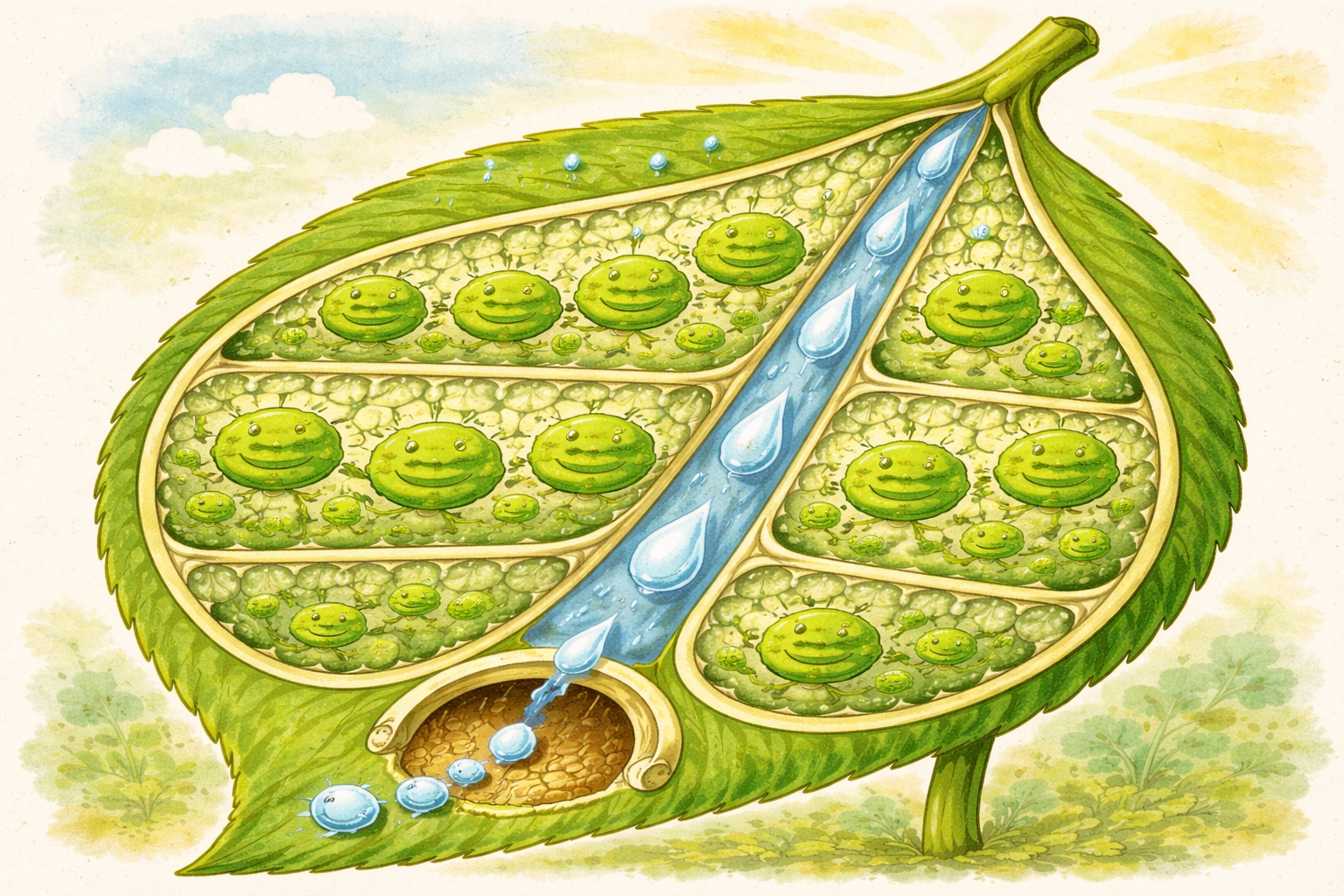
The plant's roots act like straws, sucking up water from the soil. This water travels through tubes called xylem (ZY-lum) all the way up the stem and into every leaf. Think of xylem as the plant's plumbing system: a network of tiny pipes delivering water to exactly where it's needed.
Step 2: Carbon Dioxide Sneaks In Through Tiny Doors
On the underside of leaves, there are thousands of microscopic openings called stomata (stoh-MAH-tah). These little doors open and close to let carbon dioxide gas from the air slip inside. Carbon dioxide is that same gas you breathe out: so every exhale you make is technically plant food floating through the air!
Step 3: Sunlight Hits the Chloroplasts
When sunlight lands on the leaf, chloroplasts get to work. These tiny green structures (so small you need a microscope to see them) are the actual factories where photosynthesis happens. A single leaf can contain millions of chloroplasts, all working at the same time.
Step 4: The Magic Recipe Comes Together
Inside each chloroplast, the water molecules get split apart using energy from sunlight. The carbon dioxide molecules get rearranged. And through a series of chemical reactions, these ingredients combine to form glucose: sweet, energy-packed sugar that the plant can use immediately or store for later.
Step 5: Oxygen Gets Released
Remember how water molecules got split apart? That process releases oxygen atoms, which pair up and float out through the stomata as oxygen gas. One large tree can produce enough oxygen for two people to breathe for an entire year!
A Simple Experiment: Catching Photosynthesis in Action
Want to actually see photosynthesis happening? Here's a quick experiment you can try with your kids using items from your kitchen.
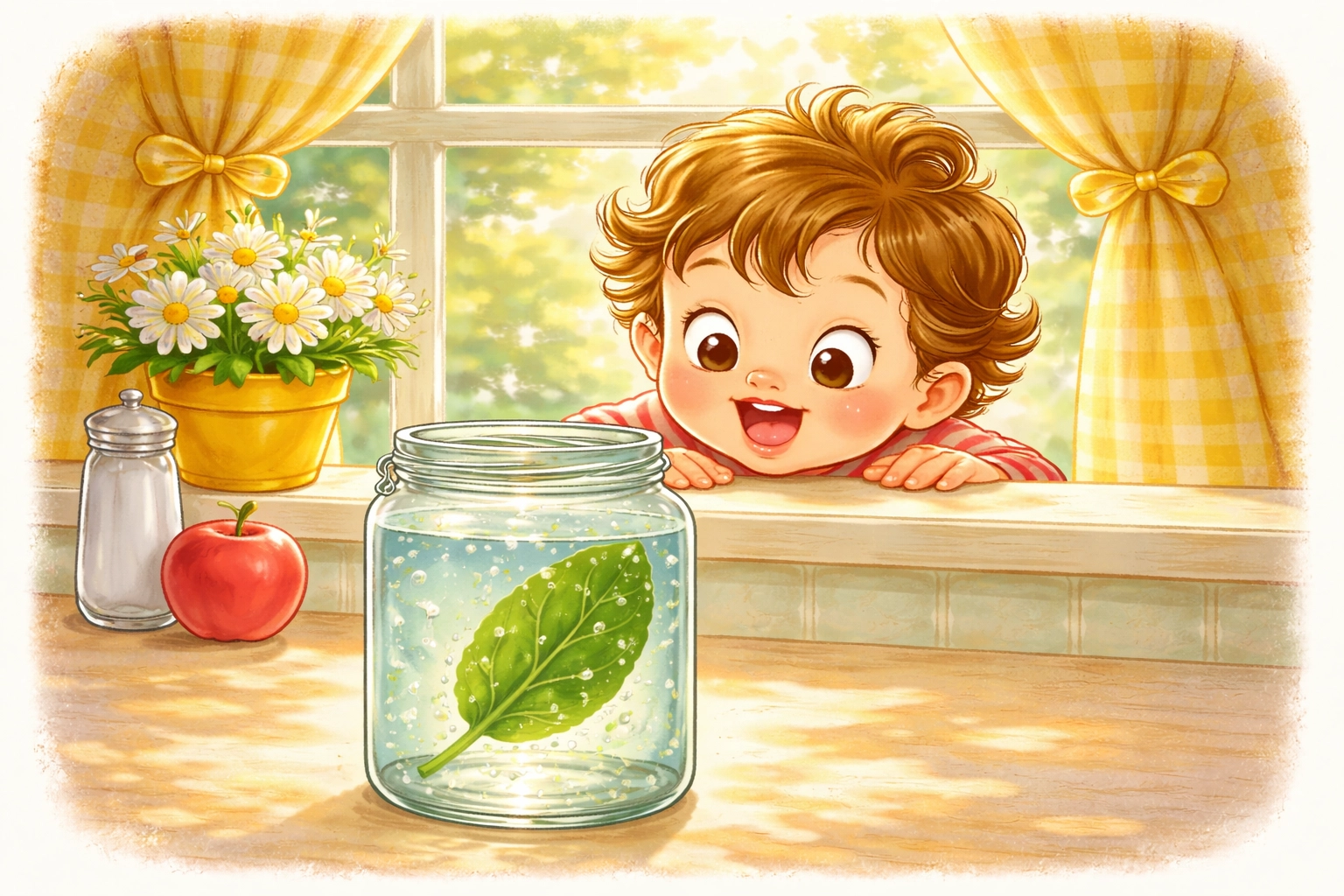
What You'll Need:
- A fresh spinach leaf or other dark green leaf
- A clear glass or jar
- Room temperature water
- A sunny window
What to Do:
- Fill your glass with water and place the leaf inside, submerged completely.
- Set the glass in a sunny spot: a windowsill works great.
- Wait 30 minutes to an hour and watch closely.
- Look for tiny bubbles forming on the leaf's surface!
What's Happening?
Those bubbles are oxygen! The leaf is still alive, still photosynthesizing, and still releasing oxygen gas. You're watching a plant breathe out in real time. The sunnier the spot, the more bubbles you'll see.
Why Should Kids Care About Photosynthesis?
Understanding photosynthesis helps kids see how everything in nature connects together like puzzle pieces.
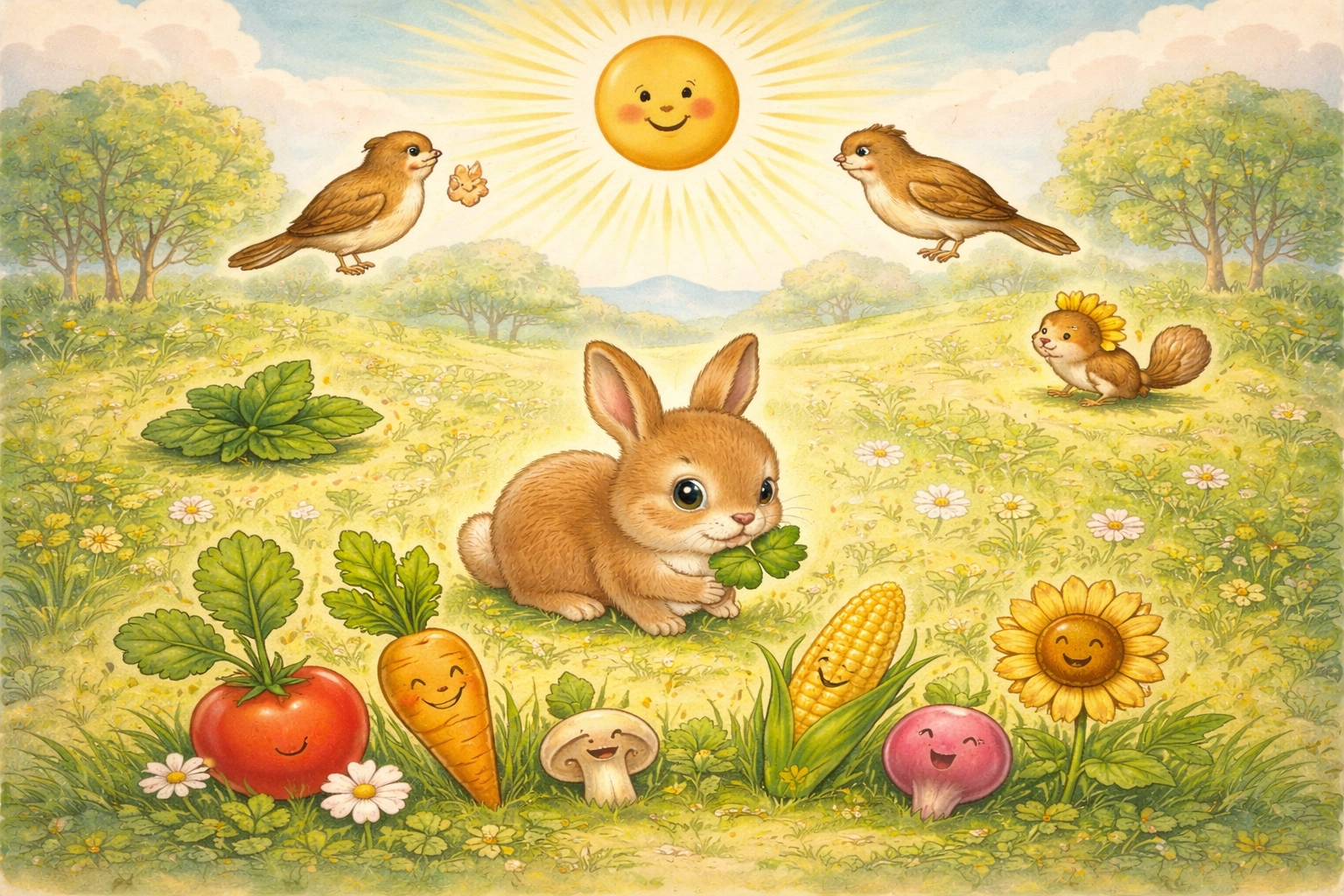
Plants feed themselves using photosynthesis, creating the foundation of almost every food chain on Earth. Rabbits eat plants. Foxes eat rabbits. Without photosynthesis, the whole system falls apart.
Plants clean our air by absorbing carbon dioxide (which can build up and cause problems) and releasing fresh oxygen. Your garden isn't just pretty: it's an air purification system!
Plants store energy that we eventually use. The vegetables on your plate? Packed with energy that originally came from sunlight, captured through photosynthesis. You're basically eating stored sunshine!
Fun Ways to Explore Photosynthesis Together
Here are a few more hands-on ideas to bring this science lesson to life:
Light vs. Dark Experiment
Cover part of a leaf on a living plant with black paper or foil. Leave it for a week, then remove the cover. The covered section will be pale or yellow because it couldn't photosynthesize without light!
Leaf Collection and Comparison
Gather leaves of different sizes and colors. Discuss which ones might capture more sunlight (bigger = more surface area) and which have more chlorophyll (darker green = more pigment).
Garden Observation Journal
Have kids sketch their favorite plants and note what time of day leaves seem most "perky" or angled toward the sun. Plants actually move their leaves throughout the day to catch maximum light!
Wrapping Up: Your Garden's Hidden Superpower
Every time you walk past your garden, remember that those quiet, still leaves are working harder than they look. They're capturing sunlight, pulling in carbon dioxide, slurping up water, manufacturing sugar, and pumping out fresh oxygen: all without making a sound.
Leaves really are nature's original solar panels. And the best part? They've been perfecting this technology for billions of years, long before humans ever dreamed of renewable energy.
Next time you're outside with your kids, pick a leaf, hold it up to the sun, and take a moment to appreciate the tiny green factories doing incredible work right in the palm of your hand.
For more hands-on garden science projects, check out our guide on building a DIY mini greenhouse from plastic bottles or explore regrowing kitchen scraps with your kids.
Photosynthesis FAQ
- What exactly is chlorophyll? Chlorophyll is the green pigment in leaves that acts like a solar panel. It captures energy from sunlight so the plant can turn it into food.
- Why do plants need carbon dioxide? Plants "breathe in" carbon dioxide and "breathe out" oxygen. During photosynthesis, they use the carbon to build their stems and leaves, which helps them grow big and strong.
- Can plants grow without any sunlight at all? Most plants need some form of light to perform photosynthesis. Indoors, if you don't have a sunny window, you can use special "grow lights" to give them the energy they need.
- How do plants 'breathe' during photosynthesis? They have tiny holes on the bottom of their leaves called stomata. They "inhale" carbon dioxide and "exhale" oxygen, which is exactly what we need to breathe!
- Can plants make food at night? Photosynthesis needs light, so most of the "food making" happens during the day. At night, plants focus on using that food to grow.
- Do all plants need the same amount of light for photosynthesis? No, some plants are "sun lovers" and need a lot of light, while others are "shade lovers" and can make enough food even in darker spots. It’s all about finding the right place for each plant.
References:
- University of California, Berkeley – Understanding Chloroplasts and Mesophyll Tissue
- Scientific American – How Leaves Absorb and Distribute Light
- National Geographic Kids – Photosynthesis Explained