



The quick answer: Going green as a family this weekend is as simple as picking one or two hands-on projects: like regrowing kitchen scraps, starting a worm bin, or building a mini greenhouse from recycled bottles. These activities cost little to nothing, take just a few hours, and teach kids lasting lessons about caring for our planet.
No need to overhaul your entire lifestyle by Monday. Sustainability works best when it's bite-sized, fun, and something everyone can participate in: from toddlers to grandparents.
Let's dig into some weekend-ready ideas your family can start today.
Why Weekend Green Projects Work So Well for Families
Here's the thing: kids don't learn sustainability from lectures. They learn it from doing. When your seven-year-old watches a carrot top sprout new greens from the kitchen counter, something clicks. When your teenager sees worms turn banana peels into garden gold, it sticks.
Weekend projects offer the perfect window: enough time to start something meaningful without the pressure of school nights or packed schedules. Plus, these shared experiences become stories your family tells for years.

Project 1: The Kitchen Scrap Regrow Garden (Under $10)
This one's a family favorite because it feels like magic. You're literally growing food from garbage.
What you'll need:
- Glass jars or shallow dishes
- Toothpicks
- Water
- Kitchen scraps (green onion roots, romaine lettuce bases, carrot tops, celery bottoms)
How to do it:
Save your scraps. After dinner prep, set aside the bottom inch of celery, the root ends of green onions, or the base of romaine lettuce. Carrot tops work too: they won't regrow carrots, but they'll sprout pretty greens perfect for salads.
Set them up. Place scraps in shallow dishes with about half an inch of water. For avocado pits, suspend them with toothpicks over a jar so the bottom touches water.
Find a sunny spot. A kitchen windowsill is perfect. Change the water every couple of days to keep things fresh.
Watch and wait. Green onions show growth within days. Lettuce and celery take about a week. Avocados? Those test your patience: sometimes months: but the payoff is worth it.
The teaching moment: Talk about food waste. Americans throw away roughly 30-40% of their food supply. Regrowing scraps shows kids that "waste" often has a second life.
For a full step-by-step guide, check out our post on how to make a DIY kitchen scrap regrow garden for under $10 with your kids.
Project 2: Start a Worm Composting Bin Together
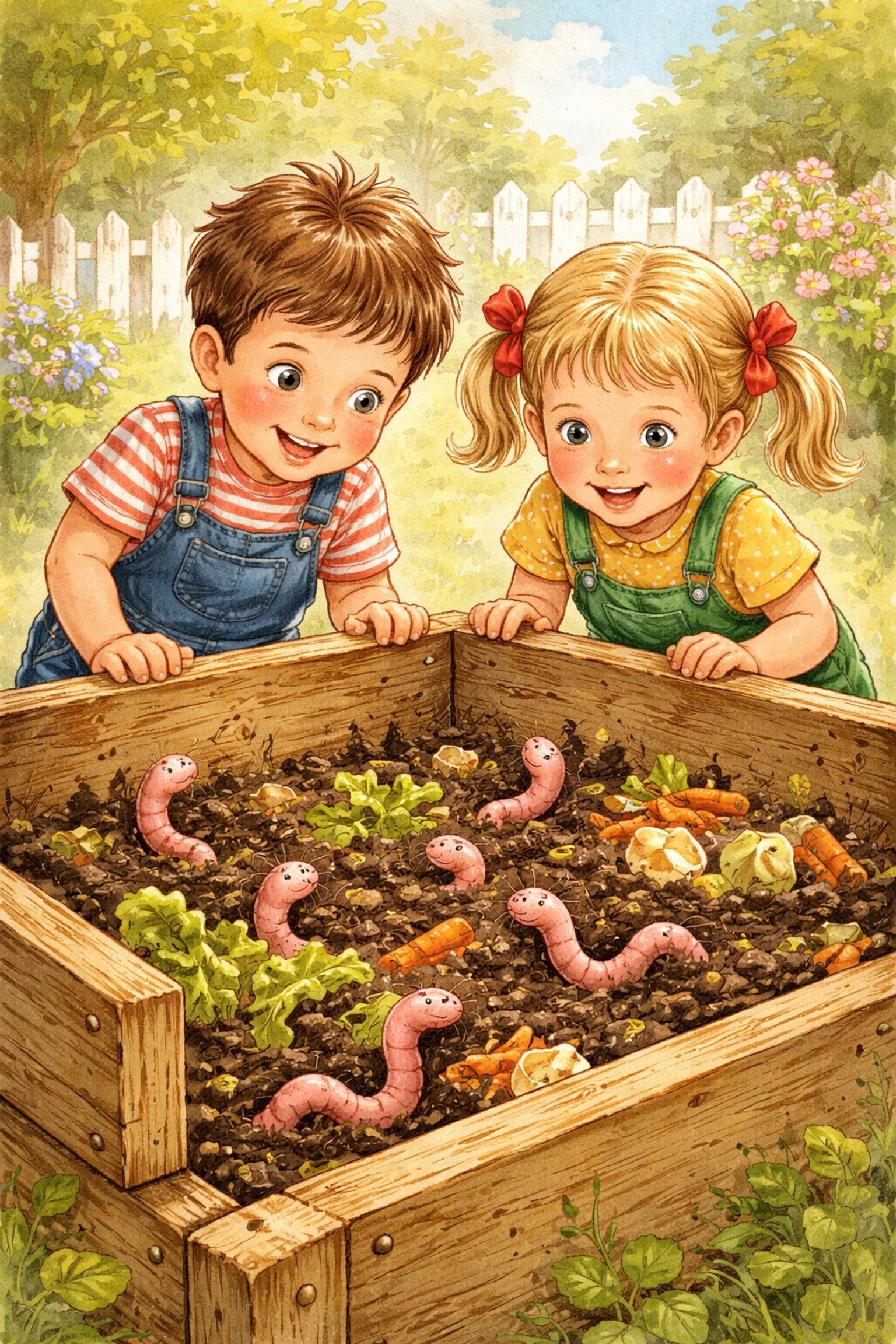
Worm composting (vermicomposting) sounds intimidating, but it's genuinely one of the easiest sustainability projects you can do. Kids absolutely love it: there's something about having a bin of pet worms that never gets old.
What you'll need:
- Two plastic storage bins (one with a lid)
- Drill or hammer and nail (for air holes)
- Newspaper or cardboard
- Red wiggler worms (available online or at bait shops)
- Fruit and vegetable scraps
How to do it:
Drill holes. Poke small holes in the lid and upper sides of one bin for airflow. Drill drainage holes in the bottom.
Create bedding. Shred newspaper or cardboard into strips. Moisten until it feels like a wrung-out sponge. Fill the bin about halfway.
Add your worms. Start with about a pound of red wigglers. Gently place them on top of the bedding: they'll burrow down on their own.
Feed them scraps. Bury fruit and veggie scraps under the bedding. Avoid meat, dairy, and citrus. Start slow: worms eat roughly half their body weight daily.
Harvest the gold. In 2-3 months, you'll have rich, dark worm castings: nature's best fertilizer.
The teaching moment: Composting diverts food waste from landfills, where it would produce methane (a potent greenhouse gas). Worms turn that same waste into plant food. Circle of life, right there in a plastic bin.
We've got a detailed walkthrough at how to create a DIY worm composting bin with children.
Project 3: Build a Mini Greenhouse from Plastic Bottles
Got empty two-liter bottles piling up? Turn them into tiny greenhouses that protect seedlings and extend your growing season.
What you'll need:
- Clean plastic bottles (2-liter soda bottles work great)
- Scissors or utility knife
- Small pots or seedling trays
- Potting soil and seeds
How to do it:
Cut the bottle. Remove the bottom third of the bottle. Keep the top portion with the cap.
Plant your seeds. Fill small pots with soil and plant seeds according to packet directions.
Cover with the bottle top. Place the bottle dome over your pot. Leave the cap off for ventilation, or remove the dome entirely on warm days.
Watch the magic. The bottle traps warmth and humidity, creating perfect germination conditions.
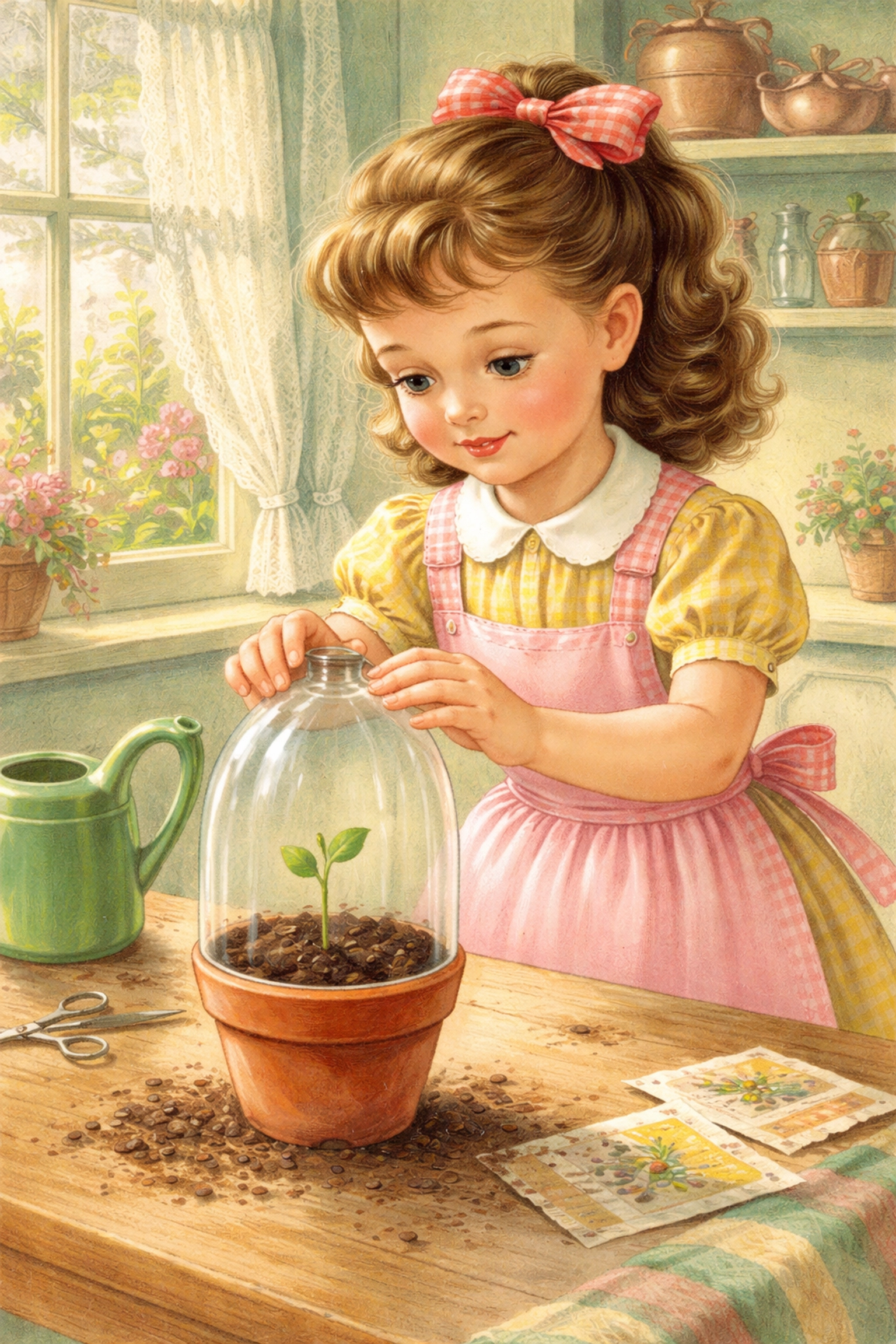
The teaching moment: Greenhouses work by trapping heat from sunlight: just like Earth's atmosphere. This is a gentle introduction to how the greenhouse effect works (and why too much of it causes problems).
Full instructions are waiting at how to make a DIY mini greenhouse out of plastic bottles for less than $10 with your kids.
Project 4: The Family Water Audit
This one requires zero supplies and takes about 30 minutes. It's also surprisingly eye-opening.
How to do it:
Time your showers. Have each family member time their shower for a few days. The average showerhead uses 2 gallons per minute. Do the math together.
Check for leaks. A dripping faucet can waste over 3,000 gallons per year. Walk through the house and listen. Kids love being "leak detectives."
Track toilet flushes. Older toilets use 3-7 gallons per flush. Newer ones use 1.6 or less. Count flushes for a day and calculate your family's total.
Set a goal. Pick one area to improve. Maybe it's shorter showers, or turning off the tap while brushing teeth. Make it specific and achievable.
The teaching moment: Water is finite. Only about 1% of Earth's water is accessible freshwater. When kids see the numbers, conservation stops being abstract.
Project 5: Upcycled Planter Challenge
Challenge your family to create planters from items headed for the recycling bin or trash.
Fair game:
- Old rain boots
- Cracked colanders (built-in drainage!)
- Tin cans with drainage holes punched in the bottom
- Worn-out tires
- Chipped teacups or mugs
Rules:
- Each person picks their own container
- Everyone plants something (herbs, flowers, succulents)
- Display your creations together
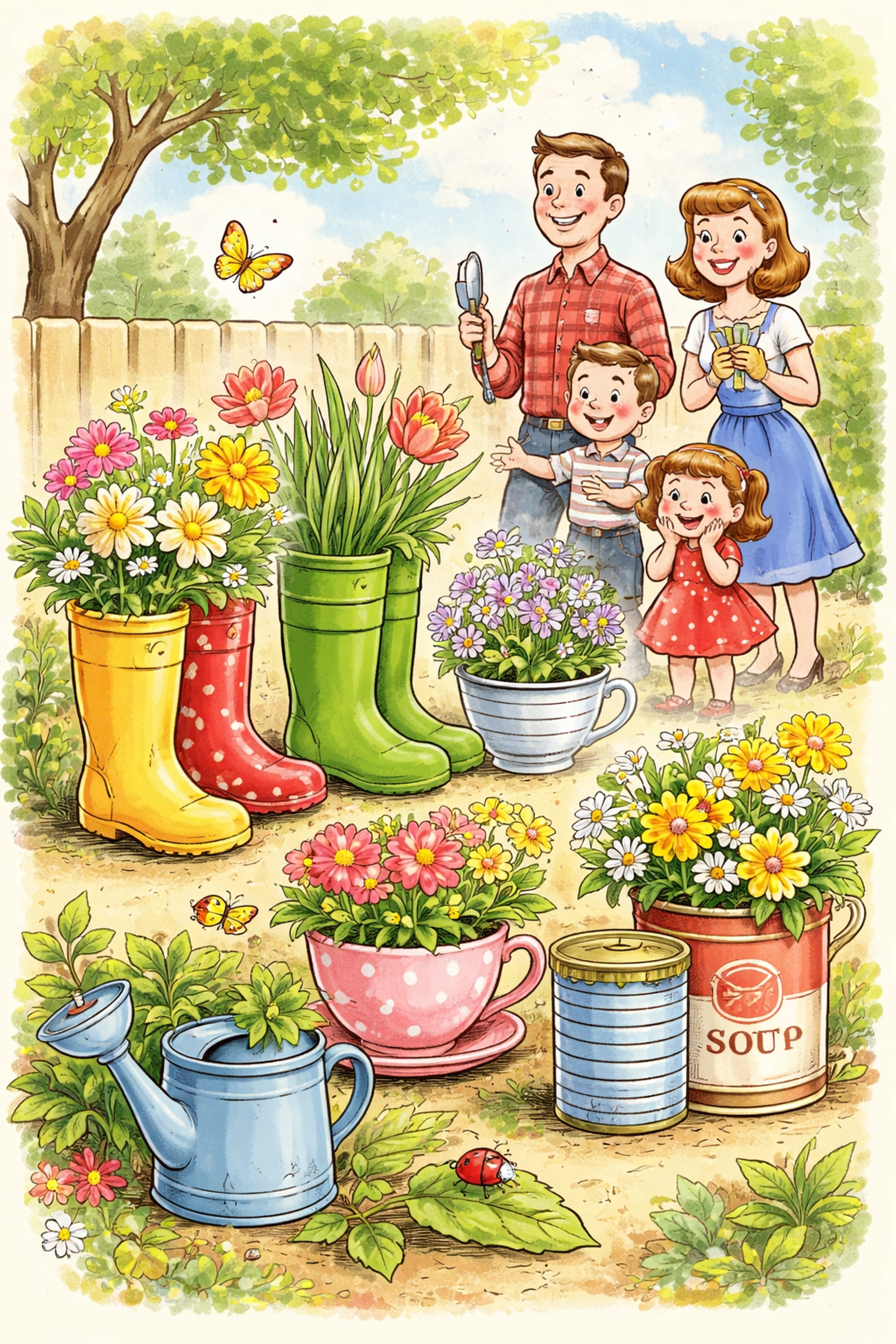
The teaching moment: Upcycling extends the life of materials and reduces demand for new products. Plus, it sparks creativity: there's no "right" answer.
Making Sustainability Stick Beyond the Weekend
One project won't change the world. But one project can change how your family thinks. Here's how to build momentum:
- Make it routine. Sunday morning worm feeding. Wednesday water check-ins. Small habits compound.
- Let kids lead. Once they've learned a skill, let them teach a friend or younger sibling. Teaching deepens understanding.
- Celebrate progress. Harvested your first regrown green onions? That's worth a family high-five.
- Connect projects. Your worm castings feed your regrown plants, which grow in your upcycled planters. Show kids how everything links together.
Your Weekend Green Checklist
Here's a quick-start list to grab and go:
- Save kitchen scraps (lettuce bases, green onion roots, carrot tops)
- Gather glass jars or shallow dishes
- Find two plastic bins for worm composting
- Collect empty plastic bottles
- Designate a "leak detective" for the water audit
- Hunt for upcycle-ready containers
Pick one or two projects. Don't try to do everything. The goal is connection and curiosity, not perfection.
Keep the Momentum Going
If your family catches the sustainability bug this weekend, we've got more projects waiting. Learn how to build a DIY aquaponics system on a budget or explore how much space you need for a productive hydroponic garden.
The best part? Every project you complete together teaches your kids that small actions matter: and that taking care of the planet can actually be fun.
Now go get your hands dirty.
FAQ: Family Sustainability Questions (Answered Simply)
What is the easiest way for a family to start being more sustainable?
Start with a simple "recycling sort" once a week. It helps kids learn about different materials and why keeping things out of the landfill is so important.
How can we save water in our garden?
Collecting rainwater in a barrel or even using "greywater" (like the water used to rinse veggies) to give your plants a drink is a great, easy habit for the whole family to learn.
Is composting difficult for kids to understand?
Not at all! Kids love the idea of turning "trash into treasure." Explaining that old apple cores and banana peels become "food" for the garden is a concept they usually find very exciting.