




Shadows move. They stretch. They shrink. They rotate around objects like silent clocks.
Farm settings offer ideal conditions for tracking this phenomenon. Open land. Clear sightlines. Minimal obstruction.
Shadow tracking transforms an ordinary sunny day into a hands-on science experiment.
What Is Shadow Tracking?
Shadow tracking is the practice of observing and recording how shadows change throughout the day.
The sun appears to travel across the sky. This apparent motion results from Earth’s rotation.
As the sun’s position shifts, shadows respond. They lengthen. They shorten. They swing from west to east.
Tracing these changes reveals predictable patterns. The same patterns ancient civilizations used to build sundials.
No special equipment required. Just sunlight, an object, and a marking tool.
Why Does a Farm Work Best?
Farms provide unobstructed horizons.
Buildings, trees, and fences in urban areas create interference. They block sunlight at certain hours. They cast competing shadows.
Open pastures and cleared fields eliminate these variables. The sun’s path remains visible from dawn to dusk.
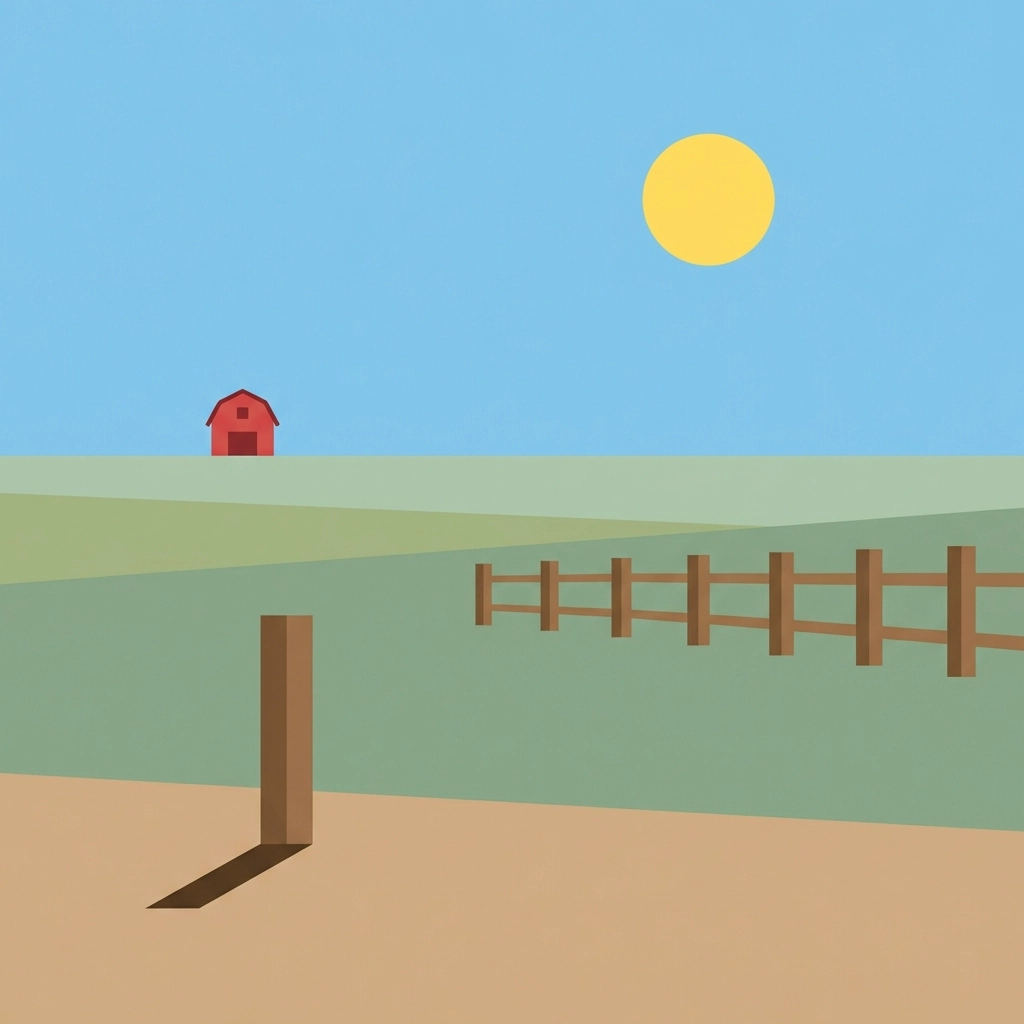
Additional advantages of farm settings:
- Flat terrain creates consistent shadow surfaces
- Natural markers like fence posts serve as permanent tracking objects
- Extended outdoor time allows multiple observations
- Varied objects (barns, tractors, hay bales) demonstrate scale differences
The farm becomes a living laboratory.
How Do Shadows Change Throughout the Day?
Morning shadows point west. They stretch long across the ground.
The sun rises in the east. Objects block that eastern light. Shadows fall in the opposite direction.
Midday shadows shrink. The sun climbs toward its highest point. Light arrives at a steeper angle. Less shadow results.
Afternoon shadows point east. They lengthen again as the sun descends toward the western horizon.
This cycle repeats daily. Predictable. Measurable. Observable.
What Materials Are Needed?
The supply list stays simple.
Essential items:
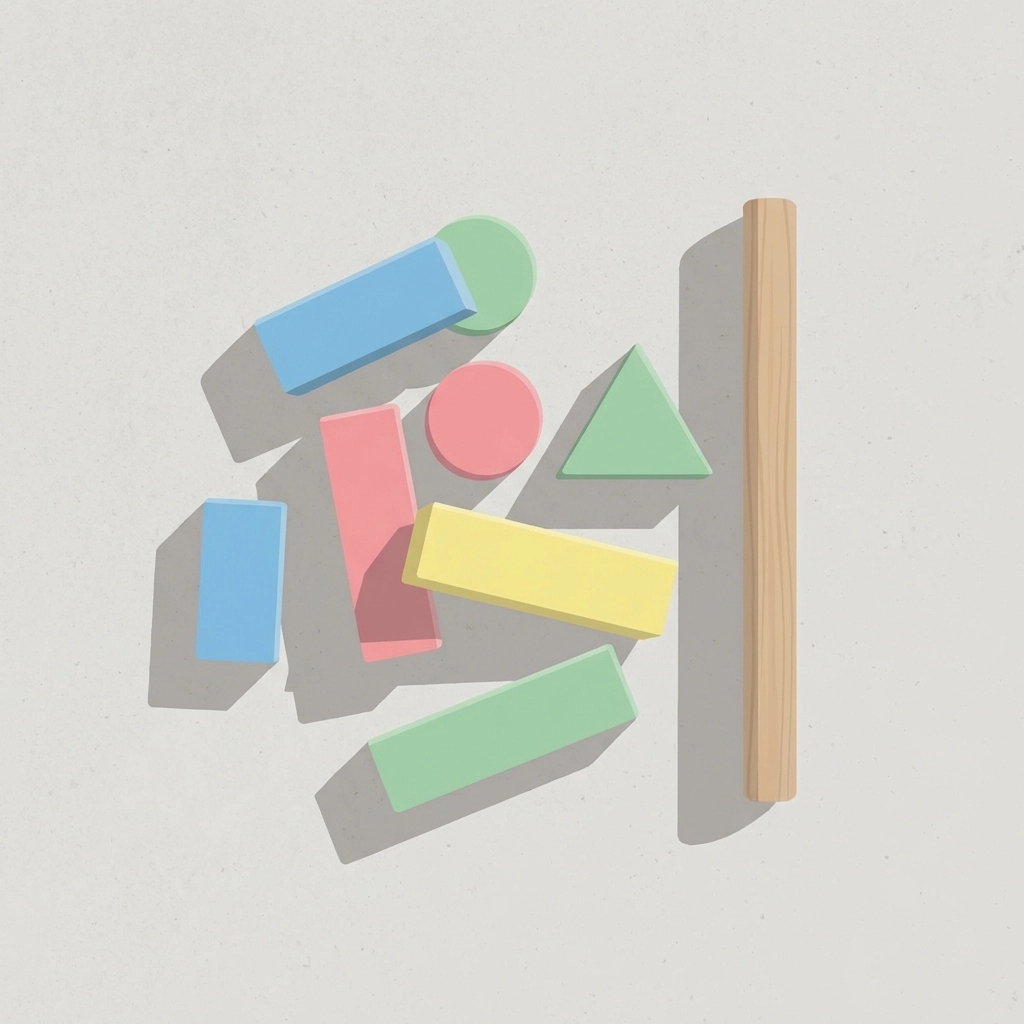
- Sidewalk chalk (multiple colors)
- A fixed object to track
- A flat surface (concrete, packed dirt, plywood)
- A watch or timer
Optional additions:
- Tape measure or ruler
- Notebook for recording data
- Wooden stake for a dedicated shadow post
Colored chalk matters. Each color represents a different time. Visual separation makes comparison immediate.
How to Set Up a Shadow Tracking Station
Select a location that receives sunlight for most of the day.
Avoid spots near tall structures. Afternoon shade from barns or silos interrupts the experiment.
Setup steps:
- Place a vertical object on a flat surface. A wooden dowel stuck in the ground works. A fence post already in place works better.
- Mark the base of the object with chalk. This becomes the reference point.
- At the first observation time, trace the shadow’s outline with one chalk color.
- Write the time next to the tracing.
- Return in 1-2 hours. Use a different color. Trace again.
- Repeat throughout the day.
By evening, the surface displays a fan of colored outlines. Each represents the sun’s position at a specific hour.
What Observations Should Be Recorded?
Data collection strengthens the learning experience.
Key measurements:
- Shadow length (in inches or centimeters)
- Shadow direction (cardinal or relative)
- Time of observation
- Weather conditions (clear, partly cloudy, hazy)
A simple chart organizes this information:
| Time | Shadow Length | Direction | Notes |
|---|---|---|---|
| 8:00 AM | 36 inches | West | Clear sky |
| 10:00 AM | 18 inches | Northwest | Clear sky |
| 12:00 PM | 6 inches | North | Sun overhead |
| 2:00 PM | 14 inches | Northeast | Partly cloudy |
| 4:00 PM | 28 inches | East | Clear sky |
Patterns emerge from the numbers. Morning and afternoon lengths mirror each other. Noon produces the shortest shadow.

What Science Concepts Does This Teach?
Shadow tracking introduces multiple scientific principles without textbooks.
Light behavior:
Shadows form when an opaque object blocks light. No light source means no shadow. The relationship stays constant.
Earth’s rotation:
The sun does not move across the sky. Earth rotates. This creates the illusion of solar movement. Shadow changes demonstrate rotation in real time.
Angles and geometry:
Shadow length depends on the angle of incoming light. Low angles create long shadows. High angles create short ones. Measurement introduces geometric thinking.
Time measurement:
Sundials use shadow position to indicate time. Shadow tracking recreates this ancient technology. The connection between astronomy and daily life becomes tangible.
Data collection:
Recording observations at intervals introduces scientific method. Hypotheses form. Evidence accumulates. Conclusions follow.
How Long Should the Experiment Run?
A single day provides meaningful results.
Start tracking by 8:00 AM. Continue until 5:00 PM or later. Observations every 1-2 hours capture sufficient change.
Extended experiments add depth:
- Multi-day tracking reveals consistency (same times produce similar shadows)
- Seasonal comparison shows how shadow angles change across months
- Solstice observations demonstrate extreme shadow lengths (shortest on summer solstice, longest on winter solstice)
One afternoon delivers the core lesson. Repeated sessions reinforce it.
What Variations Add Interest?
The basic experiment adapts easily.
Human shadow tracking:
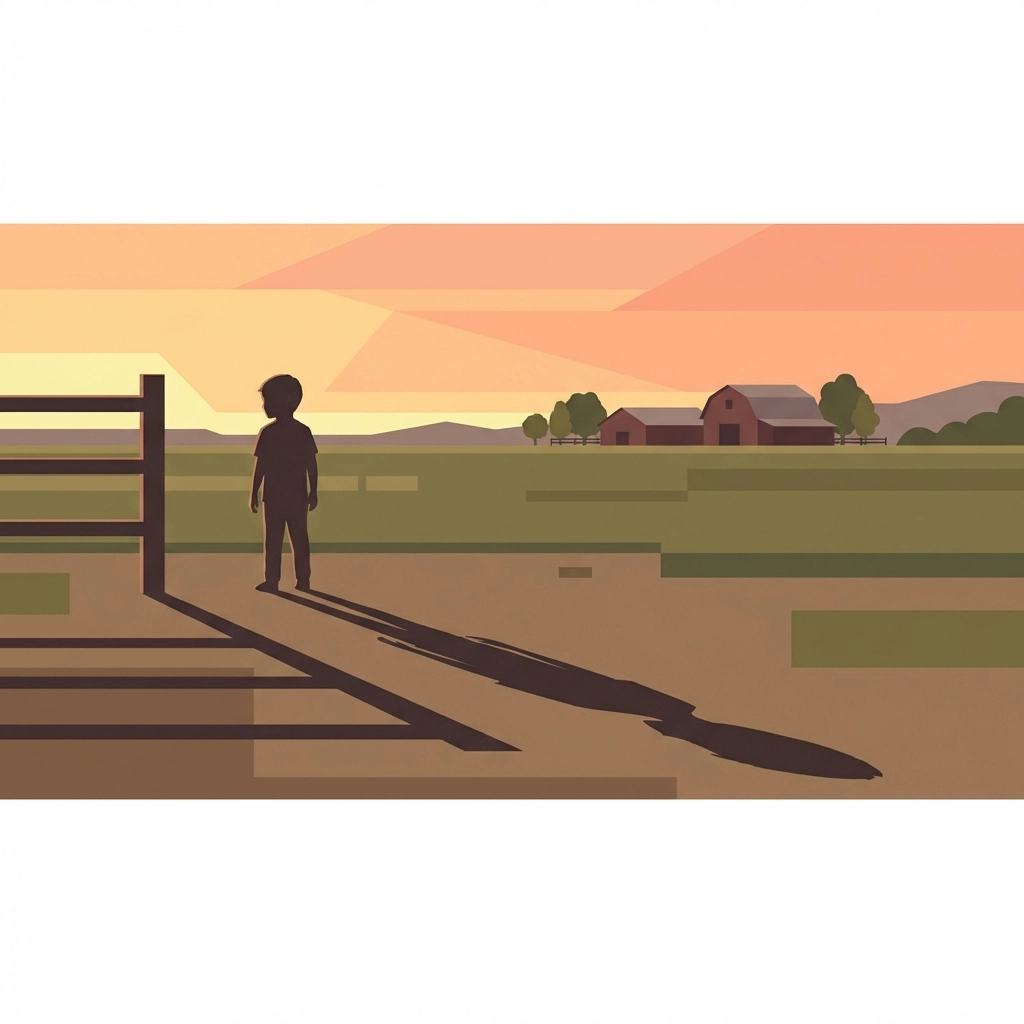
Stand in the same spot throughout the day. Trace body shadows with chalk. Watch the outline rotate and stretch.
Multiple object comparison:
Track shadows from objects of different heights simultaneously. A short post and a tall post. Compare how length ratios remain constant.
Obstacle course creation:
Predict where shadows will fall at a future time. Place markers. Return later to check accuracy.
Shadow matching:
Trace a morning shadow. Challenge participants to stand in the exact position that recreates that shadow length in the afternoon.
Each variation reinforces the same underlying science. Engagement stays high through novelty.
What If the Weather Turns Cloudy?
Clouds diffuse sunlight. Shadows become faint or disappear entirely.
This creates a teaching moment.
Sharp shadows require direct light. Overcast conditions scatter light in multiple directions. No single direction dominates. Shadows lose definition.
Wait for clearer conditions to resume accurate tracking. Partial cloud cover still produces observable shadows: they simply appear softer at the edges.
Weather interruptions demonstrate the relationship between light quality and shadow clarity.
How Does This Connect to Larger Concepts?
Shadow tracking serves as an entry point.
The same principles govern:
- Solar panel positioning
- Architectural design for natural lighting
- Agricultural planting decisions
- Navigation without instruments
Understanding how the sun appears to move across the sky builds foundational knowledge. That knowledge applies across disciplines.
A chalk tracing on a farm leads to comprehension of planetary mechanics. The simple reveals the complex.
Final Observation
Shadows tell time. They map the sky. They demonstrate physics without equations.
Farm shadow tracking requires nothing more than sunlight and attention. The results stay visible on the ground long after the experiment ends.
The sun moves. The Earth turns. The shadows prove it.