




Yes—you can garden with kids all winter in Zone 6. The trick is running a simple indoor growing “relay” (mushrooms + microgreens + seed starting), then hardening off in April and transplanting after your last frost.
The road from snow to salad starts in December with indoor mushrooms and moves to outdoor planting in May. If you live in Zone 6 (think Pennsylvania, Ohio, Kansas, or anywhere with an average last frost around mid-April to early May), your outdoor gardening season is basically on pause from November through April. But here's the thing, your family's growing season doesn't have to stop just because there's frost on the windows.
This roadmap gives you a month-by-month plan to keep little hands busy with real growing projects all winter long, so when May finally arrives, your kids aren't starting from scratch. They're finishing what they started.
Can You Garden with Kids in Winter If You Live in Zone 6?
Yep. In Zone 6, winter “gardening” just means indoor growing. You keep things moving with mushrooms + microgreens + seed starting, then shift outdoors once temperatures cooperate.
Zone 6 winters mean frozen ground, short days, and temperatures that regularly dip below freezing. Traditional outdoor gardening won't work until late April at the earliest, and tender plants need to wait until mid-May to be safe. But indoor projects like mushroom buckets, seed starting trays, and countertop microgreens give kids hands-on growing experience without any risk of frost damage.
Think of winter as your family's "Farm Lab" season. It's when you experiment, observe, and prepare for the big outdoor push in spring.
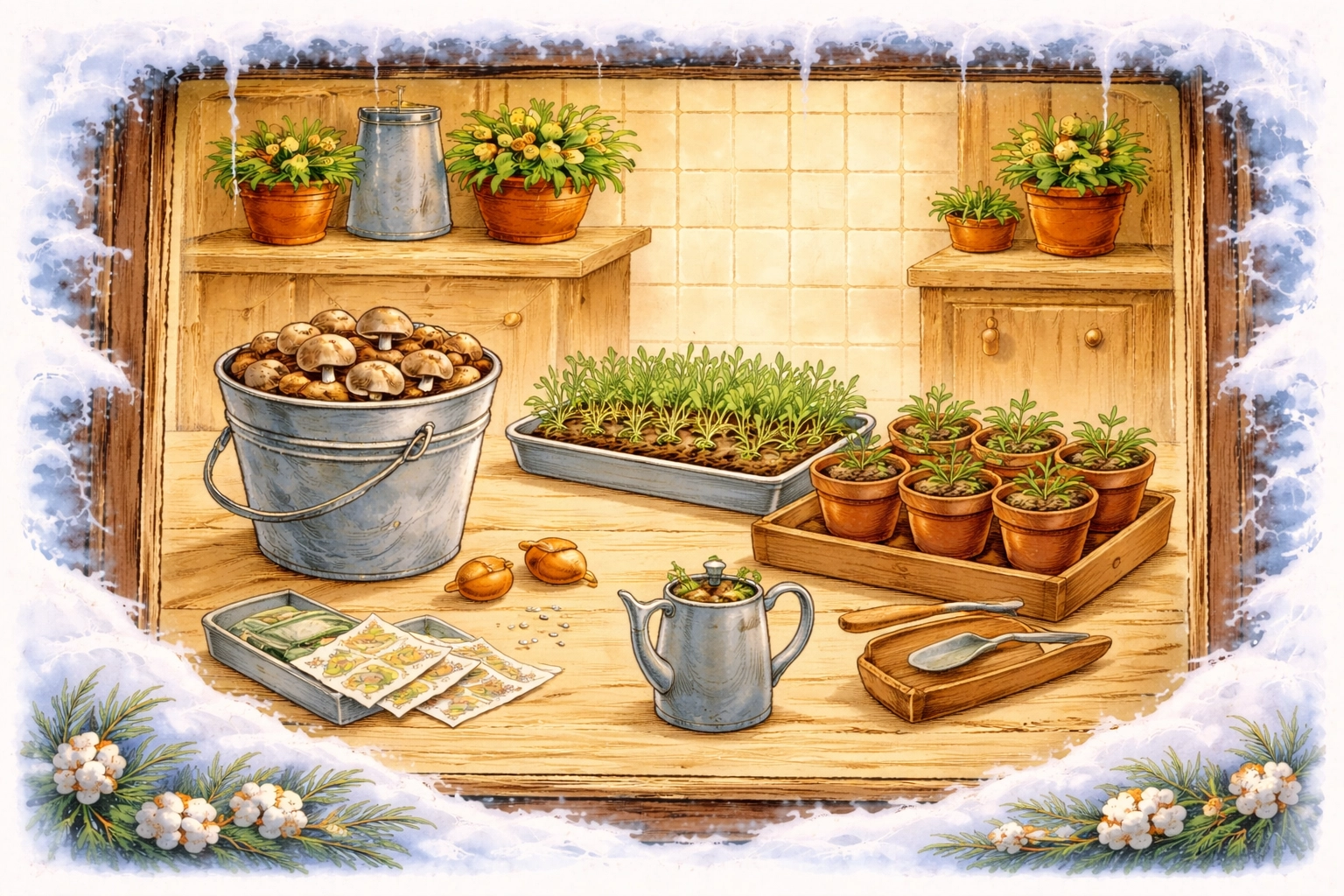
The Winter-to-Spring Timeline at a Glance
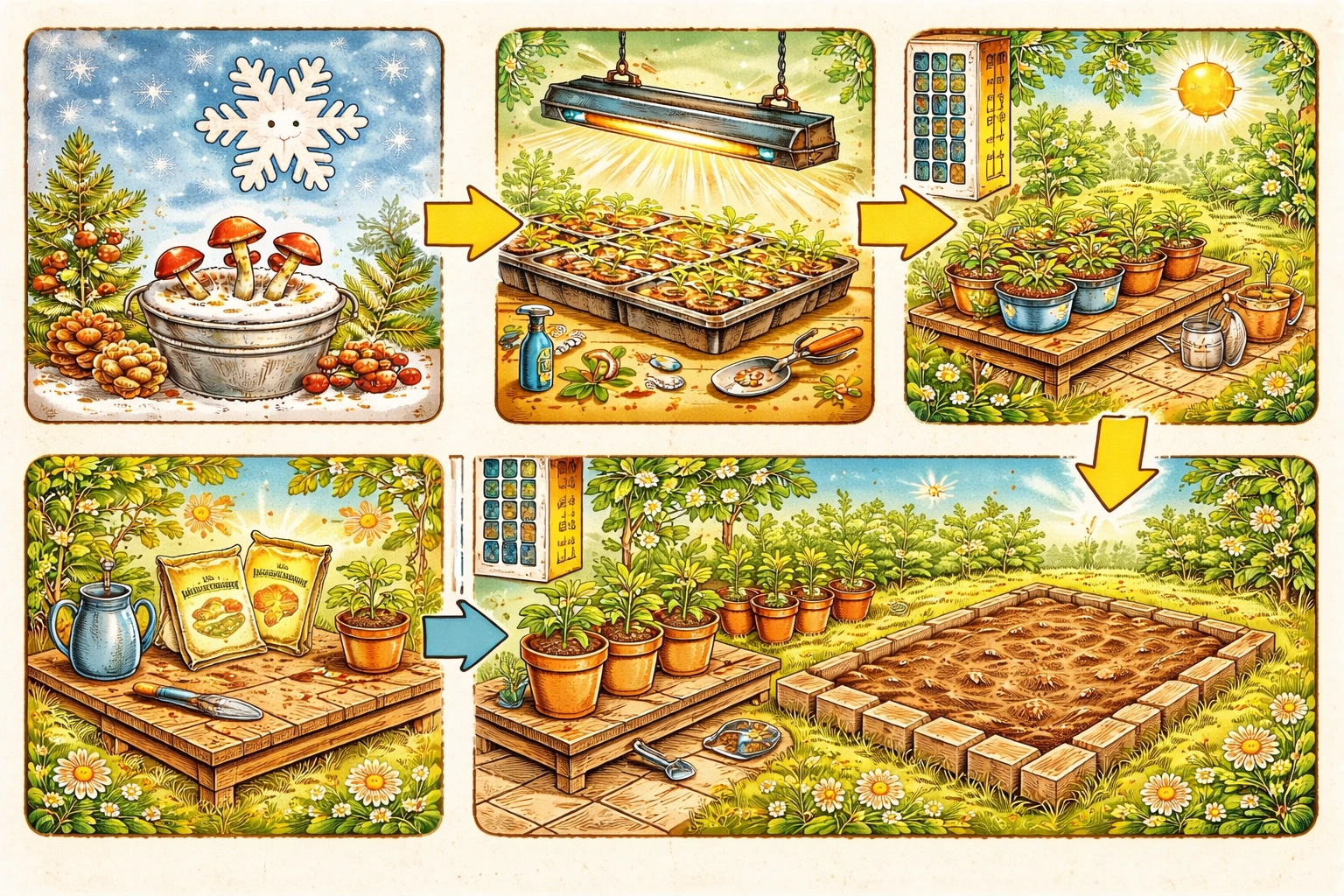
Here's your family's growing calendar from January through May:
| Month | Project Focus | What Kids Learn |
|---|---|---|
| January–February | Mushroom buckets, microgreens/sprouts | Patience, daily observation, food cycles |
| March | Seed starting indoors | Germination, light needs, measuring growth |
| April | Hardening off, soil prep | Weather awareness, plant resilience |
| May | Transplanting outdoors | Timing, care, the full seed-to-salad cycle |
This isn't about cramming in as many projects as possible. It's about giving your family one meaningful focus each month that builds toward that satisfying moment when you eat something you grew from the very beginning.
January–February: What Should We Grow Indoors First (When It’s Freezing Outside)?
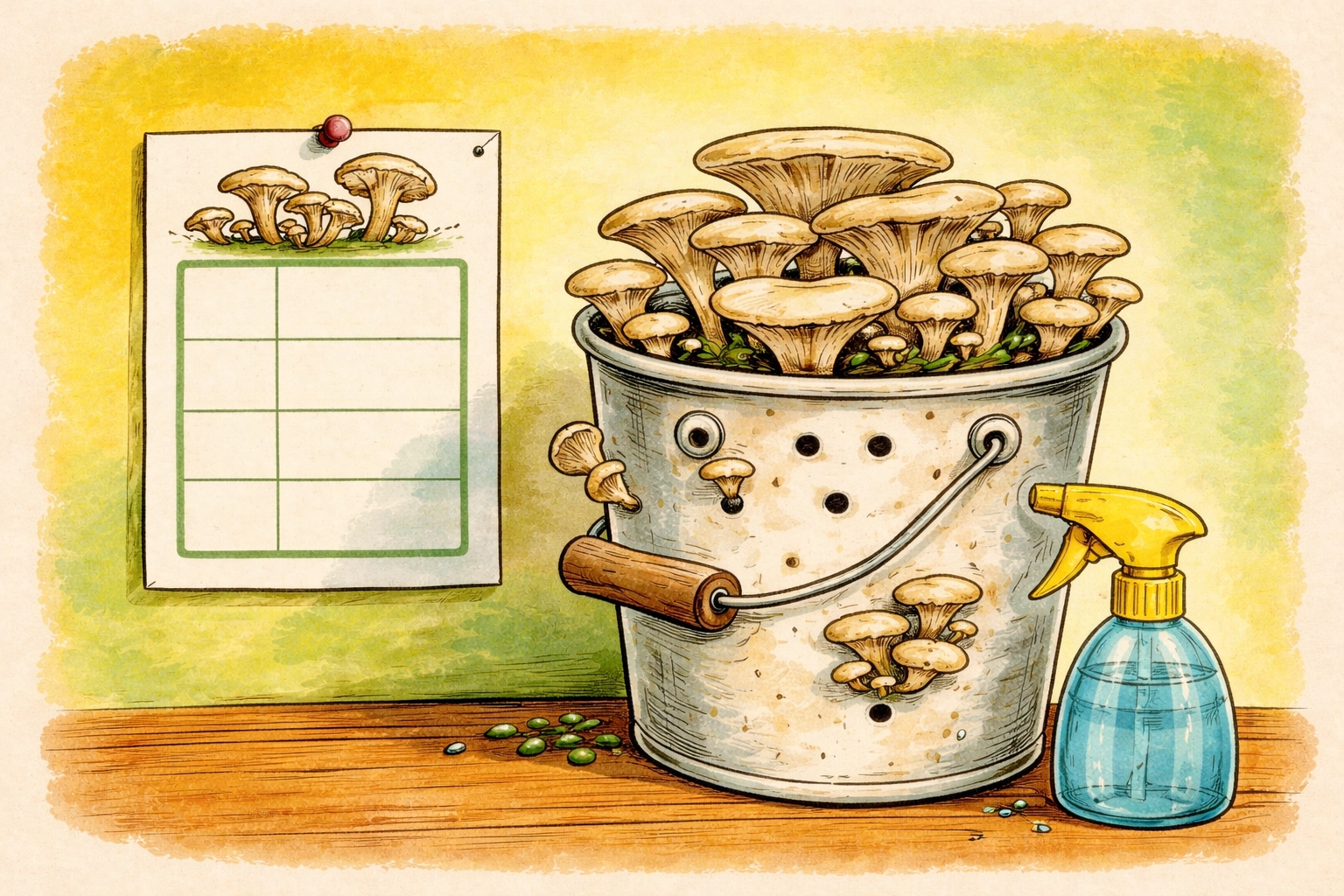
When snow piles up outside, your kitchen or basement becomes a working farm lab. These two months are perfect for projects that take time to develop, like mushrooms and microgreens.
Mushroom Buckets (4–6 Weeks to Harvest)
A 5-gallon bucket oyster mushroom tower is one of the best winter projects for families. It's affordable (under $20 to start), fits in a closet or basement corner, and produces actual food your kids can eat.
The process is simple: drill holes in a bucket, layer pasteurized straw with mushroom spawn, and wait. Kids can mist the bucket daily, watch for pins (baby mushrooms), and track growth in a journal. The whole cycle from setup to harvest takes about 4–6 weeks.
For a complete walkthrough, check out our guide to growing vertical mushrooms indoors.
March: When Should Zone 6 Families Start Seeds Indoors?
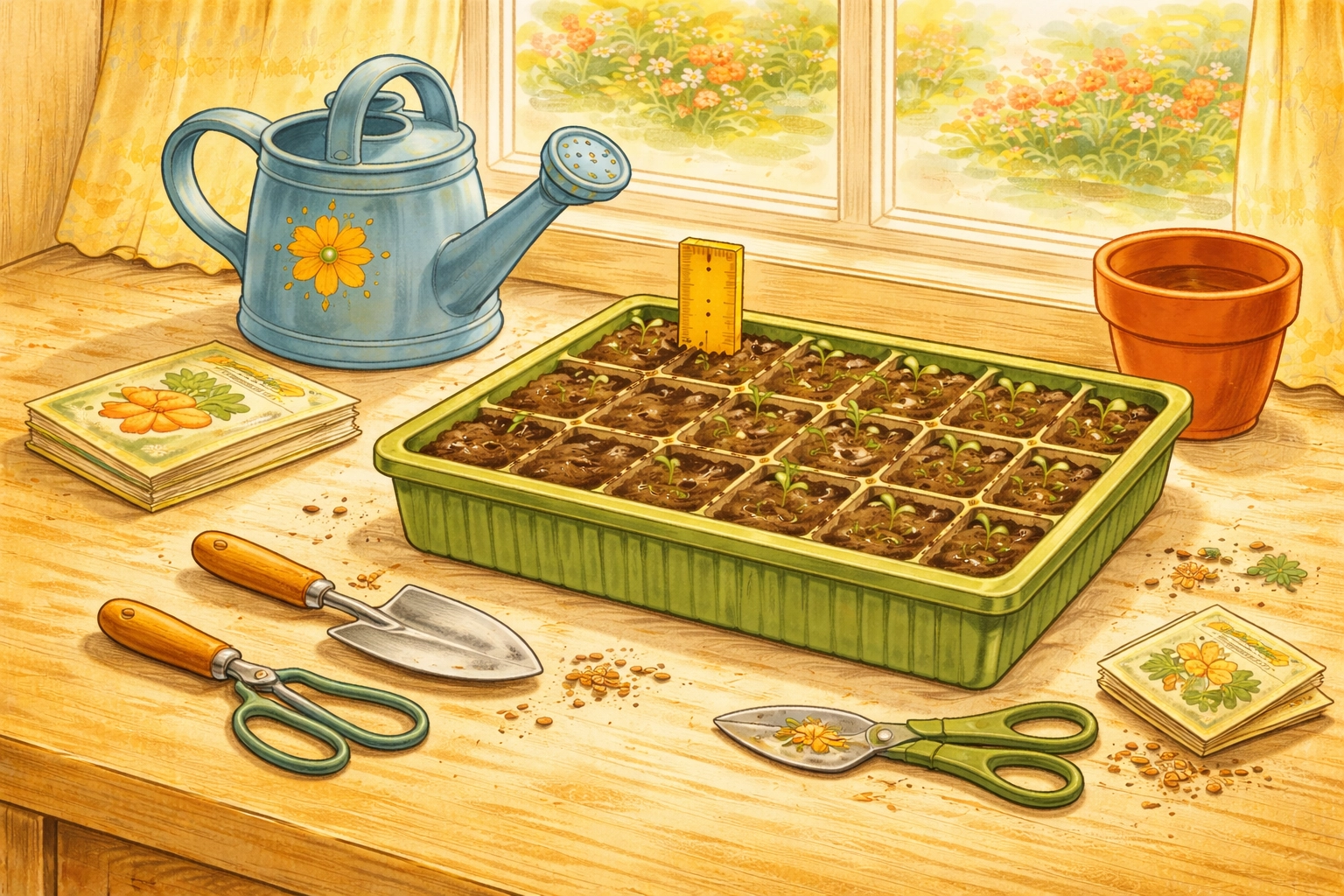
By March, the days are getting noticeably longer. This is when your family shifts from observation projects to active growing.
Starting Seeds Indoors
Most Zone 6 gardeners start seeds indoors 6–8 weeks before their last frost date. If your average last frost is around May 1st, that means starting seeds in early to mid-March.
Good beginner seeds for families include:
- Lettuce – Fast germination, ready for salads
- Tomatoes – Classic, and kids love watching them grow tall
- Basil – Fragrant and pairs perfectly with those tomatoes
- Marigolds – Bright, cheerful, nearly impossible to fail
You don't need fancy equipment. A sunny south-facing window works, though a basic grow light helps if your house doesn't get much natural light. Use seed starting mix (not regular potting soil), keep it moist but not soggy, and let kids track germination dates in a simple chart.
Kitchen Counter Quick Wins
If you want something faster while you wait for seeds to sprout, microgreens and sprouts are ready in 7–10 days. Kids can handle the daily rinsing, and they get to taste the results almost immediately.
This is also a great time to try regrowing kitchen scraps, lettuce bottoms, green onion roots, and celery bases all regenerate on a windowsill with just water.
April: How Do You Harden Off Seedlings in Zone 6 Without Killing Them?
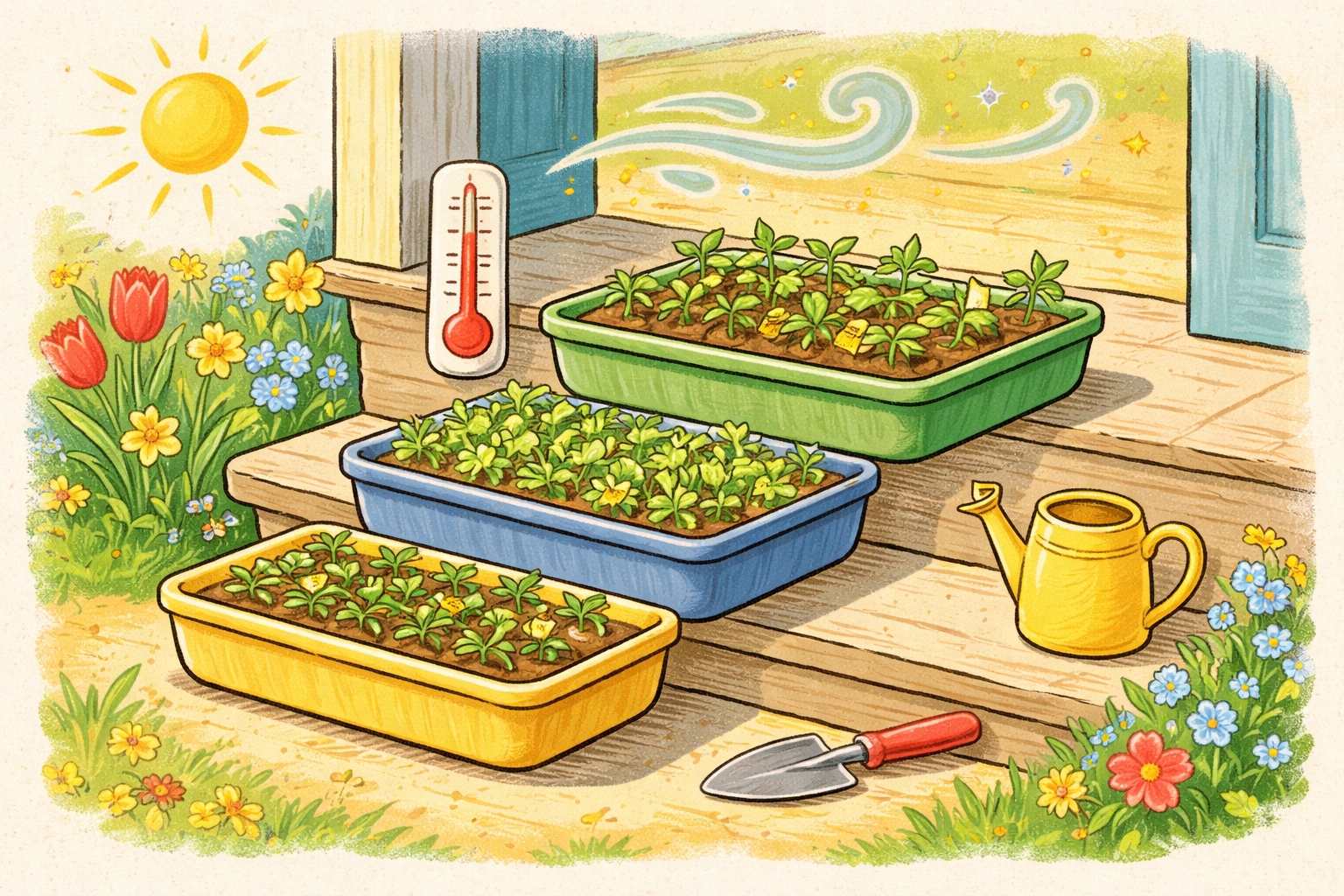
April in Zone 6 is tricky. Some days feel like spring, others dump a surprise snowstorm. This month is about patience and preparation.
Hardening Off Seedlings
Those indoor seedlings need to toughen up before they can handle outdoor conditions. Starting around mid-April (weather permitting), bring your trays outside for a few hours each day. Start in a shaded, sheltered spot, then gradually increase sun exposure and time outdoors over 7–10 days.
Kids can be in charge of the daily "seedling field trips", carrying trays outside in the morning and bringing them back before temperatures drop at night.
Preparing Outdoor Beds
If your soil has thawed, April is the time to:
- Pull back any protective mulch from last year
- Loosen the top few inches of soil with a garden fork
- Mix in compost (store-bought bagged compost works great if you don't make your own)
- Set up any trellises or supports for climbing plants
This is physical work that kids can genuinely help with. Shoveling compost, pulling old plant debris, and raking beds smooth are all age-appropriate tasks for the 5+ crowd.
May: When Is It Safe to Transplant Outdoors in Zone 6?
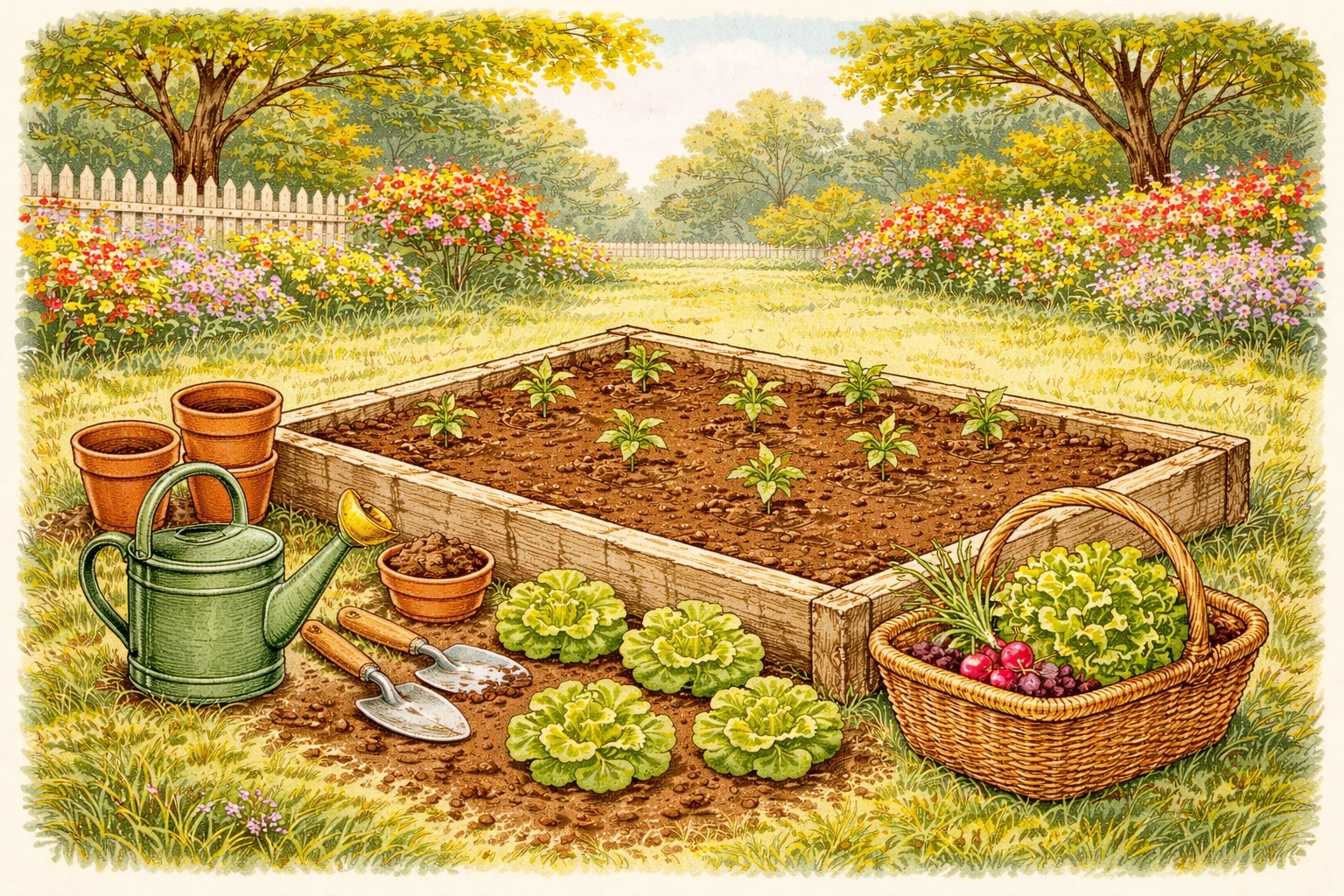
The moment you've been building toward all winter. Once your last frost date passes (check local forecasts, don't just trust the calendar), it's safe to transplant tender seedlings outdoors.
The Big Move
Choose a cloudy day or late afternoon for transplanting to reduce stress on young plants. Dig holes slightly larger than your seedling's root ball, gently remove plants from their containers, and settle them into the soil at the same depth they were growing indoors.
Water deeply right after transplanting, and consider adding a thin layer of mulch around (not touching) the stems to help retain moisture as summer heat arrives.
The Payoff
By late May or early June, those lettuce seeds you started in March will be ready for your first homegrown salad. The tomatoes will be establishing strong roots. And your kids will have experienced the complete cycle, from a frozen January morning watching mushroom pins emerge, all the way to eating greens they planted themselves.
That's the real goal here. Not just keeping kids busy during winter, but showing them that growing food is a year-round practice, not just a summer hobby.
Frequently Asked Questions (Quick Answers)
What's the Cheapest Indoor Gardening Project for Families in Winter?
Regrowing kitchen scraps costs almost nothing, just water and a sunny windowsill. Microgreens are the next cheapest, requiring only seeds, a shallow tray, and basic potting mix.
What's a Good Indoor Project for January–February Besides Mushrooms?
Microgreens and sprouts are quick wins (usually 7–10 days), and they pair perfectly with the longer mushroom timeline. Kids can help rinse, mist, and track day-by-day changes without needing outdoor space or warm weather.
How Long Does It Take to Grow Oyster Mushrooms in a Bucket?
From inoculation to first harvest, expect about 4–6 weeks. After the first flush, you may get 2–3 additional harvests over the following months.
Is a 5-Gallon Mushroom Bucket Safe to Keep in a Bedroom or Basement?
Yes, with proper ventilation. Mushrooms release spores when mature, so harvesting before caps flatten fully minimizes spore release. A basement, garage, or well-ventilated utility room is ideal. Bedrooms work but benefit from cracking a window occasionally.
Tierney Family Farms Disclaimer: The information in this blog post is for educational purposes only and isn't intended to replace professional advice. Supervise children during all projects. Ensure proper identification before eating any homegrown mushrooms. Test your soil before planting and adjust based on local Extension office recommendations. Growing conditions vary; your results may differ from what's described here.
References (Peer-Reviewed)
- Fierro-Cabo, A. (2024). Preparing for the Worst: Enhancing Seedling Traits to Reduce Transplant Shock in Semi-Arid Regions. Forests (MDPI). https://www.mdpi.com/1999-4907/15/9/1607
- Kaya, Ş. (2025). Microgreens: nutritional properties, health benefits, production techniques, and food safety risks. PeerJ. https://peerj.com/articles/17938/
- Zewdie, S. & Solomon, A. (2016). Growth and yield performance of Pleurotus ostreatus (oyster mushroom) on different substrates. AMB Express. https://amb-express.springeropen.com/articles/10.1186/s13568-016-0265-1