




What is NFT hydroponics and how does it work? NFT (Nutrient Film Technique) uses a shallow, sloped stream of water to flow continuously over plant roots. It relies on gravity to keep the thin film of nutrient water moving from one end of a channel to the other, no complicated machinery required, just clever engineering and the same force that keeps your feet on the ground.
Welcome back, Junior Engineers! We've explored pumps, reservoirs, pH, EC meters, and dissolved oxygen. Now it's time to tackle one of the most elegant hydroponic systems ever designed, one that harnesses a force you've known your whole life: gravity.
What Makes NFT Different From Other Systems?
Most hydroponic systems we've studied so far keep roots sitting in water or use timers to flood and drain growing beds. NFT takes a completely different approach.
Imagine a gently tilted slide at the playground. Now imagine a very thin layer of water flowing down that slide, so thin you could almost see through it. That's essentially what NFT does for plants.
Instead of dunking roots in a bucket or flooding a tray, NFT systems create a continuous moving stream of nutrient-rich water. The roots sit in a shallow channel, and the water flows past them like a slow-motion river, delivering food and oxygen before draining back to a reservoir to be pumped up and used again.
It's a closed loop powered by physics.
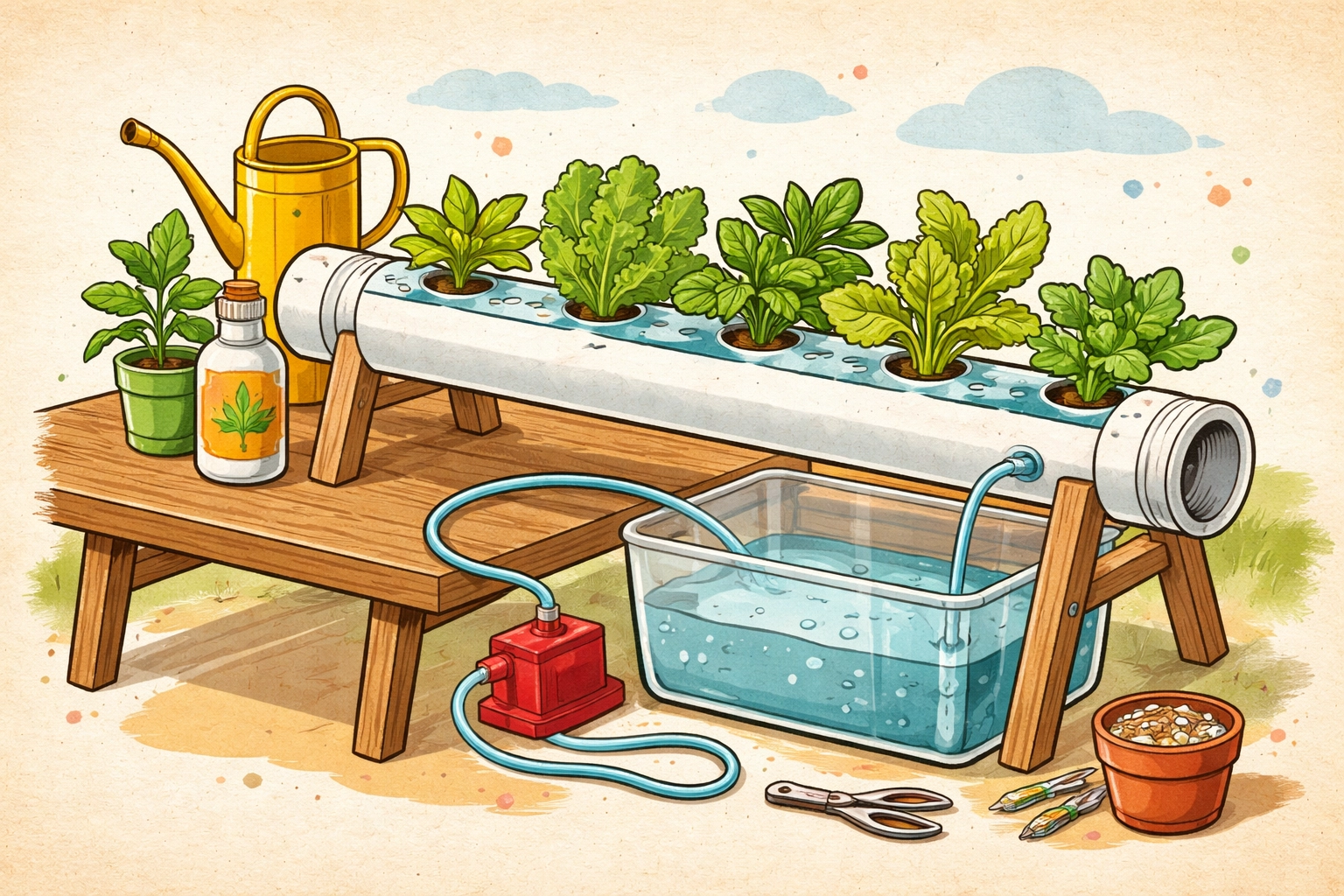
The Science of the Slope: Why Angle Matters
Here's your first engineering lesson: water flows downhill. That might sound obvious, but the angle of that hill determines everything in an NFT system.
NFT channels need a slope between 1% and 3% (also called a 1:100 to 3:100 grade). What does that mean in real measurements?
- A 1% slope means the channel drops 1 centimeter for every 100 centimeters (1 meter) of length.
- A 2% slope means it drops 2 centimeters per meter.
If the slope is too flat, water pools and becomes stagnant, roots can drown and rot. If it's too steep, water rushes past too quickly and roots can't absorb enough nutrients.
According to Virginia Tech's hydroponic system design guidelines (SPES-463), maintaining the correct slope ensures the nutrient solution moves at just the right pace: fast enough to stay oxygenated, slow enough for roots to drink their fill.
Junior Engineer Tip: You can check slope using a simple bubble level or by measuring the height difference between the two ends of your channel with a ruler.
The "Film" in Nutrient Film Technique
Now for the really clever part. The water flowing through an NFT channel isn't deep, it's just a thin film, usually only 1-3 millimeters deep. This shallow stream is the heart of the entire technique.
Why so thin? Because of the root mat.
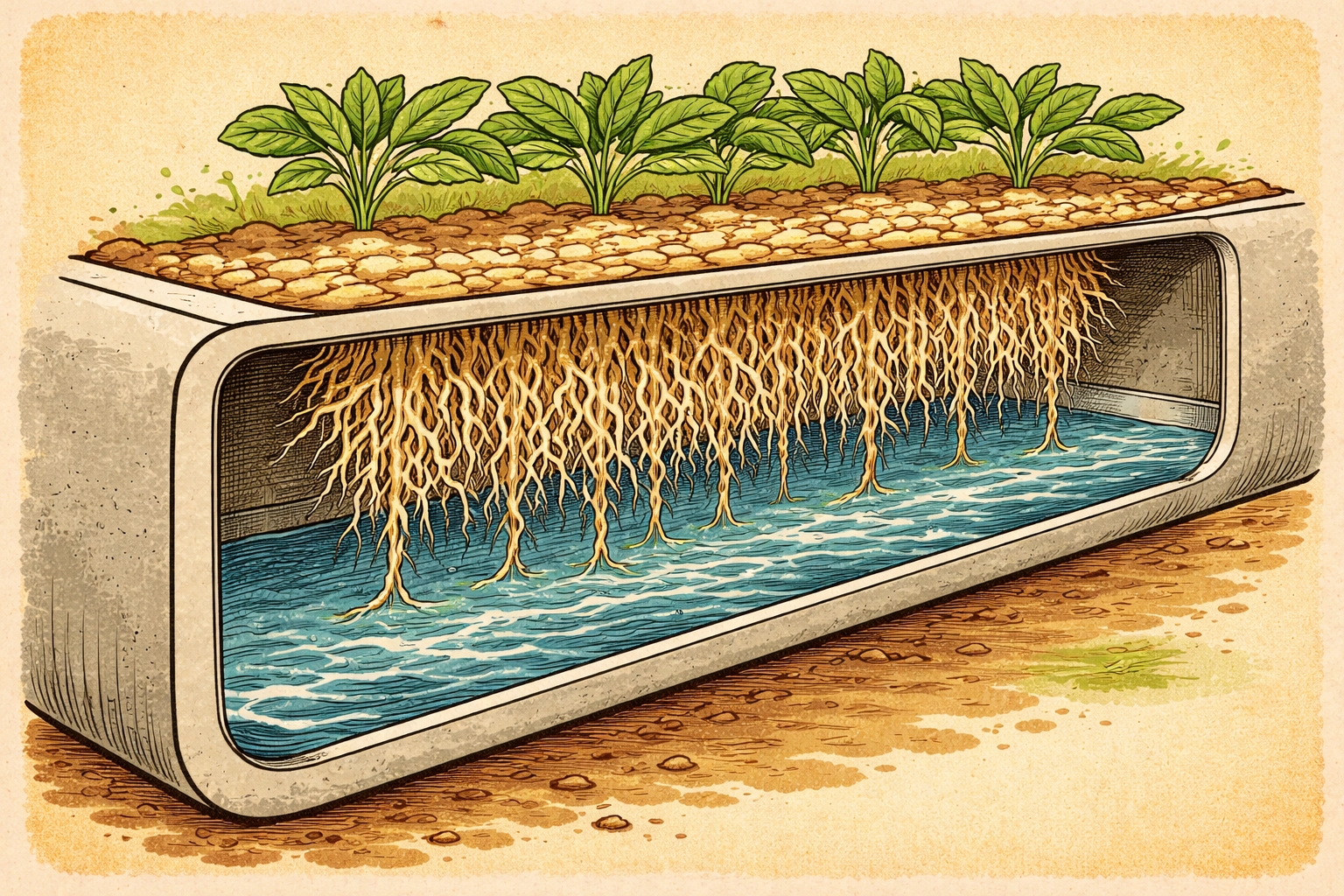
As plants grow in an NFT channel, their roots spread out along the bottom, creating a dense, tangled mat. The thin film of nutrient water flows through and under this root mat, making direct contact with hungry root tips. Meanwhile, the upper portion of the roots stays exposed to the air above the water line.
This design gives plants the best of both worlds:
- Lower roots absorb water and dissolved nutrients from the flowing film.
- Upper roots absorb oxygen directly from the air.
Remember our lesson on dissolved oxygen? Roots need to breathe! NFT systems naturally solve the oxygen problem by keeping most of the root system in contact with air while still delivering a constant supply of food and water.
Flow Rate: The Goldilocks Zone
Getting the slope right is only half the equation. The flow rate, how much water moves through the channel per minute, is equally important.
Most NFT systems operate best at 1 to 2 liters per minute for established plants. If you're just starting seeds or growing very small seedlings, you might begin at 0.5 liters per minute and increase as the plants develop larger root systems.
Research from the University of Maryland (published through MDPI) examined flow rates between 4-6 liters per minute for commercial operations with larger channels. For home and educational systems, staying in the 1-2 L/min range keeps things manageable and efficient.
Too slow: Water can become depleted of oxygen before reaching the end of the channel. Roots at the far end suffer.
Too fast: Water rushes past before roots can absorb nutrients. You waste electricity running a bigger pump, and plants stay hungry.
Finding that Goldilocks zone, not too fast, not too slow, is what separates a thriving NFT system from a struggling one.
The Pump-Gravity Partnership
Here's something beautiful about NFT engineering: the pump only does one job. It lifts nutrient solution from the reservoir up to the high end of the growing channel. After that, gravity does all the work.
The water flows downhill through the channel, past all the plant roots, and drains back into the reservoir at the low end. The pump lifts it again, and the cycle continues 24 hours a day.
This makes NFT systems remarkably water-efficient. Research shows NFT can use up to 90% less water than traditional soil gardening because the same water circulates over and over. Nothing soaks into the ground and disappears.
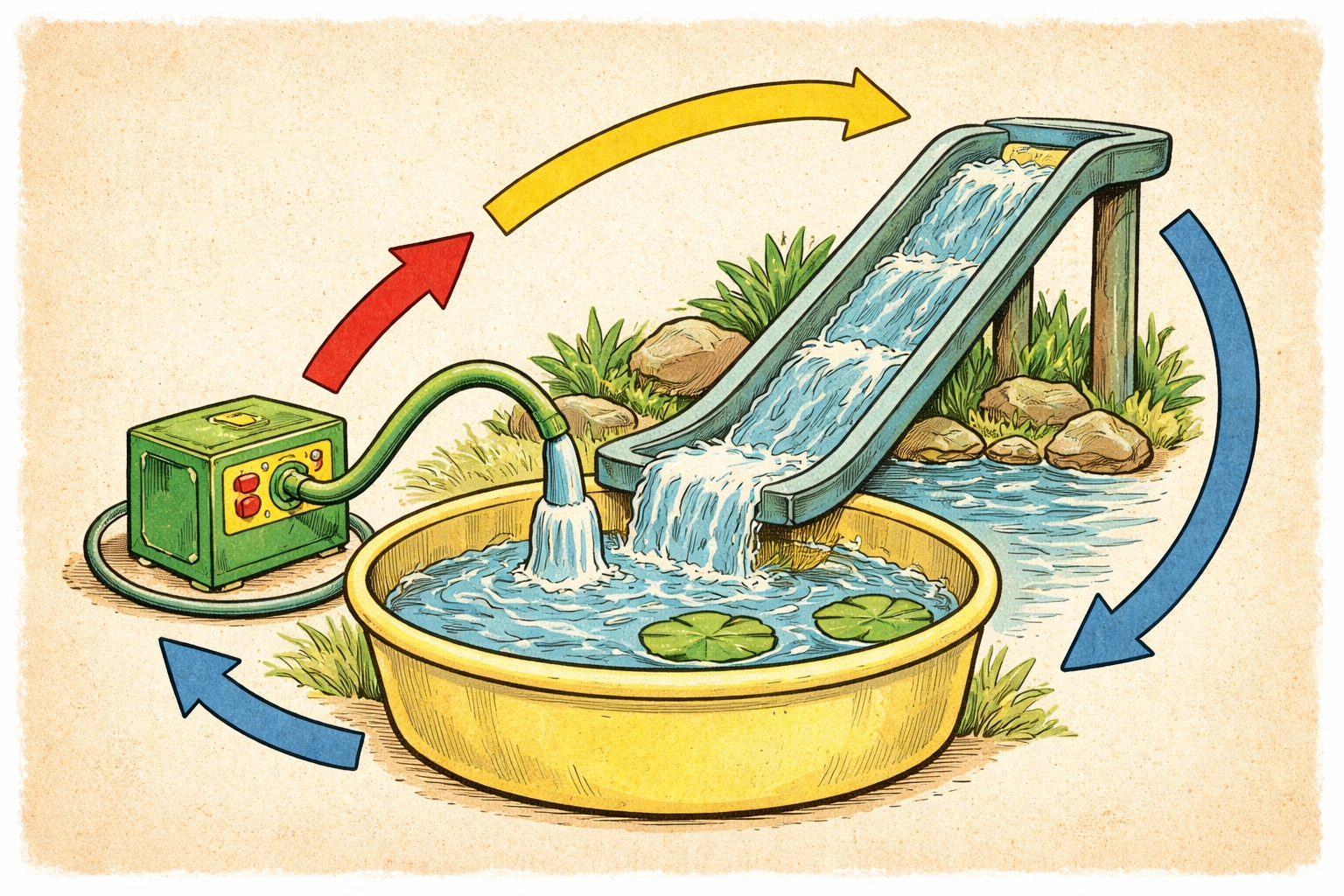
However, this efficiency comes with one important warning: NFT systems depend entirely on that pump running. If the pump fails, from a power outage, a clog, or mechanical breakdown, the flow stops. Without that thin film of water, roots can begin drying out within hours.
Unlike deep water culture where roots sit in a reservoir of water, NFT roots are only wet when water is actively flowing. That's why many serious growers keep backup pumps or battery systems ready.
Why Roots Love the River
Let's put it all together from the plant's perspective.
Imagine you're a lettuce plant. Your roots dangle into a gently sloped channel. All day and all night, a cool stream of nutrient-rich water flows past your root tips. You can drink whenever you want, the buffet never closes. Your upper roots breathe fresh air. You never sit in stagnant, oxygen-depleted water.
This constant access to food, water, and oxygen is why NFT-grown plants often mature faster and produce higher yields than their soil-grown cousins. The plant doesn't have to search for nutrients or compete with soil microbes. Everything it needs flows right past its roots, minute after minute.
Quick Reference: NFT System Parameters
| Parameter | Recommended Range |
|---|---|
| Channel slope | 1-3% (1-3 cm drop per meter) |
| Flow rate | 1-2 liters per minute |
| Film depth | 1-3 millimeters |
| pH | 5.5-6.5 |
| Best crops | Lettuce, herbs, leafy greens |
Frequently Asked Questions
Can kids build an NFT system at home?
Yes! Simple NFT systems can be built using PVC pipes or rain gutters. Adult supervision is needed for cutting materials and setting up the pump, but kids can handle planting, monitoring flow, and checking pH levels.
What happens if my NFT channel isn't level side-to-side?
Water will pool on one side and leave the other side dry. Roots on the dry side won't get nutrients. Always check that your channel is level horizontally, even though it's sloped lengthwise.
Why are my NFT plants wilting even though water is flowing?
Check your flow rate: it might be too slow, leaving roots at the end of the channel without enough oxygen or nutrients. Also verify your pump is working at full capacity and there are no clogs.
Is NFT better than deep water culture?
Neither is "better": they're different tools. NFT uses less water and works great for leafy greens. Deep water culture is more forgiving of pump failures. Many growers use both!
Linda's Disclaimer
The information in this Junior Engineer's Guide is intended for educational purposes to help families explore hydroponic growing together. Always supervise children around water, electricity, and nutrient solutions. System parameters may vary based on your specific setup, climate, and plant varieties. When in doubt, start conservative and adjust based on how your plants respond. Tierney Family Farms provides general guidance: your results depend on your unique growing conditions.
References
- Virginia Tech Cooperative Extension. "Hydroponic Systems Design." SPES-463.
- MDPI – University of Maryland research on NFT flow rates and system optimization.
- General hydroponics research on Nutrient Film Technique parameters and best practices.
Next up in the Junior Engineer's Guide: We're building on everything we've learned to explore complete system design. Stay curious, stay growing!