



Kids make sock puppet friends by gluing simple features: eyes, mouth, and hair: onto an old sock. The entire project takes 20 to 30 minutes. No sewing required.
This activity works for ages 4 and up. Younger children need adult supervision with hot glue. Older kids handle the process independently.
Total cost stays under $15. Most families already own the core supplies.
Sock puppets teach basic crafting skills. They encourage imaginative play. They create something tangible from discarded materials.
The result is a custom character ready for storytelling, puppet shows, or quiet companionship.
What Supplies Are Needed for Sock Puppets?
Gather materials before starting. Preparation prevents interruptions mid-project.
Required supplies:
- One clean sock (any size, any color)
- Hot glue gun with glue sticks
- Scissors
- Small piece of cardboard (cereal box works)
- Googly eyes (2 per puppet)
Optional embellishments:
- Pom poms (various sizes)
- Yarn scraps
- Felt sheets
- Buttons
- Markers
- Pipe cleaners
- Ribbon
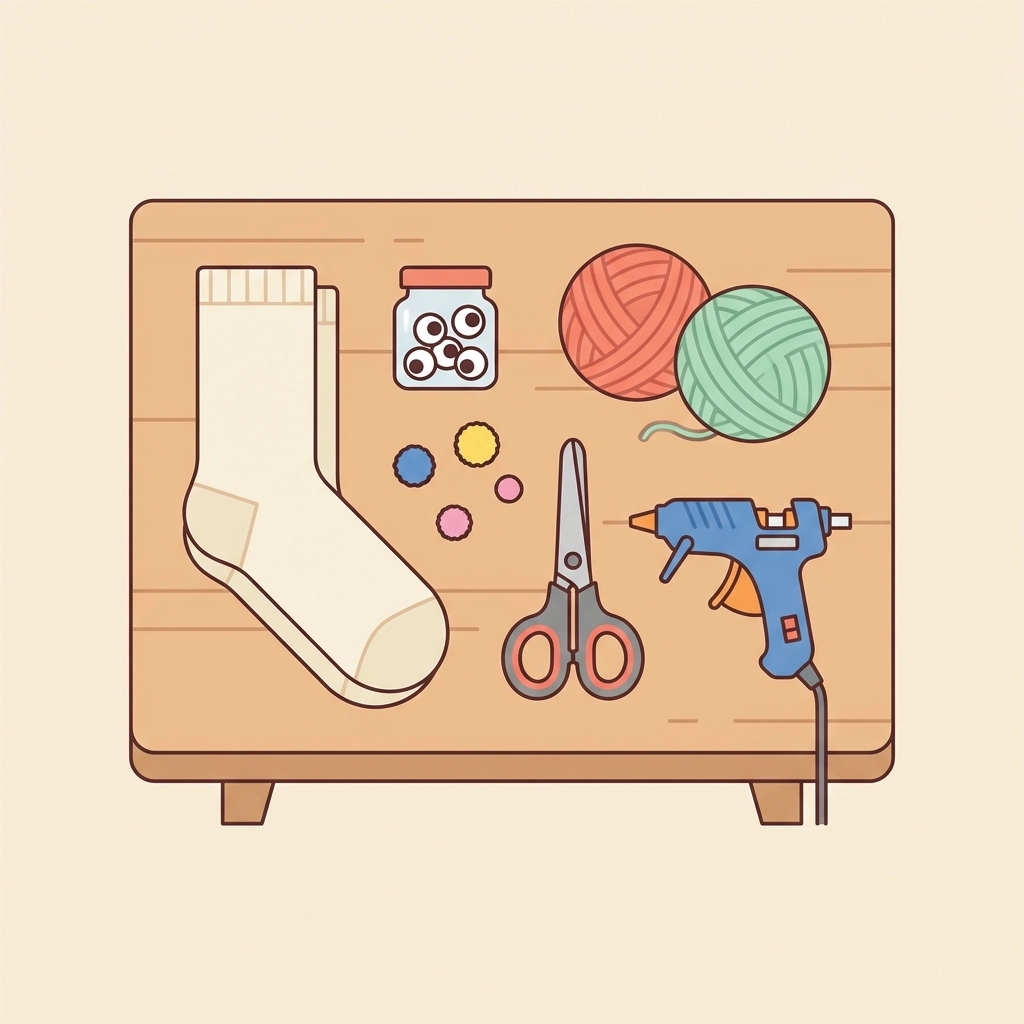
The sock becomes the puppet body. Longer socks create puppets that extend up the arm. Shorter socks work for smaller hands.
Mismatched socks find purpose here. Holes near the toe area pose no problem. The puppet mouth covers imperfections.
Cardboard creates the mouth structure. A standard cereal box provides enough material for multiple puppets.
Googly eyes add instant personality. Different sizes create different expressions. Larger eyes suggest surprise. Smaller eyes appear more serious.
Everything else is optional. Start simple. Add complexity based on time and interest.
How Does the Mouth Construction Work?
The mouth gives the puppet its voice. This step takes 5 to 10 minutes.
Step 1: Cut a piece of cardboard roughly the size of an adult palm. Approximate dimensions work fine.
Step 2: Draw an oval shape on the cardboard. Cut it out.
Step 3: Fold the oval in half along its length. This crease becomes the hinge.
Step 4: Insert a hand into the sock. Position fingers in the toe area. Locate where the mouth naturally falls when the hand opens and closes.
Step 5: Apply hot glue to the outer edges of the folded cardboard. Press it firmly inside the sock at the marked position.
Step 6: Hold in place for 30 seconds. The glue sets quickly.
The cardboard creates structure. Without it, the mouth flops. With it, the puppet speaks with definition.
Test the mouth before moving forward. Open and close the hand inside the sock. The cardboard should move smoothly with the motion.
Adjustments happen now, not later. Reposition if needed before the glue fully cures.
What Makes Eyes Look Best on Sock Puppets?
Eyes establish character immediately. This step takes 5 minutes.
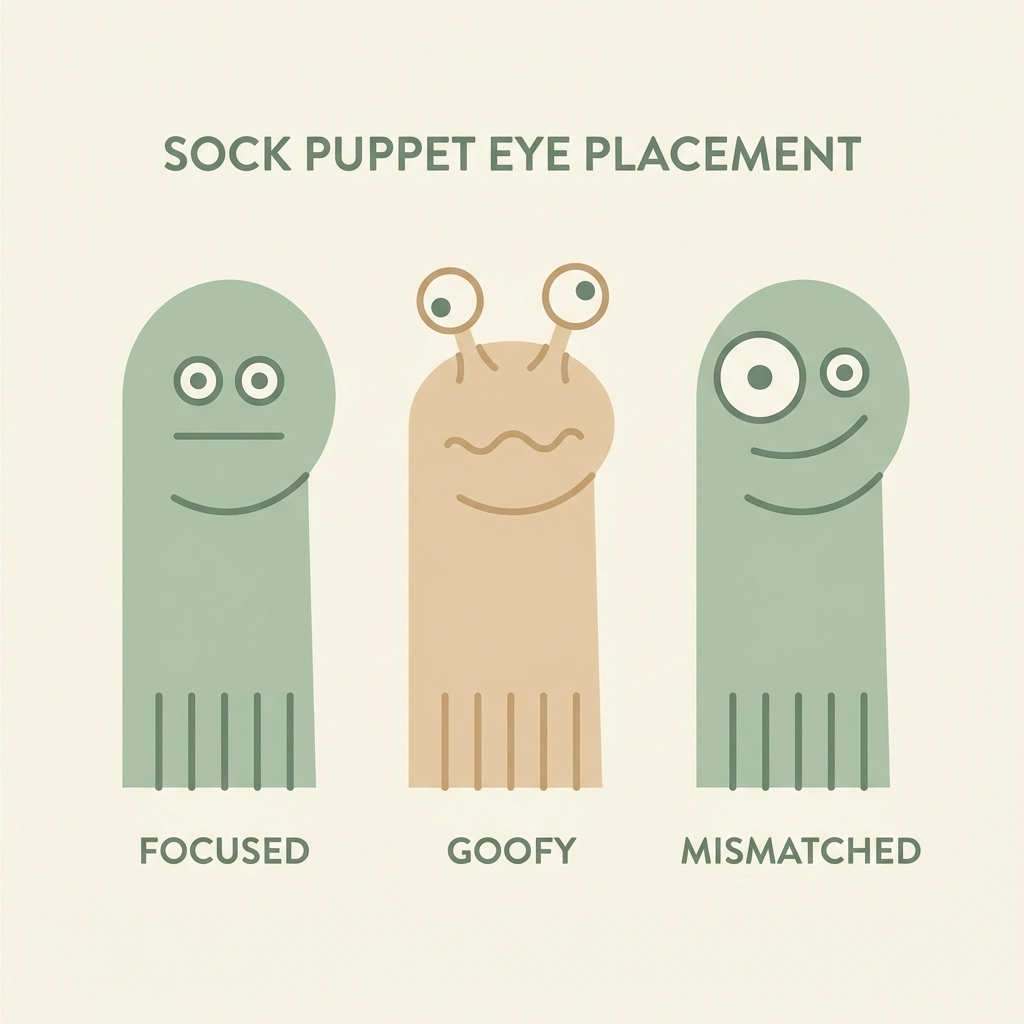
Basic approach: Glue googly eyes directly onto the sock fabric above the mouth. Position them side by side or slightly angled.
Dimensional approach: Hot glue googly eyes onto pom poms first. Then attach the pom poms to the sock. This creates eye stalks with depth.
Eye placement affects personality:
- Close together: Creates a focused, intense look
- Far apart: Suggests a goofy, scattered character
- High on the head: Implies alertness
- Low near the mouth: Creates a dopey expression
- Different sizes: Adds quirkiness
Symmetry is optional. Imperfect placement often produces more interesting characters.
Press firmly after applying glue. Sock fabric absorbs adhesive. Extra pressure ensures bonding.
Wait 60 seconds before handling. Eyes that fall off mid-project frustrate young crafters.
How Are Additional Features Added?
Details transform a basic puppet into a unique character. This phase takes 5 to 10 minutes.
Nose options:
- Single pom pom (round nose)
- Two small pom poms (nostrils)
- Button (hard nose)
- Felt triangle (animal snout)
Hair possibilities:
- Yarn strands glued to the top of the head
- Pom pom mohawk down the center
- Felt strips cut into fringe
- Pipe cleaners shaped into curls
Mouth enhancements:
- Felt tongue glued inside the lower mouth
- White felt triangles for teeth
- Red felt oval for inner mouth lining
Ear additions:
- Felt shapes glued to sides
- Pipe cleaners bent into loops
- Small socks cut and stuffed
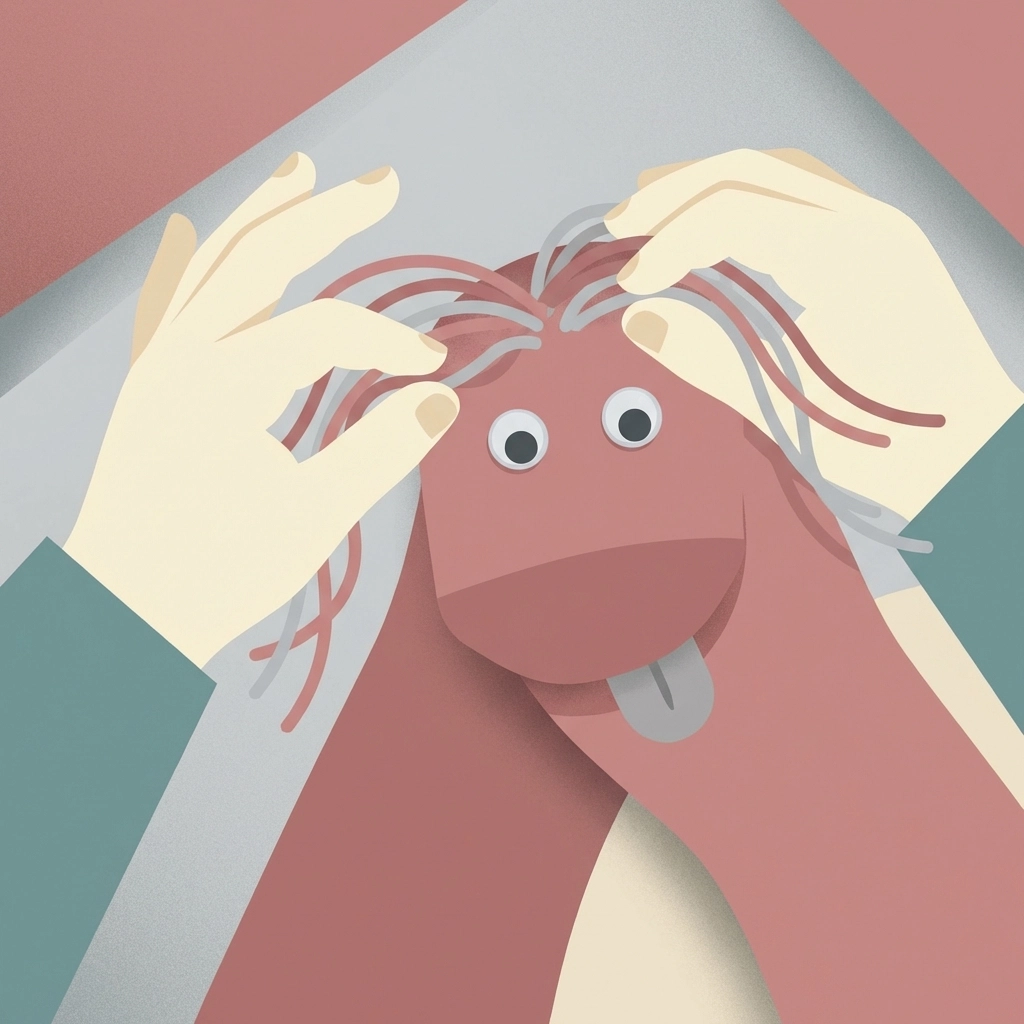
The key principle: restraint.
Two to three features create a clear character. Five or more features create visual chaos.
Choose one standout element. A wild yarn mane. Oversized teeth. Antenna made from pipe cleaners.
Let that element define the puppet. Everything else supports it.
What Is the Complete 30-Minute Timeline?
Time management keeps the project achievable. Here is the breakdown:
Minutes 1-5: Gather and organize supplies. Cut cardboard mouth template.
Minutes 6-15: Construct and attach the mouth. Test movement. Adjust if necessary.
Minutes 16-20: Position and glue eyes. Allow brief drying time.
Minutes 21-28: Add 2-3 additional features. Hair, nose, or accessories.
Minutes 29-30: Final inspection. Touch-up any loose elements.
The timeline assumes adult preparation of the hot glue gun. Heating takes 3-5 minutes and should happen before the clock starts.
Younger children (ages 4-6) benefit from pre-cut materials. Adults handle scissors and hot glue. Children focus on placement decisions and pressing pieces into position.
Older children (ages 7+) manage most steps independently. Adult supervision remains necessary for hot glue safety.
What Are Common Mistakes to Avoid?
Certain errors derail sock puppet projects. Awareness prevents frustration.
Too much glue: Excess adhesive soaks through sock fabric. It creates stiff patches and visible marks. Use small amounts. Add more if needed.
Rushing the mouth: A poorly attached mouth affects every subsequent step. Take full time on this foundation.
Overloading features: The impulse to add everything results in cluttered puppets. Edit ruthlessly.
Wrong sock choice: Thick wool socks resist glue adhesion. Thin dress socks tear easily. Standard cotton crew socks work best.
Skipping dry time: Moving too quickly causes features to shift or fall. Brief pauses between steps prevent rework.
Perfectionism: Handmade items have character. Slight imperfections add charm. Demanding precision from young children undermines enjoyment.
The goal is completion, not perfection. A finished puppet with personality beats an abandoned project with flawless eyes.
What Happens After the Puppet Is Complete?
The craft project is the beginning. Play extends the value.
Immediate activities:
- Name the character
- Develop a voice
- Create a backstory
- Perform a short introduction
Extended play options:
- Build a puppet theater from a cardboard box
- Write a simple script
- Record a puppet video
- Make additional puppets for dialogue scenes
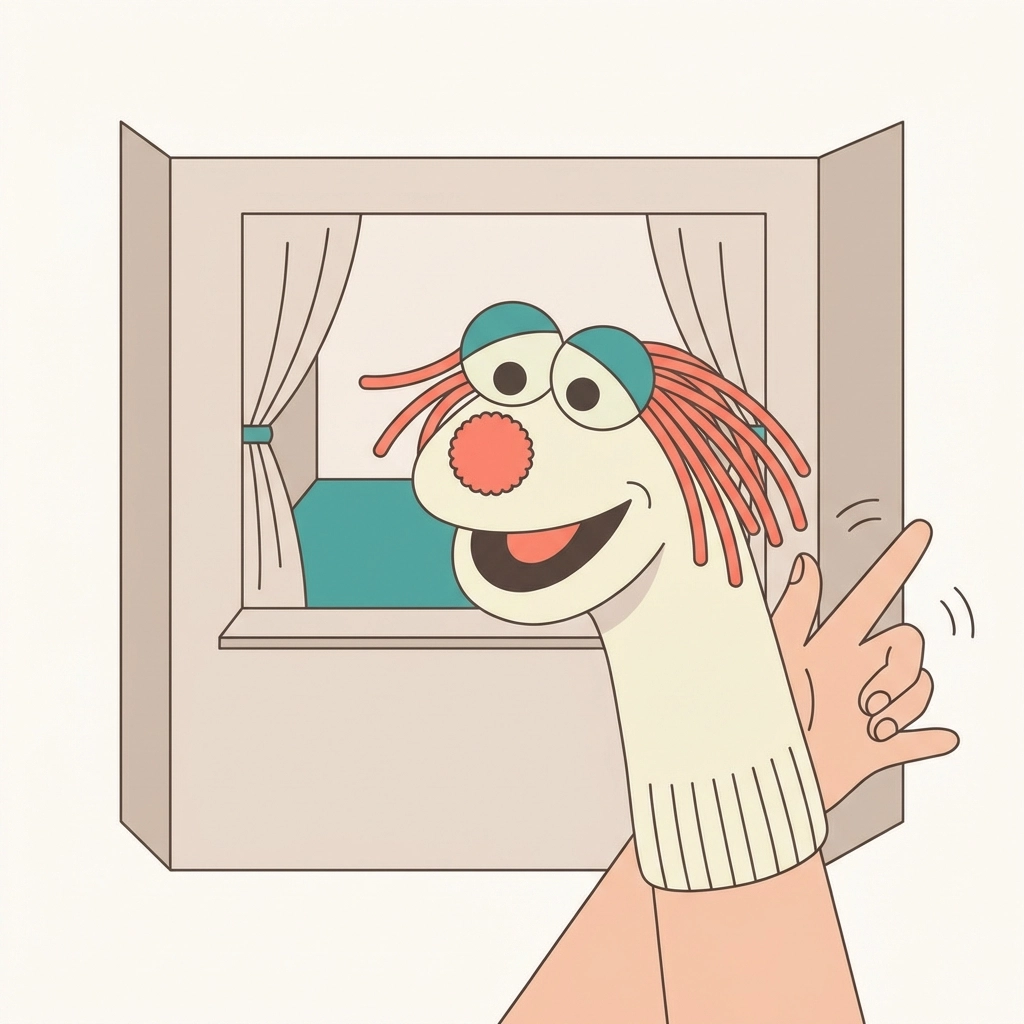
Sock puppets encourage verbal expression. Children who hesitate to speak directly often communicate freely through puppet characters.
The barrier of the puppet creates safety. Shy children find voice. Bold children practice restraint and turn-taking.
Family puppet shows become recurring events. Each session builds on previous characters and stories.
Storage is simple. Puppets flatten for drawer storage. They travel easily for car rides or visits.
Why Does This Project Work for Families?
Sock puppet crafting succeeds because of accessibility.
Low barrier to entry: No special skills required. No expensive equipment. No extensive preparation.
Flexible complexity: Simple versions suit young children. Elaborate versions challenge older kids. The same basic project scales across age groups.
Immediate gratification: Thirty minutes produces a tangible result. Children see the direct connection between effort and outcome.
Open-ended outcome: No two puppets look alike. Personal expression drives each creation.
Continued use: Unlike single-use crafts, puppets invite ongoing play. The investment of time yields repeated returns.
The sock puppet project works because it respects constraints. Time is limited. Budgets are real. Attention spans vary.
Within those constraints, creativity flourishes.
One sock. A few supplies. Half an hour.
A new friend emerges.