




The Quick Answer: Plants use a specific range of light called Photosynthetically Active Radiation (PAR), mostly in the 400 to 700 nanometer range. Through photosynthesis, they absorb this light energy and convert it into chemical energy stored as sugars, their food! Red and blue wavelengths are the most efficient "flavors" on the plant menu, which is why quality grow lights focus on delivering these specific colors.
Welcome back to the Junior Engineer's workshop, young scientists! In our previous adventures, we decoded NPK ratios and explored the mysteries of pH. Today, we're tackling something even more fascinating: how plants literally eat light.
That's right, while you munch on sandwiches, your lettuce is munching on photons. Let's find out how!
What is PAR? (Why Humans See Lumens, But Plants Eat PAR)
Here's a brain-twister for you: the brightness you see isn't the same as what your plants need.
When you buy a regular light bulb, the package tells you how many "lumens" it produces. Lumens measure how bright a light appears to human eyes. But here's the thing, your eyes and your basil plant have completely different priorities.
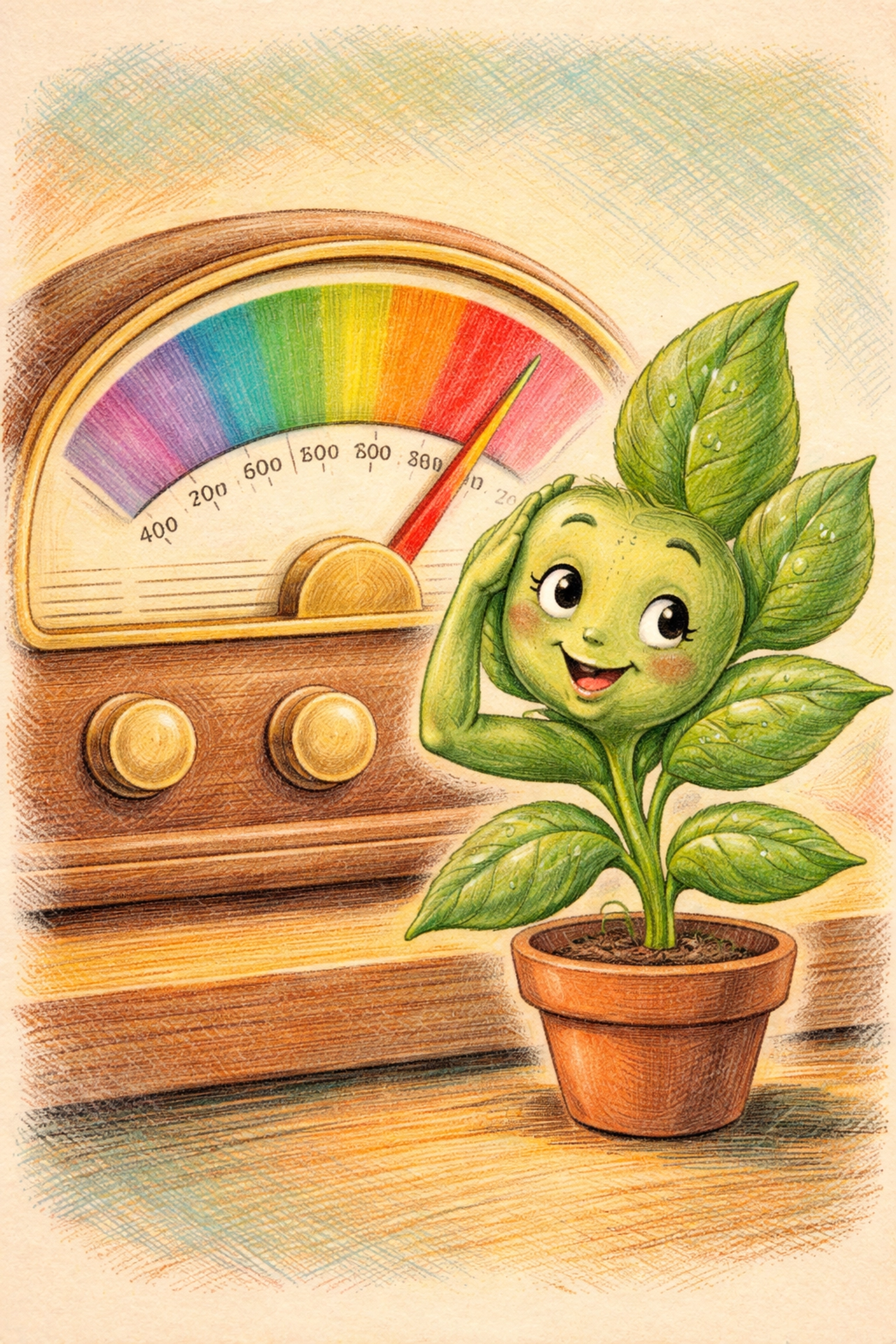
Plants can only use light within a specific wavelength range: 400 to 700 nanometers. Scientists call this range Photosynthetically Active Radiation, or PAR for short. Anything outside this window, whether it's ultraviolet rays or infrared heat, simply doesn't power photosynthesis.
Think of it like a radio dial. Your plant is tuned to one specific station (400-700nm), and light outside that frequency is just static. A super-bright lamp might look impressive to you, but if it's pumping out wavelengths outside the PAR range, your plants are basically sitting in the dark!
Junior Engineer Tip: This is why cheap "bright" LED bulbs from the hardware store often disappoint indoor gardeners. They're designed for human eyes, not plant leaves!
The Red vs. Blue Battle: Understanding Light Colors
Now let's get into the colorful science. Within the PAR range, not all wavelengths are created equal. Plants have definite favorites.
Blue Light (425-450 nm): The Structure Builder
Blue light is like the strict gym coach of the plant world. It keeps plants:
- Compact and sturdy (no leggy, floppy stems!)
- Developing rich, deep colors in leaves
- Growing strong roots
When seedlings get plenty of blue light, they develop thick stems and healthy leaves instead of stretching desperately toward any light source they can find.
Red Light (600-700 nm): The Growth Engine
Red light is the powerhouse. It drives:
- Maximum biomass production (bigger plants, faster)
- Flowering and fruiting (hello, tomatoes!)
- Overall photosynthetic efficiency
Plants absolutely love red light for energy production. It's the main fuel for the photosynthesis engine.

The Green Light Surprise
Here's something that might shock you: green light isn't useless!
Yes, plants reflect green light (that's why they look green to us), but recent research shows green wavelengths actually contribute 50-75% of photosynthetic efficiency in deeper leaf layers. Green light penetrates the leaf canopy better than red or blue, reaching cells that other wavelengths can't.
So while red and blue are the stars, green plays an important supporting role, especially in dense, leafy crops like lettuce.
Full Spectrum: Why It's the Gold Standard for Home Farms
If red and blue are so important, why not just use purple lights?
Some growers do! Those eerie purple/pink grow lights you've seen are "blurple" lights, they combine red and blue LEDs. They work, but they're not ideal for several reasons:
- They make it hard to spot plant problems (everything looks purple!)
- They're missing the beneficial middle wavelengths (like green)
- They can be harsh on human eyes
Full-spectrum LED lights aim to mimic natural sunlight by providing a balanced blend across the entire PAR range. They appear white to human eyes, making it easy to inspect your plants for pests or nutrient deficiencies, while still delivering the red and blue wavelengths plants crave.
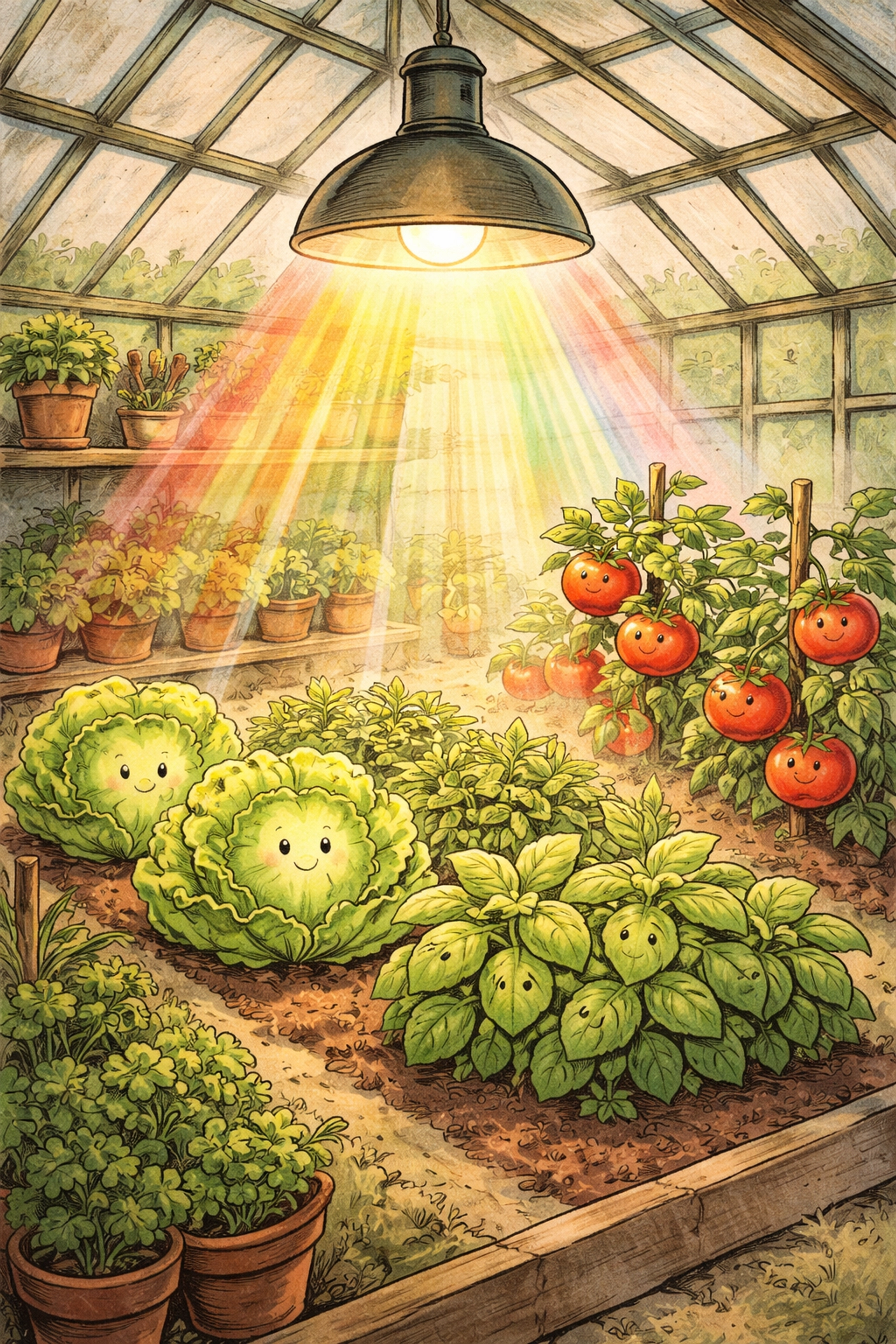
For your hydroponic garden, full-spectrum LEDs are generally the best choice because:
- Plants get a complete "diet" of light wavelengths
- You can actually see what you're growing without everything looking alien
- Modern full-spectrum LEDs are energy efficient and run cool
Measuring Success: Why Your Phone's Light Meter Won't Work
Alright, Junior Engineers, here's where things get technical, and where many beginners make mistakes.
You might think: "I'll just download a light meter app and measure my grow light!"
Unfortunately, that won't work. Remember how we discussed lumens vs. PAR? Standard light meters (including phone apps) measure lumens or lux, units designed for human vision. They tell you nothing useful about what your plants are receiving.
The Metrics That Matter: PPFD and DLI
PPFD (Photosynthetic Photon Flux Density) measures how many photons within the PAR range hit a specific area per second. It's measured in micromoles per square meter per second (μmol/m²/s).
Think of PPFD like rain intensity, it tells you how hard the "light rain" is falling on your plants right now.
DLI (Daily Light Integral) takes PPFD and adds time. It measures the total number of photons your plant receives over an entire day, measured in mol/m²/day.
If PPFD is rain intensity, DLI is total rainfall for the day.
What Numbers Should You Aim For?
| Crop | Recommended DLI (mol/m²/day) |
|---|---|
| Lettuce & Leafy Greens | 12-17 |
| Herbs (Basil, Mint) | 14-18 |
| Tomatoes & Peppers | 20-30 |
| Microgreens | 10-12 |
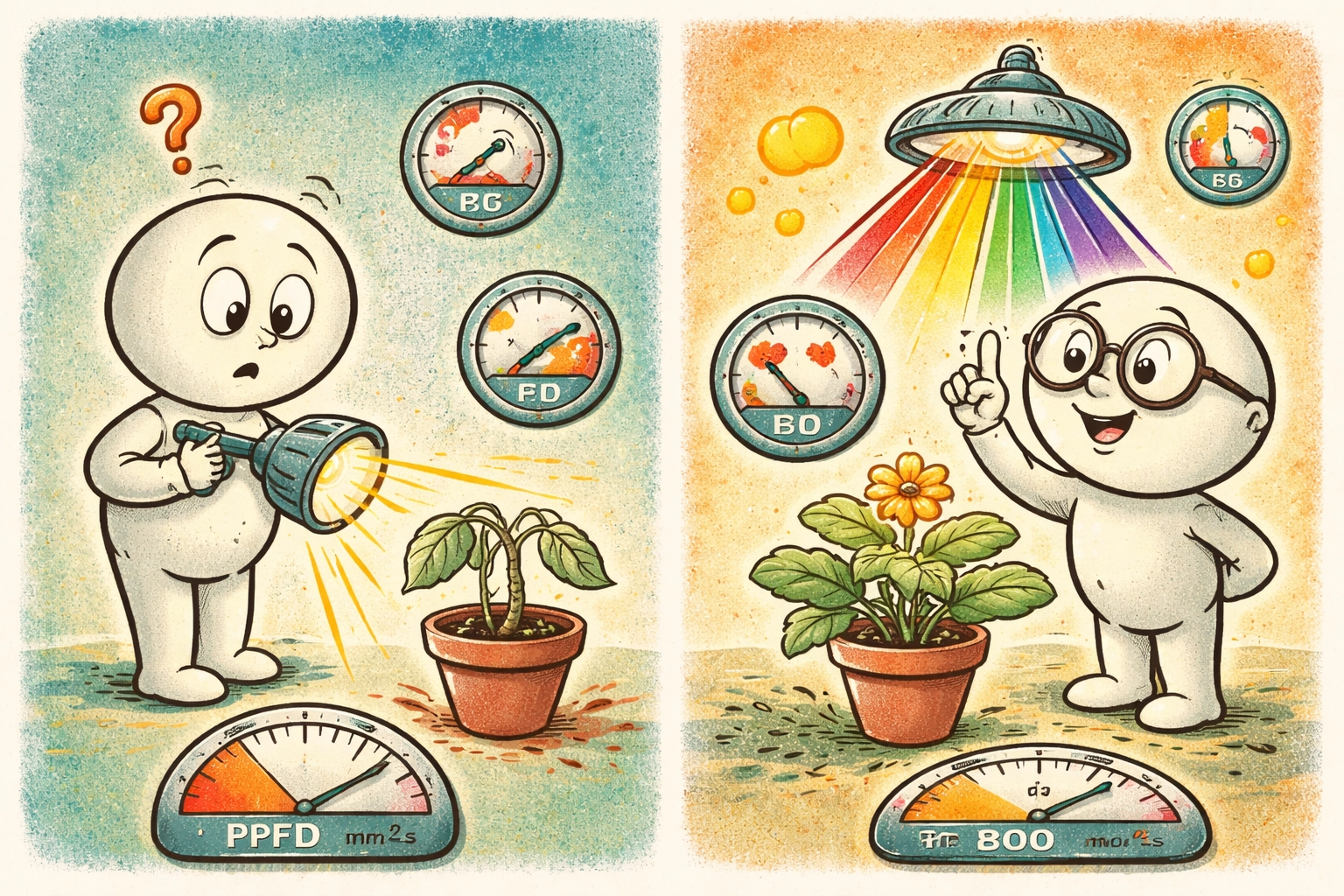
Junior Engineer Tip: To measure PPFD properly, you need a specialized quantum meter or PAR meter. These can be expensive, but some local extension offices or gardening clubs have them available to borrow. For beginners, following the manufacturer's recommended hanging heights for your grow lights is a good starting point!
Putting It All Together: Your Light Recipe
So what have we learned, Junior Engineers?
- PAR (400-700nm) is the only light range plants can use for photosynthesis
- Blue light builds structure; red light drives growth and flowering
- Full-spectrum LEDs are the gold standard for home farms
- PPFD and DLI are the real measurements that matter, not lumens!
Understanding light science transforms you from someone who just "puts plants under a lamp" into a true Junior Engineer who can diagnose problems, optimize growth, and grow thriving indoor gardens year-round.
🔬 Science Lab: References
Ready to dig deeper? Here are the peer-reviewed sources behind today's lesson:
- University of Missouri Extension – Lighting Indoor Houseplants
- Nature – LED Light Optimization Study (2025)
- MDPI Plants – Effects of Light Spectrum on Lettuce Growth
- Virginia Tech Extension – Daily Light Integral Guide
Frequently Asked Questions
Q: Can I use regular household LED bulbs for growing plants?
A: In a pinch, yes, but they're inefficient. Household LEDs are optimized for human vision (lumens), not plant growth (PAR). You'll get better results with purpose-built grow lights.
Q: Why do some grow lights look purple?
A: Those "blurple" lights combine only red and blue LEDs, which are the most photosynthetically active wavelengths. They work but make it difficult to visually inspect plants.
Q: How far should my grow light be from my plants?
A: It depends on the light's intensity! Check manufacturer guidelines. Too close causes light burn; too far causes stretching. Most full-spectrum LEDs work well 12-24 inches above seedlings.
Q: Do plants need darkness too?
A: Yes! Most plants need a dark period for respiration and proper development. A 16/8 (light/dark) schedule works well for most vegetables and herbs.
Q: What's better: sunlight or grow lights?
A: Natural sunlight is free and contains the full spectrum, but it's inconsistent and seasonal. Quality grow lights provide reliable, controllable light year-round: perfect for indoor hydroponics.
Q: Can too much light hurt my plants?
A: Absolutely. Light burn causes bleached, crispy leaves. This is why understanding PPFD and proper hanging heights matters!
Q: Why do my seedlings get tall and floppy under my windowsill?
A: They're not getting enough light intensity (low PPFD) or enough blue wavelengths, so they stretch toward the light source. A proper grow light solves this problem.
Q: How long should I run my grow lights each day?
A: Most vegetables need 12-16 hours of light daily. Leafy greens do well with 12-14 hours; fruiting plants like tomatoes prefer 14-16 hours.
⚠️ Disclaimer
The information provided in this blog post is for educational and informational purposes only. It is not intended as professional agricultural, electrical, or safety advice. Always follow manufacturer instructions when installing and using grow lights. Tierney Family Farms is not responsible for any outcomes resulting from the application of information contained herein. When in doubt, consult a qualified professional.