



A stick maze costs less than ten dollars to build.
Takes about thirty minutes.
Works indoors or outdoors.
Kids solve it again and again.
This project uses materials found around most farms and homes. Sticks, cardboard, glue. Simple construction. Big payoff.
The activity suits ages 4 through 12. Younger children help gather sticks. Older children design complex paths. Everyone participates.
What Materials Are Needed for a Stick Maze?
The supply list stays short and affordable.
Base materials:
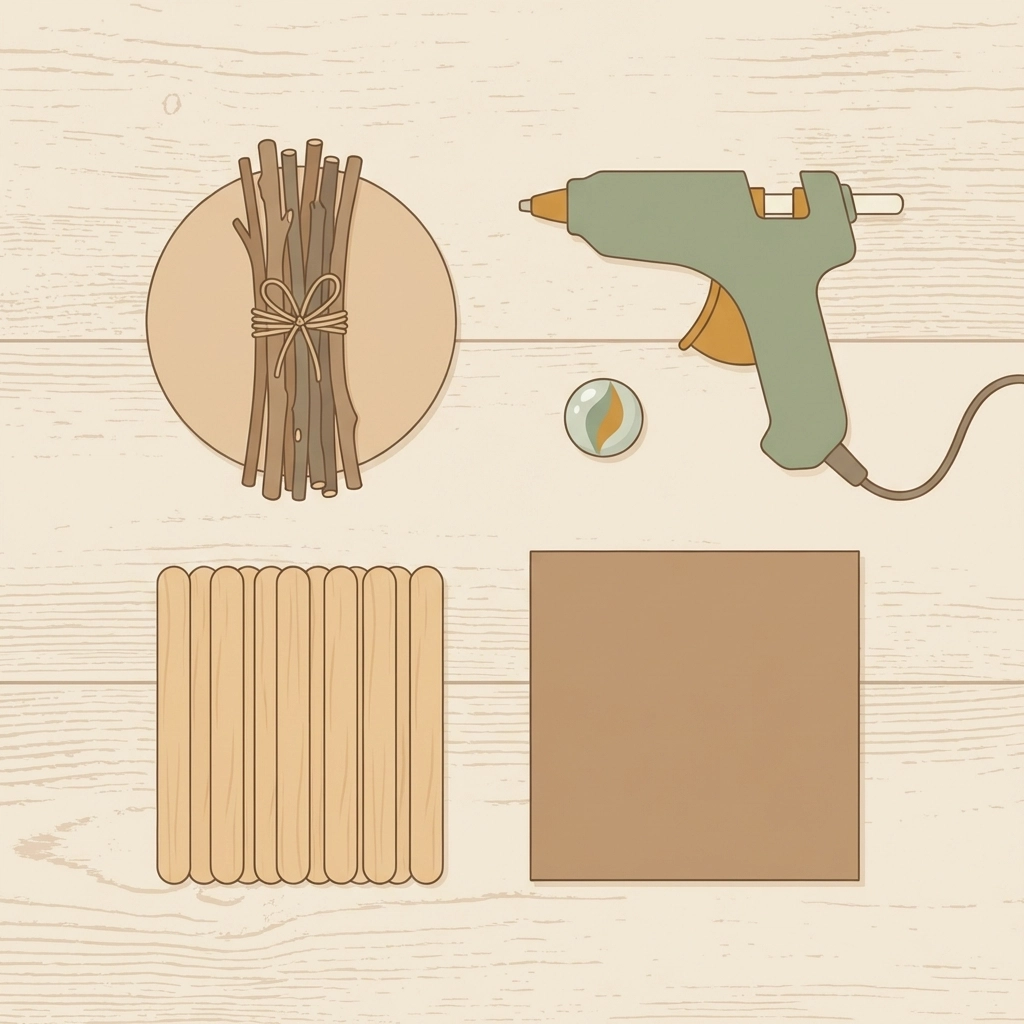
- Cardboard box lid or flat cardboard piece (12" x 12" minimum)
- Craft sticks or natural sticks collected outside
- Hot glue gun and glue sticks
- One marble or small ball
Optional additions:
- Paint or markers for decoration
- Small toy animals for themed play
- Sandpaper for smoothing rough sticks
Natural sticks work better than craft sticks for farmyard authenticity. Collect fallen twigs from the property. Look for straight pieces about 4–6 inches long.
Craft sticks from a dollar store cost approximately one dollar for 100 pieces.
Total project cost: under ten dollars.
What Ages Work Best for This Project?
Different age groups engage with different parts of the build.
Ages 4–5:
- Collect sticks outdoors
- Sort sticks by size
- Test the finished maze with a marble
- Adult handles hot glue
Ages 6–8:
- Help design the maze path
- Place sticks while adult glues
- Decorate the finished maze
- Play independently
Ages 9–12:
- Design maze independently
- Use hot glue with supervision
- Create multi-level challenges
- Build mazes for younger children
The project scales to ability. No child sits out.
How Does the Maze Get Designed?
Start with the base.
A cardboard box lid provides raised edges. These edges keep the marble contained. No lid available? Glue four long sticks around the perimeter of flat cardboard.
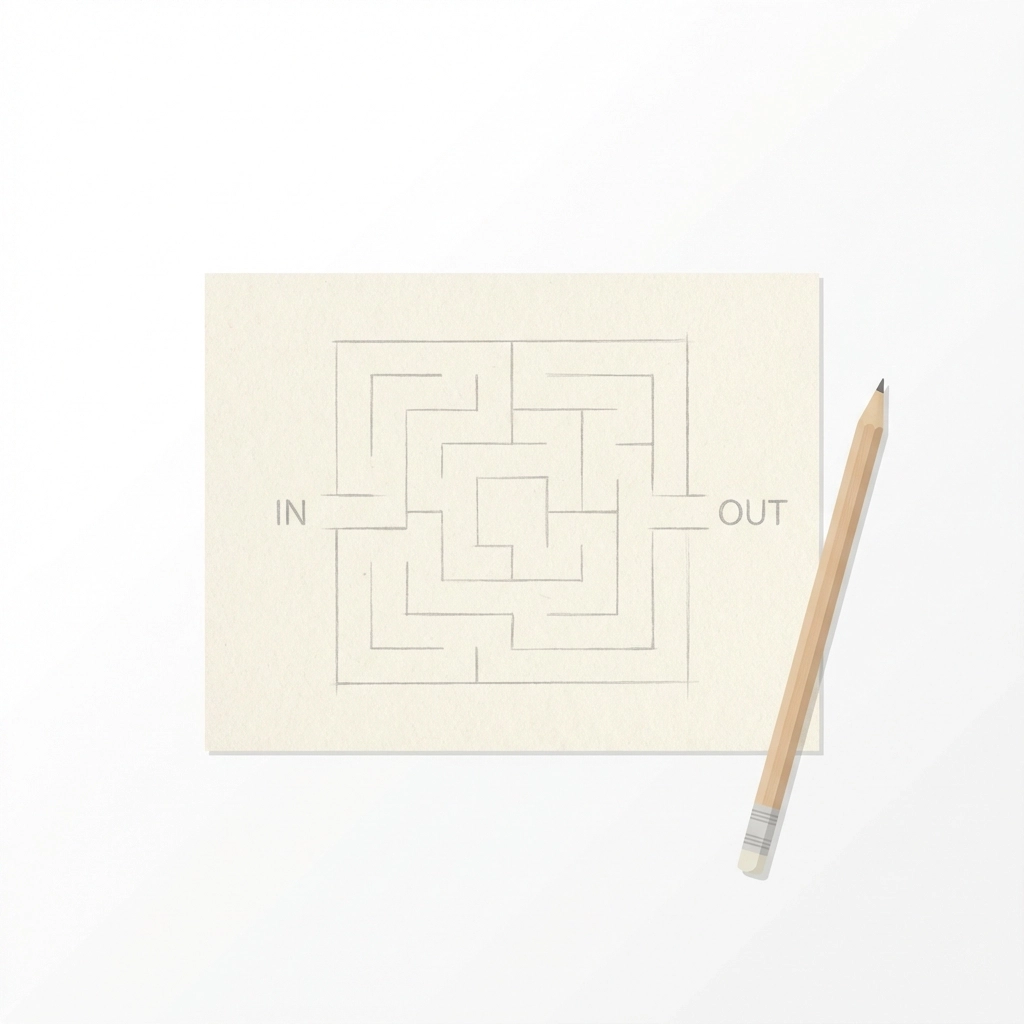
Draw the maze path before gluing anything.
Use a pencil. Light marks. Easy to erase.
Design principles:
- One entrance on one side
- One exit on the opposite side
- Dead ends create challenge
- Wider paths suit younger players
- Narrower paths suit older players
Leave space between walls. The marble needs room to roll.
Test the path width with the marble before committing to glue.
What Is the Step-by-Step Building Process?
Construction follows a logical sequence.
Step 1: Prepare the base
Flatten any warped cardboard. Remove tape or stickers. The surface needs to be smooth for marble rolling.
Step 2: Sketch the maze
Draw lightly with pencil. Include:
- Start point (mark with an "S")
- End point (mark with an "E")
- At least three dead ends
- One main solution path
Step 3: Cut sticks to size
Measure against the drawn lines. Snap or cut sticks to fit. Natural sticks snap easily. Craft sticks require scissors or a craft knife.
Adult supervision required for cutting.
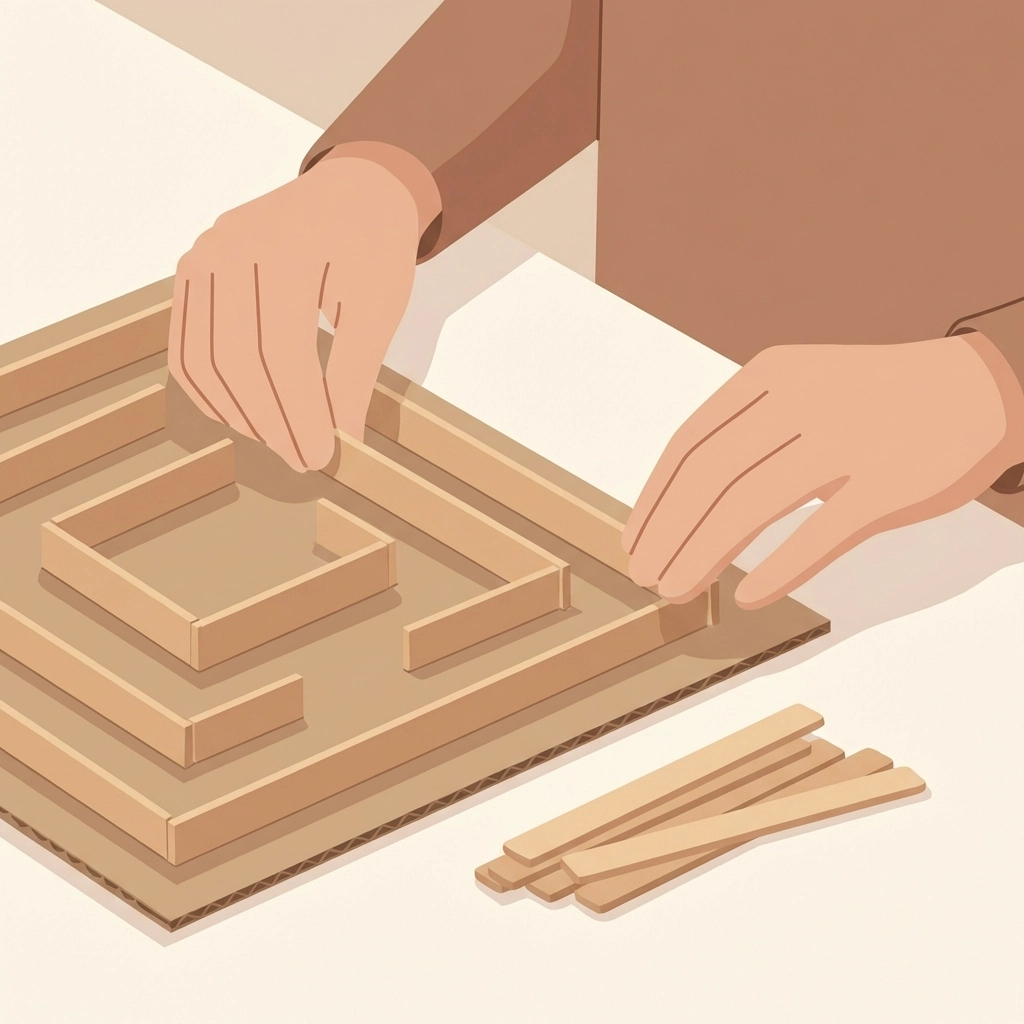
Step 4: Lay out sticks dry
Place all sticks on the pencil lines without glue. Check spacing. Adjust as needed. This preview prevents mistakes.
Step 5: Glue walls in place
Heat the glue gun. Apply a thin line of glue along one pencil mark. Press stick into glue immediately. Hold for five seconds.
Work in sections. Complete one area before moving to the next.
Hot glue sets fast. Adjustments happen within three seconds or not at all.
Step 6: Let cool completely
Five minutes minimum. Ten minutes preferred. Hot glue burns remain a risk until fully cooled.
Step 7: Test with marble
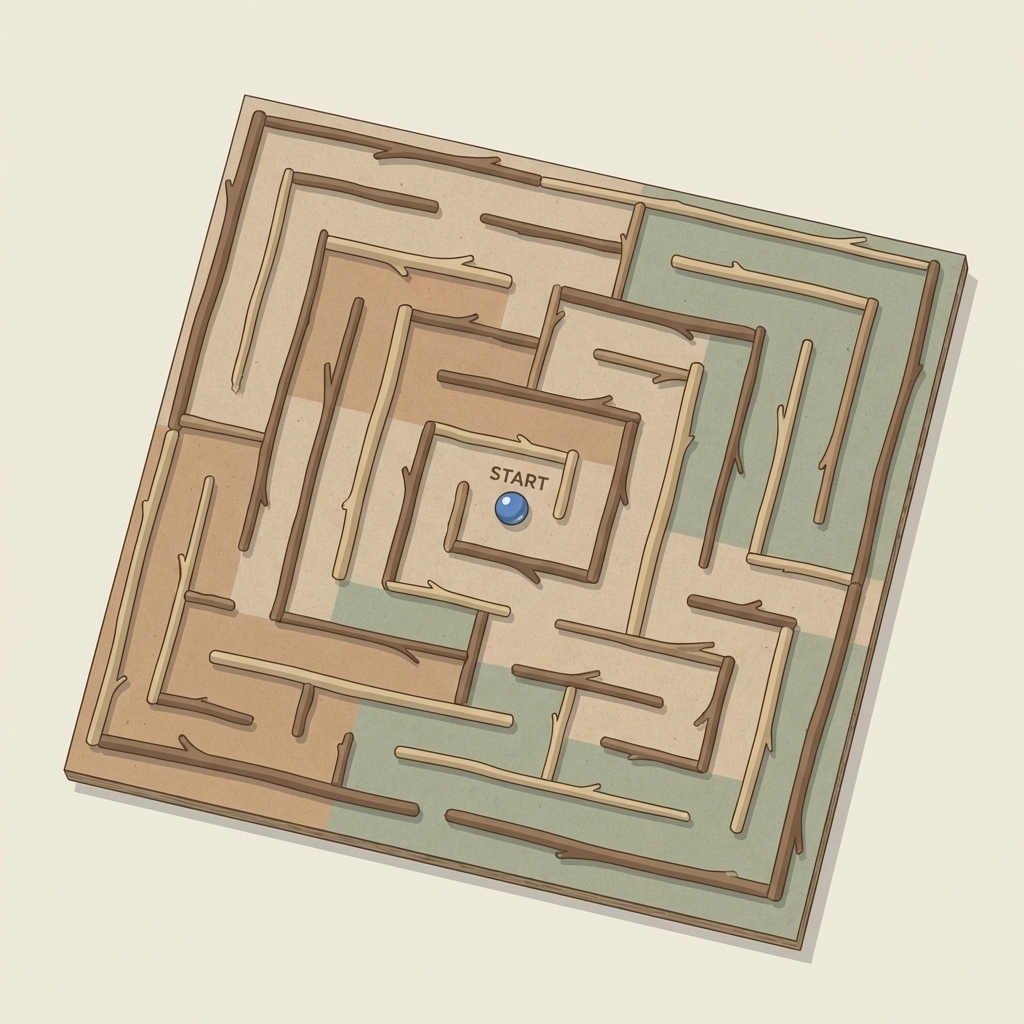
Place marble at start. Tilt base gently. Watch the path. Identify problem spots. Add walls where the marble escapes.
The maze is complete when the marble travels from start to finish without leaving the intended path.
How Can the Maze Be Made More Challenging?
Basic mazes suit beginners. Advanced builders want more.
Increase difficulty by:
- Adding more dead ends
- Narrowing pathways
- Creating longer routes
- Including switchbacks
- Building bridges with elevated sticks
Timed challenges:
- Use a stopwatch
- Record best times
- Compete against previous attempts
- No competition between children required
Obstacle additions:
- Small pebbles as roadblocks
- Bits of hay as texture changes
- Tiny toy animals as "guards" to avoid
Each modification extends play value. One maze provides hours of engagement across multiple sessions.
What Safety Considerations Apply?
Hot glue guns present the primary hazard.
Hot glue safety:
- Adults operate the glue gun for children under 9
- Work on a protected surface
- Keep the gun in a holder when not in use
- Never touch the metal tip
- Run cool water over burns immediately
Stick safety:
- Sand sharp edges on natural sticks
- Check for splinters before play
- Discard cracked or brittle sticks
Marble safety:
- Marbles present a choking hazard for children under 3
- Supervise play with very young children present
- Store marbles in a sealed container after use
Safe projects become repeated projects.
How Does This Activity Support Inclusive Play?
Stick mazes accommodate different abilities and preferences.
For children who prefer quiet activities:
The maze offers focused, calm engagement. No loud noises. No rapid movement required.
For children with limited fine motor skills:
Wider pathways reduce frustration. Larger marbles roll easier. The base can rest on a table for stability.
For children who need movement:
Collecting sticks outdoors combines physical activity with the project. Walking the property to gather materials burns energy before the seated building phase.
For group settings:
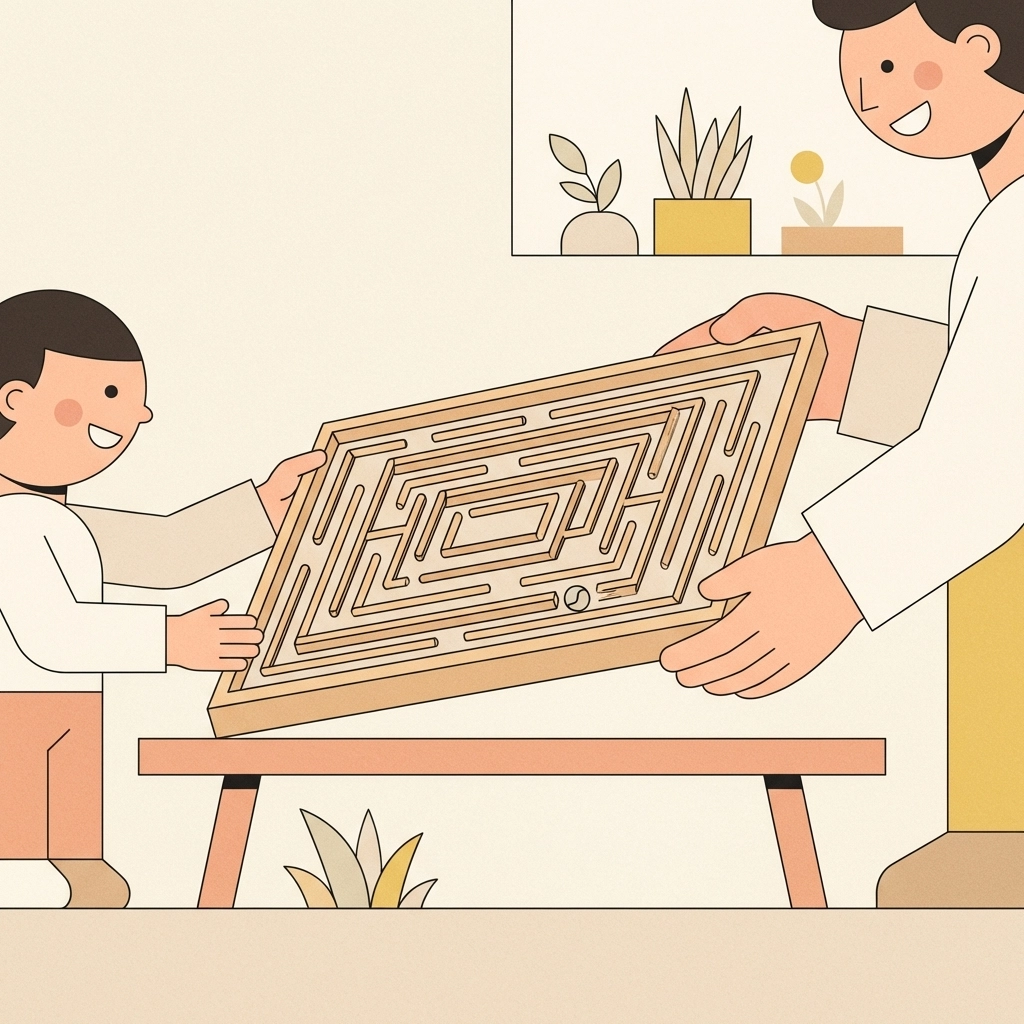
Multiple children work on one large maze. Or each child builds an individual maze. Both approaches function well.
For solo play:
One child completes the entire project independently (age-appropriate supervision maintained). Self-directed play builds confidence.
No modifications exclude any participant.
How Long Does the Finished Maze Last?
Durability depends on materials and storage.
Cardboard base:
- Lasts weeks indoors
- Moisture damages quickly
- Store flat in a dry location
Natural sticks:
- Check periodically for insect activity
- Seal with clear coat for longevity (optional)
- Replace broken pieces with fresh glue
Craft sticks:
- More uniform and stable
- Less authentic appearance
- Last longer than natural materials
A well-stored maze provides entertainment for months. Damaged sections repair easily with additional glue and replacement sticks.
What Variations Exist for This Project?
The basic concept adapts endlessly.
Seasonal themes:
- Add fall leaves around the border
- Use white paint for winter scenes
- Include flower petals in spring
- Decorate with small flags for summer holidays
Farmyard additions:
- Place toy tractors at the start
- Position barn animal figures throughout
- Create "pasture" sections with green felt
Educational extensions:
- Label sections with letters or numbers
- Create math problems at dead ends
- Include sight words along the path
Scale variations:
- Mini mazes fit in shoeboxes
- Large mazes cover card tables
- Outdoor mazes use branches and logs on the ground
One project teaches the concept. Variations maintain interest across multiple builds.
Why Does This Activity Work So Well?
Stick mazes combine multiple benefits in one project.
Low cost removes barriers to participation.
Short build time maintains attention.
Tangible results create satisfaction.
Repeated play extends value.
Skill-building occurs naturally through design and problem-solving.
Outdoor collection connects children to the land.
Indoor construction suits any weather.
The activity requires no screens, no batteries, no subscription.
Materials come from the immediate environment.
Success is visible, measurable, and personal.
A stick maze transforms ordinary materials into extraordinary play. Under ten dollars. Under an hour. Unlimited enjoyment.