



Direct Answer: To build an herb garden in a shoebox, simply line a cardboard shoebox with a plastic bag, fill it with potting soil, plant herb seeds at the recommended depth, water gently with a spray bottle, and place it on a sunny windowsill. The entire project takes about 30 minutes and costs less than $10 using materials you likely already have at home.
That's the quick version. Now let's dig into the details so you and your little ones can turn an ordinary shoebox into a thriving mini herb garden this weekend.
Why a Shoebox Makes the Perfect Starter Garden
Before we get our hands dirty, let's talk about why this humble cardboard container is actually a brilliant choice for young gardeners.
Shoeboxes are the right size for small hands to manage. They're shallow enough that kids can easily plant seeds without straining, and wide enough to grow several different herbs at once. Plus, there's something magical about transforming trash into a living, growing thing.
This project also teaches kids some pretty big lessons without them even realizing it: recycling, responsibility, patience, and basic botany all wrapped up in one afternoon activity.
What You'll Need to Get Started
Gather these materials before you begin. Most families already have everything on hand:
The Essentials:
- 1 empty shoebox (any size works, but bigger gives you more planting room)
- 1 plastic bag or plastic wrap (to line the box and prevent leaking)
- Potting soil (about 4-6 cups depending on box size)
- Herb seeds (basil, parsley, chives, or cilantro work great for beginners)
- A spray bottle filled with water
- A sunny windowsill, porch, or outdoor spot
For Decorating (Optional but Fun):
- Markers, crayons, or paint
- Construction paper
- Stickers
- Old magazines for cutting out pictures
- Glue or tape
That's it. No fancy equipment. No trip to a specialty garden store. Just simple stuff that probably sitting around your house right now.
Step-by-Step Instructions
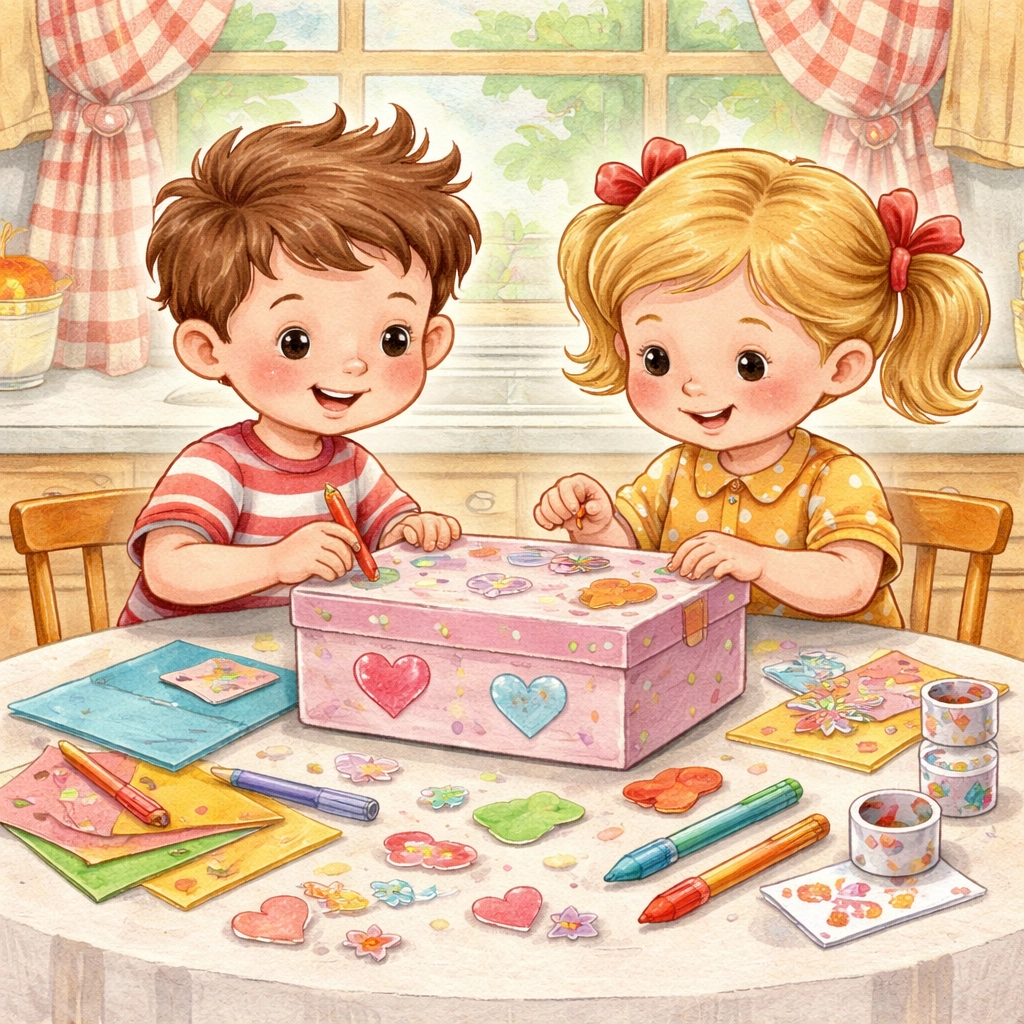
Step 1: Decorate Your Shoebox
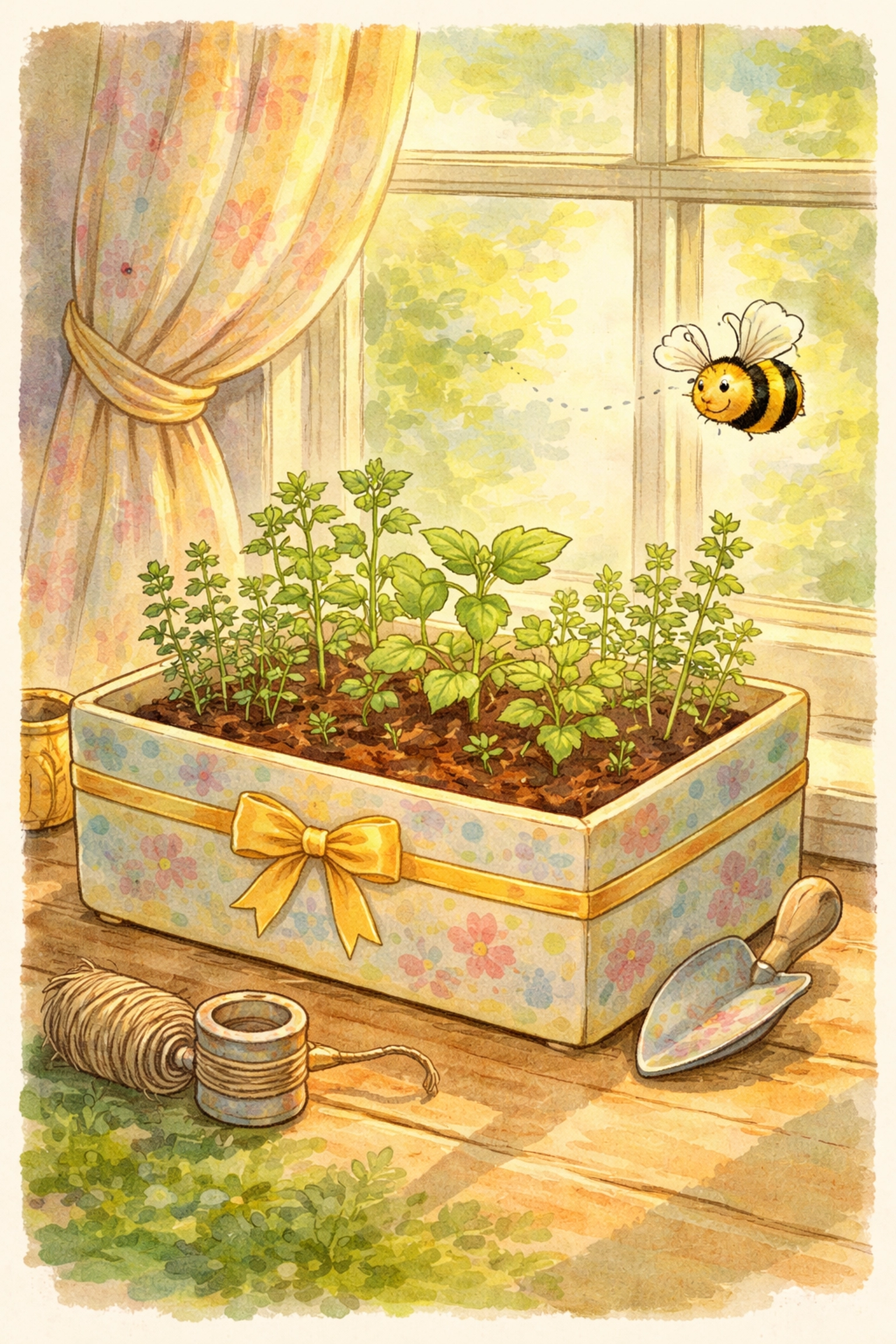
Let's be honest: this is the part kids get most excited about. Hand over the markers, stickers, and craft supplies and let them go wild on the outside of the box.
Some ideas to spark creativity:
- Draw pictures of what the herbs will look like when they're grown
- Write the names of the herbs you're planting
- Create a farm scene with animals and a barn
- Cover it in stickers that represent their personality
There's no wrong way to do this. The goal is to make them feel ownership over their garden before a single seed goes in the ground.
Pro tip: Do all the decorating before adding soil. Trust me on this one.
Step 2: Waterproof the Inside
Cardboard and water don't mix well, so we need a barrier. Take your plastic bag or plastic wrap and line the inside of the shoebox completely. Press it into the corners and fold any excess over the edges.
If you're using a plastic bag, you can cut it open to lay flat. Tape down the edges if needed to keep everything in place.
This simple step will keep your shoebox from becoming a soggy mess after the first watering.
Step 3: Add the Potting Soil
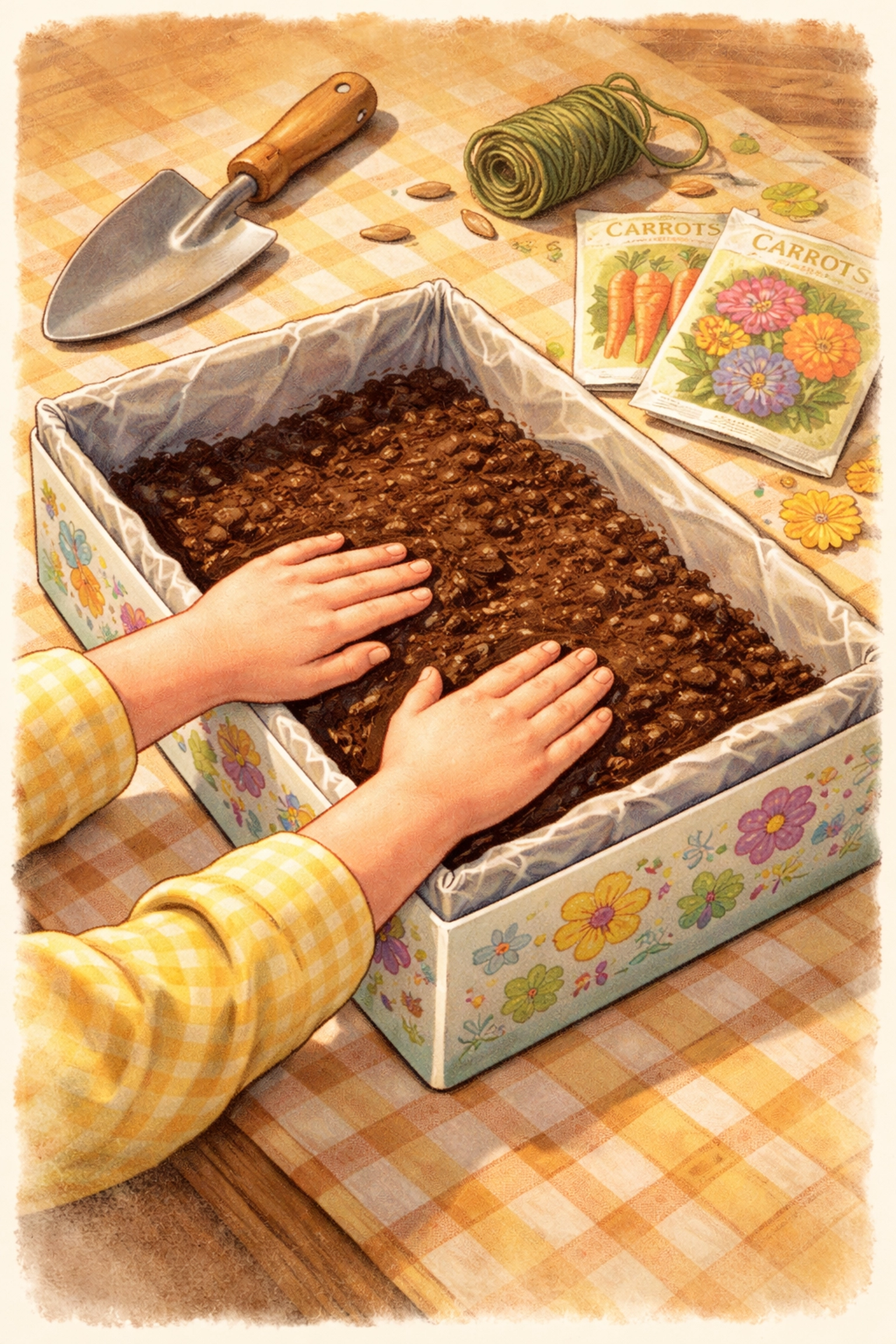
Fill your lined shoebox with potting soil, leaving about an inch of space at the top. This gives your seeds room to grow upward and prevents soil from spilling over when you water.
Have your kids use their hands to spread the soil evenly. Getting dirty is half the fun, and touching the soil helps them connect with the process.
Important: Use actual potting soil, not dirt from your backyard. Potting soil is lighter, drains better, and doesn't contain weed seeds or pests that could cause problems.
Step 4: Plant Your Seeds
Here's where the magic begins. Grab your seed packets and read the instructions together with your kids. Most herb seeds need to be planted about ¼ inch deep, but each variety is slightly different.
Planting tips for common herbs:
- Basil: Plant seeds ¼ inch deep, about 2 inches apart
- Parsley: Plant ¼ inch deep, 1-2 inches apart (these are slow to sprout: be patient!)
- Chives: Sprinkle seeds on surface and barely cover with soil
- Cilantro: Plant ½ inch deep, 2 inches apart
Use a finger or pencil to make small holes, drop in 2-3 seeds per hole (in case some don't germinate), and cover gently with soil. Pat down lightly: no need to pack it hard.
If you're planting multiple herbs, you can create sections in your shoebox. Use craft sticks as dividers and labels so everyone remembers what's growing where.
Step 5: Water Gently
Here's a rookie mistake many new gardeners make: they drown their seeds. Seeds need moisture, not a flood.
Fill a spray bottle with room temperature water and mist the soil until it's damp but not soaking wet. The spray bottle gives kids control and prevents them from accidentally washing seeds away.
This is also a great time to explain that seeds are like sleeping babies: they need gentle care to wake up and start growing.
Step 6: Find the Perfect Sunny Spot
Herbs love sunlight. Place your shoebox garden somewhere that gets at least 6 hours of direct sunlight each day. A south-facing windowsill is ideal, but a sunny porch or balcony works too.
If you're keeping it indoors, rotate the box every few days so all the plants get equal sun exposure and don't start leaning toward the window.
Caring for Your Shoebox Herb Garden
The planting is done, but your job isn't over. Here's how to keep those herbs happy:
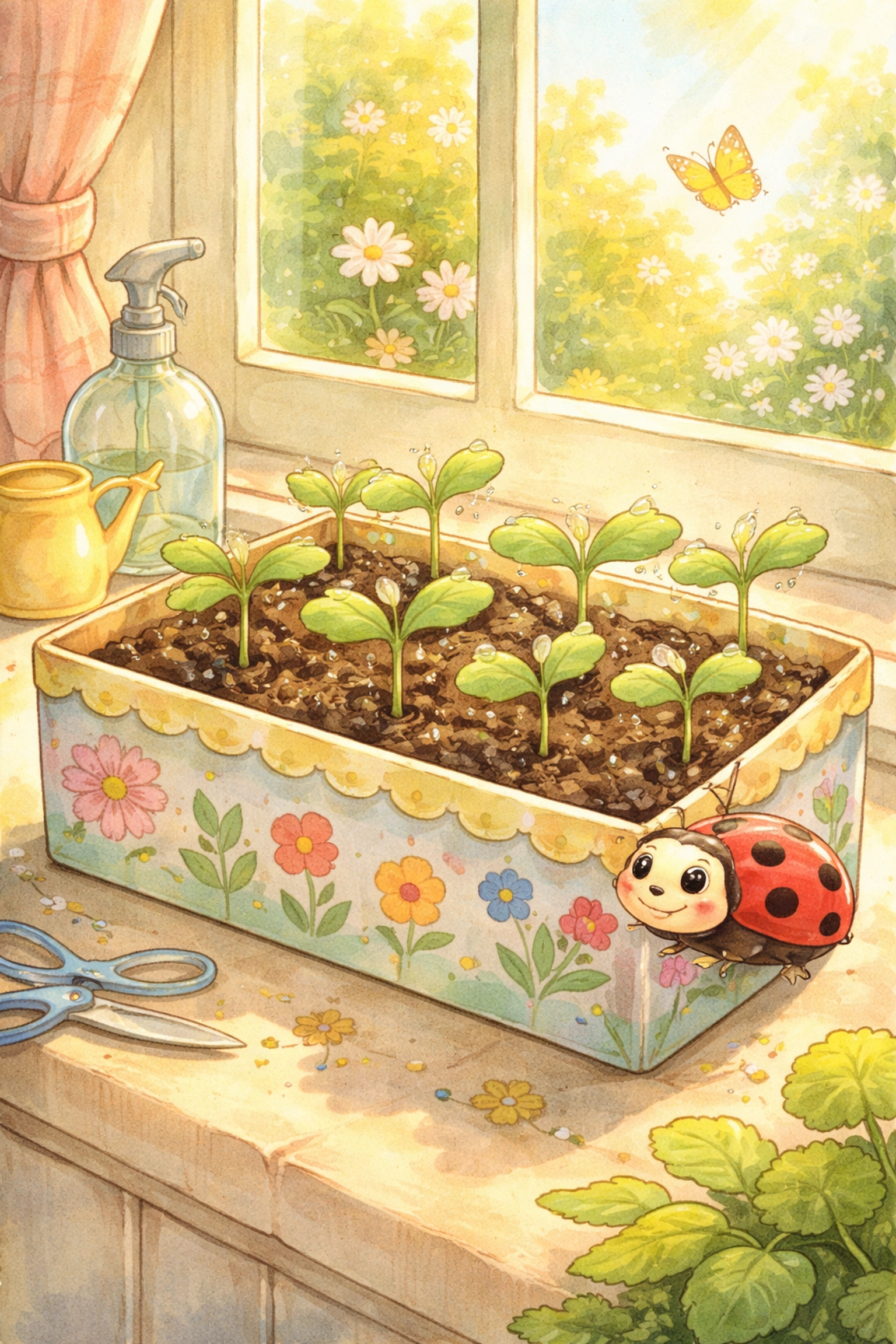
Watering: Check the soil daily by poking a finger about an inch down. If it feels dry, give it a spray. Most shoebox gardens need water every 1-2 days, depending on how sunny and warm your spot is.
Watching for sprouts: Most herb seeds germinate within 7-14 days. Basil is usually the fastest, popping up in about a week. Parsley can take up to three weeks, so don't give up on it.
Thinning: Once seedlings have their second set of leaves, thin them out so the strongest plants have room to grow. This is hard for kids who don't want to "hurt" any plants, but explain that it helps the remaining ones grow bigger and healthier.
Best Herbs for Beginners
Not all herbs are created equal when it comes to kid-friendly growing. Here are the champions:
| Herb | Days to Sprout | Why Kids Love It |
|---|---|---|
| Basil | 5-10 days | Fast results, smells amazing |
| Chives | 7-14 days | Fun to snip with scissors |
| Parsley | 14-21 days | Curly leaves look cool |
| Mint | 7-14 days | Great for making lemonade |
Stick with one or two varieties for your first shoebox garden. You can always expand later once your kids catch the gardening bug.
What Your Kids Will Learn
This isn't just about growing plants. Your children will pick up valuable skills along the way:
- Patience: Waiting for seeds to sprout teaches delayed gratification
- Responsibility: Daily watering creates routine and accountability
- Science: They'll observe germination, photosynthesis, and growth cycles firsthand
- Sustainability: Growing food at home reduces environmental impact
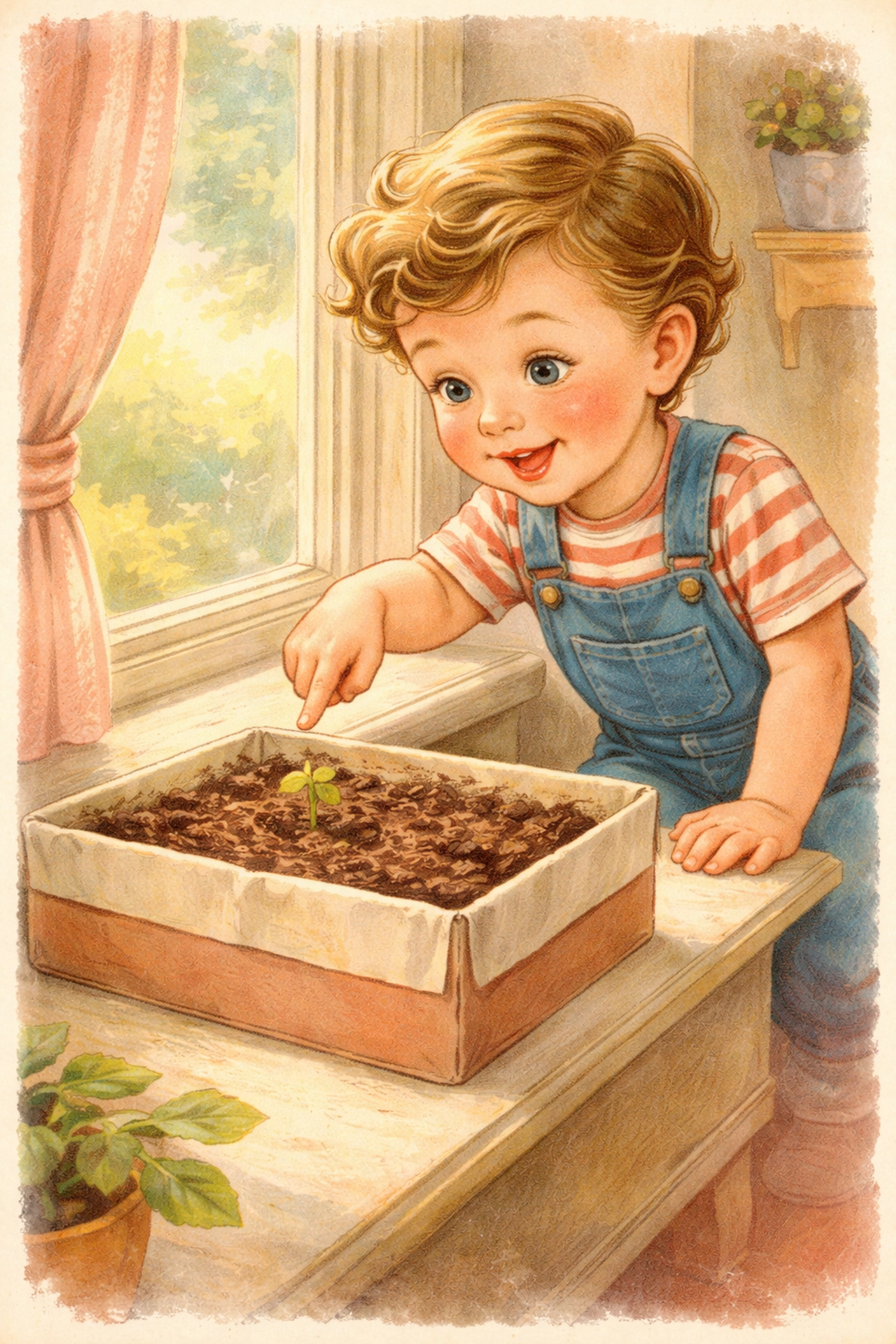
Plus, there's nothing quite like watching a kid's face light up when they spot that first tiny green sprout pushing through the soil.
Ready for More Garden Projects?
Once your shoebox herb garden is thriving, you might want to level up. Check out our guide on how to make a DIY mini greenhouse out of plastic bottles or explore building a kitchen scrap regrow garden for another budget-friendly family activity.
Now grab that shoebox and get planting. Your windowsill herb garden is waiting to happen.
FAQ
- How do I keep the shoebox from getting soggy? Lining the inside of the box with a plastic bag (like an old grocery bag) before adding the soil will keep the cardboard dry and sturdy.
- What kind of herbs grow best in a shoebox? Chives, parsley, and small varieties of basil are perfect. They don't need a huge amount of space to thrive and look beautiful in a decorated shoebox.
- Does the shoebox need to stay inside? Yes, it’s best to keep your shoebox herb garden on a sunny windowsill. Since it’s made of cardboard, it won't hold up well to rain or heavy dew outdoors.
References:
- Seed germination timelines based on standard herb growing guides
- Planting depth recommendations from common seed packet instructions